Quick answer: How often to wash dog bowls: food bowls after every meal, or at least once a day, and water bowls every day with fresh water. Use hot soapy water, or a dishwasher if the bowl is labelled for it. The slimy film is biofilm, and scrubbing breaks it up. Replace any cracked or chipped bowl.
Most of us rinse the bowl and top it up, and that's where the slime starts. This guide covers the routine, what the slime is, what a 2022 study found about how owners really wash, and which bowl materials are easiest to keep clean. For choosing a bowl, see our stainless steel dog bowls guide.
Quick picks
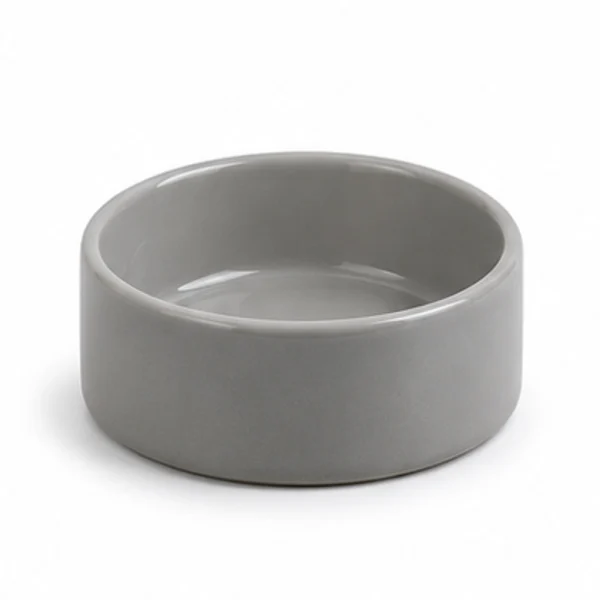
HUNTER Lund Ceramic Bowl, 900 ml
Ceramic with a silicone non-slip rim, 16 cm wide; hand wash it
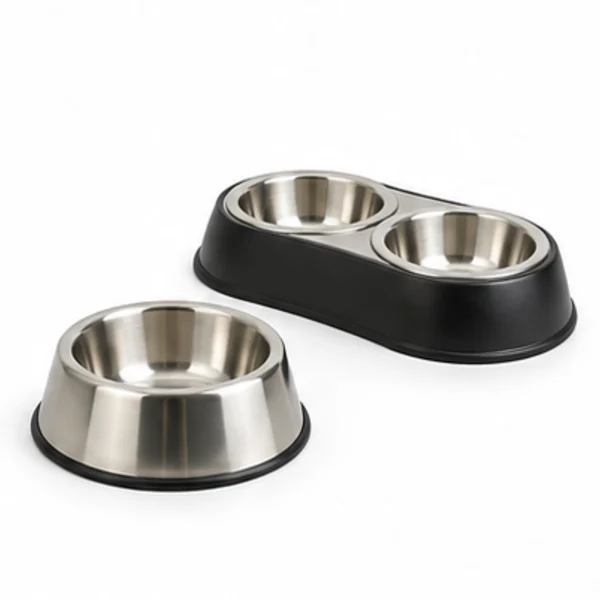
Edipets Stainless Steel Double Bowl on a bamboo base
Two lift-out stainless bowls the listing says are dishwasher safe
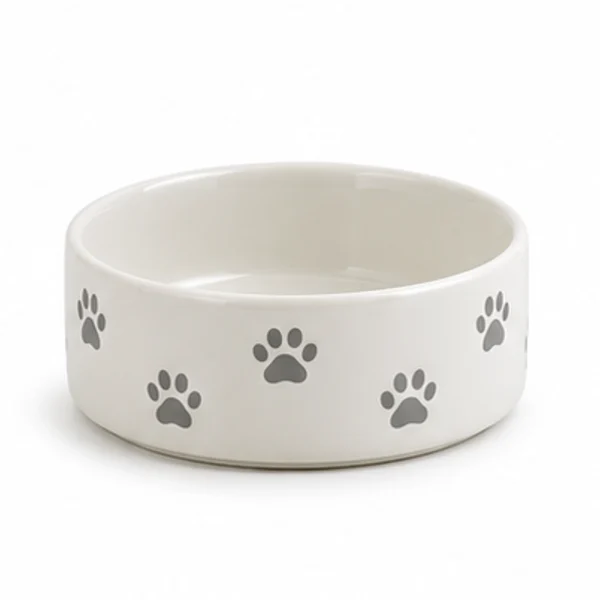
Pearhead Ceramic Dog Bowl, 2130 ml
The listing says it is dishwasher and microwave safe
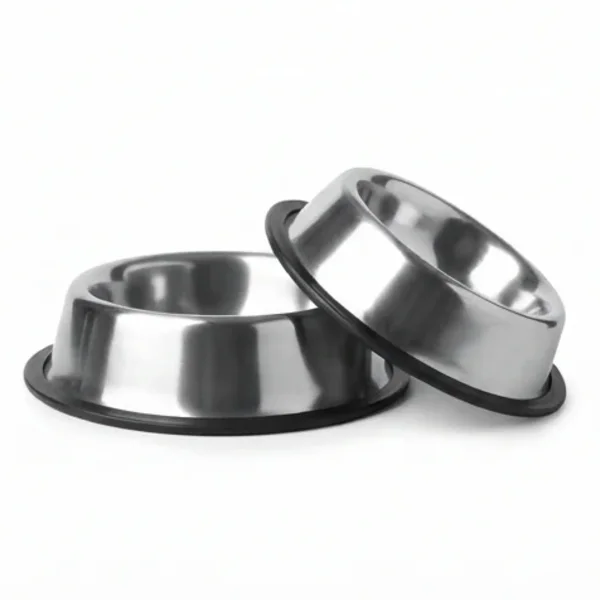
Amazon Basics Stainless Steel Dog Bowl, Set of 2
About 1 L each with a rubber base
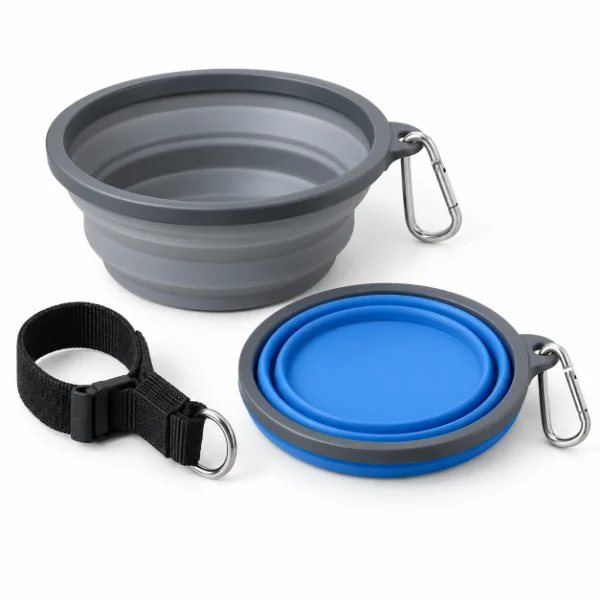
Aonkey collapsible bowls with bottle carrier, 2 pack
Silicone with a hard rim and carabiner; wash it when you get home
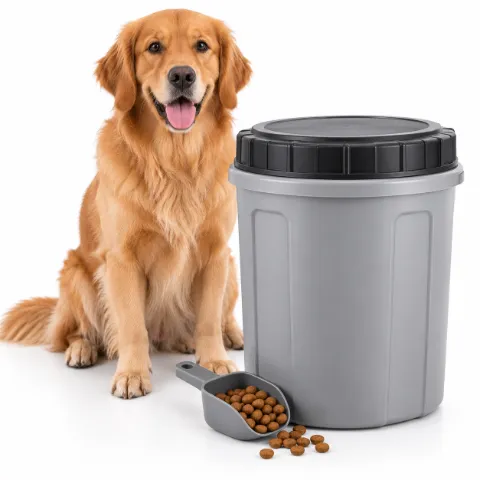
Gamma2 Vittles Vault, up to 60 lb
Screw-on lid and scoop, holds about 27 kg; imported
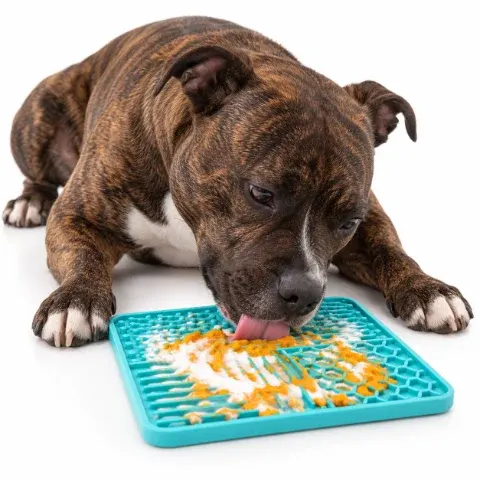
LickiMat Classic Buddy
A flat rubber mat for spreads; scrub the grooves after every use
Amazon Basics Stainless Steel Dog Bowl, Set of 2
A matching food and water pair, about 1 L each, with a rubber base.
Aonkey collapsible bowls with bottle carrier, 2 pack
Silicone bowls with a moulded hard rim, a carabiner and a bottle carrier for walks and travel.
Gamma2 Vittles Vault, up to 60 lb
A screw-on lid and scoop that hold about 27 kg of dry food, which keeps it in one place.
LickiMat Classic Buddy
A flat rubber mat that holds spreads and wet food in its grooves, and it needs a scrub after every use.
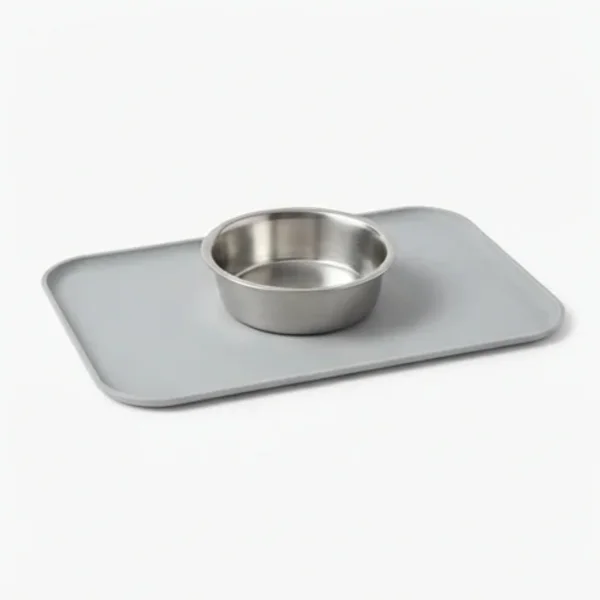
Amazon Basics silicone bowl mat, 47 x 29 cm
A mat under the bowls catches spills and splashes, and you can wipe or rinse it clean.
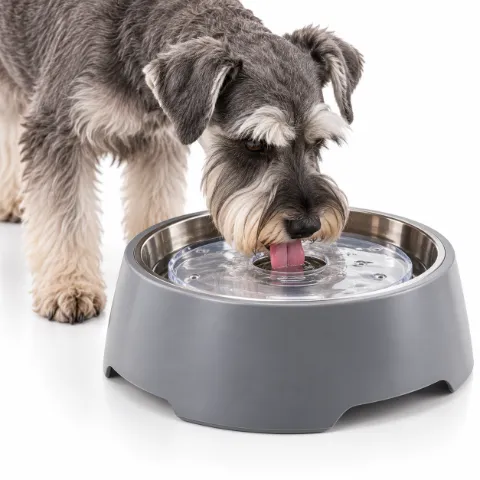
Decflow 3 L No-Spill Dog Water Bowl
A water bowl for a dog who splashes, though it still needs regular washing like any other bowl.
Pictures are illustrations, not the actual products.
More detail on the first three is in Useful gear below. Washing is the habit that matters; these just make it easier.
How often should you wash your dog's food bowl?
Wash a food bowl with hot soapy water after every meal, or at least once a day. The US FDA says to wash pet food bowls and scoops with soap and hot water after each use, and Banfield Pet Hospital and the American Kennel Club (AKC) say daily at a minimum. Wet food bowls need it most.
The AKC reports a study of 351 dog and 186 cat carers that found higher bacterial counts in bowls holding wet food than dry. So after a wet meal, wash straight away rather than leaving the bowl for the evening (AKC, updated 2 March 2026, page read 19 November 2026; FDA, page read 19 November 2026; Banfield, page read 19 November 2026).
Two small habits help. Don't use the food bowl as a scoop; the FDA says to use a separate scoop and wash it after each use. And throw out or refrigerate leftover wet food promptly instead of topping up the same bowl. If you feed dry food, our dog food container guide covers storing it, and the FDA suggests keeping it in its original bag, folded shut, somewhere cool and dry.
How often should you wash the water bowl and change the water?
Change the water at least once a day, more often in hot weather, and wash the bowl daily too. Banfield says to change water at least daily, and RSPCA Australia says fresh drinking water must be available at all times. Topping up old water isn't the same as fresh.
A daily wash matters because water bowls grow a film even when they look clean. In summer, a second bowl helps: RSPCA Australia suggests an extra bowl or two in case one gets knocked over, and says ice cubes are fine (RSPCA Australia, 7 December 2022, page read 19 November 2026). If your dog suddenly drinks far more than usual, that's a vet question, not a bowl question: see our guide to a dog drinking a lot of water. For picking an everyday bowl, see our dog water bowl guide.
What is the slime in a dog's water bowl?
The slime is biofilm: a thin layer of bacteria, yeast and debris that sticks to a wet surface. It forms in a bowl that's only rinsed, and it's why a bowl can feel slippery even when it looks fine. Washing and scrubbing breaks it up. Topping up doesn't.
The AKC describes biofilm as a slimy community of microorganisms and says breaking it up is the main reason to wash bowls. It isn't a reason to panic, but it is a reason to scrub rather than rinse. Pink or orange films are commonly a water bacterium, and the fix is the same: scrub the bowl with soap, don't just rinse it. If your dog is unwell after drinking, see the vet box below.
Dishwasher or hand wash: which cleans a dog bowl better?
A dishwasher on a hot cycle is a good option for any bowl the maker says is dishwasher safe, because heat does the work. Hand washing works if the water is hot and you scrub. The 2022 study below linked hot water and dishwashers to lower bacterial counts than cool or lukewarm washing.
Check the listing or pack first, because not every bowl can go in. Wooden or bamboo stands and some plastic parts can't, and some ceramic isn't rated for it. We don't say a dishwasher sterilises a bowl; the evidence is that it's linked to lower counts. The AKC suggests a high-heat setting for dishwasher-safe bowls. For bowls washed by hand, it suggests a weekly soak in diluted household bleach for 10 minutes, then a thorough rinse. Follow the bleach label, and skip the soak for any bowl whose listing says not to use it.
What owners actually do
A 2022 US study of dog owners (Luisana and colleagues, PLOS ONE, page read 19 November 2026) compared everyday habits with the FDA standard. Rounded, the figures are:
| What the study found | Figure |
|---|---|
| Owners who knew the FDA's pet food and bowl guidance | fewer than 5% |
| Owners who washed the bowl at least daily | about 12% |
| Owners who washed about weekly | about 22% |
| Owners who washed less than every three months, or never | about 18% |
| Washing hot or in a dishwasher vs cold or lukewarm | linked to about 1.5 log units lower bacterial counts |
| Owners who said they'd keep all the steps up long term | about 8% |
Following the FDA steps cut bacterial counts significantly. The hot-water wash in the study used water above 71°C for at least 30 seconds, which is hotter than hands can safely take, so a dishwasher is the practical way to reach it; by hand, use the hottest water you can comfortably work in, a brush and plenty of soap (PLOS ONE, 2022). It's one study in the US, but it shows how far everyday habits sit from the advice.
Which bowl material stays cleanest?
No material wins outright. Stainless steel is the practical favourite for vets because it doesn't chip and is usually dishwasher safe, while ceramic is fine if it's undamaged and plastic is the one to avoid long term. A small 2018 study found no significant difference in bacteria between materials.
Banfield and the AKC favour stainless steel for practical reasons: it's non-porous and doesn't scratch easily. Banfield says plastic scratches, can harbour bacteria, may be chewed and can irritate some dogs, so it isn't recommended long term. Ceramic is heavy and stays put, but both sources say chips and cracks can trap bacteria.
The Hartpury University study (Wright and Carroll, 2018 poster, page read 19 November 2026) sampled the water bowls of six dogs over two weeks. Bacteria rose in plastic, ceramic and stainless steel alike, with no significant difference by material, though most of the medically important species were found on the ceramic bowls. The authors call for more research, and it's a very small study. Read it as a reminder to wash every bowl, not a ranking (Hartpury).
| Material | Chips or scratches? | Dishwasher? | What to inspect |
|---|---|---|---|
| Stainless steel | Rarely; can dent | Usually, check the listing | Dents, rust spots, a loose base |
| Ceramic | Can chip or crack, and the glaze can craze | Only where the listing says | Chips, cracks, fine lines in the glaze |
| Plastic | Scratches easily | Check the listing | Scratches, chew marks, stained or cloudy patches |
| Silicone (mats, collapsible bowls) | Can tear or hold residue in folds | Check the listing | Torn edges, residue in creases |
| Bamboo or wooden stand | Can crack or swell if left wet | No on the listings we've checked, wipe and dry | Cracks, damp patches, loose legs |
If you want to compare specific bowls, our ceramic dog bowls guide covers glaze checks and sizes, and the double dog bowl guide covers matching food and water sets.
How do you wash a dog bowl properly?
Scrub the bowl with hot water and dog-only washing-up gear, rinse well, and dry it fully before refilling. Use a brush or cloth you keep for the bowls, wash your hands before and after, and give any grooves, rims or lids a proper scrub. Check for damage as you go.
- Wash your hands with soap and hot water for at least 20 seconds, as the FDA advises, before and after handling pet food and bowls.
- Empty the bowl and scrape out food. Don't tip leftover wet food back in.
- Scrub with hot soapy water, including the base, rim and any ridges. Sponges hold bacteria, so use a brush or cloth you replace often.
- Rinse thoroughly so no soap is left behind.
- Dry the bowl, or let it air dry fully, before refilling. A bowl that stays wet is where slime restarts.
- Look it over. Retire any bowl that is chipped, cracked, scratched, dented or rusty, or whose base has come loose.
- Keep a second set if you can. The AKC suggests two sets so one is always clean while the other is in the wash.
Here is how the schedule looks for each item in the house and yard:
| Item | How often | How | Source or reason |
|---|---|---|---|
| Food bowl | After every meal, at least daily | Hot soapy water, or dishwasher if labelled | FDA, Banfield, AKC |
| Water bowl | Daily wash, fresh water daily | Hot soapy water, scrub the sides | Banfield, RSPCA Australia |
| Slow feeder bowl or lick mat | After every use | Brush into the ridges, then hot soapy water | Ridges hold residue (our advice) |
| Food scoop or measuring cup | After each use | Hot soapy water, dry well | FDA |
| Float bowl (tap-fed) | Daily check, weekly empty and scrub | Take apart where the maker allows | Better Health Channel, our routine |
| Gravity hopper and tank | Daily check, weekly empty and scrub | Take apart, scrub the reservoir | Our routine |
| Pump fountain | Per the maker, at least weekly | Take apart, scrub the pump and filter | See our fountain guide |
For slow feeders and lick mats, see our slow feeder bowl guide and lick mat guide.
What about outdoor bowls, float bowls, fountains and gravity hoppers?
Anything that holds water outside needs the same daily check, plus an empty and scrub at least weekly. A float bowl keeps the level topped up, but the water still stands, so it can still grow slime and breed mosquitoes. Put outdoor bowls in shade and check them daily.
The Better Health Channel (Victorian Government, reviewed 17 December 2024, page read 19 November 2026) says to change water held in pet drinking bowls at least once a week, and more regularly in very warm weather (Better Health Channel). That's the mosquito floor for any container sitting outdoors. Our own standard is stricter: refresh daily.
Outdoor water rule: fresh water every day (RSPCA Australia), a spare bowl in hot weather (RSPCA Australia), empty and scrub anything holding standing water outside at least weekly (Better Health Channel), and keep it in shade. In a heatwave, see our guide to keeping your dog cool for heatstroke signs.
Here's where to go for each type:
- Tap-fed float bowls suit backyards and kennels. See our automatic dog water bowls guide, and check the bowl daily because a valve can stick or a hose can be chewed.
- Gravity feeder and waterer sets hold a lot of food or water and need regular emptying and scrubbing. Our dog food and water dispensers guide covers them, and why they aren't portion control.
- Pump fountains have extra parts to clean. See our dog water fountain guide.
- Ants at the bowl? A moat bowl keeps them out, and our ant proof pet bowl guide compares them. For a hot kennel, see how to keep a dog kennel cool.
- Walks and travel? Wash a collapsible bowl when you get home, because silicone folds hold residue.
Useful gear
Washing is the habit that matters, and a bowl you can put through the dishwasher makes it easier. These suit the routine above. Always check the care label on the one you buy.
- HUNTER Lund Ceramic Bowl, 900 ml: a heavy ceramic bowl with a silicone non-slip rim, 16 cm wide. The listing doesn't say dishwasher safe, so hand wash it unless the pack says otherwise. Imported, so check the delivery details on Amazon before you order. See our ceramic dog bowls guide.
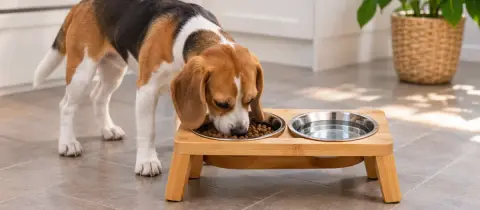
- Edipets Stainless Steel Double Bowl on a bamboo base: two lift-out stainless bowls that the listing says are dishwasher safe, so one can be in the wash while the other is in use. The bamboo base is wipe-clean only. At about 15 cm wide it suits puppies and small dogs. Imported, so check the delivery details on Amazon before you order. See our double dog bowl guide.
- Pearhead Ceramic Dog Bowl, 2130 ml: a large ceramic bowl the listing says is dishwasher and microwave safe. No non-slip base is listed. See our ceramic dog bowls guide.
When to see a vet
Book a vet visit if your dog has any of these, whatever the bowl looks like:
- vomiting or diarrhoea that keeps going, or that comes with lethargy
- drinking much more than usual, or refusing water
- gums that are pale, dry or sticky, or a dog that seems weak
- a sore, red or swollen muzzle or chin after using a plastic bowl
- a dog that gulps food and brings it straight back up
Heavy panting, collapse, or a dog that can't keep water down needs a vet straight away, day or night. If your dog may have eaten something toxic, call your vet now and the Animal Poisons Helpline on 1300 869 738 (24/7). Our frozen KONG recipes guide has the full toxic foods list. For heat, see our keep your dog cool guide.
Frequently asked questions
Can I wash dog bowls with my own dishes?
Yes, if the bowl is labelled dishwasher safe and goes through a hot cycle, it can join your other dishes. If you wash by hand, use a separate brush or cloth for the bowls. Wash your hands for at least 20 seconds before and after handling pet food, as the FDA advises.
Can you use bleach or vinegar on dog bowls?
The AKC suggests a weekly soak for hand-washed bowls in diluted household bleach for 10 minutes, then a very thorough rinse. Follow the bleach label, and skip it if the listing forbids it. We don't recommend vinegar as a disinfectant, and a hot soapy scrub does most of the work.
Do I need a separate sponge or brush for dog bowls?
It's sensible. The AKC reports that NSF found pet bowls the fourth-germiest spot in the home, behind dish sponges, kitchen sinks and toothbrush holders. Keep a brush or cloth just for the bowls, replace it often, and let it dry between washes, so you aren't spreading germs from one to the other.
How often should you replace a dog bowl?
Replace it when it's chipped, cracked, scratched, dented or rusty, or when the base comes loose. Banfield says to inspect bowls regularly and replace them when they show wear, because scratches and cracks can trap bacteria. There's no fixed lifespan, so check each bowl when you wash it.
Is it OK to leave dry food in the bowl all day?
Usually not. RSPCA Australia says adult dogs should be fed at least twice a day, which suits measured meals and a clean bowl. Leaving food out suits only a dog who nibbles and holds a healthy weight, never a gulper, an overweight dog, a puppy or a large deep-chested breed without your vet's OK. Our dog food and water dispensers guide explains why a hopper isn't portion control, and our automatic dog feeders guide covers timed options.
How often should I wash a slow feeder bowl or lick mat?
After every use, like a food bowl. The ridges and grooves hold residue, so use a brush and hot soapy water, and let them dry fully. Check the listing before using a dishwasher, because some silicone mats and plastic bowls aren't rated for it. See our lick mat guide.
Can a dirty dog bowl make people sick?
It can. The FDA says Salmonella and Listeria can be carried on pet food, and so on bowls and hands. Wash your hands for 20 seconds before and after handling food and bowls. That matters most in homes with young children or people with weak immune systems, which the AKC notes is a large share of dog-owning households.
Should you wash a new dog bowl before first use?
Yes. Give it a wash in hot soapy water first to remove dust and handling residue. While you do, check the glaze, base and rim for damage, and make sure rubber rings and non-slip feet are firmly attached. If anything is cracked or chipped on arrival, send it back.
Related guides
- Best stainless steel dog bowls
- Ceramic dog bowls
- Double dog bowl sets
- Automatic dog water bowls
- Dog food and water dispensers
- Best dog water bowls
- Dog water fountains
- Slow feeder dog bowls
- Dog food mats
- Cat bowls
Sources
- American Kennel Club, "How Often Should I Wash My Dog's Bowl?", updated 2 March 2026: https://www.akc.org/expert-advice/health/wash-dog-bowl/ (page read 19 November 2026)
- US FDA, "Tips for Safe Handling of Pet Food and Treats", content current as of 23 May 2024: https://www.fda.gov/animal-veterinary/animal-health-literacy/tips-safe-handling-pet-food-and-treats (page read 19 November 2026)
- Banfield Pet Hospital, "Choosing the right dog bowl for your dog": https://www.banfield.com/Bblog/bfun/2025/Choosing-the-right-dog-bowl-for-your-dog (page read 19 November 2026)
- Luisana E, Saker K, Jaykus L-A, Getty C, "Survey evaluation of dog owners' feeding practices and dog bowls' hygiene assessment in domestic settings", PLOS ONE, 6 April 2022: https://journals.plos.org/plosone/article?id=10.1371/journal.pone.0259478 (page read 19 November 2026)
- Wright C and Carroll A, Hartpury University, "Microbiological assessment of canine drinking water and the impact of bowl construction material", 2018 poster: https://pure.hartpury.ac.uk/en/publications/microbiological-assessment-of-canine-drinking-water-and-the-impac/ (page read 19 November 2026)
- Better Health Channel (Victorian Government), "Mosquitoes can carry diseases", reviewed 17 December 2024: https://www.betterhealth.vic.gov.au/health/healthyliving/mosquitoes-can-carry-diseases (page read 19 November 2026)
- RSPCA Australia Knowledgebase, "What should I feed my dog?", updated 21 August 2024: https://kb.rspca.org.au/knowledge-base/what-should-i-feed-my-dog/ (page read 19 November 2026)
- RSPCA Australia, "4 ways to keep your dog cool this summer", 7 December 2022: https://rspca.org.au/blog/2022/4-ways-keep-your-dog-cool-summer (page read 19 November 2026)
This guide provides general information and isn't a substitute for veterinary advice. If you're concerned about your dog's eating, drinking or tummy upsets, speak with your vet.