Quick answer: To keep a dog kennel cool in summer, put it in shade that lasts all day, add a shade sail or cover with a gap above the roof, keep air moving, and give your dog a raised bed and plenty of water. On very hot days, bring your dog inside. A kennel alone is not enough.
A kennel is a bedroom, not a cooling system. In the sun it can heat up fast, so the aim is to give your dog a cooler spot with shade, airflow and water around it. This guide covers the setup, plus when to bring your dog indoors. For the wider picture, see how to keep your dog cool in summer. If you are still choosing a kennel, our outdoor dog kennel guide and large dog kennel guide cover sizes and materials.
Quick picks
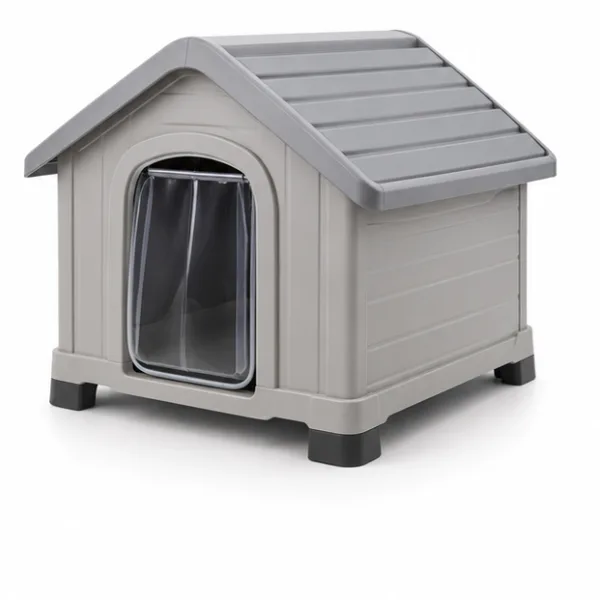
Ferplast Dogvilla 60
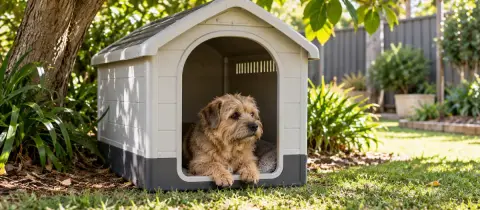
Resin kennel with a ventilation grill and a side wall that flips open into a platform.
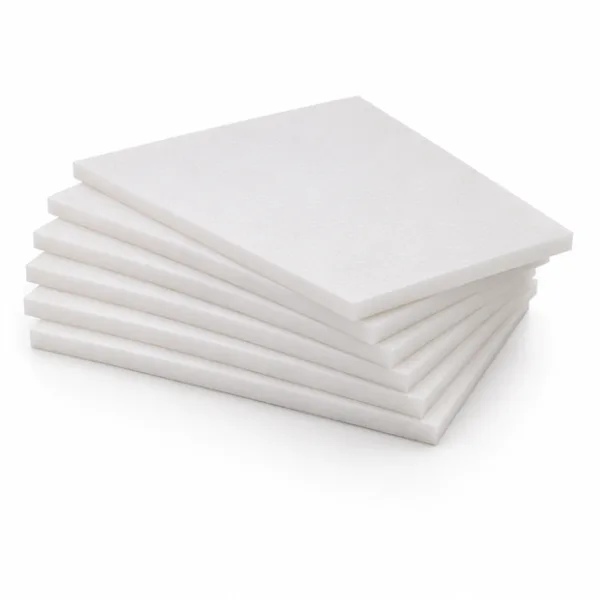
Ferplast insulating panel kit for the Dogvilla 60
Two panels fixed under the roof in summer; no substitute for shade and airflow.
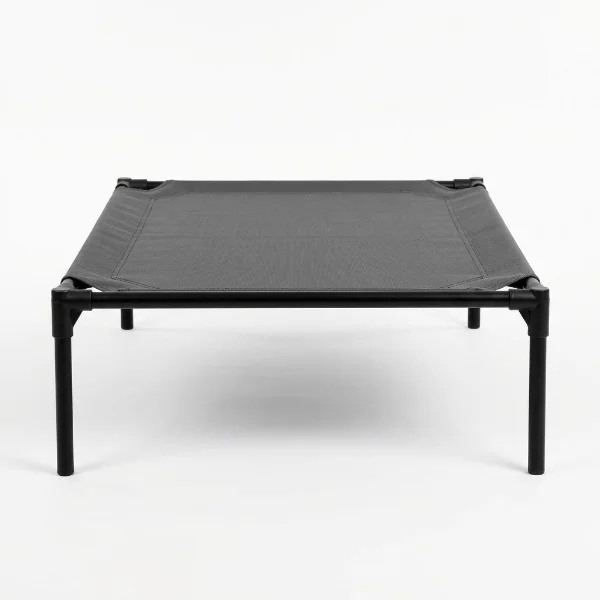
DOPEDIO raised dog cot for medium dogs
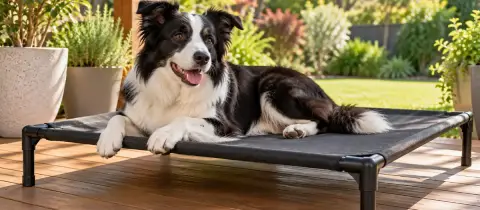
A cot-style bed lets air flow under your dog instead of sitting on a hot floor.
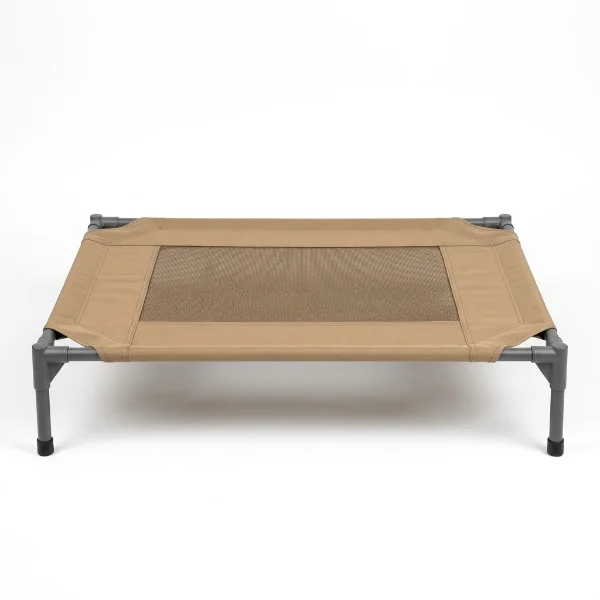
K&H outdoor elevated dog cot
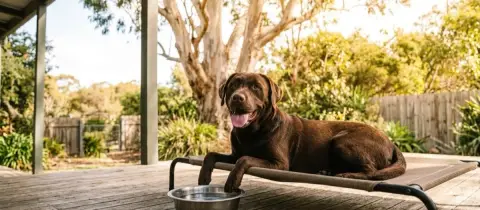
An outdoor raised cot for shade or a verandah, with air moving underneath.
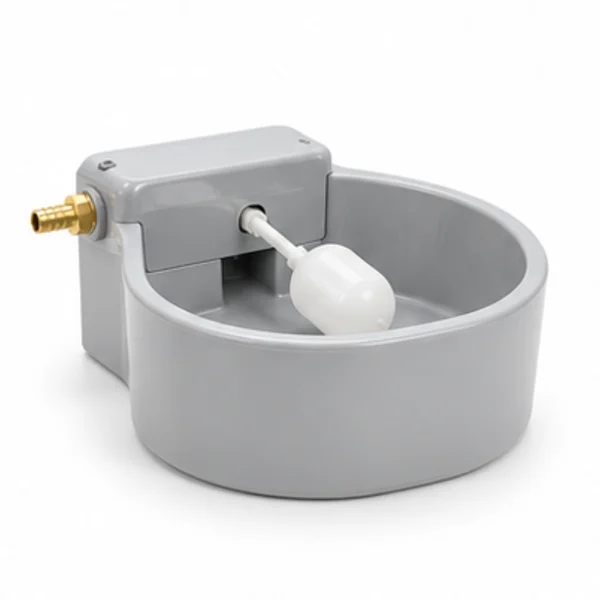
Kerbl Float Bowl, plastic, 3 litre
A hose-fed bowl keeps one water source topped up; keep it in shade and check daily.
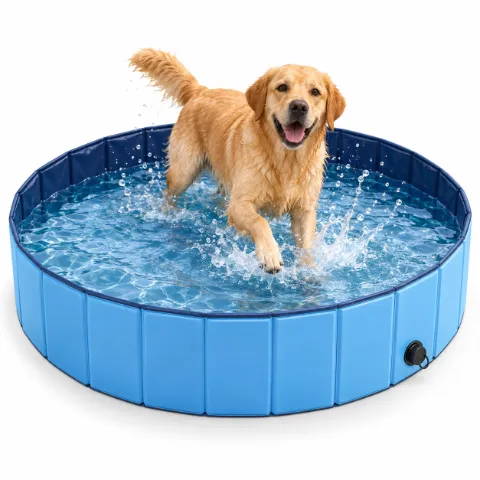
Jasonwell Foldable Dog Pool (Large, 122 cm)
Used in the shade while you're home, then emptied afterwards.
DOPEDIO raised dog cot for medium dogs
A raised cot lets air flow under your dog, which suits a kennel or shaded verandah.
K&H outdoor elevated dog cot
An outdoor raised cot for a dog who rests outside, with air moving underneath.
Kerbl Float Bowl, plastic, 3 litre
A hose-fed float bowl keeps one of your water bowls topped up.
Jasonwell Foldable Dog Pool (Large, 122 cm)
A shallow pool in the shade, used while you're home and emptied afterwards.
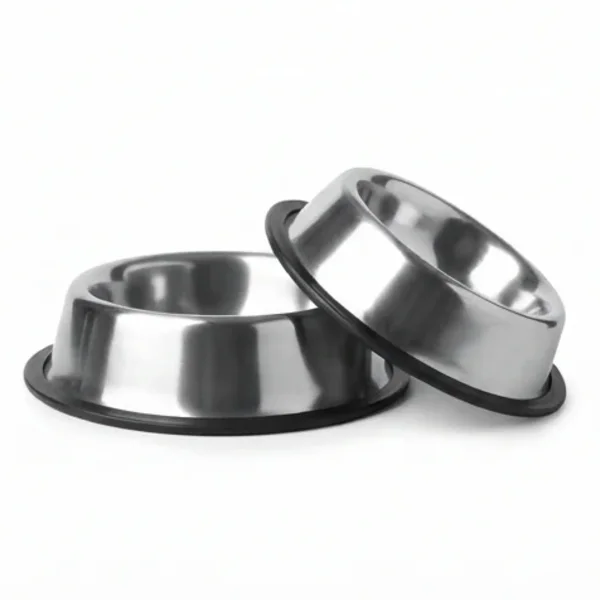
Amazon Basics Stainless Steel Dog Bowl, Set of 2
Spare bowls so there's more than one water source in the yard.
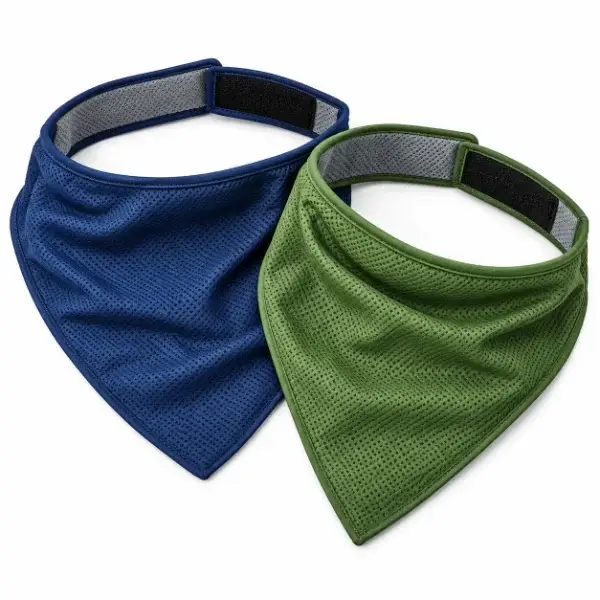
EXPAWLORER cooling bandana 2-pack
A cooling bandana for a dog you're with on a warm day.
Pictures are illustrations, not the actual products.
More detail on the first two is in Gear that helps below, and the rest are the "You may also like" cards at the end of the row. A kennel needs shade, airflow and water around it, and your dog comes inside on very hot days.
How do I keep my dog's kennel cool in summer?
Start with shade that lasts all day, then add airflow, a raised sleeping surface and fresh water. Together these make the kennel a cooler place to rest. None of them make it safe on a scorching day, when your dog should come inside or go to the coolest shaded spot you have.
Here is the order that helps most:
- Shade first. RSPCA Australia says outdoor pets need a cool, shaded area with good ventilation, because many animals cool down by panting and panting needs airflow (RSPCA Australia, 20 January 2021).
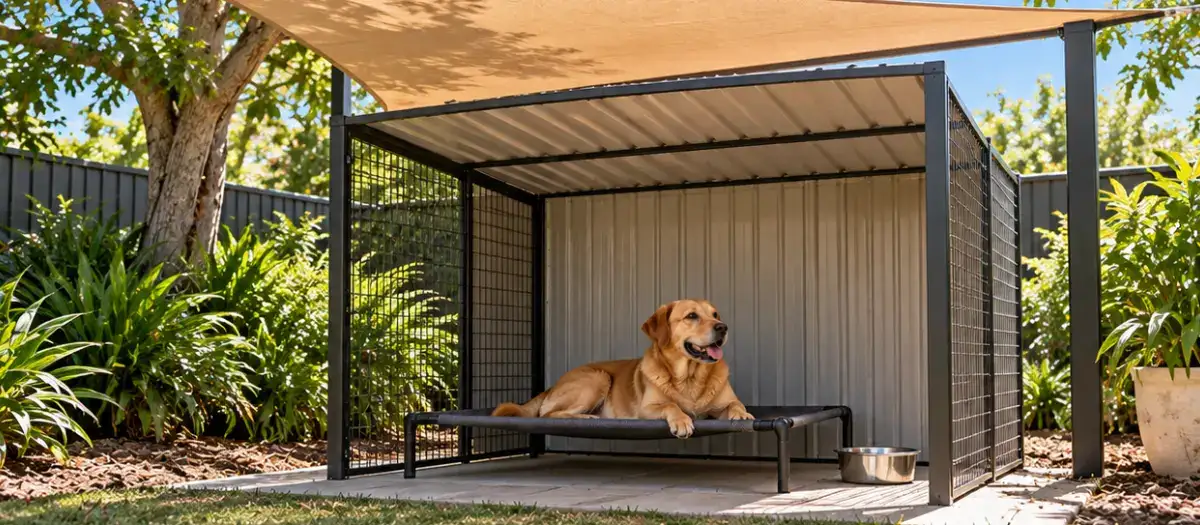
- Shade above the kennel, not wrapped around it. A shade sail, tarp or umbrella over the kennel blocks the sun. Leave a gap between the cover and the roof so heat doesn't get trapped, and keep the sides open so air can move. SPCA New Zealand says tree shade and tarpaulins work well because they don't block airflow (SPCA New Zealand, 8 January 2025).
- A raised bed inside. A cot-style bed lets air flow under your dog instead of sitting on a hot floor. See our elevated dog bed guide. For a bed that lives on the verandah rather than in the kennel, see our outside dog bed guide.
- Several water bowls. RSPCA Australia suggests extra water sources in case one spills (RSPCA Australia, 20 January 2021). Use heavy bowls that can't be tipped, and keep them in the shade. A hose-fed automatic water bowl keeps one of them topped up, as long as it sits in shade and you still check it daily.
- Keep the door facing away from the afternoon sun, and keep the vents clear.
Where is the best place to put a kennel in summer?
Put it somewhere that stays shaded from morning to evening, with a breeze, on ground that isn't baking. A spot under a tree or a covered area is usually better than open lawn or a paved corner that holds heat. Check it in the afternoon, not just in the morning.
Shade moves with the sun. A corner that is cool at 8am can be in full sun by 2pm, so check at different times of day. Raise the kennel off hot or wet ground with a pallet or feet if the design allows, and keep it away from reflective walls and hot paving.
For a long-term fix, plant a shrub or small tree on the western side of the kennel, or train a vine over a frame above it. Living shade drops the air temperature around the kennel as well as blocking the sun, but it takes a season or two to grow, so use a shade sail in the meantime.
SPCA New Zealand also warns that dog kennels are not good summer shelter because they can trap heat (SPCA New Zealand, 8 January 2025). That is why we treat the kennel as one part of the setup, with shade and airflow around it. A dog kept outside needs shelter from sun, wind and rain, and a kennel is never somewhere to shut a dog away as punishment.
Do insulated kennels stay cooler?
They can help, but they are not a fix on their own. Insulation slows heat getting in through the roof and walls, so it can take the edge off the sun. It does not cool the air inside, and a closed insulated box in full sun can still get very hot.
Wood, thick plastic and insulated designs all behave differently. Some kennels have a vent or an opening panel to move air, which helps. If you are comparing, look for a roof that overhangs, air vents and a raised floor, and then put the kennel in shade anyway. Our outdoor dog kennel guide compares materials, and the large dog kennel guide covers bigger dogs, who need more room to stretch out and more airflow.
What temperature is too hot for a dog outside?
There is no single safe number. Humidity, breed, age, weight and coat all change how a dog copes. RSPCA Australia says car interiors can reach more than double the outside temperature even on mild days (RSPCA Australia, 20 January 2021). For a kennel in the sun, treat a hot day as risky and plan to bring your dog inside.
Flat-faced (brachycephalic) breeds such as bulldogs and pugs are at higher risk, because they struggle to cool themselves. Obesity, thick or long coats, very young or old age, heart, breathing or nerve problems, and dehydration also raise the risk (RSPCA Australia, 15 November 2017). If your dog is in one of these groups, be extra careful, and ask your vet about a summer plan. Our summer guide has more on dogs who need extra care.
Should I put a fan or ice in my dog's kennel?
A fan near the kennel can help, and ice cubes in the water bowl are fine. SPCA New Zealand lists air movement from a breeze, fan or air conditioning as a way dogs lose heat, and RSPCA Australia suggests ice cubes to keep drinking water cold (RSPCA Australia, 7 December 2022). What you should not do is put ice or ice-cold water on a dog that is already overheating. Keep fan cords and plugs out of reach of chewers.
Set the fan outside the kennel, blowing across the opening, so your dog can move away from it and cannot reach the cord. RSPCA Australia's heatstroke first aid is to wet the coat with tepid or cool water and then fan the dog, and it says not to use ice or ice-cold water as this may make things worse (RSPCA Australia, 20 January 2021; SPCA New Zealand, 8 January 2025). That is first aid for a dog already in trouble, not a way to make a hot kennel safe.
Safer ways to add coolness are shade, airflow, a raised bed, and fresh cold water. Cooling mats can give a dog a cooler place to lie, and our guides cover the options: dog cooling mats, cooling dog beds, and whether cooling mats work. Supervise anything new, and remove a mat or bed if your dog chews it. A shallow dog pool in the shade, used while you're home and emptied afterwards, is another option.
When should I bring my dog inside?
Bring your dog inside on hot or humid days if inside is cooler, and always on a very hot day or during a heatwave. RSPCA Australia advises moving pets indoors on hot, humid days where the space is cooler, such as an air conditioned room.
Go by the day, not the thermometer alone. If the afternoon is hot and still, if your dog is panting hard in the shade, or if your dog is a flat-faced, older, overweight or thick-coated dog, bring them in. A tiled floor, a shaded room and a fan can help, even without air conditioning.
If you are out all day and your dog can't come inside, plan before the hot day: find a carer, a shaded and ventilated place, and extra water. Never rely on the kennel alone.
What are the signs of heatstroke?
Heatstroke is an emergency. Signs include heavy panting that gets worse, drooling, agitation, very red or pale gums, vomiting, weakness, collapse and confusion. If you see any of them, move your dog to shade or air conditioning, cool with cool tap water, and call a vet.
RSPCA Australia says heatstroke can cause multiple organ failure and can kill quickly. Other signs it lists include a bright red tongue, fast heart rate, breathing distress, diarrhoea, dizziness, tremors and seizures (RSPCA Australia, 15 November 2017). The signs can look like other illnesses, so the pattern and the weather matter. If in doubt, ring your vet.
When to see a vet
Heatstroke is an emergency. Go to a vet if your dog:
- pants heavily and won't settle, or drools a lot
- has very red or pale gums
- seems wobbly, weak, confused or agitated
- vomits, has diarrhoea or collapses
What to do: move your dog into shade or air conditioning straight away. Wet their coat with cool (not ice-cold) tap water and keep air moving over them. Don't use ice or ice-cold water, as RSPCA Australia says it may make things worse. Call your vet or nearest emergency vet while you cool your dog, then go straight there, even if your dog seems better (RSPCA Australia, 20 January 2021). Flat-faced dogs are at higher risk, so don't wait.
Our summer guide has more on first aid and prevention.
Gear that helps
You don't need to buy anything for a cooler kennel, because shade, airflow and water do most of the work. If you want extras, a cooling mat or raised bed can help your dog lie somewhere cooler. See our dog cooling mats guide, elevated dog bed guide and cooling dog bed guide.
If you are buying a small-dog kennel, the Ferplast Dogvilla 60 is one example. The listing says it is made of resin, has a ventilation grill and a side wall that flips open to become a platform, and is for a small dog. The listing gives the inside size as 47.5 x 35.5 x 36 cm, so measure your dog first.
Ferplast also sells an insulating panel kit for that kennel. The listing says that in summer you use two panels fixed under the roof for extra protection from the sun. It fits the Dogvilla 60 and is no substitute for shade and airflow.
Frequently asked questions
How do I keep an outdoor dog kennel cool?
Place it in all-day shade, cover it with a shade sail or tarp with a gap above the roof, keep the sides open for airflow, add a raised bed and put out several bowls of fresh water. On very hot days, bring your dog inside.
Is a dog kennel enough shelter in summer?
No. SPCA New Zealand says kennels can trap heat and aren't good summer shelter. A kennel gives cover from sun and rain, but your dog also needs shade that lasts all day, good airflow and fresh water, and a cooler place to go on hot days.
Can dogs stay outside in hot weather?
It depends on the day and the dog. RSPCA Australia advises a cool, shaded, ventilated area with plenty of fresh water, and bringing pets inside on hot, humid days if inside is cooler. On very hot days, or for flat-faced, older or thick-coated dogs, plan to bring them in.
What is the fastest way to cool a dog down?
Move the dog to shade or air conditioning, wet the coat with cool tap water, and keep air moving, then call a vet. RSPCA Australia says not to use ice or ice-cold water. Go to the vet even if your dog seems better.
Do cooling mats or cooling blankets work in a kennel?
Cooling mats and blankets can give a dog a cooler place to lie, but they are an extra, not a fix. Shade, airflow and water come first. See our do dog cooling mats work guide, and supervise your dog with any new mat.
Related guides
- Automatic dog water bowls
- Best outdoor dog kennel
- Best large dog kennel
- How to keep your dog cool in summer
- Best dog cooling mats
- Best elevated dog bed
- Best cooling dog bed
- Do dog cooling mats work?
- All our dog guides
Sources
- RSPCA Australia, Keeping your pet safe during heat, 20 January 2021, page read 1 November 2026 (https://www.rspca.org.au/latest-news/blog/keeping-your-pet-safe-during-heat/)
- RSPCA Australia, Warm weather worries: protect pets from heatstroke, 15 November 2017, page read 1 November 2026 (https://www.rspca.org.au/latest-news/blog/warm-weather-worries-protect-pets-heatstroke/)
- RSPCA Australia, 4 ways to keep your dog cool this summer, 7 December 2022, page read 1 November 2026 (https://rspca.org.au/blog/2022/4-ways-keep-your-dog-cool-summer)
- SPCA New Zealand, Summer safety, 8 January 2025, page read 1 November 2026 (https://spca.nz/news-and-events/news-article/summersafety)
- Ferplast Dogvilla 60 and insulating panel kit listings on Amazon Australia, checked 19 November 2026
This guide provides general information and isn't a substitute for veterinary advice. If you're concerned about your dog in the heat, speak with your vet.