Research guide. WhiskerFinds may earn a commission from links, at no extra cost to you.
Quick answer: The best outdoor dog kennel for a small dog is the Ferplast Dogvilla 60, a plastic kennel with a drainage floor, vent grill and removable roof. Very small dogs suit the Dogvilla 50. Medium and large dogs need a bigger shelter, such as the Zooba fabric house or the A.FATI outdoor kennel. Any kennel needs shade, airflow and fresh water.
This guide compares five outdoor dog kennels and accessories on Amazon Australia, with sizes taken from each listing. Bigger dog? Start with our large dog kennel guide. Worried about hot days? Read how to keep a dog kennel cool.
Quick picks
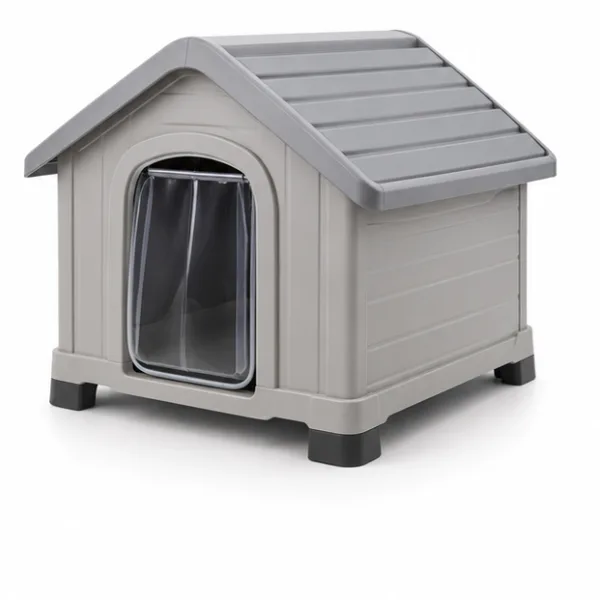
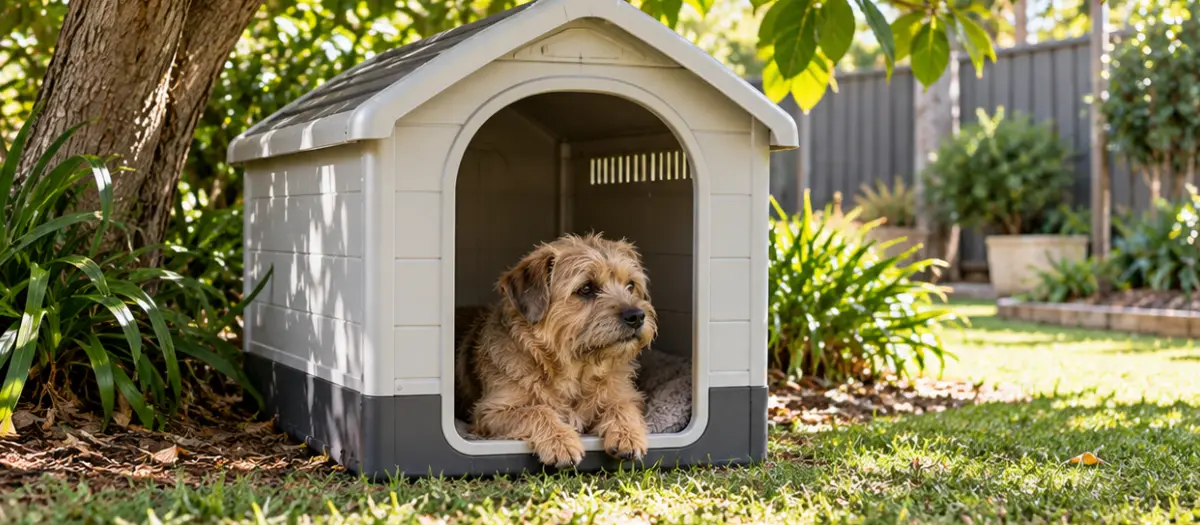
Ferplast Dogvilla 60
Plastic kennel for a small dog, with a drainage floor, vent grill and a side wall that flips open into a platform
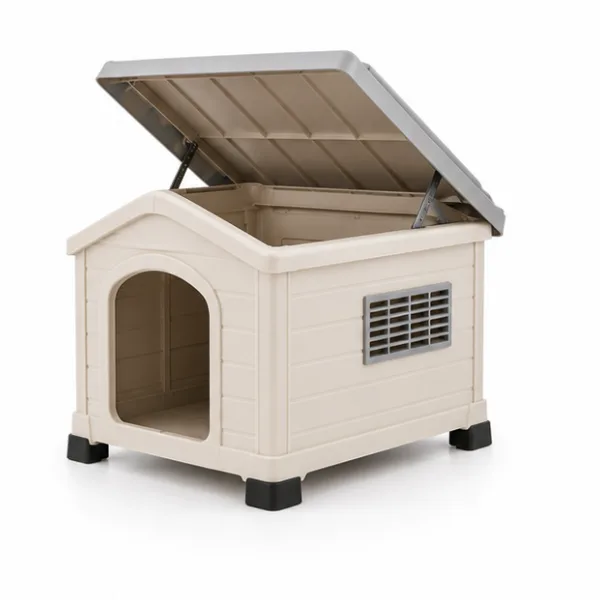
Ferplast Dogvilla 50
The same design in a smaller size, recommended by the listing for a very small dog
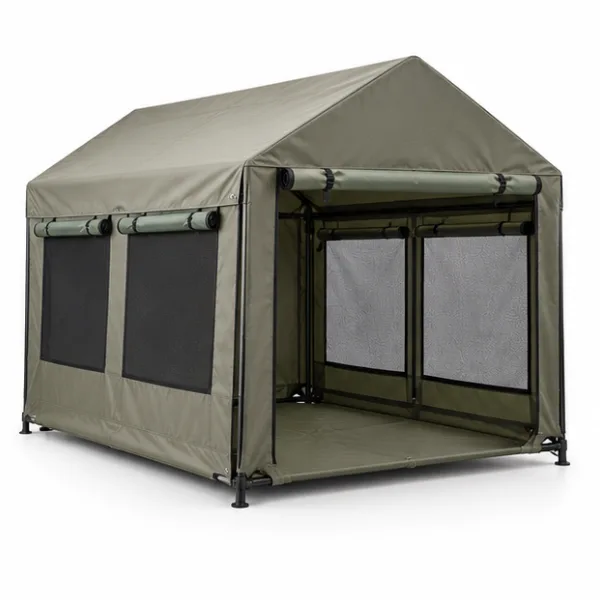
A.FATI outdoor kennel, 120 x 120 x 100 cm
A roomy, roofed nylon shelter with a back door and ground nails
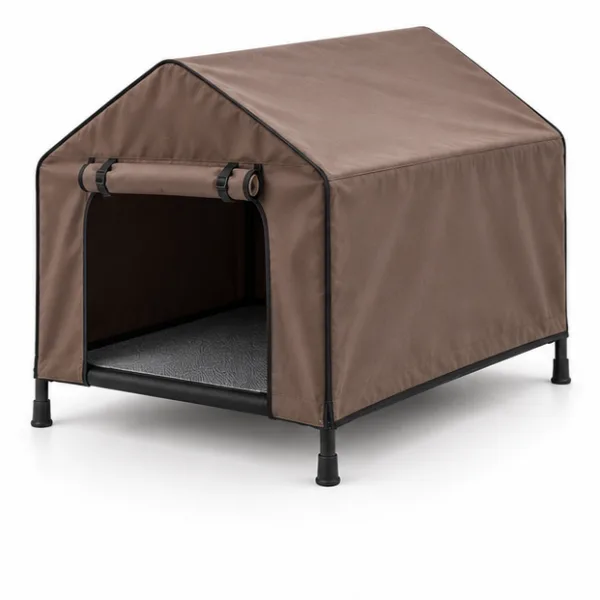
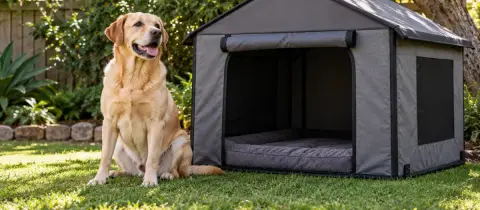
Zooba 36-inch weatherproof dog house
Steel frame with a fabric canopy that snaps off to leave an elevated cot
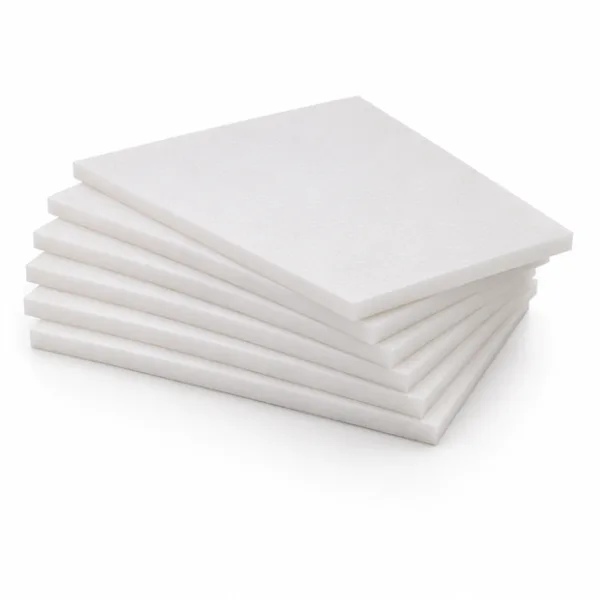
Ferplast insulating panel kit for Dogvilla 60
Six PVC panels that line the inside of the Dogvilla 60
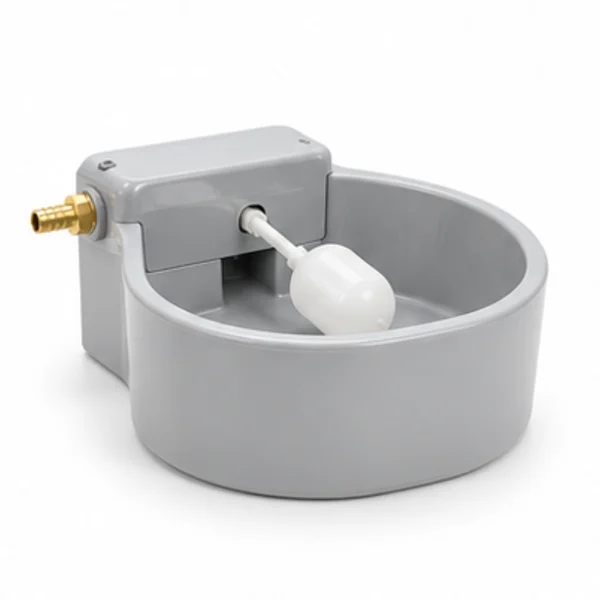
Float-valve water bowl
It tops itself up from a hose or tap line, so fresh water is always on hand when you're out.
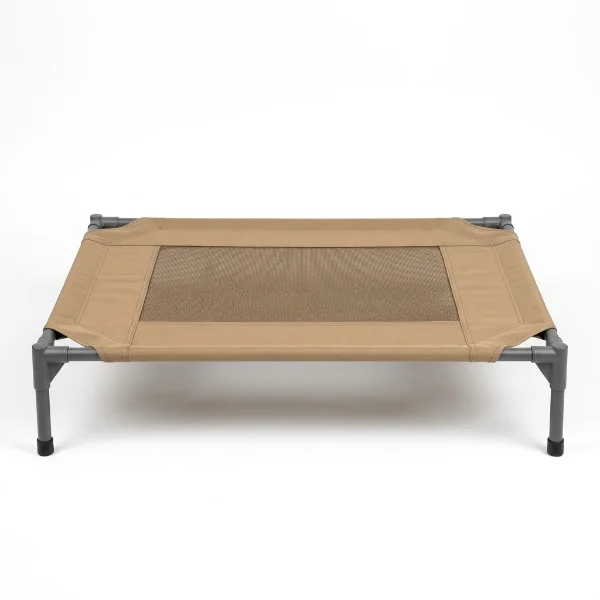
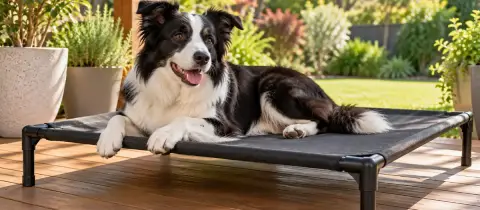
Outdoor elevated dog cot
A raised cot gives your dog a cooler, off-the-ground spot to rest in or beside the kennel.
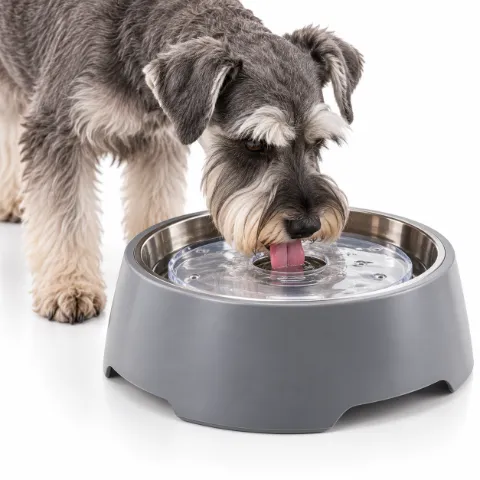
No-spill dog water bowl
A bowl built to resist tipping suits a yard dog, and it still needs a daily top-up and a shady spot.
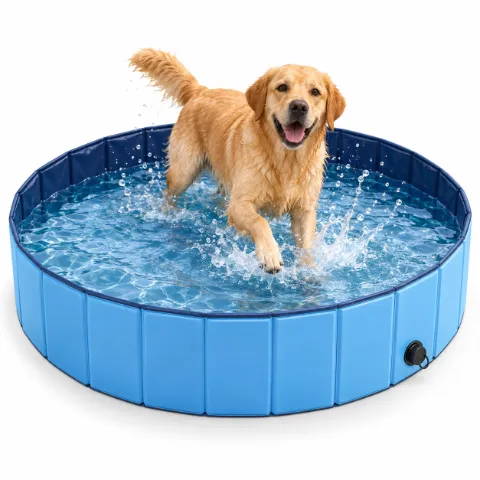
Foldable dog pool
A shallow pool gives a dog a way to cool off on a warm day.
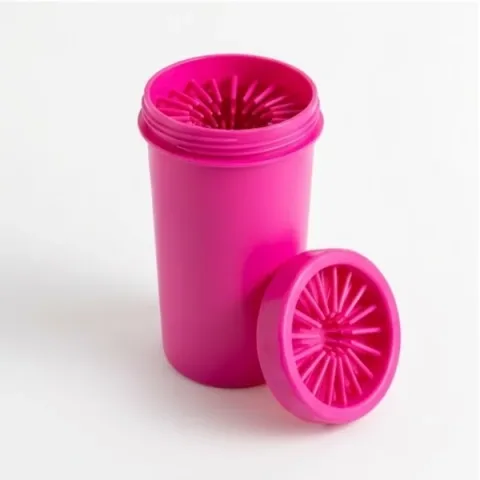
Dog paw washer
A handy rinse for muddy paws before your dog heads back inside after time in the yard.
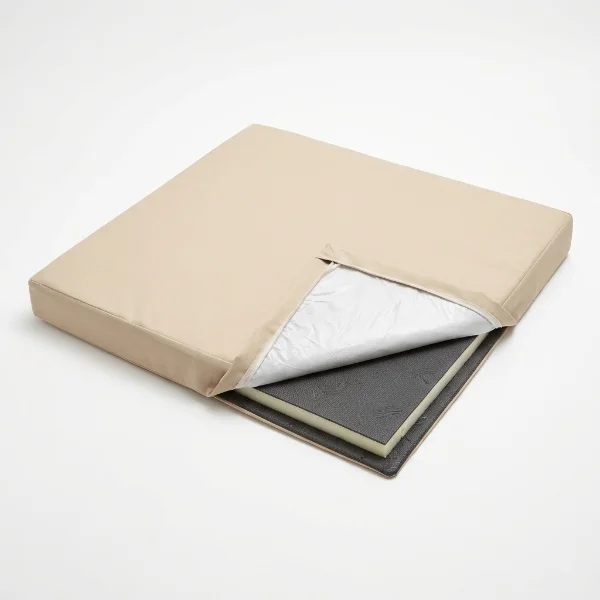
Waterproof dog bed
A wipe-clean bed copes with damp better than plush fabric when it sits in or beside the kennel.
Pictures are illustrations, not the actual products.
The insulation kit is an accessory and suits just the model its listing names.
What is the best kennel for outside?
For a small dog, the Ferplast Dogvilla 60 is our top pick because it is a solid plastic kennel with a drainage floor, a vent grill and a removable roof for cleaning. Medium and large dogs need a bigger shelter, and a fabric option such as the Zooba is lighter to move.
Note that searches for "dog kennel" often bring up boarding kennels. This page is about a kennel for your own yard. If your dog lives mostly indoors, a kennel is a place to rest in the garden, not a replacement for time with the family. For indoor sleeping and travel, see our dog crate guide.
Plastic, wood or fabric kennel?
Plastic is easy to hose down and quick to assemble. Fabric on a steel frame is light and can be moved around the yard. Timber can be well insulated, but none of the wooden kennels we looked at on Amazon Australia passed our checks, so this guide covers plastic and fabric.
- Plastic (resin): the Dogvilla listings say the material is shock and UV resistant. A plastic kennel is rigid, easy to wipe out and does not need tools to put together, per the listings.
- Fabric on a frame: the Zooba listing says it uses 600D PVC oxford fabric and a steel frame, with a raised base. The A.FATI listing describes a 600D nylon tent shape. These are lighter, but fabric is easier for a determined chewer to damage.
- Wood: can be a good choice from a local supplier, but check it is untreated or pet safe, raised off the ground and free of splinters and nails.
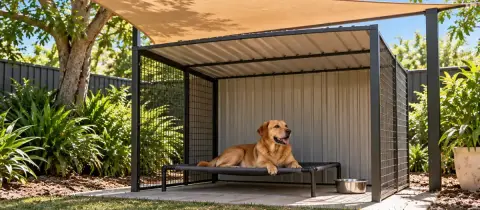
- Steel pens and runs: a fenced enclosure, not a shelter. A run still needs a roofed, shaded kennel or covered area inside it, plus water. For a smaller fenced area at home, see our dog playpen guide.
Our picks in detail
1. Ferplast Dogvilla 60: best overall
A plastic kennel made of thermoplastic resin that the listing calls shock and UV resistant. It measures 58 x 48 x 44 cm overall, with an inside of 47.5 x 35.5 x 36 cm and a door of 16 x 20.5 cm. The listing recommends it for a small dog. A side wall flips open to become a platform, and the floor has a built-in drain with a vent grill for airflow. The roof lifts off for cleaning, assembly needs no special tools per the listing, and the manufacturer warranty is listed as one year.
- Pros: drainage floor and vent grill; removable roof for cleaning; flip-open side wall; no tools to assemble per the listing
- Cons: the inside is small, so it suits small dogs only; a cushion, plastic door and insulation kit are sold separately; the listing's wording is a little unclear in places
- Best for: small dogs that need a dry shelter in a shaded yard
- Skip it if: your dog is a medium or large breed, or is still growing
2. Ferplast Dogvilla 50: best for small dogs
The smaller version of the same kennel. It measures 43 x 48 x 44 cm overall, with an inside of 32.5 x 35.5 x 36 cm. The listing recommends it for a very small dog, and describes a drainage floor, a vent grill, a removable roof and a side entrance for extra protection from the weather. The title also mentions an anti-bite door and insulating feet.
- Pros: same drainage and vent design as the 60; compact; easy to clean
- Cons: very little room, so measure your dog first; a puppy can outgrow it fast
- Best for: very small dogs, such as toy breeds, that spend time in a shaded yard
- Skip it if: your dog is bigger than a toy or very small breed. The Dogvilla 60 is the next size up
3. A.FATI outdoor kennel, 120 x 120 x 100 cm: best for large dogs
A grey tent-style shelter with a triangular frame and a roof, described by the listing as waterproof. The listing gives 125 x 125 x 110 cm overall in the bullets and 120 x 120 x 100 cm in the title, so the two sizes do not quite match. It has a back door that attaches with Velcro, ground nails to anchor it, and artificial vines for extra shade. The listing says it suits large breeds or several dogs. See our large dog kennel guide for more.
- Pros: lots of space; extra shade; back door can be removed; ground nails included
- Cons: the listing gives no inside floor size, and the details list "small" and "cat" in places, so check its size notes carefully; fabric can be chewed or torn; it is not a closed box, so it gives less protection in a cold wind
- Best for: a large dog, or two, that needs shade in a fenced yard
- Skip it if: your dog chews hard, or you want an insulated, floored kennel
4. Zooba 36-inch weatherproof dog house: best fabric kennel
A steel-framed house with a canopy the listing says is 600D PVC oxford fabric. It has a Textilene mesh bed raised about 22 cm (8.7 inches) off the ground and a mesh vent in the top. Inside it measures 36 x 30 x 44 inches with a 24 x 18 inch door. The canopy snaps off to leave a raised cot, and the listing says the bungee-cord poles go together without tools. The listing says it fits dogs up to 80 lbs, though another part of the same listing gives a weight limit of 135 lbs.
- Pros: raised base lets air move underneath; canopy snaps on and off; light enough to move
- Cons: the listing gives two different weight limits (80 lbs and 135 lbs) and two colours, so check before you buy; fabric is easier to chew than plastic; the 600D and waterproof claims are the listing's own
- Best for: a medium to large dog in a shaded yard or on a covered patio
- Skip it if: your dog chews or digs at fabric, or you want a heavy-duty rigid kennel
5. Ferplast insulating panel kit for Dogvilla 60: best add-on for insulation
A kit of six PVC panels that lines the inside of the Dogvilla 60, including the roof and floor. The listing says to use all six in winter and just two under the roof in summer. It includes a plastic side wall and screws to replace the flip-open wall. Other Dogvilla sizes have their own kits, so this one is for the model its listing names, nothing else.
- Pros: can be fitted in winter or summer; made for the Dogvilla 60; screws included
- Cons: the winter set swaps out the flip-open wall; it does nothing for a kennel in full sun without shade; it is not a stand-alone kennel
- Best for: Dogvilla 60 owners who want more insulation
- Skip it if: you own a different kennel or a different Dogvilla size
What size kennel does my dog need?
Check the listing's inside measurements, not the outside size. Measure your dog lying stretched out, then compare that with the inside length and width. Also check the door, because a kennel with enough floor space is no use if your dog cannot get through the doorway comfortably.
Here is how the inside sizes in our picks compare. The Dogvilla 60 listing recommends it for a small dog, with an inside of 47.5 x 35.5 x 36 cm and a door of 16 x 20.5 cm. That is a snug fit, so it suits small dogs, not medium or large breeds. If your dog is bigger than a small breed, look at the larger pair of picks below. Sizes shift between brands, and what one listing calls "large" another calls "medium", so always go by the numbers.
Do dogs need an insulated kennel in Australia?
Insulation can help in both seasons, but it does not replace shade, airflow and fresh water. The Dogvilla 50 listing says the plastic body gives good thermal insulation, and Ferplast sells a separate panel kit for the Dogvilla 60. Insulation does not cool a kennel parked in full sun.
The panel kit listing says to fit all six panels for winter, and two panels under the roof for summer. The kit also includes a plastic wall that replaces the opening side wall. That means you give up the flip-open platform when you fit the full winter set, which is worth knowing before you buy. On very hot or cold days, the safest plan is to bring your dog inside if you can. For self-warming mats sized for kennels, see our pet heat pad guide.
Where should I put my dog's kennel?
Put it in a spot that is shaded all day, not just in the morning, and raise it off hot or wet ground. Face the door away from the prevailing wind and rain. Keep it away from fences your dog can climb, and place it where you can see your dog from the house.
RSPCA Australia says outdoor pets need a cool, shaded area with good ventilation, because dogs cool down by panting, which needs good airflow (RSPCA Australia, page read 1 November 2026). A kennel in direct sun can get very hot inside, so shade has to come from a tree, shade sail or structure, not from the kennel alone. RSPCA Australia's summer advice says the same about shade and airflow for dogs kept outside (RSPCA Australia, page read 1 November 2026). Pavers or a timber pallet under the base keep it off soggy ground.
How do I keep a kennel cool in summer?
Move the kennel into shade that lasts all day, keep air flowing through it, raise it off hot ground, and always have fresh water your dog cannot tip over. On very hot days, bring your dog inside or to the coolest shaded spot you have. A kennel is shelter, not air conditioning.
Our full guide, how to keep a dog kennel cool, covers shade sails, airflow and cooling gear. Our summer cooling guide has the wider heat plan, and elevated dog beds let air move under a resting dog.
Is a kennel enough shelter for a dog that lives outside?
A kennel is one part of it. A dog kept outside also needs shade that lasts all day, protection from wind and rain, fresh water in a bowl that will not tip, company and exercise. RSPCA Australia advises that outdoor pets need shade, ventilation and plenty of fresh water, with extra water sources in case one spills (RSPCA Australia, page read 1 November 2026).
Never use a kennel to shut a dog away as punishment. Kennels do not treat boredom or separation anxiety either, so if your dog is restless or vocal when left, see is my dog bored?. A tip-proof water bowl is worth having by the kennel.
Outdoor dog kennels compared
Details from each Amazon Australia listing, checked on 1 Nov 2026.
| Product | Material | Inside size | Door | Best for |
|---|---|---|---|---|
| Ferplast Dogvilla 60 | Thermoplastic resin | 47.5 x 35.5 x 36 cm | 16 x 20.5 cm | Small dogs |
| Ferplast Dogvilla 50 | Thermoplastic resin | 32.5 x 35.5 x 36 cm | 16 x 20.5 cm | Very small dogs |
| A.FATI outdoor kennel | 600D nylon | Not listed (125 x 125 x 110 cm overall) | Open tent shape | Large dogs, shade |
| Zooba 36-inch house | PVC fabric, steel frame | 36 x 30 x 44 in (about 91 x 76 x 112 cm) | 24 x 18 in (about 61 x 46 cm) | Medium to large dogs |
| Ferplast insulating panels | PVC | 6 panels | Not applicable | Dogvilla 60 owners |
How we chose
We searched Amazon Australia for outdoor dog kennels, dog houses and kennel accessories, then shortlisted products that met all of these checks:
- Well rated: a strong average rating with plenty of buyer reviews.
- No red flags: no pattern of poor reviews, safety complaints or listing problems.
- Available on Amazon Australia when we checked.
- Material suited to outdoor use.
- Inside size and door size shown on the listing.
- Raised floor or drainage so water does not pool.
- Ventilation for airflow.
- Assembly that most households can manage.
These are researched picks, not products we've personally tested. We compared the specifications and features shown on each Amazon Australia listing, checked on 1 Nov 2026. We didn't accept payment from any brand, and no brand saw this page before it was published.
Left out this time: wooden kennels (none on Amazon Australia passed our checks), a plastic kennel with too many breakage complaints, and a small plastic kennel whose recurring issues we could not overlook.
Setting up your kennel
Choose a level, shaded spot and raise the kennel off damp ground. Face the door away from the wind and rain. Add a clean, dry bed, plus a water bowl your dog cannot tip, set in shade. Check for sharp edges, loose screws or torn fabric every week.
Anchor lighter kennels so they cannot blow over, and keep the area clear of chemicals, rubbish and anything your dog could chew. Cooling gear can help on warm days, such as an elevated bed or a cooling mat, but supervise anything your dog might chew. A waterproof dog bed copes with damp better than plush fabric, and our outdoor dog bed guide has more options.
Caring for your kennel
Hose it out regularly, let it dry fully and replace bedding that gets damp. The Dogvilla listings say the roof lifts off to make cleaning easier. The Zooba listing says to hose the fabric with clear water monthly. Check for wasp nests, ticks and snakes around the kennel in warm months, and keep long grass trimmed.
When to get help
Heatstroke is an emergency. RSPCA Australia lists relentless panting, drooling, very red or pale gums, breathing distress, vomiting, lethargy and weakness as warning signs. Flat-faced breeds such as pugs and bulldogs are at higher risk. Cool your dog with tepid or cool tap water, not ice-cold water, and fan them. RSPCA Australia says to get to a vet as soon as possible, even if you only suspect heatstroke (RSPCA Australia, page read 1 November 2026). Go even if your dog seems better.
See your vet if your dog seems unwell in the cold, is reluctant to leave the kennel, stops eating or drinking, or acts differently. A kennel will not fix boredom or separation anxiety, so talk to your vet or a qualified, reward-based behaviour professional if your dog is distressed when left.
Frequently asked questions
What is the best outdoor dog kennel?
For a small dog, the Ferplast Dogvilla 60 is our top pick, with its drainage floor, vent grill and removable roof. A very small dog suits the Dogvilla 50. For large dogs, look at the A.FATI or the Zooba. Check the inside size against your dog before you buy.
Is a plastic or fabric kennel better?
Plastic is rigid, easy to hose and suits chewers better. Fabric on a frame is lighter and can be moved around the yard, and the Zooba has a raised base for airflow. Neither replaces shade, and neither suits every dog. Pick by your dog's size and habits.
How big should a dog kennel be?
Big enough for your dog to lie stretched out and get through the door comfortably, judged by the listing's inside size, not the box size. For example, the Dogvilla 60's inside is 47.5 x 35.5 cm with a 16 x 20.5 cm door, which suits a small dog only. If your dog is between sizes, go up a size.
Do outdoor dog kennels need insulation?
It helps in both seasons, but it is not a substitute for shade, airflow and water. Ferplast sells a six-panel kit for the Dogvilla 60, and its listing says to use all six in winter and two under the roof in summer. Bring your dog inside in extreme weather.
Where is the best place to put a dog kennel?
Somewhere shaded all day, raised off damp ground, with the door facing away from the wind and rain. Keep it in view of the house and away from climbable fences. RSPCA Australia says outdoor pets need a cool, shaded area with good ventilation.
Can a dog live in a kennel outside all the time?
A kennel alone is not enough. A dog needs shade, shelter from wind and rain, fresh water, company and exercise. RSPCA Australia advises bringing pets inside on hot, humid days if it is cooler indoors. If your dog is outside much of the day, ask your vet or local RSPCA about what suits your dog.
Related guides
- Portable dog fences
- Best pet heat pads for dogs and cats
- Best large dog kennels
- How to keep a dog kennel cool
- Best outdoor dog beds
- Best elevated dog beds
- Best waterproof dog beds
- Best dog cooling mats
- How to keep your dog cool in summer
- Best dog crates
Sources
- RSPCA Australia: Keeping your pet safe during the heat, read 1 November 2026
- RSPCA Australia: 4 ways to keep your dog cool this summer, read 1 November 2026
- Product details from each linked Amazon Australia listing, checked on 1 Nov 2026.
This guide provides general information and isn't a substitute for veterinary advice. If you're concerned about your dog's comfort in the heat or cold, speak with your vet.