Best kitten scratching posts: sizes and safe picks
By Anish PuriUpdated 30 Oct 202613 min readResearched, not tested by us
Research guide. WhiskerFinds may earn a commission from links, at no extra cost to you.
Quick answer: A good kitten scratching post is stable, tall enough for your kitten to stretch out on once grown, and covered in a texture they like. Our overall pick is the Feandrea 85 cm sisal post, which has a wide, battened base. Cardboard scratchers are a cheap second option for floors and walls.
Kittens scratch from the day they arrive, so it helps to have the right thing ready before they find your sofa. This guide compares four kitten scratching post options on Amazon Australia, then covers height, sisal or cardboard, placement and training. It sits alongside our kitten proofing hub and our guide to cat trees, which are worth a look once your kitten has outgrown a single post.
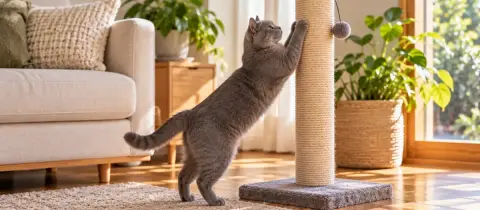
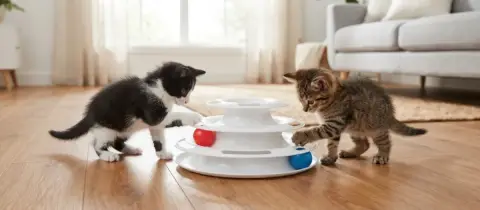
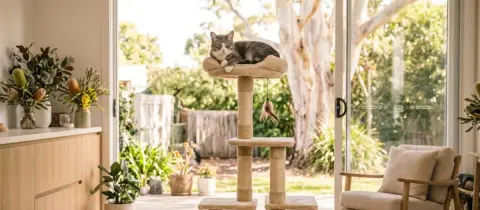
Pictures are illustrations, not the actual products.
Not sure whether a tall post or a flat pad suits your kitten? Read the next three sections first.
Why do kittens need a scratching post?
Scratching is normal cat behaviour, not naughtiness. The RSPCA Australia knowledgebase says cats scratch to maintain their claws, to leave scent from glands in their paws, and to release feelings such as frustration or excitement (RSPCA Australia knowledgebase, updated 17 June 2024, page read 30 October 2026).
The Cat Protection Society of NSW adds that scratching helps cats shed old nail sheaths and stretch their paws, so stopping it altogether isn't the goal. The goal is to give your kitten somewhere better to do it (Cat Protection Society of NSW, page read 30 October 2026).
How tall should a kitten scratching post be?
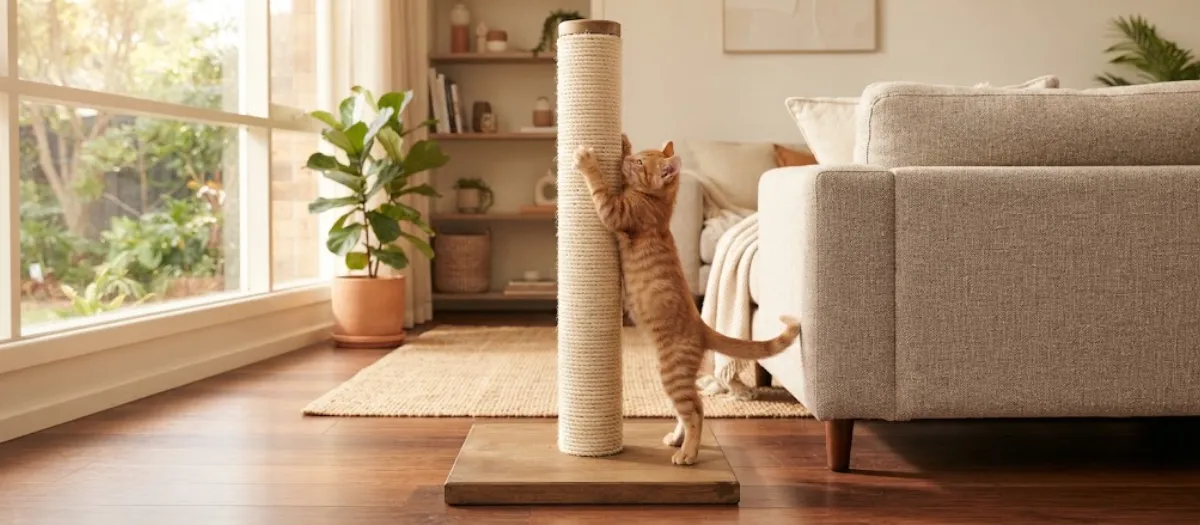
Pick a post that suits the adult your kitten will become, not the kitten you have today. The RSPCA says a post should let a cat stretch out fully, and the Cat Protection Society says most cats prefer tall posts. The base matters just as much: a post that wobbles or tips teaches a kitten not to trust it.
Neither source gives a set height, so use the stretch test. Imagine your cat fully grown, standing on hind legs with front paws reaching up. The sisal should reach at least that high. A kitten can use the lower part of a tall post straight away. Both sources also say the post should be sturdy enough for a cat to lean into it without it moving.
For a small kitten, a tall post is fine as long as the base is wide and heavy. If your kitten finds it too big, add a flat pad beside it for the first few weeks.
Our picks in detail
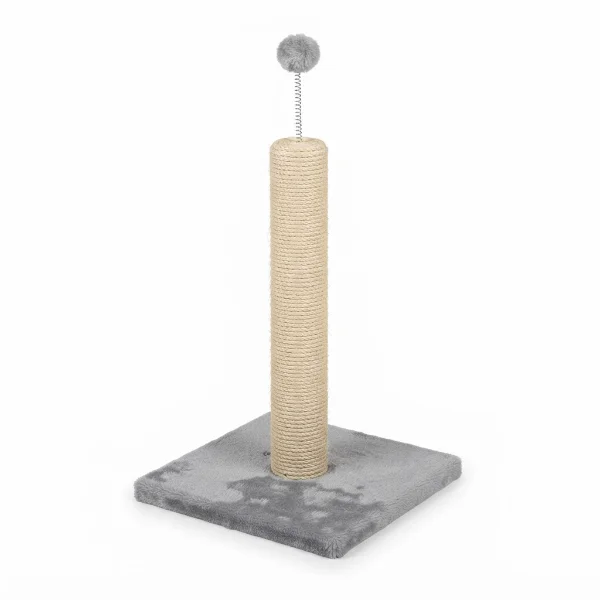
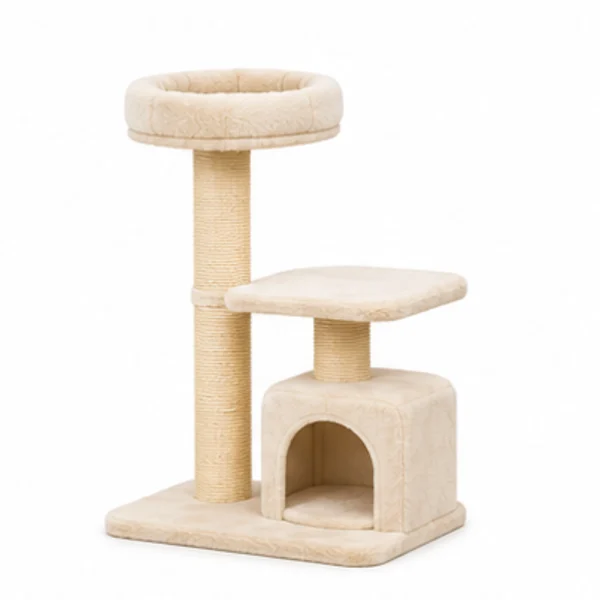
1. Feandrea scratching post, 85 cm: best overall, a post they grow into
This is a tall post with a 13 cm sisal-wrapped trunk on a base of 50 x 40 cm. The listing says the base is reinforced with extra battens so the post doesn't tip. It comes with a spring-mounted pompom toy with a bell. Materials are sisal, MDF and plush. The listing says it suits medium and large cats, which means a kitten grows into it.
Pros: tall enough for an adult stretch; wide base built not to tip, per the listing; sisal surface
Cons: big footprint; the pompom sits on a spring with a bell, so check it often and remove it if it loosens
Best for: one post that lasts from kitten to adult cat
Skip it if: you have very little floor space or want something flat for a small kitten to start on
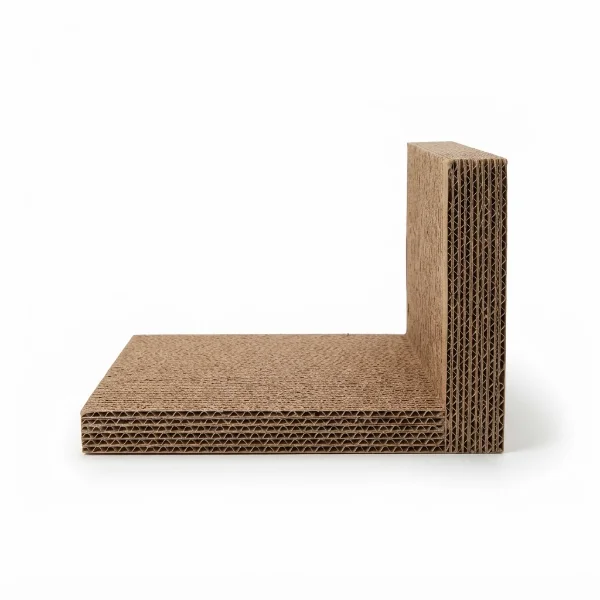
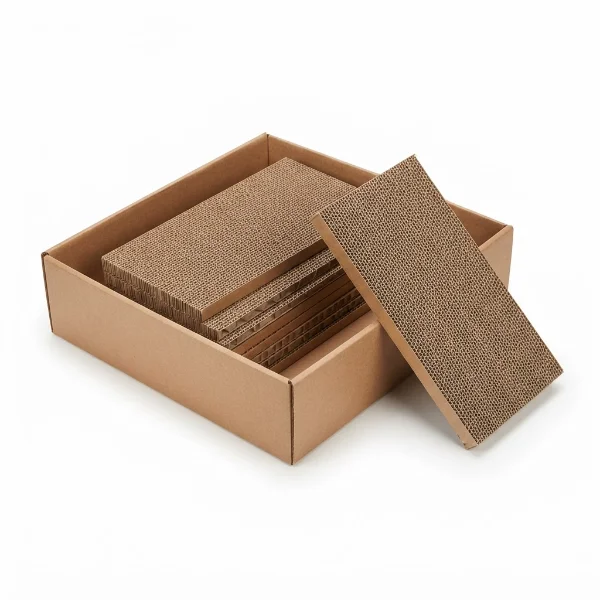
2. FUKUMARU L-shaped cardboard scratcher: best for wall and floor scratching
A 4 cm thick corrugated cardboard piece measuring 68 x 42 x 29 cm. The listing says you can stand it against a wall as a vertical scratcher, lay it flat as a lounge, or use it as a little house. That makes it a flexible way to cover two scratching styles for one product.
Pros: three uses; light enough to move; works for vertical and horizontal scratching
Cons: cardboard sheds bits and wears out; some cats ignore cardboard and prefer sisal
Best for: a second scratching spot, or a kitten who likes scratching along the floor
Skip it if: you want one long-lasting post
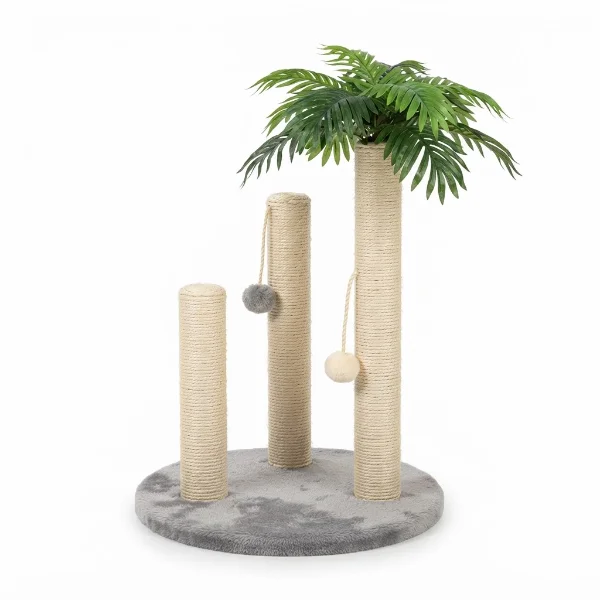
3. LEMONDA palm tree scratching post: best multi-height post
A palm tree style post, about 40 x 40 x 80 cm, with three sisal-wrapped poles at different heights (the listing gives about 40 cm up to 80 cm), 15 artificial leaves on top and hanging ball toys. The base is carpeted, round and weighted. It needs minor assembly. One listing oddity: the material field says "Cardboard" while the bullet points say sisal, so check the poles when it arrives.
Pros: three heights suit a growing kitten; weighted base; tall pole for stretching
Cons: the hanging toys and leaves are chewable, so check them and remove any that loosen; the listing contradicts itself on material
Best for: kittens who like to climb, reach and bat at toys
Skip it if: you'd rather not have chewable decorations in the house
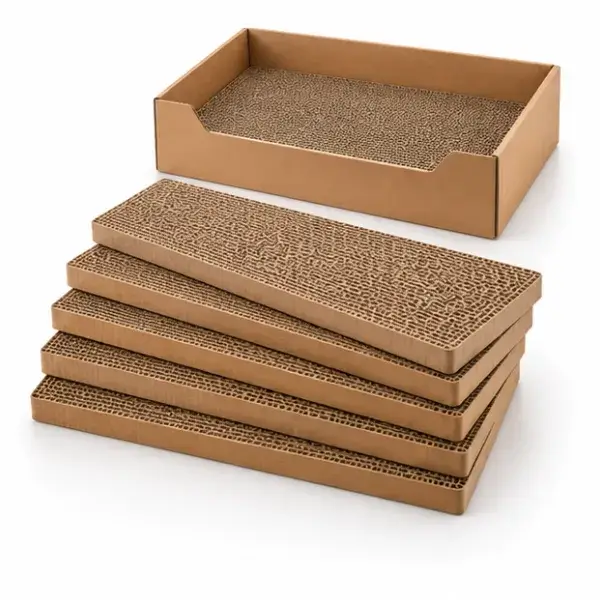
4. FUKUMARU 5-pack cardboard scratch pads with box: best budget refill pack
A box about 41.5 x 29 x 14 cm with five reversible cardboard pads, each about 40 x 27.7 x 2.8 cm. Because the pads are refills, you swap a worn one for a fresh one rather than buying a whole new scratcher. It only offers horizontal scratching.
Pros: budget-friendly; refills; easy to put in several rooms
Cons: horizontal only; cardboard bits on the floor
Best for: a starter scratcher for a small kitten, or a second scratcher
Skip it if: your kitten prefers to stretch up and scratch vertically
Sisal or cardboard: which is better for kittens?
Neither is better for every kitten. Sisal is a tough rope-like fibre that wraps around posts and lasts well. Cardboard is cheap, light and works flat on the floor or against a wall, but it sheds bits and wears out faster. Cats have their own texture preferences, so the RSPCA suggests trying a few.
The Cat Protection Society lists sisal rope, corrugated cardboard, seagrass rope and carpet as options, and notes that some cats prefer to scratch on all four paws, which suits a flat surface. Our suggestion: one tall sisal post, plus one cardboard scratcher in a second spot. That covers both vertical and horizontal scratching and shows you which your kitten prefers.
Kitten scratching posts compared
Details from each Amazon Australia listing, checked on 30 Oct 2026.
We searched Amazon Australia for kitten and small-cat scratchers, then shortlisted ones that met all of these checks:
Well rated: a strong average rating with plenty of buyer reviews.
No red flags: no pattern of poor reviews, safety complaints or listing problems.
Available on Amazon Australia when we checked.
Stable base or no-tip design.
Sisal or dense cardboard as the scratching surface.
Tall enough for an adult cat to stretch, or a clear horizontal use.
No small loose parts that can't be removed.
These are researched picks, based on specifications rather than use in our own homes. We compared the features shown on each Amazon Australia listing, checked on 30 Oct 2026. We didn't accept payment from any brand, and no brand saw this page before it was published.
Left out this time: short, light posts that can tip, posts with long dangling strings, and carpet-covered posts.
Where should you put a scratching post?
Put it where your kitten already scratches or sleeps. The RSPCA suggests placing a post in front of furniture or carpet your cat has been scratching. The Cat Protection Society says to choose a spot your cat passes often, because a hidden post is unlikely to be used. Near your kitten's bed or main play area is a good place to start.
If you have more than one cat, both sources suggest more than one post. The RSPCA says one per cat so no cat guards the only one. Keep tall posts against a wall or in a corner so they feel steady, and keep the post away from the litter tray (see our kitten litter guide for tray placement). If a kitten is joining an older cat, give the kitten its own post in its own room at first, as our guide to introducing a kitten to an older cat explains. For the wider room-by-room picture, see our kitten proofing checklist.
How to teach a kitten to use a scratching post
Make the post the best option in the house, and reward your kitten when they use it. Never punish scratching. The RSPCA says punishment is ineffective and counterproductive, and that shouting or physical punishment is linked to more unwanted scratching. Spraying water or shouting is out too.
Things that help:
Play near the post. Drag a wand toy up the side of the post and let your kitten chase it there. Wand toys have string, so put them away after every session and never leave string, ribbon or elastic out for kittens to chew. Linear objects like string are a recognised danger for cats if swallowed (VCA Hospitals, updated 28 February 2024, Linear foreign body in cats). Cornell's Feline Health Center also advises avoiding toys with strand-like parts that can come off and be swallowed.
Reward use. Praise, a gentle pat or a small treat when they scratch the post. The Cat Protection Society says treats on the base can help. Count treats toward the daily food amount.
Try an attractant. The RSPCA lists attractants as one way to encourage use. Catnip doesn't affect every cat, and may not work on young kittens, so don't rely on it (see what catnip does to cats).
Block favourite furniture spots for a while. The RSPCA suggests covering furniture with thick covers, and the Cat Protection Society mentions furniture covers and sticky pads. Put the post right beside the spot you're protecting.
Gently redirect. The Cat Protection Society suggests calmly picking your cat up and placing them at the post each time. Be consistent, and never yell.
Toys from our kitten toys guide can help a kitten burn off energy before they head for the sofa.
What about declawing and nail trims?
Never declaw a cat. The RSPCA describes declawing as major surgery that removes part of each toe, and says the Australian Veterinary Association and the RSPCA both consider it unacceptable, and that it is illegal in many places (RSPCA Australia knowledgebase). A post, training and patience are the answer.
Trimming claws is different, and it won't stop scratching. The Cat Protection Society says to have a vet or vet nurse show you how first. If you'd like to learn, our cat nail clipper guide compares clippers.
When to get help
See a vet promptly if your kitten stops eating, is very sleepy or weak, vomits repeatedly, has diarrhoea for more than a day, or strains in the tray. Very young kittens can go downhill fast.
A cat straining to pee with little or nothing coming out is an emergency. The University of Illinois veterinary college calls a urinary blockage a true emergency. Go to a vet or after-hours emergency vet straight away.
Suspected poisoning (lilies, medicines, chemicals) is an emergency: call your vet or after-hours emergency vet straight away.
Call your vet if your kitten is limping, has a torn or bleeding nail, keeps chewing at their paws, or suddenly scratches or licks a lot more than usual. Scratching or paw licking that seems out of character may have a physical or stress cause, and your vet can help work out which. If a kitten has swallowed string, thread or a toy part, or you can see thread hanging from the mouth or bottom, call your vet straight away.
Frequently asked questions
What is the best scratching post for a kitten?
A stable one with a wide base, covered in sisal, and tall enough for your kitten's adult stretch. Our pick is the Feandrea 85 cm post. Add a flat cardboard pad as well, so your kitten has a vertical and a horizontal option.
When should I start using a scratching post with a kitten?
Have one ready the day your kitten comes home. Kittens scratch as part of normal behaviour, and it's easier to build the habit early than to redirect a habit later. Place it near where they sleep and play, and reward them whenever they use it.
How do I stop my kitten scratching the furniture?
Offer a better option beside the spot, cover the furniture for a while and reward every use of the post. The RSPCA says punishment backfires. See the training section above for the full steps, and our kitten proofing hub for the rest of the home.
Why is my kitten scratching the furniture instead of the post?
Usually because the post is in the wrong place, wobbles, or has a texture your kitten doesn't like. Move the post beside the furniture, make sure it's steady, and reward every use. Try a cardboard pad as well. Our sisal or cardboard section covers texture, and the training section covers the rest.
Will my kitten use a tall post?
Usually, once they get used to it. A kitten can scratch the lower part straight away and grow into the rest. If the post feels too big, put a flat pad beside it, drag a wand toy up the trunk and put the post near their bed. For low trees with platforms a kitten can grow into, see cat trees for kittens.
Can I use catnip on a scratching post?
You can try it, but catnip doesn't affect every cat and may not work on young kittens, so don't rely on it. Treats, praise and dragging a wand toy up the post are more reliable starting points. Our catnip guide explains why cats react differently.
Do kittens need their nails trimmed?
Not always, and trimming won't stop scratching, because scratching is normal behaviour. The Cat Protection Society says to ask your vet or vet nurse to show you how first. Check your kitten's paws regularly for torn or overgrown nails, and see our nail clipper guide if your vet suggests trims.
Product details from each linked Amazon Australia listing, checked on 30 Oct 2026.
This guide provides general information and isn't a substitute for veterinary advice. If you're concerned about your kitten's claws or scratching, speak with your vet.