Quick answer: If your cat won't use the cat tree, the usual causes are a quiet corner nobody visits, a tree that wobbles, or a new smell. Less often the platforms are too small or the first step is too high, or an older cat is sore. Move it to where you sit, steady it, then make climbing rewarding.
A cat tree that gets ignored is frustrating, and it's usually fixable. This guide sorts the likely reasons, gives you a table to tell them apart, then a simple plan and the right tree type to swap to if the first one doesn't suit. If your real problem is the sofa, our guide to stopping a cat scratching furniture covers that.
Quick picks
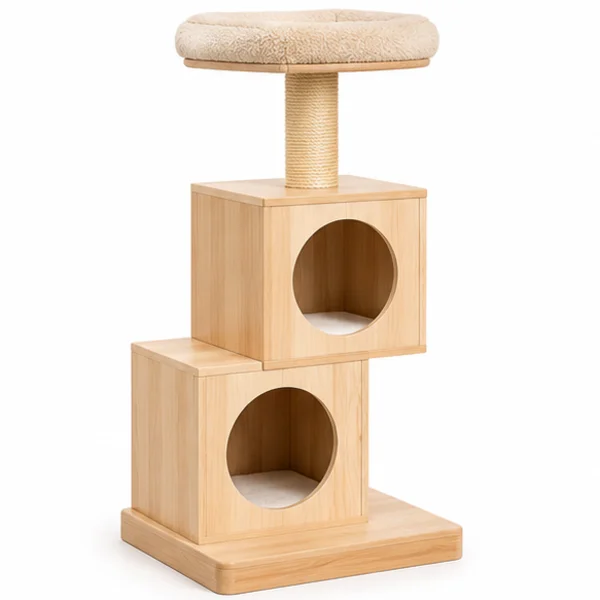
PAWZ Road 89 cm Modern Cat Tower with dual condos
48 x 44 x 89 cm, ground-floor condo needs no steps, wall anchor strap included
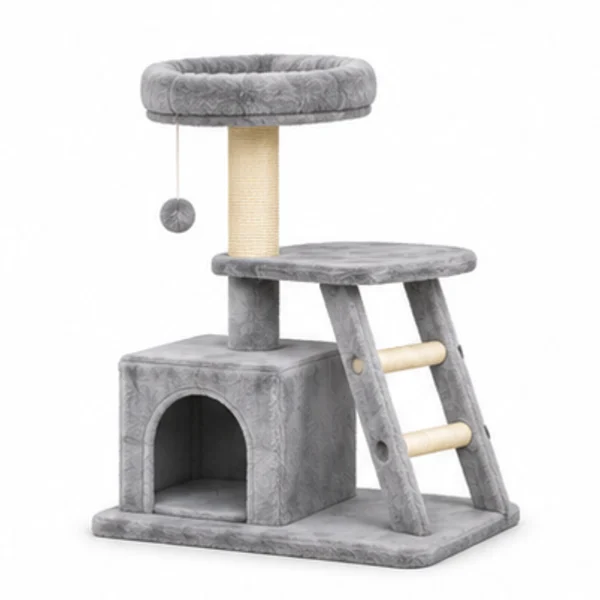
PAWZ Road 116 cm cat tree with hammock and top perch
A kitten-sized tree; low trees with close platforms suit kittens
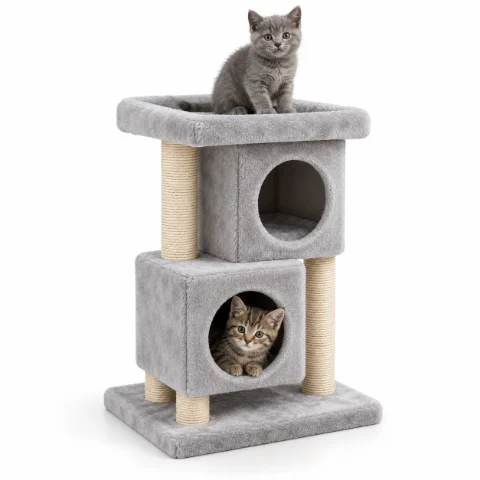
Feandrea Small Cat Tree with 2 Caves
A low option for a cat put off by a tall tree
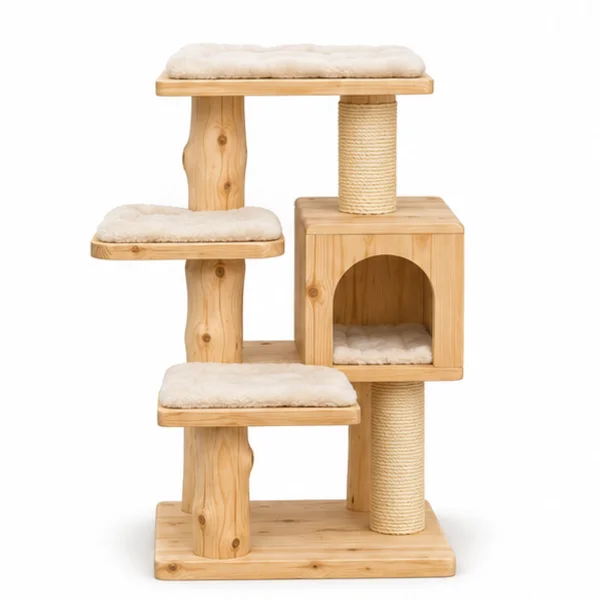
PAWZ Road Solid Cat Tree, 150 cm
A solid tree for large cats who wobble lighter ones
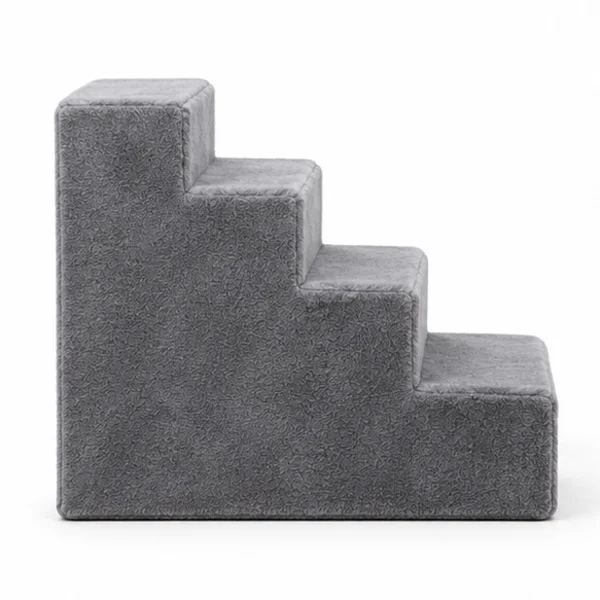
Feandrea 4-step foam stairs, 72 x 40 x 50 cm
Shallow steps help an older cat reach a favourite spot, once your vet has looked
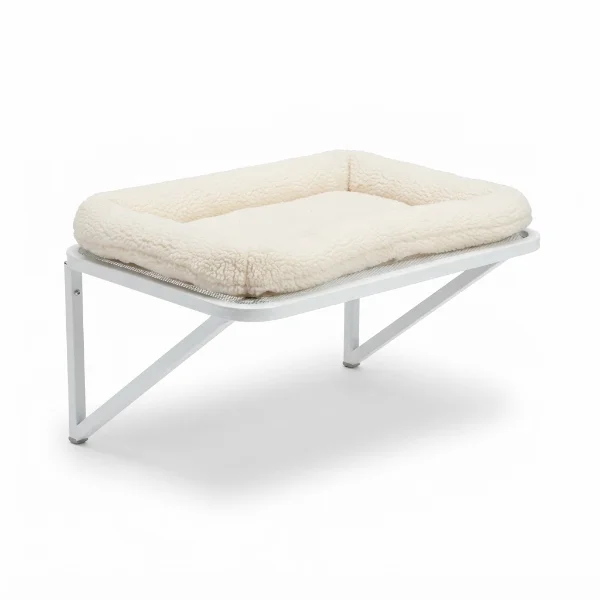
Zakkart metal window perch
A sunny view gives your cat height if a tree doesn't suit
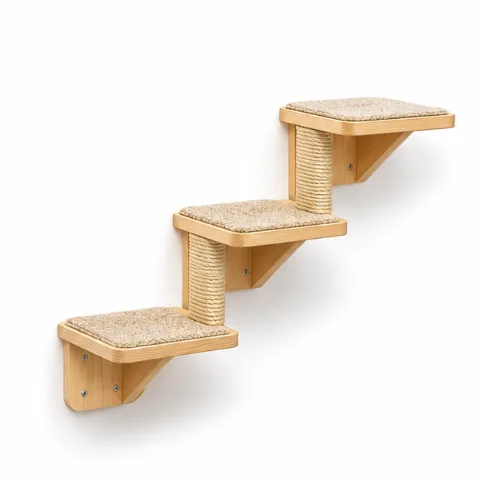
COOLEX 3-in-1 Cat Climbing Wall Steps with Hemp Rope
A wall-mounted alternative at different heights, mounted safely
PAWZ Road 116 cm cat tree with hammock and top perch
A tree sized for a kitten who is still learning to come down.
Feandrea Small Cat Tree with 2 Caves
A low option for a cat put off by a tall, narrow tree.
PAWZ Road Solid Cat Tree, 150 cm
A solid tree for a heavier cat who wobbles lighter ones.
Feandrea 4-step foam stairs, 72 x 40 x 50 cm
Shallow steps for an older cat, once your vet has checked for sore joints.
Zakkart metal window perch
A lookout gives height and a view when a tree doesn't suit your home.
COOLEX 3-in-1 Cat Climbing Wall Steps with Hemp Rope
Wall-mounted steps at different heights, mounted safely, for homes with little floor space.
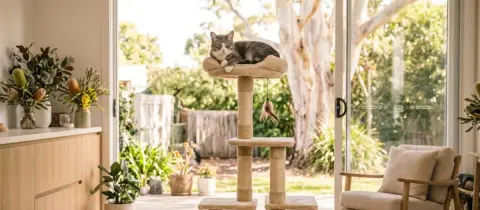
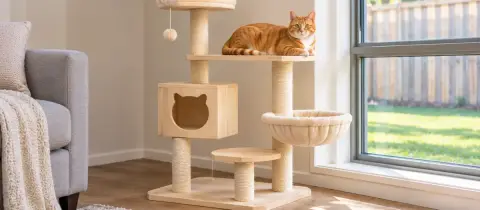
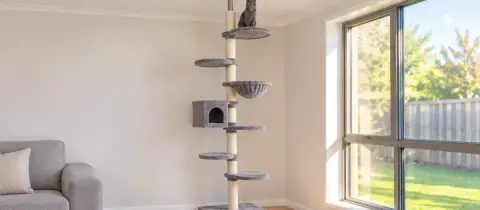
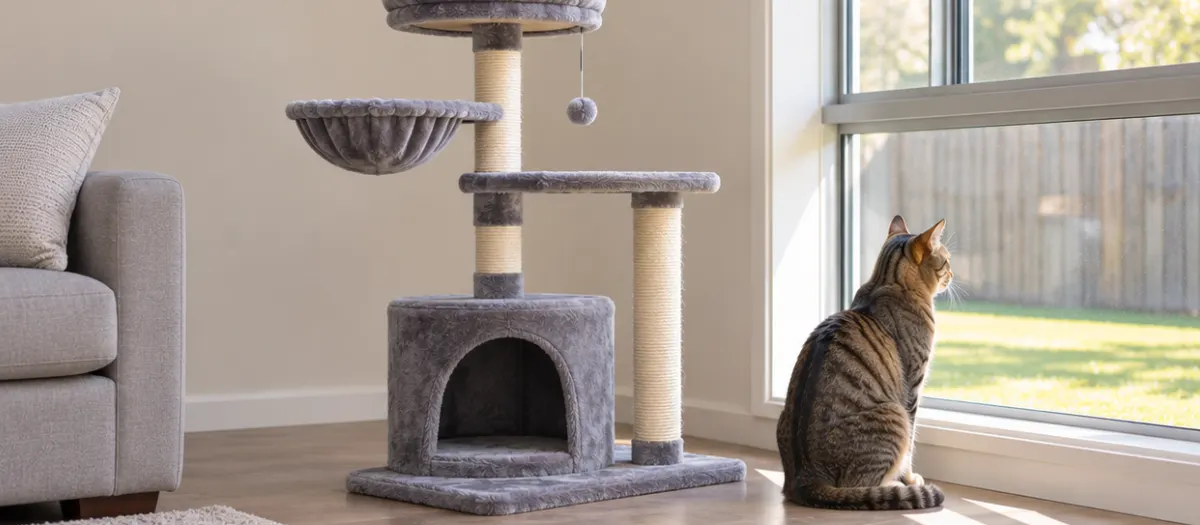
Pictures are illustrations, not the actual products.
More detail on the first pick is in Useful gear below. Gear won't fix placement or pain, and it doesn't replace your vet.
Why does my cat ignore the cat tree?
Most cats ignore a tree for one of six reasons: it's in a dead corner, it wobbles, it smells new, the platforms are too small or the first step is too high, a fall has put the cat off, or an older cat is sore. Cats do like height, so the tree usually needs fixing, not the cat.
International Cat Care says cats are natural climbers who like to rest and watch their surroundings from high places, and that the beds on a cat tree must be big enough to be used (International Cat Care, updated 26 September 2025, page read 19 November 2026). Its scratching guide adds that lightweight posts that move may not give enough resistance, and cats may avoid them (International Cat Care, updated 7 October 2026).
The six reasons, in the order we'd check them:
- Placement. The tree is somewhere the cat never spends time.
- Wobble. One shaky jump can end a cat's interest for good.
- New smell. A factory-fresh tree smells of nothing the cat knows.
- Size and shape. Perches are too small to turn on, or the first step is a big leap.
- Fear. A slip, a fall or a loud noise nearby can make a cat wary of it. Merck Veterinary Manual says fearful cats should be kept away from what frightens them and reintroduced gradually.
- Pain. An older cat that has stopped climbing may be sore (see the older cat section below).
How can I tell which reason it is?
Look at what your cat actually does around the tree. Each pattern is more consistent with one cause, though none is a diagnosis, and more than one can apply at once. Use the table to pick the first thing to change.
| What you see | More consistent with | Try this first | Which tree type helps |
|---|---|---|---|
| Walks past the tree daily but naps on the sofa arm beside it | Placement | Move the tree to that spot | Same tree, new position |
| Jumps on, the tree sways, never goes back | Wobble or a light base | Anchor it, widen the footprint, or swap | A heavier tree, see wooden cat trees |
| Sniffs the tree, rubs or sprays it, then leaves | New smell | Rub a used blanket on it and give it time | Same tree |
| Kitten climbs up and cries at the top | Descent not learned yet | Low tree with close steps | See cat trees for kittens |
| Uses only the bottom scratching post | Perches too small or too high | Bigger platforms, or a ramp | A low, wide tree |
| Used to climb, now sleeps on the floor | Possible joint pain | Vet check, then steps or a lower tree | A low tree with a ramp |
| Two cats, only one uses it | Competition for resources | A second tree or shelves | See the one per cat plus one rule below |
Where should a cat tree go?
Put it where your household spends time, ideally near a window and close to your cat's favourite sleeping spot. Avoid a dead corner or a busy doorway. Cats like to be near their people while keeping a view, and a tree nobody walks past is just furniture.
International Cat Care says to place scratching posts where the cat spends time and near its favourite bed, because cats often scratch after sleeping (International Cat Care, updated 7 October 2026). VCA Animal Hospitals gives the same advice for sleeping areas. The same logic suits a tree with a scratching post built in.
A few placement checks:
- A window with a view of birds or the street beats a blank wall.
- Keep it clear of the litter tray and food bowls.
- Think about where a cat can jump from the top. A tree beside a shelf of ornaments or the TV invites a launch onto things that can fall.
- If you can't decide, put it beside the spot where your cat already naps for a few days and see if it moves in.
How do I stop the cat tree wobbling?
Tighten every bolt, stand it on a hard level floor against a wall, use the anchor strap into a wall stud, and replace a tree that still rocks. If no strap came with it, buy an anchor kit. A moving tree is one many cats won't trust twice.
The Australian Competition and Consumer Commission (ACCC) says that securing tall furniture to a wall or floor is the best way to stop it tipping, that you should buy an anchor kit if none is supplied, and that renters should ask the landlord or agent first and offer to remove the anchors at the end of the tenancy. It also suggests choosing low-set furniture or a sturdy, broad base (ACCC Product Safety, page read 19 November 2026). That guide is about furniture and TVs, but the same physics applies to a tall tree.
Our wobble checklist:
- Check every bolt and screw with a screwdriver, then check again after a week, because they can work loose.
- Stand the tree on a hard floor where you can. Carpet can let it rock.
- Put it against a wall, or fix the strap to a stud or a suitable wall anchor for your wall type.
- Push the top with your hand. If it sways a lot, your cat will feel it.
- If you rent and can't anchor, choose a wider, heavier or shorter tree.
No tree is tip-proof, and a big or energetic cat can test any of them.
How do I get my cat to use the cat tree?
Make the tree a nice place to be before asking your cat to climb it. Put it in the right spot, let it pick up your home's smell, play around the base and up the levels with a wand toy, and leave treats on the platforms. Never lift or force your cat onto it.
This is a starter plan. Many cats take days to weeks, and some never love a tree, so follow your cat's pace:
| Day | What to do |
|---|---|
| 1 | Place the tree where the family sits. Rub a worn T-shirt or a used blanket over it, or tuck it on a platform |
| 2 | Leave it alone and let your cat sniff and look. Don't pick your cat up and put it on |
| 3 | Play with a wand toy around the base and along the bottom level, ending with a catch |
| 4 | Drag the toy up one level at a time, and let your cat chase it |
| 5 | Put a few treats on the lower platforms |
| 6 | Add catnip to the post or a platform, only if your cat responds to it |
| 7 | Repeat the play at the cat's favourite time of day, and note which level it likes |
International Cat Care suggests a wand-toy game around the base and treats on or near the post, and VCA Animal Hospitals suggests toys or food nearby, catnip for cats that respond, and a treat each time the cat uses it. Merck Veterinary Manual says 50 to 75% of cats respond to catnip, so it won't work on every cat. Our cat wand toys guide and catnip toys guide cover the toys.
Never punish or squirt your cat for ignoring the tree. RSPCA Australia says punishment is ineffective and counterproductive, and Merck says it can make a cat fear its owner. Finish play sessions with a catch, put wand toys away afterwards, and never leave string or ribbon on or near the tree. Skip laser-only play too.
For a nervous cat, International Cat Care says synthetic pheromones can increase a cat's sense of security. We explain how they work in our Feliway guide.
Is the cat tree the wrong size or shape for my cat?
Sometimes. The platforms should be big enough for your cat to turn around and settle, the first step should be low enough for them to reach easily, and your cat should be able to get down again without a big drop. A tree that looks great on the listing can still be the wrong shape for your cat.
International Cat Care says the beds on a cat tree must be big enough to be used, and that cats must be able to get down easily, especially older cats. As a rough check, a platform should be at least as long as your cat curled up. If it isn't, your cat may use the base and ignore everything above it.
If the tree is the wrong shape, here is what to swap to:
| Your cat | What to look for | Guide |
|---|---|---|
| Ignores it and the tree is tall and narrow | A low, wide tree with a no-step condo | See the gear section below |
| Wobbles it, or is a heavier cat | A wooden tree with a wide base | Wooden cat trees or cat trees for large cats |
| A confident climber who wants height | A tall tree or floor-to-ceiling tree | Tall cat trees |
| A kitten learning to come down | Close platforms and a low height | Cat trees for kittens |
| Likes to hide more than perch | An enclosed den | Cat houses |
| Not sure | Compare trees by cat size | Best cat trees |
Before you buy a tall or floor-to-ceiling tree, measure your ceiling at the exact spot. The National Construction Code sets 2.4 m as the minimum for living rooms and bedrooms, and many homes are taller (National Construction Code 2022, Part 10.3 "Room heights", page read 19 November 2026).
For more than one cat, RSPCA Australia lists resting places, hiding spots and scratching posts as essential resources, with one per cat plus one in separate locations. In a multi-cat home VCA suggests safe spaces with more than one entrance, so one cat can't trap another.
Why has my older cat stopped using the cat tree?
An older cat that stops climbing may be sore, because arthritis is common in older cats. A cat that hesitates to jump, takes several small jumps or creeps down needs a vet check before you change anything. Steps, a ramp or a lower tree can help once your vet has looked.
VCA Animal Hospitals says about 90% of cats over 10 have osteoarthritis in at least one joint. Signs it lists include reluctance to jump up or down, trouble getting up, stiff walking, hiding more, a poorer coat and missing the litter tray when the box is hard to get into (VCA Animal Hospitals, last updated 31 March 2026). A vet diagnoses it with an exam and imaging, so don't guess, and don't give any medicine or supplement without your vet's say-so.
International Cat Care's senior cat advice is practical: shallow steps or a gently sloping ramp to a favourite lookout, wider and more secure surfaces because balance declines with age, and horizontal scratching posts, which are easier than tall vertical ones (International Cat Care, updated 26 September 2025). Our cat steps for bed guide covers gentle steps for older cats.
Do cats need a cat tree at all?
Not a tree specifically, but cats do need places to climb, perch and scratch. Merck Veterinary Manual calls these major behavioural needs and says cats should be given appealing outlets for them. If a tree doesn't suit your home, other options can meet the same need.
Some alternatives:
- Cat wall shelves, mounted safely at different heights. International Cat Care says shelves need a non-slip surface.
- A window hammock for a sunny lookout.
- A cleared cupboard or wardrobe top with a non-slip mat, if your cat can get up and down easily.
- More ideas in our cat enrichment guide.
Useful gear
Gear won't fix placement or pain, but if your tree is the wrong shape, a low, wide tower can suit a kitten, an older cat or a cat put off by a tall tree. Links to our other tree guides are above.
- PAWZ Road 89 cm Modern Cat Tower with dual condos: low and wide (48 x 44 x 89 cm). The listing says the ground-floor condo needs no steps, which suits an older cat or a kitten, and that a wall anchor strap is included. It also has a sisal-wrapped post, a sisal ramp and a detachable dangling ball. Balls on cords and elastic are for supervised play: check the cord, and remove it if it frays or your cat chews it. It's the top pick in our modern cat trees guide.
Pet shops and vet clinics also stock cat trees if you'd like to see one in person first.
When to see a vet
Book a vet visit if your cat's avoidance of the tree comes with any of these:
- an adult cat that stops climbing or jumping, hesitates, or takes several small jumps
- creeping down instead of jumping
- hiding more, grooming less, or missing the litter tray
- overgrown or thickened claws in an older cat
- a cat that suddenly avoids a tree it used for years, especially after a fall (a vet can check for injury)
- hiding with less eating or drinking
Hiding is normal for cats, but prolonged hiding with a change in appetite isn't, and RSPCA Australia advises a vet visit to rule out medical causes when a cat's behaviour changes. A vet diagnoses arthritis with an exam and X-rays, and treats it. Our scratching guide covers claws and scratching.
Frequently asked questions
How long does it take a cat to start using a new cat tree?
There's no set timeline. Many cats investigate within days, others take weeks, and some never use a tree much. Watch your cat's pace, keep the tree in a good spot, and keep the play and treats going. If a cat that used to climb stops, see your vet.
Should I put the cat tree in the bedroom or the living room?
The living room is usually better, because that's where the family spends time and cats like to be near their people. A bedroom works if your cat sleeps there. Pick the spot your cat already uses, ideally near a window, and not a corner they avoid.
Why does my cat use the scratching post on the tree but never climb it?
That is more consistent with perches that are too small, too high a first step or a tree that moves. Your cat likes the sisal but doesn't trust the climb. Check the wobble, try a ramp or lower platform, and compare tree types in the table above.
Can I put catnip on a cat tree?
Yes, if your cat responds to it. Merck Veterinary Manual says 50 to 75% of cats do, so it won't work on every cat. Sprinkle a little on a platform or the post, and don't use it as a substitute for fixing wobble or placement.
My kitten climbs the cat tree but won't come down. What do I do?
Coming down is learned after going up, so it's common. Don't pull the kitten off. Stay close, offer a treat or toy at a lower platform and let it find its own way. A low tree with close platforms helps, and our kitten trees guide compares some.
Why does my cat prefer the cardboard box the cat tree came in?
Cats often like enclosed, snug hiding places, and a box is an easy, familiar one. International Cat Care says hideaways let cats take time away from social demands. A cat house gives that without the cardboard.
Will a second cat tree stop my two cats fighting over one?
It might help, but it won't solve every conflict. RSPCA Australia says one resource per cat plus one, in separate locations, and says blocking another cat from resources is a sign of tension. If the tension continues, ask your vet to rule out medical causes.
Should I throw out a cat tree my cat has never used?
Not yet. Try a new position, fix any wobble, and give it a fair run with the plan above. If your cat still ignores it, or the tree is the wrong size or shape, move on to a better-suited one, and sell or pass the old one on.
Related guides
- Best cat trees and towers
- Best wooden cat trees
- Best tall cat trees
- Best cat trees for kittens
- Best indoor cat houses
- Best cat trees for large cats
- How to stop a cat scratching furniture
- Cat enrichment ideas for bored indoor cats
Sources
- International Cat Care: Making your home cat friendly, updated 26 September 2025, read 19 November 2026
- International Cat Care: Scratching on furniture and carpets, updated 7 October 2026, read 19 November 2026
- International Cat Care: Special considerations for senior cats, updated 26 September 2025, read 19 November 2026
- VCA Animal Hospitals: Arthritis in Cats, last updated 31 March 2026, read 19 November 2026
- VCA Animal Hospitals: Scratching Behavior in Cats, 18 February 2020, read 19 November 2026
- VCA Animal Hospitals: Environmental needs of young cats, read 19 November 2026
- Merck Veterinary Manual: Behavior Problems in Cats, last updated April 2026, read 19 November 2026
- RSPCA Australia Knowledgebase: Why does my cat scratch the furniture?, updated 17 June 2024, read 19 November 2026
- RSPCA Australia Knowledgebase: What do I need to know about multi-cat households?, updated 6 November 2025, read 19 November 2026
- ACCC Product Safety: Toppling furniture and televisions guide, read 19 November 2026
- National Construction Code 2022, ABCB Housing Provisions, Part 10.3 "Room heights", read 19 November 2026
This guide provides general information and isn't a substitute for veterinary advice. If you're concerned about your cat's climbing, behaviour or health, speak with your vet.