Quick answer: To stop a cat scratching furniture, give the scratching a better home rather than trying to end it. Put a tall, sturdy post right beside the spot your cat already scratches, reward every use, cover the furniture while the habit changes, and keep claws trimmed. Never punish. Scratching is normal cat behaviour.
Cats don't scratch your couch to be rude. They scratch because it does a job for them, so the fix is to give that job somewhere better to happen. This guide explains why cats scratch, how to set up the right posts, and what to avoid. For picks, see our guide to cat scratching posts.
Why do cats scratch furniture?
Cats scratch to keep their claws in shape, to stretch, and to leave scent from glands in their paws. It can also help them let out stress or frustration. Furniture is often chosen because it is sturdy, sits in the middle of the home and feels good to pull against.
RSPCA Australia lists claw maintenance, scent marking through the paw pads and releasing emotions such as frustration, anxiety or excitement (RSPCA Australia Knowledgebase, updated 17 June 2024, page read 1 November 2026). Animal Welfare League NSW gives a similar list, including stretching and exercise (AWL NSW, page read 1 November 2026).
Because it is natural, the aim is to redirect it. A cat that is stopped from scratching altogether still has the same needs.
How do I stop my cat scratching the couch?
Offer a better option in the right spot, make the couch less appealing for a while, and reward the new habit. The post has to beat the couch on stability, height and position, or your cat will keep choosing the couch.
The step-by-step plan below puts these in order. In short:
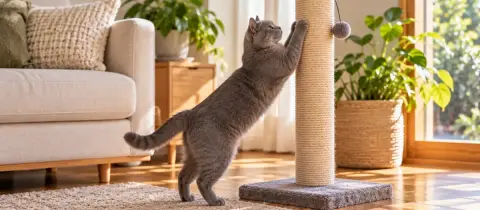
- A post that is tall and sturdy enough for a full stretch
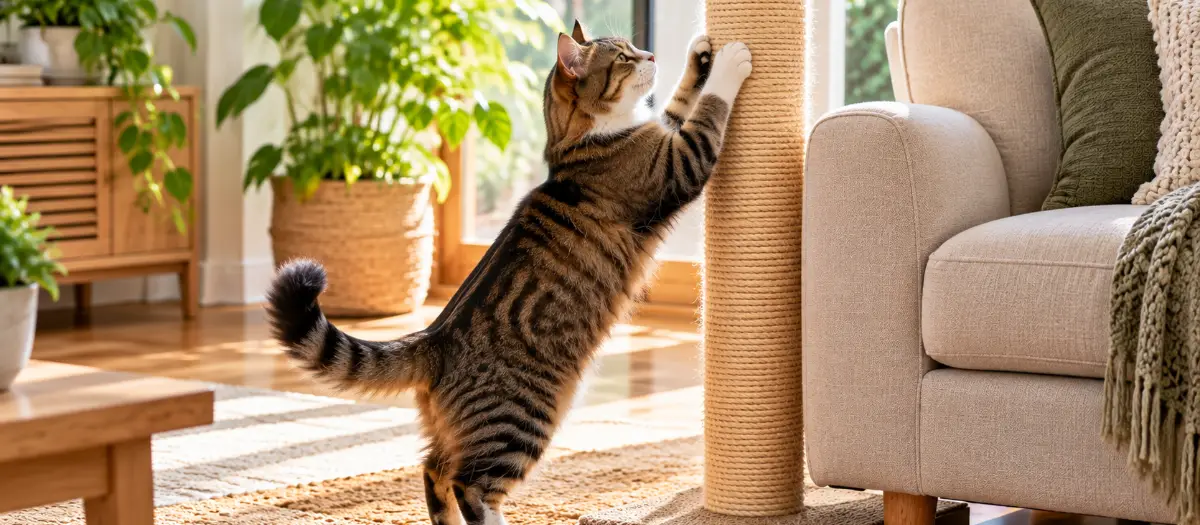
- Placed in front of the furniture being scratched
- A cover or protector on the couch for now
- Treats or play when your cat uses the post
- Regular nail trims
A step-by-step plan
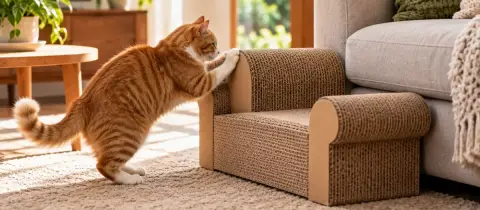
- Choose the right post. RSPCA Australia advises a post that lets your cat stretch fully and is sturdy enough to lean on. A post that wobbles teaches a cat to go back to the couch. Our tall cat scratching post guide covers height and stability. Cats have preferences, so try more than one material. A sisal post, a flat cardboard scratcher and a sloped pad give you a mix of vertical and horizontal.
- Put it in the right place. RSPCA Australia suggests placing a post in front of the furniture your cat is targeting. Also try spots near where your cat sleeps, because many cats stretch and scratch after waking. In a home with more than one cat, RSPCA Australia suggests one post per cat, as some cats guard a post.
- Make the couch less inviting. RSPCA Australia lists thick furniture covers among ways to restrict access, and AWL NSW suggests double-sided tape or furniture protectors, noting cats dislike sticky surfaces. Our cat scratcher for couch guide covers products that sit on the couch itself. For clear guards that stick to fabric couch arms and corners, see our cat repellent guide. Treat covers as a short-term helper while the post habit builds, not the whole answer.
- Reward the post. Give a treat, praise or a quick game each time your cat uses it. AWL NSW and RSPCA Australia both recommend rewarding use. A toy dragged up the post can show your cat what it is for. Our cat toys guide has options, and no string or ribbon toys should be left out unsupervised.
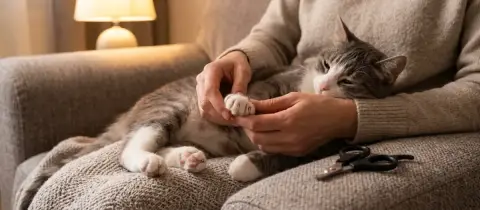
- Keep claws trimmed. AWL NSW recommends regular trimming to reduce damage, and says to ask your vet if you are unsure how to do it safely. Our cat nail clippers guide shows what to look for. Trimming eases the damage, but it doesn't remove the urge to scratch, so keep the post in place.
- Add play and enrichment. RSPCA Australia lists play, puzzles and toys as part of the answer. A cat with a busy day has less reason to take frustration out on the couch. A climbing and scratching spot such as a cat tree combines exercise with scratching.
Every cat is different, so watch how yours responds. Some take to a new post quickly, others need a few tries with a different material or position. Results vary and there is no set timeline.
What smells stop cats scratching furniture?
There is no scent we would recommend. Many online tips suggest citrus sprays, but we steer away from citrus and essential oils around cats. The ASPCA lists lemon as toxic to cats, naming its essential oils and psoralens among the toxic principles (ASPCA, page read 1 November 2026). VCA Animal Hospitals explains that essential oils can poison cats, who absorb them through the skin and swallow them while grooming (VCA Animal Hospitals, page read 1 November 2026).
A safer approach uses texture, not smell. Cover the spot with a protector or tape, and make the post the attractive choice. If you want something that smells good to a cat, rewarding use of the post does the job without any spray on your furniture. We haven't found a scent product we can recommend for this.
Should I punish my cat for scratching?
No. Yelling at, squirting or hitting a cat doesn't teach it where to scratch, and it can make things worse. RSPCA Australia says punishing natural scratching is ineffective and that verbal and physical punishment has been linked to more unwanted scratching. AWL NSW says it can raise stress and worsen the behaviour.
Instead, interrupt calmly if you can, then lead your cat to the post and reward it. Skip water sprays, shouting and scruffing.
Does trimming my cat's nails protect furniture?
Trimming helps because blunter claws snag and shred less, but it won't stop the scratching, because the urge to scratch stays. Trim regularly, keep offering a post beside the furniture, and reward your cat for using it. AWL NSW recommends regular trims to reduce damage and says to ask your vet if you're unsure how.
Go gently. Take off just the sharp tip, stop if your cat is stressed, and have your vet or vet nurse show you the technique if you are unsure. AWL NSW says to consult your vet if you aren't sure how to trim safely. Our cat nail clippers guide explains the tools, and our guide to grooming a cat covers handling paws.
Nail caps are not the answer either. International Cat Care advises against them because they can distress cats and cause problem behaviours; our nail caps for cats guide explains why and what to do instead.
Do cats grow out of scratching furniture?
Not as a rule. Scratching is a lifelong habit, so most cats will always want to scratch. What often changes is where, once they have a post they like in the right spot. We didn't find a source we opened that gives an age for when cats start or stop, so we won't give one.
For kittens, start early with a small, stable post, so good habits form as they explore. See our kitten scratching post guide and our kitten-proofing guide.
Is declawing an option?
No. RSPCA Australia advises against declawing for non-medical reasons, describing it as major surgery that amputates part of the toe, and says the Australian Veterinary Association and the RSPCA both consider it unacceptable. AWL NSW also calls it inhumane. Trimming, posts and covers are the answer.
When to see a vet
See your vet if your cat:
- starts scratching much more or much less than usual, or the change is sudden
- has overgrown claws that curl into the paw pad, or claws that look sore, red or swollen
- won't let you touch its paws, or pulls away or cries when you try
- seems in pain, limps, licks its paws a lot or shows signs of stress, such as hiding or changes in eating or the litter box
Scratching changes can have several causes, so a vet check comes first. If the problem continues, ask your vet about a qualified, reward-based behaviour professional. Avoid anyone who suggests punishment, because RSPCA Australia links punishment to more unwanted scratching.
Frequently asked questions
How do I get my cat to stop scratching my couch?
Put a tall, sturdy post directly in front of the scratched part of the couch, cover the couch with a protector or tape for now, and reward your cat every time it uses the post. Add regular nail trims and play. Don't punish, because it can increase unwanted scratching.
What scent will keep cats from scratching furniture?
We don't recommend any scent. Citrus and essential oils are often suggested online, but the ASPCA lists lemon as toxic to cats because of its essential oils and psoralens. Use texture instead: a furniture protector or double-sided tape, plus a post your cat prefers.
Why does my cat scratch the carpet?
Carpet is a flat, textured surface, so a cat that scratches it is probably a horizontal scratcher. Put a flat cardboard scratcher or a sisal mat on the worn patch, reward use, and cover the patch for a while. RSPCA Australia suggests offering both vertical and horizontal options because preferences vary.
Does clipping a cat's nails protect furniture?
It helps reduce damage, because blunter claws catch and tear less. It doesn't stop the urge to scratch, so keep a post in place too. AWL NSW recommends regular trims and says to ask your vet if you are unsure how to do them safely.
Why should you never over trim a cat's claws?
Cutting too far can hurt your cat and make it dislike handling. Take off just the sharp tip, stop if your cat is upset, and ask your vet or vet nurse to show you. AWL NSW says to consult your vet if you aren't sure how to trim safely.
At what age do cats start clawing furniture?
We didn't find an age in the sources we opened. Kittens explore with their claws as they grow and play, so offer a small, stable post early. Our kitten scratching post guide covers what suits young cats.
Does my cat scratch furniture for attention?
It can look that way, because cats often scratch when you walk in or sit down. RSPCA Australia lists excitement among the feelings scratching lets out, so a burst of scratching when you come home is more consistent with excitement than defiance. Greet your cat, lead them to the post and reward them there.
Related guides
- Why won't my cat use the cat tree?
- Best wooden cat trees
- Nail caps for cats: are they safe?
- Best cat scratching posts
- Best tall cat scratching posts
- Best cardboard cat scratchers
- Best cat scratchers for the couch
- Best kitten scratching posts
- Best cat nail clippers
- Best cat trees
- Best cat toys
- All our cat guides
Sources
- RSPCA Australia Knowledgebase, Why does my cat scratch the furniture? updated 17 June 2024, page read 1 November 2026 (https://kb.rspca.org.au/knowledge-base/why-does-my-cat-scratch-the-furniture/)
- Animal Welfare League NSW, Cat scratching behaviour, page read 1 November 2026 (https://www.awlnsw.com.au/cat-scratching-behaviour/)
- ASPCA, Lemon (toxic and non-toxic plants), page read 1 November 2026 (https://www.aspca.org/pet-care/animal-poison-control/toxic-and-non-toxic-plants/lemon)
- VCA Animal Hospitals, Essential oil and liquid potpourri poisoning in cats, page read 1 November 2026 (https://vcahospitals.com/know-your-pet/essential-oil-and-liquid-potpourri-poisoning-in-cats)
This guide provides general information and isn't a substitute for veterinary advice. If you're concerned about your cat's claws or behaviour, speak with your vet.