Best cardboard cat scratchers: pads, boxes and loungers
By Anish PuriUpdated 1 Nov 202613 min readResearched, not tested by us
Research guide. WhiskerFinds may earn a commission from links, at no extra cost to you.
Quick answer: A cardboard cat scratcher gives your cat a flat, easy-to-claw surface that you can replace when it wears out. Our top pick is the PatiencET 4-pack with its box. Pads suit most homes, a box doubles as a bed, and a lounger suits cats who scratch while stretched out.
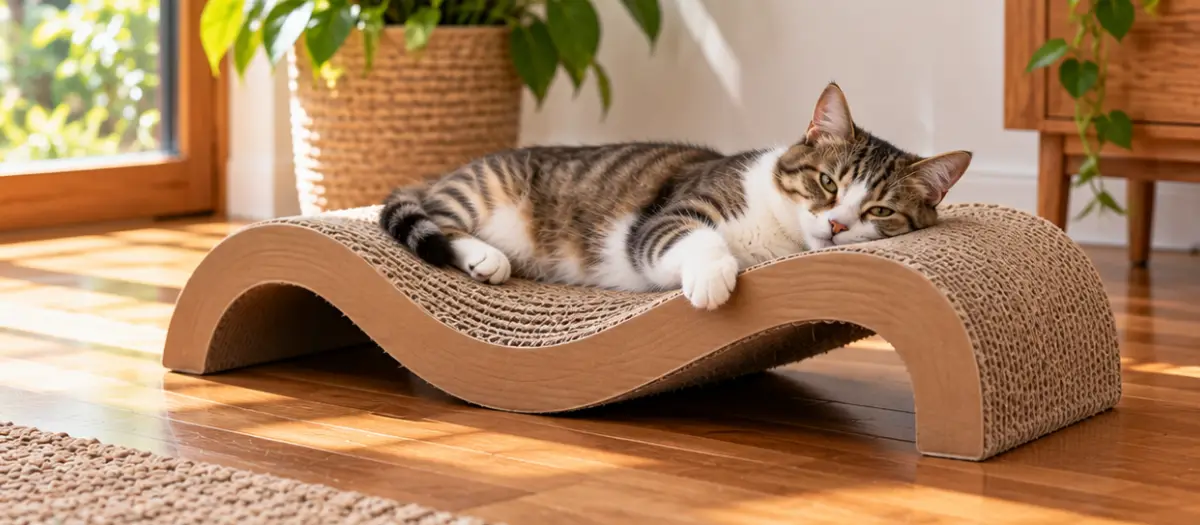
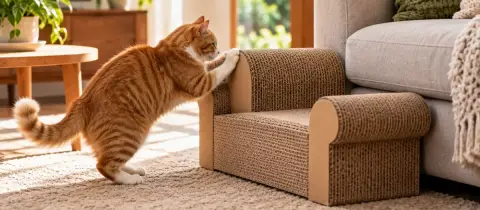
Illustration, not the actual product
Our top pickPatiencET 4-pack scratch pads with box
Cardboard scratchers come as flat pads, boxes with a pad inside and curved loungers. This guide compares four on Amazon Australia, explains how long they last and how much mess to expect, and shows where they fit alongside a tall post. For the full picture, start with our cat scratching post guide, and if the sofa is the target, see our cat scratcher for couch guide.
Quick picks
Our top pickBest overall
PatiencET 4-pack scratch pads with box
Four reversible pads and a box that doubles as a lounge, for small and medium cats
Pictures are illustrations, not the actual products.
Not sure which shape suits your cat? Watch how your cat scratches now, then use the sections below.
Do cats like cardboard scratchers?
Many cats do. Corrugated cardboard is easy to dig claws into, it shreds satisfyingly, and a flat pad suits cats who scratch stretched out on the floor. Cats have individual tastes, though, so some prefer rope, carpet or a tall post. Try one and watch what your cat does.
RSPCA Australia explains that cats scratch to keep their claws in good condition, to leave scent from glands in their paw pads, and sometimes as an outlet for feelings such as frustration or excitement. It also suggests offering a mix of styles, from vertical to horizontal, and trying different textures because each cat has its own preferences (RSPCA Australia Knowledgebase, page read 1 November 2026). Cats aren't sharpening their claws when they scratch. Cat Protection Society of NSW explains that scratching sheds the dead outer nail sheath, which comes away every few weeks (Cat Protection Society of NSW, page read 1 November 2026). Cardboard is an easy, replaceable way to test what your cat likes before you commit to a bigger piece.
Do cardboard cat scratchers work?
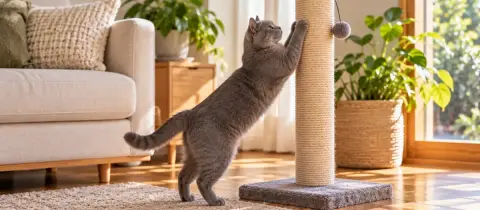
They can. A cardboard scratcher gives your cat an approved place to scratch, which may draw some scratching away from your couch. It is a tool, not a fix. Place it where your cat already scratches, and pair it with sturdy options if your cat is a big stretcher.
Never punish a cat for scratching. RSPCA Australia says scolding or hitting doesn't work and can make unwanted scratching worse. Reward use of the scratcher with a treat or a bit of play instead.
Our picks in detail
1. PatiencET 4-pack scratch pads with box: best overall
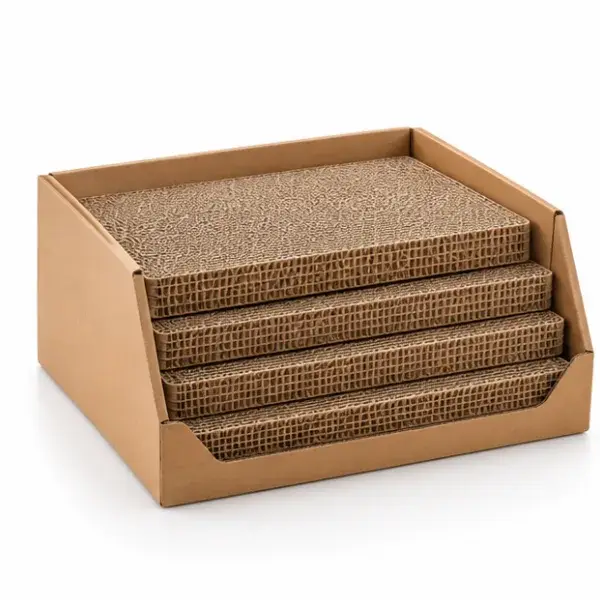
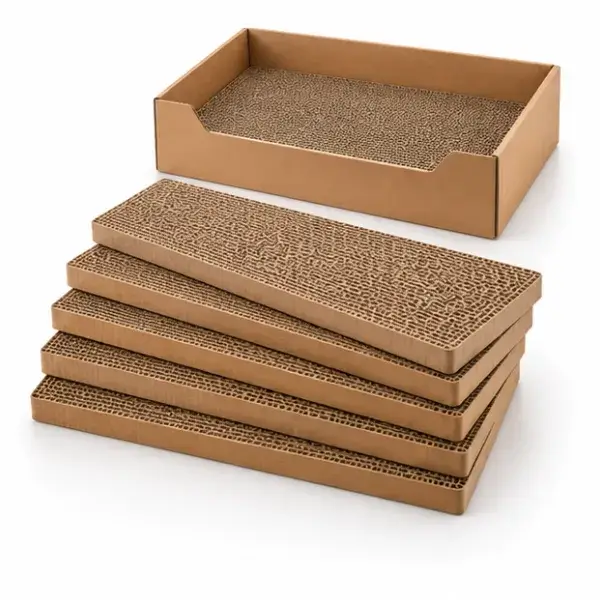
Four corrugated cardboard pads come with a box, which the listing says can also be used as a lounge bed or nest. Each pad is about 3 cm (1.18 inches) thick, and the box measures 43.9 x 22.4 x 14 cm. The listing describes it for small and medium cats and kittens, says the surface is double sided so you can flip a worn side, and adds that replacement pads are available. Four catnip packs are included.
Pros: four pads in one pack; reversible; box doubles as a lounge; replacement pads offered per the listing
Cons: the listing says it suits small and medium cats, so a large cat may overhang the box; catnip doesn't interest every cat; expect cardboard scraps
Best for: homes with one or two small to medium cats, or kittens
Skip it if: you have a large breed such as a Maine Coon, or want a heavy, single, fixed scratcher
2. Hide & Scratch cardboard box and bed: best scratcher box
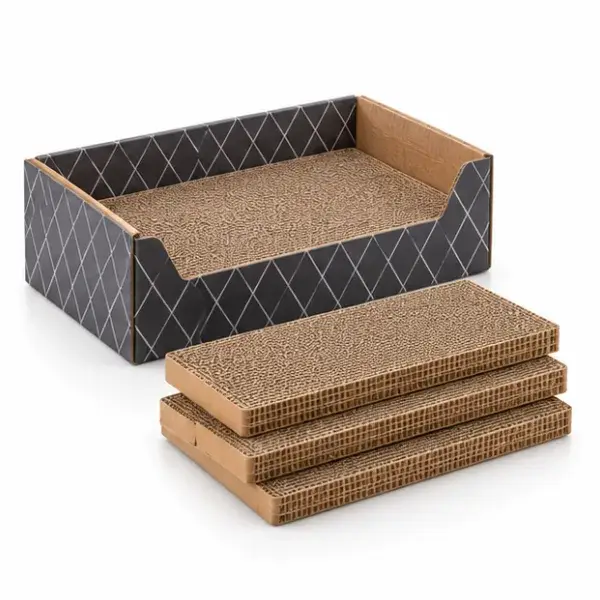
A heavy-duty corrugated cardboard box with a double-sided pad inside, in a dark grey diamond pattern. The listing gives the box as 40.6 x 33 x 19.1 cm and 1.25 kg, with sides it says are 7.5 inches (about 19 cm) high so scraps stay contained and the cat can hide. The listing says it comes with 3 refill pads and needs no tape to assemble. It also says it is made with plant-based glue and soy-based ink. Cardboard is still not something a cat should eat, so take the box away if your cat chews off and swallows pieces.
Pros: high sides catch scraps; refills included; the listing recommends it for small, medium and large cats
Cons: the listing says do not wash, so it can't be rinsed clean; bulkier than a flat pad; not a replacement for a tall post
Best for: cats who like a hide, a nap and a scratch in one spot, including bigger cats (our cat bed for large cats guide covers roomier beds)
Skip it if: you want a slim scratcher that tucks flat against a couch
3. LIKEA reversible scratcher lounge: best lounger
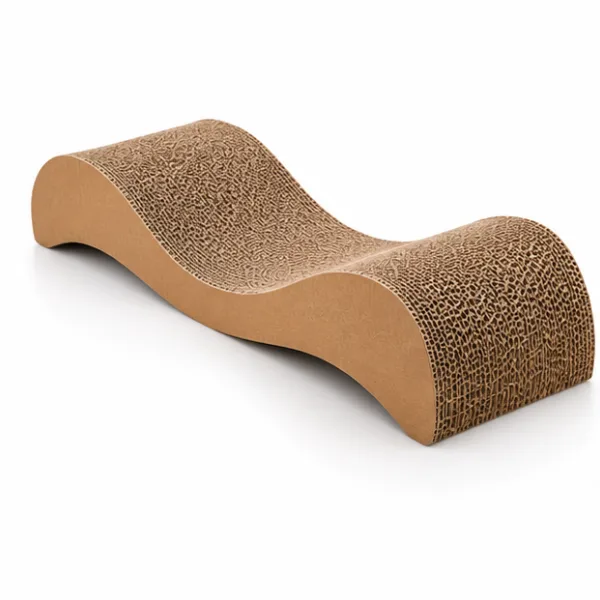
A curved, reversible lounge made from recycled corrugated cardboard with non-toxic glue, according to the listing. It measures 43.5 x 24 x 7 cm and weighs 0.56 kg. The listing says the curves make scratching easier and give a comfortable place to rest, and it includes catnip. The listing also states spot clean only.
Pros: reversible; curved shape for scratching while stretched out; light and easy to move
Cons: the listing recommends it for small breeds; a single lounger per pack; spot clean only
Best for: small cats and kittens who scratch lying down
Skip it if: you have a large cat or want several pads
4. 5-pack cardboard scratch pads in a box: best multi-pack
Five corrugated cardboard pads and a paper box, branded AGYM on the listing. Each pad measures about 40.6 x 24.4 x 2.5 cm (16 x 9.6 x 1 inches) and both sides can be scratched. The listing says you can place pads in several corners or fix a pad to a wall with double-sided tape. The listing says not to clean it, and to dispose of and replace pads as needed.
Pros: five pads to spread around; double-sided; the wall option gives a vertical angle; slim
Cons: thin at about 2.5 cm, so it may wear out quickly; the listing says do not clean; double-sided tape on a wall may mark paint, so test a hidden spot first
Best for: homes where a cat scratches in several rooms
Skip it if: your cat wants a thick, chunky scratcher or a lounge to sleep on
Cardboard or sisal: which is better?
Neither wins outright. Cardboard is soft to claw, replaceable and good for flat scratching, but it wears out faster and sheds scraps. Sisal rope or fabric on a post is tougher and lets a cat stretch upwards. Many homes do best with both, so a cat can pick.
Cardboard suits kittens, older cats and cats who scratch horizontally. For cats who like to reach up, a sturdy post matters more, and our tall cat scratching post guide covers options. A cat who loves to climb as well may be better served by a cat tree. The main thing is offering choice, because RSPCA Australia suggests trying a range of surfaces.
Can a cardboard scratcher replace a scratching post?
Usually not on its own. A cat needs a full stretch to scratch properly, and RSPCA Australia says posts should be tall enough for a cat to stretch fully and sturdy enough to lean on. A flat scratcher can't give that. It works best as a partner to a post.
If your cat just scratches the floor, a cardboard scratcher may be all you need. If your cat reaches up the couch or a door frame, add a stable vertical post as well. This horizontal and vertical mix is the sensible setup, and it is the one our cat scratching post guide recommends. For young cats, see our kitten scratching post guide too.
How long does a cardboard scratcher last?
It depends on the cat, the thickness and whether you flip it. A light scratcher may last a few weeks, a heavy-duty one longer. There's no fixed time. Flip a reversible pad when one side wears out, and replace it when the surface is flat and smooth.
Reversible designs double the use, and the PatiencET, the LIKEA and the 5-pack all have two-sided surfaces according to their listings. The Hide & Scratch is refillable, with three refill pads in the listing, so you keep the box and swap the pad. Results vary, so watch your own cat. A worn pad that no longer grips may send your cat back to the couch.
Are cardboard scratchers messy?
Yes, to a degree. Scratching sheds bits of cardboard, so expect scraps on the floor around a flat pad. Boxes with high sides catch most of it. Plan on a quick sweep or vacuum, and put the scratcher on a hard floor or a mat for easy cleaning.
The Hide & Scratch listing says its 19 cm (7.5 inch) sides keep scraps contained. The PatiencET listing says debris is easy to dispose of. Scratchers also curl and flatten with use, so check that a pad isn't sliding about. If your cat chews the cardboard and swallows pieces, take it away and speak with your vet.
Cardboard cat scratchers compared
Details from each Amazon Australia listing, checked on 1 Nov 2026.
We searched Amazon Australia for cardboard cat scratchers, then shortlisted ones that met all of these checks:
Well rated: a strong average rating with plenty of buyer reviews.
No red flags: no pattern of poor reviews, safety complaints or listing problems.
Available on Amazon Australia when we checked.
Size clearly stated on the listing.
Refills included or a reversible surface, so one purchase lasts longer.
Reversible where possible, so a worn side can be flipped.
Shape (flat, incline, box or lounge) clear from the listing, so you can match it to your cat.
These are researched picks, not products we've personally tested. We compared the specifications and features shown on each Amazon Australia listing, checked on 1 Nov 2026. We didn't accept payment from any brand, and no brand saw this page before it was published.
Left out this time: scratchers with glue or catnip claims the listing doesn't explain.
Which shape suits my cat?
Match the shape to how your cat scratches. A cat who rakes the floor likes a flat pad. A cat who curls up after scratching may like a box or lounger. A cat who leans against a wall may use a pad fixed upright. Try one shape first, then add more.
Flat pad: for floor scratchers and for sliding in front of a couch.
Incline or lounge: for cats who scratch at an angle, or who like to rest on it.
Box: for cats who like a hide, plus fewer scraps on the floor.
Multi-pack: for several rooms or several cats.
For several cats, RSPCA Australia suggests one post per cat, since some cats guard a favourite.
Setting up your cardboard scratcher
Put it where your cat already scratches or sleeps. Sit it on a hard floor or a mat so it doesn't slide. Reward your cat for using it with a treat or play. Use catnip if your cat responds to it, since not every cat does.
Pick a spot next to the furniture your cat already scratches.
Anchor it. A pad that slides about can put a cat off.
Reward use with a treat or play, never a scolding.
Add more options. Mix in a tall post. See our catnip explainer if you are unsure about catnip.
Flip or refill when one side wears out, and replace it when it goes smooth.
Keeping scratching safe and claws healthy
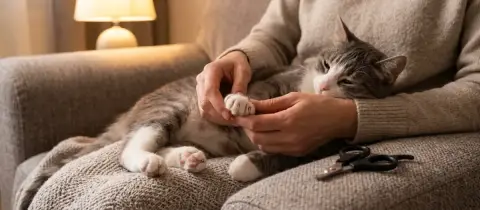
Cardboard is gentle on claws, but watch your cat. If your cat chews and swallows pieces, remove the scratcher. Keep an eye out for splits in the card, and bin a scratcher once it falls apart. Regular nail trims keep claws comfortable, and our cat nail clippers guide can help.
Scratching is normal cat behaviour, so offer places for it rather than trying to stop it. RSPCA Australia and the Australian Veterinary Association consider declawing unacceptable because it is major surgery with lasting harm (RSPCA Australia, page read 1 November 2026). Skip scented deterrent sprays, essential oils and citrus around cats.
When to get help
See your vet if your cat's claws are torn, bleeding or growing into the paw pad, if your cat is limping, or if your cat has swallowed cardboard and is vomiting or off its food.
RSPCA Australia notes that scratching can also be an outlet for feelings such as frustration or anxiety (RSPCA Australia Knowledgebase, page read 1 November 2026). If scratching suddenly increases or comes with other changes, talk to your vet or a qualified, reward-based behaviour professional.
Frequently asked questions
What is the best cardboard cat scratcher?
For most homes, the PatiencET 4-pack is our top pick, with four reversible pads and a box. The Hide & Scratch suits cats who want a high-sided box, the LIKEA suits cats who scratch lying down, and the 5-pack suits several rooms. Compare them in the table above.
Can I put a cardboard scratcher on the wall?
Yes, if the listing says it's made for it. The 5-pack listing says a pad can be fixed to a wall with double-sided tape, which gives a cat that scratches door frames or wall corners a vertical option. Test the tape on a hidden patch of paint first, fix the pad at your cat's stretch height, and check it hasn't worked loose.
Why does my cat scratch things?
RSPCA Australia says cats scratch to keep their claws in good condition, to leave scent from their paws, and as an outlet for feelings like frustration or excitement. It is normal behaviour, so the aim is to give your cat good places to scratch rather than stop it.
Do cardboard scratchers keep cats off the couch?
They can help, but they aren't a guarantee. Put a scratcher right in front of the spot your cat uses, reward use, and never punish. Mix flat and vertical options. If couch scratching continues, read our stop cat scratching furniture guide.
Is cardboard safe for cats to chew?
Some listings say their cardboard is made with non-toxic glue and ink, which is the brand's claim. A nibble while scratching is common, but swallowed cardboard isn't harmless. If your cat eats pieces, or is vomiting or off their food afterwards, take the scratcher away and contact your vet.
Can I use a cardboard scratcher for kittens?
Yes, kittens often take to them. Listings for the PatiencET, LIKEA and 5-pack mention kittens. Choose a low shape, supervise at first and pick up scraps. For young cats, our kitten scratching post guide has more ideas.
How often should I replace a cardboard scratcher?
There's no fixed schedule. Flip a reversible pad when one side wears down, and replace it once the surface is smooth or falling apart. Heavy scratchers will go through cardboard faster. Refillable options, like the Hide & Scratch, let you swap just the pad.
Product details from each linked Amazon Australia listing, checked on 1 Nov 2026.
This guide provides general information and isn't a substitute for veterinary advice. If you're concerned about your cat's claws or behaviour, speak with your vet.