By Anish PuriUpdated 1 Nov 202614 min readResearched, not tested by us
Research guide. WhiskerFinds may earn a commission from links, at no extra cost to you.
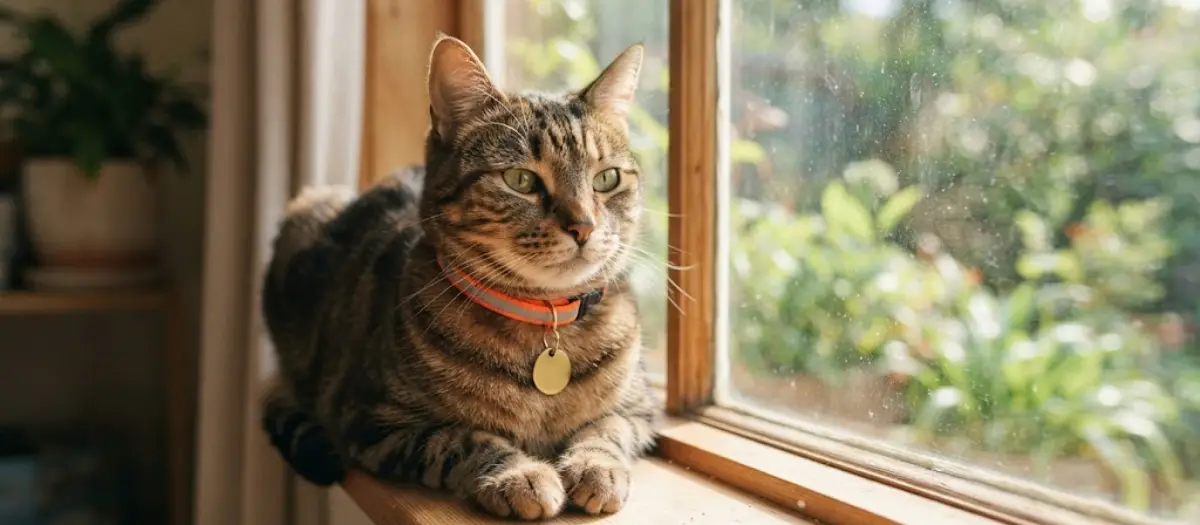
Quick answer: The best cat collar is a breakaway one, which snaps open if it catches on something, fitted with room for two fingers underneath. Our top pick is the Rogz Glowcat Safeloc, which the listing says has an adjustable release buckle and reflective, glow-in-the-dark material. A collar and tag add to a microchip, they don't replace it.
A collar gives your cat a place for an ID tag, a bell or a tracker, but the wrong one can cause harm, so the buckle matters more than the pattern. This guide compares seven breakaway collars on Amazon Australia and covers fit, bells, AirTags and kittens. If you want to take your cat outdoors on a lead, use a harness, never a collar: see our best cat harness guide. Using a magnetic cat flap? Our cat door guide explains why that collar should be a snap-open one too. Looking for a dog? Start with our best dog collars.
Quick picks
Our top pickBest overall
Rogz Glowcat Safeloc breakaway collar
Adjustable release buckle, reflective and glow-in-the-dark
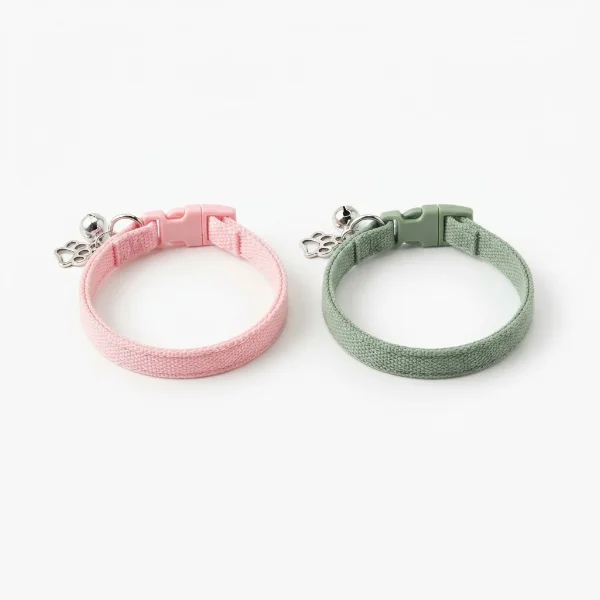
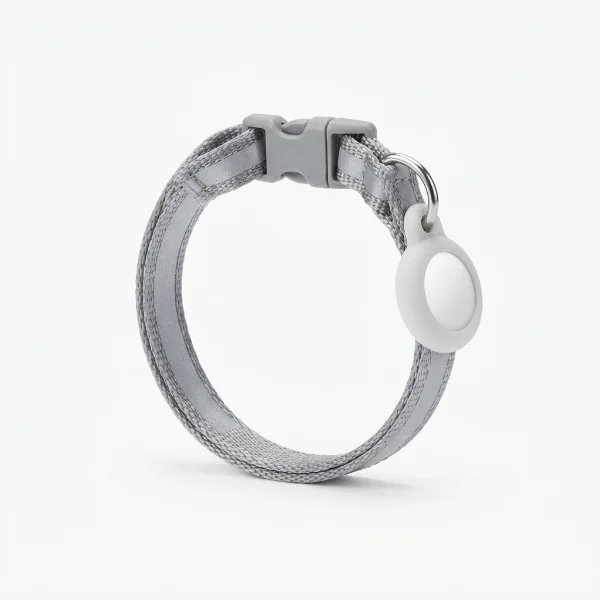
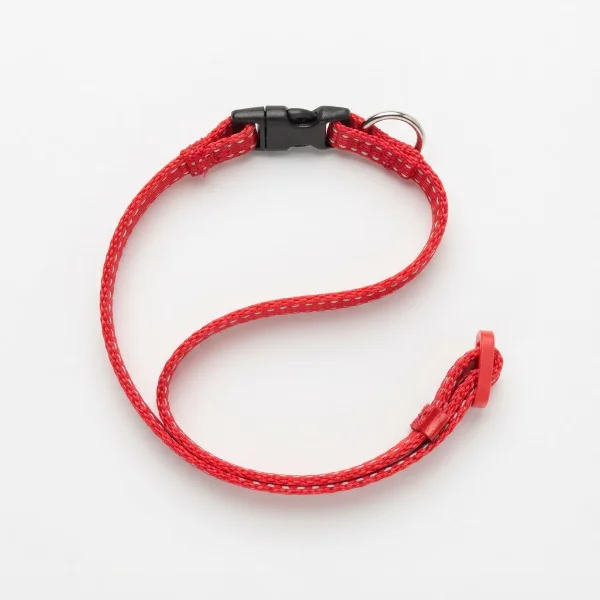
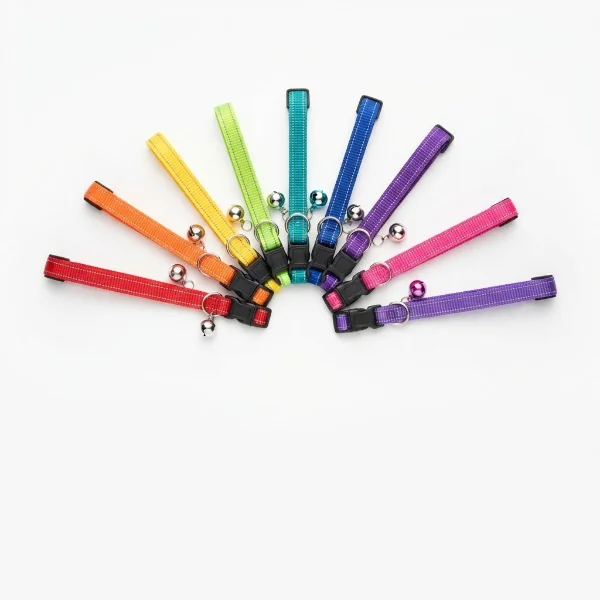
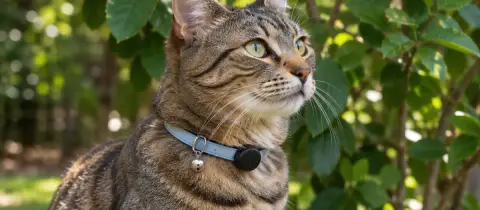
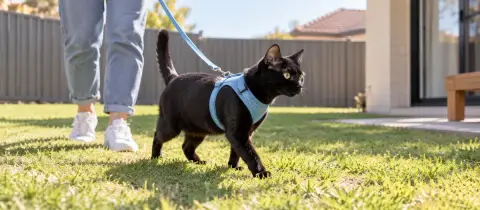
Pictures are illustrations, not the actual products.
Every collar here is sold as a breakaway or snap-open style. Collars made of elastic are left out.
Should your cat wear a collar?
It depends on your cat and your goals. A collar is a handy place for an ID tag, and the RSPCA says even indoor cats should ideally wear one in case they escape. But a microchip is the main ID. International Cat Care calls microchipping the safest and most permanent way to identify a cat.
International Cat Care (updated 26 September 2025) lists the reasons people use collars: ID tags, cat flap keys, a bell to reduce hunting and visibility at night. It also warns that collars can cause rubbing, a jaw or leg caught in the collar, or strangulation, which is why the type and fit matter (International Cat Care).
Indoor cats and cats with a catio can still slip out through a door left open, so a tag can help a finder reach you. If your cat hates collars, keep the microchip details current and talk to your vet about what suits them.
Are breakaway collars safe for cats?
Breakaway collars are the safer choice because the buckle is designed to release if the collar snags, so a cat isn't held. International Cat Care recommends a snap-open buckle that doesn't need much force to open. The trade-off is that the collar can come off and be lost, along with its tag or tracker.
A breakaway buckle is the idea that makes a collar safer, but it isn't a guarantee. The RSPCA also recommends a breakaway clip, which it says opens under force if the collar catches (RSPCA Australia knowledgebase, updated 23 February 2022) (RSPCA Australia). Never clip a lead to a collar; for walks, see our cat harness and lead guide.
International Cat Care advises against collars with an elastic section, and the RSPCA advises against fixed, non-stretch buckles as well as stretch collars. So skip elastic collars and plain fixed buckles for cats. Fixed buckles are fine on dogs, which is why our leather dog collar and personalised dog collar guides use them, but a cat needs the release.
The Rogz listings describe a Safeloc buckle with an adjustable load, meaning you can set the strain at which it releases. For a small cat, a lower load may suit, but the listing says it still breaks free under too much strain. Check the buckle opens when you give it a gentle pull, and watch how your cat moves in it.
Our picks in detail
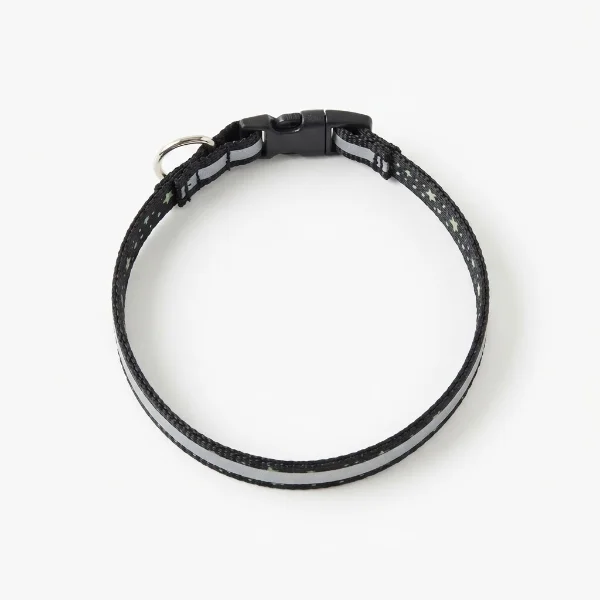
1. Rogz Glowcat Safeloc breakaway collar: best overall
A black nylon collar with a Safeloc buckle that the listing says is designed to break open if the collar snags. You can set the strain at which it breaks away using the adjustable load buckle. The listing describes reflective materials and glow-in-the-dark technology for visibility at night. It lists a bell, a nickel-plated ring and wipe-clean care, at about 30.5 cm long.
Pros: adjustable release load; reflective and glow-in-the-dark per the listing; ring for a tag; wipe clean
Cons: the listing just says "fits most cats" with no neck measurement in centimetres, so measure before buying; comes as a single collar; the bell isn't described as removable
Best for: most adult cats, and owners who want a release load they can set
Skip it if: you need a quiet collar, or you have a very small cat or kitten (see the extra small Rogz below)
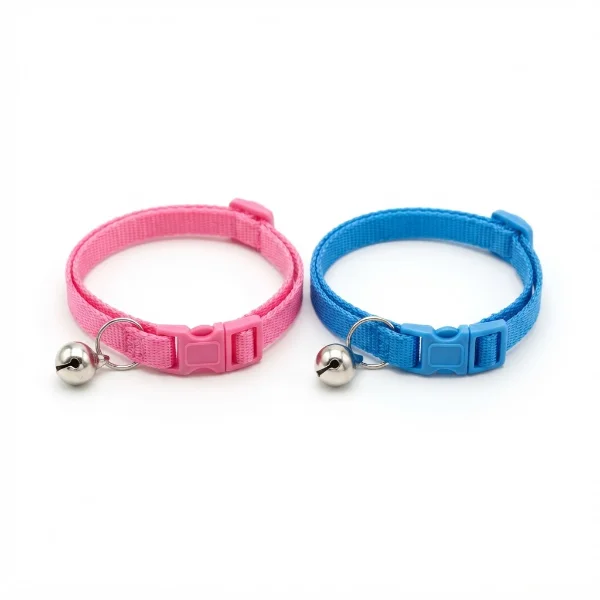
2. Faleela breakaway cat collar, 2 pack with bells: best with a bell
Two soft polyester cotton collars in a plaid pattern, each with a bell and a quick-release breakaway buckle, plus a head scarf. The listing doesn't say how the scarf attaches, so treat it as decoration for the collar only: if it slides onto the breakaway strap, fine; never tie fabric around a cat's neck, because a tied loop can't release. The listing says each collar adjusts from 7.5 to 10.8 inches and suggests leaving room for two fingers. It also says the collars suit cats and small dogs.
Pros: two collars; soft fabric; machine washable on a gentle cycle per the listing; two-finger fit advice
Cons: the details list the closure as "Buckle", while the bullets describe a breakaway one, so check it releases when it arrives; the scarf's attachment isn't described, so skip it unless it slides onto the breakaway collar; the listing says to expect 1 to 2 cm measuring differences; the description's packing list mentions one collar while the details say two, so check what arrives
Best for: a small to average cat who likes a bell and a bit of style
Skip it if: you'd like a reflective collar, or you'd rather skip the scarf
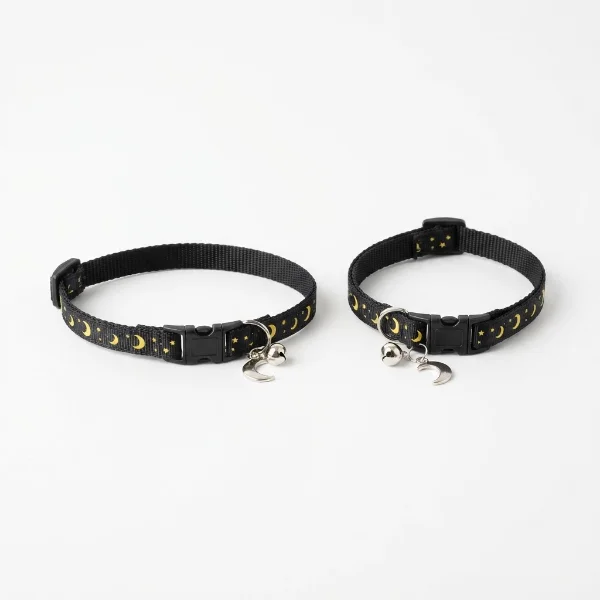
3. Moons and stars breakaway collar, 2 pack: best glow pattern
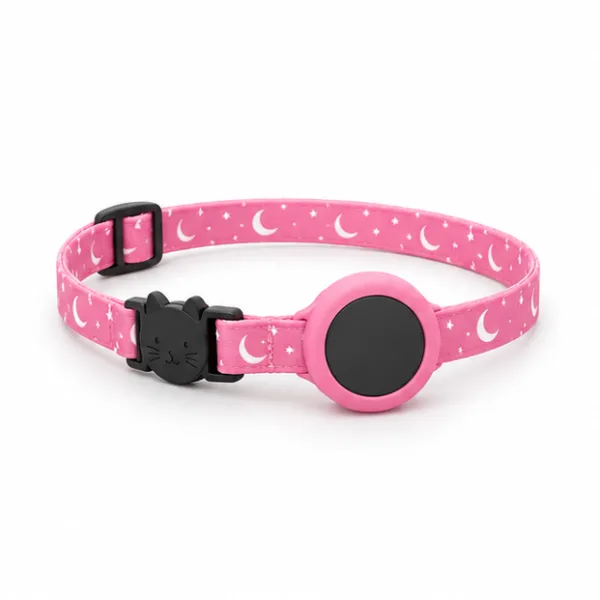
Two nylon collars in a moon and star pattern with a pendant and a removable bell. The listing says the buckle opens quickly if it catches, and that the pattern glows in the dark after light exposure. It adjusts from 6.9 to 10.7 inches.
Pros: glow pattern per the listing; removable bell; two collars; wide enough range for kittens and adults
Cons: the listing says the glow comes after sun exposure, so it isn't a lit-up collar; the pendant is extra weight to check; the listing also targets puppies, so check the size
Best for: a kitten or small cat who is out at dusk
Skip it if: you want a plain collar with no dangling pendant
4. Cotton breakaway collar, 2 pack with paw pendant: best soft cotton
Two handmade cotton collars with small bells and paw pendants, each about 7 to 11 inches long. The listing describes a detachable safety-release buckle with rounded ears to avoid scratching the neck, and says the bell can be removed or replaced. It also lists a light weight, and hand washing.
Pros: light cotton; round-ended buckle; removable bell; two collars
Cons: hand wash only; the listing's wildlife bell claim is the maker's own
Best for: a cat that dislikes stiff nylon and stays mostly indoors
Skip it if: your cat is often outside in wet weather, or you want a reflective strip
5. Reflective breakaway collar with AirTag holder: best with an AirTag holder
A black nylon collar with a breakaway buckle, a reflective strip, a bell and an elastic case designed to hold an AirTag. The listing says it adjusts from 8.66 to 13.78 inches. The included components don't list an AirTag, so assume you buy it separately.
Pros: wide size range; reflective strip; a holder made to stop the tag dangling, per the listing; bell included
Cons: the AirTag adds weight (our cat tracker guide covers this); if the buckle releases, the tracker goes with the collar; the details list silicone while a bullet says nylon rather than silicone, so check the material; the listing shows no warranty
Best for: larger or heavier cats whose owners want a tracker as well as a microchip
Skip it if: your cat is small or a kitten, or you don't want extra weight on the neck
6. Rogz Alleycat Safeloc collar, extra small: best for small cats
A narrow collar for small cats and older kittens. The listing says it adjusts for necks of 6 to 9 inches and has a Safeloc breakaway clip with an adjustable break-away load, but that it still breaks free under too much strain. It lists reflective, snag-proof webbing and a removable colour-coded bell.
Pros: made for small necks; removable bell; adjustable load; no open ends per the listing
Cons: single collar; hand wash; too small for most adult cats
Best for: small cats and kittens that have outgrown a first collar
Skip it if: your cat's neck is over 9 inches, or you want a pack of spares
7. 9 pack reflective breakaway collars with bells: best for multi-cat homes
Nine nylon collars: three reflective plain, three paw pattern and three with fruit pendants, adjustable from 7.5 to 12.6 inches. The title says breakaway, the bullets mention a snap buckle, and the details list the closure as a buckle. The listing mentions two years of after-sale service.
Pros: one collar each for a multi-cat home, plus spares; machine washable per the listing; a reflective strip on three of the nine
Cons: the listing is less clear about the breakaway buckle than the others, so check it opens under a gentle pull; fruit pendants dangle; a lot of collars if you have one cat
Best for: homes with several cats, or cats that lose collars
Skip it if: you have one cat, or want a clearly described release buckle
How to fit a cat collar
Fit the collar snug, with room for one or two fingers under it. Too loose and a leg or the jaw can catch, too tight and it can rub or press on the neck. Check it again a few minutes after putting it on, because cats often tense their necks at first.
That is International Cat Care's advice, and the RSPCA says the same two-finger idea, adding that injuries usually come from a collar that is too loose or too tight and that you should check the fit weekly.
Here is a simple routine:
Measure your cat's neck with a soft tape, then compare it with the listing's size range (see the table below).
Slide the collar on and fasten it. Check you can slide two fingers underneath without a struggle.
Trim or tuck the loose end of the strap so it can't be chewed or caught.
Watch for scratching, pawing or head shaking. Check the fur and skin under the collar regularly.
Test the buckle: it should release when you pull on it.
Kittens grow fast, so check the fit often and loosen the collar as they grow. Keep in mind that collar sizes are given by the maker, so measure rather than guess.
Cat collars compared
Details from each Amazon Australia listing, checked on 1 Nov 2026. Neck sizes are the listing's own figures, converted from inches.
We searched Amazon Australia for cat collars, then shortlisted ones that met all of these checks:
Well rated: a strong average rating with plenty of buyer reviews.
No red flags: no pattern of poor reviews, safety complaints or listing problems.
Available on Amazon Australia when we checked.
Breakaway (snap-open) buckle stated on the listing.
Adjustable size range listed, or a clear fit for small cats.
A ring or place for an ID tag where the listing shows one.
Reflective or glow claimed where the listing says so.
These are researched picks, not products we've personally used. We compared the specifications and features shown on each Amazon Australia listing, checked on 1 Nov 2026. We didn't accept payment from any brand, and no brand saw this page before it was published.
Left out this time: elastic and non-breakaway collars, flea collars (ask your vet instead), calming collars, and cat collar cameras, because of the weight on a cat's neck.
Do bells, AirTags and ID tags help?
Each does a different job. A bell can help you find your cat and may reduce hunting, an ID tag lets a finder call you, and a tracker can help you search. None replaces a microchip, and anything that dangles can snag. Keep add-ons small and light.
On bells, International Cat Care says they can help reduce hunting but should be fully sealed with no slits where claws could catch. The RSPCA says bells help at first, but cats often adapt their stalking to avoid the noise. Treat a bell as one tool among several.
For ID, the RSPCA suggests a tag with your cat's name and one or two phone numbers, updated when they change. It lists engraved tags, GPS trackers, embroidered collars and a number written on the collar with permanent pen as options.
An AirTag or similar tracker is a heavier add-on. If a breakaway buckle does its job, the tracker falls off with the collar, so it can't be your only plan. Keep the microchip details current, and keep your cat's tag legible. For a festive version with a bow tie, see our cat Christmas outfit guide, which is built around breakaway collars.
How do you get a cat used to a collar?
Go slowly and make it pleasant. Let your cat sniff the collar, put it on for a few minutes while you play or offer a treat, then take it off before they fuss. Build up the time gradually. Results vary, so watch your cat's body language.
International Cat Care says to pair the collar with positive things like play, food or treats, and that getting a kitten used to a collar early is easier than introducing one to an adult cat. Count any treats toward the day's food.
Don't force it. If your cat is frozen, scratching hard or hiding, take the collar off and try again another day, or ask your vet. Never punish a cat for pulling at a collar. Check the fit again after a few minutes, because cats often tense their neck at first.
When to see a vet
Take the collar off and call your vet if your cat is rubbing or scratching at their neck, or if you notice hair loss, redness or sores under the collar.
Treat it as urgent if a collar has caught in your cat's mouth or under a front leg, or if there is any wound. Cut or release the collar carefully and see a vet. Our kitten-proofing guide covers other household hazards.
Frequently asked questions
Should my cat wear a collar?
It's a personal choice. A collar with an ID tag helps someone contact you if your cat gets out, and the RSPCA suggests even indoor cats ideally wear one. A microchip is still the main ID. If your cat tolerates a breakaway collar, it's worth considering.
Are breakaway collars safe for cats?
They're the safer type, because the buckle is made to release if the collar snags. International Cat Care recommends a snap-open buckle and advises against elastic sections. The downside is that the collar, tag and any tracker can come off, so keep the microchip details current.
Do bells on cat collars stop hunting?
Not reliably. International Cat Care says bells can help reduce hunting, if they are sealed so claws can't catch. The RSPCA says cats often adapt their stalking to avoid the noise. A bell is one tool, alongside keeping your cat in at night.
How tight should a cat collar be?
Snug, with room for one or two fingers underneath. International Cat Care and the RSPCA give this same guide. Check again a few minutes after fitting, then regularly. The RSPCA suggests weekly, because too loose or too tight is when injuries happen.
Can a cat wear an AirTag?
Some collars have a holder for one, but it adds weight and goes with the collar if the breakaway buckle opens. It can help you search, but it doesn't replace a microchip or an ID tag. Choose a lightweight holder and a collar that fits.
What age can a kitten wear a collar?
We didn't find a set age on the sources we read. International Cat Care says getting a kitten used to a collar early is easier than introducing one later. Choose a small, light breakaway collar, check the fit often as they grow, and ask your vet.
Do indoor cats need a collar?
Not strictly, but it can help. The RSPCA says indoor cats should ideally wear one in case they escape, and should always be microchipped. If your cat is a door-dasher, a tag with your phone number gives a finder a quick way to reach you.
Product details from each linked Amazon Australia listing, checked on 1 Nov 2026.
This guide provides general information and isn't a substitute for veterinary advice. If you're concerned about your cat's neck, skin or safety, speak with your vet.