Research guide. WhiskerFinds may earn a commission from links, at no extra cost to you.
Quick answer: The right cat door depends on which animals you want to let through. If neighbourhood cats are a worry, a microchip cat door is designed to open only for your cat, and the SureFlap Microchip Pet Door is our microchip pick. A magnetic flap needs a collar key, and a basic 4-way flap lets any cat in.
A cat door (also called a cat flap) is a small way in and out for your cat, but the type you choose changes who else can use it, where it can be fitted and how much work the install is. This guide compares five cat doors on Amazon Australia and covers glass and windows, sizing, strays, curfews and training. For the bigger picture, including walls, security screens and renting, see our guide on how to install a dog door, which applies to cat flaps too.
Quick picks
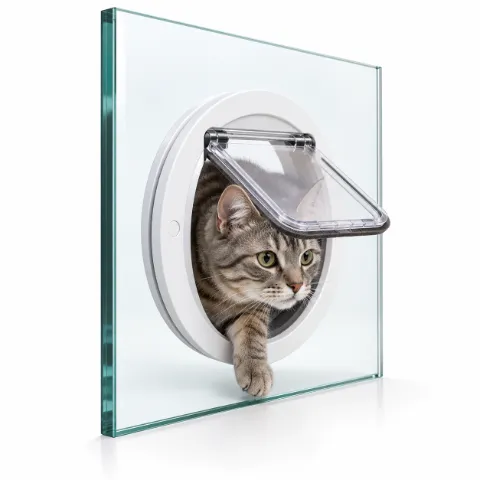
Cat Mate 4-Way Cat Flap for Glass Doors, 24.5 cm
Round flap made for glass, with 4 lock settings
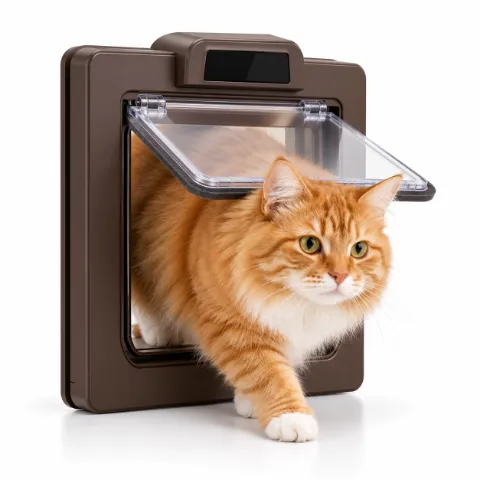
SureFlap Microchip Pet Door
Reads your pet's microchip and has a timed Curfew Mode; the larger SureFlap model
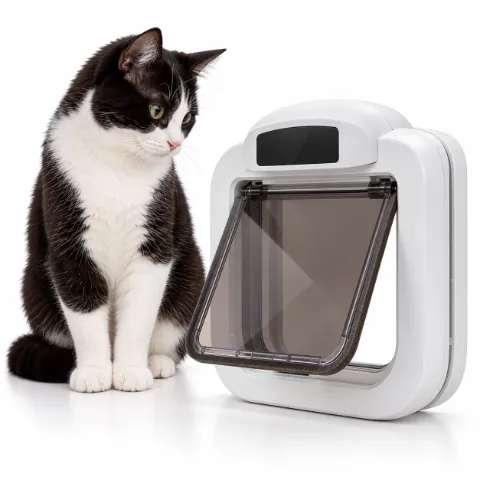
Cat Mate Microchip Activated Cat Flap 360
Reads a microchip or ID disc, up to 30 pets
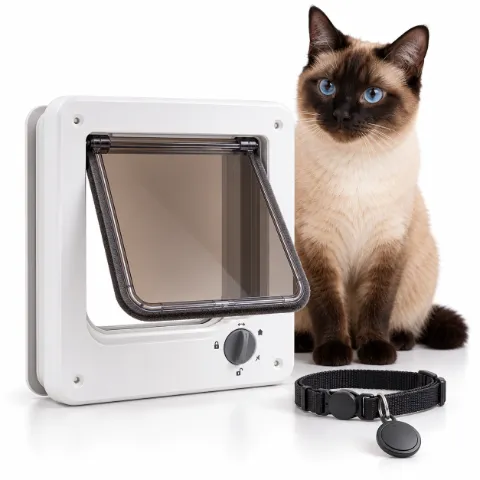
PetSafe Staywell Deluxe Magnetic Cat Flap
No batteries, only pets wearing the magnetic key collar can use it
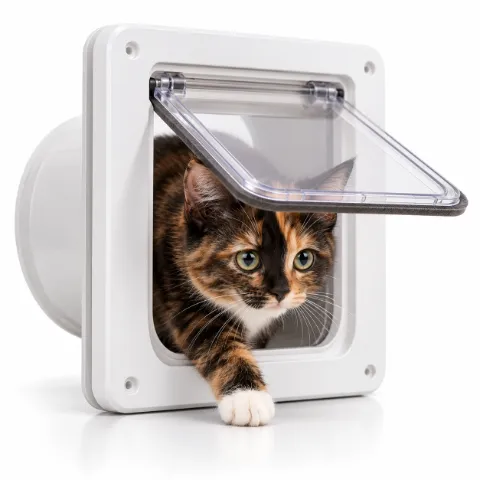
PetSafe Staywell 4 Way Locking Classic Cat Flap with tunnel
Simple 4-way lock with a cutting template
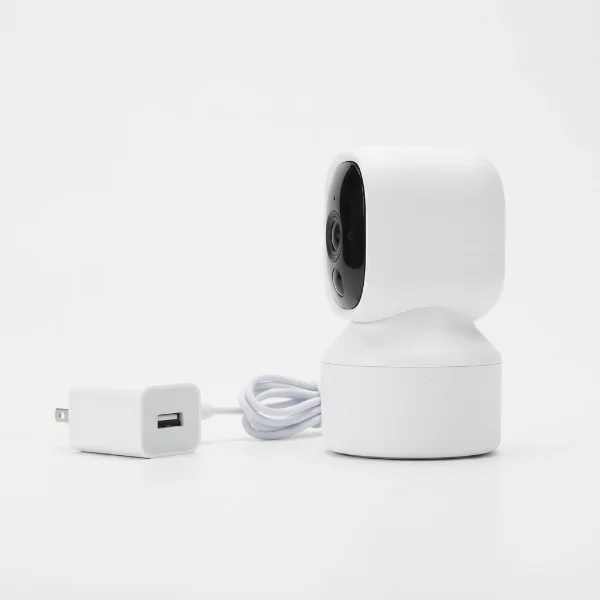
Tapo C200 pan and tilt camera
Lets you check in on your cat while you're out.
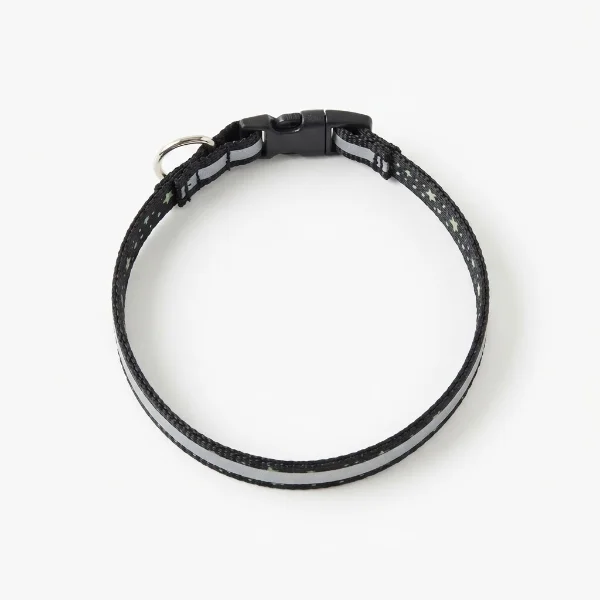
Rogz Glowcat Safeloc breakaway collar
A breakaway collar that makes your cat easier to see at dusk.
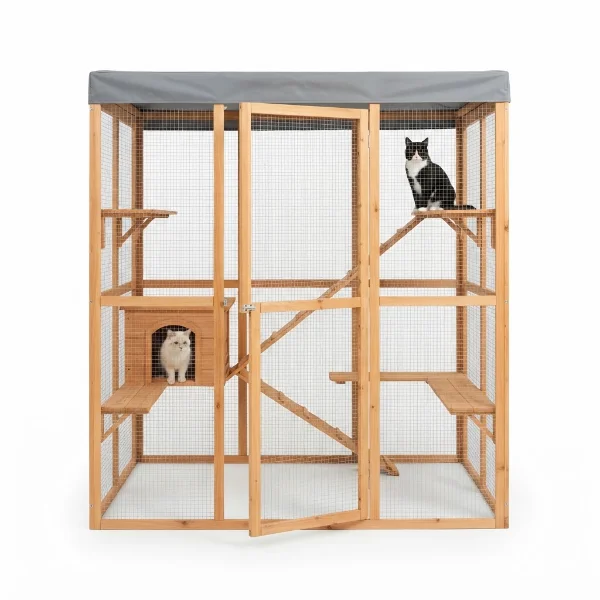
PetsCosset 71 inch walk-in catio
A safer outdoor space for a cat who wants fresh air without roaming.
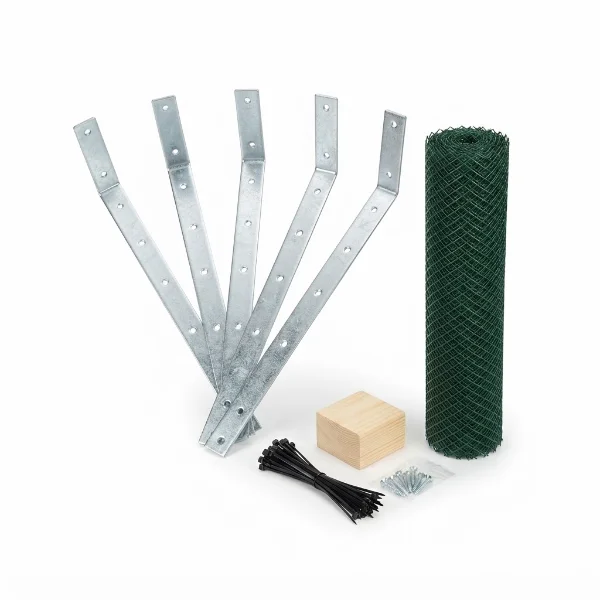
Cat-proof fence kit
A way to keep your cat inside your own garden once they're using the flap.
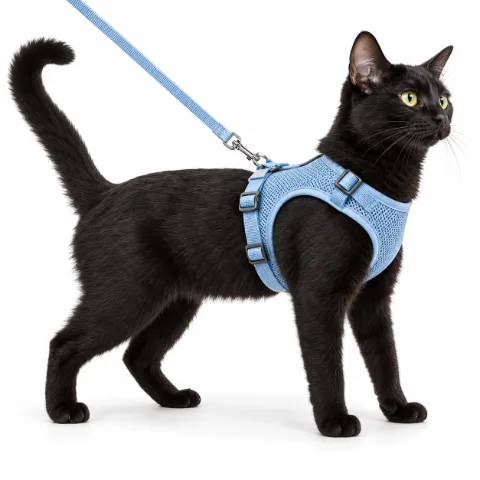
Cat harness and lead set
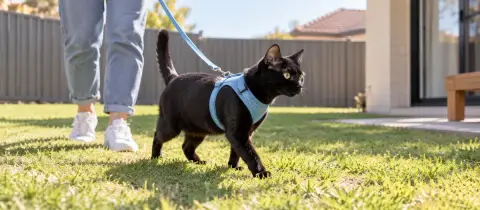
Supervised outdoor time for a cat who enjoys it, with the lead clipped to the harness and never a collar.
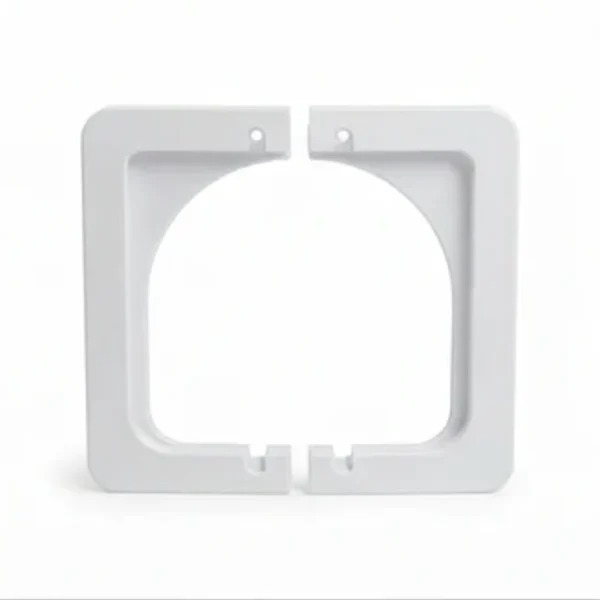
The Kitty Pass interior cat door
If the flap you need is between rooms rather than to the outdoors, an interior cat door is worth a look.
Pictures are illustrations, not the actual products.
If you need to fit a flap into a wall or a thicker door, our related gear section covers tunnel extenders and adapter kits.
Which type of cat door do you need?
There are three main types of cat door. A basic flap opens for any cat that pushes it. A magnetic flap opens only for a cat wearing a magnetic key. A microchip flap reads your cat's microchip and opens only for cats it has been taught. Pick by who you want kept out.
| Type | Lets in | Needs | Best for |
|---|---|---|---|
| Basic 4-way flap | Any cat (or small animal) that pushes it | Nothing, just a cut-out | One-cat homes where visitors aren't a worry |
| Magnetic key flap | Only a cat wearing the magnetic key | A collar for your cat | Households that want no batteries |
| Microchip flap | Only microchips programmed into it | Batteries, and your cat's microchip | Homes with stray or neighbourhood cats about |
Whichever you choose, the flap is only one part of the setup. If your cat shares the house with a dog, the dog door guides on our site, such as our large dog door guide, cover bigger openings. For a cat flap in a security screen or flyscreen, see our cat door for screen door guide.
Where can you fit a cat flap?
You can fit a cat flap in most timber doors, glass doors and windows, sliding doors, screen doors and, with a tunnel, walls. Each needs a different product and sometimes a tradesperson. Check the thickness of the door and the cut-out size against your cat's measurements before you buy or cut anything.
| Where | What you need | Our guide or pick |
|---|---|---|
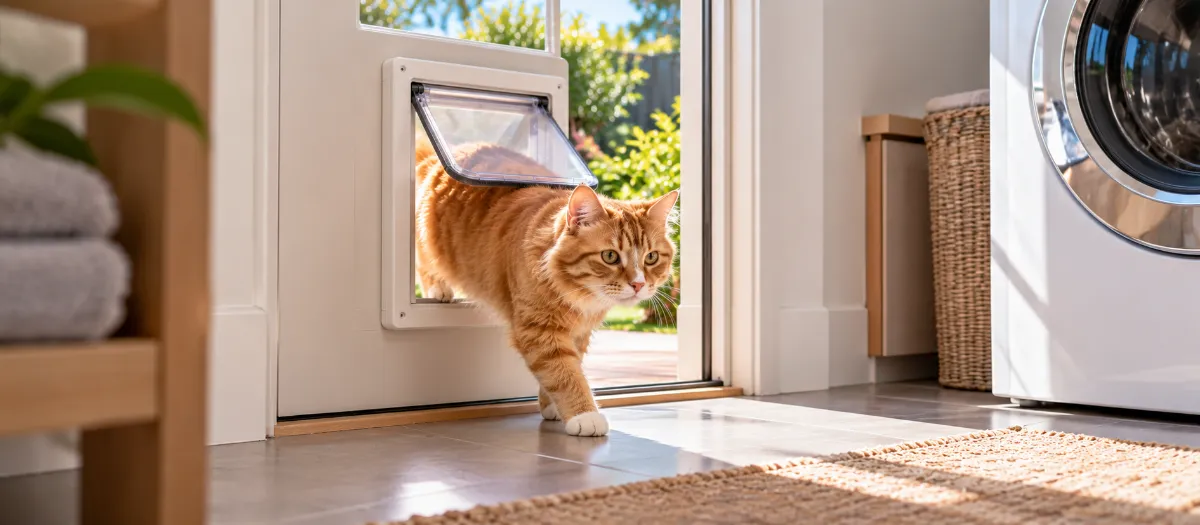
| Timber or hollow door | A standard flap and the maker's cutting template; check the door thickness against the listing | Cat Mate Microchip 360 (doors up to 35 mm) or PetSafe Staywell Classic with tunnel (doors up to 6 cm) |
| Glass door or window | A flap made for glass, and a glazier to cut the hole or make a new pane | Cat flaps for windows and glass, or the glass section below |
| Sliding door | An insert panel that slides into the track, so nothing is cut | Best dog door for a sliding glass door |
| Screen door or fly screen | A flap made for screens | Best cat door for a screen door |
| Wall | A tunnel extender or adapter kit for the thickness, and a check for hidden wiring and pipes first | Cat doors for walls, or our related gear section below |
| Internal door | A basic flap; a lock is often not needed, for example to keep the dog out of the litter room (our own suggestion) | Interior cat doors, or PetSafe Staywell Classic with tunnel |
Our picks in detail
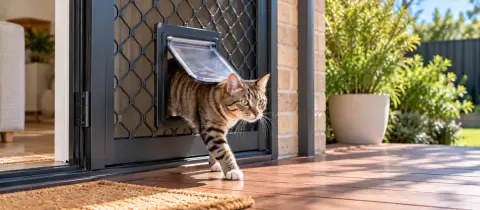
1. Cat Mate 4-Way Cat Flap for Glass Doors, 24.5 cm: best for glass doors and windows
A round, 4-way locking cat flap designed to be fitted into glass. The listing describes it for small to average-sized cats and says you can lock it in and out, in only, out only or fully locked. It lists a super-tough polymer build and describes the flap as tamper-proof and silent, which are the maker's claims. The glass needs a round hole cut by a glazier, and toughened glass usually needs replacing with a new pane made with the hole.
- Pros: made for glass; four lock settings
- Cons: not selective, so any cat can use it; suits small to average cats only; glass work needs a glazier
- Best for: a glass door or window, and a cat who is small to average in size
- Skip it if: you have a large cat, or you rent and can't change the glass
2. SureFlap Microchip Pet Door: best microchip
The larger SureFlap model. The listing says it works with your pet's existing microchip to keep intruder animals out, and that it's compatible with all microchip formats. It also works with a SureFlap RFID collar tag (one is supplied), has a Curfew Mode that locks and unlocks at set times, and runs on 4 C batteries for up to a year, per the listing. The listing gives the exterior as about 26.2 x 28.1 cm and the cut-out as about 20.7 x 23.4 cm. SureFlap doors are also sold by vets and pet-door specialists, and the Cat Mate 360 below is the other microchip option here.
- Pros: reads a microchip, no collar needed; Curfew Mode; larger opening for bigger cats; RFID tag supplied for cats without a chip
- Cons: needs batteries; the cat's microchip must be programmed in; a larger cut-out than a standard flap; a glass fit needs a separate mounting adaptor
- Best for: homes with stray or neighbourhood cats, and larger cats
- Skip it if: you want a battery-free flap, or your cat is tiny and a smaller flap would do
3. Cat Mate Microchip Activated Cat Flap 360: microchip alternative
A microchip flap that, per the listing, reads your cat's microchip or a Cat Mate ID disc (sold separately) and can store up to 30 pets. You programme it with a button, it has a 2-way lock and a magnetic closure, and it fits doors including metal up to 35 mm thick. Walls, glass panels and thicker doors need an adapter kit, sold separately. Check the listing for the battery type.
- Pros: microchip or ID disc; up to 30 pets; programmed with a button; metal doors up to 35 mm
- Cons: imported, so check the delivery details on Amazon before you order; only a 2-way lock; needs an adapter kit for walls and glass; check the batteries it needs
- Best for: multi-cat homes that want a microchip flap and have a standard door
- Skip it if: you need more than a 2-way lock
4. PetSafe Staywell Deluxe Magnetic Cat Flap: best magnetic key
A magnetic cat flap. The listing says only pets wearing the magnetic key collar can use it, and that it locks four ways: fully open, fully closed, in only and out only. There are no electronics to charge, but your cat has to wear the key every time they go through.
- Pros: no batteries; four lock settings; only a pet with the key can open it, per the listing
- Cons: your cat must wear a collar, and should be a breakaway one (see this page); a lost or removed key means a locked-out cat
- Best for: cats that already wear a snap-open collar and owners who don't want batteries
- Skip it if: your cat dislikes collars, or you'd rather have a microchip flap
5. PetSafe Staywell 4 Way Locking Classic Cat Flap with tunnel: best basic
A simple flap that locks four ways. The listing mentions a cutting template, and the halves screw together. The "with tunnel" model has a fixed tunnel for doors up to 6 cm thick, which can't be extended. The listing mentions a 3-year manufacturer's warranty.
- Pros: simple to understand; cutting template; four lock settings; tunnel included
- Cons: not selective, so any cat can use it; imported, so check the delivery details on Amazon before you order; the tunnel can't be extended for thicker walls
- Best for: a standard door where you only need a plain flap
- Skip it if: neighbourhood cats are a worry, or your wall is thicker than 6 cm
Microchip or magnetic cat flaps: which is better?
Neither is better for everyone. A microchip flap needs no collar and can learn several cats, but it needs batteries. A magnetic flap has no batteries, but your cat must wear the key on a collar every time. Think about your cat's comfort with collars and how many cats you have.
International Cat Care (updated 26 September 2025) says magnetic or electronic keys on collars were once the only way to make a flap selective, and that microchip flaps now let a cat in without a collar (International Cat Care). The same page recommends a snap-open collar that releases a trapped cat, and says it would never recommend a collar with an elastic section. The RSPCA's knowledgebase also recommends a breakaway clip, which it says will snap open if snagged (RSPCA Australia knowledgebase, updated 23 February 2022).
So if you go magnetic, choose a quick-release collar, check the fit with one or two fingers under it, and recheck after a few minutes. Microchipping your cat is worth doing anyway. International Cat Care calls it the safest and most permanent way to identify a cat.
What is a secure cat door?
A secure cat door is one that opens only for your cat and locks when you want it shut: a microchip or magnetic flap with a lock setting, fitted so the opening is no bigger than your cat needs. A basic flap can be locked but not made selective. For a security screen door, a flap made for screens is the secure option.
Can you put a cat flap in glass or a window?
Yes, but a glazier needs to do it. Cat flaps for glass fit into a round hole in the pane, and glass that has been toughened can't be cut or drilled afterwards. In that case the pane is usually replaced with new glass made with the hole. Ask a glazier to quote before you buy.
Viridian Glass, an Australian glass maker, says the stresses locked into toughened glass mean it can't be further altered, and that trying to cut or alter it will almost certainly break it (Viridian Glass). Never cut glass yourself.
The Cat Mate 4-Way Cat Flap for Glass Doors in this guide is the one made for this job. For sliding glass doors where you'd rather not cut anything, see our dog door for sliding doors guide, which covers insert panels that slide into the track (these suit small dogs and cats too). If you rent, read the next paragraph first.
Renting matters here. In Australia, renters generally need the landlord's (or agent's) written consent before making changes such as cutting a pet door, and the rules differ by state, so check yours. NSW's government page says tenants can make changes if the lease allows them or the landlord gives written permission, and lists fly screens on windows among the minor changes a landlord can't unreasonably refuse (NSW Government). It doesn't name pet doors, so ask. Removable options are often the renter-friendly choice, but still check your lease.
What size cat flap do I need?
Measure your cat's shoulder height and widest point. The top of the flap should sit a little above the shoulder, and the opening should be wide enough for the widest part of your cat. Then compare those numbers with the maker's size chart, because opening sizes vary a lot between models.
PetSafe's sizing advice for its pet doors is to measure the chest width and the height from the top of the back, above the shoulders, to the lowest point of the ribcage, then match both to the chart, choosing the larger size if the two disagree (PetSafe support). It's written for dogs, but the method works for cats. Keep the step-over low too, especially for kittens and older cats.
For a sense of how tight the standard cat flaps can be, Sure Petcare's support page gives the smallest opening on its standard microchip cat flap as 142 mm wide by 120 mm high, with a 165 mm by 171 mm cut-out for doors and walls (Sure Petcare). The larger SureFlap Microchip Pet Door in this guide lists an exterior of about 26.2 x 28.1 cm and a cut-out of about 20.7 x 23.4 cm. Measure twice, and don't go bigger than your cat needs.
How do you keep stray cats and wildlife out?
Use a selective flap and keep it locked when you're away or at night. Microchip and magnetic flaps are designed to open only for your cat, while a basic flap lets in any cat or small animal that pushes it. A smaller opening, and not fitting a bigger door than needed, also helps.
Selective flaps only work once they're set up. Sure Petcare advises programming your cat's microchip into a SureFlap before installation so you don't accidentally add a neighbour's cat, and notes that while a flap is propped open, any cat can get in (Sure Petcare). Practical advice: lock the cat door when you go out and overnight.
The SureFlap Microchip Pet Door listing says it works with your pet's existing microchip to keep intruder animals out, and the listing for the Cat Mate microchip flap says it reads a microchip or ID disc. These are the makers' claims, so watch how it works in your own home. If other animals keep turning up, a basic flap isn't the right choice.
Should you lock a cat flap at night? Cat curfews and locking modes
Often, yes. Some Australian councils require cats to be contained at night or at all times, and rules vary, so check your council (our cat curfew rules guide covers each state). A lockable flap lets you keep your cat in when it matters. Microchip flaps can lock and unlock on a schedule, and 4-way flaps let you choose.
For example, Maribyrnong City Council in Victoria says cats must be safely contained on their owner's property between 7pm and 7am (Maribyrnong City Council). Hepburn Shire's curfew took effect on 1 July 2023 and requires cats to be confined to their owner's property from sunset to sunrise unless they are contained or controlled, and its page says the RSPCA and the Cat Protection Society of Victoria support curfews (Hepburn Shire Council). Other councils differ, so look up your own.
The 4-way flaps in this guide have four lock settings: open both ways, in only, out only and fully locked. "In only" is handy at bedtime: your cat can come home but can't go out. The listing for the SureFlap Microchip Pet Door mentions a Curfew Mode that locks and unlocks at set times. For safe outdoor time on a lead, see our best cat harness guide or the wider cats section.
Cat doors compared
Details from each Amazon Australia listing, checked on 13 Nov 2026.
| Flap | Type | Fits | Locks |
|---|---|---|---|
| Cat Mate 4-Way for Glass Doors | Basic, glass | Glass, 24.5 cm round flap | 4-way |
| SureFlap Microchip Pet Door | Microchip | Doors and walls (cut-out about 20.7 x 23.4 cm) | Curfew Mode |
| Cat Mate Microchip 360 | Microchip | Doors up to 35 mm thick; adapter kit for walls and glass | 2-way |
| PetSafe Staywell Deluxe Magnetic | Magnetic key | See listing for door fit | 4-way |
| PetSafe Staywell Classic with tunnel | Basic | Doors up to 6 cm thick | 4-way |
How we chose
We searched Amazon Australia for cat doors and cat flaps, then shortlisted ones that met all of these checks:
- Well rated: a strong average rating with plenty of buyer reviews.
- No red flags: no pattern of poor reviews, safety complaints or listing problems.
- Available on Amazon Australia when we checked.
- Locking modes stated on the listing.
- Fit range stated: door thickness, glass or wall fitting is clear.
- For microchip flaps: the listing says it works with standard microchips (a brand claim, which we attribute).
These are researched picks, not products we've personally tested. We compared the specifications and features shown on each Amazon Australia listing, checked on 13 Nov 2026. We didn't accept payment from any brand, and no brand saw this page before it was published.
Left out this time: a well-known microchip cat flap that wasn't available on Amazon Australia when we checked, a microchip flap that didn't pass our well rated check, and interior-only cat doors, which now have their own guide.
Related gear
Two add-ons that solve a different problem, a wall or a glass panel that doesn't suit the flap as it comes.
SureFlap Pet Door Tunnel Extender. For thicker walls. Check that it's made for the Pet Door model before you buy.
Pet Mate Cat Flap Adapter Kit. It's imported, so check the delivery details on Amazon before you order. The listing describes it as an adapter kit for walls and glass panels, for Cat Mate flaps.
How do you train a cat to use a cat flap?
Use rewards, patience and never force it. Prop the flap open so your cat can see through, put a treat on the other side, then remove the prop only once your cat goes through happily. Pushing a cat through the flap can put them off, so let them take their time.
Sure Petcare's advice is to hold the flap open with a peg or tape, tempt your cat through with a treat (count it in their daily food), and remove the prop only when they're comfortable. It says training can take days or weeks, and that opening the door for your cat can undo progress (Sure Petcare, 30 October 2019). Results vary from cat to cat.
Be careful about where the flap leads. Don't fit a cat door that opens onto a road, a pool area or an unfenced yard (see cat proof fence options), and check your council's cat rules. A catio or enclosure is one way to give outdoor time more safely. Treat-based training can also help with a nervous cat, and our cats enrichment page has ideas for indoor play while they settle in.
When to get help
Call a glazier for any glass work, and never cut glass yourself. Check for hidden wiring and pipes before cutting a wall. Western Australia's Building and Energy says concealed cables are a risk when drilling and to contact a licensed electrical contractor if you hit one, and other states have similar rules, so use a licensed electrician for anything electrical.
If you rent, ask your landlord or agent before you change anything; see NSW Government: making changes to a rental property as an example, and check your own state.
Call your vet if your cat is hurt by the flap, or if they won't settle or seem afraid to go near it after a reasonable time.
Frequently asked questions
Do microchip cat flaps work with all microchips?
The SureFlap listing says so: it says the Microchip Pet Door is compatible with all microchip formats, which is the brand's claim. Cat Mate's flap reads a microchip or an ID disc. Check the listing, and test the flap with your cat's chip before cutting anything.
What is a smart cat flap?
A flap that reads your cat's microchip or a tag, and in some models connects to an app to log comings and goings or lock on a schedule. The SureFlap here is a microchip flap with a timed Curfew Mode but no app. We haven't checked the app-connected models, so compare their listings before buying.
Do cats need a cat flap?
No. A contained indoor cat, or one with a catio, does fine without one, and many councils now expect cats to be kept in at night anyway. A flap suits a household that wants the cat to come and go during the day without someone on door duty. If that's not you, skip the cut-out. Our guide to whether you should get a cat flap goes through it by situation.
Are magnetic cat flaps safe?
The flap itself is fine, but the collar is the risk. International Cat Care recommends a snap-open collar that releases if your cat gets trapped, and would never recommend one with an elastic section. Use a breakaway collar (we compare them in our cat collar guide), check the fit with one or two fingers, and consider a microchip flap instead.
Can you put a cat flap in a glass door?
Yes, with a glazier. A cat flap for glass needs a round hole, and toughened glass can't be cut afterwards, so the pane is usually replaced. See our glass section above. Never cut glass yourself, and ask your landlord first if you rent.
How do I stop other cats coming through my cat flap?
Choose a microchip or magnetic flap, which the makers design to open only for your cat, and lock it overnight and when you're out. Programme your cat's chip in before you prop the flap open. Our stray and wildlife section has more.
Can a cat flap be locked at night?
Yes. All the flaps in this guide lock, and the 4-way ones have an "in only" setting, so your cat can come in but not go out. The SureFlap listing mentions a Curfew Mode that locks and unlocks at set times, which can help if your council has a cat curfew.
Do cat flaps let in cold air or bugs?
Some can. No flap is a perfect seal, and the listing for the Cat Mate microchip flap describes a magnetic closure it calls draught-resistant, which is the brand's claim. A tunnel in a thick wall also leaves a gap. Keep the flap locked closed when your cat is inside, and consider a screen in fly season.
How do you install a cat flap?
Measure your cat's shoulder height and widest point, then check the flap's cut-out size and your door's thickness. Mark the opening using the maker's template, cut carefully and fit both halves. Glass needs a glazier, and toughened glass usually means a new pane made with the hole. Our dog door install guide has the step by step.
Related guides
- Should you get a cat flap?
- Cat flaps for windows and glass
- Cat doors for walls
- Interior cat doors
- Small dog doors
- How to install a dog door: glass, walls and security screens
- Best dog door for a sliding glass door
- Best cat door for a screen door
- Best large dog door
- Best cat harness
- Cats
Sources
- International Cat Care: Should my cat wear a collar? (updated 26 September 2025)
- RSPCA Australia knowledgebase: What type of cat collar should I use? (updated 23 February 2022)
- NSW Government: Making changes to a rental property
- Viridian Glass: How we process glass
- Western Australia Government: Having electrical work done (updated 26 November 2024)
- Sure Petcare: Microchip cat flap support (Australia)
- Sure Petcare: How to train a cat to use a cat flap (30 October 2019)
- PetSafe support: How to measure my dog to determine which size PetSafe plastic pet door is needed
- Maribyrnong City Council: Cat curfew
- Hepburn Shire Council: Cat curfew
- Product details from each linked Amazon Australia listing, checked on 13 Nov 2026.
This guide provides general information and isn't a substitute for veterinary advice. If you're concerned about your cat's safety at home, speak with your vet.