Cat doors for walls: tunnel kits for weatherboard, brick veneer and double brick
By Anish PuriUpdated 21 Nov 202613 min readResearched, not tested by us
Research guide. WhiskerFinds may earn a commission from links, at no extra cost to you.
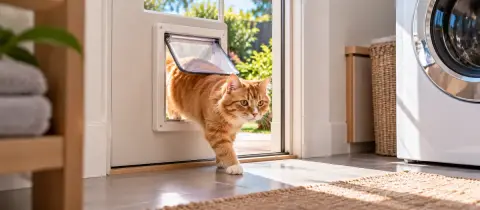
Quick answer: A cat door for a wall needs a tunnel that spans the whole wall, so measure the wall's depth first. For walls 12.1 to 18.4 cm thick, the Baboni Pet Door for Wall (Small) is our top pick for cats up to 5.4 kg. Thicker walls need a kit with extensions, and brick is a job for a tradesperson.
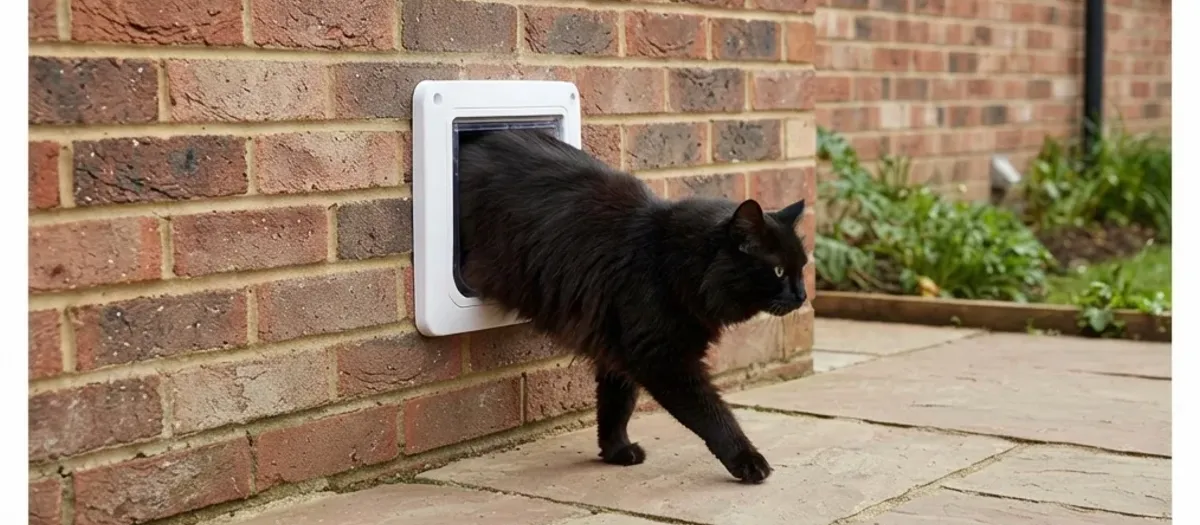
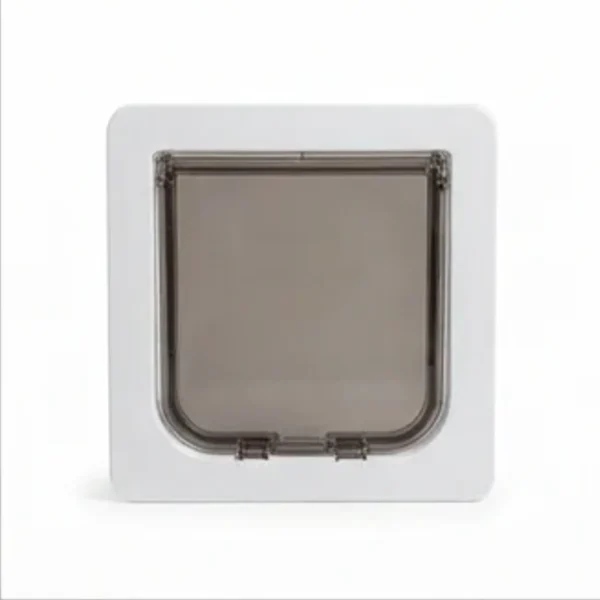
Illustration, not the actual product
Our top pickBaboni Pet Door for Wall, Small (2-flap)
A standard cat flap tunnel is only about 7 cm deep (Sure Petcare gives 70 mm for its microchip flap), so it suits a door, not a wall. Wall kits have a telescoping tunnel that lengthens to fit. Most on Amazon Australia are dog-sized, so this page is the narrow set that suits cats. Big dogs belong on our large dog door guide, small dogs on our small dog door guide, and the fitting steps are in how to install a dog door.
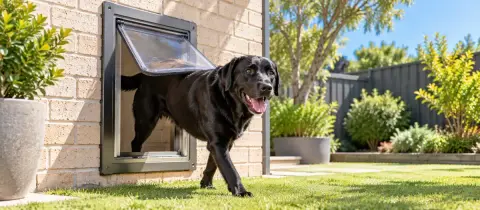
Pictures are illustrations, not the actual products.
Wall cat doors compared
Details from each Amazon Australia listing, checked on 20 Nov 2026. "Not stated" means the listing doesn't say.
Swipe sideways to see every column
Kit
Wall range (cm)
Flap opening (cm)
Pet weight (kg)
Frame
Lock or cover
Baboni Small
12.1 to 18.4
13.3 x 20.6
Up to 5.4
Steel and aluminium alloy
Double flap; a lock is named in the title with no detail
PetSafe Never Rust Small
12.1 to 18.4; extension kits sold separately
13.3 x 20.6
Up to 6.8
Plastic (PVC)
Double flap, slide-in closing panel
PetSafe Microchip Cat Flap
Not stated; accessories sold separately
Not stated
Up to 8
Plastic
4-way manual lock, dual auto locks
Staywell Original Medium
Not stated; the listing mentions a tunnel extension but doesn't confirm one for the Medium
Not stated
Up to 18
Plastic
Snap-on closing panel
How do I measure my wall for a cat door?
Measure the wall from the outside face to the inside face at the exact spot where the door will go, including cladding, the cavity and the inner lining. Then pick a kit whose tunnel range covers that number. A tunnel that is too short leaves a gap, and don't plan on cutting a long one down unless the maker says you can.
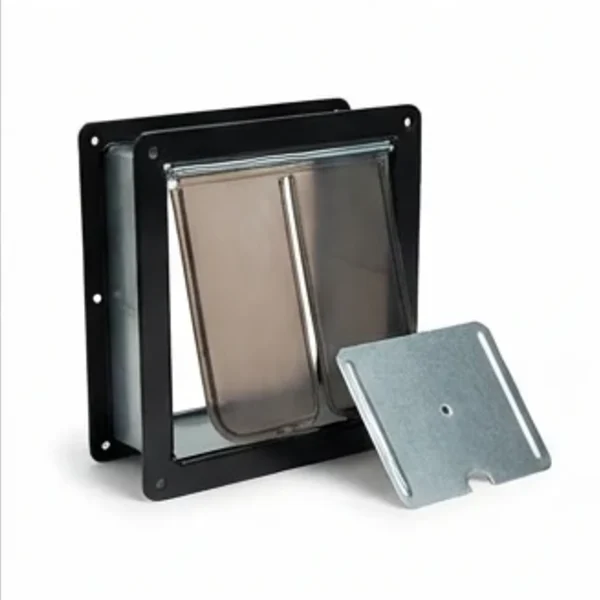
The only cat-sized pick with a metal frame and a telescoping tunnel in the one kit. The listing says the tunnel suits walls 4 3/4 to 7 1/4 in (12.1 to 18.4 cm) thick, the flap opening is 13.3 x 20.6 cm, the frame is 23.5 x 33.3 cm and the wall cut-out is 17.1 x 25.4 cm. It lists a laser-welded steel and aluminium alloy frame, a double flap, and a cutting template with instructions.
The listing gives a limit of 5.4 kg (12 lb) for pets, which covers many cats but not a big one. The listing makes claims about weatherproofing, energy efficiency and thermal insulation; those are the maker's words, so don't count on them in a storm or a cold snap.
Pros
Metal frame, per the listing
Telescoping tunnel for 12.1 to 18.4 cm walls
Double flap; cut-out template included
Cons
Weight limit of 5.4 kg, so not for large cats
The listing names no extension for walls thicker than 18.4 cm
The listing says Baboni is a new brand
Best for: an average-sized cat and a wall within the 12.1 to 18.4 cm range.
Skip it if: your cat is over 5.4 kg or your wall is deeper than 18.4 cm.
2. PetSafe Never Rust Wall Entry Pet Door, Small: best for walls thicker than 18.4 cm
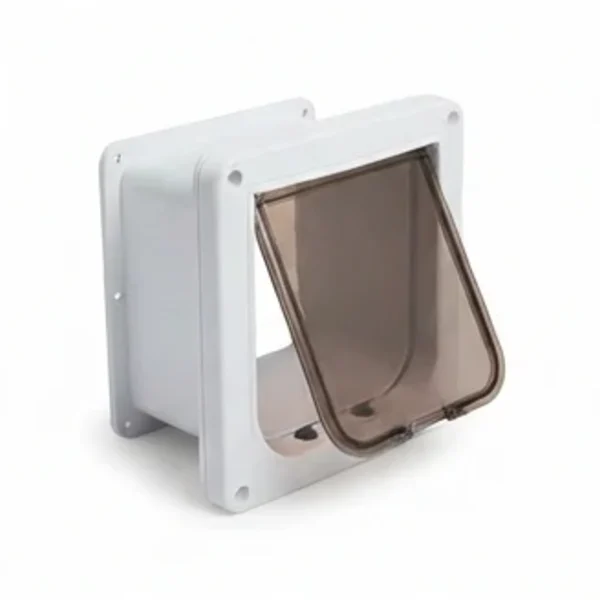
The same 12.1 to 18.4 cm tunnel range and 13.3 x 20.6 cm opening as pick 1, but the listing says compatible extension kits are sold separately for thicker walls. That makes it the one to price up for double brick, once a tradesperson has measured the wall. Extension kits must match the model, so check the maker's chart before you order.
The frame is plastic (PVC) that the listing says won't rust and withstands UV, with a double flap and a slide-in closing panel. Weight limit is 6.8 kg (15 lb), for cats or small dogs. As explained on this page, insulation claims are the maker's.
Pros
Extension kits sold separately for walls over 18.4 cm
Higher weight limit than pick 1 (6.8 kg)
Slide-in closing panel for storms or when you're away
Cons
A plastic frame, not metal
Extension kits cost extra
The listing gives no tunnel depth with extensions
Best for: a thick wall, or a larger cat up to 6.8 kg.
Skip it if: you want a metal frame, or your wall is already within range and you don't need extensions.
3. PetSafe Microchip Cat Flap: best microchip option for a wall
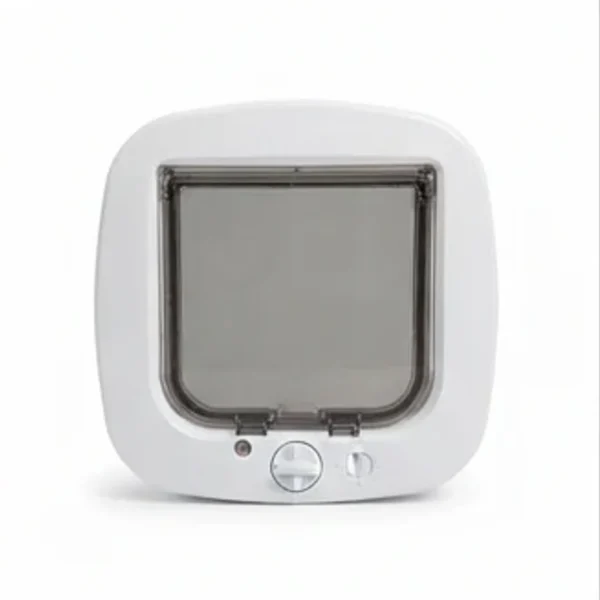
The only microchip flap on this page. The listing says it reads your cat's microchip without a collar, with a 4-way manual lock and dual auto locks. It says it suits wood, PVC, UPVC, glass or brick walls and doors, with "PetSafe installation accessories sold separately". The weight limit is 8 kg and it takes 4 AA alkaline batteries (not included), up to 12 months expected, per the listing.
The catch is the wall install. The listing gives no opening size and no tunnel range, so a wall needs extra PetSafe parts bought separately. Check the maker's installation chart for your wall before you buy. Microchip compatibility is the maker's claim, so check it against your cat's chip.
Pros
Selective entry by microchip, per the maker
No collar needed
4-way manual lock plus dual auto locks
Cons
A wall install needs extra parts sold separately
No opening size or wall range on the listing
Needs batteries
Best for: a household with neighbourhood cats where you've confirmed the wall parts.
Skip it if: you want one kit that works out of the box for a wall.
4. PetSafe Staywell Original 2-Way Pet Door, Medium: best budget
The budget way into a wall on this page, and it takes dogs too. The listing says it works with brick walls and wooden, metal or PVC doors, includes a cutting template, and suits pets up to 18 kg. It mentions an optional tunnel extension for thicker doors and walls, but words it around the small size, so confirm with the maker that an extension is made for the Medium, and how deep it goes, before anyone cuts your wall. It's a 2-way door with a closing panel that snaps on from the inside.
Check the maker's size chart for the flap and cut-out sizes, because the listing doesn't give them. A medium opening is bigger than a cat needs, so other animals can fit through as well.
Pros
The listing says it works with brick walls
Takes cats and dogs up to 18 kg
Cutting template and closing panel included
Cons
No in-only or out-only setting, just a closing panel
The listing doesn't confirm a tunnel extension for the Medium, and gives no size figures
A bigger opening than a cat needs
Best for: a household with a cat and a small dog on a budget.
Skip it if: you want selective entry, or you'd rather keep other animals out.
Is it safe to cut a wall in an older home? Asbestos first
Not until the material has been checked. The Victorian Government's Better Health Channel says homes built before the mid-1980s are highly likely to contain asbestos products, those built from the mid-1980s to 1990 may, and those built after 1990 are unlikely to. It lists exterior fibre cement (fibro) cladding and weatherboards among them (Better Health Channel, "Asbestos in the home", reviewed 15 October 2019, page read 20 November 2026).
The same page says not to saw, grind, drill or break asbestos products with power tools. It says it's difficult to tell by looking, the only way to be certain is a test by an accredited laboratory, and untested material should be treated as asbestos. We'd leave any removal to a licensed asbestos removalist.
A cat door cut-out means sawing or drilling, so on a pre-1990 fibro or weatherboard home, test first. If the result is positive, skip the wall and look at a door instead.
Do I need a tradesperson to fit a cat door in a wall?
For brick, yes, and we'd suggest it for most walls. Brick and block need masonry tools and a clean, square cut-out. The listings call their kits DIY, but that is the maker's description. The cut is hard to undo, so a tradesperson is the safer route.
Before any cut, check what's inside the wall. The Western Australian Government says concealed cables can pose a risk when drilling into walls, says to turn the power off where you're working before you drill, and that if you hit a cable you should leave the power off and call a licensed electrical contractor (Western Australia Government, "Having electrical work done", updated 26 November 2024, page read 20 November 2026). PetSafe's US page also says to check for electrical and plumbing fixtures where the door will go, and to use a stud finder. As our own rule of thumb, keep well away from power points, switches and the walls behind bathrooms, kitchens and laundries, where cables and pipes are more likely.
We searched Amazon Australia for cat and small-pet doors for walls, then shortlisted those that met all of these checks:
Well rated: a strong average rating with plenty of buyer reviews.
No red flags: no pattern of poor reviews, safety complaints or listing problems.
Available on Amazon Australia when we checked.
A wall or tunnel range stated on the listing, or a clear statement that the kit works through a wall.
A weight limit that covers cats, given in the listing.
How the opening closes (double flap, closing panel or locks) described on the listing.
Where a listing is new or missing a detail, we say so in the cons. These are researched picks, not products we've personally tested. We compared the specifications and features on each Amazon Australia listing, checked on 20 Nov 2026, and we didn't accept payment from any brand.
Pet shops and vet clinics may stock door and wall flaps, and some trades and pet door installers supply and fit kits. Wherever you buy, match the tunnel range in cm to your wall, and check that extension kits suit the model.
When to see a vet
Book a vet visit if your cat:
has a cut, scratch or limp after catching itself on the frame or a sharp tunnel edge
seems afraid of the new door and stops going out, eating or using its tray
has a bite or scratch from another animal that came through the flap, especially with swelling or limping
If you think your cat has been bitten by a snake, go to a vet straight away and keep your cat calm and still.
For the wall itself, call the right professional: a licensed electrician if you hit a cable, a licensed asbestos assessor or removalist for fibro, and ask your landlord for consent if you rent. Our cat flap guide covers snakes and security.
Frequently asked questions
How do I know which size wall cat door my cat needs?
Measure your cat's shoulder height and widest point, then compare them with the flap opening and the kit's weight limit. Baboni and Never Rust Small have a 13.3 x 20.6 cm opening, with limits of 5.4 and 6.8 kg. If your cat is near the limit, choose the next size up from the maker.
Can you put a cat flap in a fibro wall?
Only after the material has been checked. On a pre-1990 home, treat fibro as asbestos until an accredited laboratory says otherwise, and don't cut or drill it with power tools. If the test is clear, the same kits and tunnel measurements apply. If it's positive, use a door instead.
Can you extend a cat flap tunnel?
Yes, if the model has extension kits. The PetSafe Never Rust Small listing says they're sold separately, the Staywell Original listing mentions one without confirming it for the Medium, and the Baboni Small listing names none. Extension kits are sold separately and must match the model, so buy the one the maker names for your wall, and measure the full depth first.
Can a microchip cat flap go in a wall?
Yes, but with extra parts. The PetSafe listing says its accessories are sold separately, and nothing on it gives a wall range. Check the maker's installation chart for your wall before you buy. If you only want selective entry for a thin wall, ask the maker which adaptor your wall needs.
Is a wall better than a door for a cat flap?
A wall suits homes where a door isn't practical, such as a glass or security door, or where you'd rather not cut into a door at all. A door is quicker and cheaper to fit and usually reversible, so a door flap is easier for renters. Our cat door guide covers door flaps.
How do you stop rain getting in through a wall cat door?
Place it under an eave or verandah, and keep the closing panel on in storms. A double flap and a closing panel help, but seals and weatherproofing are the makers' claims, not guarantees.
Can a cat door go through double brick?
Possibly, but not as it comes. Double brick is deep, so you'd need a kit with extensions that cover the full depth, fitted by a tradesperson with masonry tools. Measure the wall first and check the maker's range. Don't assume any kit here suits double brick without extensions.
How high off the ground should a wall cat door sit?
Low enough for your cat to step through without a jump, with a low step on each side. Measure from the floor to your cat's chest and compare it with the maker's size chart. Keep it away from pipes and wiring, and don't point it at a road or pool area.
Product details from each linked Amazon Australia listing, checked on 20 Nov 2026.
This guide provides general information and isn't a substitute for veterinary advice. If you're concerned about your cat's safety at home, speak with your vet.