By Anish PuriUpdated 22 Oct 202612 min readResearched, not tested by us
Research guide. WhiskerFinds may earn a commission from links, at no extra cost to you.
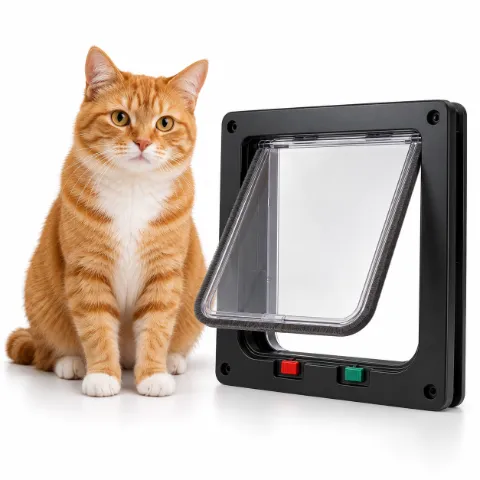
Quick answer: A cat door for a screen door is a small flap that clamps or screws into the mesh, and most fly screens can take one. Our pick is the lockable Dog Door Screen in Small. If your screen is a security screen, look at the Petway, which the listing says is made for security mesh.
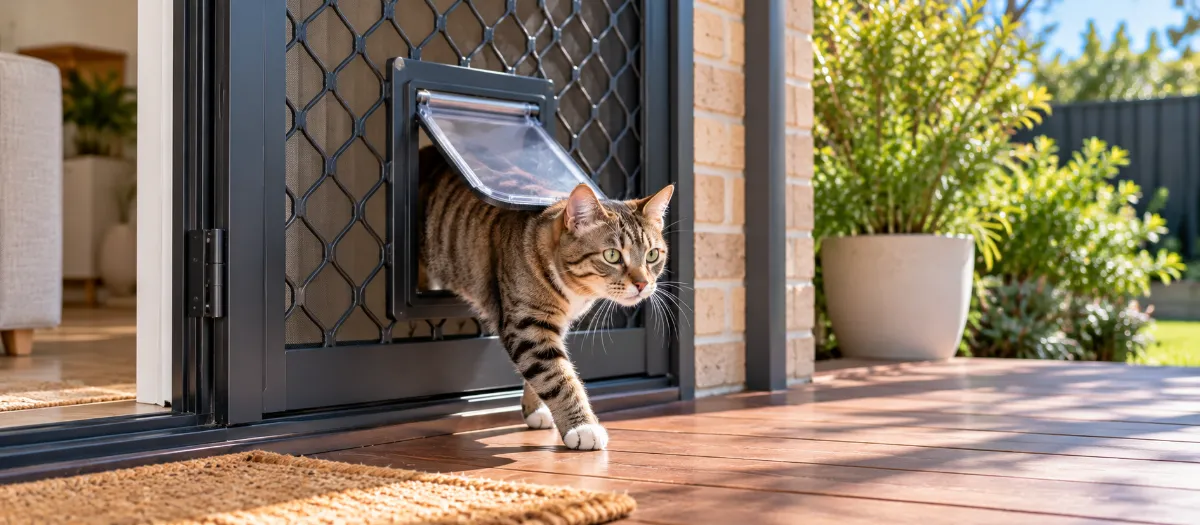
Illustration, not the actual product
Our top pick"Dog Door Screen" lockable pet door, Small
Screen doors are the easy place to start, because the mesh is thinner than a solid door or a sheet of glass. This guide compares four screen pet doors on Amazon Australia, explains the difference between a fly screen and a security screen, and covers sizing and keeping your cat in at night. For the wider picture on glass, walls and doors, see our guide on how to install a dog door.
Quick picks
Our top pickBest overall
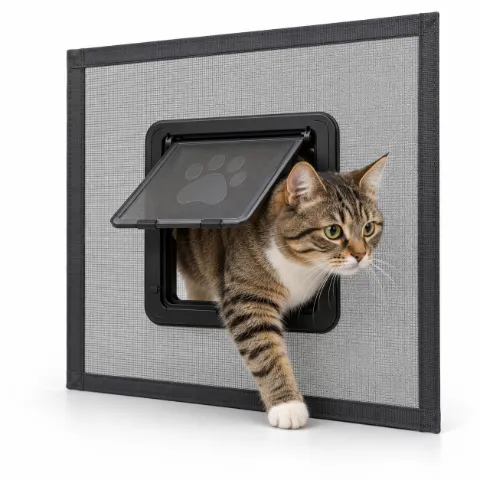
"Dog Door Screen" lockable pet door, Small
Two sliding locks and magnetic closing; for cats, small dogs and puppies
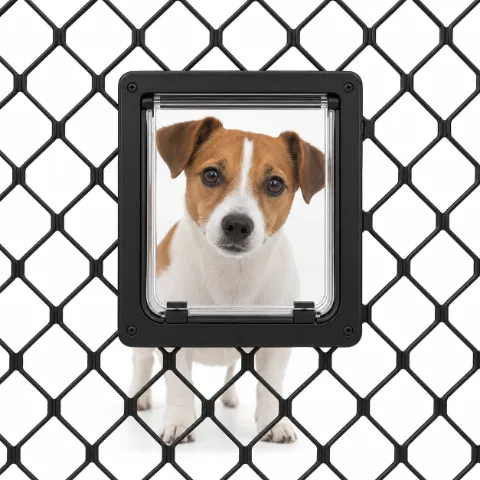
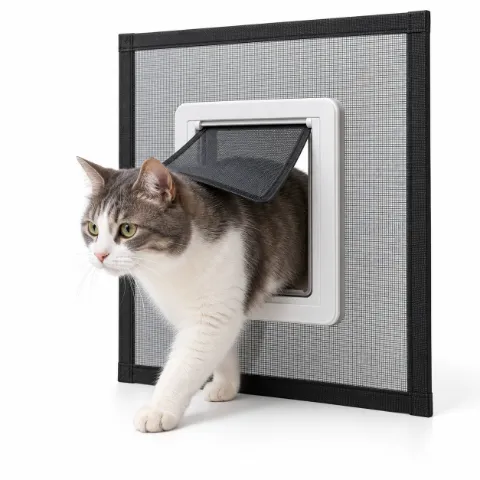
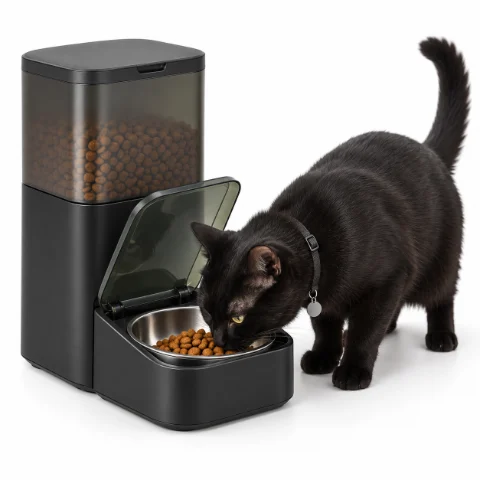
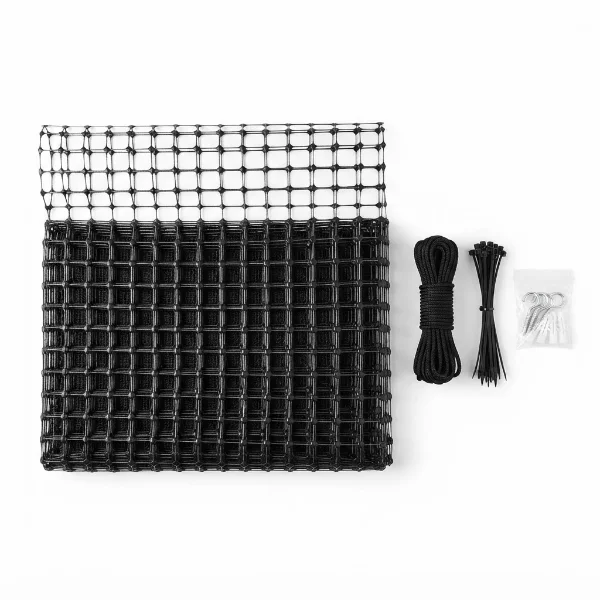
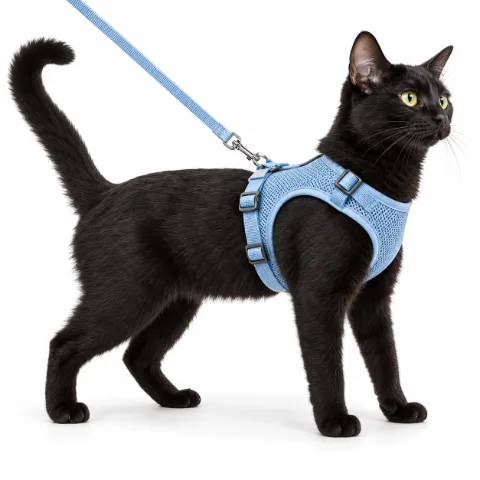
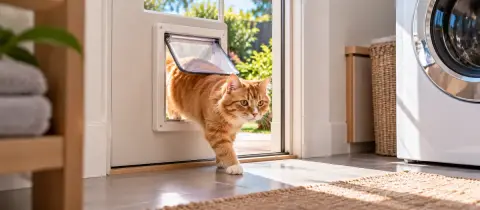
Pictures are illustrations, not the actual products.
Not sure which kind of screen you have? Read the next two sections before you buy.
Can you put a cat door in a screen door?
Yes, in most cases. Fly screens (the light mesh in a thin frame) are the easiest, and every pick here is listed for screens. Security screens are tougher and not all flaps suit them, so check the listing for your screen type. In a rental, ask first. See the renting section below.
Each pick fits a slightly different job. The Dog Door Screen and the Enjoying door are listed for screen doors, windows and screen areas. The PetSafe snaps into an existing screen. The Petway is the one whose listing names security mesh. If you have a sliding glass door with a sliding fly screen, the dog door for sliding doors guide covers the glass side.
Fly screen or security screen: what's the difference for a pet door?
A fly screen keeps insects out and is made of light mesh that cuts easily, so most screen flaps are made for it. A security screen uses stronger mesh, such as stainless steel or diamond mesh, and needs a flap made for that material. Check which one you have, and read what the listing says it fits. If your cat is clawing through the fly screen itself, tougher pet-proof fly screen mesh is made to resist scratching.
The listings differ on this point:
Petway: the listing says it is made for diamond mesh security screens, stainless steel security screens and flyscreens, and that it is slim enough for a sliding screen door to still slide.
PetSafe: the listing says it works with most metal or vinyl coated fibre screens. It doesn't mention security mesh, so don't count on it for one.
Dog Door Screen and Enjoying: the listings describe screen doors, windows and screen areas. Neither names security mesh, so ask the maker before cutting a security screen.
If you're unsure what your screen is made of, or it's a security screen fitted by a company, ask the screen maker or installer before you cut anything.
Our picks in detail
1. "Dog Door Screen" lockable pet door, Small: best overall
An ABS plastic flap for screens, meant for cats, small dogs and puppies. The listing says it fits screen doors, windows and screen areas, with two sliding locks at the bottom and built-in magnets that close the flap. The outer frame is listed at 9.4 x 11.4 inches, with the flap opening 8 x 10 inches (about 20 x 25 cm). Screws are included.
Pros: locks listed; magnetic closing; screws included; suits cats and small dogs
Cons: the listing doesn't name security mesh; Small only suits smaller cats and dogs, so measure; the flap and frame are plastic, so it suits cats and small dogs rather than strong pushers
Best for: fly screens, and a first screen door for a cat
Skip it if: you have a security screen or a large cat
2. Petway Small Pet Door for Security Screen Doors and Flyscreens: best for security screens
The listing gives Australia as the country of origin, and says it is made for diamond mesh security screens, stainless steel security screens and flyscreens. It's described as ultra-slim, so a sliding screen door can still slide, with a 4-way lock and clips and a clamp-fit DIY install. The Small flap opening is 240 mm high by 190 mm wide. Medium and Large sizes exist.
Pros: the one pick that names security screens; slim enough for sliding screens, per the listing; 4-way lock; larger sizes available
Cons: a security screen may still be best fitted by the screen maker; the Small opening is narrow for a stocky cat
Best for: security screens and sliding screen doors
Skip it if: your cat is large (look at the Medium or Large listings)
A high-impact plastic frame that snaps into an existing screen door, window or porch screen, with a tear-resistant mesh flap per the listing. The listing says it works with most metal or vinyl coated fibre screens, and that the small door locks.
Pros: snaps in; a mesh flap rather than a hard flap; locks
Cons: the listing doesn't mention security mesh; check the size chart for the opening
A flap that swings both ways, with magnets that slow and stop it. The listing says the opening is 8 x 10.2 inches inside a 9.4 x 11.4 inch outer frame, with locks on both sides, and screws with nuts included. It's listed for screen doors, sliding doors, windows and thin doors, and says thick aluminium or walls need adhesive.
Pros: both-way swing; locks on both sides; fits several surfaces per the listing; hardware included
Cons: the listing doesn't name security mesh; thick aluminium frames need adhesive instead of screws
Best for: cats who like a flap that closes gently behind them
What size cat door do I need?
Measure your cat standing up: the widest point of the body and the height from the floor to the top of the shoulder. The flap should sit a little above the shoulder and the opening should be wider than the widest point. Follow the maker's size chart, and size for your biggest pet.
PetSafe's sizing advice for its plastic pet doors is to measure the chest width and the height from the top of the back, above the shoulders, down to the lowest point of the ribcage, then match both to the chart. If you fall between two sizes, PetSafe says to take the larger (PetSafe support). That article is written for dogs, but the method works the same for a cat. Always check the chart for the exact door you're buying.
The openings on these listings are:
Dog Door Screen, Small: flap opening 8 x 10 inches (about 20 x 25 cm).
Petway, Small: flap opening 240 mm high by 190 mm wide. The listing says Medium and Large sizes also exist.
Enjoying: inner opening 8 x 10.2 inches.
PetSafe, Small: check the size chart on the listing for the opening.
Most adult cats fit through these. A large cat such as a Maine Coon, or a small dog, may need a bigger size. For bigger dogs, see our large dog door guide.
How do I keep my cat in at night?
Lock the flap before dusk and put your cat's evening meal, water and litter indoors. All four picks have locks listed, so you can close the door at night or when you're out. Check whether your council requires cats to be contained too.
Some Australian councils require cats to be kept on their owner's property at night or at all times. For example, Maribyrnong City Council's page says cats must be safely contained on their owner's property between 7pm and 7am each day (Maribyrnong City Council, read 22 October 2026). Rules differ council to council, so check yours.
Maribyrnong's tips for settling a cat indoors include feeding the evening meal inside, offering breakfast before letting the cat out, and providing a litter tray, water, a quiet bed and night-time toys or puzzle feeders (Maribyrnong City Council). For ideas, see our cat enrichment guides.
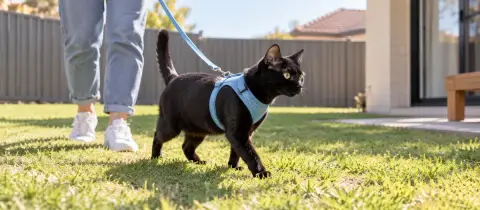
A manual lock works well for set times, but you have to remember it. Microchip and magnetic-key flaps can decide who comes in and out for you, but they are made for solid doors, not mesh. Our best cat doors guide covers those, including the lockable options. Safe time outdoors is another option, and a cat harness is one way to do it.
Cat doors for screens compared
Details from each Amazon Australia listing, checked on 22 Oct 2026.
We searched Amazon Australia for cat doors and pet doors made for screens, then shortlisted doors that met all of these checks:
Well rated: a strong average rating with plenty of buyer reviews.
No red flags: no pattern of poor reviews, safety complaints or listing problems.
Available on Amazon Australia when we checked.
Says which screen types it fits.
Lockable.
Flap opening size on the listing or its size chart.
These are researched picks, based on specifications rather than use in our own homes. We compared the features shown on each Amazon Australia listing, checked on 22 Oct 2026. We didn't accept payment from any brand, and no brand saw this page before it was published.
Left out this time: microchip and electronic flaps, which are made for solid doors rather than mesh, and screen flaps that didn't pass our red flags check.
How do I fit a cat door in a screen?
Read the maker's instructions first, because each frame fits differently. In general, you mark the height on the screen, cut the mesh to the template, fit the frame halves either side and fix them with the screws. Security screens may need a professional or the screen maker.
Hold your cat beside the door and mark a height with the flap's top just above the shoulder.
Use the template or measure the cut-out size on the listing, and mark it on the mesh.
Cut the mesh carefully along the line. Fold or tape any sharp wire ends.
Fit the frame halves either side and fix them with the screws or clips.
Check the flap swings freely and the lock works.
How do I train my cat to use it?
Use treats and patience, never force. Prop the flap open at first, call your cat through with a treat on the other side, then lower the flap a little at a time. Use a reward each time, and let your cat set the pace. Cats vary a lot in how quickly they settle. Sure Petcare's advice is the same: hold the flap open with a peg or tape, tempt your cat through with a treat, and remove the prop only once they're comfortable; it says training can take days or weeks (Sure Petcare, 30 October 2019).
Keep sessions short, and lock the flap while training if your cat could slip out unsupervised. Our cat door guide and the install hub cover more on this.
Do I need my landlord's permission?
Generally yes. Renters in Australia usually need the landlord's (or agent's) written consent before changing a property, and the rules vary by state, so check yours. In NSW, the government says you can make changes if your lease allows it or your landlord gives written permission (NSW Government).
The "minor changes" examples on that page include inserting fly screens on windows, but they don't mention pet doors, so ask. Removable options, such as a snap-in flap, are often the renter-friendly choice, but check your lease. The screen may also belong to the landlord.
When to get help
Call your landlord or agent before you cut or fit anything if you rent. For a security screen, contact the screen maker or installer first. If a wall might hide wiring, call a licensed electrician before you cut. Glass should always be cut by a glazier.
Call your vet if your cat is hurt by a flap or won't settle after you change their routine.
Frequently asked questions
Can you put a cat door in a security screen door?
Sometimes. Security screens use stronger mesh, and only some flaps are made for them. The Petway listing says it suits diamond mesh and stainless steel security screens. If the screen was fitted by a company, ask them first before cutting.
Will a screen door cat flap let bugs in?
A closed flap should keep most insects out, but small gaps around the frame or a flap left open can let some through. The Dog Door Screen and Enjoying listings both describe magnets that pull the flap shut. Check the frame sits snug against the mesh, and lock the flap at night in fly season.
Can dogs use a screen door pet door?
Small dogs and puppies can, because these doors are made for them. The Dog Door Screen listing names small dogs and puppies. Bigger dogs need a larger door and a stronger surface. See the large dog door guide for those.
How do I stop other cats coming in?
An open flap lets any animal through. Locking it when you're out and at night helps. A selective flap that reads a microchip or magnetic key only opens for your cat, but those suit solid doors. See the best cat door guide.
Can I fit a cat door in a sliding screen?
Often, yes. The Petway listing says it is slim enough that a sliding screen door still slides. Check the frame thickness and the track before you cut, and see the sliding door dog door guide for the glass side of a patio door.
Can I put a cat door in a rental screen door?
Often, with written consent. Renters usually need the landlord's or agent's permission before changing a property, and rules vary by state, so check yours. A snap-in or clamp-on flap is easier to agree to than a cut, and you may need to refit the original mesh when you leave. Ask in writing and keep the reply.
Product details from each linked Amazon Australia listing, checked on 22 Oct 2026.
This guide provides general information and isn't a substitute for veterinary advice. If you're concerned about your cat's safety at home, speak with your vet.