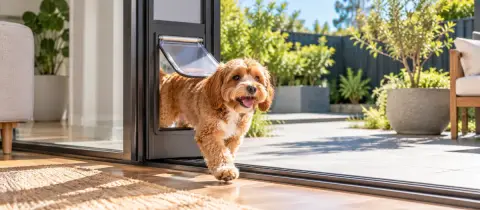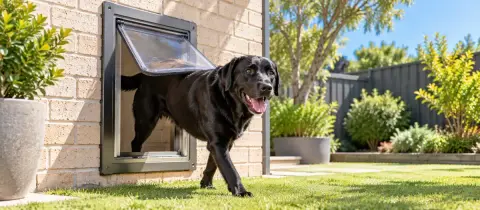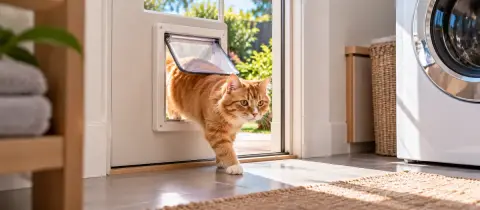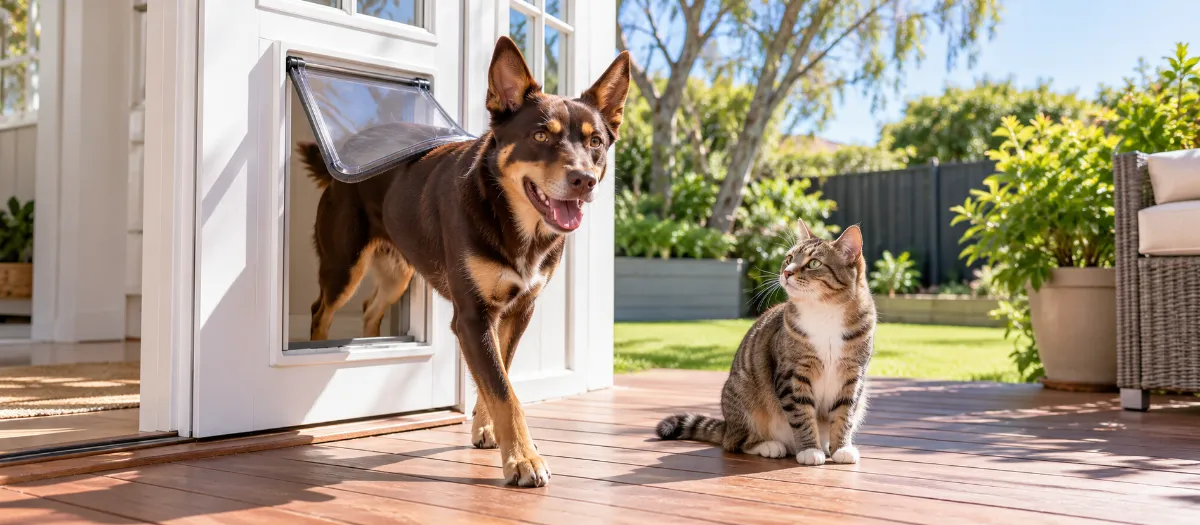
Quick answer: Dog door installation depends on the surface. Timber doors and screens are usually DIY-friendly with the maker's cutting template, glass needs a glazier, and walls need a check for wiring and pipes first. Renters usually need written consent, and your dog's shoulder height and widest point set the size.
Fitting a pet door is a bigger job than it looks, mostly because the right method changes with the surface you're cutting into. This guide helps you pick the right door type for your home, measure properly, and know which jobs are fine to do yourself. For cats, the same steps apply to a cat door.
Quick picks
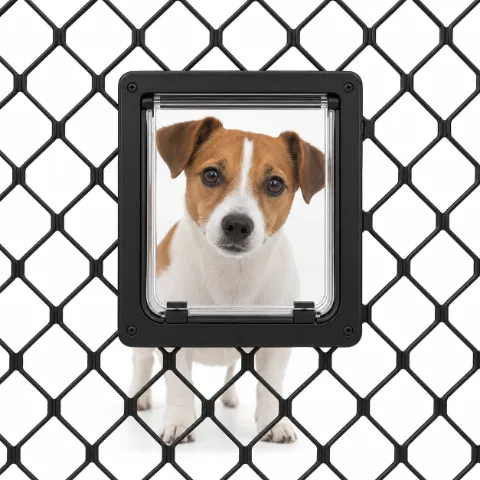
Petway Small Pet Door for Security Screen Doors & Flyscreens
Made for diamond mesh and stainless steel security screens and flyscreens, per the listing.
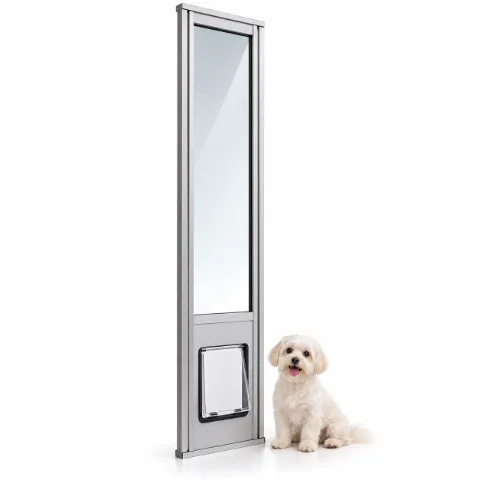
VEVOR Dog Door for Sliding Glass Door
An insert panel that slides into the door track, so the glass isn't cut.
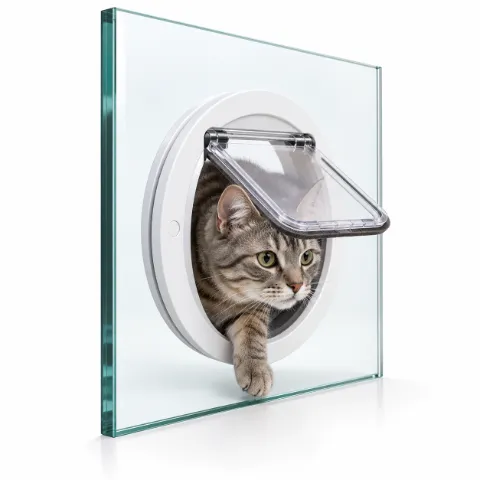
Cat Mate 4-Way Cat Flap for Glass Doors
A round 24.5 cm flap for glass, fitted by a glazier.
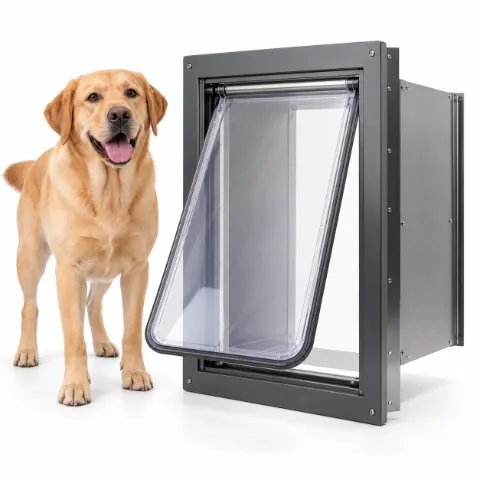
Baboni 3-Flap Pet Door for Wall, Large
A telescoping tunnel for walls 11.4 to 19.5 cm thick, per the listing.
Pictures are illustrations, not the actual products.
Each one is covered in its full guide: security screens and fly screens, sliding doors, cat doors and large dogs.
Which type of pet door suits your home?
The surface decides the door. A timber door, a fly screen or a sliding-door track each suits a different style, and glass and brick need extra care. Start with the surface in the table, then check the guide linked beside it for products that fit that job.
| Surface | Best option | DIY? | Notes |
|---|---|---|---|
| Timber or metal door | Standard flap with a cutting template | Often, with basic tools | Check the maker's door thickness range first |
| Fly screen | Screen-fit flap that snaps in or clamps on | Usually | See our screen door guide |
| Security screen | A flap made for your mesh type | Often, if it clamps on | Check mesh type and frame before buying |
| Sliding glass door | Insert panel that sits in the track | Yes, no cutting | See our sliding door guide |
| Fixed glass | Flap cut into new glass | No, call a glazier | Toughened glass can't be cut after it's made; the pane is replaced |
| Brick or clad wall | Wall door with a tunnel | Depends on the wall | Check for wiring and pipes first. See our large dog door guide |
What should I measure before buying a dog door?
Measure your dog's shoulder height and the widest part of their body. The top of the flap should sit a little above the shoulder, and the opening should be wide enough for the widest point. Then check both numbers against the maker's size chart, and measure the thickness of your door or wall.
PetSafe's sizing advice follows this pattern: stand your dog comfortably, measure chest width and height, check both against the chart, and choose the larger size if the two fall into different sizes (PetSafe support). With more than one dog, use your biggest. Other makers' charts differ a little, so follow the chart for the door you're buying.
Also measure:
- Door or wall thickness. Each door lists the thickness range it fits. The Ideal Designer Series in our large dog door guide, for example, lists doors 32 to 51 mm thick. A thick wall needs a tunnel or tunnel extender, which is sometimes sold separately.
- Step-over height. The bottom of the opening should sit low enough for your dog to step through comfortably, which is more important for older dogs and small breeds.
- Room to grow. If you have a puppy, size for the adult dog and ask your vet if you're unsure how big they'll get. See our large dog door guide for bigger breeds.
How do I install a dog door in a timber door?
Most flap doors come with a paper template. Tape it to the door at the right height, trace it, drill a hole in each corner, cut between the holes with a jigsaw, then fit the frame and screw it together. Follow the instructions for your exact door, as the steps and drill sizes vary.
PetSafe's published steps for its plastic door show the usual order (PetSafe support). Other brands are similar, but check yours:
- Gather your tools. You'll typically need a drill, a jigsaw, a tape measure, a pencil, a level or square, masking tape and a screwdriver. Wear safety glasses.
- Mark the height. Use your dog's shoulder height and the maker's chart. Mark a centre line on the door.
- Place the template. PetSafe says to keep the cut-out at least 3 inches (about 7.5 cm) from the bottom and sides of the door, so the door keeps its strength.
- Drill the corners. Drill a hole at each inside corner of the outline, holding the drill straight.
- Cut the opening. Start the jigsaw blade in a corner hole and follow the line. Check the space behind the cut is clear first.
- Test-fit, then fix the frame. Trim the opening if it's tight, fit the frame halves, and tighten the screws by hand. Seal the outer frame as the maker directs.
Before you cut, check the maker's notes on which door types the frame suits. If you're unsure about your door, ask a handyperson to look at it.
Can you put a dog door in glass?
Yes, but a glazier should do it. Many glass doors and panels are toughened (tempered) safety glass, and toughened glass can't be cut after it's made. Usually the glass panel is replaced with new glass made with the hole already in it. Your glazier can tell you what you have.
Viridian Glass, an Australian glass maker, says the stresses locked into toughened glass mean it can't be further altered, and that trying to cut or alter it will almost certainly break it (Viridian Glass). So never try to cut or drill a glass door yourself. A glazier or handyperson will quote for the work, and it often needs to be organised ahead of time.
If you'd rather not touch the glass, a sliding-door insert panel is the no-cut option. It sits in the door track and the sliding door closes against it. Our sliding door guide compares your options. For cats, the Cat Mate flap for glass doors in our quick picks is made to be fitted into a round hole cut in new glass.
How do I install a dog door in a wall?
Walls are harder than doors. Before cutting, check for electrical wiring, pipes and studs, then follow the maker's wall-door instructions. Brick and timber-framed walls need different methods. If you can't rule out wiring, or the wall is brick or load-bearing, get a licensed electrician or a builder to look first.
The Western Australian Government warns that concealed cables can sit in walls, that drilling can damage their insulation, and that you should turn the power off and work out where cables run before drilling. If you hit a cable, leave the power off and call a licensed electrical contractor (Government of Western Australia, updated 26 November 2024). Rules on who can do electrical work differ by state, but DIY electrical work isn't a job to take on.
PetSafe's wall-door guide, which assumes a timber-framed wall, tells you to find the studs, check for wiring and pipes, wear safety glasses, and add timber supports inside the cavity (PetSafe support). It doesn't cover brick, so for brick and masonry follow the maker's guide for that door or hire a builder.
The Baboni wall door in our quick picks lists a telescoping tunnel for walls 11.4 to 19.5 cm thick. Our large dog door guide covers more. Fitting a cat-sized kit? See cat doors for walls, which sorts kits by wall thickness and covers the asbestos check for older homes.
Can I put a pet door in a security screen or fly screen?
Yes, and it's often the easiest job. Screen-fit flaps snap into a fly screen or clamp onto the frame, with no big cut. Security screens vary, so match the flap to your mesh type and frame. Check the listing's compatibility notes before buying.
The Petway Small Pet Door is listed as made for diamond mesh and stainless steel security screens and flyscreens. The listing says it's ultra-slim so a sliding screen door still slides, and that it has a clamp-fit DIY install. Some other pet doors only suit plain fly screens, so read the fine print.
Small flaps suit cats and small dogs. A larger dog needs a bigger opening, which is usually a door or wall job. See our screen door guide for compared options.
I'm renting: what are my options?
In Australia, renters generally need the landlord's or agent's written consent before making changes such as cutting a pet door. Rules vary by state, so check yours. Removable options, like a sliding-door insert or some screen flaps, are often the renter-friendly choice, but still check your lease.
The NSW Government says tenants can make changes if the lease allows it or the landlord gives written permission, that landlords can't unreasonably refuse a short list of minor changes, and that tenants usually pay unless the landlord agrees otherwise (NSW Government, Making changes to a rental property). Fly screens on windows are on that list, but a pet door isn't mentioned, so ask first. Other states have their own rules, so check with your state's tenancy authority.
Ask in writing, say what you plan to fit and how you'll repair the door or screen when you leave, and keep the reply.
How do I train my dog or cat to use a pet door?
Go slowly and let your pet choose. Prop the flap open so they can see through, reward them from the other side, and close it a little more once they're confident. Never push or force them through, as that can make them wary of the door.
Sure Petcare suggests letting your dog sniff the door before it's fitted, keeping them away during the noisy part, rewarding them from the other side, and holding the flap open with a peg or tape until they get the idea (Sure Petcare, 15 January 2020). It says never to force your dog through or tell them off for not using it. Results vary, so keep sessions short and calm.
Purina's cat flap advice is similar: prop it open for the first few weeks, use treats to coax the cat through, and don't push the cat. It also suggests fitting the flap at a height matched to the distance from the cat's belly to the floor (Purina UK, updated 15 May 2026).
Keeping your home secure
An open flap is an open entrance. It can let in neighbourhood cats or wildlife, so lock the pet door at night and when you're out, and don't fit a bigger door than your pet needs. Selective flaps only open for your pet.
Microchip and magnetic-key flaps open only for your pet, and our cat door guide compares both types.
Cats have another thing to think about. Some councils require cats to be contained at night or at all times. Maribyrnong City Council in Victoria, for example, says cats must be safely contained on their owner's property between 7pm and 7am (Maribyrnong City Council). A lockable flap helps you keep your cat in, and the SureFlap Microchip Pet Door listing mentions a Curfew Mode that locks and unlocks at set times. Check your council's rules. For safe outdoor time, see our cat harness guide.
Never leave a pet alone with a pet door that opens onto a road, a pool area or an unfenced yard.
Our pet door guides
- Best dog door for a sliding door: insert panels and screen options that don't need glass cut.
- Best cat door for a screen door: flaps for fly screens and security screens.
- Best cat door: microchip, magnetic and 4-way locking cat flaps.
- Best large dog door: wall and door options for bigger breeds.
When to get help
Call a glazier for any glass. Call a licensed electrician if a wall may hide wiring, and speak to your landlord or agent before any change if you rent. If your pet is hurt by a flap or won't settle around the door, talk to your vet. A qualified tradesperson can advise on your home.
Frequently asked questions
How much does it cost to install a dog door?
It depends on the door, the surface and who does the work. A flap in a timber door is often a DIY job, while glass, walls and security screens may need a glazier, builder or handyperson. Ask for a written quote, and say whether you're supplying the door yourself.
Can you install a dog door yourself?
Often, yes, for a timber door, a fly screen or a sliding-door insert, if you're comfortable with a drill and jigsaw. Don't cut glass yourself, and don't cut a wall without checking for wiring and pipes. See how to install one in a timber door.
How do you install a dog door in a glass sliding door?
The simplest way is an insert panel that sits in the track, so nothing is cut. If you want a flap cut into the glass itself, a glazier needs to supply new glass with the hole made in it. Our sliding door guide compares inserts.
Can you put a dog door in a brick wall?
Yes, with a wall door and a tunnel, but it's a bigger job. Check for wiring and pipes first, and follow the maker's masonry instructions or hire a builder. Rules on electrical work differ by state, and a licensed electrician should handle any wiring. See the wall section.
Do I need permission to install a pet door in a rental?
Generally yes. Renters usually need written consent from the landlord or agent before cutting a door, and rules vary by state. A removable insert may be easier to agree to, but ask first and keep the reply. See the renting section.
Are dog doors a security risk?
An open flap can let in animals, and a bigger opening than your dog needs is best avoided. Lock the door at night and when you're out, and consider a selective flap that only opens for your pet. See keeping your home secure.
How high should a dog door be?
The top of the flap should sit a little above your dog's shoulder, and the bottom should be low enough to step through. Measure shoulder height and your dog's widest point, then follow the maker's size chart. See what to measure.
Related guides
- Small dog doors
- Cat doors for walls
- Cat flaps for windows and glass
- Best dog door for a sliding door
- Best cat door for a screen door
- Best cat door
- Best large dog door
- Dogs
- Cats
Sources
- NSW Government, Making changes to a rental property (https://www.nsw.gov.au/housing-and-construction/rules/making-changes-to-a-rental-property)
- Government of Western Australia, Having electrical work done, updated 26 November 2024 (https://www.wa.gov.au/government/multi-step-guides/electrical-safety-home/having-electrical-work-done)
- Viridian Glass, How we process glass (https://www.viridianglass.com/resources/techdirect/how-we-process-glass/)
- PetSafe support, How to measure my dog to determine which size plastic pet door is needed (https://support.petsafe.net/articles/how-to-measure-my-dog-to-determine-which-size-petsafe-plastic-pet-door-is-needed/)
- PetSafe support, How to install the plastic pet door (https://support.petsafe.net/articles/how-to-install-the-petsafe-plastic-pet-door/)
- PetSafe support, How to install the wall entry pet door (https://support.petsafe.net/articles/how-to-install-the-petsafe-wall-entry-pet-door/)
- Sure Petcare, How to train your dog to use a dog door, 15 January 2020 (https://www.surepetcare.com/en-au/advice-news/dog-care/dog-door-advice/how-to-train-your-dog-to-use-a-dog-door)
- Purina UK, Cat flap training, updated 15 May 2026 (https://www.purina.co.uk/articles/cats/behaviour/training/cat-flap-training)
- Maribyrnong City Council, Cat curfew (https://www.maribyrnong.vic.gov.au/Residents/Pets-and-animals/Cat-curfew)
This guide provides general information and isn't a substitute for veterinary advice. If you're concerned about your pet's safety around a pet door, speak with your vet.