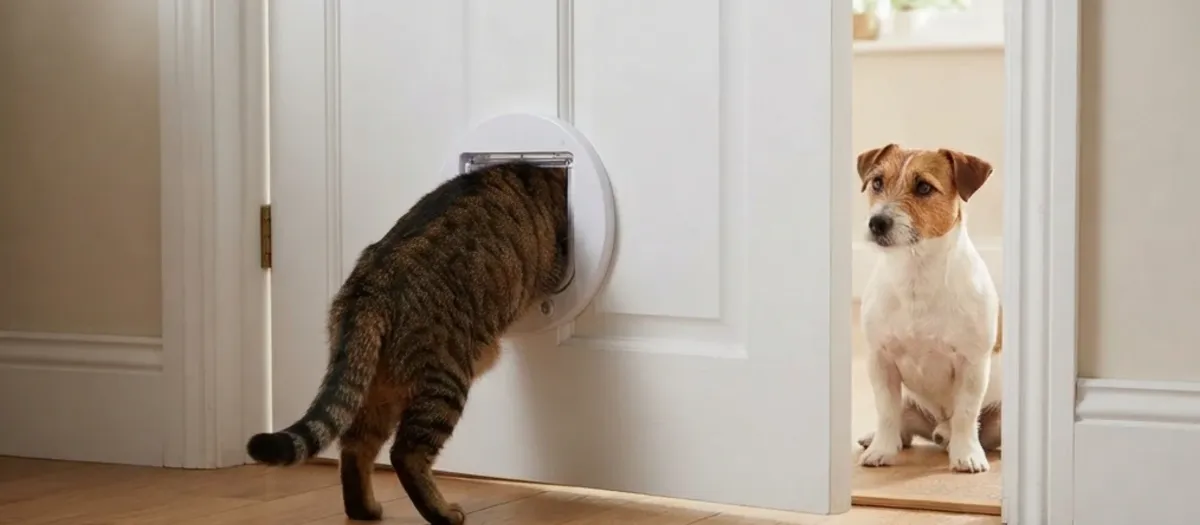
Interior cat doors: let the cat in and keep the dog out of the litter and food
By Anish PuriUpdated 21 Nov 202614 min readResearched, not tested by us
Research guide. WhiskerFinds may earn a commission from links, at no extra cost to you.
Quick answer: An interior cat door lets your cat reach the litter tray or food in a room with the human door closed, and it keeps out any dog wider than the opening. Our top pick is The Kitty Pass, a no-flap door for standard interior doors. Measure your dog's chest first: no door is dog-proof, and none is a security device.
Dogs and litter trays don't mix. A dog that gets in with the cat's food or the tray may eat things it shouldn't, and the cat loses its quiet spot. This guide compares five ways to fix that on Amazon Australia, sorted by opening size in centimetres and door thickness, including one that needs no cutting at all. For doors to the outside, see our cat door guide, cat doors for walls or cat flaps for windows and glass, and for the bigger question of whether to fit a flap at all, read should you get a cat flap?
Quick picks
Our top pickBest overall
The Kitty Pass Interior Cat Door
The widest no-flap opening here, 19.1 cm, with a clean frame and no visible screws
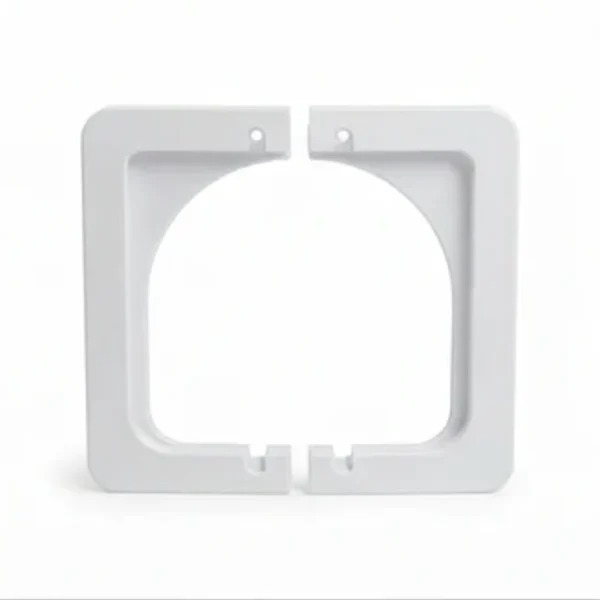
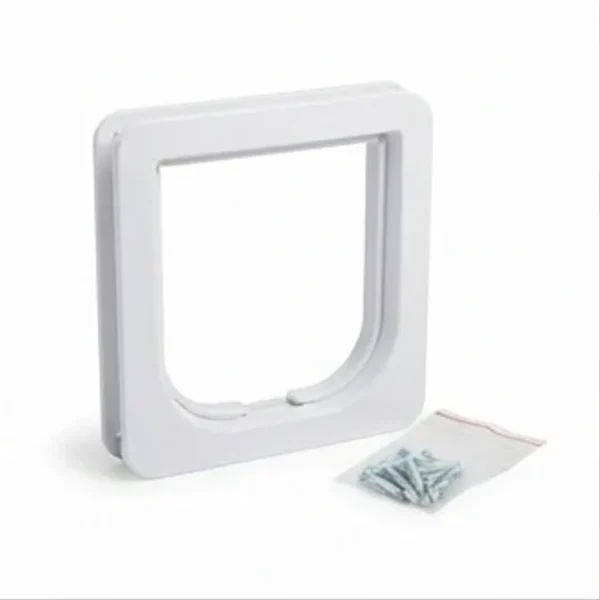
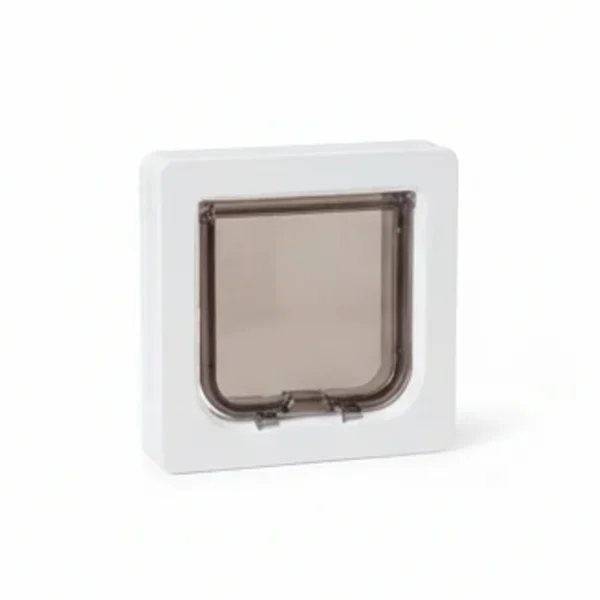
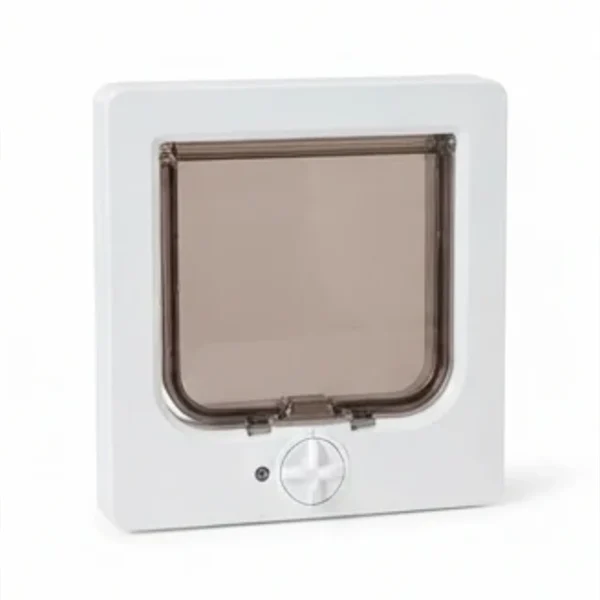
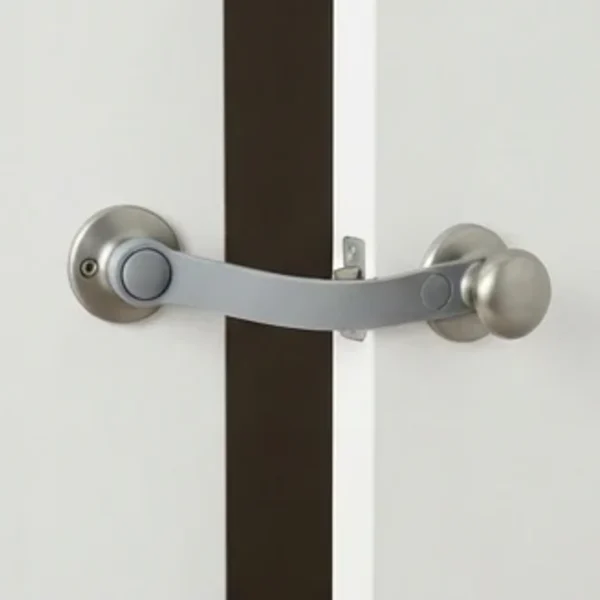
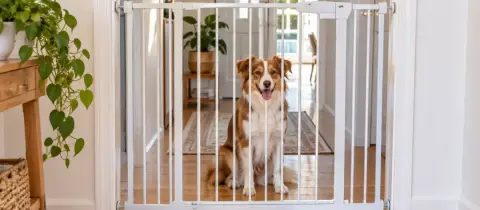
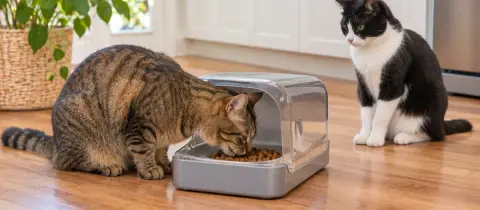
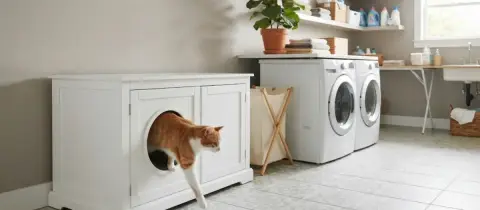
Pictures are illustrations, not the actual products.
Interior cat doors compared
Details from each Amazon Australia listing, checked on 20 Nov 2026. "Not stated" means the listing doesn't say.
Swipe sideways to see every column
Door
Type
Door thickness (cm)
Cat weight (kg)
Closes or locks
Kitty Pass
No-flap pass-through
3.2 to 4.4
Up to about 9
Listing describes no way to close it
Meow Manor
No-flap pass-through
Solid and hollow-core doors; range not stated
Up to about 9
Closable opening
PetSafe Small
Flap
1.3 to 5.1
Up to 6.8
Sliding lock, magnetic closure
CEESC XL
Flap
Outer depth 5.5; "doors and thin walls"
Up to 12.5, waist under 63 cm
4-way lock
Door Buddy
Door prop
Not a cut-in door; swaps the strike plate
Not stated
Door closes normally
Will an interior cat door keep my dog out?
Only if your dog is clearly wider than the opening. A door keeps out dogs that are too big to fit through, and nothing else, so no interior door is "dog-proof". Measure your dog's chest at its widest point, and compare it with the opening width below. A dog narrower than the opening can probably get through.
Swipe sideways to see every column
Door
Opening width (cm)
Notes
Kitty Pass
19.1 (19.1 x 16.5 high)
A dog narrower than about 19 cm could fit
Meow Manor
16.5 (16.5 wide x 21 high)
The narrowest of the fixed openings, so it keeps out more dogs
CEESC XL
20.1 inner (20.1 x 22.1 high)
The widest, so the likeliest to let a small dog through
Door Buddy
Adjustable, up to about 14
The listing gives the lower limit as 6.4 or 7.6 cm in different places
PetSafe Small
Not stated
The listing gives no opening size, so ask the maker before you rely on it
Chest width is the number that matters, and a growing puppy will change it, so measure again as your puppy grows. If your dog is small, a plain door won't help. PetMD suggests an electronic cat door that opens only for the pet wearing the right tag when the dog is about the cat's size, and the options further down help too.
The widest no-flap opening on this page. The listing says the pass-through is 7 1/2 x 6 1/2 in (19.1 cm wide by 16.5 cm high), for cats up to 20 lb (about 9 kg), in composite PVC finished in semi-gloss white that you can paint. It says it fits standard interior doors 1 1/4 to 1 3/4 in thick (3.2 to 4.4 cm), with a cutting template and directions in the box. The listing says it has no visible screw holes, and that the wide opening stops tails getting snagged. Those are the maker's claims.
The listing describes no way to close the opening, so the room is always open to a dog narrow enough to fit.
Pros: wide opening; no flap to learn; clean, paintable frame
Cons: the listing describes no way to close it; a dog narrower than about 19 cm could fit through; imported, so check the delivery details on Amazon before you order
Best for: a standard door, a medium or large cat, and a dog that is clearly wider than 19 cm
Skip it if: your door is thinner than 3.2 cm or thicker than 4.4 cm, or you want to shut the opening
2. Meow Manor No-Flap Interior Cat Door: best no-flap door you can close
The one here that lets you close the opening without taking anything off. The listing says the opening is 8.25 in high and 6.50 in wide (21 x 16.5 cm), for cats up to 20 lb (about 9 kg), and fits solid and hollow-core doors with screw fixing and a cutting template. The listing describes a closable door as an alternative to a flap, and says it can only be opened from the outside, so check your cat isn't in the room before you close it. It doesn't give a door-thickness range, so check with the maker before you buy for a thin or thick door.
Its 16.5 cm width is narrower than the Kitty Pass, so it keeps out more dogs. For a cat of 20 lb (about 9 kg) or more, the listing points to the maker's XL model, which we haven't checked.
Pros: closable; narrower opening keeps out more dogs; the listing says it suits hollow-core doors
Cons: a 16.5 cm gap is a tighter fit for a big, broad-chested cat; door-thickness range not stated
Best for: a hollow-core laundry or bedroom door, and a household where you sometimes want the room shut
Skip it if: your cat is over about 9 kg or very broad
The simplest flap here, and the one that suits the widest range of doors. The listing says it fits interior wood, storm, PVC, panelled or metal doors 1/2 to 2 in thick (1.3 to 5.1 cm), and is designed for cats and small dogs up to 15 lb (6.8 kg). So a dog in that range can use it too unless you slide the lock across. It has a sliding lock, a magnetic closure and a transparent flap, and comes with a cutting template and hardware. The listing suggests closet, laundry and cabinet doors.
The listing gives no opening size, so ask the maker for it, then measure your cat and your dog against it. A nervous cat may need time with a flap, and our cat door guide has a short training section that applies here too.
Pros: widest door-thickness range here; a lock; a see-through flap
Cons: no opening size in the listing; made for small dogs up to 6.8 kg as well as cats, so it won't keep those out; a flap needs training for some cats
Best for: a thick or unusual door, a small to average cat, and a tight budget
Skip it if: your cat is large, or your dog is small enough to push a flap open
The biggest opening and the only 4-way lock on the page. The listing says the outer size is 24.9 wide x 27.9 high x 5.5 deep cm (9.8 x 11 x 2.15 in), with an inner opening of 20.1 x 22.1 cm and a cut-out of 21.1 x 24.1 cm, for cats or dogs up to 12.5 kg (27.54 lb) with a waist under 63 cm (24.8 in). The lock has four modes: in only, out only, both ways and fully locked. It has a transparent flap and a brush strip, and the listing says the ABS plastic is weather-resistant.
The size is the catch. An opening that suits a big cat may also suit a small dog, and cutting a 21 x 24 cm hole is a larger job in a hollow-core door. The listing doesn't say it suits hollow-core doors, so check with the maker.
Pros: the largest opening; 4-way lock; transparent flap
Cons: the opening can let a small dog through; a large cut-out in a thin door; no hollow-core claim
Best for: a large cat, or two cats who like to share
Skip it if: you have a small dog, or your door is thin
5. Door Buddy Door Prop for Cats: best no-cut option for renters
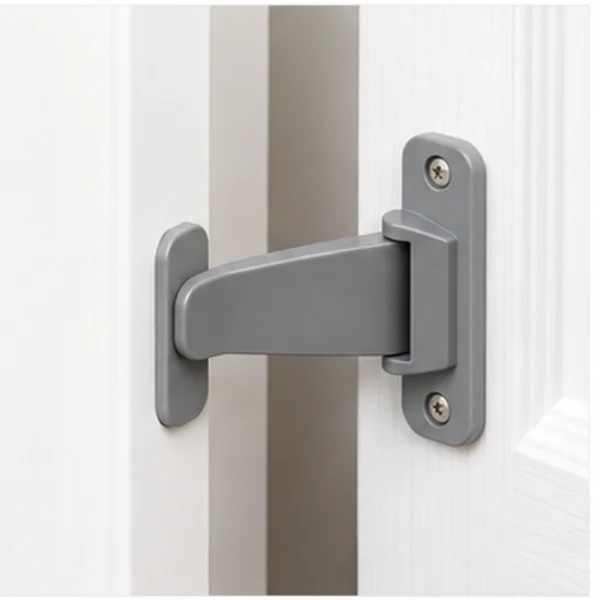
Nothing to cut, and it comes off again. The listing says you swap the door's strike plate for the Door Buddy one using the existing screws, with no adhesive, cutting or new holes. It holds the door ajar at an adjustable gap, which the listing gives as up to about 14 cm. For the lower limit it says 6.4 cm in one line and 7.6 cm in another. You open the door with the normal handle from either side.
The listing says the gap keeps a dog out "if slightly larger than cat", and that's the catch. It only works when your dog is clearly bigger than your cat. Renters should keep the original strike plate and refit it when they leave. It is also still a gap, so it does nothing to hide a litter tray from view.
Pros: no cutting; removable; you can still shut the door
Cons: only works when the dog is clearly bigger than the cat; it's still a gap, so the room is never fully shut while it's propped
Best for: a rental, or a door you don't want to cut
Skip it if: your dog is about the same size as your cat, or is small enough to squeeze through a gap your cat can use
Why keep your dog away from the litter tray and cat food?
Because cat food is too rich for dogs, though it isn't toxic, and cat poo can carry bacteria and parasites. PetMD, a vet-reviewed site, says a small amount of cat food is usually harmless but that feeding it isn't recommended (PetMD, "Can Dogs Eat Cat Food?", updated 5 February 2025, page read 21 November 2026). The reason is richness. It gives the AAFCO minimums for adult cat food as about 26% protein and 9% fat, against 18% protein and 5.5% fat for adult dog food.
PetMD says dogs that eat a lot of cat food could develop an upset stomach, pancreatitis or other problems, and the risk is higher for dogs with a history of pancreatitis, kidney or liver disease, a sensitive stomach, or a low-fat diet. Long-term, it can mean weight gain. It's the same fatty food and pancreatitis point our food pages make. PetMD's list of ways to keep dogs out includes a door prop, a cat door, a microchip feeder, feeding the cat up high, and separate meals.
The tray is the other draw. The American Kennel Club says dogs are scavengers and cat poo likely smells like cat food to them (AKC, "Why Do Dogs Eat Cat Poop?", updated 27 March 2026, page read 21 November 2026). It notes that poo can carry bacteria such as salmonella that can spread to people, and that dogs can pick up internal parasites even when the cat looks well. Eating a lot of litter could cause a blockage. The AKC suggests keeping the litter box out of reach.
What are the other ways to separate them?
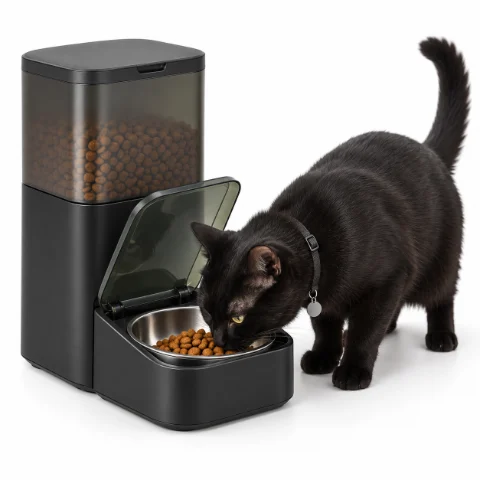
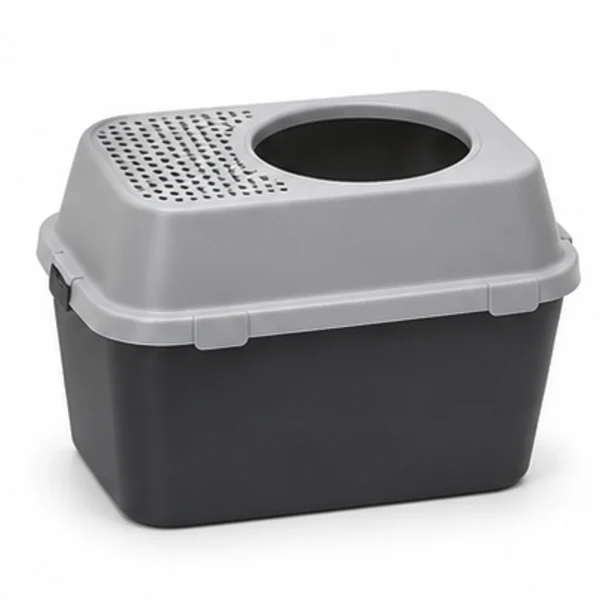
A pet gate, a microchip feeder, a litter box enclosure or top-entry box, and a litter mat all help keep a dog away from the cat's food and tray. A gate is the better choice for a small dog that fits through any cat door, and a feeder protects the food wherever it sits. Which one suits depends on your dog's size and your home:
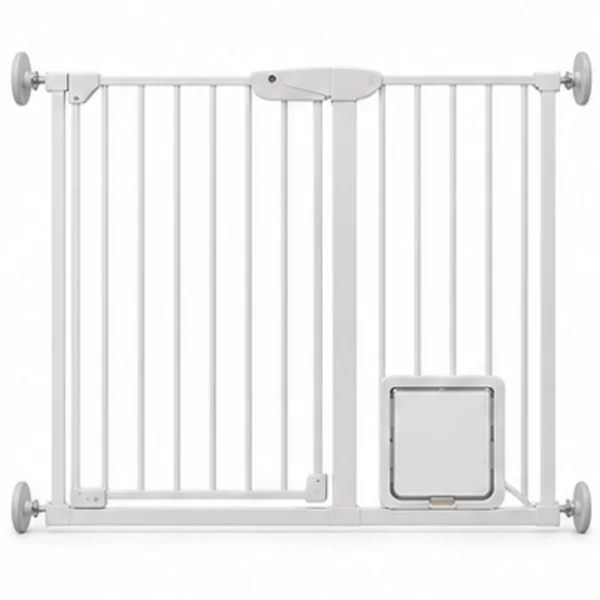
A pet gate with a cat-sized gap, or one a cat can jump. Our dog gate guide covers gates for doors and halls, and it's the better choice for a small dog that fits any cat door. Our guide to pet gates with a cat door compares the cat-door sizes in cm.
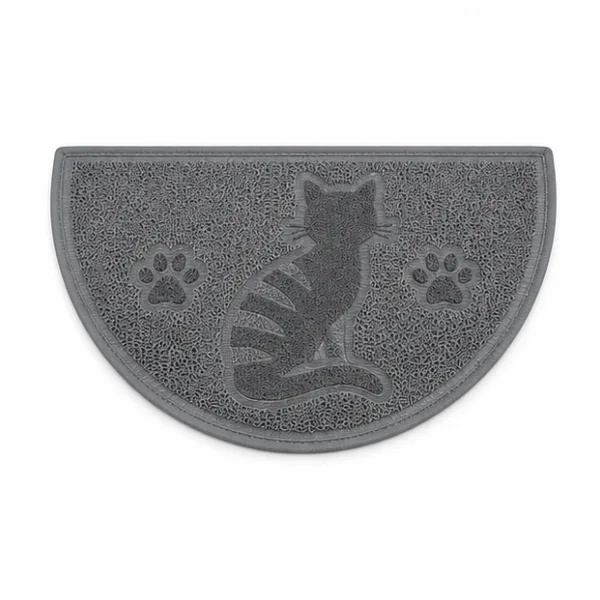
A litter mat at the exit to catch scatter before it spreads. Our cat litter mat guide compares them.
Where else can you buy an interior cat door?
Pet shops and vet clinics may stock plain flaps; no-flap doors and door props may be harder to find in stores. A carpenter or handyperson can cut and fit a door if you'd rather not do it yourself.
Choose by situation
Swipe sideways to see every column
Your situation
What to look for
Our pick
Renting
Nothing cut, and removable
Door Buddy (5), after checking your lease
Big cat, up to about 12 kg
The largest opening, a 4-way lock
CEESC (4)
Small dog in the house
A gate or a feeder; a door won't stop it
See the options above, or small dog doors if the dog needs its own way out
Hollow-core door
A listing that says it suits hollow-core
Meow Manor (2)
Laundry or wardrobe door
A lockable door, with ventilation
PetSafe Small (3), or Meow Manor (2)
Two cats
The widest opening, so they don't queue
Kitty Pass (1) or CEESC (4)
A nervous cat that dislikes flaps
No flap at all
Kitty Pass (1) or Meow Manor (2)
Big dog, a small cat
Any of the fixed openings
Meow Manor (2) keeps out the most dogs
How we chose
We searched Amazon Australia for interior cat doors, no-flap doors and door props, then shortlisted those that met all of these checks:
Well rated: a strong average rating with plenty of buyer reviews.
No red flags: no pattern of poor reviews, safety complaints or listing problems.
Available on Amazon Australia when we checked.
Opening size stated on the listing, or clearly flagged where it isn't.
Door thickness range given, or a statement of which doors it suits.
A way to close or lock it, where the listing claims one.
Where a listing is imported or missing a detail, we say so in the cons. These are researched picks, not products we've personally tested. We compared the specifications and features on each Amazon Australia listing, checked on 20 Nov 2026, and we didn't accept payment from any brand.
Left out this time: close copies of the CEESC door with smaller openings, a second listing of the Meow Manor door in other colours, and microchip flaps, which are more than an internal door needs.
When to see a vet
Call your vet if your dog has eaten a lot of cat food and has vomiting, diarrhoea, a sore tummy or won't eat. These signs can have many causes, and a vet can work out which. Don't give any human medicine to settle a tummy. Some are dangerous for dogs, so ask a vet first. Our dog diarrhoea guide has more.
Call your vet if your dog has eaten litter and is straining, isn't pooing or has abnormal stools. Eating a large amount of litter could cause a blockage, and a dog that eats cat poo may need a check for parasites.
Call your vet if your cat stops using the tray after the change. That can have many causes, including a health problem; see our guide to cats peeing outside the litter box.
If your dog may have got into cleaning products stored in a laundry, call the Animal Poisons Helpline on 1300 869 738 (24 hours a day).
Frequently asked questions
Can you put a cat door in a hollow-core door?
Often yes, but check that the kit suits it. Hollow-core doors are a thin skin around a light core, so the fixing matters. Of our picks, only the Meow Manor listing says it fits both solid and hollow-core doors. For any other door, ask the maker before you cut.
What size interior cat door does a big cat need?
Measure your cat's widest point and its shoulder height, then compare them with the opening, not the product's outer size. The CEESC XL opening is 20.1 x 22.1 cm, for cats up to 12.5 kg. The Kitty Pass and Meow Manor list about 9 kg. For a very large cat, see our litter box for large cats guide.
Can I fit an interior cat door in a rental?
Only with permission. The NSW Government says tenants can change a rental if the lease allows it or the landlord agrees in writing, and rules differ by state (NSW Government, "Making changes to a rental property", page read 21 November 2026). It doesn't name pet doors, so ask. The Door Buddy needs no cutting, and you can swap the original plate back.
What happens if my dog eats cat poo from the litter tray?
Usually it's gross rather than dangerous, but it isn't harmless. The AKC says poo can carry bacteria and parasites, and eating a lot of litter could cause a blockage. Call your vet if your dog strains, stops pooing or has abnormal stools, and keep the tray out of reach. Our guide to dogs eating cat poop covers the vet checks and fixes in full.
Does an interior cat door need a flap?
No. The Kitty Pass and Meow Manor have no flap, which suits cats that dislike pushing through one. A flap, like the PetSafe or CEESC, can add a lock and some privacy, but a nervous cat may need time to learn it. A no-flap door is open, so it only works for dogs too big to fit.
How high should an interior cat door sit?
Low enough for your cat to step through without a big jump, and that's our own advice, not a rule. Mark the position on the door with your cat standing by it, and keep the bottom edge close to the floor, particularly for kittens, seniors and heavy cats. Follow the kit's template for the frame.
Is a pet gate better than an interior cat door?
For a small dog, yes. A door only keeps out dogs wider than the opening, and a gate stops the dog without cutting the door, though your cat needs a way past it. For a medium or large dog and a room you want to keep closed, a door works. See our dog gate guide.
Can a cat door go in a laundry or wardrobe door?
Yes, and it's a common spot for a litter tray. Make sure the room has some airflow, keep cleaning products and chemicals out of the cat's and the dog's reach, and check the tray is easy to get to. A wardrobe needs the same checks, plus room for the cat to turn around.
Product details from each linked Amazon Australia listing, checked on 20 Nov 2026.
This guide provides general information and isn't a substitute for veterinary advice. If you're concerned about your cat's or dog's health, speak with your vet.