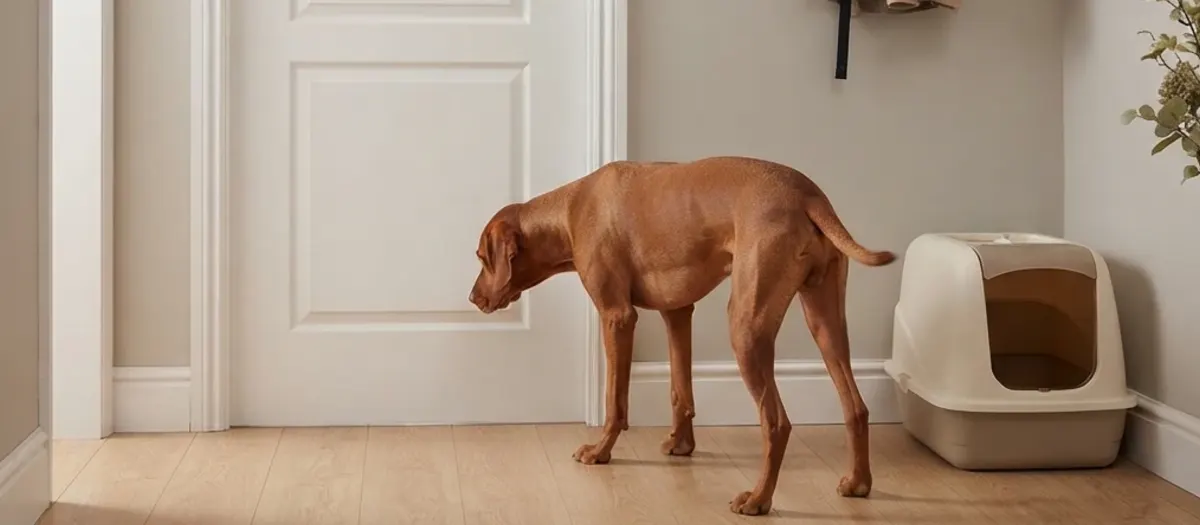
Quick answer: A dog eating cat poop is common, and it's usually scavenging and curiosity, because cat poo can smell like cat food. Most dogs come to no harm, but it can pass on bacteria and parasites. The main fix is to put the litter box where your dog can't reach it, and scoop daily.
It's gross, and common in homes with a dog and a cat. This guide covers why dogs do it, what the real risks are, when to see your vet and which setups keep the tray safe. If a new pet is about to join the house, start with our guide to introducing a dog to a cat.
Why does my dog eat cat poop?
Dogs are scavengers, and cat poo often smells like cat food, which many dogs find appealing. The American Kennel Club says it usually starts as curiosity that can turn into a habit, and that it can sometimes come from a dietary deficiency (AKC, updated 27 March 2026, page read 23 November 2026).
Vets call eating poo coprophagia. Vetwest Animal Hospitals in WA says cat faeces sometimes have enough appealing qualities to attract dogs. It lists behavioural causes such as curiosity, attention, copying other dogs, and old-fashioned toilet training that rubbed a dog's nose in a mess (Vetwest, page read 23 November 2026). Medical causes need ruling out too, which is where the table below comes in.
| Likely pattern | What you might notice | First step |
|---|---|---|
| Scavenging or habit | Your dog heads straight for the tray, or checks every poo on walks, and is otherwise well | Block access, scoop daily, reward coming to you |
| Diet may play a part | Always hungry, eats other odd things, loose or bulky stools | Talk to your vet about the diet before changing it |
| Medical cause possible | Sudden start in an adult, weight change, more thirst, tummy upsets, or other changes | Book a vet check |
| Puppy stage | A young puppy mouthing and tasting everything | Supervise, keep the tray out of reach, stay consistent |
This table shows patterns, not a diagnosis. A vet can work out what is going on.
Is eating cat poo dangerous for dogs?
Usually not seriously, but it isn't risk free. The AKC says most dogs that do it show no health problems, yet cat poo can carry bacteria such as salmonella, which can spread to people, and several intestinal parasites. A cat that looks perfectly well can still pass parasites.
Litter is the other risk. The AKC says litter can cause a blockage if a dog eats a lot of it, though most dogs would need to eat a large amount, and to keep an eye on a dog that has eaten any, clumping or not. See the vet box below for what to watch for.
There's a people side too. If your dog has raided the tray, wash your hands after cleaning up or handling the dog's mouth area, and keep your dog's mouth away from faces and food prep until things are sorted. Our dog wormer guide covers worming products, and your vet can advise on a parasite plan that suits your dog.
When should a vet check my dog?
Book a check if your dog has trouble pooing, isn't pooing, has abnormal stools, or has eaten litter and isn't passing normal bowel movements. The AKC also suggests regular checkups, which can include parasite screening, for a dog that often scavenges poo from outdoor sources.
A sudden start in an adult dog is worth a visit too. Vetwest lists underfeeding or a poorly digestible diet, enzyme problems, parasites, vitamin and mineral shortfalls, diabetes, Cushing's or thyroid disease and some steroid medicines as things a vet will want to rule out first. The vet may look at the diet, check stools for parasites and run tests if needed. Our dog diarrhoea guide covers loose stools after a raid.
Please don't try to make your dog vomit at home, and don't give human medicines. Some are dangerous for dogs, so ask your vet before giving anything.
How do I stop my dog eating cat poo?
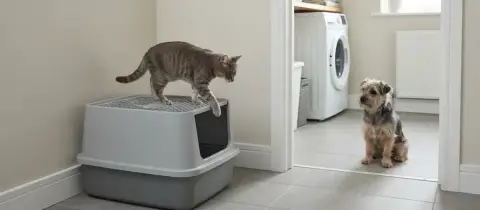
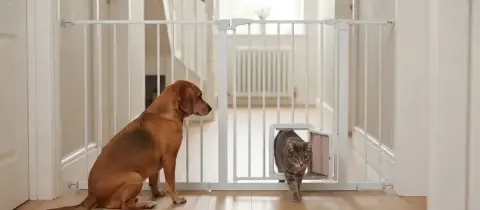
Stop the access first. Put the tray where your dog can't reach it, use a gate that lets the cat through, or use a covered or top-entry box. Then scoop daily, reward your dog for coming to you, and never punish. Training alone rarely beats a tray the dog can still reach.
Vetwest also suggests cleaning up promptly and supervising. Scoop every day, as the RSPCA says cat faeces and urine should be removed daily (RSPCA Australia, updated 30 May 2024, page read 23 November 2026). Our litter scoop guide compares scoops, and our litter change guide covers the routine.
Which litter setup suits my home?
No setup is a guarantee. Small or determined dogs can get into top-entry boxes or onto the lid, and any gap a cat fits through, a small dog may fit through too. Use "harder for a dog to get into" as your yardstick, and match the setup to your dog.
| Setup | Which dogs it stops | Which dogs still beat it | More |
|---|---|---|---|
| Top-entry box | Many medium and large dogs that nose around the side | Small, agile dogs that jump or climb, and any dog that tips the box | Dog-proof litter boxes |
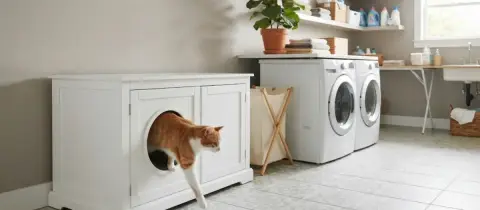
| Enclosed box with a door | Dogs too big for the doorway | Small dogs that learn to push a cat door | Litter box enclosures |
| Gate with a cat door | Dogs bigger than the cat door | Small dogs that fit the cat door, and dogs that jump the gate | Pet gates with a cat door |
| Door held open at a cat-sized gap | Dogs that can't squeeze through the gap | Small dogs, and dogs that push the door wider | Interior cat doors |
| Tray up high | Dogs that can't climb or jump | Agile dogs, and it's hard on older or arthritic cats | Cat wall shelves |
Do I have to think about my cat as well?
Yes. The tray still has to be easy for your cat to use, in a quiet, easily reached spot away from food and water, as the RSPCA suggests. Our dog-proof litter box guide covers its tray-size and two-tray advice.
That matters here, because a covered or top-entry box is a trade-off. Some cats prefer open trays, so introduce a new box slowly and keep an open tray in a dog-free spot as a backup. For an older or arthritic cat, don't switch to a top-entry box. Keep the low-entry box and block the dog instead, as in our senior cat litter box guide. If the cat starts avoiding the tray, see the vet box below. Our litter box smell guide also helps with keeping a tray inviting.
What about training and "leave it"?
Teach your dog to come away from the tray when called, and reward that with a small food treat from our training treats guide. Interrupt calmly, never scold after the fact, and never rub your dog's nose in anything. Vetwest notes that this old method is one of the ways the habit can be learned.
Supervise your dog on walks too, and call your dog away from poo you spot on the way. If the cat's food bowl is also under attack, see our dog eating cat food guide. For a dog that fixates on the cat itself, see your vet, then a veterinary behaviourist or a qualified behaviour professional, and read how to introduce a dog to a cat.
Useful guides
No product fixes this on its own. These guides compare the setups in the table:
- Dog-proof litter boxes, for top-entry and enclosed boxes compared by entry height and opening
- Pet gates with a cat door, for letting the cat through while the dog stays out
- Interior cat doors, for a cat-sized gap into a dog-free room
- Litter box enclosures, for hidden and furniture-style boxes
- Cat litter scoops, for scooping daily
- Litter box smell, for keeping the tray fresh
When to see a vet
Call your vet if your dog has eaten cat poo or litter and shows any of these:
- straining to poo, or not pooing
- abnormal stools, or diarrhoea that carries on
- repeated vomiting, a sore tummy or a hunched posture
- less interest in food, or unusual tiredness
- a sudden start of poo eating in an adult dog
Eating a lot of litter can cause a blockage, so tell your vet how much your dog ate and what type of litter it was. Also see a vet about your cat if it is straining in the tray, passing blood, or avoiding the tray. A male cat straining or not passing urine is an emergency, so see a vet straight away, day or night. Our senior cat litter box guide and dog-proof litter box guide cover setups once the vet is sorted.
Frequently asked questions
Can dogs get worms from eating cat poo?
Yes, they can. The AKC says dogs can pick up several types of intestinal parasites from cat poo, and a cat with no signs isn't necessarily parasite-free. Ask your vet about regular parasite control and a stool check, especially if your dog raids the tray often.
Can eating cat litter hurt my dog?
It can. The AKC says eating a lot of litter can cause a blockage, although most dogs would need to eat a large amount. If your dog ate litter and isn't passing normal bowel movements, or seems unwell, call your vet.
Will my puppy grow out of eating cat poo?
Vetwest says poo eating is common in puppies and often clears up by adulthood, but dogs of any age can do it and early action helps stop a lasting habit. Don't count on it fading by itself. Keep the tray out of reach, supervise, and mention it at your puppy's vet visits.
Should I tell my dog off when I catch them in the litter box?
No. Vetwest lists rubbing a dog's nose in its mess as a training mistake that can encourage poo eating, and telling off after the fact doesn't teach your dog what to do instead. Calmly call your dog away, reward them for coming, then fix the setup so the tray is out of reach.
Is it safe if my dog licks me after raiding the litter box?
It's best to avoid it. The AKC says cat poo can carry bacteria such as salmonella, which can spread to people. Wipe your dog's mouth area, wash your hands, and keep your dog's face away from children, faces and food preparation until the habit is under control.
Why has my older dog suddenly started eating poo?
A sudden change in an adult dog is worth a vet visit. Vetwest says medical causes such as parasites, diet problems, diabetes, Cushing's disease, thyroid disease and some steroid medicines are checked first. A vet can work out whether it's medical or habit, so book a check before assuming it's behaviour.
Do taste-deterrent powders stop dogs eating cat poo?
We found no good evidence that they work for cat poo. Vetwest mentions remedies that may make a dog's own poo taste less appealing, which wouldn't change what's in the litter tray. Ask your vet before buying anything. A deterrent also won't stop access, and blocking the tray is the step that most reliably helps.
Does changing my dog's food help?
Sometimes. Vetwest says a vet may suggest a more digestible diet, a high-fibre food or enzyme supplements where a medical or diet cause is found. Don't change the diet on a guess. Have your vet check first, because the cause may be habit, and the tray still needs to be blocked.
Related guides
- How to introduce a dog to a cat
- Dog eating cat food: is it harmful, and how do you stop it?
- Dog-proof litter boxes
- Pet gates with a cat door
- Interior cat doors
- Best litter box enclosures
- Best litter boxes for senior cats
- Litter box smell: causes and how to get rid of it
- Dog diarrhoea: bland diet, home care and when to see a vet
Sources
- AKC: Why Do Dogs Eat Cat Poop?, Anna Burke, updated 27 March 2026, read 23 November 2026
- Vetwest Animal Hospitals: Why do dogs eat their own poo?, read 23 November 2026
- RSPCA Australia Knowledgebase: How do I encourage my cat to use a litter tray?, updated 30 May 2024, read 23 November 2026
This guide provides general information and isn't a substitute for veterinary advice. If you're concerned about your dog's eating habits or health, speak with your vet.