Best litter boxes for senior cats: low-entry picks
By Anish PuriUpdated 30 Oct 202613 min readResearched, not tested by us
Research guide. WhiskerFinds may earn a commission from links, at no extra cost to you.
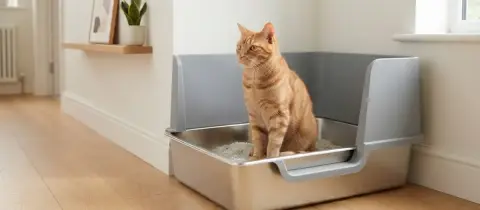
Quick answer: The best litter box for senior cats is a long, open tray with a low entry, so stiff joints don't have to climb over a high edge. The iKitchen Low Entry Stainless Steel Litter Box, with sides of about 10 cm all round, is our top pick. If your older cat suddenly changes toilet habits, see your vet.
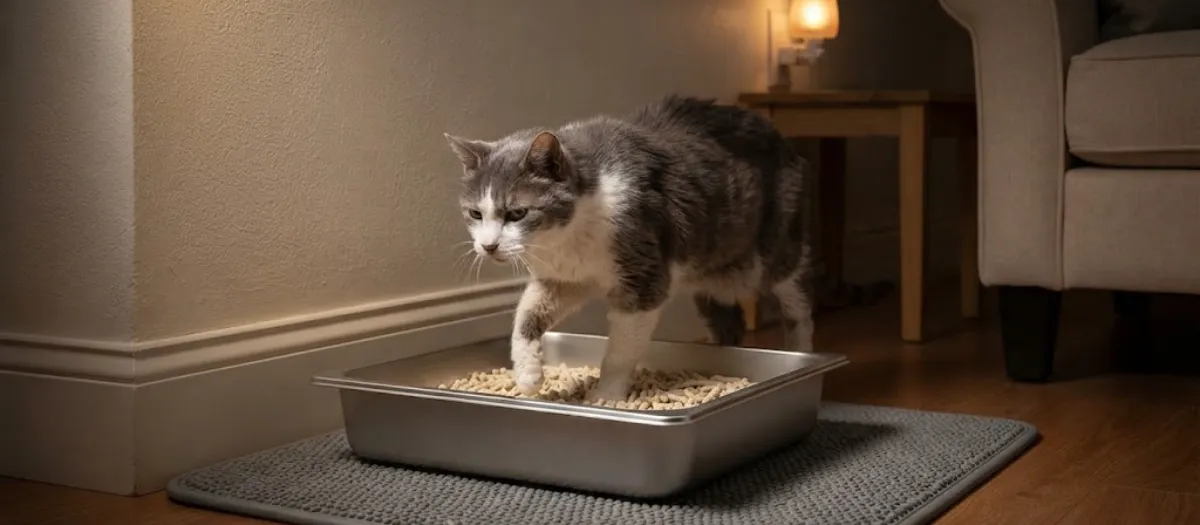
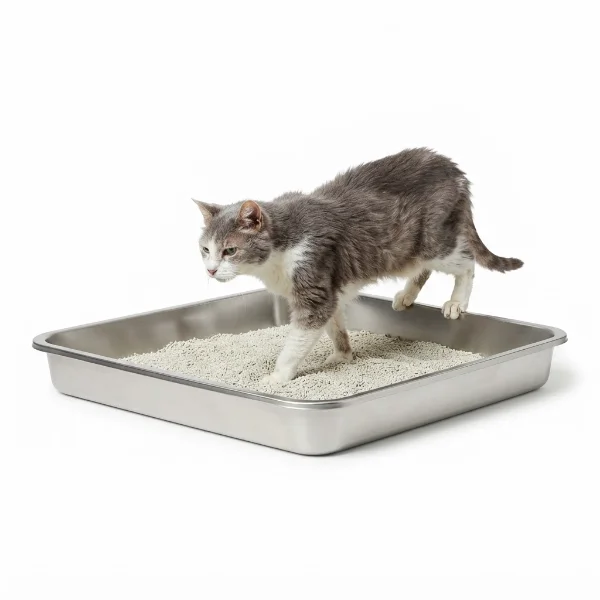
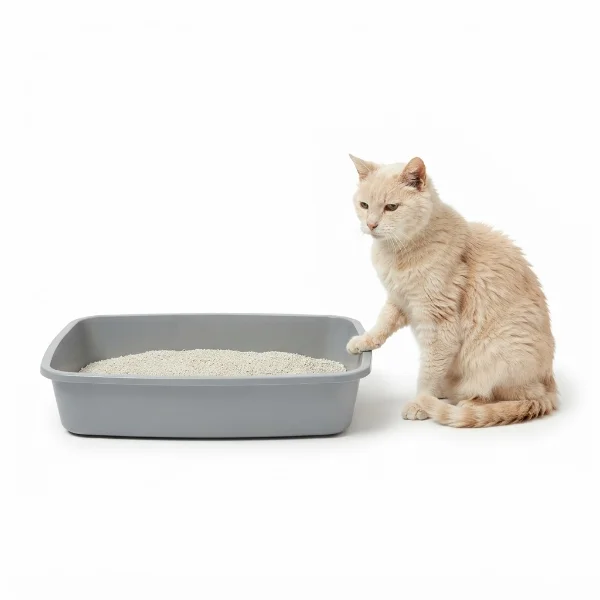
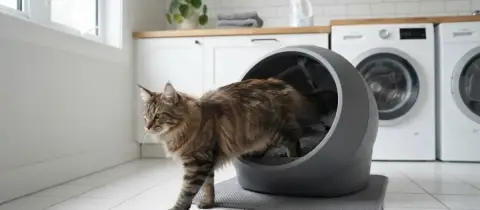
Illustration, not the actual product
Our top pickiKitchen Low Entry Stainless Steel Litter Box
Older cats often start missing the tray for a reason that has nothing to do with manners. This guide compares four low-entry trays on Amazon Australia and covers what to look for, where to put them and when to call the vet. If your cat is already going outside the box, start with our hub on why cats pee outside the litter box.
Quick picks
Our top pickBest overall
iKitchen Low Entry Stainless Steel Litter Box
Large 60 cm tray with sides of about 10 cm all round
Pictures are illustrations, not the actual products.
Entry height is the number to check first, so each pick below gives it from the listing.
Why do senior cats struggle with the litter box?
Stiff or painful joints, often from arthritis, can make stepping over a high tray edge or squatting uncomfortable. Older cats can also have other health problems, or feel less sure on slippery floors. A tray that was fine for years can become a hurdle. Steps to the bed or a favourite perch help in the same way; see our cat steps for bed guide.
Cats are good at hiding pain, so a missed tray can be one of the first things you notice. RSPCA Australia's knowledgebase lists litter tray difficulties or accidents outside the tray among the possible signs of arthritis, and suggests a tray with a low entry side (RSPCA Australia knowledgebase, updated 29 May 2024). Cats Protection also says an older cat that stops using the tray should see a vet first, because medical causes are common (Cats Protection). A tray is a tool that makes toileting easier. It doesn't treat the cause.
What are the signs your older cat finds the litter box hard?
Look for a pattern rather than a single slip. Possible signs include toileting just beside the tray, perching with the back feet outside it, hesitating at the edge, or going to the toilet in a different room. Other changes can appear too, such as less grooming and less jumping.
RSPCA Australia lists reduced activity, stiffness, trouble with stairs or jumping, reduced grooming and less use of high places among the possible signs of arthritis, and says other conditions can look similar, so a vet should make the diagnosis (RSPCA Australia knowledgebase). Cats Protection lists hesitating to jump up or down and toileting outside the tray (Cats Protection). These signs can also come from other health problems, so they are a reason to book a check, not a diagnosis. See the "When to get help" box below.
Our picks in detail
1. iKitchen Low Entry Stainless Steel Litter Box: best overall
A large, open stainless steel tray of about 60 x 40 cm with sides of about 10 cm (4 in) all round, so there is no high back or front to climb over. The listing says it suits cats up to 27.5 lb (about 12.4 kg), including arthritic, sick, frail or overweight cats, and describes the steel as rustproof.
At 60 cm long, it fits the 1.5-times-length guide for a cat of about 40 cm from nose to tail base. The low sides also mean litter can scatter, so a mat helps.
Pros: low sides all round; long enough for most full-size cats; open top; smooth steel surface that is simple to wipe
Cons: litter can spill or get kicked over the low sides; a flat tray with no splash guard may not suit a cat that sprays or pees high
Best for: a cat of average or larger size with stiff joints
Skip it if: your cat digs hard or scatters litter, or you want sides high enough to hold it in
2. Tehoao Low Entry Stainless Steel Litter Box: best for cats who kick litter
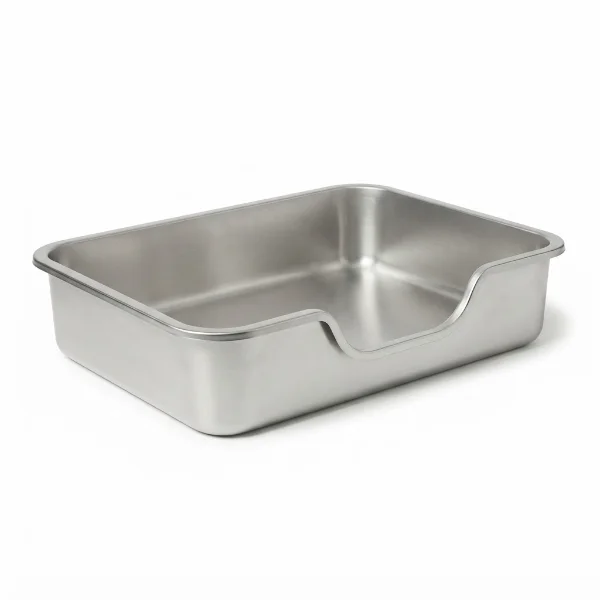
A stainless steel tray of about 50 x 35 x 15 cm with an 8 cm low entry cut-out on one side, per the listing. The idea is a low door with higher sides on the rest of the tray, which can keep more litter inside than an all-round low tray. It is also sold in other sizes, so check which one you're ordering.
This size is shorter than the iKitchen. By the 1.5-times-length guide, a 50 cm tray suits a cat of about 33 cm from nose to tail base, so for a bigger cat look at the larger size in the listing.
Pros: low door with higher sides; steel is simple to wipe; other sizes available
Cons: this size is smaller than many full-size cats need; cats must use the door side, so a stiff cat can't step in from anywhere
Best for: a smaller senior cat who kicks litter around
Skip it if: your cat is large, or you'd rather have a low edge on every side
3. Uiifan 3 Pack Low Entry Litter Boxes: best for several rooms or levels
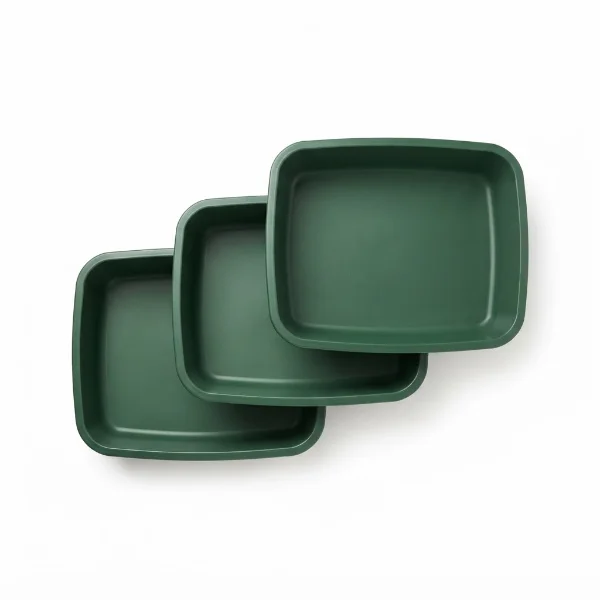
Three open plastic trays, each about 59 x 42 x 11 cm. They are useful where you want a tray on each level or in a few rooms, because older cats may not want to walk far or climb stairs to reach the toilet.
Plastic is lighter than steel, so put each tray on a non-slip mat. Check that the 11 cm sides suit your cat's step height.
Pros: three trays in one purchase; about 59 cm long; open top; suits a multi-level home
Cons: plastic can hold odours and scratches more than steel; sides are slightly higher than the iKitchen's
Best for: homes with stairs or several rooms, and for meeting the "one extra tray" guide
Skip it if: you only need one tray, or your cat is very stiff and needs the lowest edge possible
4. POOWEE! Plain Cat Litter Pan Large: best small tray
A low-sided plastic pan of about 42 x 31 x 8 cm. The listing says the brand is Australian owned. It is the lowest tray here, at about 8 cm, but also the shortest.
At 42 cm, it suits a cat of about 28 cm from nose to tail base under the 1.5-times guide, so it suits small or slim seniors. For a medium or large cat, it is better as a spare than as the main tray.
Pros: very low sides; small enough for tight spots; Australian owned brand per the listing
Cons: too small for most medium and large cats; plastic
Best for: a small or light older cat, or as a spare tray near where your cat sleeps
Skip it if: your cat is medium or large
What makes a good litter box for senior cats?
A good litter box for senior cats has a low entry, is long enough to turn around in, has an open top and sits still on a non-slip surface. Low sides matter most, then size. Cats Protection says older cats and those with mobility issues need low-sided trays, and that any cat needs a tray big enough to turn around in (Cats Protection). If a dog raids the tray, keep the low-entry box and block the dog instead, with a pet gate with a cat door.
Entry height: measure from the floor to the lowest point your cat steps over. Compare it with what is listed, not with the tray's overall height. A tall tray can still have a low door, and a tall wall can be a barrier, so our high-sided litter box guide compares wall height and entry step, where the listing gives one.
Length: a common guide is a tray about 1.5 times your cat's length from nose to the base of the tail, according to RSPCA Australia (RSPCA Australia knowledgebase, updated 30 May 2024). Measure your cat, then check the tray's length.
Open top: usually easier to step into and out of than a lid or hood, and RSPCA Australia recommends a large, open tray.
Non-slip base: RSPCA Australia suggests a towel or mat under the tray to stop it slipping, and it catches tracked litter too. A tray that slides is harder for stiff legs.
Easy to clean: you will be checking more often, so smooth sides and a wide opening for the scoop help.
Litter: most cats prefer unscented, fine, clumping litter. RSPCA Australia recommends about 3 to 4 cm of unscented litter, and Cats Protection says to avoid scented litters because they can put cats off the tray. Don't use essential oils or perfumed deodorisers near the tray. A shallow layer is easier on sore paws than a deep one. If you'd like to try something different, change litter slowly and offer a second tray with the old litter. Our tofu litter guide covers one alternative.
Low-entry litter boxes compared
Details from each Amazon Australia listing, checked on 30 Oct 2026.
We searched Amazon Australia for low-entry litter boxes and trays, then shortlisted ones that met all of these checks:
Well rated: a strong average rating with plenty of buyer reviews.
No red flags: no pattern of poor reviews, safety complaints or listing problems.
Available on Amazon Australia when we checked.
Entry height listed on the listing, or clear from its stated dimensions.
Length suits a full-size cat, or the listing makes the smaller size clear.
Easy to clean: open top, smooth sides and a wide opening.
These are researched picks, not products we've personally tested. We compared the specifications and features shown on each Amazon Australia listing, checked on 30 Oct 2026. We didn't accept payment from any brand, and no brand saw this page before it was published.
Left out this time: trays that weren't available or had listing problems when we checked, and high-entry or top-entry boxes, which are harder for stiff joints.
Where should you put litter boxes for an older cat?
Put a tray on every level your cat uses, close to where they rest, in a quiet spot away from food and water. The RSPCA suggests keeping food, water, litter tray and beds on the same level so your cat doesn't need stairs (RSPCA Australia knowledgebase).
How many trays? A common vet guideline is one tray per cat plus one extra, in different places. RSPCA Australia says to provide one tray per cat plus an extra in a multi-cat home, and Cats Protection suggests spreading them out and not lining them up in a row, because the cat may count them as one. For an only cat, the second tray is a sensible backup if the first is a long way off.
Quiet, but not too far: away from washing machines, doorways and cat flaps, but within a short walk of the bed.
Light at night: Cats Protection suggests a night light near the tray for older cats.
Non-slip floor: a mat under the tray helps on tiles and timber.
Heat: in a hot Australian summer, put trays in the coolest, best-ventilated spot, not a hot laundry or garage. Scoop daily. Our litter box smell guide has more.
Don't move trays often, and keep the old tray in place while you try a new one.
Flushing: Don't flush cat litter or cat poo, even if the packet says "flushable". Cat faeces can carry Toxoplasma, which standard wastewater treatment doesn't remove, and the New Zealand Department of Conservation links it to deaths of dolphins and other marine mammals (NZ Department of Conservation). Western Sydney University's Dr Ian Wright says the five Australian water authorities he asked all advised against flushing litter, which can swell and block pipes, including the ones inside your home (Western Sydney University, 8 June 2021). It can clog a septic system too. Bag it, bin it, and check your council's rules.
Does an automatic litter box suit a senior cat?
Sometimes, but check the entry height first. Many automatic boxes have a higher step or enclosed shape than the trays here. They suit some seniors who are still steady on their feet, but a cat with stiff joints may do better with a plain low tray.
The PETKIT PuraMax 2 listing calls its design low-entry at about 20 cm (7.8 in), which is still higher than the trays above. It lists a cat weight range of about 1.5 to 8 kg and says not to use it for pets under 6 months. Follow each listing's minimum weight and age. Introduce an automatic box slowly, with it switched off or in manual mode, and keep a normal tray available while your cat learns. Never leave a kitten or a cat under the minimum weight with one running. See our automatic litter box guide for large-cat picks and details.
When to get help
A male cat straining to pee with little or nothing coming out is an emergency. It can mean a urinary blockage, which can be fatal if untreated. Go to a vet straight away, including an after-hours clinic. Walkerville Vet says many male cats trying to pee have a blockage and to seek emergency help as soon as possible if a cat can't pass urine (Walkerville Vet, updated 28 November 2020).
Book a vet visit if your older cat goes outside the box, strains, or pees more or less often than usual. Other signs worth mentioning are drinking more, hiding, crying in the tray, less grooming or hesitating to jump. These can be linked to arthritis, kidney or urinary problems and other conditions, and only a vet can say which. RSPCA Australia says arthritis is painful and should be treated with evidence-based options, so your vet can discuss pain relief.
Don't punish your cat for accidents. RSPCA Australia says punishment isn't effective and may be counter-productive (RSPCA Australia knowledgebase).
Frequently asked questions
What is the best litter box for an old cat?
A long, open tray with a low entry suits most older cats. Our top pick is the iKitchen Low Entry tray, with sides of about 10 cm. Smaller cats may prefer a lower, shorter tray. See the low-entry comparison for sizes and heights.
Why is my old cat peeing outside the litter box?
There can be several reasons, including joint pain, kidney or urinary problems, or stress. It is more consistent with a health problem than bad behaviour, so a vet check comes first. Our hub on cats peeing outside the litter box walks through the causes.
How low should the entry of a senior cat litter box be?
There is no single measurement for every cat. The trays in this guide range from about 8 to 11 cm, with the iKitchen at about 10 cm. Watch your cat step in, and if they hesitate or lift a back leg awkwardly, try a lower edge.
How many litter boxes does a senior cat need?
A common vet guideline is one per cat plus one extra, in different places. For an older cat, that second tray can sit on another level or near the bed, so a long walk or flight of stairs never gets in the way of a quick trip.
Can I cut down the side of a litter box for my cat?
We haven't researched cutting down a box, and rough edges are a risk for paws, so we wouldn't. Buy a tray made with a low entry instead, such as the Tehoao with its 8 cm door cut-out, or use a shallow plain tray.
What litter is best for older cats?
Most cats prefer unscented, fine, clumping litter, and that's a good start for seniors. Keep the layer shallow, about 3 to 4 cm per RSPCA Australia, and avoid scented litter or deodorisers with essential oils or perfume. Change types slowly.
Do senior cats need a night light near the litter box?
It can help. Cats Protection suggests a night light near the tray for older cats, and older eyes may find a dark hallway harder. Use a low, steady light, and keep the route clear of clutter. A tray in a dark laundry or garage is a long, uncertain walk for an older cat.
Product details from each linked Amazon Australia listing, checked on 30 Oct 2026.
This guide provides general information and isn't a substitute for veterinary advice. If you're concerned about your cat's toileting or mobility, speak with your vet.