Best stainless steel litter box in Australia (2026)
By Anish PuriUpdated 25 Nov 202615 min readResearched, not tested by us
Research guide. WhiskerFinds may earn a commission from links, at no extra cost to you.
Quick answer: The best stainless steel litter box for most cats is the suzzipaws XL, a big steel tray with clip-on high sides. Choose the Feandrea for a high-sided 28 L tray, the Tehoao low-entry tray for kittens and older cats, the Marchul if you want a lid and your cat is about 5.4 kg or less, and the LOVELEDI two-pack for two cats.
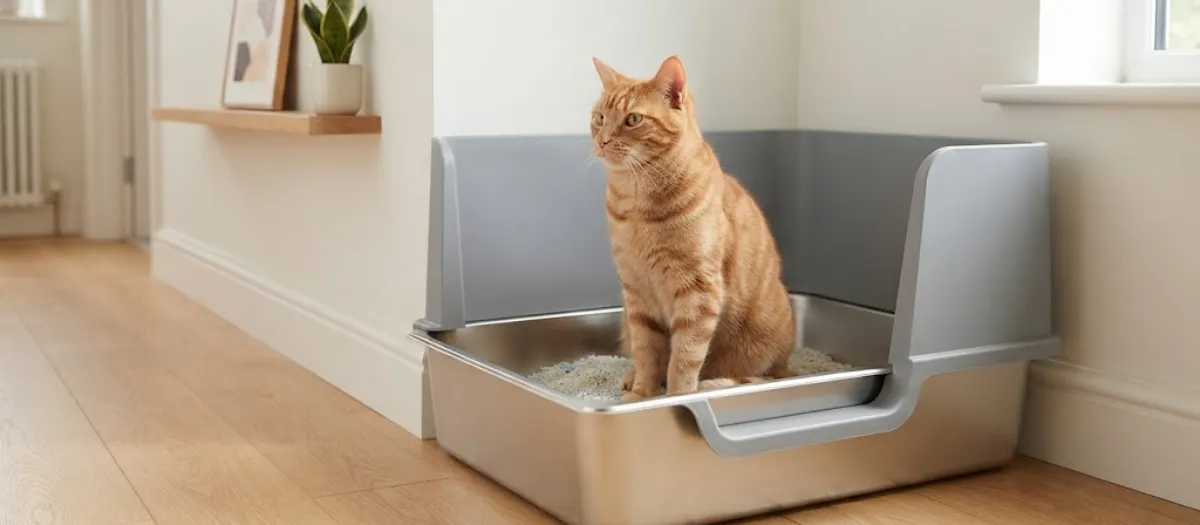
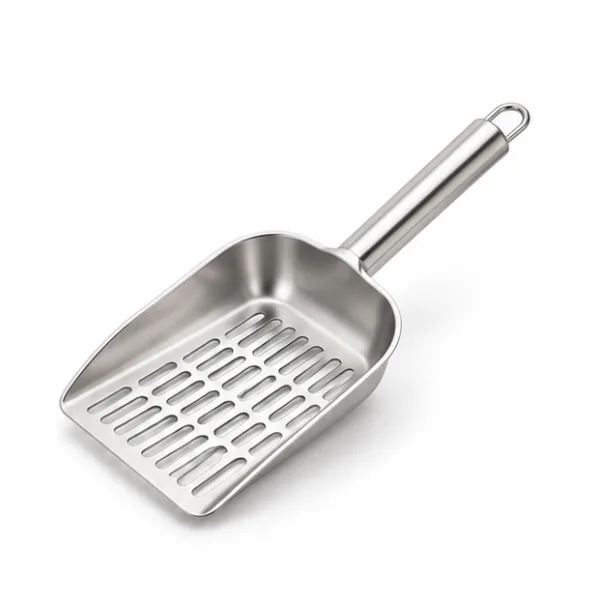
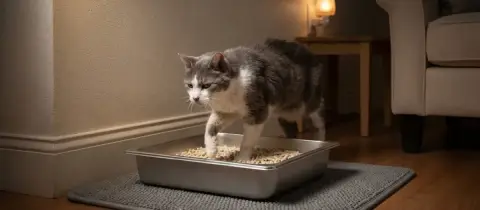
Illustration, not the actual product
Our top picksuzzipaws XL Stainless Steel Litter Box
A stainless steel litter box, often called a stainless steel litter tray, is a metal tray instead of a plastic one, usually bigger than the standard supermarket tray. This guide compares six on Amazon Australia, covers size, high sides, low entries and lids, and gives an honest answer on whether steel is worth it. If your cat has started going outside the box, start with why cats pee outside the litter box before buying anything. For plastic, hooded and top-entry boxes, see our cat litter box guide.
Quick picks
Our top pickBest overall, big cats and high sides
suzzipaws XL Stainless Steel Litter Box
Steel tray with clip-on high sides and a footboard
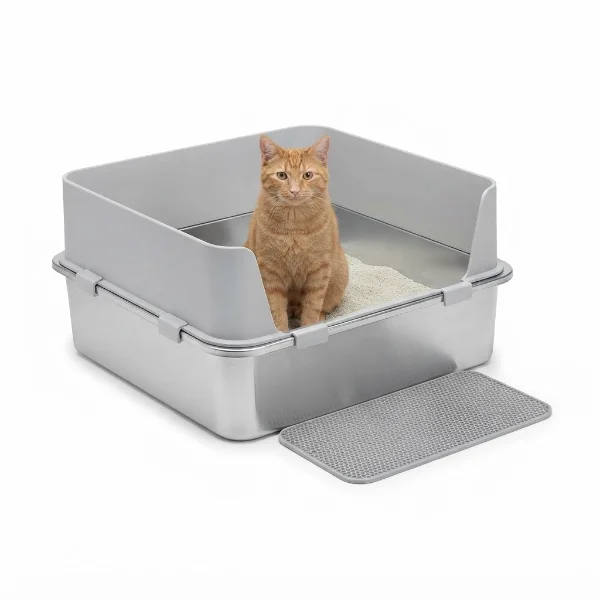
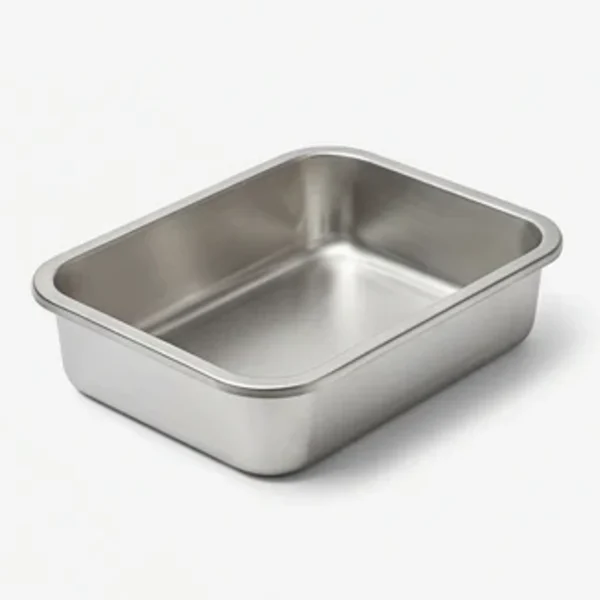
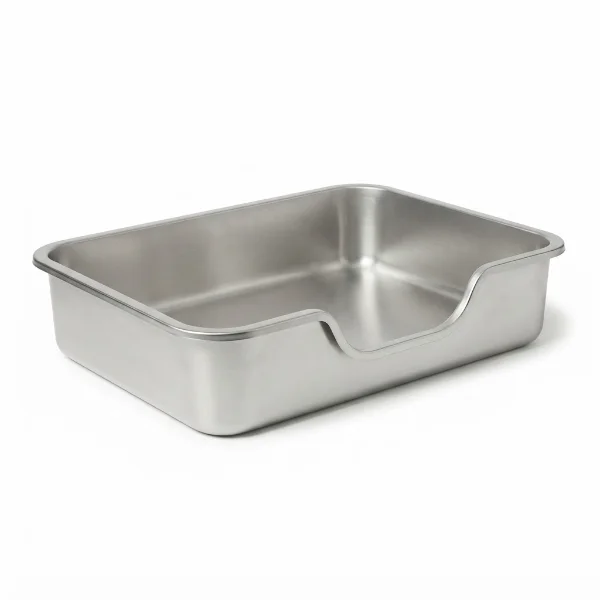
Pictures are illustrations, not the actual products.
Prefer a lower step for an older cat? The Tehoao above is the only pick whose listing states an entry height (8 cm), and our best litter box for senior cats covers more low-entry trays, including steel ones.
Metal litter tray vs plastic: is a stainless steel litter box better?
It can be easier to keep clean, but it isn't a cure for litter box smell. Steel has a smooth, hard surface that doesn't scratch the way soft plastic does, so there are fewer scratches for urine to sit in. Smell mostly comes down to scooping, litter and placement, whichever tray you use.
We looked for independent research comparing steel and plastic trays for odour or bacteria and didn't find any from a vet or university, so treat the "steel stays fresher" idea as a reasonable argument, not a proven result. What sources do agree on is the basics. The RSPCA says to clean away waste daily, replace the litter at least once a week, and use cleaning products that are safe for cats, since strong-scented cleaners and scented litter may put a cat off (RSPCA UK, page read 30 October 2026). Our litter box smell guide covers the rest.
Steel has real downsides too:
Noise. Scratching and digging can sound louder on metal, and some cats may dislike that.
Feel and temperature. Metal can feel cold or warm depending on where the box sits, which may matter in an Australian summer or a cold hallway.
Seams. Boxes with a plastic surround or clip-on sides have joins, and litter or urine can work into them. Wipe them out when you wash the box. A one-piece tray avoids most of this, and the Tehoao listing describes its tray as seamless.
Weight and cost. They are heavier than plastic and usually cost more.
It still needs scooping. Steel doesn't stop waste building up.
If your cat is happy with a large, clean plastic tray, you don't have to switch.
What size stainless steel litter tray do I need?
Go bigger than you think. The RSPCA Australia knowledgebase says a litter tray should be at least 1.5 times your cat's length (RSPCA Australia knowledgebase, updated 30 May 2024). Measure your cat from the nose to the base of the tail, then multiply by 1.5 and compare that with the box length.
For example, a cat measuring 40 cm from nose to tail base needs a tray about 60 cm long, which matches the 60 cm boxes in this guide. A longer cat needs more, so very large cats may find even these snug. The Marchul (about 51 cm long) suits cats up to about 34 cm by the same rule, which fits its 5.4 kg limit. The same RSPCA page suggests filling the tray with about 3 to 4 cm of litter.
Use the listed length, not the height, for this check. Going a little over is fine: cats like space to turn and dig. The size table below works the rule out for every pick. For plastic, hooded and top-entry options for big cats, and a chart by cat length, see our litter boxes for large cats.
Our picks in detail
1. suzzipaws XL Stainless Steel Litter Box: best overall for big cats and high sides
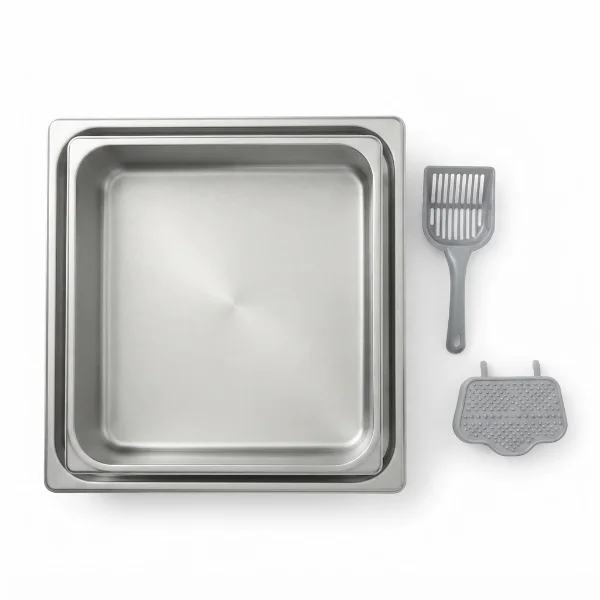
A large stainless tray of about 60 x 40.6 x 30.5 cm with a plastic surround that clips on to form high sides. The listing says it holds up to 37 L of litter, suits large cats and cats that pee high, and has an overlapping seam. It also comes with a footboard (the listing calls it a filter pedal), a scoop and a wall-mount holder for the scoop.
The listing says the footboard helps older or short-legged cats, though the 30.5 cm height is still a step up, so check it suits your cat.
Pros: big enough for large cats; clip-on high sides; footboard and scoop included; open top most cats accept
Cons: tall sides are a hurdle for kittens, seniors and sore joints; the plastic surround and its seam need washing too; heavier and bulkier than plastic
Best for: large cats, and cats that stand to pee or dig hard
Skip it if: your cat finds stepping into tall boxes difficult, or you are short on floor space
2. Marchul Enclosed Stainless Steel Litter Box: best enclosed
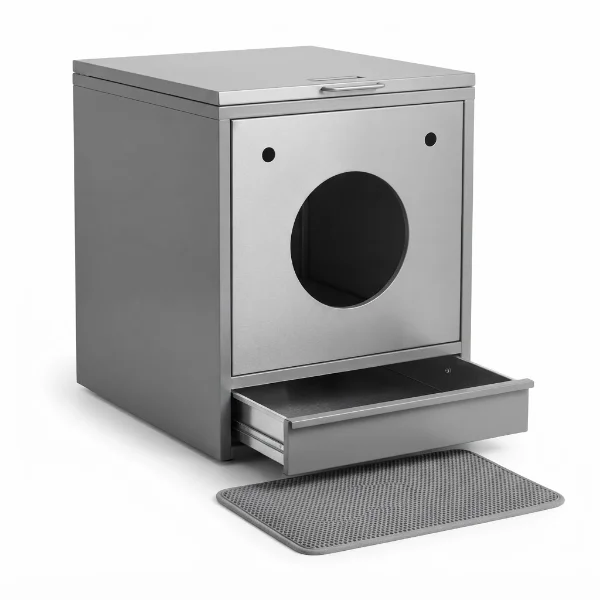
A fully enclosed box of about 51 x 41 x 38 cm with a lid, a single door and two vents. The steel drawer slides out for emptying (the title gives it as 12 cm deep), and the listing mentions a 35 degree inner splash guard. A mat, a scoop and two carbon bags come in the box.
Size is the catch. The listing says it fits cats around 12 lb, about 5.4 kg, so it is not for big cats. Do the 1.5 times length check from the size section first.
Pros: lid keeps litter and sight lines contained; slide-out steel drawer; splash guard, mat and scoop included
Cons: only suits cats up to about 5.4 kg, per the listing; some cats dislike enclosed boxes; the closed space can build up heat and smell, so scoop daily
Best for: small to average cats, and homes where the box sits in view
Skip it if: your cat is big, or your cat hasn't used a covered box before
3. Anycoo Stainless Steel Litter Box 60 x 40: best simple big tray
A large steel tray, 60 x 40 cm, with a high-side top section that overlaps the base, according to the listing. A pedal and a scoop are included.
The listing is inconsistent on height: the title says 60 x 40 x 15 cm while a bullet says 60 x 40 x 20 cm. Check the height on the listing, and measure your cat's step-in, before buying. A lower height is gentler on older cats but may let more litter fly out.
Pros: big footprint; high-side section overlaps the base; pedal and scoop included
Cons: the listing gives two different heights; shorter sides than the suzzipaws if the 15 cm figure is right
Best for: a plain, roomy steel tray when you don't need a lid
Skip it if: you need to know the exact height, or your cat sprays or kicks litter high
4. LOVELEDI 2 Pack XXL Stainless Steel Litter Box: best for two-cat homes
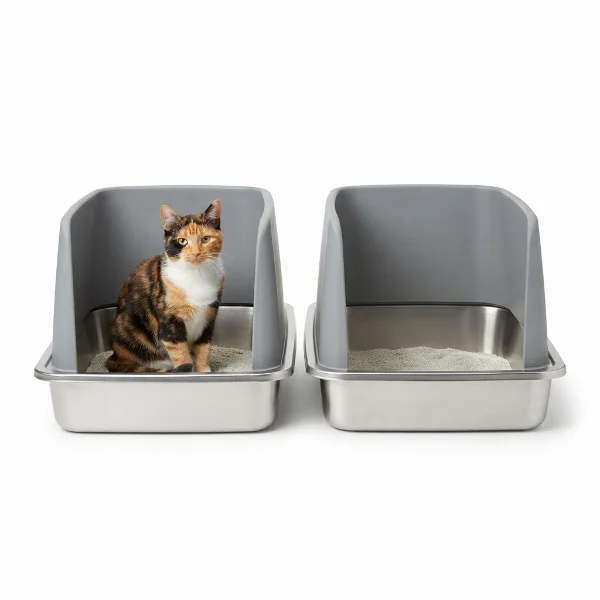
Two semi-enclosed stainless boxes, each about 61 x 40.6 x 30.5 cm. The listing mentions a 365-day warranty.
A common vet guideline is one litter box per cat plus one extra, in different places. For two cats, that is three boxes, so a two-pack is a good start and you would add a third elsewhere. The RSPCA Australia knowledgebase says the same for multi-cat homes, and says even one cat needs two trays in separate spots (RSPCA Australia knowledgebase). Put them in different rooms rather than side by side.
Pros: two boxes in one purchase; same generous size as the suzzipaws; warranty in the listing
Cons: semi-enclosed, so some cats may dislike the shape; two large boxes take up room; you still need a third for two cats
Best for: two-cat homes, or one cat that benefits from boxes on two floors
Skip it if: you only have room for one box, or you don't want a semi-enclosed shape
5. Feandrea Stainless Steel Litter Box, High Edge, 28 L: best mid-capacity high-sided tray
An open tray of 62 x 42 x 30 cm with a stainless steel base and slate grey plastic sides. The listing says it holds 28 L of litter (the suzzipaws holds 37 L), suits cats up to 15 kg, and has high spill edges, a low front door with a gentle sloped step, anti-tracking holes at the exit edge that drop stray litter into a litter catcher, and hidden storage for the scoop. A scoop and brush come in the box, and the sides detach for washing.
Choose it over the suzzipaws if you like the sloped step and built-in litter catcher, and the suzzipaws if you want the larger capacity and a footboard. The maker's notes recommend clumping, absorbent litter, and say not to lift or move the box while it holds litter, so scoop and empty it where it sits.
Pros: high edges for sprayers and kickers; sloped step at the front; litter catcher and scoop storage built in; scoop and brush included; sides come off for washing
Cons: 30 cm sides are still a step for a stiff senior; the entry height isn't given in cm; plastic sides and joins need washing too; the maker says not to move it when it holds litter
Best for: cats up to 15 kg in homes that want high sides with a gentler way in
Skip it if: your cat needs the lowest possible entry (see the Tehoao), or you plan to use a pellet litter and want the maker's say-so first
6. Tehoao Stainless Steel Litter Box with Low Entry, 50 x 35 x 15 cm: best for seniors, kittens and cats with sore joints
A shallow one-piece stainless tray of 50 x 35 x 15 cm. The listing says it has an ultra-low 8 cm entrance, seamless construction, rounded edges with soft rubber strips around the entrance, and high-sided splash protection. It names kittens, senior cats, post-surgery cats and cats with joint discomfort as the cats it is made for. The listing also offers three other sizes, up to 60 x 40 x 15 cm, so check the size selected before you order.
A low step is the point, so side height is the trade-off: at 15 cm the walls are the lowest in this guide, and a cat that kicks or sprays high may flick litter over them. By the 1.5 times rule, 50 cm suits cats up to about 33 cm from nose to tail base, so a large older cat may want the 60 x 40 size or the litter boxes for large cats guide. Our best litter box for senior cats compares more low-entry trays, and your vet can advise if stepping in has suddenly become hard.
Pros: 8 cm entrance per the listing; one-piece, so no seams to clean; soft rubber strips on the entrance edge; wipes clean
Cons: low walls let more litter escape; this size is short for big cats; weight isn't stated; the listing also pitches it for rabbits and ferrets, so check it suits your cat's size
Best for: kittens, older cats, cats recovering from surgery and cats with sore joints
Skip it if: your cat sprays or kicks litter high, or your cat is large
High sides, open or enclosed?
High sides keep sprayed or kicked litter inside and suit cats that pee standing up or dig hard. A lid hides the mess and traps litter, but some cats dislike enclosed boxes, and RSPCA UK notes that some cats may like a covered tray, so watch your cat. Open is the safer first choice. For open plastic trays compared by wall height see high-sided litter boxes, and for sifting trays see sifting litter boxes.
Think about entry height as well as side height. The higher the walls, the bigger the step in for a kitten, an older cat or a cat with sore joints. The suzzipaws listing says the footboard helps older or short-legged cats, and the Feandrea listing describes a low front door with a gentle sloped step, though neither gives the entry height in cm. The Tehoao listing is the only one here that states one, 8 cm. Our senior cat litter box guide has more low-entry options if stepping in is the problem.
Lids add another thing to consider: a closed box holds smell inside for the cat, and heat and humidity build up faster in summer. If you pick the enclosed Marchul, scoop daily and keep it somewhere airy. Some owners prefer an automatic litter box for large cats instead, which is a different kind of product with its own trade-offs.
Choose by situation: which stainless steel litter tray suits your cat?
The right tray depends on your cat's size, age and habits. Big cats need a roomy open tray, sprayers and kickers need high sides, and kittens and seniors need a low entry. Use the table to match your situation to a pick.
Swipe sideways to see every column
Situation
What to look for
Watch out for
Our pick or guide
Big cat
Long, open tray with high sides
Check length against 1.5 times your cat's body length
Round trays have less floor than they look; check the inside size
None picked here
Stainless steel litter boxes compared
Details from each Amazon Australia listing, checked on 25 November 2026. The last column is our own working: the tray's listed length divided by 1.5, which is the longest cat (nose to tail base) that tray meets the RSPCA 1.5 times rule for. It uses the outside length, so inside room will be a little less.
We searched Amazon Australia for stainless steel litter boxes, then shortlisted ones that met all of these checks:
Well rated: a strong average rating with plenty of buyer reviews.
No red flags: no pattern of poor reviews, safety complaints or listing problems.
Available on Amazon Australia when we checked.
Listed dimensions: length, width and height are stated.
Stainless steel tray (not just a steel-look finish).
Sides or lid: high sides, a lid or a surround to help keep litter in.
Litter-tracking features: a footboard, pedal, mat or splash guard where the listing mentions one.
These are researched picks, not products we've personally tested. We compared the specifications and features shown on each Amazon Australia listing, checked on 25 November 2026. We didn't accept payment from any brand, and no brand saw this page before it was published.
Left out this time: boxes with listing problems or little buyer history.
How to clean a stainless steel litter box
Scoop every day, and empty and wash the box regularly. Use warm water and a plain, unscented dish soap, rinse well and dry fully before refilling. Avoid strong-smelling cleaners, because the RSPCA warns they may put a cat off the box. Don't use scourers that scratch the steel. The Feandrea notes say the same: mild detergent, warm water, no hard brushes or abrasive cleaners.
The RSPCA's advice is to use cleaning products that are safe for cats and to avoid strong-scented ones (RSPCA UK, page read 30 October 2026). International Cat Care also says to avoid ammonia-based products, which smell like urine to a cat (International Cat Care), and never mix bleach with any ammonia cleaner. For that reason we don't suggest scented sprays or deodorisers, and never use essential oils near a litter box. Wash clip-on surrounds and seams separately, since this is where residue collects.
For accidents on floors or beds, the same RSPCA page recommends biological or enzymatic washing liquid or powder, and says not to punish your cat.
Don't flush cat litter or cat poo, even if the packet says "flushable". Cat faeces can carry Toxoplasma, which standard wastewater treatment doesn't remove, and the New Zealand Department of Conservation links it to deaths of dolphins and other marine mammals (NZ Department of Conservation). Western Sydney University's Dr Ian Wright says the five Australian water authorities he asked all advised against flushing litter, which can swell and block pipes, including the ones inside your home (Western Sydney University, 8 June 2021). It can clog a septic system too. Bag it, bin it, and check your council's rules.
How many litter boxes per cat?
A common vet guideline is one litter box per cat plus one extra, in different places. The RSPCA Australia knowledgebase says a single cat should still have at least two trays in separate spots, and a multi-cat home should have one per cat plus one more (RSPCA Australia knowledgebase, updated 30 May 2024).
Place boxes in quiet, private spots that are easy to reach and away from food and water, and avoid moving them often. For litter, the RSPCA says to use unscented litter and offer different types to see what your cat likes. Most cats prefer unscented, fine, clumping litter, so avoid scented litters and deodorisers.
When to get help
A male cat straining to pee with little or nothing coming out is an emergency. The American College of Veterinary Surgeons says a cat with a urinary obstruction needs emergency treatment, and that a complete blockage can be fatal. Signs can include crying, restlessness, hiding and tiredness. Go to your vet or the nearest 24-hour emergency hospital straight away (ACVS: Urinary obstruction in male cats).
Call your vet if your cat starts toileting outside the box, strains, or pees more or less often than usual. The RSPCA says regular toileting outside the tray can be a sign of a health problem. A new box won't fix a medical cause, so see our guide on why cats pee outside the litter box.
Watch for a cat that avoids the new box, especially a kitten or an older cat. Go back to a familiar tray and ask your vet if it continues.
Frequently asked questions
Do cats like stainless steel litter boxes?
Many cats use them without fuss, but cats differ. Some may dislike the sound of digging on metal, or the feel of a cold surface. Keep your old tray beside the steel one while your cat decides, and use the same litter in both so the change is only the tray.
Are stainless steel litter boxes better for smell and hygiene?
Steel is smooth, doesn't hold scratches for urine to sit in, and takes hot water, which can help, but we found no independent research proving it stops odour. The most hygienic box is the one you scoop daily and wash weekly. Our litter box smell guide covers causes and fixes.
Can I use any litter, or a sifting tray, with a stainless steel litter box?
Steel suits most litters, but check the maker's notes: Feandrea recommends clumping, absorbent litter for its tray. Most cats prefer unscented, fine, clumping litter, with 3 to 4 cm in the tray as the RSPCA suggests. Sifting trays suit pellet litters, and fine clumping litter can clog the holes, so see sifting litter boxes for those. Our clumping cat litter guide and tofu cat litter guide cover the litters.
Are stainless steel litter boxes safe for cats?
A steel tray is a sensible material, but check for rough edges or loose clips out of the box, and keep sides in good condition. RSPCA UK says a litter tray should be made of robust, non-toxic and sturdy material. Skip any box that wobbles or has sharp seams, and ask your vet about a cat with sore joints.
Do stainless steel litter boxes rust?
Stainless steel is chosen for resisting rust, but quality varies, and long soaking or harsh scrubbing can damage any finish. Dry the box after washing, and check seams and clips. Replace it if you see rust or pitting, and check the listing for what it says about the material.
Are stainless steel litter boxes good for senior cats?
Only if the entry is low enough. Most steel trays here have sides around 30 cm, a big step for stiff joints. The Tehoao listing gives an 8 cm entrance, and the Feandrea has a sloped low step with no figure given. Our senior cat litter box guide compares more, and your vet can advise on mobility.
Is a stainless steel litter box with a lid better?
A lid can give privacy and keep more scattered litter inside, but it isn't automatically better. Some cats dislike covered boxes, and a closed space holds smell in for the cat, so scoop daily. Open is the safer first choice. See our litter box enclosure guide for hidden boxes.
Are round stainless steel litter boxes any good?
They suit a corner or a small laundry, but a round tray has less floor area than a rectangle of the same width, so check the inside diameter against the 1.5 times body length rule before buying. We haven't picked one, because the round steel trays we looked at didn't list clear inside measurements.
Product details from each linked Amazon Australia listing, checked on 25 November 2026.
This guide provides general information and isn't a substitute for veterinary advice. If you're concerned about your cat's toileting, speak with your vet.