Sifting litter boxes: lift-to-sift trays and pour-through sifters compared
By Anish PuriUpdated 23 Nov 202610 min readResearched, not tested by us
Research guide. WhiskerFinds may earn a commission from links, at no extra cost to you.
Quick answer: A sifting litter box lets you lift a mesh tray to separate clumps from clean litter, and the Arm & Hammer Large Sifting Litter Box is our best overall pick for one small to medium cat. It isn't self-cleaning, so you still lift, sift and bin the waste every day. Check your cat's length first, because most of these trays are short.
Sifting boxes promise to save you the scoop. They don't remove the job, but they can make it quicker. This guide compares four options on Amazon Australia by size in centimetres, the litter each listing names and how each one sifts, with a chart that turns your cat's length into a minimum box size. For the basics of choosing a tray, see our cat litter box guide.
The range is short. Only three real sifting boxes passed our checks, plus one stand-alone sifter that works with a box you already own. All four are imports. Several boxes sold as "sifting" have no sifter at all, and we left those out.
Quick picks
Our top pickBest overall
Arm & Hammer Large Sifting Litter Box
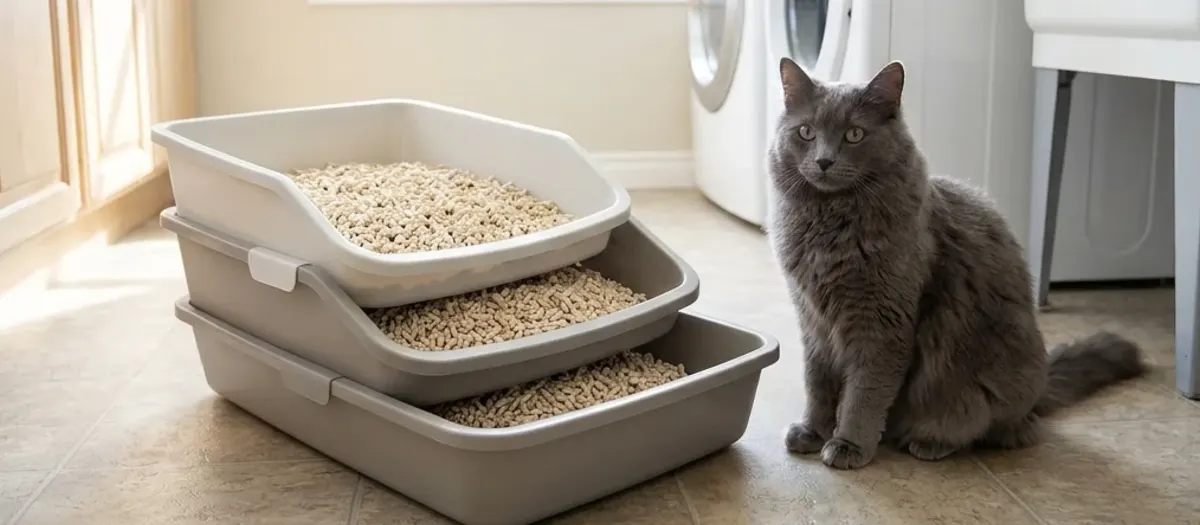
Simple three-pan lift-to-sift system, 48.3 cm long, with the pour-and-lift steps spelled out
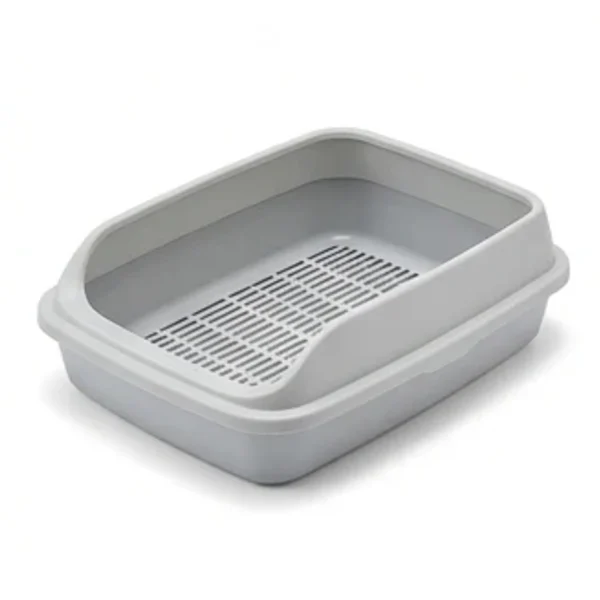
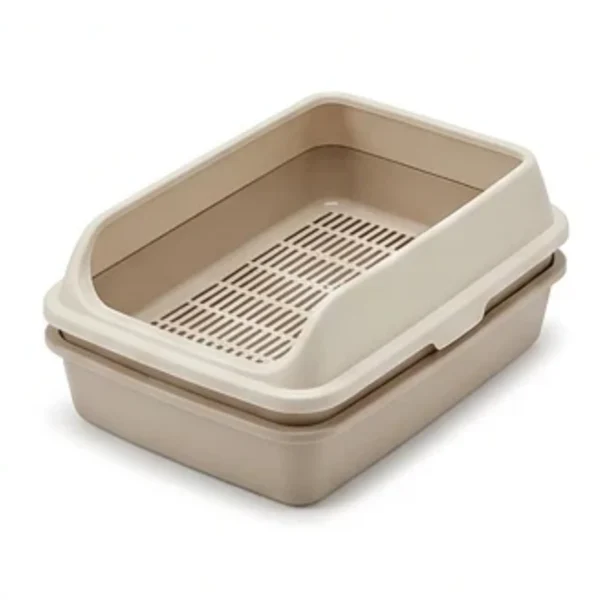
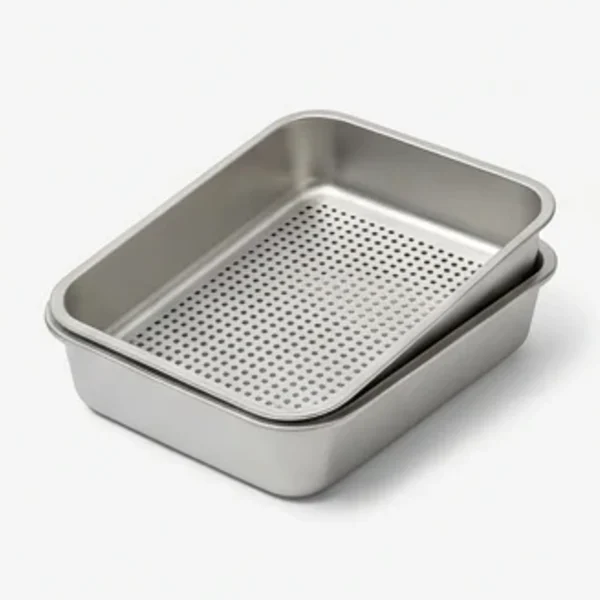
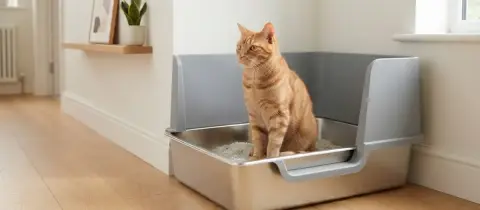
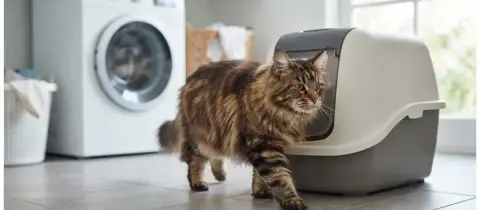
Pictures are illustrations, not the actual products.
Sifting litter boxes compared
Details from each Amazon Australia listing, checked on 23 Nov 2026. Where a listing gives inches, we've converted to centimetres.
Swipe sideways to see every column
Pick
How it sifts
Litter the listing names
Size (cm)
Material
Arm & Hammer
Lift a sifting pan out of the lower pan; one sifting pan and two regular pans
Pine, crystal, pellets and clumping
48.3 x 38.1 x 20.3; 1.14 kg
Plastic, no lid
Van Ness
Two trays plus a sifter, in a frame
Most clumping litters; "not ideal for pellets/powders"
48.2 x 38.4 x 20.3; 453 g
Plastic, no lid
KISENG
Lift a dual-layer mesh tray; sawdust drops to the pan
Pine pellets; remove the tray for clumping litter
59.7 x 39.4; about 26 to 30 tall; 5.3 kg
Stainless steel, no lid
SiftEase
Pour a full box through a basket into a holding bin
Clumping clay, silica, corn and walnut; pine pellets by flipping the process
Basket about 37 x 27 cm and about 20 cm deep; holding bin about 37 x 27 x 38 cm (description); the details field says 36.8 x 26.7 x 17.8
Polypropylene and polyester
How does a sifting litter box work?
You lift a tray with holes in it, and clean litter falls through while clumps stay behind. It is a manual system. Nothing moves by itself, and the waste still has to be tipped into a bin by you.
The three-pan boxes stack. Arm & Hammer's own steps say to pour the dirty litter from the top pan into an empty pan with the sifter tray on top, lift the sifter out of the second pan to leave the clumps, then put the sifter back in the empty pan and the clean litter on top. The Van Ness is a two-tray set with a sifter. The KISENG has a steel mesh tray that sits over the pan. The SiftEase is different again: you lift the whole box and pour it through a basket into a bin below.
The listings say "no scooping required" and "scoop free". Treat that as the makers' wording. RSPCA Australia says to remove faeces and urine every day, and International Cat Care says to remove solids and clumps at least twice a day and give the tray a full clean at least once a week (RSPCA Australia knowledgebase, updated 30 May 2024; International Cat Care, "Soiling indoors", updated 26 September 2025; both pages read 23 November 2026). A sifting box changes how you remove the waste, not how often. Our how often to change cat litter guide has the full routine.
Our picks in detail
1. Arm & Hammer Large Sifting Litter Box: best overall
The simplest system here, with the pour-and-lift steps spelled out. The listing says one sifting pan and two regular pans, a lift-to-sift design, black plastic and no lid. It is 48.3 x 38.1 x 20.3 cm and weighs 1.14 kg. The listing names pine, crystal, pellets and clumping litter, and the maker suggests its own SLIDE litter.
The listing says the plastic is treated with Microban for antimicrobial protection of the product, and that you should replace any litter pan every 12 months. It says made in the USA with recycled materials.
Pros: three-pan system with clear steps; names several litter types; spare pan to stack and swap
Cons: 48.3 cm is short for a big cat; no lid; plastic pans need replacing yearly per the maker; imported, so check the delivery details on Amazon before you order
Best for: one small to medium cat, up to about 32 cm long by our sum
Skip it if: your cat is longer than about 32 cm, or you want a lid
2. Van Ness Large Sifting Cat Litter Tray with Frame: best with a raised frame
The only pick with a framed tray that adds height. The listing says the frame reduces litter and urine spill outside the box. It is a set of two trays and a sifter, 48.2 x 38.4 x 20.3 cm, plastic, 453 g, no lid.
The listing says it is designed for most clumping litters and not ideal for pellets or powders. Hand wash it in warm water, as the listing says not to use a dishwasher. The listing also states no warranty.
Pros: frame adds wall height; two trays and a sifter in the set; light to lift
Cons: not ideal for pellets or powders; no warranty per the listing; 48.2 cm is short for a big cat; imported, so check the delivery details on Amazon before you order
Best for: a small to medium cat on clumping litter that kicks a little
Skip it if: you use pellet litter, or your cat is longer than about 32 cm
3. KISENG stainless steel sifting litter box: best for pine pellets
The answer for pellets, and the longest floor here at 59.7 x 39.4 cm. The listing describes a dual-layer stainless steel mesh tray that separates whole pellets from waste while sawdust falls to the bottom pan. Remove the tray and it works as a deep single pan for clumping litter. It comes with a scoop and four anti-slip pads, and weighs 5.3 kg.
The size figures in the listing don't agree. The description says 22.83 x 14.57 x 10.43 in (about 58 x 37 x 26.5 cm), while the details give 59.7 x 39.4 x 30.5 cm, so call it about 58 to 60 cm long and 26 to 30 cm tall, and check before you order. The listing says the steel is non-porous and won't absorb odours, and that is the maker's claim.
Pros: built for pellets; longest floor here, suiting a cat up to about 39 cm by our sum; doubles as a deep pan for clumping litter; scoop and pads included
Cons: the stated height varies by listing field; high sides are hard on a senior cat; fine clumping litter in sifting mode isn't what it is built for; heavy at 5.3 kg; imported, so check the delivery details on Amazon before you order
Best for: a bigger, fit adult cat on pine pellets
Skip it if: your cat is senior or arthritic, or you want to sift fine clumping litter in sifting mode
4. SiftEase litter sifter: best pour-through sifter
Not a box. It is a sifting basket over a holding bin that works with a box you can lift and pour, so you keep the tray you already like, whether it's steel, large or hooded. The listing's description gives the sifting basket as about 37 x 27 cm (14.5 x 10.5 in) and about 20 cm (8 in) deep, over a 28 qt (about 26 L) holding bin listed at about 38 cm (15 in) tall. The details field gives 36.8 x 26.7 x 17.8 cm, which doesn't match that bin height, so check before you order. You pour the dirty litter in, the waste stays in the basket and the clean litter drops to the bin. You then wash the empty box, bin the waste and pour the clean litter back.
The listing names clumping clay, silica, corn and walnut litters, and says pine pellets work by flipping the process. It says made in the USA, and that the basket and bin suit covered, open and top-entry boxes, including large boxes.
Pros: works with the box you already own; suits several litter types per the listing; lifting and pouring is a different motion from scooping
Cons: you must lift and tip a full box, which is heavy with a big tray; two parts to store; not a one-piece system; imported, so check the delivery details on Amazon before you order
Best for: an owner with a favourite box, steel or hooded, who wants the sifting without swapping boxes
Skip it if: you can't lift and pour a full box, or you want a one-piece system
Do sifting litter boxes work with clumping litter?
Yes, clumping litter is what most of them are built for. A hard clump stays on the sifter while loose litter drops through. The Arm & Hammer, Van Ness and SiftEase listings all name clumping litters, and the KISENG says to remove its mesh tray to use clumping litter as a deep single pan.
A few limits come from the listings, not from us:
Van Ness: the listing says it is designed for most clumping litters and not ideal for pellets or powders.
SiftEase: it works with litter that fits through a standard scoop, and the listing names clay, silica, corn and walnut.
Soft clumps: a clump that crumbles will break up on the sifter. Our clumping litter guide covers litters that clump hard.
If you use crystal or tofu litter, see the FAQ. For litter choice in general, start with our cat litter guide.
Can you use pine pellets in a sifting box?
Yes, in the right box. A pellet sifter lets sawdust fall through while whole pellets stay on top. The KISENG listing describes exactly that with its dual-layer mesh, and the SiftEase listing says pine pellets work by flipping the process, so the sawdust drops below while clean pellets stay up top.
The Arm & Hammer listing also names pine and pellets. The Van Ness listing says it isn't ideal for pellets, so skip it if you use them. Our paper cat litter guide covers another pellet type, and our stainless steel litter box guide covers steel trays without sifters.
What size sifting box does my cat need?
At least 1.5 times your cat's length. That is the RSPCA Australia guide for a large open tray, and International Cat Care gives the same figure. Neither says how to measure, so we use nose to base of tail. It is a guideline, not a law, and bigger is fine. The sums below are ours, from the listed outside length, so the inside is a little shorter.
Swipe sideways to see every column
Your cat's length (nose to tail base)
Minimum box length
Picks that reach it
30 cm
45 cm
Arm & Hammer, Van Ness, KISENG
32 cm
48 cm
Arm & Hammer, Van Ness, KISENG
35 cm
53 cm
KISENG only
40 cm
60 cm
None, KISENG is 59.7 cm
By that rule, the Arm & Hammer (48.3 cm) and Van Ness (48.2 cm) suit a cat up to about 32 cm long. The KISENG (59.7 cm in the details) suits a cat up to about 39 cm. The SiftEase is not a box, so it takes its size from the box you pour through it. Measure your cat lying stretched out. For a bigger cat, our litter box for large cats guide has a longer chart.
Litter depth matters too. RSPCA Australia says about 3 to 4 cm of unscented litter, and International Cat Care says at least 3 cm. A sifter works best when the pan holds enough litter for a clump to form and for your cat to dig.
Who should skip a sifting litter box?
Skip one if your cat is large, old, a kitten, or a spray-and-kick type, and skip one if you want the job fully automatic. Each has a reason:
A long or large cat. Two of the three boxes are 48 cm long, which suits only a cat up to about 32 cm by the rule above.
A senior, arthritic or very young cat. International Cat Care says older cats may struggle with high-sided trays, and RSPCA Australia says to adjust box height for kittens and elderly or sick cats. The KISENG has sides of about 26 to 30 cm, which is a real climb. See our litter boxes for senior cats guide.
We searched Amazon Australia for sifting litter boxes and sifters, then shortlisted those that met all of these checks:
Well rated: a strong average rating with plenty of buyer reviews.
No red flags: no pattern of poor reviews, safety complaints or listing problems.
Available on Amazon Australia when we checked.
A real sifter that the listing describes: a lift-out tray, a mesh layer or a pour-through basket.
Size in cm on the listing, so we can match it to your cat's length.
The litter it suits named on the listing.
These are researched picks, not products we've personally tested. We compared the specifications and features on each Amazon Australia listing, checked on 23 Nov 2026, and we didn't accept payment from any brand.
Left out this time: two boxes with "sifting" in the title whose listings describe an open tray with a high fence and no sifter or mesh, a hooded box that doesn't sift, a plain open tray, two enclosed boxes with a drawer rather than a sifter, and a deodorising crystal. A sifter scoop belongs on our cat litter scoop guide.
Where else can you buy a sifting litter box?
Basic litter trays are sold in pet shops, vet clinics and some department stores, but not every shop stocks a sifting design, so ask first. If you're keen to try the idea first, a plain tray plus a sifter scoop is one route. See our cat litter scoop guide. For bagging the waste afterwards, see our Litter Genie guide.
When to see a vet
Book a vet visit if your cat starts toileting outside the tray, or the clumps in the tray change suddenly in size or number. International Cat Care says a vet will likely need to rule out medical causes for a sudden change. A new tray won't fix a health problem, and our guide to peeing outside the litter box has more.
Go to a vet or emergency clinic straight away if your cat is straining to pass urine, can't pass it or passes only small amounts. International Cat Care says that needs to be seen urgently. Its urethral obstruction page says a blocked urethra is an emergency and occurs almost only in male cats.
Frequently asked questions
Do sifting litter boxes really work?
Yes, for separating clumps from loose litter, if you use the litter the listing names and the box is big enough for your cat. They save a little scooping effort but not the daily check. The makers say "no scooping required", while RSPCA Australia says to remove waste every day.
Do I still have to scoop with a sifting litter box?
You still have to remove the waste every day. A sifting box changes how you do it: you lift, sift and bin the clumps instead of scooping them one at a time. RSPCA Australia says to remove faeces and urine daily, and International Cat Care says solids at least twice a day.
Will a sifting box fit a big cat?
Only the KISENG, and only up to a point. The rule is a box at least 1.5 times your cat's length, so a 48 cm box suits a cat up to about 32 cm and the 59.7 cm KISENG suits one up to about 39 cm. For longer cats, see our large cat litter box guide.
Is a sifting litter box good for kittens and older cats?
Usually not. International Cat Care says older cats may struggle with high-sided trays, and RSPCA Australia says to adjust the box height for kittens and elderly or sick cats. Pick a low entry instead, as in our senior cat litter box guide.
How often should I replace a sifting litter pan?
Arm & Hammer's listing says to replace any cat litter pan every 12 months to maintain odour control, so that is the maker's advice. Replace a pan sooner if it is scratched or holds a smell after washing. Our litter box smell guide covers cleaning.
Is a sifting litter box better than a self-cleaning one?
It depends on what you want. A sifting box is manual and has no motor, but you still do the lifting. A self-cleaning box moves the waste for you, though someone still has to empty it. Our automatic litter box guide compares the self-cleaning options.
What's the difference between a sifting box and a sifter scoop?
A sifting box sifts the whole tray in one lift or pour, while a sifter scoop lifts clumps out a few at a time. The SiftEase sits between the two as a stand-alone pour-through sifter. Scoops are on our cat litter scoop guide.
Can I use crystal or tofu litter in a sifting box?
Only as each listing says. Arm & Hammer names crystal and pellet litters, and SiftEase names silica, corn and walnut. Van Ness isn't ideal for pellets. None of the four listings names tofu, so check the box maker first. See our crystal litter guide and tofu litter guide.
Product details from each linked Amazon Australia listing, checked on 23 Nov 2026.
This guide provides general information and isn't a substitute for veterinary advice. If you're concerned about your cat's toileting or health, speak with your vet.