Quick answer: If you're pregnant, Australian health sources say to hand the litter box to someone else, and Red Nose Australia says to start when you begin trying to conceive. Toxoplasmosis comes from cat faeces, not from cuddling your cat. If no one else can do it, the sources say to use gloves, empty the tray daily and wash your hands.
If you're pregnant, or hoping to be, the litter tray suddenly becomes a worry. This guide sets out what the Australian health sources say, who should take over the job, and what to do in a home where nobody else can. For the everyday scooping routine, see our guide on how often to change cat litter.
Is it safe to be around the litter box when you're pregnant?
The sources advise avoiding handling cat faeces when you're pregnant, so the tray is the part to hand over. Living with your cat is a different matter, because the parasite is passed in faeces rather than fur or saliva. Nobody can promise zero risk, so ask your GP or midwife about your situation.
Healthdirect says to avoid handling cat faeces if you're pregnant or have a weakened immune system, and to wear gloves and wash your hands carefully if you must handle litter (healthdirect, page dated March 2024). Red Nose Australia says the same for the whole of pregnancy and adds that the parasite is shed in faeces, not fur or saliva (Red Nose Australia, page read 24 November 2026).
Why is cat litter linked to toxoplasmosis?
Cats are the most commonly encountered hosts of the Toxoplasma parasite in Australia, according to the Better Health Channel. A cat passes the parasite in its faeces as oocysts, and they take at least 24 hours to become infective. That's why a tray emptied every day matters.
The Better Health Channel says cats pick up the parasite by eating infected rodents or birds, and can pass it on to their owners. The US CDC gives a wider window, saying the parasite isn't infectious until 1 to 5 days after a cat sheds it, and that removing faeces each day clears it before then (CDC, 30 January 2024). We use both figures. The CDC page doesn't mention pregnancy, so we only use it for the litter facts.
Why does it matter in pregnancy? Healthdirect says infection during pregnancy can lead to miscarriage or stillbirth, and can cause hearing problems, blindness, learning problems and seizures in the baby. The Better Health Channel explains that the concern is a first infection while pregnant, because the parasite can reach the baby through the placenta. It says most unborn babies are not affected, but a minority may be harmed, and that a woman infected before pregnancy is generally protected (Better Health Channel, 12 May 2023).
Timing within pregnancy also matters. Pregnancy, Birth and Baby says infection in the first trimester is less likely to reach the baby but tends to be more severe if it does, while later infection is more likely to reach the baby but is usually milder (Pregnancy, Birth and Baby, February 2026). It gives no odds, and neither do we.
Who should clean the litter tray while you're pregnant?
Someone else, if at all possible. The Better Health Channel says to get someone else to handle litter trays, and Red Nose Australia says to hand the job over as soon as you start trying for a baby. The table below shows how to organise that in different homes.
| Your situation | What to do | What the sources say |
|---|---|---|
| Partner or adult at home | Hand over the tray completely, including emptying, washing and bagging | Get someone else to handle litter trays (Better Health Channel) |
| Shared house | Agree a daily rota with housemates and write it down, so the tray is never skipped | Trays should be emptied every day (Pregnancy, Birth and Baby) |
| Lives alone | Ask family, a friend or a neighbour for a daily tray visit, and use the checklist below if you can't | Gloves and handwashing if you must (healthdirect) |
| Partner works away | Plan the handover before they leave, and keep the daily rota going while they're gone | Daily cleaning, because oocysts take at least 24 hours to become infective (Better Health Channel) |
Whoever takes over still needs the basics: gloves, a hand wash afterwards, and a daily empty. Bag the waste and bin it; our how often to change cat litter guide covers why litter should never be flushed.
What if nobody else can clean the litter tray?
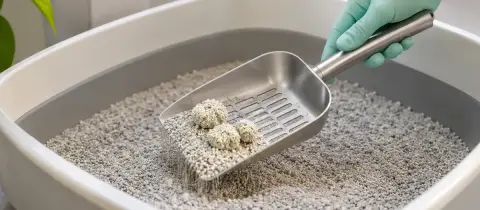
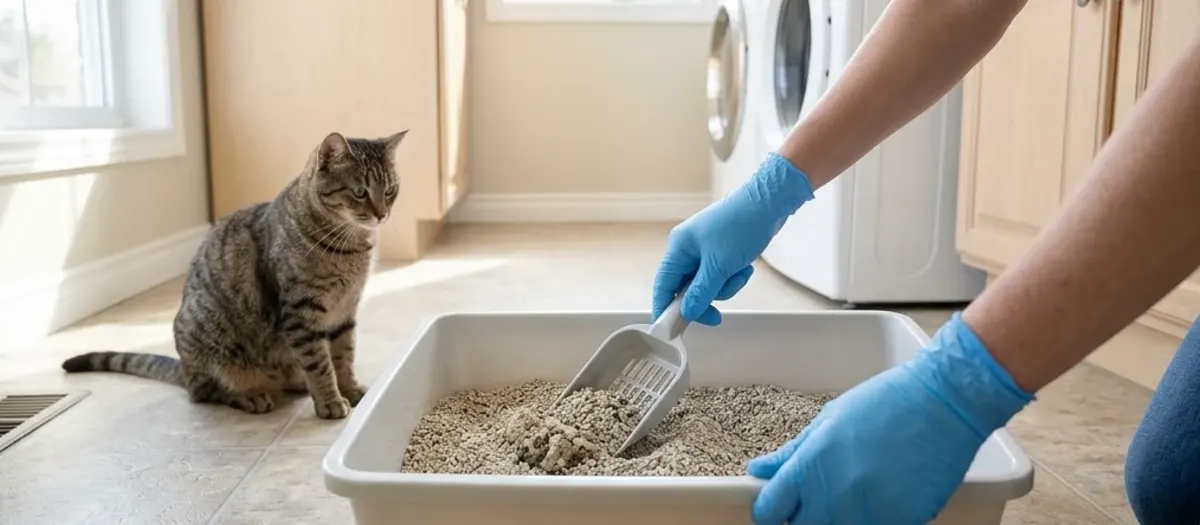
If nobody else can do it, the sources give the same basic steps: disposable gloves, an empty tray every day and careful handwashing afterwards. Red Nose adds a mask. These steps are about reducing exposure, not removing it, so tell your GP or midwife that you're the one doing the tray.
Here is a checklist for a home with no other option. It's drawn from the sources above, plus two common-sense steps of our own (keeping food separate and keeping the routine steady), and nothing here is a promise of safety:
- Wear disposable gloves, and a mask too if you follow Red Nose Australia's advice.
- Empty the tray every day, before the faeces have had time to become infective.
- Wash your hands with soap straight afterwards, even though you wore gloves.
- Keep the job separate from food: no snacking, drinking or touching your face while you scoop.
- Disinfect the tray regularly with boiling water, as Pregnancy, Birth and Baby says. The Better Health Channel goes further and says to clean and disinfect trays daily. Check your tray's maker first, as hot water can warp some plastic.
- Keep the routine steady. A cat that dislikes a messy tray may start going elsewhere, and cleaning that up is another round of contact. Our guide to litter box smell and the one on peeing outside the litter box can help.
Then keep looking for a helper. Even a neighbour who agrees to a quick daily visit for the length of your pregnancy changes the picture.
Can you keep your cat while pregnant?
Yes. Red Nose Australia says you don't need to rehome your cat, because the risk comes from faeces rather than the cat itself, and none of the other sources we opened suggest giving a cat up. What the sources do advise is how your cat lives, which the points below cover.
- Keep your cat indoors where you can, and stop it hunting. The Better Health Channel advises indoors and no eating birds or other wildlife. Pregnancy, Birth and Baby says a bell on the collar can help; use a breakaway collar. Our cat curfew rules guide and catio ideas show how to give a cat outdoor time without the roaming.
- Feed canned or dry commercial food. The Better Health Channel says to choose these rather than raw meat, and the CDC says not to feed cats raw or undercooked meat. See our dry cat food guide and wet cat food guide.
- Wash your hands after handling your cat. Red Nose Australia lists this as a general precaution.
What else can cause toxoplasmosis?
Cat faeces isn't the only route. Healthdirect lists raw or undercooked meat and soil contaminated with cat faeces as well, so a plan that only covers the litter tray misses some routes. The table below sets out each route, the prevention step and the source.
| Route | Prevention step | Source |
|---|---|---|
| Cat litter and faeces | Someone else handles trays; gloves and handwashing if you must; empty daily | Better Health Channel, healthdirect |
| Raw or undercooked meat | Cook all meat thoroughly; wash hands and kitchen equipment after raw meat | healthdirect, Pregnancy, Birth and Baby |
| Soil and gardening | Wear gloves; wash hands afterwards; cover sandpits when not in use | healthdirect, Pregnancy, Birth and Baby |
| Unwashed vegetables | Wash vegetables thoroughly, or peel them | healthdirect, Pregnancy, Birth and Baby |
The Better Health Channel names lamb, pork and kangaroo as meats to cook through. Outdoor cats are one reason gardens carry risk: if neighbourhood cats use your garden beds, gloves matter even more.
What should you do if you think you've been exposed?
See your GP or midwife. Pregnancy, Birth and Baby says to see one if you're pregnant and have symptoms, or if you've had direct contact with cat faeces, raw meat or contaminated soil or water. A blood test can show whether an infection is new or past. Please don't wait for symptoms, as many infections cause none.
Healthdirect says you can have toxoplasmosis and have no symptoms at all, and the Better Health Channel says the blood test may be the only evidence. When symptoms do appear, they can be flu-like, with swollen glands, fever, headaches and muscle aches. We can't tell you what a result means or what happens next. That is a conversation for your doctor, midwife or obstetrician.
Useful guides
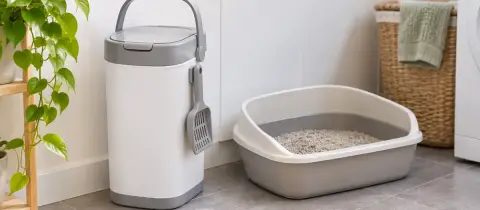
None of these products removes the need for someone else to handle the waste. They can make the job faster, cleaner or less frequent for whoever takes it over:
- Cat litter scoops, for scooping without touching the waste
- Litter Genie, for bagging used litter
- Automatic litter boxes, where the waste still has to be emptied by someone
- Cat litter tray liners, for easier tray changes
- Sifting litter boxes, for lifting clumps out of the litter
- High-sided litter boxes, for cats that kick litter out of the tray
When to see a vet
For you: if you're pregnant and think you've been in contact with cat faeces, raw meat or contaminated soil, or you have symptoms, see your GP or midwife. This guide can't diagnose anything.
For your cat: see your vet if your cat seems unwell, or if its toileting changes, such as straining, going back to the tray again and again or crying while using it.
A male cat straining to pee with little or nothing coming out is an emergency. Go to a vet straight away, day or night. See our guide on why cats pee outside the litter box.
Frequently asked questions
Can I pat and cuddle my cat while pregnant?
Red Nose Australia describes the risk from petting as very low, because the parasite is passed in faeces and not in fur or saliva. Wash your hands after handling your cat as a general precaution. The places to take care are the litter tray, soil and raw meat. Your GP or midwife can answer personal questions.
Do I have to rehome my cat if I'm pregnant?
No source we opened advises it. Red Nose Australia says rehoming isn't needed, and the health pages focus on the tray, meat and soil rather than on giving the cat up. If someone is pressuring you, point them to those pages, and ask your GP or midwife for advice that fits your home.
When should I stop cleaning the litter if I'm trying to conceive?
Red Nose Australia says to hand over the tray as soon as you start trying for a baby. The Better Health Channel says the main concern is a first infection during pregnancy, and that a blood test shows whether you've been infected before. Your GP can explain what that means for you.
What if I live alone or my partner works away?
Start with a helper, such as family, a friend or a neighbour, even for a short daily visit. If nobody is available, use the gloves, daily empty and handwashing checklist above, and tell your GP or midwife. Plan before the person leaves, not after, so the tray is never left to build up.
Does an automatic or covered litter box make it safe for me to clean?
We found no source that says so. The advice is to avoid handling cat faeces, and an automatic or covered box still collects waste that someone has to empty. If that person is you, the same steps apply: gloves, a daily empty and handwashing. Our automatic litter box guide covers how they work.
How would I know if I've caught toxoplasmosis?
You might not. The Better Health Channel says most infections cause no symptoms, and a blood test can be the only evidence. Pregnancy, Birth and Baby says a blood test can show whether an infection is new or past. If you're pregnant and worried, see your GP or midwife rather than waiting for symptoms.
Is an indoor cat fed commercial food lower risk?
Red Nose Australia says these cats are lower risk because they're less likely to have been exposed to the parasite. Lower isn't none, and the sources still say to avoid handling the faeces. Keeping to canned or dry food and stopping hunting removes two of the ways a cat picks it up.
Does the cat litter I use make a difference?
The sources we opened don't say it does. The steps that matter are daily removal, gloves and handwashing, whichever litter you use. If you're choosing a litter for other reasons, our best cat litter guide compares clay, tofu, pine and crystal.
Related guides
- How often should you change cat litter?
- Litter box smell: causes and how to get rid of it
- Why is my cat peeing outside the litter box?
- Best cat litter boxes and litter trays
- Best stainless steel litter box
- Best litter box for large cats
- Best litter boxes for senior cats
- Best cat litter
- Sifting litter boxes
- High-sided litter boxes
- Automatic wet food feeders for cats
- Cordless pet water fountains
Sources
- healthdirect: Toxoplasmosis, page dated March 2024, read 24 November 2026
- Better Health Channel: Toxoplasmosis, dated 12 May 2023, read 24 November 2026
- Pregnancy, Birth and Baby: Toxoplasmosis, page dated February 2026, read 24 November 2026
- US CDC: Preventing Toxoplasmosis, 30 January 2024, read 24 November 2026
- Red Nose Australia: Is cat litter safe during pregnancy?, no date shown, page read 24 November 2026
This guide provides general information and isn't a substitute for veterinary or medical advice. If you're concerned about your cat's health, speak with your vet, and if you're pregnant and concerned about toxoplasmosis, speak with your GP or midwife.