By Anish PuriUpdated 2 Nov 202614 min readResearched, not tested by us
Research guide. WhiskerFinds may earn a commission from links, at no extra cost to you.
Quick answer: The best cat litter scoop has slots small enough to catch clumps and wide enough to let clean litter fall through. Our top pick is the fine stainless steel cat litter scoop with 5 mm slots. Plastic scoops are lighter, and wider slots usually suit pellet and tofu litter better.
A scoop is the tool you will pick up more than any other in your cat's routine, so it is worth getting one that fits your litter and your box. This guide compares five scoops on Amazon Australia and explains slot size, materials and hygiene. For the box itself, start with our cat litter box guide, and if you use a bin system, see the Litter Genie guide.
Quick picks
Our top pickBest overall
Fine stainless steel cat litter scoop
Stainless steel frame with 5 mm slots, wooden handle and a hanging hook
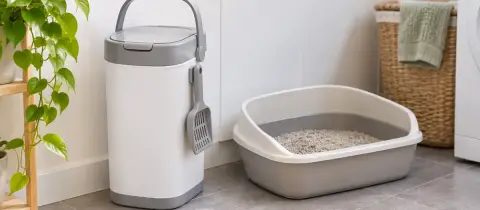
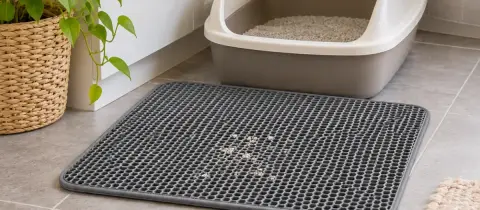
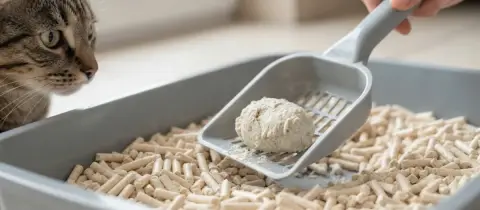
Pictures are illustrations, not the actual products.
Every scoop here suits a different litter, so check the slot notes below before you buy.
What is the best cat litter scoop?
The best cat litter scoop matches your litter. For fine clumping litter, look for narrow slots and a sturdy edge that slides under clumps. For lightweight natural litters, wider openings work better. A comfortable handle and a scoop that fits your box matter just as much as the material.
Think about three things. First, your litter: clumping clay, wood, pea pod, pellets and tofu all behave differently. Second, your box: a deep scoop is awkward in a small, shallow tray. Third, your hands: a longer handle keeps your fingers further from the litter. If you are still choosing litter, our tofu cat litter guide covers that type, and our kitten litter guide covers litter for young cats.
Metal or plastic litter scoop?
Neither is always better. Stainless steel is rigid, and the steel scoop here has a wide front edge for corners. Plastic is lighter. The honest trade-off is stiffness against weight, plus how easily the scoop cleans, so pick the one you will actually use daily.
Metal scoops tend to suit people who want a firm edge for lifting stuck clumps. The steel scoop's listing says the stability lets you lever lumps off the edge and bottom of the box. Plastic scoops are lighter on the wrist, and one in this guide (the Moderna) is listed as dishwasher safe. If your box is plastic, a firm metal edge can scratch it over time. That is our own caution rather than a brand claim, so keep an eye on the box surface.
Our picks in detail
1. Fine stainless steel cat litter scoop: best overall
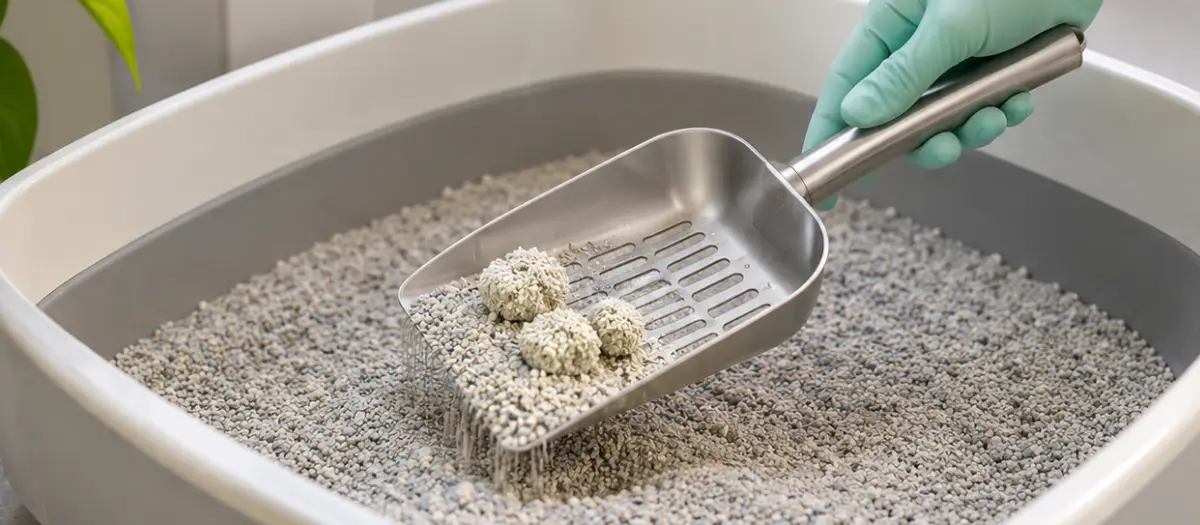
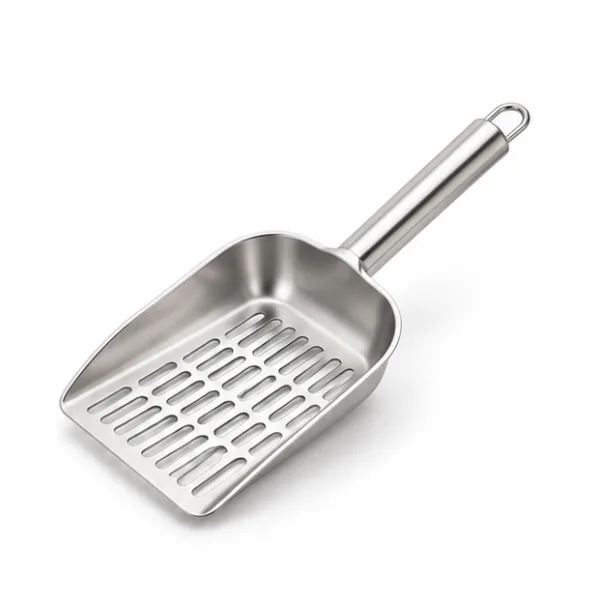
A stainless steel frame with solid wire mesh and a wooden handle. The listing gives the slot spacing as 5 mm, says it suits fine-grained litter and says it is not for tofu litter. It has a wide front edge for deep corners, a hook under the handle to hang it on the tray edge, and the listing says it can be rinsed directly with water. The package measures about 27.9 x 10.2 x 6.6 cm and weighs 110 g.
Pros: fine slots for small lumps; hook for hanging; wide front edge; firm handle that allows leverage on stuck clumps, per the listing
Cons: not for tofu litter, per the listing; wooden handle, so avoid long soaks; the listing's wording about non-clumping litter is a little unclear, so check your litter type
Best for: fine clumping or fine-grained litter and owners who like a firm edge
Skip it if: you use tofu or large pellet litter
2. Litter Genie cat litter scoop: best plastic scoop
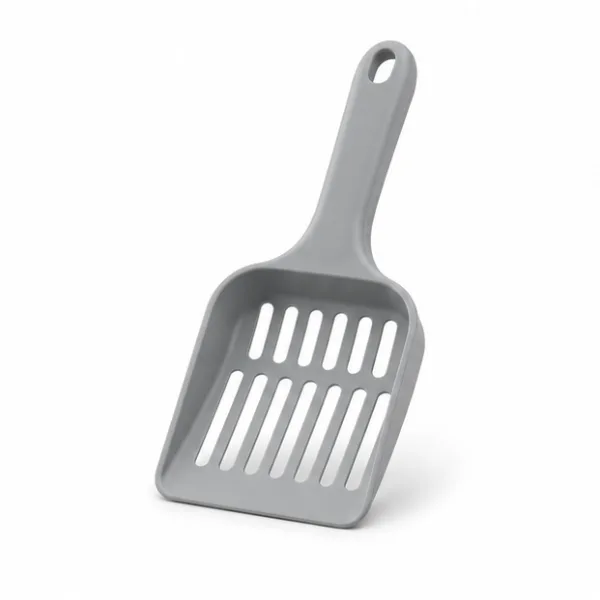
The title says it is sturdy, easy to clean and suitable for all cat litter types. The description says it has an ergonomic handle and a wide scooping surface. The package is about 29 x 22.5 x 4.5 cm and 45 g, so it is very light. It pairs naturally with the bin system covered in our Litter Genie guide, though nothing in the listing says it is limited to that.
Pros: very light; wide surface; ergonomic handle, per the listing; suits all litter types, per the title
Cons: the listing's bullet points appear to describe an unrelated product (an aquarium heater), so we relied on the title and description only; material and slot size aren't stated; no hook listed
Best for: a light, no-fuss scoop that you can use with any litter
Skip it if: you want the exact slot size or material confirmed before you buy
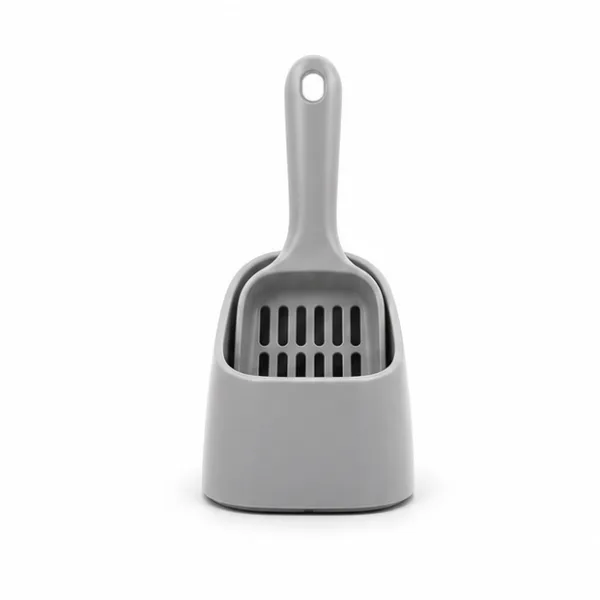
A plastic scoop with a wide mouth and a large holder section. The listing says the top handle keeps your hand away from the litter, and that a large amount can be sifted in one movement. It lists the size as 15.4 x 13.2 x 12.9 cm, a 1 year warranty, and says it is dishwasher safe.
Pros: dishwasher safe, per the listing; handle sits above the litter; sifts a lot in one go; 1 year warranty listed
Cons: slot size isn't stated; the listing shows both grey and lemon colour details, so check the colour you receive; no hook listed
Best for: people who want to scoop and sift in one movement
Skip it if: you prefer a metal edge, or want a stated slot size
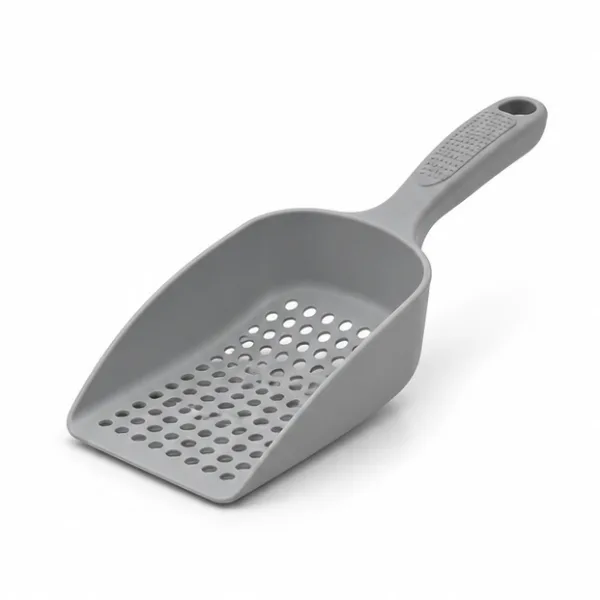
A grey scoop with a comfortable handle, a large scooping area and large openings. The listing says it is made for lightweight natural litters, such as Catit's wood or pea pod clumping litters, and it has an integrated hanging bracket for storage. It measures about 14.7 x 4.6 x 31.8 cm and weighs 100 g.
Pros: built-in hanging bracket; large openings suit light natural litter; large scooping area
Cons: the material is listed as polyester, which is unusual for a scoop, so the maker's detail is worth a look; the listing gives two different sets of dimensions; the warranty line says no guarantee
Best for: wood or pea pod clumping litter, and tidy storage
Skip it if: you use fine clay litter, where the larger openings may let small clumps through
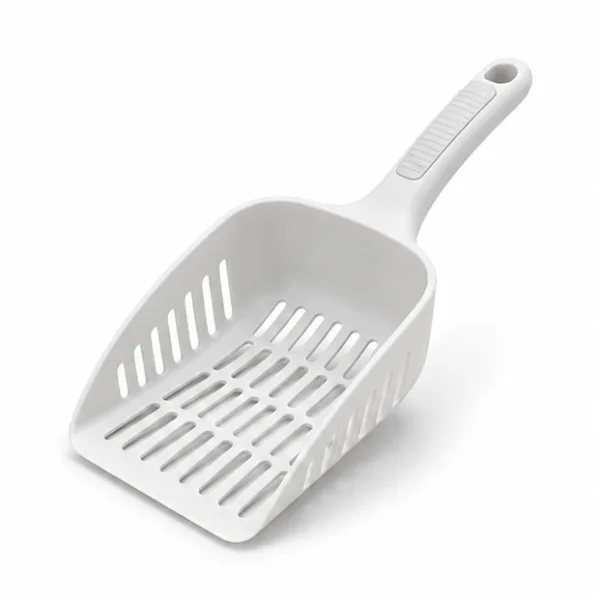
A big, deep scoop with a long handle. The listing says the horizontal bars are triangle shaped, the first two gaps are narrower to pick up the smallest pieces, and the leading edge is knife-like for scraping the bottom of the box. The listing gives the size as 13.3 x 2.0 x 6.0 inches (about 33.8 cm long) and the package as 33.2 x 15.8 x 5.7 cm.
Pros: deep shovel; long handle; narrow first gaps; scraping edge
Cons: it is large, and in a small or shallow tray it can be awkward to turn; the listing doesn't state the material; no hook listed
Best for: a large, deep box and a cat who produces large clumps
Skip it if: your box is small, or you want a scoop that hangs on the tray
What slot size do I need?
Match the slot to your litter. Small slots (the steel scoop lists 5 mm spacing) catch small lumps in fine litter. Wider openings suit lightweight natural litters, such as wood or pea pod, and larger pellets or tofu pieces. A scoop with slots that are too small for your litter holds on to clean litter.
Here is what the listings say. The steel scoop says it suits fine-grained litter and not tofu litter. The Catit Pixi lists large openings and says it is made for light natural litters, such as clumping wood or pea pod. The CatGuru lists variable spacing, with the first two gaps narrower to pick up small pieces. The Litter Genie title says it suits all litter types, though the listing doesn't give a slot measurement. The Moderna listing says it sifts but doesn't give a slot size either.
If you use tofu litter, read our tofu cat litter guide and choose a scoop with wider openings than the 5 mm steel one. Tip: after your first scoop, shake it over the box and see what stays behind. If clean litter keeps sticking, the slots are too small. If clumps fall through, they are too wide.
Fine clumping clay suits narrow slots (see our clumping cat litter guide); crystals and pellets need wider ones.
That matches our litter box smell guide. Scooping on time does more for smell than any deodoriser, so a scoop that is quick to use helps you keep up. Wash the whole box weekly with mild detergent and avoid ammonia-based cleaners. If your cat starts avoiding the box, don't assume it is behaviour. See our guide on cats peeing outside the litter box and talk to your vet.
How do I clean a litter scoop?
Rinse the scoop after each use, wash it with mild detergent and hot water every time you wash the box, and dry it before hanging it up. Avoid strong-smelling disinfectants. International Cat Care advises mild detergent with hot water and thorough rinsing, and warns against scented products.
For plastic scoops, the Moderna listing says it is dishwasher safe, so check the maker's guidance for the others. The steel scoop's listing says it can be rinsed directly with water. It has a wooden handle, so we would avoid long soaks, which is our own suggestion. Keep a separate scoop for the cat tray and never use it for anything else.
Add the scoop to your weekly box wash, because a scoop with old litter stuck in its slots spreads smell every time you use it.
Where should I keep the scoop?
Keep it close to the box but not inside it, ideally hung on a hook or in a holder so it stays dry and off the floor. Two scoops in this guide have a hanging feature built in, which saves you from leaving it lying on a mat or in a drawer.
The steel scoop lists a hook below the handle that lets it hang on the edge of the tray. The Catit Pixi lists an integrated hanging bracket. If your scoop has no hook, a wall hook or a small lidded container beside the box does the job. Place the holder where your cat can't knock it over. A litter mat under the box also catches stray litter when you lift the scoop out.
Should pregnant people scoop cat litter?
It is safest to ask someone else to scoop, and to talk to your doctor or midwife. The CDC says people who are pregnant need to be more cautious about toxoplasmosis, and advises changing the litter box daily and washing hands with soap and water after touching anything cat faeces may have touched.
The CDC (page updated 11 March 2025) lists pregnant women among those who need to be more cautious, and notes that infants infected in the womb can develop symptoms later. Its prevention page (updated 30 January 2024) says the parasite isn't infectious until 1 to 5 days after a cat sheds it, which is why daily removal matters. It recommends gloves for gardening and soil, and doesn't specifically mention gloves for litter boxes, so ask your health provider what they advise for you. Pregnancy, Birth and Baby, an Australian government-funded service, goes further: avoid changing cat litter if you are pregnant, and if you must, wear gloves and wash your hands well afterwards (Pregnancy, Birth and Baby, last reviewed February 2026).
Whoever scoops, wash your hands afterwards. Don't flush litter or cat poo. Bag it and put it in the bin, and check your council's rules.
Cat litter scoops compared
Details from each Amazon Australia listing, checked on 2 Nov 2026.
We searched Amazon Australia for cat litter scoops, then shortlisted ones that met all of these checks:
Well rated: a strong average rating with plenty of buyer reviews.
No red flags: no pattern of poor reviews, safety complaints or listing problems.
Available on Amazon Australia when we checked.
Material stated on the listing, or flagged here when it isn't.
Slot size or litter type noted where the listing gives it, and flagged where it doesn't.
Length or size stated, so you can judge fit with your box.
Holder or hook noted where the listing mentions one.
These are researched picks, not products we've personally used. We compared the specifications and features shown on each Amazon Australia listing, checked on 2 Nov 2026. We didn't accept payment from any brand, and no brand saw this page before it was published.
Left out this time: flimsy scoops with no stated material.
What about scented scoops, deodorisers and bags?
Choose unscented tools. International Cat Care says scented litters, deodorants and strong-smelling disinfectants may put a scent-sensitive cat off the tray. A deodoriser never replaces scooping. If smell is the issue, see our litter deodoriser guide and the litter box smell guide first.
When to see a vet
Book a vet visit if your cat strains, cries in the box, passes small amounts often, has blood in the litter, or suddenly starts going outside the box. International Cat Care says regular soiling needs a vet exam to rule out medical causes.
Ask your doctor or midwife before you scoop if you are pregnant or have a weak immune system. See the CDC toxoplasmosis page.
Go to a vet straight away if your cat is straining and passing nothing, which can be an emergency.
Frequently asked questions
Which litter scoop should I buy first?
The best scoop matches your litter and your box. A stainless steel scoop with fine slots, such as the one we pick first, suits fine clumping litter. A light plastic scoop with wide openings suits natural litters. Choose a handle that is comfortable and a size that fits your tray.
Is a metal or plastic litter scoop better?
Metal is firmer and good for lifting stuck clumps. Plastic is lighter and some, like the Moderna, are listed as dishwasher safe. Neither is better for every home. Choose based on your litter, your box material and which one is comfortable enough that you will scoop every day.
What size slots should a cat litter scoop have?
Slots should be small enough to catch clumps and wide enough to let clean litter fall through. The steel scoop here lists 5 mm spacing for fine litter. Wider openings suit lightweight natural litters such as wood or pea pod, per the Catit listing, and the steel scoop's listing says its fine slots are not for tofu litter.
Can I use a metal scoop for tofu litter?
Check the listing. The steel scoop in this guide says it is for fine-grained litter and not for tofu litter. For tofu litter, pick a scoop with wider openings, and see our tofu cat litter guide for more on that litter type.
Is scooping once a day enough?
At least once a day, and twice a day is better. International Cat Care says solids and clumps should come out at least twice daily, and the RSPCA Australia knowledgebase says waste should be removed daily. Wash the whole box weekly with mild detergent.
What is the best way to clean a litter scoop?
Rinse it after use, then wash it with mild detergent and hot water when you wash the box, and dry it before hanging it up. Skip strongly scented disinfectants. If your scoop has a wooden handle, avoid long soaks. Check the maker's guidance for dishwasher use.
Is it safe to scoop cat litter when pregnant?
It is safest to ask someone else, and to talk to your doctor or midwife. The CDC lists pregnant women among those who need to be more cautious about toxoplasmosis and advises changing the litter box daily and washing hands after touching anything cat faeces may have contaminated.
Can I leave the scoop in the litter box?
Hang it on a hook or in a holder beside the box so it stays dry and off the floor. The steel scoop and the Catit Pixi both list a hanging feature. Keep it away from where your cat eats, and somewhere it can't be knocked over.
Product details from each linked Amazon Australia listing, checked on 2 Nov 2026.
This guide provides general information and isn't a substitute for veterinary advice. If you're concerned about your cat's toileting, speak with your vet.