Quick answer: How often to change cat litter depends on the job. Scoop solids and clumps at least twice a day and top up daily. Empty and wash the whole tray weekly as a safe habit, because sources range from weekly to every four weeks with clumping litter. Change sooner for several cats, hot weather or any smell.
Vets and welfare groups agree on the daily scoop but not on the full change, which is why advice online looks so mixed. This guide sets out what each source says, a schedule by litter type, and how deep to fill the tray. If your cat is already toileting elsewhere, start with our guide to why a cat pees outside the litter box.
How often should you scoop the litter tray?
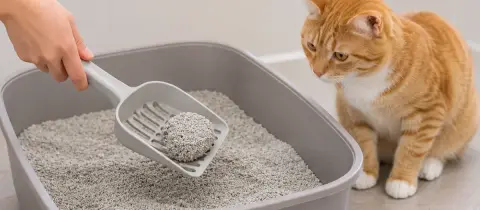
Scoop solids and clumps at least twice a day, and top up the litter once a day. That is International Cat Care's routine, and RSPCA Australia says to remove faeces and urine daily. Cats can be fussy about a dirty toilet, so a regular scoop is the easiest way to keep your cat using the tray. Pregnant or trying to conceive? See litter box and pregnancy before you scoop.
There's a health reason too. The Better Health Channel says the Toxoplasma oocysts (the stage passed in cat faeces) take at least 24 hours to become infective, so cleaning trays daily, with gloves and a hand wash afterwards, removes them before they can spread (see the vet box and FAQs for who should avoid the job).
How often should you change all the litter?
Sources differ, so weekly is the safe habit. International Cat Care says at least weekly in one article and every 2 to 4 weeks for clumping litter in another. VCA says to empty and refill weekly. Longer can suit one cat on good clumping litter that stays dry and doesn't smell.
Use this table as a starting point, and shorten any interval if the litter smells or stays damp.
| Litter type | Scoop | Top up | Full change | Wash tray |
|---|---|---|---|---|
| Clumping clay (see our clumping cat litter guide) | Clumps and solids, at least twice a day | Daily, to keep the depth | Sources range from weekly to every 2 to 4 weeks; sooner if it smells or stays damp | At every full change |
| Tofu and mixed (see our tofu litter guide and Pidan guide) | Clumps and solids, at least twice a day | Daily | No source we opened sets a figure; start weekly and go sooner in humid weather or if damp | At every full change |
| Crystal (see our crystal cat litter guide) | Solids at least twice a day, and stir the crystals | As the pack says | When the crystals stop absorbing or discolour; makers claim up to a month or more, so check your pack | At every full change |
| Paper and pellet (see our paper litter guide) | Solids at least twice a day | Daily | Non-clumping litter every couple of days, says International Cat Care | At every full change |
| Automatic box (see our litter for automatic litter boxes guide) | The machine does it | To the fill line | Still needed; follow your box's manual, with weekly as a fair starting point | At every full change |
How much cat litter should you use?
Start with 3 to 4 cm of litter, and go to about 5 cm if clumps stick to the base of the tray. The sources differ, so this is our middle path. Too shallow and urine reaches the plastic before a clump can form.
| Source | Suggested depth |
|---|---|
| RSPCA Australia | About 3 to 4 cm of unscented litter |
| International Cat Care | At least about 3 cm |
| VCA Animal Hospitals | At least 3 inches (about 7.5 cm) |
| Our suggestion | 3 to 4 cm, deeper if clumps stick |
Our clumping cat litter guide explains why clumps stick and how depth fixes most cases. Whatever the depth, choose an unscented litter where you can, since RSPCA Australia and International Cat Care both prefer it and scented products can put some cats off.
How many litter trays does your cat need?
One tray per cat plus one extra, in separate spots. International Cat Care, RSPCA Australia and VCA all say this. Each tray should be about 1.5 times your cat's length, nose to the base of the tail. More trays share the wear, so each one stays cleaner between changes.
| Cats at home | Trays |
|---|---|
| 1 | 2 |
| 2 | 3 |
| 3 | 4 |
Our litter box for large cats guide and best litter boxes guide cover size and style.
How do you wash the litter tray?
Tip out all the litter, wash the tray with mild detergent and hot water, rinse well and dry it before refilling. International Cat Care says to avoid disinfectants that turn cloudy in water, because those contain phenols, which are toxic to cats. Skip strongly scented cleaners, as scented products can put cats off the tray.
VCA suggests scrubbing the box monthly, with some cats preferring weekly, and replacing it yearly. A tray scratched deep enough to hold smells is worth replacing sooner. If a cat has soiled the floor, use an enzyme product made for the job: our enzyme cleaner for cat urine guide compares them.
Does the type of litter change how often you change it?
Yes. Clumping litters let you lift out the wet parts, so the rest lasts longer between full changes. Non-clumping litters soak up urine at the bottom, so International Cat Care says they need changing every couple of days. Here is how each type fits the routine:
- Clumping clay: scoop clumps, top up, then do a full change on the schedule above. RSPCA Victoria says clumping litter suits adult cats only. For kittens, Found Animals suggests non-clumping litter until about four months, then mixing clumping in gradually. See our kitten litter guide.
- Tofu and mixed: these clump too, so the routine matches clay. Keep the bag dry in humid weather.
- Crystal: RSPCA Victoria notes that crystals absorb moisture rather than clump, so you remove solids and stir, then change the lot when the crystals stop absorbing or discolour.
- Paper and pellets: these don't clump, so expect more frequent changes.
- Automatic boxes: the machine removes waste, but litter still wears out and the drum or tray still needs washing.
Whichever you use, never flush litter or cat faeces. Every water authority Western Sydney University asked said kitty litter must not go down the toilet, and clay litter swells and blocks pipes (Western Sydney University, 8 June 2021, page read 19 November 2026); our clumping cat litter guide explains why. Bag it and bin it, and check your council's rules.
If you change litter type, mix the new in gradually over about a week, or offer a second tray, as International Cat Care suggests. Go back a step if your cat avoids the tray. Cats often prefer the texture they learned as kittens.
When should you clean the tray more often?
Clean more often whenever the tray is under extra pressure. International Cat Care says cats with chronic kidney disease, an overactive thyroid or feline idiopathic cystitis may need more frequent cleaning. Several cats sharing a tray, covered trays (RSPCA Victoria says they need more frequent changing) and hot, humid weather all call for sooner changes.
Change the litter today if any of these apply. This checklist is our own, drawn from the hygiene points in the sources above:
- the tray smells even after scooping
- the litter looks damp or greasy
- clumps stick to the base
- your cat hesitates, perches on the edge or digs at the sides
- the litter has dropped below about 3 cm
Useful guides
Gear supports the routine; it doesn't replace it. These guides compare what's out there:
- Litter for automatic litter boxes, with what each box maker allows
- Clumping cat litter, for clay and mineral picks
- Crystal cat litter, for silica crystals and unscented picks
- Pidan cat litter, for tofu, cassava and mixed blends
- Cat litter scoops, for fast, clean scooping
- Cat litter mats, for catching scattered litter
- Litter deodorisers, for unscented odour control
- Litter Genie, for a bin that seals used litter
When to see a vet
A male cat straining to pee with little or nothing coming out is an emergency. It can be a urinary blockage, which the University of Illinois veterinary college calls a true emergency. Go to a vet straight away, day or night.
Book a vet visit if you notice any of these:
- a sudden change in the volume, smell or colour of urine or stool
- blood in the tray, or crying while using it
- straining, or going back to the tray again and again
- toileting outside the tray, which has many causes (see our guide)
- drinking much more than usual
A tidier routine won't fix a medical problem, so check with your vet first. Pregnant women and anyone with a weakened immune system should get someone else to handle the tray, because of toxoplasmosis (see the Better Health Channel page in our sources).
Frequently asked questions
How often should you change cat litter with two cats?
Plan on three trays, scoop each at least twice a day, and lean towards weekly full changes rather than longer ones. Two cats fill litter faster, and a shared tray gets dirty sooner. If a tray smells or stays damp between changes, change it early and add another tray.
Do you still need to change the litter if you scoop every day?
Yes. Scooping removes solids and clumps, but the remaining litter slowly picks up odour and damp. VCA says to empty and refill weekly, and International Cat Care says to clean the whole tray out completely at least weekly. Some sources allow longer with good clumping litter, so watch for smell.
How do you know when cat litter needs changing?
Trust your nose and your cat before the calendar. A smell that survives scooping, litter that looks damp, or a cat who hesitates at the tray all mean change it today, whatever the schedule says. Our "change it today if" checklist above lists the signs we watch for, drawn from the hygiene points in the sources.
How often should you change non-clumping litter?
International Cat Care says every couple of days. Non-clumping litter can't be scooped as cleanly, so the urine sits in the base instead of being lifted out. Remove solids at least twice a day, top up between changes, and wash the tray at each change.
Can you keep topping up clumping litter instead of changing it all?
Topping up replaces what the scoop removes, so it's part of the routine, but it doesn't clear what has soaked into the rest. Old litter holds odour and starts to cake on the base. Do a full empty and wash on schedule, and top up to your usual depth in between.
How often should you replace the litter tray itself?
VCA suggests replacing the box yearly, and PetMD's vet panel says the same. Plastic scratches with scooping, and scratches can hold smells that washing doesn't remove. Replace it sooner if it's cracked, deeply scratched or still smells after a proper wash.
Should pregnant women change cat litter?
Better not. The Better Health Channel says pregnant women and people with weakened immune systems should get someone else to handle trays, because of toxoplasmosis. If you have no choice, wear gloves, clean the tray daily and wash your hands afterwards. Your doctor or midwife can give advice for your situation.
Should you change litter more often in summer?
Often, yes. Heat and humidity make damp litter smell sooner, so check the tray more often in a hot Australian summer. No source we opened gives a figure, so go by smell and dampness rather than a fixed schedule. Keep litter bags sealed and dry, and put the tray somewhere cool and ventilated.
Related guides
- Litter box smell: causes and how to get rid of it
- Why is my cat peeing outside the litter box?
- Best cat litter: clay, tofu, pine or crystal?
- Best clumping cat litter
- Crystal cat litter
- Low-dust cat litter
- Best cat litter for automatic litter boxes
- Best litter for kittens
- Best cat litter boxes and litter trays
Sources
- International Cat Care: Soiling indoors, updated 26 September 2025, read 19 November 2026
- International Cat Care: Choosing a litter tray for your cat, updated 10 December 2025, read 19 November 2026
- RSPCA Australia Knowledgebase: How do I encourage my cat to use a litter tray?, updated 30 May 2024, read 19 November 2026
- RSPCA Victoria: Learning to use kitty litter, read 19 November 2026
- VCA Animal Hospitals: Housetraining for kittens and cats, read 19 November 2026
- Better Health Channel: Toxoplasmosis, reviewed 12 May 2023, read 19 November 2026
- Western Sydney University: Can I flush cat poo down the toilet?, 8 June 2021, read 19 November 2026
- PetMD: Best cat litter, updated 4 January 2026, read 19 November 2026
- Found Animals: Best litter for kittens, 6 March 2020, read 19 November 2026
- University of Illinois College of Veterinary Medicine: Blocked cats, an emergency for male cats, read 19 November 2026
This guide provides general information and isn't a substitute for veterinary advice. If you're concerned about your cat's toileting or health, speak with your vet.