Quick answer: A cat peeing outside the litter box may have a medical problem, so book a vet check first. If the vet finds nothing, look at the box, litter, location, cleaning and stress. A male cat straining to pee with little or nothing coming out is an emergency. Our cleaner pick is Nature's Miracle.
Finding a puddle on the bed or carpet is stressful, and it is rarely your cat being spiteful. If your cat is peeing outside the litter box (or litter tray), this guide walks through the likely causes in a sensible order: health first, then the box setup, then cleaning and stress. It links to our guides on the automatic litter box, stainless steel litter box, tofu litter, litter box smell and litter box for senior cats when you want to go deeper.
Quick picks
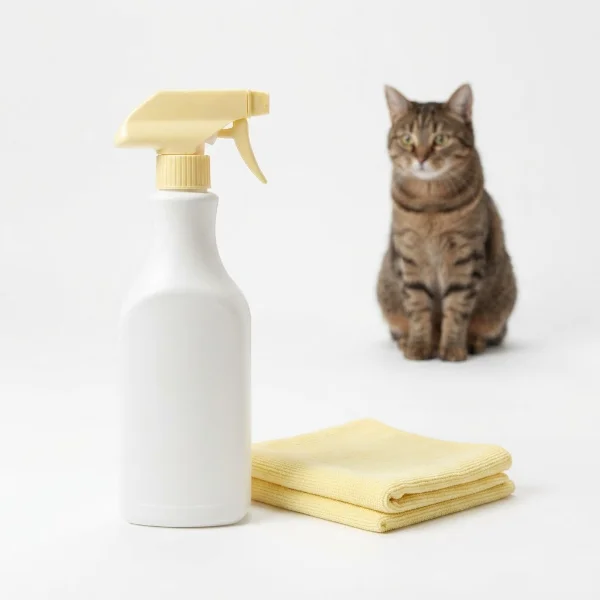
Nature's Miracle Advanced Cat Stain and Odour Eliminator, 946 ml
Enzymatic formula for urine and other messes
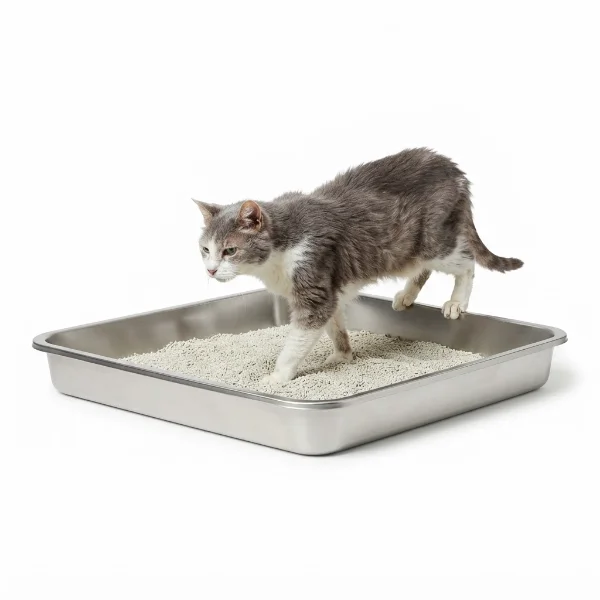
iKitchen Low Entry Stainless Steel Litter Box
About 10 cm high sides all round, so it is easier to step into
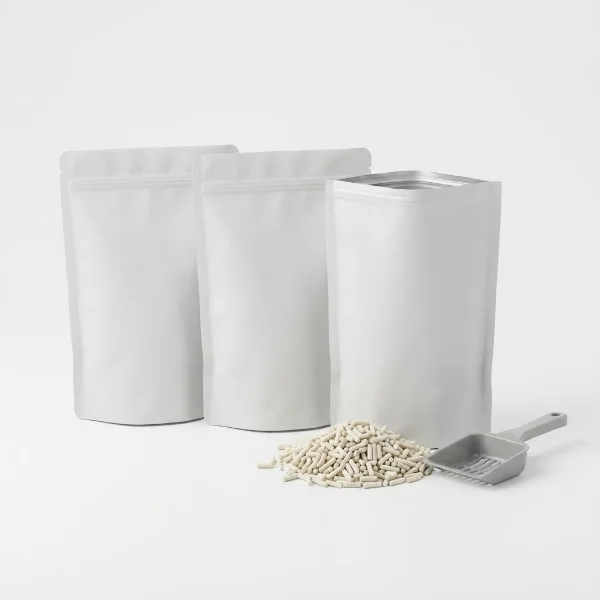
FUKUMARU Tofu Cat Litter, unscented, 8.1 kg
Plant-based, unscented, three 2.7 kg packs
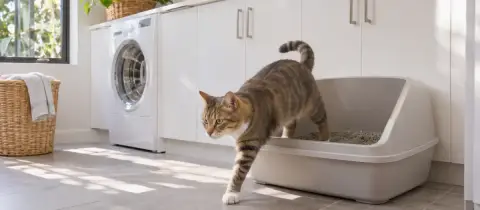
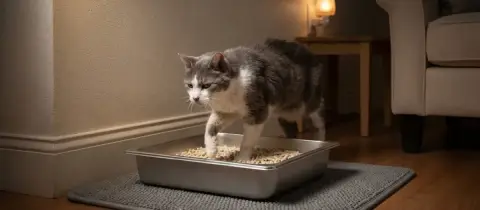
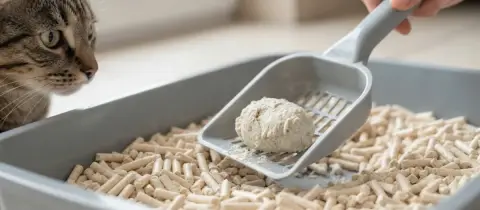
Pictures are illustrations, not the actual products.
Products are tools, not cures. None of them will fix a medical problem, so see the vet first if the change is new.
Why is my cat peeing outside the litter box?
The most common reasons are a medical problem, a litter box your cat doesn't like, a stress or change at home, or marking. Medical causes come first because pain or illness can stop a cat reaching or using the tray. Only a vet can tell which it is. If your cat is backing up to walls and leaving small squirts rather than puddles, that is more consistent with spraying, which can have different triggers and still needs a vet check first. See our guide to cat spraying.
Here is the shortlist, drawing on International Cat Care and the Cat Protection Society:
- Medical: urinary tract disease, diabetes, an overactive thyroid, arthritis and others (see the next section).
- The box: too small, dirty, hard to step into, covered when your cat prefers open, or too few boxes.
- The litter: a new brand, a scented litter, or a texture your cat dislikes.
- The location: a noisy, busy or exposed spot, or a box too close to food.
- Stress: a new pet, a move, a neighbourhood cat outside, or changes to routine.
- Marking: spraying urine, which is a different behaviour (see below).
International Cat Care (updated 26 September 2025) lists urinary tract disease, stress-related cystitis, hyperthyroidism and diabetes among the medical causes of soiling indoors, and notes that painful joints can make it hard for an older cat to reach or climb into the tray. It also lists fear and threats around the tray as behavioural ones (International Cat Care). The Cat Protection Society of NSW says to get a vet check first to rule out illness, and only then look at other causes (Cat Protection Society of NSW).
Is it a medical problem?
It can be, and a vet check is the first step, especially if the change is sudden. Urinary tract disease, diabetes, an overactive thyroid and arthritis can all make a cat toilet in the wrong place. Only a vet can tell what is going on. Our cat UTI guide covers the signs, what a vet checks and when it is an emergency.
Signs that can point towards a medical cause include going to the tray often with small amounts, straining or crying, blood in the urine, overgrooming the belly or genitals, or a cat that is irritable or quieter than usual. International Cat Care says feline lower urinary tract disease can cause straining, frequent small urinations, blood in the urine and urinating outside the tray. Bladder stones and crystals are among the causes of lower urinary tract disease that International Cat Care lists. It adds that stress-related cystitis is the most common cause in cats with these signs (International Cat Care, updated 28 November 2025). If your vet finds crystals or stones, any diet change is your vet's call. Our urinary cat food guide explains what non-prescription urinary foods can and can't do, and none of them treats a blockage or an infection. Arthritis can make it hard for a cat to climb into a high-sided tray, which is why a low entry matters for older cats (see our litter box for senior cats guide).
Your vet may want a urine sample, so ask how to collect one. Take notes before the visit: how often, where, how much, and whether your cat is drinking more. If your cat seems to be drinking more or less, tell your vet; a cat water fountain is no substitute for a check.
When is it an emergency?
A cat that is trying to pee and little or nothing comes out needs a vet immediately. This is an emergency in male cats because the urethra can block. Other warning signs are crying in the tray, repeated trips, vomiting, hiding, weakness or collapse. Don't wait to see if it passes. Our cat UTI guide lists the signs of a blocked cat in more detail.
The University of Illinois College of Veterinary Medicine (10 July 2025) says a urethral obstruction is a true emergency in male cats, and lists crying or straining without producing urine, small amounts of bloody urine, urinating outside the litter box, vomiting, lethargy and collapse as signs (University of Illinois). International Cat Care says any cat trying and failing to pass urine needs to be seen immediately (International Cat Care).
A cat straining in the tray can be peeing or pooping, and it can be hard to tell the two apart. If you are not sure, treat it as urgent and call your vet or an emergency clinic.
Is it spraying or peeing?
Spraying is scent marking: your cat stands, often treads with their back feet, quivers their tail and squirts a small amount onto an upright surface. Peeing means squatting on a flat surface and passing a larger amount. They need different fixes, so look at the pattern.
This is how International Cat Care describes the difference (International Cat Care). RSPCA NSW says urinating mainly outside the tray, or on vertical surfaces and new objects, points towards marking, which is more likely in cats that aren't desexed, and that desexing as soon as possible should reduce spraying (RSPCA NSW). Stress and multi-cat homes can also play a part.
A few clues that help:
- Puddles on a bed, rug or pile of washing are more consistent with a cat avoiding the box, or a medical issue, than with marking.
- Small splashes on a wall, door or a new object are more consistent with spraying.
- Both can happen, and either can have a medical cause, so mention what you see to your vet.
Litter box problems that put cats off
Most cats prefer a clean, roomy tray with fine, unscented litter in a quiet spot away from food. A tray that is dirty, too small, hard to climb into or filled with scented litter can put a cat off. Fix one thing at a time so you can tell what helped.
- A dirty box. International Cat Care says to remove solids and clumps at least twice a day and to clean the whole tray at least weekly. The Cat Protection Society notes that cats notice dirt more than we do and that strong scented cleaning products are best avoided when changing the tray. Our how often to change cat litter guide gives the routine.
- A box that is too small. The tray should be big enough for your cat to turn around and posture comfortably, per International Cat Care. A large cat or a senior cat often needs a bigger tray; our litter boxes for large cats guide compares sizes.
- High sides. International Cat Care says low sides or a cut-out entrance help older cats. Our senior cat guide and stainless steel guide cover low-entry trays.
- Covered or open. International Cat Care says covered and open trays suit different cats, so try both. The Cat Protection Society says covered trays can trap odour and may put some cats off.
- Scented litter. The Cat Protection Society advises avoiding scented litters. Choose unscented, and skip anything scented with essential oils or perfume. Our tofu litter guide compares unscented options, and most cats prefer a fine, sand-like texture, per International Cat Care.
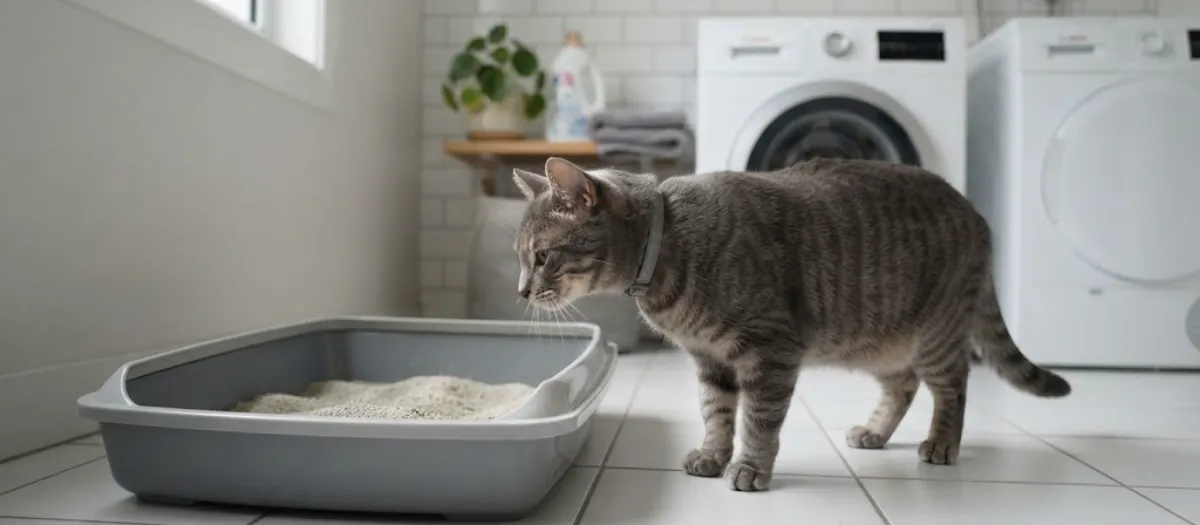
- The wrong place. International Cat Care says to put trays in a quiet corner where your cat only has to watch one or two directions, and to keep food bowls away from them. Avoid a laundry next to a noisy washing machine.
- A bully or a threat. In multi-cat homes, one cat can guard the box. A neighbourhood cat outside can also unsettle an indoor cat.
- Too few boxes. See the next section.
If you are changing litter, do it slowly, mixing a little of the new litter with the old, and offer the new type in an extra tray so your cat can choose. RSPCA NSW also suggests trying different litters or trays gradually.
To compare open, hooded and top-entry trays by size and entry height, see our cat litter box and tray guide.
Heat and humidity can make a box smell sooner in many parts of Australia, and the Cat Protection Society says cats notice dirt and urine smell more than we do. See our litter box smell guide. If you are considering a self-cleaning model, our automatic litter box guide covers the weight limits and how to introduce one slowly. Keep a normal tray available while your cat learns.
Why is my cat peeing right beside the litter box?
Peeing right next to the tray is more consistent with a cat that wants to use it but finds something about it uncomfortable (dirty, too small, sides too high, a lid, a litter it dislikes) or painful than with marking. Look at the pattern, see your vet first, then change one thing at a time.
The two sources we cite don't describe the "beside the tray" case by name, so this is our own reading of what they say. International Cat Care lists a dirty tray, an unsuitable tray, litter or location, and painful joints among the reasons for soiling indoors (International Cat Care). The Cat Protection Society of NSW says to rule out illness first and then look at the tray, litter and location, and notes that a cat in a tray that is too small may hover over the side and miss by accident (Cat Protection Society of NSW).
Some things to check:
- Scoop and wash the tray, then look for urine that has soaked over the edge.
- Check the size and sides. If your cat stands with their back half hanging out, or the sides are tall, try a bigger or lower tray.
- Think about the lid. If your cat is peeing next to a covered tray, try taking the lid off.
- Look at the litter. A new brand or a scented litter may be the trigger.
- Watch for pain. A cat that hesitates, cries or steps in and out may need a vet.
How many litter boxes per cat?
A common vet guideline is one litter box per cat plus one extra, placed in different spots. Two cats would have three boxes. This helps even for cats with outdoor access, and it matters most in multi-cat homes where one cat may block another.
International Cat Care and the Cat Protection Society of NSW both say one tray per cat plus a spare, and International Cat Care says to spread them out in a multi-cat home (International Cat Care; Cat Protection Society of NSW). Two trays side by side may work as one to your cat, so put them in different rooms or on different levels. If you live in a small space, two trays at opposite ends is better than a pair in one spot.
If your cat keeps returning to one spot, RSPCA NSW suggests adding a second tray in that area rather than only scrubbing the spot (RSPCA NSW).
Why is my cat pooping outside the litter box?
The reasons overlap with peeing: pain, a box your cat doesn't like, stress, or a bad experience in the tray. Constipation can also make a cat strain or avoid the tray, so mention any hard, dry or infrequent stools to your vet. Our cat laxative guide explains the options, but ask your vet before giving any laxative.
International Cat Care (updated 26 September 2025) lists signs of constipation such as straining, extra time in the tray, crying out while passing faeces, passing faeces less often and small, hard, dry stools. It names arthritis, dehydration, a dirty tray, unsuitable litter, a noisy location and competition with other cats among the causes (International Cat Care). The same page warns that straining to pee can be an emergency and that it can be hard to tell the two apart, so call your vet if you are not sure.
The same box fixes apply: clean daily, size the tray for your cat, offer a low entry if your cat is stiff, and keep the location calm.
Disposing of litter and poo. Don't flush cat litter or cat poo, even if the packet says "flushable". Cat faeces can carry Toxoplasma, which standard wastewater treatment doesn't remove, and the New Zealand Department of Conservation links it to deaths of dolphins and other marine mammals (NZ Department of Conservation). Western Sydney University's Dr Ian Wright says the five Australian water authorities he asked all advised against flushing litter, which can swell and block pipes, including the ones inside your home (Western Sydney University, 8 June 2021). It can clog a septic system too. Bag it, bin it, and check your council's rules.
How do I clean cat pee properly?
Blot up as much as you can, then clean the spot with an enzymatic cleaner made for cat urine. Avoid ammonia-based products, which smell like urine to cats and may draw them back, and don't use bleach either. Let the area dry fully, and keep your cat away until it does. Our best enzyme cleaner for cat urine guide compares cleaners made for the job.
International Cat Care recommends an enzymatic cleaner designed for cat urine and faeces and says to avoid ammonia-based products because they smell like urine (International Cat Care). The Cat Protection Society also says never to use bleach or ammonia-based products, that citrus cleaners may deter cats, and that an odour-neutralising product or odour eliminator can remove residual smell (Cat Protection Society of NSW). Never punish your cat or rub their nose in the spot, which International Cat Care says makes things worse because it increases fear.
Old spots you can't see or smell can keep drawing a cat back, and a UV urine detector torch can help you find them before you clean.
A simple routine:
- Blot with paper towel (don't rub it in), then bin it.
- Apply the enzymatic cleaner as the label says and keep the area damp for the time on the label.
- Let it dry. Test a hidden patch first on fabric or carpet.
- Block access while it dries, and ventilate the room.
- Make the spot less appealing, for example by putting a tray, a bed or a food bowl there if your vet agrees it suits your cat (RSPCA NSW suggests moving bedding or food to a repeat spot).
For mattresses and big jobs, work through the same steps and check the cleaner's label for the material. Our litter box smell guide covers odour in more detail.
Could stress or a change at home be the cause?
Yes. Cats feel most vulnerable when toileting, so a new pet, a visitor, a move, loud noise, or a cat outside the window can put them off the tray. Changes in routine count too. Look for what changed around the time the problem started.
International Cat Care says threats such as other cats, a neighbour's dog, loud noises or bad weather can stop a cat using the tray (International Cat Care). The Cat Protection Society says small changes to routine, such as feeding times or when you get home, can also trigger it.
Some common triggers:
- A new pet or baby. Give each cat their own boxes, food and resting spots.
- A move or renovations. Set up the boxes first and keep them in familiar spots.
- A cat newly kept inside. If your council has introduced a cat curfew or containment rule, your cat may need extra boxes, more play and time to adjust. See our cat curfew rules guide and catio ideas.
- Boredom or low activity. Our cat enrichment guide has ideas for play and climbing, and a cat tree or cat toys can give your cat more to do.
- Ambush at the box. Place the box where your cat can see anyone approaching.
Some owners also try a pheromone product, and the Cat Protection Society says Feliway may help. RSPCA NSW says a vet may suggest pheromone sprays or diffusers for stressed cats. The evidence is mixed, so treat it as a small extra, not a fix (see our FELIWAY for cats guide). Don't use essential oil diffusers, which can be unsafe for cats.
How to stop a cat peeing everywhere: a step by step plan
To stop a cat peeing everywhere, rule out a medical cause with your vet first. Then fix the tray setup (enough trays, kept clean, big enough, unscented litter, a quiet spot), clean every accident spot with an enzymatic cleaner, and lower stress. Never punish your cat.
Change one thing at once, give each change a fair go, and keep a simple diary. Results vary from cat to cat, so there is no fixed timeline.
- Check for an emergency. A cat straining with little or nothing coming out needs a vet immediately.
- Book a vet check if the change is new or ongoing, and take notes on where, how often and how much.
- Count the boxes. One per cat plus one, in different places.
- Check the box. Scoop at least once a day (International Cat Care suggests twice), wash with warm soapy water weekly, and make sure it is big enough and easy to step into.
- Check the litter. Switch to an unscented, fine litter if you use scented. Offer the new litter in a second tray first.
- Check the location. Quiet, easy to reach, away from food and noisy appliances.
- Clean the accident spots with an enzymatic cleaner, and no ammonia or bleach.
- Look at stress and routine. Add hiding spots, play and calm spaces.
- Go back to the vet if it continues, and ask about a behaviourist if your vet finds no medical cause. RSPCA NSW says a vet may refer you to a behaviour specialist.
Never punish your cat. It doesn't teach them anything useful and can make the stress worse.
How we chose
We looked for a few products that genuinely help with this problem, rather than a long list. Each one had to meet all of these checks:
- Well rated: a strong average rating with plenty of buyer reviews.
- No red flags: no pattern of poor reviews, safety complaints or listing problems.
- Available on Amazon Australia when we checked.
- Unscented or fragrance-light: nothing sold as scented litter or a deodoriser with essential oils or perfume.
- Sized for the job: a cleaner for urine, a box with a low entry, a litter that is unscented.
These are researched picks, not products we've personally tested. We compared the specifications on each Amazon Australia listing, checked on 25 November 2026. We didn't accept payment from any brand, and no brand saw this page before it was published.
Left out this time: litter deodoriser crystals and sprays with essential oils or perfume, scented litters, and any product that claims to cure toileting problems.
Products that can help
1. Nature's Miracle Advanced Cat Stain and Odour Eliminator, 946 ml: best for cleaning up accidents
An enzymatic (bacteria-based) cleaner for cat urine, diarrhoea, vomit and blood, made for multiple surfaces. The listing says removing the odour discourages re-soiling. It has a Sunny Lemon fragrance. One ingredient list names "fragrance" without essential oils, but we couldn't confirm the full ingredients, so patch test it and keep your cat away until it dries.
- Pros: enzymatic formula; works on several surfaces
- Cons: it is scented, and we couldn't confirm the full ingredient list; some cats dislike citrus smells; it won't fix the reason for the accident
- Best for: cleaning pee from carpet, bedding and hard floors after you have blotted it up
- Skip it if: you need a completely fragrance-free product, or your cat is sensitive to smells
2. iKitchen Low Entry Stainless Steel Litter Box: best for older or stiff cats
A stainless steel tray about 60 x 40 x 10 cm, with sides about 4 inches (10 cm) high all round. The listing says it suits cats up to 27.5 lb (about 12.4 kg), including arthritic, sick, frail or overweight cats, and that the stainless steel is rustproof. Our senior cat litter box guide compares it with three other low-entry trays.
- Pros: low sides are easier to step over; large footprint; easy-to-wipe stainless steel
- Cons: low sides let litter and spray escape more easily; open top
- Best for: older cats, stiff cats, and cats that struggle with high-sided boxes
- Skip it if: your cat digs hard or sprays up the wall, or you want a covered box
3. FUKUMARU Tofu Cat Litter, unscented, 8.1 kg: best unscented litter to try
Plant-based tofu litter in three 2.7 kg packs, with "unscented" in the title. The listing says it works best in moderate climates and suggests a different blend for hot, humid conditions, and it carries a flushable claim we don't suggest following. Our tofu cat litter guide has the full comparison.
- Pros: unscented; plant-based; three packs let you try it in an extra tray
- Cons: the listing itself says it suits moderate climates; some cats may not like the texture; don't flush it
- Best for: owners who want to test an unscented alternative to a scented litter
- Skip it if: your cat is happy with their current unscented, fine clumping litter
Our litter guides
- Best automatic litter box for large cats
- Best stainless steel litter box
- Tofu cat litter: pros, cons and which to buy
- Litter box smell: causes and fixes
- Best litter box for senior cats
- High-sided litter boxes, if your vet has ruled out a medical cause and your cat pees over the edge
When to get help
See a vet straight away if your cat:
- A male cat straining to pee with little or nothing coming out is an emergency. It can mean a urinary blockage. The University of Illinois veterinary college and International Cat Care both say to go straight to a vet
- is crying in the tray, vomiting, hiding, very quiet, weak or has collapsed
- has blood in the urine, or is licking at their belly or genitals
- is straining to poo, or has passed no faeces
Book a vet check if your cat has started peeing or pooping outside the box, or is peeing much more or less often. International Cat Care says a vet should rule out medical causes if soiling becomes regular. If the vet finds nothing, ask about a behaviourist.
Frequently asked questions
Why is my cat suddenly peeing outside the litter box?
A sudden change is worth a vet check first, because urinary problems, pain or other illness can cause it. If the vet finds nothing, look at what changed: litter, box, location, a new pet, stress. A male cat straining with little or nothing coming out is an emergency.
Why is my cat peeing on my bed?
Peeing on a bed can be a sign that your cat is avoiding the tray, and it can also point to a medical or stress cause. Ask your vet to check, then work through the box and litter steps above and clean the bed with an enzymatic cleaner.
Why is my old cat peeing outside the litter box?
Older cats may have arthritis, diabetes or an overactive thyroid, and a high-sided tray can be hard to climb into. Book a vet check, then try a low-entry tray on each floor and keep the box close to where your cat rests. See our senior cat litter box guide.
Why is my cat peeing everywhere after moving house?
A move can unsettle a cat, and unfamiliar smells and sounds can put them off the tray. Set up the boxes first in quiet spots, keep your cat in one room to begin with, and use the same litter. If it continues, see your vet.
How do I stop my cat peeing in the same spot?
Clean the spot with an enzymatic cleaner, never ammonia or bleach, and block access while it dries. RSPCA NSW suggests putting a tray, bed or food bowl on the repeat spot if your vet agrees it suits your cat. See how to clean cat pee properly above.
Will desexing stop my cat peeing in the house?
It may help if the cause is marking. RSPCA NSW says marking is more likely in cats that aren't desexed and that desexing as soon as possible should reduce spraying. It won't fix a medical problem or a litter tray problem. See our cat spraying guide.
Can cats hold a grudge or pee out of spite?
There is no good evidence that cats pee to get back at us. Toileting outside the box is more consistent with a medical problem, a litter box issue, stress or marking. Punishing a cat can make fear worse, so stay calm and look for the cause.
Can I flush cat litter or cat poo down the toilet?
No. Even "flushable" litters are best put in the bin. Cat faeces can carry Toxoplasma, litter can block pipes, and the Australian water authorities surveyed in 2021 all said litter shouldn't be flushed. Bag it, bin it and check your council if unsure. Our tofu litter guide covers this for tofu litter.
Related guides
- Cat spraying: why cats mark indoors and how to stop it
- Cat UTI: signs to watch for and when it's an emergency
- Urinary cat food: best non-prescription picks
- Best cat litter box and litter tray
- UV pet urine detector torches
- Best wet cat food (wet food adds water)
- Best paper cat litter (a soft alternative when a cat dislikes the litter)
- Best enzyme cleaner for cat urine
- Cat curfew rules in Australia
- Indoor cat enrichment
- FELIWAY for cats: does it work?
- Best cat water fountains
- How we research
- All our cat guides
Sources
- International Cat Care, Soiling indoors, updated 26 September 2025 (https://icatcare.org/articles/soiling-indoors)
- International Cat Care, Feline lower urinary tract disease, updated 28 November 2025 (https://icatcare.org/articles/feline-lower-urinary-tract-disease)
- International Cat Care, Constipation in cats, updated 26 September 2025 (https://icatcare.org/articles/constipation-in-cats)
- University of Illinois College of Veterinary Medicine, Blocked cats: an emergency for male cats, 10 July 2025 (https://vetmed.illinois.edu/pet-health-columns/blocked-cats-an-emergency-for-male-cats/)
- Cat Protection Society of NSW, Factsheet: unwanted toileting behaviour, page read 30 October 2026 (https://catprotection.org.au/cat-care-factsheets/factsheet-unwanted-toileting-behaviour/)
- RSPCA NSW, Cat toileting problems, page read 30 October 2026 (https://www.rspcansw.org.au/?p=14391)
- Ian Wright, Western Sydney University, Can I flush cat poo down the toilet? (The Conversation), 8 June 2021 (https://www.westernsydney.edu.au/news-centre/stories/2021/opinion-ive-always-wondered-can-i-flush-cat-poo-down-the-toilet)
- New Zealand Department of Conservation, Toxoplasmosis and dolphins (https://doc.govt.nz/toxoplasmosis-dolphins), page read 30 October 2026 (no date shown)
- Product details from each linked Amazon Australia listing, checked on 25 November 2026.
This guide provides general information and isn't a substitute for veterinary advice. If you're concerned about your cat's toileting, speak with your vet.