Research guide. WhiskerFinds may earn a commission from links, at no extra cost to you.
Quick answer: A cat laxative is usually a lubricant gel or a fibre paste, and for an otherwise well cat with an occasional slow-down our top pick is Troy Laxapet gel. A gel is a helper, not a treatment. A cat that is straining, hasn't passed a stool in 48 to 72 hours, or is vomiting or off food needs a vet, not a laxative.
Most "cat laxative" searches come from an owner watching a cat sit in the tray for too long. This guide explains what those products actually are, compares four on Amazon Australia, and covers what vets use instead. If your cat's problem is mostly hair, our cat hairball remedies guide is the better starting point, and we've kept its picks off this page on purpose. If your cat is also vomiting, read our cat vomiting guide first.
Only one of the four picks here is a clear laxative for cats and dogs. Two are hairball gels sold as lubricant laxatives, and one is a fibre paste that makes no laxative claim.
Quick picks
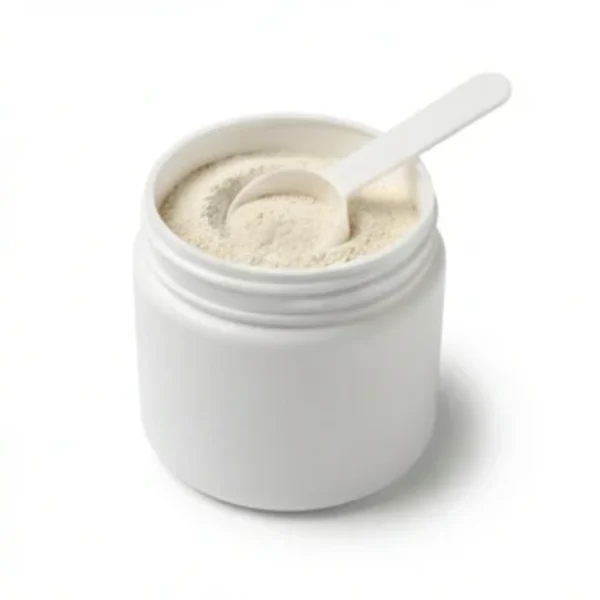
Troy Laxapet gel, 100 g
Labelled a mild lubricant laxative for cats and dogs, with a vitamin warning on the listing
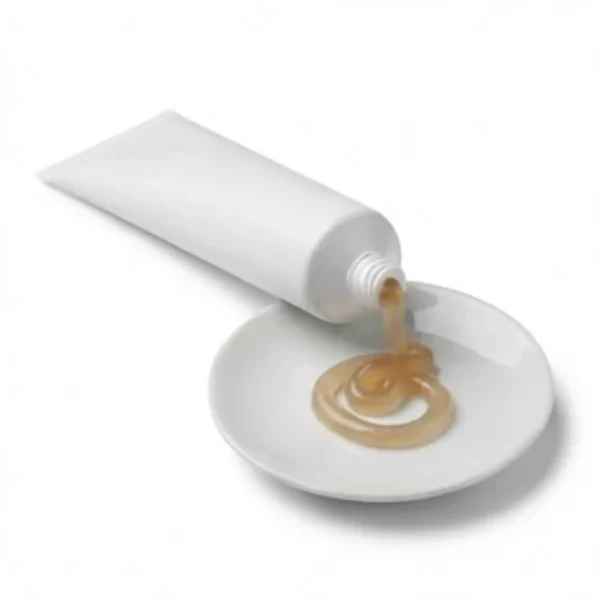
Tomlyn Laxatone gel, tuna flavour, 120 g
Flavoured gel with the actives listed; suits mild cases only
Sentry Petromalt hairball relief, malt flavour, 125 g
The listing says cats and kittens over 4 weeks; ask your vet first
GimCat Expert Line Gastro Intestinal paste, 50 g
Psyllium, elm bark and grass instead of a lubricant; a snack, not a labelled laxative
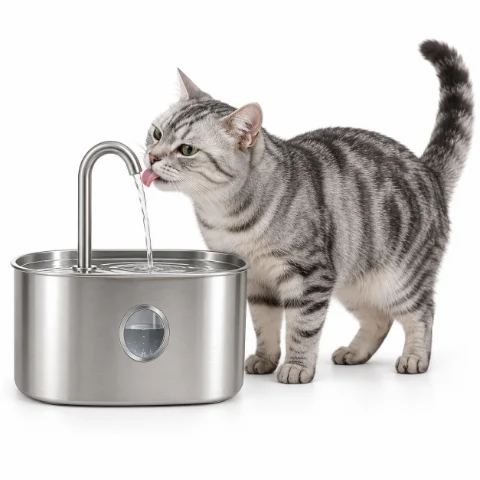
A stainless steel cat water fountain (OMIPAWZ 3.2 L)
Moving water can tempt some cats to drink more, which matters when stools are dry.
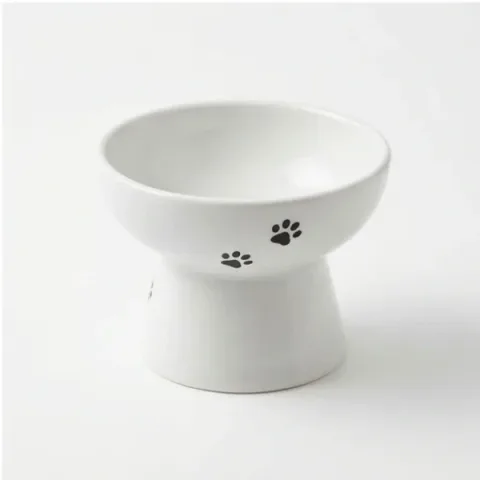
A wide, stemmed water bowl (necoichi Happy Dining)
A simple extra water spot for cats that ignore fountains, handy to place in a second room.
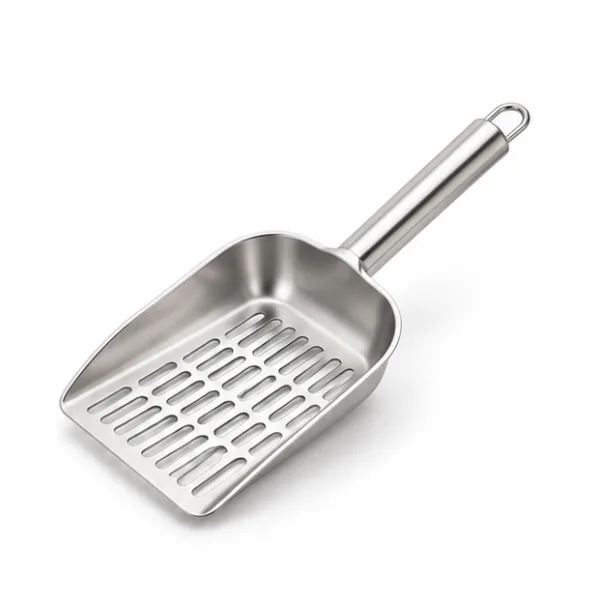
A fine stainless steel litter scoop
Makes it easier to scoop promptly and keep an eye on how often your cat poos and what the stools look like.
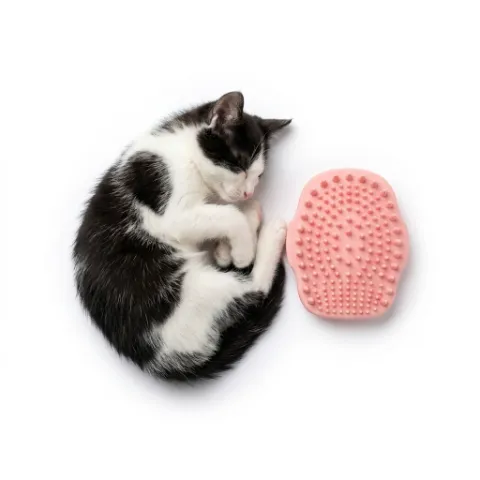
KONG Cat ZoomGroom
A rubber grooming brush that lifts loose fur during brushing, so less ends up swallowed by a cat that grooms a lot.
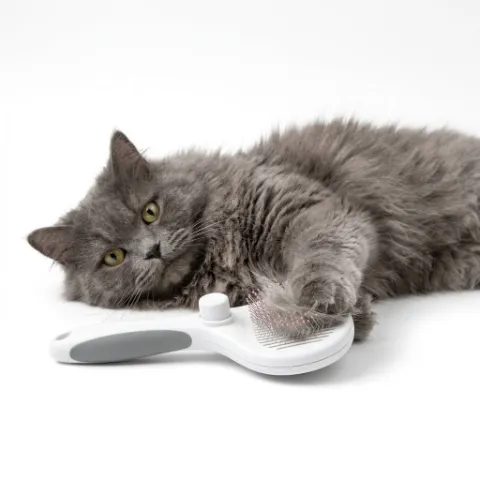
Self-cleaning slicker brush
Regular brushing is another way to cut down on swallowed hair.
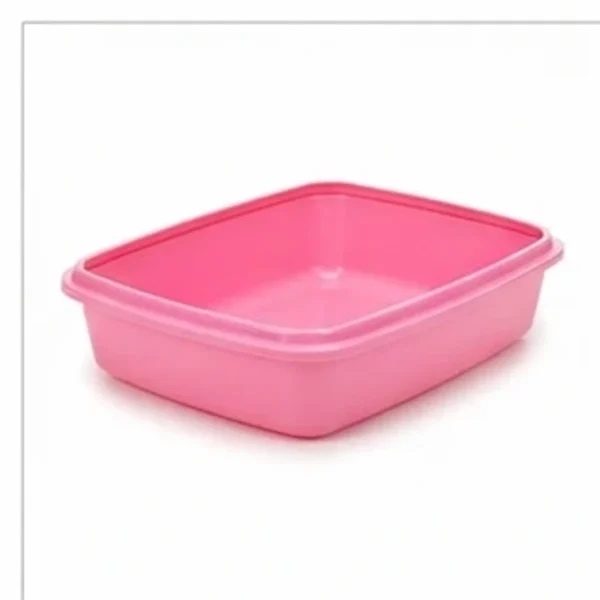
Open litter tray
An easy-to-scoop tray makes it simpler to watch how often your cat goes.
Pictures are illustrations, not the actual products.
What is a cat laxative, and which kinds are there?
A cat laxative is anything given to make stool pass more easily, and there are four main types. Lubricants coat the stool, bulk fibre adds mass and water, osmotic laxatives draw water into the bowel, and stimulants push the bowel to contract. Only the first two are sold over the counter for cats.
| Type | How it works | Examples | Who chooses it |
|---|---|---|---|
| Lubricant | Coats the stool with an oily film | Petrolatum or mineral oil gels (picks 1 to 3) | Owners, ideally with a vet's OK |
| Bulk fibre | Absorbs water and adds mass to the stool | Psyllium (pick 4), pumpkin, fibre diets | Owners or vets |
| Osmotic | Holds water in the bowel to soften stool | Lactulose, macrogol (also called PEG 3350) | Vet prescribes |
| Stimulant | Triggers the bowel to contract | Medicines only a vet gives | Vet only; not safe with a blockage |
The Merck Veterinary Manual describes lactulose as the most effective of the osmotic group and says PEG 3350 can also be used. VCA names a stool softener (docusate, which it writes as DSS) and PEG 3350 among the laxatives vets prescribe for cats. These are what a vet may prescribe, and we don't give amounts for any of them. Some are also sold for people, but never give your cat a human product: the vet chooses the medicine and the amount (Merck Veterinary Manual, "Constipation, Obstipation, and Megacolon in Small Animals", page read 25 November 2026; VCA Animal Hospitals, "Constipation in Cats", last updated 30 July 2025, page read 25 November 2026).
How do you tell constipation from straining to wee?
You often can't tell by watching, and that matters because a blocked bladder is an emergency. VCA says frequent trips to the litter box can look like a urinary problem, so a vet should check any cat that is straining. Look at what the cat actually passes: stool, urine, or nothing.
Cornell says a cat with a urethral obstruction may strain, make frequent attempts and pass little or no urine. It calls this an absolute emergency needing immediate veterinary treatment, and says male cats, including neutered ones, are at higher risk because the urethra is longer and narrower (Cornell Feline Health Center, "Feline Lower Urinary Tract Disease", updated October 2016, page read 25 November 2026). If your cat is tray-hopping and you can't find any stool or any wee, go to a vet or emergency clinic the same day. Our guide to cats peeing outside the litter box covers other urinary signs.
Our picks in detail
1. Troy Laxapet gel, 100 g: best overall
The clearest laxative label of the four. The listing calls it an edible laxative gel and a mild lubricant laxative for dogs and cats, to aid elimination of swallowed hair, and says it softens faeces when used 2 to 3 times per week. That's the maker's wording on the listing, not our advice on amounts, so follow the pack and ask your vet.
The listing warns that vitamin deficiency may occur if used for a prolonged period, which matches Merck's note on lubricants. It doesn't give the ingredients or say where it's made.
- Pros: labelled for cats and dogs; mild lubricant; honest long-use warning on the listing
- Cons: no ingredient list on the listing; not for long-term use; one tube serves cats and dogs, so check the pack for the cat amount
- Best for: a mild, occasional slow-down or hair build-up in an otherwise well cat
- Skip it if: your cat hasn't passed stool in 48 to 72 hours, is straining, vomiting or off food, or you'd need it long term
2. Tomlyn Laxatone gel, tuna flavour, 120 g: best for fussy cats
A flavoured gel you place on the nose or paws so your cat licks it off, per the listing. The listing gives the actives per 6 g (white petrolatum, soybean oil and light mineral oil) and a long inactive list that includes cane molasses, corn syrup and malt syrup. It says to consult your vet before giving it.
The listing says safe use in pregnant animals or animals intended for breeding hasn't been proven, and to stop and see your vet if the condition worsens or doesn't improve. The Vetoquinol-labelled tube lists the same ingredients, so we've included only one.
- Pros: actives listed; tuna flavour; clear vet-first safety wording
- Cons: petroleum-based and sold mainly as a hairball gel, so for mild cases only; directions are "see product label"; sugary syrups in the inactives; imported, so check the delivery details on Amazon before you order
- Best for: cats that will lick a tuna-flavoured gel from a paw
- Skip it if: your cat is pregnant or breeding, or takes other medicine without your vet's say-so
3. Sentry Petromalt hairball relief, malt flavour, 125 g: best for kittens
The listing says it's for cats and kittens over 4 weeks, and calls it an intestinal lubricant and gentle laxative for constipation, dry cough and occasional vomiting linked to hairballs. Those are the listing's claims. A constipated or vomiting kitten is a vet visit, so use this only after asking your vet.
Corn syrup is the first ingredient, followed by barley malt extract, mineral oil and petrolatum. The listing contradicts itself on frequency: the directions say once a day and the highlights say "weekly", so follow the tube. Its directions also mention squeezing the gel straight into the mouth. Stick to the paw, given Merck's aspiration warning on mineral oil.
- Pros: malt flavour; the listing gives a kitten age; full ingredient list
- Cons: conflicting frequency on the listing; corn syrup first, so not sugar-free; petroleum-based; imported, so check the delivery details on Amazon before you order
- Best for: a kitten or a cat that prefers malt to fish flavours
- Skip it if: you want a sugar-free product or clear directions on the listing
4. GimCat Expert Line Gastro Intestinal paste, 50 g: best petroleum-free fibre paste
A fibre paste, not a laxative. The listing calls it a functional snack for digestion and the gut flora, made in Germany, with psyllium (5%), powdered elm bark (2%), powdered grass (5%), yeast beta-glucans (1%) and a lactose-derived GOS prebiotic (1.5%), and says it has no added colours, preservatives, flavours or sugar. "Developed with vets" is the maker's claim.
Fibre without enough water is the catch, as Merck's hydration note on this page shows. The listing's directions only say to feed according to your cat's needs and consult a vet.
- Pros: no petroleum lubricant; composition given; no added sugar per the listing
- Cons: small 50 g tube; no feeding amount on the listing; the listing carries no laxative claim
- Best for: a regular cat with slightly firm stools, alongside plenty of water
- Skip it if: your cat is already constipated, or can't have lactose-derived ingredients
How long without a poo is too long for a cat?
VCA says most cats pass stool about once a day, ideally at least every other day, and to call your vet if there has been no bowel movement within 48 to 72 hours of the last one. Straining, hard dry pellets, small amounts of liquid stool, vomiting or loss of appetite mean calling sooner.
Constipation has many possible causes, so a laxative may be treating a symptom of something else. Merck lists hair, bones and litter in the stool, low water intake, stress, pain, narrowed pelvic canals, hypothyroidism, nerve problems and some medicines. Cornell says that in many cats no cause is found, and that severe cases can progress to megacolon, a stretched colon that can need surgery (Cornell Feline Health Center, "Constipation", last updated 2021, page read 25 November 2026).
Are cat laxatives safe?
A lubricant gel can be a reasonable helper for a well cat, but only with a vet's say-so. Used for a constipated cat without a vet, it can hide a problem. Merck says laxatives should be avoided in dehydrated animals because they can worsen dehydration, and it says long-term lubricant use may reduce absorption of fat-soluble vitamins.
Merck also says petrolatum hairball products for cats should be used only with veterinary approval and supervision (Merck Veterinary Manual, "Cathartic and Laxative Drugs Used in Monogastric Animals", page read 25 November 2026). The Troy listing carries the same vitamin warning in its own words.
Three things to avoid at home:
- Human laxatives and enemas. Merck says phosphate-containing enemas must be avoided in cats because they can cause life-threatening electrolyte problems. Cornell says enemas at home are only for cats that tolerate them, after a vet has trained you.
- Oils by spoon or syringe. Merck says oral mineral oil carries a risk of aspiration pneumonia, which is why we say never force any oily product into a cat's mouth. Offer a gel on the paw so your cat licks it off.
- Adding fibre to a dry, dehydrated cat. Merck says cats should be well hydrated before fibre is added, to lower the risk of fibre impaction. Cornell says too much soluble fibre can cause loose stools.
Lubricant gel or fibre paste: which suits your cat?
A lubricant suits a cat that is regular but swallowing a lot of hair, and a fibre paste suits a cat that is regular but a bit firm. Neither is a fix for a cat that is already blocked up. That cat needs a vet.
Merck says the effect of lubricant laxatives is moderate and that they help only in mild constipation, so treat these products as tools inside a routine of water, brushing and a vet's advice. Our hairball remedies guide explains the hair side, and hairball treats are the chew version.
Cat laxatives compared
Details from each Amazon Australia listing, checked on 25 Nov 2026. "Not stated" means the listing doesn't say.
| Product | Type | Main ingredients on the listing | Pack | Species and age on the listing | Directions on the listing |
|---|---|---|---|---|---|
| Troy Laxapet | Lubricant gel | Not stated | 100 g | Cats and dogs | The listing says it softens faeces when used 2 to 3 times per week |
| Tomlyn Laxatone | Lubricant gel | Per 6 g: white petrolatum 1.285 g, soybean oil 0.237 g, light mineral oil 0.203 g; cane molasses, corn syrup, malt syrup | 120 g | Cats; age not stated | "See product label" |
| Sentry Petromalt | Lubricant gel | Corn syrup, barley malt extract, mineral oil, petrolatum, glycerin, fish oil | 125 g | Cats and kittens over 4 weeks | Once a day in the directions; "weekly" in the highlights |
| GimCat Gastro Intestinal | Fibre paste | Psyllium 5%, elm bark 2%, powdered grass 5%, yeast beta-glucans 1%, GOS 1.5% | 50 g | Cats, all life stages | According to need; ask a vet |
Choose by situation
| Your situation | What to look for | Our pick |
|---|---|---|
| Well cat, an occasional slow-down or hair build-up | A mild lubricant, with a vet's OK | Troy Laxapet (1) |
| Cat that refuses plain gels | A flavoured gel to lick from the paw | Tomlyn Laxatone (2), tuna |
| Kitten over 4 weeks, or malt-lover | A kitten-labelled gel, after asking a vet | Sentry Petromalt (3) |
| Regular but firm stools, you'd rather add fibre | A fibre paste, with plenty of water | GimCat (4) |
| Not passed stool in 48 to 72 hours, or straining | A vet visit | No product |
| Male cat straining and passing little or no wee | Emergency vet, same day | No product |
| Cat with kidney disease, vomiting or off food | A vet visit before any product | No product |
| Stools are loose, not firm | A different problem; see the vomiting and sensitive stomach guides | Cat vomiting, sensitive stomach food |
What else helps a cat that gets constipated?
Water, brushing and vet-led changes do more than a tube of gel. Merck lists water access as a key prevention step and describes dietary fibre as the preferred approach for mild cases. VCA lists high-fibre diets, regular grooming, hairball remedies and, for mild cases, probiotics as long-term support, and says not to change treatment without your vet.
- More water. A cat water fountain and wet cat food both add water.
- Brushing. Less swallowed hair means less in the stool; see our cat brush guide.
- A clean tray. Merck lists a dirty litter box and stress as reasons a cat holds on. A low-entry tray can help a stiff, older cat.
- Probiotics. Only as something to ask your vet about; see probiotics for cats.
- Food. VCA lists high-fibre diets as long-term support, chosen with your vet. If skin or tummy reactions to food are the worry, see our hypoallergenic cat food guide.
Where else can you buy a cat laxative?
Vet clinics stock laxative gels and fibre diets and can tell you which suits your cat, and pet shops and pharmacies sell hairball gels too. Check the label for the species, kitten age and directions, since the Amazon listings for two of our picks leave directions to the pack.
How we chose
We searched Amazon Australia for cat laxative gels, pastes and stool softeners, then shortlisted those that met all of these checks:
- Well rated: a strong average rating with plenty of buyer reviews.
- No red flags: no pattern of poor reviews, safety complaints or listing problems.
- Available on Amazon Australia when we checked.
- Made for cats, with the species stated on the listing.
- Ingredients or safety information shown on the listing where the maker gives them.
- No claim to treat or cure constipation, which only a vet can assess.
Where a listing is imported or missing a detail, we say so in the cons. These are researched picks, not products we've personally tested. We compared the specifications and features on each Amazon Australia listing, checked on 25 Nov 2026, and we didn't accept payment from any brand.
Left out this time: herbal "constipation relief" drops with no ingredient list, pastes promising instant results, stool softener bars from an unknown maker, a French-labelled gel with almost no listing detail, hairball treats (they have their own guide), and anything for loose stools.
When to see a vet
Go to a vet or emergency clinic today if your cat is straining in the tray and passing little or no wee, especially a male cat. That can be a blocked bladder, and Cornell calls it an absolute emergency.
See your vet if your cat has any of these:
- No bowel movement in 48 to 72 hours, or repeated unsuccessful trips to the tray
- Vomiting, not eating, hiding, lethargy or a sore, tight belly
- Blood in the stool or tray, or small amounts of liquid stool with straining
- Crying out or going outside the tray
- Constipation that keeps coming back, even if your cat is fine in between
- Older cats, kittens, and cats with kidney disease or other long-term illness
Never give a human laxative or an enema, and never spoon or syringe oil into your cat. Our cat vomiting guide covers the vomiting signs, and the hairball guide covers hair blockages.
Frequently asked questions
Can I give my cat a human laxative?
No. Human laxatives and enemas can be dangerous for cats, and Merck says phosphate-containing enemas must be avoided in cats because of life-threatening electrolyte problems. Cornell says home enemas are only for cats that tolerate them, after a vet has trained you. Ask your vet before giving anything.
Does pumpkin help a constipated cat?
Merck lists pumpkin among ways to add fibre to food, but as part of vet-guided care, and it warns cats should be well hydrated first. Amounts depend on your cat, so ask your vet. Plain cooked pumpkin is the only kind to consider, never pie filling with spices or sugar.
Is a hairball gel the same as a cat laxative?
Often yes. Most hairball gels are lubricant laxatives, and Sentry's listing calls its gel a gentle laxative. Troy's listing says laxative outright. The difference is the label and the focus on hair. For the hair side of the story, see our hairball remedies guide.
Can a kitten have a cat laxative?
Only on your vet's advice. The Sentry listing gives 4 weeks as its lower age, but constipation or vomiting in a kitten can be serious, so call your vet first. Check the age directions on any tube, and don't give a product made for adult cats or for dogs without asking.
Why does my cat keep getting constipated?
Merck says older, overweight cats, cats with chronic kidney disease and cats with earlier episodes are at higher risk, and that low water intake, stress, pain and a dirty tray can play a part. Repeated bouts need a vet, who can look for the cause rather than just softening stools.
Do wet food and water really help?
They can. Merck lists water access as a key prevention step, and wet food adds water to meals. It isn't a guaranteed fix, and a cat with kidney disease needs your vet's advice on diet and water. Our water fountain guide and wet food guide have options.
Is a stool softener different from a laxative?
A stool softener such as docusate is a type of laxative that makes stool hold more water. VCA names it among the options vets use for cats. It's a vet decision, so we don't pick one. Ask your vet whether a softener, lactulose or a fibre change suits your cat.
How do I get my cat to take a gel?
Place a small amount on a front paw or the nose so your cat licks it off, as the Tomlyn listing describes. Don't squirt it into the mouth, since Merck notes aspiration risk with oral mineral oil. Our guide to giving a cat a pill has handling tips.
Related guides
- Cat hairball remedies
- Cat vomiting: causes, colours and when to see a vet
- Best probiotics for cats
- Best cat food for sensitive stomachs
- Hypoallergenic cat food
- Hairball treats for cats
- Best cat water fountains
- Best wet cat food
- Best cat brushes
- Why is my cat peeing outside the litter box?
- Cat guides
Sources
- Cornell Feline Health Center, "Constipation", last updated 2021, page read 25 November 2026 (https://www.vet.cornell.edu/departments-centers-and-institutes/cornell-feline-health-center/health-information/feline-health-topics/constipation)
- Cornell Feline Health Center, "Feline Lower Urinary Tract Disease", updated October 2016, page read 25 November 2026 (https://www.vet.cornell.edu/departments-centers-and-institutes/cornell-feline-health-center/health-information/feline-health-topics/feline-lower-urinary-tract-disease)
- VCA Animal Hospitals, "Constipation in Cats", last updated 30 July 2025, page read 25 November 2026 (https://vcahospitals.com/know-your-pet/constipation-in-cats)
- Merck Veterinary Manual, "Constipation, Obstipation, and Megacolon in Small Animals", page read 25 November 2026 (https://www.merckvetmanual.com/digestive-system/diseases-of-the-large-intestine-in-small-animals/constipation-obstipation-and-megacolon-in-small-animals)
- Merck Veterinary Manual, "Cathartic and Laxative Drugs Used in Monogastric Animals", page read 25 November 2026 (https://www.merckvetmanual.com/pharmacology/systemic-pharmacotherapeutics-of-the-digestive-system/cathartic-and-laxative-drugs-used-in-monogastric-animals)
- Product details from each linked Amazon Australia listing, checked on 25 Nov 2026.
This guide provides general information and isn't a substitute for veterinary advice. If you're concerned about your cat's constipation or digestion, speak with your vet.