Research guide. WhiskerFinds may earn a commission from links, at no extra cost to you.
Quick answer: A self-cleaning litter box can suit most cats if its weight range, entry and hood style match your cat. Our top pick is the Neakasa M1 Plus, an open-top box the listing says suits cats from 1.5 kg up to about 15 kg, so large cats are covered. For a camera and app monitoring, see the PETKIT Purobot Max Pro 2.
The right self-cleaning litter box depends on your cat's weight, how your cat feels about hoods, and whether you share the home with other cats. Large cats are one situation, not the only one. This guide compares six automatic litter boxes on Amazon Australia, explains how the safety sensors work and what they can't do, and walks through switching your cat over slowly. If your cat is already toileting around the house, start with why cats pee outside the litter box before buying anything.
Quick picks
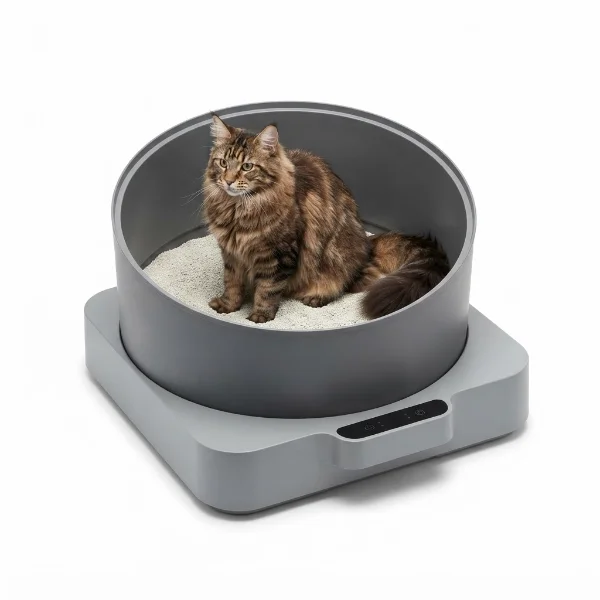
Neakasa M1 Plus
Open top; listing says cats up to about 15 kg and up to 3 cats; anti-pinch gear structure
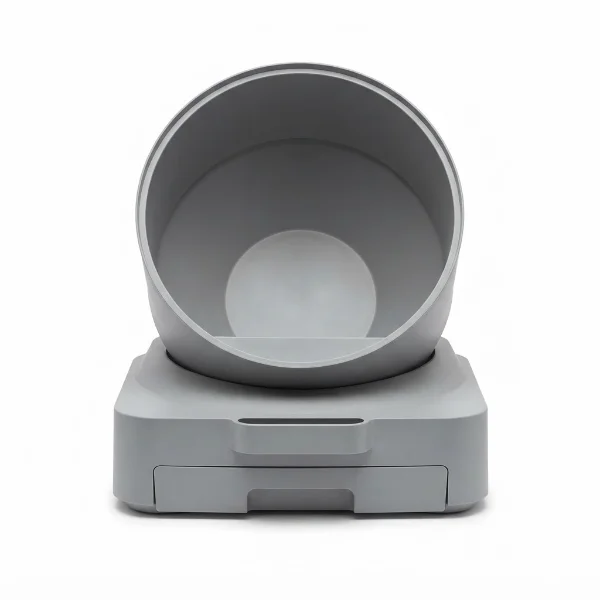
CATLINK Open-X
Always-open entrance, 12 L waste bin and a health monitor that tells pee from poo, per the listing
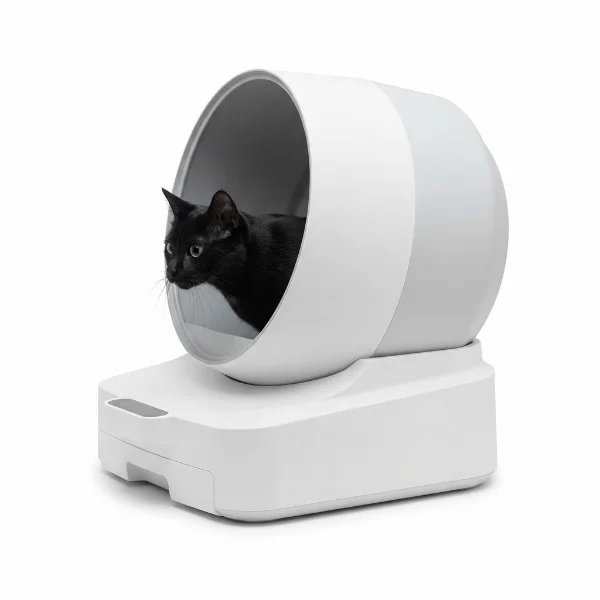
HoneyGuaridan Self Cleaning Litter Box
IPX5 waterproof body, tool-free detachable parts
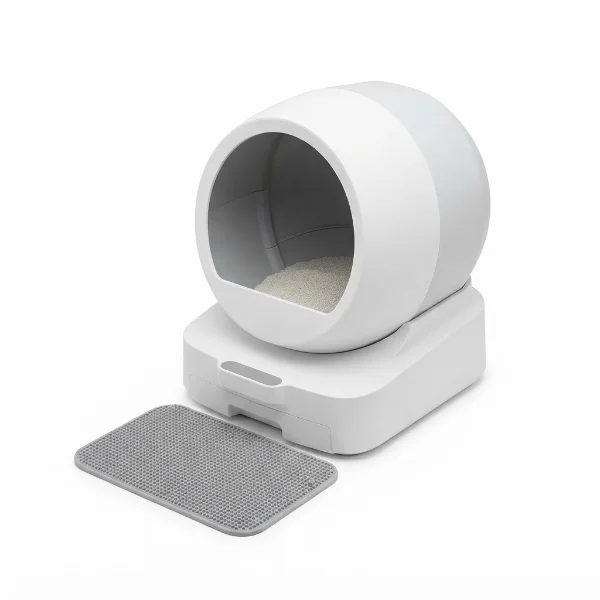
PETKIT PuraMax 2
Hooded with a low entry; listing says 1.5 to 8 kg and not for pets under 6 months
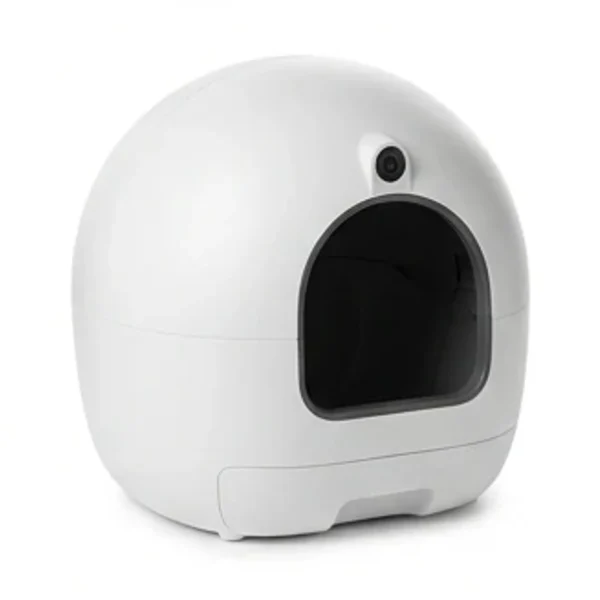
PETKIT Purobot Max Pro 2
Enclosed, with an AI camera and app that record each visit, per the listing
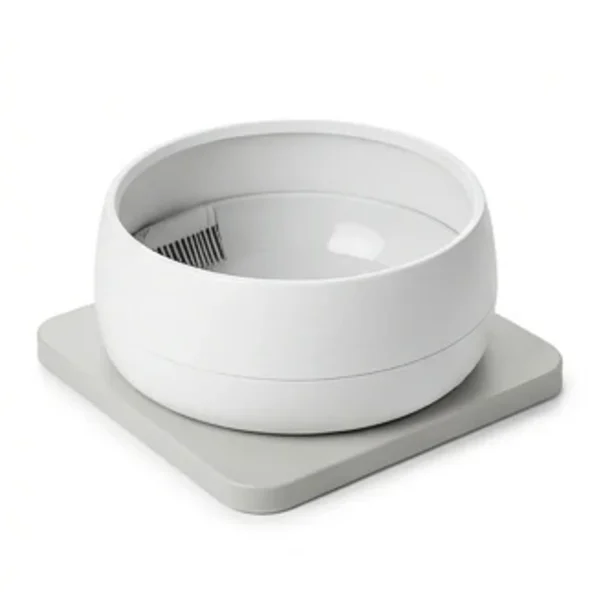
Gimars Open Top Self Cleaning Litter Box
Wide 37 cm entry, 12 sensors and a low body height; listing says 1.5 to 10 kg
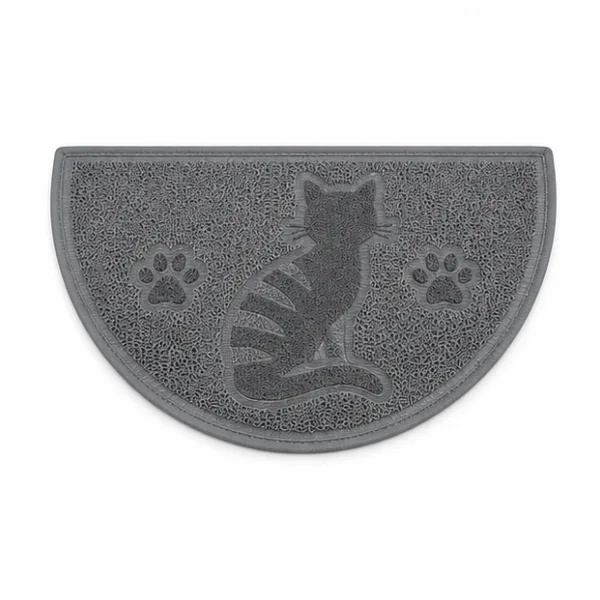
Large litter trapping mat
A mat outside the box catches litter that gets carried off on paws, which can help keep the floor tidier around a self-cleaning box.

Clumping mineral cat litter
A clumping litter is the type most automatic boxes are designed around, so it's worth checking your model's manual before you buy.
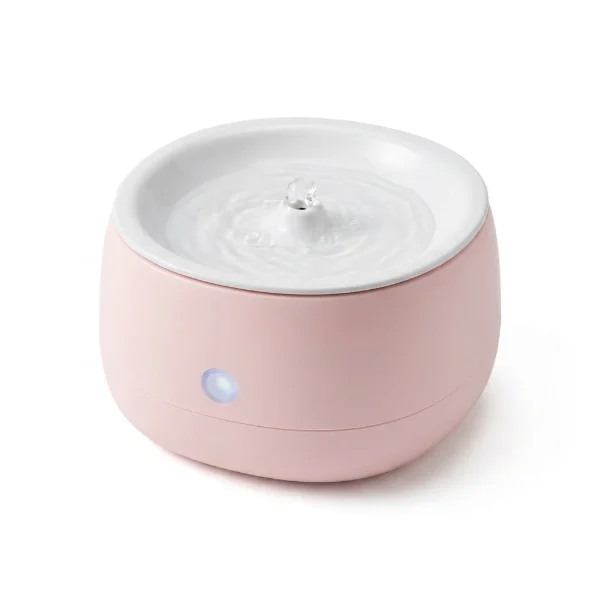
Catit Pixi cat fountain
Fresh running water is another part of the routine for a busy owner.
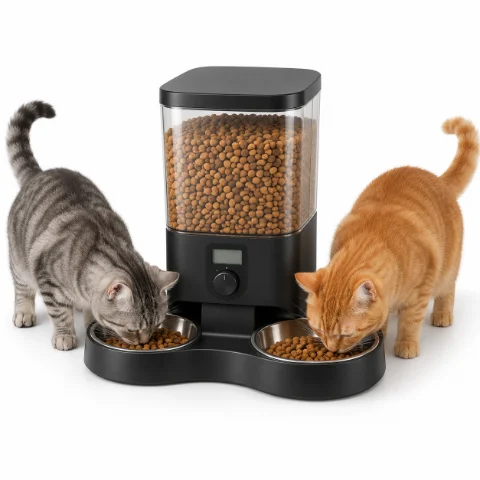
oneisall 5 L automatic cat feeder
A timed feeder pairs with a self-cleaning box for owners who are out a lot, though your cat still needs a person to check in.
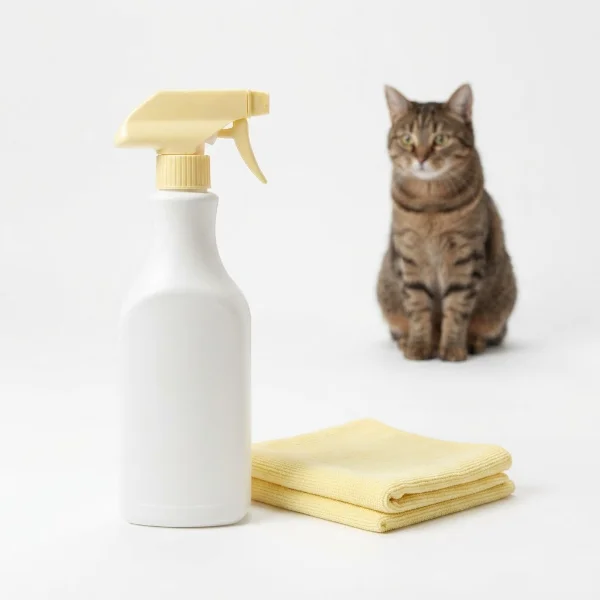
Nature's Miracle cat stain and odour eliminator
An enzyme-style cleaner for any accident outside the box.
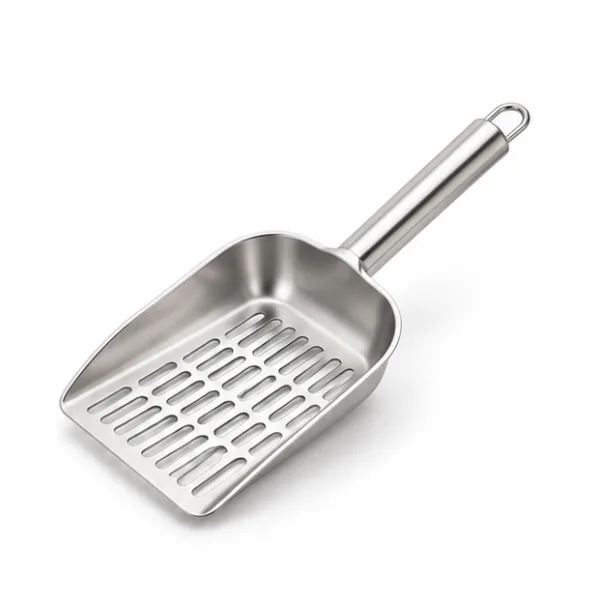
Fine stainless steel cat litter scoop
A backup scoop is useful if you ever need to use a normal tray alongside the automatic box.
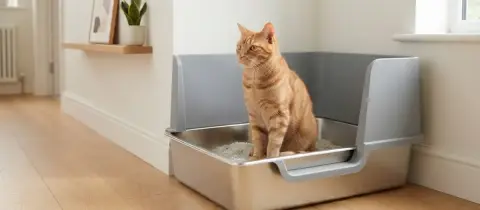
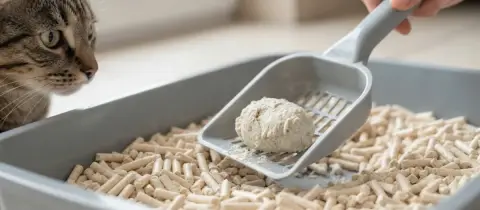
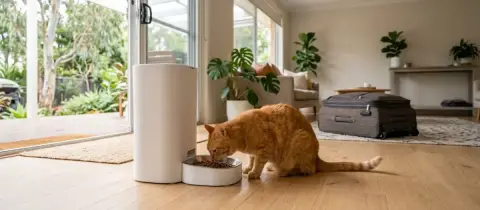
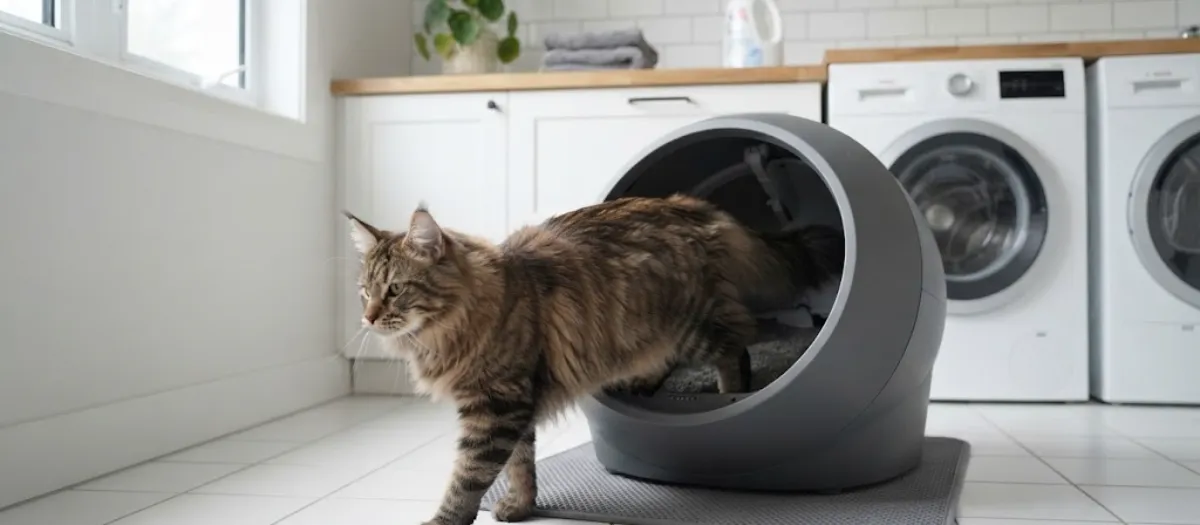
Pictures are illustrations, not the actual products.
Weights and sizes below are from the listings. Weigh and measure your cat before you pick one.
Are self-cleaning litter boxes safe?
They can be, but safety depends on the model, the sensors and how you introduce your cat. Look for several sensors, anti-pinch design and a stated minimum weight. Never leave a kitten, or any cat under the listed minimum weight, alone with one running. Keep a normal tray available while your cat learns.
All six boxes here list safety features. The Neakasa listing describes a gear structure that limits the litter bed's rotation and a 6-array infrared sensing system. The CATLINK lists weight sensors, infrared sensors and anti-pinch switches. The HoneyGuaridan listing says a motion sensor stops cleaning when a cat approaches and that it has 4 weight sensors. The PETKIT PuraMax 2 listing describes infrared and weight sensors that pause the box when a cat approaches or the weight changes. The Purobot Max Pro 2 listing says the cylinder stops when a pet gets close and that an anti-pinch structure keeps the entrance open. The Gimars listing lists 12 sensors, including interior infrared, entry radar and weight sensing, and says it pauses when a cat approaches. These are the makers' claims, and sensors can get dirty or fail, so don't treat them as a guarantee. We didn't find a vet-written source or an Australian recall on automatic litter box injuries when we checked on 30 October 2026, so the safety case rests on the makers' claims and on how carefully you introduce the box.
Some practical steps:
- Check the minimum weight and age on the listing before you buy. Neakasa lists 1.5 kg and has a Kitten Mode in its app for kittens under that. PETKIT says not to use either of its boxes for pets under 6 months.
- Keep the sensors clean, and wipe them when you empty the bin.
- Follow the placement notes. The Purobot Max Pro 2 listing says not to put it on carpet or mats because that may interfere with its sensors, and to use a flat floor.
- Don't rely on it alone when you're away. Have someone check on your cat and the box each day.
- Check what happens in a power cut. The listings we read don't say, so check the manual for each model.
Do self-cleaning litter boxes actually work?
They can, when you use them as the maker describes. The listings point to two trouble spots: the wrong litter for the box (the PuraMax 2 listing rules out crystal litter) and a box sitting on carpet or a mat (the Purobot Max Pro 2 listing warns that this can upset its sensors). Check the manual for the litter list and the fill line, and keep a plain tray as a backup.
Here is what the listings say that matters for day-to-day use:
- Litter. Use only what your model's manual allows; see which litter works below.
- Placement. Put the box on a flat floor with room around it for the bed or drum to turn.
- Upkeep. You still empty the bin, wash the box and wipe the sensors. The days between emptying on each listing are the maker's figures, usually for one cat.
- Power and wifi. Every box needs mains power, and the app features need wifi. The Gimars listing says 2.4 GHz only, the CATLINK, HoneyGuaridan and Purobot Max Pro 2 list 2.4 and 5 GHz, and the other two don't name a band. If your wifi drops, check the manual for what the box does.
Our picks in detail
1. Neakasa M1 Plus: best overall
An open-top automatic box, about 53 x 64 x 59 cm. The description says it supports cats from 1.5 to 15 kg (3.3 to 33 lb) and up to 3 cats, with a Kitten Mode in the app for kittens under 1.5 kg. For safety, it describes a gear structure that limits the litter bed's rotation and 6-array rotary infrared sensing of movement, size and position. The details panel also shows 22 lb as a "weight capacity", the same figure as the box's own weight, so we've gone by the description's 15 kg.
It has a 7.2 L litter capacity and an 11.2 L waste bin, and the listing says 7 to 14 days between emptying. A brush strip seals the gap between the bed and the bin, and the listing says no carbon packs are needed. The title mentions a 2-year protection plan.
- Pros: weight range up to about 15 kg, per the listing; open top; anti-pinch design; app Kitten Mode; up to 3 cats
- Cons: the longest edge is about 64 cm, so a very long cat should measure; needs power and wifi for the app; the "7 to 14 days" is the maker's claim, and a household with several cats will empty it sooner
- Best for: large cats, and homes with up to 3 cats
- Skip it if: you want a hooded box, or you have little floor space
2. CATLINK Open-X: best open-top for multi-cat homes
An open-top box, about 58.4 x 53.3 x 58.4 cm, with an always-open entrance. The listing calls it an incomplete gear design, which it says keeps the opening clear. It lists weight sensors, infrared sensors and anti-pinch switches, a dual-band wifi app and a 12 L waste bin that it says lasts up to 15 days for one cat.
The listing says the health monitor can tell pee from poop and gives daily and weekly reports, and that the app can monitor each cat's activity. It doesn't say how the box tells cats apart, so check that before relying on it for cats of similar size. It also claims 30 dB operation, which is the maker's figure.
- Pros: largest waste bin here; open entrance; health monitor; dual-band wifi
- Cons: we couldn't find a stated weight range, so check the listing before you buy for a heavy cat; the listing doesn't say how it tells cats apart; the 15 days is the maker's figure for one cat
- Best for: homes with more than one cat that want an open box with a big bin
- Skip it if: you need a stated weight range, or you need to know how each cat is tracked before you buy
3. HoneyGuaridan Self Cleaning Litter Box: easiest to wash
About 57 x 55 x 55 cm and 9.3 kg. The listing says it has an IPX5 waterproof body and base that can be rinsed, with tool-free detachable parts, plus a litter mat and 2 rolls of bags in the box.
The listing says it has room for cats of 3 to 33 lb (about 1.5 to 15 kg), with a 13.6 inch (about 34.5 cm) opening. A motion sensor stops cleaning when a cat approaches, there are 4 weight sensors, and it stays open while working. The app tracks each cat's weight, toilet frequency and duration, and the listing says up to 14 days hands-free. In kitten mode, cleaning is controlled manually.
- Pros: rinse-clean design; same listed weight range as the Neakasa; mat and bags included
- Cons: we couldn't find a waste bin size on the listing; litter guidance is only "most clumping litter", with no types named
- Best for: anyone who wants to wash the whole box easily, in a warm climate where odours build up faster
- Skip it if: you want a bin capacity stated up front
4. PETKIT PuraMax 2: best enclosed (cats up to 8 kg)
An enclosed box, about 62 x 53.8 x 55.2 cm. The listing says the applicable weight is 1.5 to 8 kg and not to use it for pets under 6 months, with space for cats up to 18 lb (about 8 kg). The entry is a low 7.8 inches, about 20 cm.
The listing describes xSecure: infrared and weight sensors, remote alerts, and a pause when a cat approaches or its weight changes. It says the box works with clumping clay, tofu, mixed and bentonite litter, but not crystal litter. The waste bin is 7 L, and the listing says up to 15 days for one cat. It also has a smart spray deodoriser, which you can leave unused if your cat dislikes smells; the RSPCA recommends unscented litter.
- Pros: hooded; low entry; tofu and clumping litters named; sensors listed
- Cons: limit of about 8 kg, so it isn't for large cats; smallest stated bin here at 7 L; no crystal litter; enclosed boxes are tighter for a cat that needs room to turn
- Best for: cats under 8 kg, over 6 months, in a home where you want the mess hidden
- Skip it if: your cat is large, or dislikes enclosed boxes
5. PETKIT Purobot Max Pro 2: best with a camera
An enclosed box with a lid, about 68 x 55.9 x 64 cm and 14 kg, so it's the biggest and heaviest here. The listing says it has an AI camera with a 210 degree view and infrared night vision that recognises your cat when it approaches and records toileting. It says the app uses the camera's images of urine and stool to flag changes such as colour or clump size, and has multi-cat recognition with separate data for each cat. Those are the maker's claims, and the app isn't a vet. If you see changes, speak with your vet.
The listing gives the entry as about 10 inches (25 cm) above the ground and says the opening is 43 percent larger than the previous generation's. It lists an 8 L waste bin that it says lasts up to 17 days for one cat, 2.4 and 5 GHz wifi, a 35 to 45 decibel noise level, and a 2-year after-sales cover. The directions give the cat weight range as 3.3 to 17.6 lb (about 1.5 to 8 kg) and say the cat should be older than 6 months.
- Pros: camera and app that log each visit, per the listing; multi-cat recognition; 8 L bin; sensors and anti-pinch structure listed
- Cons: enclosed, and some cats dislike hoods; a limit of about 8 kg, so it isn't for large cats; needs wifi and the app for the camera features; a camera pointed at the litter area isn't for everyone; biggest and heaviest box here; shouldn't sit on carpet or mats, per the listing
- Best for: owners who want app monitoring and a record of each visit, with a cat under 8 kg
- Skip it if: your cat is large, your cat hates hoods, or you don't want a camera or app
6. Gimars Open Top Self Cleaning Litter Box: best open-top for cats up to 10 kg
An open-top box with no lid, about 56.5 x 51.5 x 42 cm and 11.2 kg. It has the lowest body height of the six, and the listing gives a 37 cm wide entry. The title says it is for multiple cats and senior cats, though the listing doesn't give an entry height, so a senior cat's step-in height isn't known from the listing.
The listing says the weight range is 1.5 to 10 kg, with 12 sensors including interior infrared, waste-bin infrared, entry radar and weight sensing, and that it pauses when a cat approaches or enters. It lists an 8 L sealed waste bin that it says lasts up to 12 days depending on cat size and use, 2.4 GHz wifi app control with auto and manual cleaning, a quiet cleaning process of 32 decibels or less (the maker's figure), plus a litter mat and 2 rolls of bags.
- Pros: open top with a wide entry; compact height; 12 sensors listed; app with auto and manual modes; mat and bags included
- Cons: limit of 10 kg, although the listing text also calls it suited to large cats, so weigh your cat first; no litter types named; the listing gives two slightly different sets of dimensions; 2.4 GHz wifi only
- Best for: cats up to 10 kg that dislike hoods, in a home that wants a lower-profile open box
- Skip it if: your cat is over 10 kg, or you need to know the entry height before you buy
Do vets recommend automatic litter boxes?
We didn't find a vet body that recommends or advises against them in general. What vet and welfare sources do cover is the basics: enough clean trays, and noticing changes in how often your cat goes. An automatic box can hide those changes unless you check the app data or look yourself.
The RSPCA Australia knowledgebase (updated 30 May 2024, page read 25 November 2026) says a single cat needs at least two trays in separate spots, and a multi-cat home needs one per cat plus one extra. It also says to remove waste every day (RSPCA Australia knowledgebase). So an automatic box shouldn't be your only tray.
The Cornell Feline Health Center (page updated October 2016, read 25 November 2026) lists urinating more often than usual, difficult or painful urination, crying out while urinating, blood in the urine, peeing outside the box and frequent licking of the genital area as signs of lower urinary tract disease, and says a cat with a suspected blockage needs a vet immediately (Cornell Feline Health Center). With a box that clears waste for you, those signs are easy to miss. That's where an app that logs visits, or a quick daily look at the bin, helps. Neither is a diagnosis, and a vet can work out what's going on.
Which self-cleaning litter box suits a large cat?
Start with the weight limit, then the length of the box. A large cat needs a box listed well above its weight, an entry it can step through without ducking, and room to turn and dig. The RSPCA suggests a tray at least 1.5 times your cat's length, which is hard to meet with a compact automatic box.
The RSPCA knowledgebase recommends a large, open tray at least 1.5 times the length of your cat. Measure from your cat's nose to the base of its tail and multiply by 1.5. A cat that measures 45 cm would need about 68 cm, and the longest outside edge of these boxes is about 56 to 68 cm, with the inside shorter again. That doesn't rule them out, but it's a reason to choose an open top and to watch whether your cat can turn around comfortably.
Here is what to compare:
- Weight range. The Neakasa and HoneyGuaridan listings say up to about 15 kg. The Gimars lists up to 10 kg. The two PETKIT boxes list up to about 8 kg, so skip them for a heavy cat. We couldn't find a stated weight range for the CATLINK, so check the listing before buying for a heavy cat.
- Open top or enclosed. Open tops give a big cat more headroom and an easier exit. An enclosed box can keep litter scatter and the view of the bin out of sight, but it's tighter for a large body.
- Entry. The PuraMax 2 has a low entry of about 20 cm, which suits smaller cats and seniors. For older or stiff cats, our best litter box for senior cats guide covers low-sided trays, and a plain low tray can sit beside an automatic one.
- Where it goes. The RSPCA recommends quiet, private spots away from food and water, and not moving the trays about. Allow room around the box for the arm of the lid or bed to turn.
If you want a hand-washable alternative to an automatic box, see our best stainless steel litter box guide, or our wider litter box guide. For a plain tray sized for a big cat, see litter boxes for large cats.
Self-cleaning litter boxes compared
Details from each Amazon Australia listing, checked on 25 Nov 2026. "Not stated" means the listing doesn't say.
| Box | Open or enclosed | Cat weight range | Minimum cat weight | Waste bin | Litter named | App |
|---|---|---|---|---|---|---|
| Neakasa M1 Plus | Open top | About 1.5 to 15 kg | 1.5 kg; Kitten Mode below that | 11.2 L | Not stated | Yes |
| CATLINK Open-X | Open top | Not stated | Not stated | 12 L | Not stated | Yes |
| HoneyGuaridan | Open, stays open while working | About 1.5 to 15 kg | About 1.5 kg; manual kitten mode | Not stated | Most clumping litter | Yes |
| PETKIT PuraMax 2 | Enclosed | About 1.5 to 8 kg | 1.5 kg and 6 months | 7 L | Clumping clay, tofu, mixed, bentonite; not crystal | Yes |
| PETKIT Purobot Max Pro 2 | Enclosed (lid) | About 1.5 to 8 kg | 1.5 kg and over 6 months | 8 L | "All cat litters" per the listing | Yes, with camera |
| Gimars Open Top | Open top | About 1.5 to 10 kg | 1.5 kg | 8 L | Not stated | Yes |
Size and entry, as each listing gives them:
| Box | Size (cm, L x W x H) | Box weight | Entry |
|---|---|---|---|
| Neakasa M1 Plus | About 53 x 64 x 59 | About 10 kg (22 lb) | Not stated |
| CATLINK Open-X | About 58.4 x 53.3 x 58.4 | About 9.7 kg (21.4 lb) | "Wide entrance", no size given |
| HoneyGuaridan | About 57 x 55 x 55 | 9.3 kg | Opening about 34.5 cm (13.6 in) |
| PETKIT PuraMax 2 | About 62 x 53.8 x 55.2 | About 9.9 kg (21.8 lb) | Low entry about 20 cm |
| PETKIT Purobot Max Pro 2 | About 68 x 55.9 x 64 | 14 kg | About 25 cm (10 in) above the ground |
| Gimars Open Top | About 56.5 x 51.5 x 42 (the description gives 56.8 x 54.4 x 50) | 11.2 kg | 37 cm wide; height not stated |
Choose by situation
| Your situation | What to look for | Picks to start with |
|---|---|---|
| Large cat over 8 kg | A listed weight range above your cat, an open top and room to turn | Neakasa M1 Plus, HoneyGuaridan; Gimars only up to 10 kg; check the CATLINK listing |
| Kitten | Makers set minimum weights, and the PETKIT boxes say not under 6 months. Never run the automatic cycle for a kitten under the listed minimum | A plain tray for now; see our kitten litter guide |
| Multi-cat home | A big bin, an app that tracks each cat, and one box per cat plus one extra | Neakasa M1 Plus (listing says up to 3 cats), CATLINK Open-X, Purobot Max Pro 2 |
| Nervous cat that hates hoods | An open top with a wide entry | Neakasa M1 Plus, CATLINK Open-X, HoneyGuaridan, Gimars |
| Senior or arthritic cat | A low entry, and a plain low tray kept beside it; see litter boxes for senior cats | PuraMax 2 (about 20 cm entry); the Gimars title mentions senior cats but gives no entry height |
| Small home, or you're a light sleeper | A smaller footprint, and noise figures from the maker (claims only) | Gimars (lowest body, listing says 32 dB or less), CATLINK (listing says 30 dB) |
| Want app monitoring | An app that logs visits (and weight, on the HoneyGuaridan); a camera if you want to see what's in the bin | Purobot Max Pro 2 (camera), CATLINK Open-X, HoneyGuaridan |
Automatic litter boxes are also sold in some pet shops, so you may be able to see the size in person before you buy. Whichever you choose, check the weight range, entry height and litter rules for your cat.
How we chose
We searched Amazon Australia for self-cleaning litter boxes, then shortlisted ones that met all of these checks:
- Well rated: a strong average rating with plenty of buyer reviews.
- No red flags: no pattern of poor reviews, safety complaints or listing problems.
- Available on Amazon Australia when we checked.
- Cat weight range stated on the listing, or flagged here when it isn't.
- Safety sensors listed.
- Entry and size described, so you can match the box to your cat.
These are researched picks, not products we've personally used. We compared the specifications and features shown on each Amazon Australia listing, all six checked on 25 November 2026. We didn't accept payment from any brand, and no brand saw this page before it was published.
Left out this time: models with very few Australian buyers, boxes that need proprietary crystal trays, plumbed boxes that need water and drainage, and boxes that may be small for cats around 6 kg.
Which litter works in an automatic box?
Most automatic boxes work best with clumping litter, and the PETKIT PuraMax 2 lists clumping clay, tofu, mixed and bentonite but not crystal. The HoneyGuaridan says most clumping litters are supported, and the Purobot Max Pro 2 listing says it is compatible with all cat litters, which is the maker's claim. We couldn't find named litters on the Neakasa, CATLINK or Gimars listings, so check each manual. Choose unscented: the RSPCA recommends it, and cats have individual preferences. Our litter for automatic litter boxes guide compares litters against each maker's rules.
Tofu litter is a plant-based option, and our tofu cat litter guide compares unscented brands. Whatever you choose: don't flush cat litter or cat poo, even if the packet says "flushable". Cat faeces can carry Toxoplasma, which standard wastewater treatment doesn't remove, and the New Zealand Department of Conservation links it to deaths of dolphins and other marine mammals (NZ Department of Conservation). Western Sydney University's Dr Ian Wright says the five Australian water authorities he asked all advised against flushing litter, which can swell and block pipes, including the ones inside your home (Western Sydney University, 8 June 2021). It can clog a septic system too. Bag it, bin it, and check your council's rules.
In hot, humid weather, waste sits in the bin and smells sooner, so empty it earlier than the listed days. See litter box smell: causes and fixes for more. A mat outside the box helps catch scatter, and our cat litter mat guide covers sizes, but follow each maker's placement note, because the Max Pro 2 listing says not to stand the box itself on a mat.
How to switch your cat to an automatic litter box
Go slowly and let your cat set the pace. Put the new box beside the old tray with the power off, let your cat explore it, then add litter and use it in manual mode. Keep the old tray until your cat is using the new one reliably, and reward calm visits.
A gentle plan:
- Place it with the power off. Put the box near the old tray, in a quiet spot away from food and water, and let your cat sniff around it.
- Add litter and leave it still. Scoop by hand for a few days. If your cat uses it, give a treat when it steps out.
- Keep the old tray beside it. The RSPCA recommends at least two trays in separate places, so keep a normal one even once your cat is happy.
- Run it when your cat is not nearby. Start the first cycles while your cat is out of the room, and watch how they react to the sound.
- Stop if your cat avoids it. Go back a step. If your cat starts toileting elsewhere, that can have many causes, so see the hub on peeing outside the litter box.
Never punish a cat for avoiding the new box. If your cat seems worried, our Feliway guide and cat enrichment guides cover settling a worried cat. If you'd rather hide the box, a litter box enclosure is one option, but check that the automatic box has room to work and that the cat still has a clear way in and out.
Are self-cleaning litter boxes worth it?
They can be, if scooping is a hassle and you have the space. It won't remove the work: you still empty the bin, wash the box, keep sensors clean and keep an eye on your cat. For some homes it's a convenience, for others a noisy, bulky extra that needs power.
What it can help with:
- Less daily scooping, which matters if you're out a lot or scooping is hard on your back.
- Tracking: the CATLINK, HoneyGuaridan and Purobot Max Pro 2 listings describe apps that log toilet visits, and the HoneyGuaridan listing says its app tracks each cat's weight too. A sudden change in how often or how long your cat uses the box can be worth mentioning to your vet. It isn't a diagnosis.
- Several cats sharing a home. Remember the guideline of one box per cat plus one, in different places (RSPCA Australia knowledgebase).
What to weigh up:
- Noise and movement can worry a nervous cat; see the noise FAQ below.
- Power, wifi and ongoing supplies such as bags and litter.
- The box takes floor space, and bigger cats leave less margin.
- Your cat has to accept it. Some never do, and a plain tray is fine.
The RSPCA says to remove faeces and urine daily, so even with an automatic box, glance at it each day. Pairing it with an automatic cat feeder or a cat water fountain can help busy owners, but a person should still check on the cat.
When to get help
A male cat straining to pee with little or nothing coming out is an emergency. A urinary blockage is a true emergency. The University of Illinois vet school lists straining, small amounts of bloody urine, peeing outside the box and vomiting as signs, and says to go to a vet immediately (University of Illinois College of Veterinary Medicine, 10 July 2025). Don't wait to see if it passes.
Call your vet if your cat toilets outside the box, strains, or pees much more or less often than usual. These can be signs of a medical problem, and an automatic box won't fix them. App data can help your vet see the pattern.
Stop using the box and call the maker if your cat is caught, scared or hurt by it. Never leave a kitten or a cat under the listed minimum weight with one running.
Frequently asked questions
What is the best self-cleaning litter box in Australia?
Our top pick is the Neakasa M1 Plus, an open-top box the listing says suits cats from 1.5 to 15 kg and up to 3 cats, with anti-pinch gearing and infrared sensing. If you want a camera and app records of each visit, the PETKIT Purobot Max Pro 2 suits cats under 8 kg. Match the weight range to your cat first.
Are automatic litter boxes safe for cats?
They can be when you pick one with several sensors and anti-pinch design, follow the listed minimum weight, and introduce it slowly. Sensors aren't perfect, so keep them clean and watch the first cycles. Our safety section covers what to check.
What is the best automatic litter box for a Maine Coon?
Our pick is the Neakasa M1 Plus, an open-top box the listing says supports cats up to about 15 kg. Measure your cat from nose to tail base first, because the longest outside edge is about 64 cm. The HoneyGuaridan has the same listed weight range if you want a box that rinses clean. For a plain box instead, see our litter boxes for large cats.
Can kittens use an automatic litter box?
Not safely at a young age. Check each listing's minimum: Neakasa lists 1.5 kg with a Kitten Mode, and both PETKIT boxes say not under 6 months. Use a normal tray for kittens, or run the box in manual mode, and never leave a kitten alone with one running.
Can multiple cats share an automatic litter box?
Some can. The Neakasa listing says up to 3 cats, and the CATLINK and Purobot Max Pro 2 listings describe tracking each cat separately in the app. Cats can still prefer their own spots, so follow the one box per cat plus one guideline and keep a normal tray out too.
Do automatic litter boxes need special litter?
Often clumping litter works best, but the listings differ. The PETKIT PuraMax 2 names clumping clay, tofu, mixed and bentonite litter and rules out crystal, and the HoneyGuaridan says most clumping litter. Three listings name none, so check the manual. See which litter works in an automatic box for the details.
Can you use tofu litter in an automatic litter box?
In some. The PETKIT PuraMax 2 listing names tofu litter as compatible. We couldn't find a litter list for several others, so check the manual before filling one. Our tofu litter guide compares unscented brands, and the flushable label on tofu litter shouldn't be taken as permission to flush it.
Are self-cleaning litter boxes noisy?
The listings give only the makers' own figures: CATLINK says 30 dB, Gimars says 32 dB or less and the Purobot Max Pro 2 says 35 to 45 dB. The others give none. How loud a box sounds in your home, and how your cat reacts, will vary, so run the first cycles while your cat is out of the room.
Related guides
- Litter for automatic litter boxes
- Cat litter and pregnancy: who should empty the tray or waste drawer
- How often to change cat litter
- Why is my cat peeing outside the litter box?
- Best stainless steel litter box
- Tofu cat litter: pros, cons, which to buy
- Litter box smell: causes and fixes
- Best litter box for senior cats
- Best litter box enclosures
- Best cat litter mat
- Best automatic cat feeders
- Best cat water fountains
Sources
- RSPCA Australia knowledgebase: How do I encourage my cat to use a litter tray? (updated 30 May 2024), read 25 November 2026
- Cornell Feline Health Center: Feline Lower Urinary Tract Disease (updated October 2016), read 25 November 2026
- University of Illinois College of Veterinary Medicine: Blocked Cats: An Emergency for Male Cats (10 July 2025), read 25 November 2026
- Western Sydney University: Can I flush cat poo down the toilet? (8 June 2021), read 30 October 2026
- NZ Department of Conservation: Toxoplasmosis and Hector's and Māui dolphin, read 30 October 2026 (no date shown)
- Product details from each linked Amazon Australia listing, checked on 25 Nov 2026.
This guide provides general information and isn't a substitute for veterinary advice. If you're concerned about your cat's toileting, speak with your vet.