Best litter box enclosures: hidden litter box furniture
By Anish PuriUpdated 31 Oct 202614 min readResearched, not tested by us
Research guide. WhiskerFinds may earn a commission from links, at no extra cost to you.
Quick answer: A litter box enclosure is worth it for many homes, as long as it fits a full-size tray and your cat accepts it. Our top pick is the Hzuaneri cat litter box enclosure, a cabinet with a curved side corridor. Check the inside size first, scoop daily, and let your cat decide.
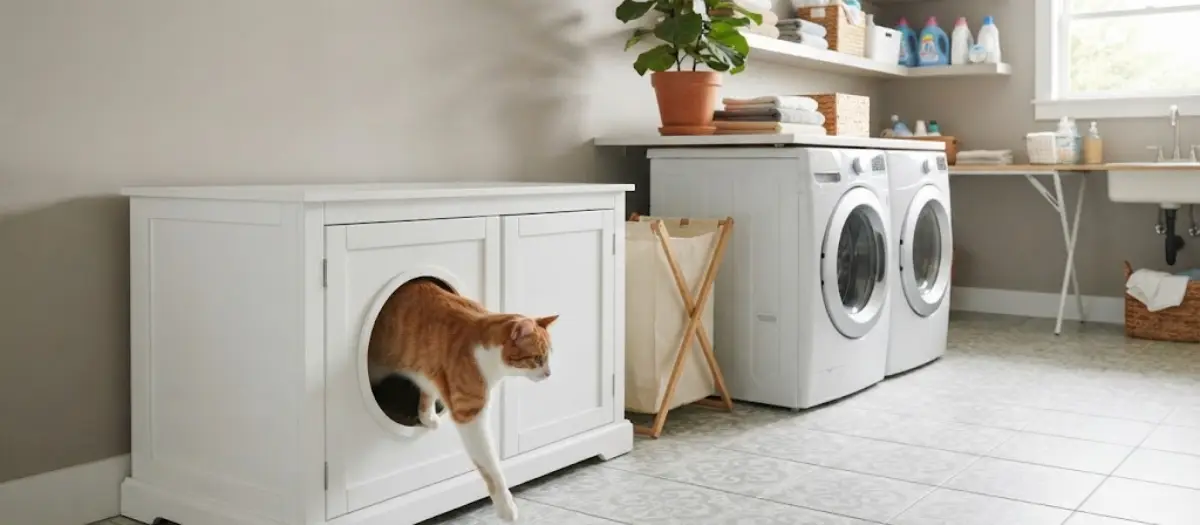
A litter box enclosure is a cabinet or planter that hides the tray, so the laundry or lounge room looks tidier. This guide compares five on Amazon Australia by size, entry and fit. If the smell is your main problem, start with our litter box smell guide, and if scooping is the chore, see automatic litter boxes.
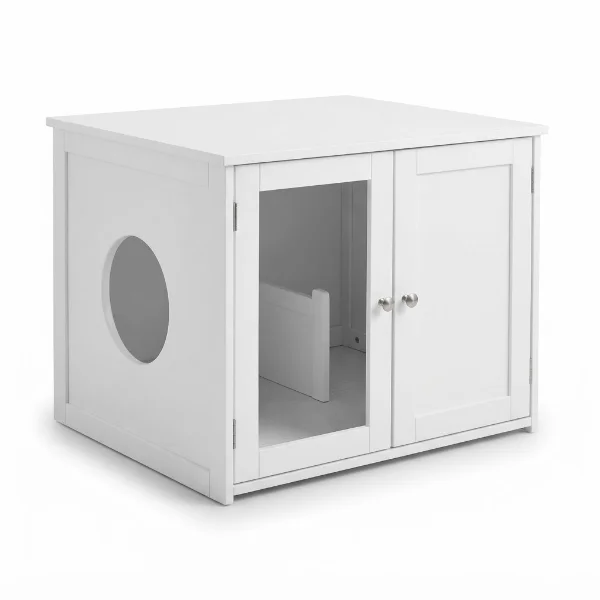
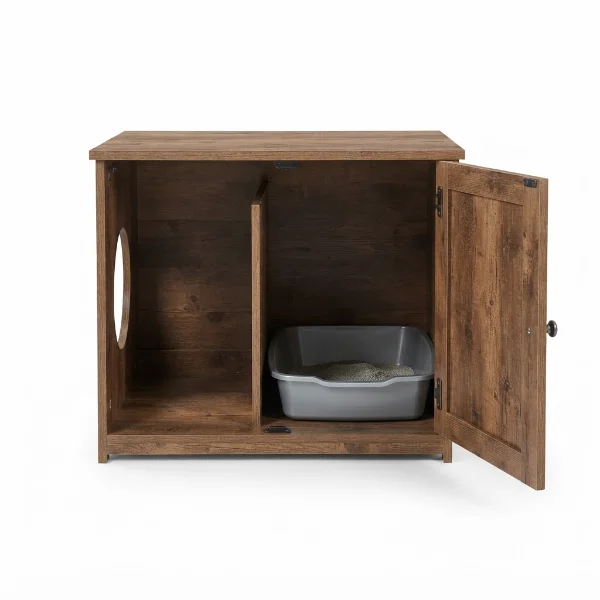
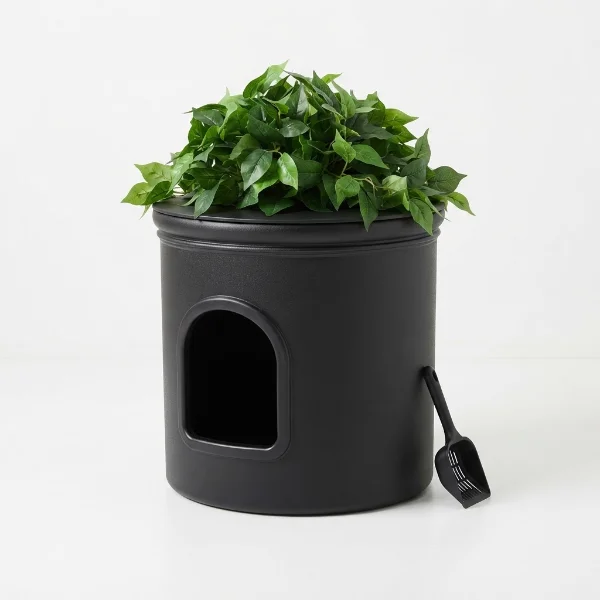
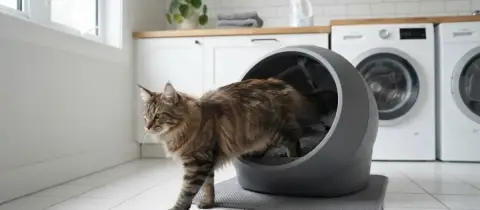
Pictures are illustrations, not the actual products.
Four of these cabinets are built around a tray you supply, so measure your tray before you pick one. The Lifewit planter is different: it is a complete litter box with its own basin.
Are litter box enclosures worth it?
They can be, if the cabinet is roomy and your cat is happy using it. An enclosure hides the tray and can help contain scattered litter, but it doesn't make a dirty tray clean. It works best as part of a routine that includes daily scooping and a tray your cat already likes.
Think about what you want from it. If you want the tray out of sight, a cabinet does that well and doubles as a side table. If your goal is less smell, scooping and litter choice matter more than the box, so read the litter box smell guide too. If the problem is no time to scoop, an automatic litter box may suit you better than furniture. For kittens, our kitten litter guide covers what to put in the tray.
Be aware that a cabinet can also hide problems. A tray you can't see is easier to forget, so build a daily check into your routine.
Why do some vets not recommend covered litter boxes?
Covered boxes aren't banned, but there are good reasons for caution. International Cat Care says owners like them for privacy and odour control, but that soiled litter is harder to spot and remove, which can put a cat off. It adds that some cats feel vulnerable in an enclosed space with one exit, especially in multi-cat homes (International Cat Care, choosing a litter tray, updated 10 December 2025).
The same page says large cats may struggle to turn and dig in a small covered tray, and that a flap, if there is one, is best removed. In a different article, International Cat Care notes that some cats feel safer in a covered tray while others prefer an open one, and suggests trying the type you don't currently use (International Cat Care, soiling indoors, updated 26 September 2025).
So the honest answer is that cats differ. An enclosure with a wide, open entry and a big tray inside suits most cats better than a small, dark box with one tight exit.
Our picks in detail
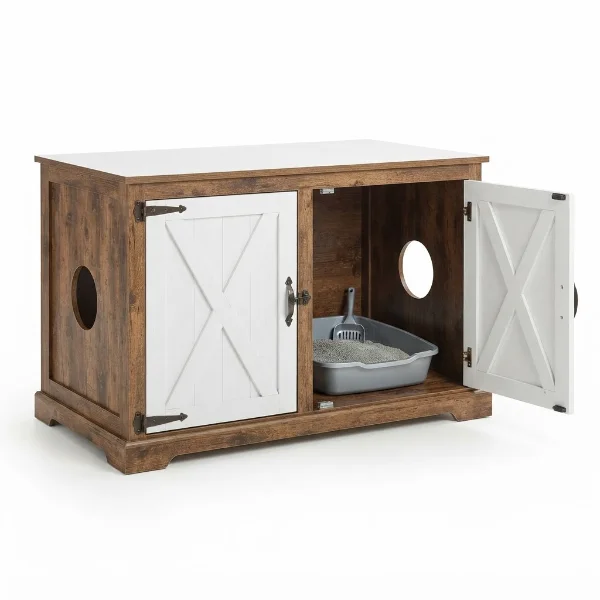
1. Hzuaneri cat litter box enclosure: best overall
A barn-door cabinet in rustic white and brown engineered wood. The listing says the entry route is curved, which it says improves privacy and keeps dogs out, and that there is carpet inside to catch litter, a latch, and a scratching ball with a bell. It lists 31.5 x 19.7 x 20.9 inches outside and says the wood is FSC certified. Assembly is by you, and the listing says it takes about 30 minutes.
Pros: curved corridor entry; a long cabinet for a bigger tray; doubles as furniture; labelled parts per the listing
Cons: the listing gives outside size only, so check that your tray fits with room to spare; the corridor adds a turn for a stiff or nervous cat; engineered wood can swell if wet; the listing doesn't mention ventilation holes, so scoop daily and leave the doors open for a while after cleaning
Best for: a one-cat home that wants a tidy cabinet and a dog kept out
Skip it if: your cat has trouble with turns or steps, or you can't confirm your tray fits
2. Hzuaneri litter box enclosure with divider: best for a known inside size
A cabinet in the same barn-door style that gives you its inside size. With the divider fitted, the listing says the inside is 14.2 x 17.9 x 18.1 inches, and with the divider removed the inside length grows to 21.6 inches. It has a reversible entrance (left or right), double doors with magnetic latches, and moisture-resistant pads that the listing says help stop the particle board swelling.
Pros: inside sizes are on the listing; the divider can come out for a bigger tray; the entry can sit on the left or right
Cons: 21.6 inches inside is still too short for very large trays; the listing's outside length is 23.6 inches; a divider-in layout is tight for most trays; the listing doesn't mention ventilation
Best for: a cat with a standard to large tray in a room with limited wall space
Skip it if: you have a very large cat or your tray is longer than 21.6 inches
3. Lifewit hidden litter box with faux plant: best for small spaces
A round, black planter-style litter box with an artificial plant on top. Unlike the cabinets on this page, it comes with its own pour-and-clean basin, so you don't put a separate tray inside. The listing says it has a low 15 cm threshold with a small platform at the opening, a carbon filter in the top and a scoop, and that a replacement basin up to about 43.8 cm across and 11.4 cm high also fits. It lists the polypropylene body at 4.19 kg.
The listing is unclear on height: the text says 70 cm, while the listed item size is 50 cm tall. Check the photos before you buy.
Pros: small footprint; low entry step; a scoop and filter are included per the listing; light to move
Cons: conflicting height on the listing; a round, closed design may feel cramped to a big cat; the filter needs replacing; not a side table
Best for: a small flat or corner with a small to medium cat
Skip it if: your cat is large, dislikes enclosed spaces, or you want a cabinet that doubles as furniture
4. Hzuaneri double litter box enclosure: best for two cats
One long cabinet with two separate compartments. The listing says two cats can use it at the same time without interfering with each other, and that each side measures 22.2 x 17.7 x 18.1 inches and fits most litter boxes. It lists ventilation holes, a carpeted porch, a scratching ball with bell, and magnetic locks that it calls dog-proof. The whole unit is 46.7 inches long on the listing.
Pros: two trays side by side; each side has its own entry; ventilation holes per the listing
Cons: it's two trays, not three, so a two-cat home still needs one more tray elsewhere (see below); 118.7 cm is a lot of wall; the listing says each side fits "most" litter boxes, so measure
Best for: two cats who get along and a long, clear wall
Skip it if: your cats don't share well, or you have room just for a small cabinet
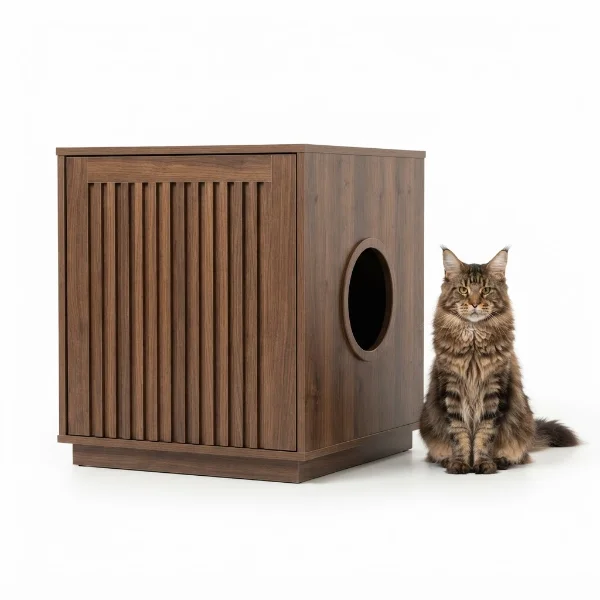
5. Evermagin large litter box enclosure: best for large cats
A walnut-finish cabinet with a fluted front and a reversible side entry. The listing says it fits trays up to 28.3 x 16.9 x 18.6 inches and lists the outside as 31.5 x 18.1 x 19.7 inches, with double doors that make scooping easier.
Pros: the listing states the largest tray it fits; double doors; reversible entry
Cons: imported, so check the delivery details on Amazon before you order; 16.9 inches wide inside may be narrow for a very wide tray; the listing describes dog-proofing in few words; the listing doesn't mention ventilation
Best for: large cats, including Maine Coon types, who need a long tray
Skip it if: your tray is wider than 16.9 inches
What size litter box enclosure do you need?
Measure your tray first, then your cat. International Cat Care suggests a tray about 1.5 times your cat's body length, nose to the base of the tail, and notes that many standard trays are too small. Your enclosure then needs to be bigger than that tray on the inside, with room for your cat to turn and dig.
Always compare the tray with the inside measurements, not the outside ones. Outside sizes include the walls, and most listings give outside sizes only. Where a listing gives inside room, we say so below.
Maine Coons and other big cats: start with the tray, then the cabinet. A large cat needs a long tray and a tall opening. The Evermagin and the Hzuaneri with divider are the roomiest here on their listings. For the box itself, our litter boxes for large cats guide has a chart by cat length.
Kittens and older cats: a low step matters more than extra length. International Cat Care says cats with arthritis or reduced mobility benefit from lower tray sides. Our litter boxes for senior cats guide covers lower-entry trays.
Measure the room too: the Hzuaneri double is about 118.7 cm long on its listing, which is a lot of wall.
Litter box enclosures compared
Details from each Amazon Australia listing, checked on 31 Oct 2026. Outside size is as the listing gives it.
We searched Amazon Australia for litter box enclosures and hidden litter box furniture, then shortlisted ones that met all of these checks:
Well rated: a strong average rating with plenty of buyer reviews.
No red flags: no pattern of poor reviews, safety complaints or listing problems.
Available on Amazon Australia when we checked.
A size you can work with: inside measurements or the tray size it fits on the listing, or an outside size we could compare, with the gap called out in the cons.
An entry the cat can use comfortably.
Room for a full-size tray.
Can be opened for daily scooping.
Airflow we could see: ventilation holes or a filter on the listing, or an open entry corridor; where a listing says nothing about ventilation we say so.
These are researched picks, not products we've personally tested. We compared the specifications and features shown on each Amazon Australia listing, checked on 31 Oct 2026. We didn't accept payment from any brand, and no brand saw this page before it was published.
Left out this time: enclosures with no usable size on the listing, rattan baskets too small for a standard tray, and listings whose sizes conflicted so badly we couldn't tell what you'd get. We also skipped scented and "deodorising" add-ons, because strong scents can upset cats.
How do you get your cat to use a litter box enclosure?
Go slowly and let your cat choose. Keep the same tray and litter your cat already uses, and make the change one step at a time. Never push or carry your cat into the cabinet. If your cat avoids it, go back a step.
Build it, then leave the doors off. Open it up so your cat can see and sniff.
Put the old tray inside. Same tray, same litter, same spot if you can.
Add a treat nearby. Reward calm visits, then close the doors a little at a time.
Keep an open tray too. International Cat Care suggests offering both covered and open trays so your cat can pick.
Watch for changes. If your cat starts toileting elsewhere, open it up again and see the vet if it continues.
Results vary. Some cats move straight in, and others never accept it, which is fine.
Can two cats share a litter box enclosure?
Usually it's better to give each cat its own tray. International Cat Care advises one tray per cat plus at least one extra, spread around the home away from food and water and not grouped together (International Cat Care, choosing a litter tray, updated 10 December 2025). So two cats need three trays.
A double cabinet like the Hzuaneri gives each cat a side, but that is two trays, and you still need a spare in a different spot. Putting trays side by side may look like one tray to your cat. If one cat spends time in a cat cage or an outdoor cat enclosure, that space needs its own tray too, kept away from the food and water in there.
How do you stop a litter box enclosure from smelling?
Scoop often and keep air moving. International Cat Care says to remove solids at least twice a day and top up the litter daily. Its advice on full washes ranges from weekly to every 2 to 4 weeks with clumping litter, and weekly is the safe habit inside a cabinet. Ventilation holes help, but they don't replace cleaning. Our how often to change cat litter guide sets out the routine by litter type.
Avoid scented sprays, deodorisers and heavily perfumed cleaners inside the cabinet. International Cat Care says scented products can overwhelm cats and may lead to house soiling. Also don't use essential oils. For a gentler option, see tofu cat litter, and for more tips see our litter box smell guide. A steel tray resists odours too, as in our stainless steel litter box guide.
Keep the cabinet away from food and water and out of busy spots. International Cat Care says cats often avoid trays near cat flaps or big windows because they feel exposed.
How do you keep a dog out of a litter box enclosure?
Choose a cabinet with a side or corridor entry, and fit any latches. The Hzuaneri models and the Evermagin say on their listings that they are dog-proof, which is the brand's claim, so watch how a determined dog gets on. Small dogs may still get in.
A corridor entry makes it harder for a dog to reach the tray, but it also adds a turn for your cat. If you have a puppy or a very persistent dog, place the cabinet where you can supervise at first, or behind a door your cat can use.
When to see a vet
A male cat who is straining to pee with little or no urine is an emergency. The University of Illinois vet school calls a urinary blockage in male cats a true emergency and says to go to a vet right away. Signs include crying while trying to urinate, repeated straining with little or no urine, bloody urine, urinating outside the box, vomiting, and later lethargy or collapse (University of Illinois College of Veterinary Medicine, 10 July 2025).
See your vet if your cat strains, goes more often, cries in the tray, passes blood, or starts toileting outside the tray. International Cat Care says a cat straining to pass urine or passing only small amounts must be seen urgently (International Cat Care, soiling indoors). Our guide on a cat peeing outside the litter box has more.
Frequently asked questions
Do covered litter boxes trap smell?
They can hold odour inside, and it builds up quickly if the tray isn't scooped. International Cat Care says soiled litter is harder to spot and remove in a covered tray. Scoop at least twice a day, keep air moving, and skip scented sprays and essential oils.
Will my cat use a litter box enclosure?
Many cats do, but it varies. Keep the same tray and litter, start with the doors off, add treats, and never force your cat inside. If your cat avoids it or toilets elsewhere, go back a step and talk to your vet if it continues.
How often should I clean a litter box enclosure?
Scoop solids at least twice a day and top up the litter daily, as International Cat Care advises. Wash the tray weekly, which is the safe habit inside a cabinet, and leave the doors open for a while afterwards so it dries and airs. Use unscented cleaners.
How many litter trays do two cats need?
Three. International Cat Care advises one tray per cat plus one extra, spread around the home and away from food and water. A double cabinet gives each cat a side, but that is two trays, so add a third somewhere else.
How do I keep my dog out of the litter box?
Pick a cabinet with a side or corridor entry and a latch. The listings for the Hzuaneri and Evermagin cabinets describe them as dog-proof, which is the brand's claim. Small dogs may still squeeze in, so check how yours behaves around it and supervise at first.
Product details from each linked Amazon Australia listing, checked on 31 Oct 2026.
This guide provides general information and isn't a substitute for veterinary advice. If you're concerned about your cat's toileting, speak with your vet.