Quick answer: Cat calming collars may help some cats, but the evidence is thin. One maker-funded trial of a prototype pheromone collar found more improvement than a plain collar in problem urination, scratching and conflict between cats over 28 days. We skip lavender and herbal collars, and any collar on a cat must be a breakaway one.
If your cat is stressed, spraying or fighting with another cat, a collar that promises calm is tempting. This guide covers what the research found, what's actually in these collars, the safety checks that matter, and what to try first. If spraying is the problem, start with our cat spraying guide.
Do calming collars work for cats?
They might help some cats, but we can't say they work. The best evidence is a single 2024 trial, run and funded by the maker of Feliway, using a prototype collar. It showed benefits on some problems and a real rate of side effects, and it isn't proof for the collars sold in shops.
Here is what the trial reported (Endersby, Billy and De Jaeger, Frontiers in Veterinary Science, December 2024, page read 23 November 2026):
| Detail | Result |
|---|---|
| Design | Randomised, blinded, placebo-controlled |
| Cats and homes | 624 cats in 459 households |
| Length | 28 days, with questionnaires at 7, 14 and 28 days |
| Collars | A prototype with 13% Feliway Optimum, against a plain silicone collar |
| Problem urination, scratching, conflict between cats | Significantly more improvement with the pheromone collar |
| Fear | Improved, but not significantly more |
| At least one adverse event | About 25% (pheromone) and 30% (plain) |
| Skin lesions | 6.9% (pheromone) and 3.8% (plain) |
| Collar removed after an adverse event | 9.5% (pheromone) and 4.4% (plain) |
| Collars lost or removed, all cats | 12.1% |
Adverse events included scratching, hair loss and discomfort. Read the result with these caveats in mind:
- Maker-funded. All three authors work for Ceva, which makes Feliway, and the company funded the study.
- A prototype. It was not a collar you can buy, so don't assume any product on a shelf behaves the same way.
- Short. Four weeks says little about longer use.
- Skin trouble was real. More cats in the pheromone group had skin lesions, and more had the collar taken off after a reaction.
The authors themselves wrote that the side-effect rate suggests a collar may not be the best way to deliver the pheromone. That's the honest takeaway: some promise, some risk, and a reason to look at other options first.
What's in a cat calming collar?
Most use either a synthetic pheromone or a scent. A pheromone collar carries a copy of a cat comfort signal, which the maker says soothes cats. Other collars are scented with plant oils, and many listings we saw name lavender and chamomile.
Some pheromone collars also carry lavender and chamomile scent on top. Ingredient lists are often thin or missing, and words like "natural" or "plant extracts" tell you very little. Some listings make big promises about how fast they work or how long they last. We treat those as the seller's claims, not facts.
Why don't we recommend lavender or herbal calming collars?
We never recommend essential-oil products for cats, and a scented collar sits against your cat's nose and neck all day. Pet Poison Helpline says cats have difficulty metabolising and eliminating some toxins, including essential oils, and that oil on the fur can be absorbed through the skin or swallowed when the cat grooms (Pet Poison Helpline). We apply that to collars, sprays and diffusers alike. "Natural" doesn't mean safe. The ASPCA lists the lavender plant as toxic to cats (ASPCA cats plant list), and we found nothing to show lavender calms cats.
Cats have a very sensitive sense of smell, and a strong scent they can't escape is a poor idea. Some makers warn about it themselves. One listing we read tells buyers to stop using the collar if the cat loses a lot of hair, and to check the cat isn't sensitive to the fragrance before ordering. That's a lot of caution for a product sold as calming.
We read calming collar listings on Amazon Australia for this page. None gave us a collar we'd put on a cat: some had essential oils, and the pheromone-only ones didn't mention a breakaway buckle. So this page has no collar picks. We haven't called any brand dangerous. We just can't make a safe recommendation from what the listings show.
Are calming collars safe for cats?
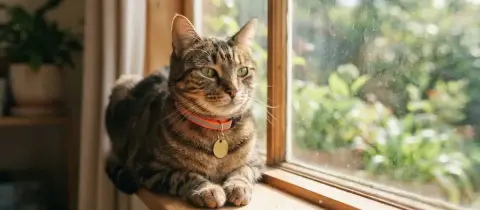
Only if the collar breaks away, fits properly and is checked often. A collar that doesn't release is a hanging risk if it snags. The trial's skin results show that irritation can happen even with a pheromone collar, so watch the neck, not just the mood.
Our cat collar guide explains breakaway buckles in full, citing RSPCA Australia and International Cat Care, and our checklist below gives the short version. International Cat Care says to check the fit again a few minutes after fitting, because cats often tense their necks at first, and the RSPCA suggests checking it weekly.
Calming collar, diffuser or spray: which suits your cat?
For most cats, a diffuser or spray is the better first step, because nothing sits on the neck. RSPCA Australia says a vet may suggest pheromone sprays or diffusers for stressed or anxious cats, and VCA Animal Hospitals says to ask your vet which product suits your cat.
| Collar | Diffuser | Spray | |
|---|---|---|---|
| On the cat | Yes, on the neck | No | No, goes on surfaces |
| Where it works | Around the cat, if it's wearing it | Mostly the room it's plugged into | Where you apply it, as the label says |
| Replacement | Check the maker's label | The Feliway Classic refill listing says up to 30 days | Reapply as the label says |
| Skin risk | Yes (rubbing, hair loss, sores) | None to the neck | None to the neck |
| Best for | A cat who tolerates a collar, with your vet's input | Stress in one main room | Marked spots, carriers, new places |
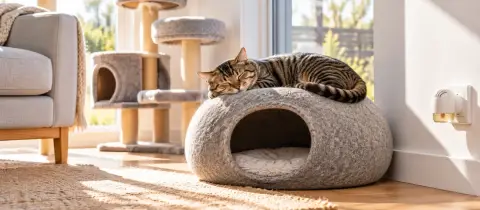
Our Feliway guide compares the diffuser and spray, attributes the maker's claims and covers the Australian diffuser. A calm place to retreat matters too, and a cat cave bed gives a nervous cat somewhere to hide. For vet trips, see how to get a cat into a carrier calmly.
Will a calming collar stop my cat spraying?
It may support other changes, but it won't fix spraying on its own. In the trial, problem urination improved more with the pheromone collar, yet that was one prototype over four weeks, scored by the cats' owners, and it isn't a collar you can buy.
Spraying usually has a cause: other cats outside the window, tension between cats at home, a change in routine, or a medical problem. VCA Animal Hospitals says never to scold or frighten a cat, because cats are very sensitive to any punishment, even a telling-off. Work through the causes first in our cat spraying guide. A cat in heat may spray too, which our cat in heat guide explains. If you need a short stopgap for the mess, see cat nappies, and clean marked spots with an enzyme cleaner, using a UV torch to find old ones.
If you still choose a collar: a checklist
- Breakaway buckle, stated on the listing
- No essential oils, lavender, chamomile or added fragrance
- Cat-specific, never a dog collar
- Fits with two fingers of room, rechecked a few minutes after fitting
- Daily skin and fur check
- Off at the first sign of redness, hair loss or scratching
- A vet's view first, especially if the problem is sudden, because stress isn't the only cause
Useful guides
Collars are only one small tool. These guides cover the safer parts of a calming plan, so we link to them instead of listing collars:
- Does Feliway work? Diffuser vs spray, for pheromone options with nothing on the neck
- Best cat collars, for breakaway buckles and fit
- Cat spraying indoors, for causes and fixes
- Cat in heat, for signs, timing and keeping her calm
- Cat nappies, for short, supervised stopgap use
- Best cat cave beds, for a hiding spot
- How to get a cat into a carrier, for calmer vet trips
When to see a vet
Take the collar off and call your vet if you see any of these:
- hair loss, redness or sores under a collar
- a cat that suddenly hides, stops eating or overgrooms
- spraying or peeing outside the tray with a sudden start
A cat, especially a male, straining, crying or passing little or no urine needs a vet straight away; a urinary blockage is an emergency and can be fatal (RSPCA Australia). If a collar has caught on something or around a leg or the mouth, release it carefully and see a vet straight away.
Frequently asked questions
How long does a cat calming collar take to work?
There's no reliable timeline, and results vary from cat to cat. The 2024 trial gathered questionnaires at 7, 14 and 28 days, so those were the check points, not promises. Watch your cat's behaviour and skin, and don't rely on a seller's "works within an hour" style claim.
Can a kitten wear a calming collar?
We found no source giving a safe age for calming collars, and kittens grow fast, so a collar can become tight quickly. Ask your vet before trying one. A pheromone diffuser or spray avoids the neck altogether, and a calm hiding spot and a steady routine help settle a kitten.
Can my cat sleep in a calming collar?
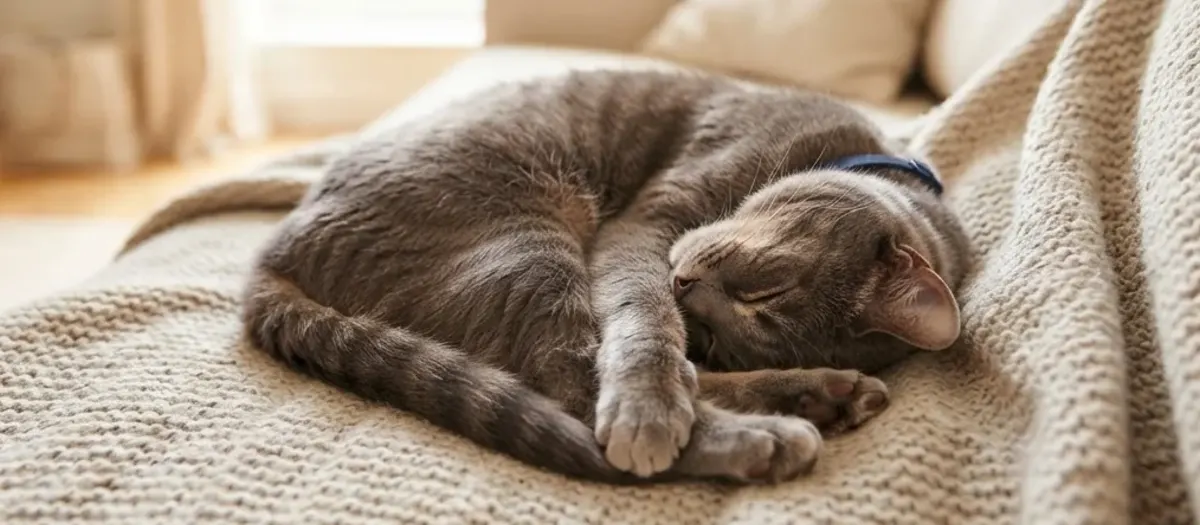
Only if it's a breakaway collar that fits with two fingers of room, and your cat's skin is checked daily. A collar worn around the clock rubs for longer, so look under it each morning. Ask your vet what suits your cat, and take it off if the skin looks irritated.
Do vets recommend calming collars for cats?
The vet sources we read don't single out collars; they point to pheromone diffusers and sprays, with your vet's advice. The main collar trial was run and funded by the maker, so it isn't independent advice. Your own vet can tell you whether a collar makes sense, especially for a cat with sensitive skin.
Can I use a calming collar and a Feliway diffuser together?
We didn't find a source on combining them, so we can't say. Ask your vet. If you do try more than one product, change one thing at a time, so you can tell what helps, and watch your cat's skin and mood.
Why is my cat losing fur under the calming collar?
Hair loss under a collar can be a sign of irritation, rubbing or sensitivity to the collar or its scent. Take the collar off and see your vet. Don't put it back on until a vet has looked at the skin. Hair loss was among the adverse events in the 2024 trial.
Are dog calming collars safe for cats?
No. Use cat products only. Dog collars are made, sized and labelled for dogs, and a collar for a dog may not break away or fit a cat's neck. If you have a dog as well, our Adaptil guide covers dog calming products.
Related guides
- Cat spraying indoors: why cats mark and how to stop it
- Cat in heat: signs, how long it lasts and what helps
- Cat nappies
- UV pet urine detector torches
- Does Feliway work? Diffuser vs spray for cats
- Best cat collars
- Best cat cave beds
- How to get a cat into a carrier for the vet
- Why is my cat peeing outside the litter box?
- Does Adaptil work? Collar, diffuser and spray guide
Sources
- Endersby, Billy and De Jaeger: Efficacy of a pheromone-impregnated collar in controlling feline problem behaviors, Frontiers in Veterinary Science, 19 December 2024, read 23 November 2026
- RSPCA Australia Knowledgebase: Why is my cat urinating inappropriately?, updated 30 May 2024, read 23 November 2026
- VCA Animal Hospitals: Urine marking and spraying behavior in cats, read 23 November 2026
- Pet Poison Helpline: Essential Oils and Cats, read 23 November 2026
- ASPCA: Toxic and non-toxic plants for cats
- Calming collar listings on Amazon Australia, read 23 November 2026
This guide provides general information and isn't a substitute for veterinary advice. If you're concerned about your cat's stress, skin or behaviour, speak with your vet.