By Anish PuriUpdated 18 Nov 202616 min readResearched, not tested by us
Research guide. WhiskerFinds may earn a commission from links, at no extra cost to you.
Quick answer: The best puppy collar is a soft, light, adjustable flat collar that fits with two fingers under it. You can introduce it from the day your puppy comes home, then check the fit often as they grow. Our top pick is the Rogz Classic reflective collar in small. Use a harness for lead walking, never a training or shock collar.
Your puppy's first collar is mostly about comfort and ID, not control. This guide compares six options on Amazon Australia, shows how to measure a fast-growing neck, and explains why we leave out training collars. It sits alongside our best dog collars guide, and pairs well with crate training a puppy and the puppy training schedule.
Quick picks
Our top pickBest overall
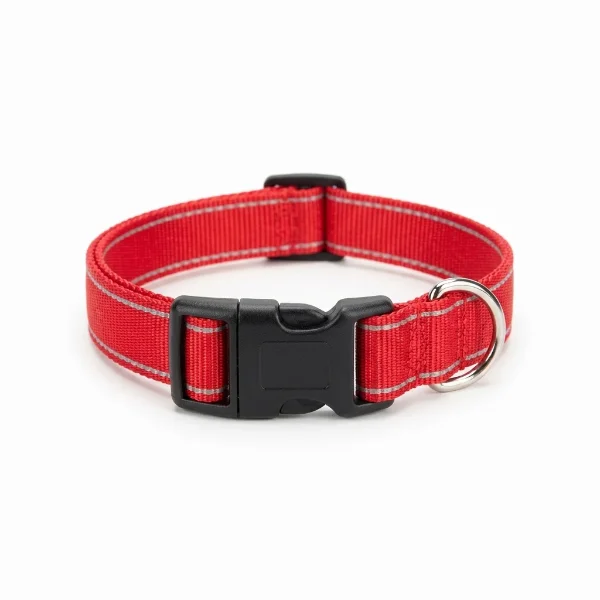
Rogz Classic reflective collar, small
Light nylon webbing with reflective stitching, adjustable for small necks
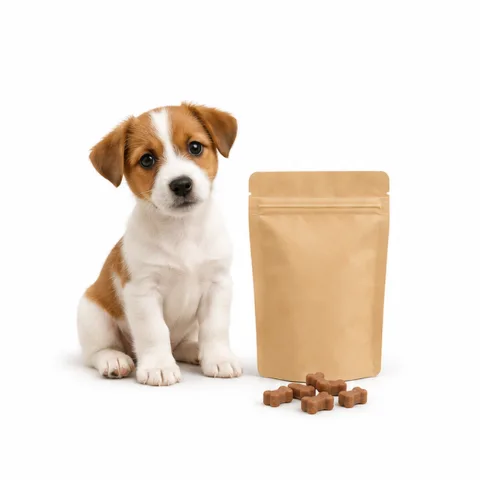
Pictures are illustrations, not the actual products.
The whelping bands are for identification in a litter, not for walking, so they suit breeders rather than a new family with one puppy.
What age can a puppy wear a collar?
A puppy can start getting used to a light collar once they've settled in at home, and many owners begin in the first days. We couldn't find a vet or RSPCA source that names a set age, so go by the puppy: short, calm, supervised sessions, with a treat as soon as the collar is on.
The Kennel Club (UK) advises a small, lightweight collar sized for your puppy now, not their adult size, and a treat the moment it is fastened. It also says to keep watch indoors, because a collar can catch on furniture (The Kennel Club, page read 1 November 2026).
Take the collar off in the crate and whenever your puppy is unsupervised. AKC advises taking it off before a dog goes into the crate, for safety (AKC, page read 1 November 2026), which matches our crate training guide. That includes overnight if your puppy sleeps in a crate.
What type of collar is best for a puppy?
A soft, light, flat collar with an adjustable buckle and a ring for an ID tag is the best type for most puppies. RSPCA Australia says a puppy's collar should be in good condition, fitted correctly and comfortable (RSPCA Australia, page read 1 November 2026). Once your puppy's neck passes about 25 cm, our collar and lead set guide has adult sets up to a 64 cm neck.
Here is how the common types compare for a young puppy:
Swipe sideways to see every column
Type
What it is
Good for a puppy?
Soft flat collar
Nylon or cotton strap, buckle or clasp, ring for a tag
Yes, the usual first choice
Collar and lead set
Matching collar and lead
Yes, once your puppy wears the collar happily
Litter ID band
Soft colour-coded band
For identifying newborns in a litter, not for walking
Training, bark, remote, prong, choke, slip, martingale or shock
Collars that tighten, correct or hurt
No, we never recommend them
Light matters more than looks. A heavy buckle or wide strap can weigh down a tiny neck, so look for a narrow, soft strap in the small-neck size range the listing gives. Our best dog collars guide covers padded, reflective and personalised styles for older dogs.
Our picks in detail
1. Rogz Classic reflective dog collar, small: best overall
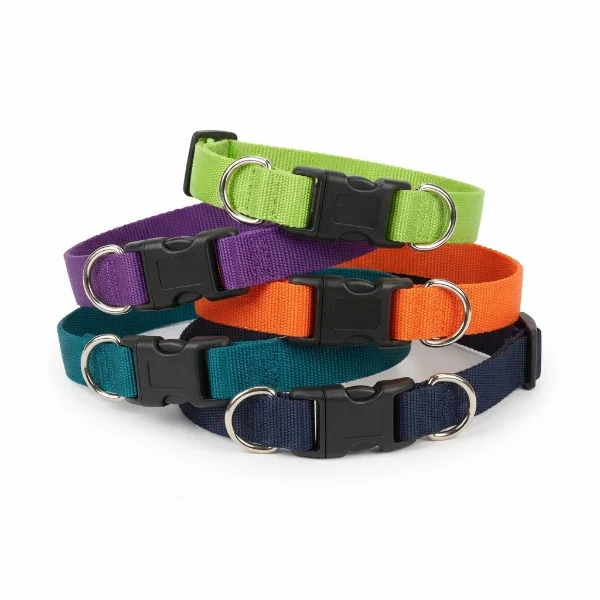
A light nylon collar in the small size, with reflective stitching woven into soft webbing, a buckle and a ring. The listing says it adjusts for necks of about 20 to 31 cm, suits breeds such as Yorkies, chihuahuas and Maltese, and comes in ten colours. The weight is listed as just 0.03 pounds, so it won't drag on a small neck. It's also in our best dog collars guide in the medium size.
Pros: very light; reflective stitching for dusk walks; ring for a tag; many colours
Cons: the listing gives the small's width and range in a few different ways (11 mm in one place, 3/8 inch in another, and 20 to 31 cm or 8 to 13 inches), so check your puppy's neck against the smaller range; the details field lists a leash as included, which looks like a data error; the listing gives no care instructions, so wipe it and let it dry rather than machine washing; a medium or large breed puppy will outgrow the small quickly
Best for: a small-breed puppy, or a first collar for any puppy who is still tiny
Skip it if: you expect a big dog, or you want a soft fabric against sensitive skin
2. Ultra-soft cotton corduroy collar: best for tiny puppies and sensitive skin
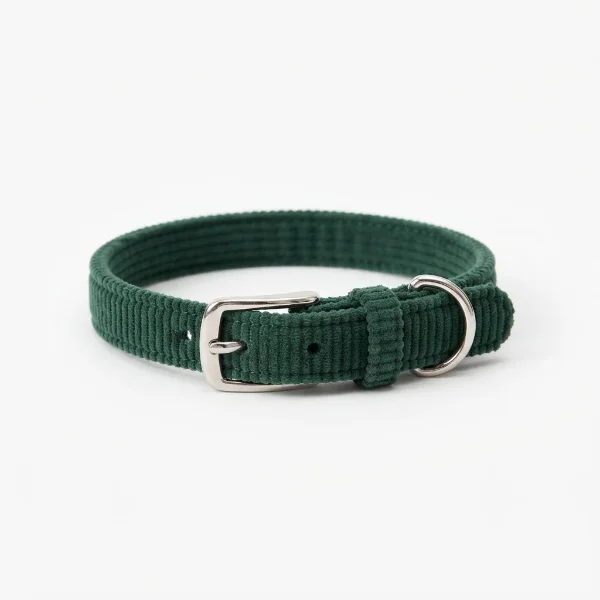
This small-size collar is cut from cotton corduroy and finished with rose gold plated hardware and a metal quick release clasp, per the listing. The listing says it adjusts for necks of 25 to 38 cm, is 1.5 cm wide, and tells you to measure the neck and add one to two inches. It says the inside has no hard stitching, and that corduroy suits dogs with allergies to nylon, polyester or leather. Treat those as maker claims. Care is machine or hand wash in cold water, then hang to dry. It also appears in our best dog collars guide.
Pros: soft cotton; metal clasp; wide adjustable range; washable
Cons: the listing's age field says "adolescent", so a very tiny puppy may need to wait for the neck to fill the lower end of the range; no reflective strip; needs to hang dry
Best for: a small puppy whose neck is sensitive, or who dislikes stiff nylon
Skip it if: you walk at dusk and want reflective stitching, or your puppy chews fabric
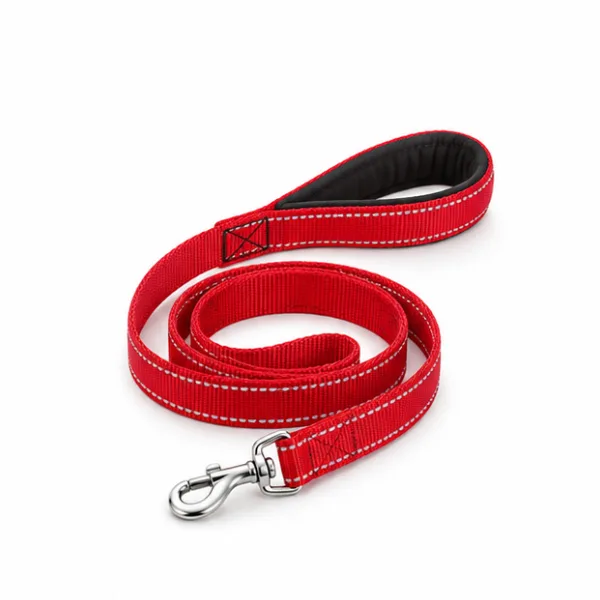
3. Corduroy collar and lead set, small: best collar and lead set
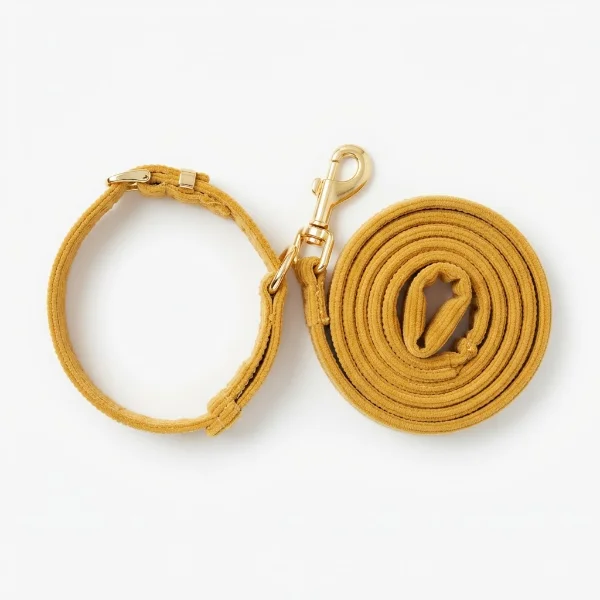
A matching soft corduroy collar and lead in the small size. The listing says the collar adjusts for necks of 23 to 36 cm and is 1.5 cm wide, with a metal quick release clasp. The lead is 1.5 cm wide and 150 cm long. The listing describes the lead webbing as soft, with a comfortable grip.
Pros: matching set; metal clasp; soft fabric on the collar and the lead; a wide adjustable range
Cons: the lead is a standard lead, so a puppy who pulls will still need a harness; no reflective strip; one size listed in the listing we checked
Best for: an owner who wants a first collar and lead together, once the puppy is happy in the collar
Skip it if: your puppy pulls hard, or you plan to walk mostly in a harness
4. Floral collar and lead set, small: best patterned set
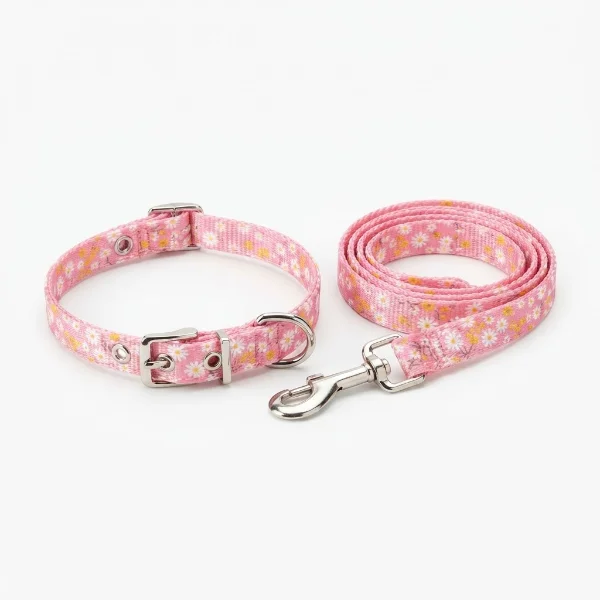
A nylon collar and lead in a floral pink print. The listing says the collar is 1.5 cm wide and adjusts from 25 to 38 cm. The lead is 2 cm wide and 120 cm long, with a padded loop handle and a D ring for things like poo bags or a treat bag. The collar has a plastic buckle and the lead has a chrome clip.
Pros: matching set; padded handle; D ring on the lead; wide adjustable range
Cons: plastic buckle rather than metal; the listing is aimed at "active female dogs" but the size range suits any small puppy; the lead is wider than the collar, so it may feel chunky on a tiny puppy
Best for: an owner who wants a patterned set for a small breed puppy
Skip it if: you prefer a metal clasp or a plain colour
5. AMAGOOD classic nylon collar: best for colour and size choice
A plain nylon collar sold in a wide range of colours and several sizes. The listing gives these ranges: extra small (listed for cats) 21 to 30 cm, small 28 to 40 cm, medium 37 to 50 cm and large 45 to 68 cm. It has a curved plastic buckle and a chrome coated metal D ring, and the listing says it's easy to wash. It tells you to leave a two-finger gap between collar and neck.
Pros: colour choice; a size step that can follow your growing puppy; metal D ring; washable
Cons: the listing says it works for dogs and cats, but it isn't a breakaway collar, so don't use it on a cat (see our cat collar guide); the listing text was written around the medium, so check the size you pick; plastic buckle
Best for: a growing puppy where you want to pick the size and colour yourself
Skip it if: you want a soft fabric or a reflective collar
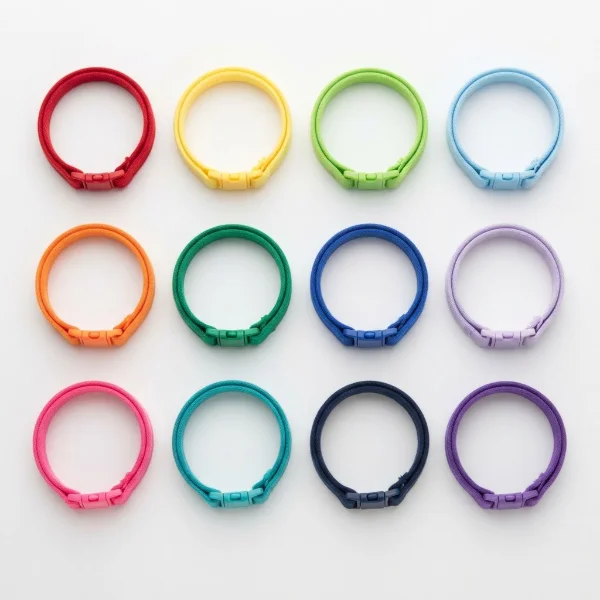
6. 12-pack puppy whelping ID collars: best for breeders with a litter
Twelve colour-coded bands to tell newborn pups apart during feeding, weighing and daily care. The listing says each is soft double-sided fleece with a hook-and-loop closure and a 35 cm adjustable length, and that it's intended for identification, not walking or restraint. It says to check each band regularly as the puppy grows and leave comfortable clearance around the neck. The listing's details field says nylon, while its text says fleece, so the material isn't fully clear.
Pros: twelve colours; reusable; made for newborn litters; the listing says they also suit kittens and small pets
Cons: the material is described two ways; hook-and-loop can come undone or collect hair, so supervise and check often; not for walking or tying up a puppy
Best for: a breeder with a litter who needs to tell pups apart
Skip it if: you have a single puppy, or you won't be able to check the bands every day
Puppy collar sizes: how to measure
Measure around the base of your puppy's neck where the collar will sit, then choose a collar whose listed range includes that number. Once it's on, you should be able to slide two fingers underneath. Check the fit every few days, because puppies outgrow collars quickly.
AKC advises measuring the neck circumference where the collar rests and sizing up if you're between sizes (AKC, page read 1 November 2026). RSPCA Australia says puppies grow fast, so check the collar at least a few times a week, and that medium and large breed puppies may start small and need new sizes as they grow.
A few sizing habits help:
Use a soft tape. If you don't have a tape, wrap a piece of string around the neck and measure the string.
Check by hand. Two fingers should slide in without a struggle. If they can't, loosen it. If the collar slides over the ears, tighten it.
Expect to buy again. A collar with a wide adjustable range lasts longer, but a fast-growing breed may need a new size within weeks.
Look at the range, not the label. "Small" differs between brands, so compare your measurement with the listed neck range.
Puppy collars compared
Details from each Amazon Australia listing, checked on 1 Nov 2026.
We searched Amazon Australia for puppy collars and shortlisted collars that met all of these checks:
Well rated: a strong average rating with plenty of buyer reviews.
No red flags: no pattern of poor reviews, safety complaints or listing problems.
Available on Amazon Australia when we checked.
Light, soft material.
Adjustable, with a small-neck size range listed.
A secure buckle.
A ring for an ID tag.
These are researched picks, not products we've personally tested. We compared the specifications and features shown on each Amazon Australia listing, checked on 1 Nov 2026. We didn't accept payment from any brand, and no brand saw this page before it was published.
Left out this time: training, remote and anti-bark collars, and prong, choke or shock collars (we never recommend them).
Litter ID collars: how to use them safely
Litter bands are a supervised tool. The listing for the 12-pack says to check fit regularly as the puppy grows, and pups grow fast, so look at each band at least daily and loosen or replace it before it gets snug. Take a band off any puppy you can't watch.
We couldn't find a vet or RSPCA page that sets rules for litter ID collars, so ask your vet or an experienced breeder for advice on your litter. If a band is wet, soiled or the skin looks red, take it off and speak with your vet.
Getting your puppy used to a collar
Link the collar with something good, using treats, and go slowly. Put it on, give a treat straight away, and take it off a little later while your puppy is still calm. Build up the time across several short sessions, and watch your puppy while it's on.
The Kennel Club (UK) says to treat as soon as the collar is fastened, because treating after you remove it can link the treat with the collar coming off. Here is a simple routine:
Let your puppy sniff the collar and have a treat.
Fasten it calmly, then treat and play for a minute or two.
Stay in the room and watch for scratching, rubbing or snagging.
Take it off before your puppy gets fussed, and offer another treat.
Add a little time each day. Results vary, and some puppies take longer.
A collar is for ID, and a harness is usually the better choice for lead walking. RSPCA Australia recommends a harness for walking and training because it keeps pressure off the neck, and it says to check a harness fit a few times a week as well (RSPCA Australia, page read 1 November 2026).
Many puppies wear both: a soft collar with the tag, and a harness clipped to the lead. Our puppy harness guide has a sizing chart for small and growing puppies. If your puppy pulls, our no-pull dog harness guide compares picks, and the harness should fit with room to move. For a flat-faced or very small puppy, ask your vet which style suits.
Personalised collars are a good way to carry a name and number. See our personalised dog collars guide. If you like the look of leather, our leather dog collars guide covers it, though leather can be heavy for a tiny neck.
Does my puppy need a microchip and a tag?
Yes, in most places. Dogs need a microchip and council registration, and rules differ by state and council, so check yours. In NSW a dog away from home must wear a collar and tag with its name and the owner's address and phone number. In Victoria, registered dogs wear their council registration tag. A tracker doesn't replace either.
Campbelltown City Council (NSW) says dogs other than working dogs must wear a collar and tag with their name and your address and phone number outside their property, and that a dog must be microchipped before it's registered (Campbelltown City Council, page read 1 November 2026). Hume City Council (Vic) says dogs over three months must be microchipped and registered, and must wear the council tag (Hume City Council, page read 1 November 2026). Those are two councils, so use your own council's page.
Why we don't recommend training or anti-bark collars for puppies
Training, remote and anti-bark collars work by punishing or startling a dog, and we don't recommend them for puppies or any dog. RSPCA Australia opposes electronic devices that give shocks, including anti-bark collars, and says they involve punishment and cause pain, fear and discomfort (RSPCA Australia, information current to 19 December 2022).
RSPCA Australia also says choke chains, slip collars and prong collars shouldn't be used because they cause pain and distress and can damage the neck. A puppy who barks, bites or pulls is learning. Reward-based routines work with that, and our puppy training schedule is a gentle place to begin. For boredom, see is my dog bored?.
When to see a vet
See your vet if your puppy has redness, hair loss, sores or scabs under the collar, keeps scratching at the neck, or coughs or gags when the collar or lead tightens. A collar that is too tight or has been left on too long can rub, so take it off and check the neck first.
If a puppy is distressed whenever the collar goes on, or you're worried about biting or barking, talk to your vet or a qualified, reward-based trainer. Our itchy skin guide covers skin signs.
Frequently asked questions
What age can a puppy wear a collar?
A puppy can start wearing a light collar once they've settled in, and many owners begin in the first days. We couldn't find a vet or RSPCA source that sets an age, so go at the puppy's pace. Keep sessions short, treat when it goes on, and supervise.
What type of collar is best for a puppy?
A soft, light, adjustable flat collar with a ring for an ID tag suits most puppies. RSPCA Australia says it should be in good condition, fitted correctly and comfortable. Avoid heavy buckles on small necks, and never use training, prong, choke or shock collars.
What size collar for an 8 week old puppy?
It depends on the breed, so measure the neck and match it to the listed range, with two fingers of room. A tiny breed may fit a small collar listing from about 20 or 23 cm, while a larger breed starts small and moves up quickly. Check fit a few times a week.
Should a puppy wear a collar or a harness?
For most puppies, yes to both. The collar carries the ID tag all day, while the lead clips to a harness, which RSPCA Australia says stops pulling from straining the neck. Fit the collar with two fingers of room and the harness snug but not tight, and recheck both every few days as your puppy grows.
Should a puppy wear a collar at night?
Take it off in the crate, and whenever your puppy is unsupervised, because AKC advises removing the collar before a dog goes in, for safety. Asleep counts as unsupervised, so the simplest rule is collar off at night, with the tag going back on in the morning before any door opens.
Are anti-bark collars okay for puppies?
No. RSPCA Australia opposes anti-bark and shock collars, saying they involve punishment and cause pain, fear and discomfort. Puppies bark for many reasons, including boredom and excitement. Try a reward-based routine and enrichment first, and ask your vet or a qualified trainer if barking worries you.
Can I use a puppy collar and lead set straight away?
Get your puppy comfortable in the collar first, with treats, then add the lead indoors for short sessions. A set is handy once that's going well. If your puppy pulls or you walk in a harness, the lead can clip to the harness instead.
Can a puppy wear a collar with their name on it?
Yes. A name and phone number on the collar help a finder reach you, but they don't replace a microchip or the tag your council requires. Check spelling and phone number before ordering anything made to order. See our personalised dog collars guide for picks.
Product details from each linked Amazon Australia listing, checked on 1 Nov 2026.
This guide provides general information and isn't a substitute for veterinary advice. If you're concerned about your puppy's neck, skin or behaviour, speak with your vet.