Quick answer: Cat safe indoor plants include spider plant, Boston fern, parlour palm, areca palm, peperomia and African violet, all listed non-toxic by the ASPCA. Devil's ivy, monstera, snake plant, aloe and peace lily are on its toxic list. Lilies are the plant to never have in a cat home.
Houseplants and cats don't always mix, and plant lists online often disagree. This guide sorts common plants into safe, keep-out and check-first, explains why the lists clash, and covers what to do if your cat chews one. If your cat just needs something green to chew, start with our cat grass guide.
Which indoor plants are safe for cats?
The ASPCA's cat plant list names spider plant, Boston fern, parlour palm, areca palm, peperomia, African violet, basil and blue echeveria as non-toxic to cats. Non-toxic doesn't mean harmless, though. The ASPCA says plants listed as non-toxic aren't expected to be life-threatening, but any plant material may cause vomiting and stomach upset (ASPCA toxic and non-toxic plants, page read 23 November 2026).
The table below groups the plants Australians most often ask about. We opened each ASPCA entry on 23 November 2026 (ASPCA cats plant list). Plants the sources we opened didn't confirm sit in "Check first".
| Plant (common name) | Group | What the source says, and our note |
|---|---|---|
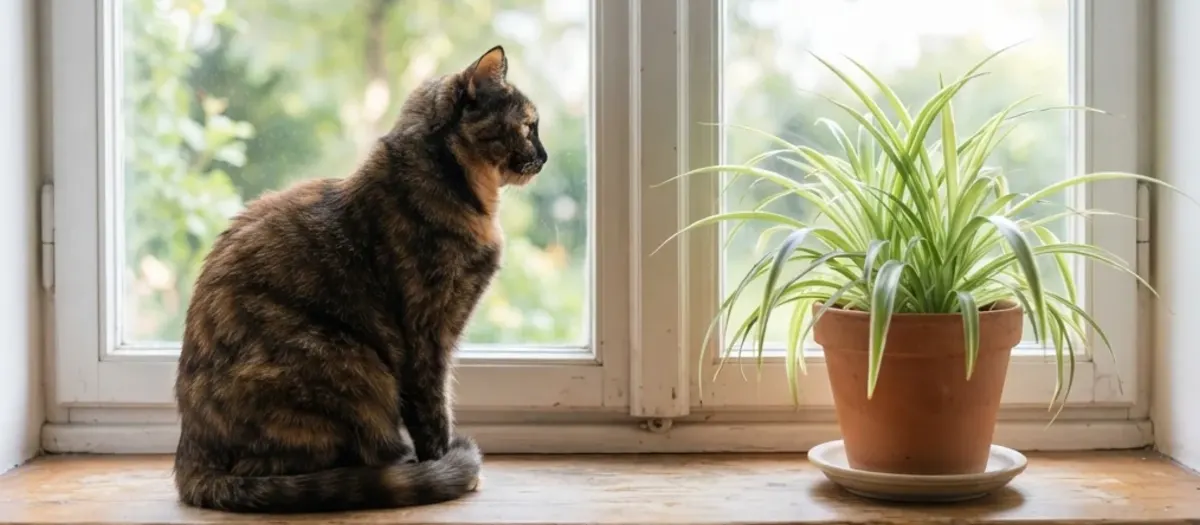
| Spider plant | Safe | ASPCA: non-toxic to cats |
| Boston fern | Safe | ASPCA: non-toxic to cats. "Fern" is a loose name, so check the label (see the next section) |
| Parlour palm | Safe | ASPCA: non-toxic, listed as Bamboo Palm or Parlor Palm (Chamaedorea elegans). Check the botanical name on the pot tag |
| Areca palm | Safe | ASPCA: non-toxic to cats |
| Peperomia | Safe | ASPCA lists several peperomias as non-toxic |
| African violet | Safe | ASPCA: non-toxic to cats |
| Basil | Safe | ASPCA: non-toxic to cats |
| Blue echeveria | Safe, check the botanical name | ASPCA lists blue echeveria as non-toxic. Other echeverias aren't confirmed, so match the name on the pot tag |
| Peace lily | Keep out | ASPCA: toxic. Mouth irritation, drooling and vomiting. Not a true lily (details) |
| Devil's ivy (pothos) | Keep out | ASPCA: toxic to cats |
| Monstera | Keep out | ASPCA lists it as ceriman |
| Philodendron | Keep out | Several philodendrons are on the ASPCA toxic list |
| Snake plant (mother-in-law's tongue) | Keep out | ASPCA: toxic |
| Aloe vera | Keep out | ASPCA: toxic |
| Jade plant | Keep out | ASPCA: toxic |
| Weeping fig (Ficus benjamina) | Keep out | ASPCA: toxic |
| Dieffenbachia (dumb cane) | Keep out | ASPCA: toxic |
| Kalanchoe | Keep out | ASPCA: toxic |
| Cyclamen | Keep out | ASPCA: toxic |
| Sago palm | Keep out | ASPCA: toxic, with liver damage among the risks |
| Poinsettia | Keep out | ASPCA: toxic |
| Chinese evergreen | Keep out | ASPCA: toxic |
| Dracaena | Keep out | ASPCA: toxic |
| English ivy | Keep out | ASPCA: toxic |
| Asparagus fern | Keep out | ASPCA: toxic. Not a true fern |
| Lavender and mint | Keep out | ASPCA: toxic. Worth knowing for kitchen windowsill herb pots |
| True lilies and daylilies | Never in the house | See our lily guide |
| Calathea, cast iron plant, ponytail palm, haworthia, Christmas cactus, moth orchid, money tree, bird's nest fern | Check first | The ASPCA has non-toxic entries under most of these names, but each name covers several plants. Search the botanical name on the pot tag in the ASPCA database before buying |
| ZZ plant, rubber plant, fiddle leaf fig, string of pearls | Keep out unless confirmed | Not confirmed safe in any source we opened. The ASPCA's toxic list has an Indian rubber plant entry, and we found no entry for ZZ plant, fiddle leaf fig or string of pearls. Ask your vet or the helpline before bringing one home |
Catnip and cat grass aren't in the table, because they're grown for cats to enjoy. The ASPCA marks catnip as toxic, but the only signs it gives are vomiting and diarrhoea, so our catnip plant guide suggests small amounts. See also our cat grass guide.
Which houseplants are toxic to cats?
Common houseplants on the ASPCA's toxic list for cats include devil's ivy, monstera, philodendron, snake plant, aloe vera, jade plant, peace lily and dieffenbachia. Most cause mouth and stomach trouble, but some are worse. Sago palm is listed with liver damage among the risks (ASPCA, sago palm), and lilies are in a class of their own.
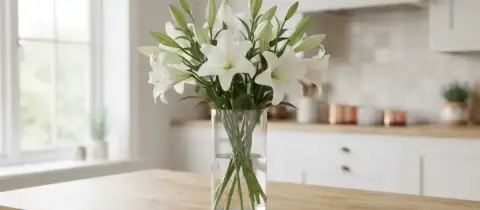
Lilies are the one to treat as an emergency. True lilies and daylilies can cause kidney failure in cats, even from pollen or vase water. Never keep them in the house, and read our lily guide for the full picture, including peace lilies.
Devil's ivy is a good example of a milder one. The ASPCA says golden pothos contains insoluble calcium oxalates, and signs can include oral irritation, drooling, vomiting and difficulty swallowing (ASPCA, golden pothos, page read 23 November 2026).
Why do plant lists disagree?
Lists differ because plant names are slippery and because each database covers different plants. "Fern" can mean a true fern or asparagus fern, which isn't a true fern and sits on the ASPCA's toxic list. Nursery "pet safe" tags may also be broader than any vet source.
Three things cause most of the confusion:
- One common name, several plants. The ASPCA says the plant's name determines toxicity, and that individual plants may not look like the photos on its listings (ASPCA toxic and non-toxic plants). Find the botanical name on the pot tag.
- Different databases. RSPCA Australia points owners to several resources, including the Australian Animal Poisons Helpline, a CSIRO eBook on Australian poisonous plants, Agriculture Victoria, and the Illinois and Cornell databases. It notes the Illinois and Cornell ones aren't Australia-specific (RSPCA Australia, updated 16 October 2026, page read 23 November 2026).
- Labels on pots. A "pet safe" tag is a marketing claim, and one common name can cover several plants. That's why our check-first row asks you to match the botanical name before you buy.
What happens if a cat eats a toxic plant?
It depends on the plant and how much was eaten, so it can range from drooling and a sore mouth to serious illness. Many keep-out plants mostly irritate the mouth and stomach, while lilies and sago palm can cause organ damage. A vet can work out which, so call early.
Patterns that may point to a problem:
- Drooling, pawing at the mouth, or reluctance to eat
- Vomiting, especially more than once
- Trouble swallowing or breathing
- Wobbliness, lethargy or collapse
- Changes in how much your cat drinks or wees
No list of signs rules a plant out. If you saw your cat chew something on the keep-out list, you don't need to wait for symptoms before calling.
What should I do if my cat chewed a plant?
Move your cat away from the plant and call your vet or the Animal Poisons Helpline on 1300 869 738 (24 hours, 7 days). Have the plant's name or a photo of it ready. Don't try to make your cat vomit at home.
Steps that help:
- Take your cat away from the plant and remove any leaves or soil from their mouth only if it's easy and calm to do.
- Photograph the plant and its tag. The botanical name is what a vet or helpline needs.
- Phone first. RSPCA Australia points to the Australian Animal Poisons Helpline as a free service giving first-aid advice and triage for poisoned animals. Say what your cat chewed and roughly when.
- Go where you're told. If the helpline or your vet says to come in, take the plant or a cutting in a bag.
- Skip the home remedies. Don't offer milk or give any human medicine, and ask your vet before giving anything.
If it was any kind of lily, treat it as an emergency, even if your cat seems fine.
How do I stop my cat chewing houseplants?
Plants out of reach are not cat-proof, because cats climb. The reliable options are a room your cat can't enter, only keeping plants from the safe column, and giving your cat something better to chew, such as a pot of cat grass.
Some tips:
- Offer cat grass. A pot in an easy spot may steer a chewer toward something safe. It won't stop every nibbler, so it's an add-on to removing risky plants. See our cat grass guide.
- Add more to do. Climbing, scratching and play tire out a bored cat. Our cat enrichment guide has ideas, and our kitten-proofing checklist covers plants room by room.
- Don't count on high shelves or hanging pots. A good jumper can reach them, and we don't recommend plant stands as a fix.
- Skip sprays. Don't use essential oil repellents around cats.
Balconies need thought too. If you keep pots out there, stick to the safe column, and see our cat netting guide for the balcony itself.
Are cat-safe plants also safe for dogs?
Often, but not always, so check each plant for dogs too. The ASPCA keeps a separate list for dogs. Its spider plant and Boston fern pages list both plants as non-toxic to dogs and cats, while its golden pothos (devil's ivy) page lists it as toxic to both. For any other plant, open its ASPCA entry and read the dog line before you assume.
If you share your home with a dog and a cat, keep only plants that are listed as non-toxic for both.
Useful guides
No product makes plants safe for a cat, so there's no shopping list here. These guides help with related jobs:
- Cat grass: is it safe and how to grow it, a safe pot for chewers
- Growing a catnip plant
- Windows in summer: see our guides to window restrictors, pet-proof fly screens and adjustable window screens, and the high-rise syndrome guide for why open windows matter
When to see a vet
Call your vet or the Animal Poisons Helpline on 1300 869 738 (24 hours, 7 days) straight away if your cat:
- has had any contact with a lily, even if they seem fine. See our lily guide
- vomits more than once, drools, or paws at their mouth
- has trouble swallowing or breathing
- is wobbly, collapses or won't eat
- wees more or less than usual, or strains
Take the plant or its label with you, and don't try to make your cat vomit. The RSPCA Australia knowledge base says to check plants before your pets can reach them and to ask your vet if you're unsure.
Frequently asked questions
Are succulents safe for cats?
There's no single answer. Aloe, jade plant and kalanchoe are on the ASPCA's toxic list for cats, while blue echeveria is listed as non-toxic. Other echeverias aren't confirmed, so check each succulent by its botanical name before it comes home.
Is devil's ivy toxic to cats?
Yes. The ASPCA lists devil's ivy, also called golden pothos, as toxic to cats. It says it contains insoluble calcium oxalates, which may cause oral irritation, drooling, vomiting and difficulty swallowing. Keep it out of the house, and call your vet if your cat chews it.
Are snake plants safe for cats?
No. The ASPCA lists snake plant, also sold as mother-in-law's tongue, as toxic to cats. It's a common, tough plant, so it's easy to buy without thinking. If your cat has chewed one, phone your vet or the Animal Poisons Helpline on 1300 869 738.
Is a monstera safe for cats?
No. The ASPCA toxic list for cats includes monstera under the name ceriman. The leaves are tempting to chew, and the plant can be big and hard to put out of reach. Keep it in a room your cat can't enter, or choose a plant from the safe column.
Which low-light indoor plants are safe for cats?
From the ASPCA's non-toxic entries, parlour palm, Boston fern, spider plant and peperomia are the ones we'd start with. Check the pot tag for the botanical name, and ask a nursery about light, since we haven't verified growing conditions for each one.
Are herbs like basil, mint and lavender safe for cats?
Basil is non-toxic on the ASPCA's cat list. Mint and lavender are on its toxic list, which matters for a kitchen windowsill herb pot. If you grow herbs, keep basil within reach and the others in a room your cat can't enter.
Why does my cat chew houseplants?
Cats may chew plants out of curiosity, boredom or because they like the texture, and it's common. Offering cat grass and more play may help. A sudden change in chewing, or a cat eating lots of non-food items, is worth mentioning to your vet.
Can I keep a toxic plant if my cat ignores it?
It's not worth the risk. Cats climb, kittens explore, and a cat that ignores a plant today may chew it next month. A room your cat can never enter is the only reliable way to keep a toxic plant, and lilies shouldn't be in the house at all.
Related guides
- Are lilies poisonous to cats?
- Cat grass: is it safe and how to grow it
- Growing a catnip plant
- Kitten proofing your home
- High-rise syndrome in cats
- Window restrictors for cats
- Pet-proof fly screen
- Adjustable window screens
- Cat netting for balconies
Sources
- ASPCA: Cats plant list, page read 23 November 2026
- ASPCA: Spider plant, page read 23 November 2026
- ASPCA: Boston fern, page read 23 November 2026
- ASPCA: Golden pothos, page read 23 November 2026
- ASPCA: Toxic and non-toxic plants, page read 23 November 2026
- ASPCA: Sago palm, page read 23 November 2026
- RSPCA Australia Knowledgebase: plants that might be poisonous for pets (updated 16 October 2026, page read 23 November 2026)
This guide provides general information and isn't a substitute for veterinary advice. If you're concerned about your cat's health after chewing a plant, speak with your vet.