Quick answer: Cat grass is safe for most cats in moderation. It's usually young wheat, oat, barley or rye grown in a pot, and it's a safer thing to chew than lawn grass or houseplants. Some cats vomit after eating it. Grow it fresh, keep it mould-free, and keep lilies out of the house. Our planter pick is the Catit Grass Planter.
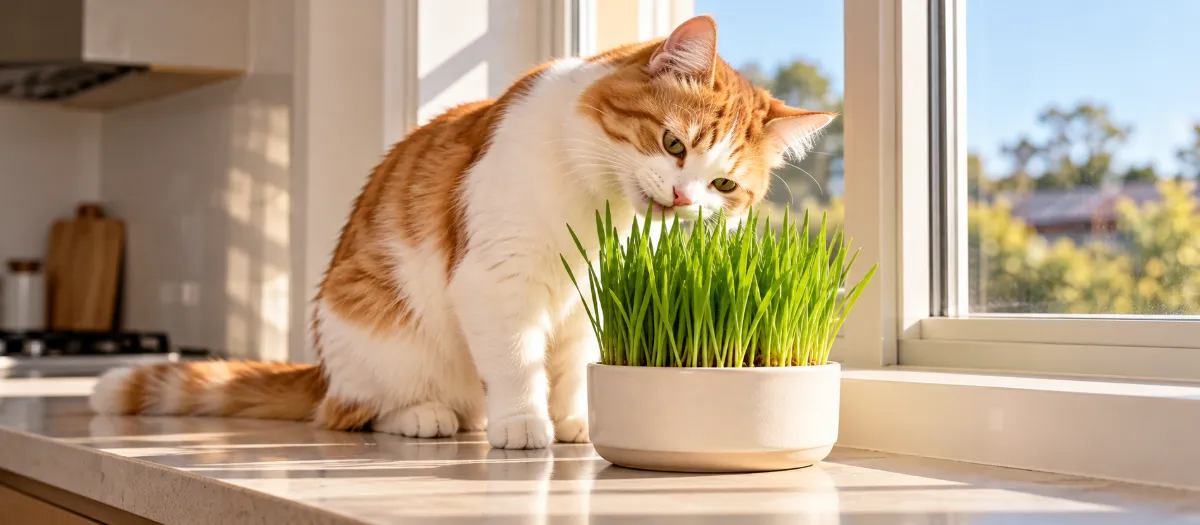
Plenty of cats nibble grass, and a pot on the windowsill gives them something safe to chew. This guide covers what cat grass is, why cats eat it, what to keep away from them and how to grow it indoors. It also explains how it differs from catnip, and there's one planter pick near the end.
Quick picks
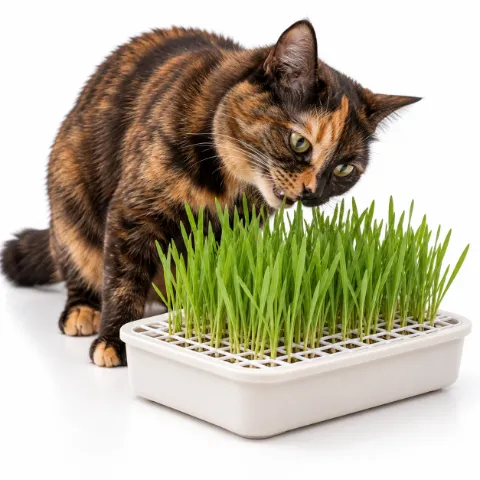
Catit Grass Planter
A low, stable design with a grid cover to help stop knock-overs and digging
Pictures are illustrations, not the actual products.
This page is mainly advice, so there's only one pick. Check what's in the box on the listing before you buy, because you may need to supply your own seed. Cat grass is a snack and a bit of fun, not a treatment for anything.
What is cat grass?
Cat grass is young grass grown for cats to chew. PetMD says the usual seeds are rye, barley, oat or wheat, and pet-store kits typically include seed, soil and a pot (PetMD, published 23 February 2016). You can also buy a plain packet of seed and grow your own.
Garden centres and nurseries here often sell ready-grown pots of "pet grass" too. Check the label for the grass type, and avoid pots that have been sprayed. Any of these is a different thing from the lawn out the back, which may have been treated with products you can't see.
Cat grass is also a different plant from catnip. Catnip is a mint-family plant that makes some cats roll, rub and play. Cat grass is simply a grass cats chew. There's more on this in cat grass vs catnip below.
Why do cats eat grass?
Nobody knows for sure. Vets say eating grass is common, including in healthy cats, and the main ideas are about digestion, texture and plain enjoyment. PetMD (published 3 November 2023) lists several theories, none proven (PetMD). A 2021 study PetMD mentions found no difference between long-haired and short-haired cats, so it isn't simply about hairballs.
Here are the theories vets mention:
- Clearing the stomach. Greencross Vets says cats that eat prey may have fur, feathers or bones to deal with, so grass may act like a laxative or help bring them up (Greencross Vets). See our hairball guide for what vets do suggest.
- Easing the gut. PetMD says grass that passes through into the stool may help move things along in a mildly constipated cat.
- Nutrients. Greencross says grass may supply nutrients such as folic acid. PetMD says no studies confirm what cats actually absorb from it.
- Taste and texture. Some cats just like it.
Greencross's Dr Emily Payne says the idea that cats eat grass only to make themselves vomit may not be true. The pattern matters more than any one nibble. If your cat is eating grass and then vomiting often, see the vet box further down this page.
Is cat grass safe for cats?
Yes, for most cats, in moderation. Both PetMD and Greencross Vets say grass is generally fine unless it has been treated with pesticides or fertilisers. A pot of plain cat grass avoids that risk. The main problems are vomiting, mould and what else is growing nearby.
Some points to know:
- Some cats vomit after eating it. Once in a while is not unusual. PetMD says eating grass and vomiting it up frequently may point to a gut problem, so tell your vet if it's new or increasing. Greencross says vomiting once a week or more is a reason to get your cat checked.
- Mould. PetMD says overwatering causes mould, so keep the pot damp but not soggy. Bin the pot if you see mould or it smells off.
- Treated lawns and gardens. Greencross recommends cat grass so cats don't eat plants that have had chemicals or fertiliser on them. Never let a cat chew grass that may have been sprayed. Keep snail bait and garden chemicals well away from cats.
- Long blades. Trim the grass if it flops over. It's easier for your cat to chew and keeps the pot tidy. If your cat gags, sneezes or has a runny nose after chewing, a blade may be stuck. That's a vet visit.
- Moderation. Treat it as a snack. If your cat eats a lot of grass, Greencross says to ask your vet. The same goes for a cat that chews or eats lots of non-food items.
PetMD says to talk to your vet if you're concerned about your cat eating grass, especially if the habit is new or increasing.
Do vets recommend cat grass?
Some do, as a safer option than other plants. Greencross Vets' Dr Emily Payne recommends cat grass (or catnip) so cats don't eat treated plants. PetMD says cat grass avoids the pesticide risk of lawn grass and is a safer alternative to toxic houseplants. Neither source says cats need it.
Which plants should cats never chew?
Lilies are the one to know. The RSPCA Australia knowledge base (updated 16 October 2026) says all parts of a lily are highly toxic to cats, and even a small amount can cause kidney failure (RSPCA Australia knowledge base). Don't have lilies in the home at all. If your cat may have chewed one, or licked pollen, call your vet straight away.
Lilies are not the only risk. The RSPCA suggests checking that any plant is safe before your pets can reach it, and asking your vet if you're unsure. It also points to the Australian Animal Poisons Helpline, a free service giving first-aid advice and triage recommendations for poisoned pets. Our cat-safe indoor plants guide lists which common houseplants to keep and which to keep out.
Our indoor cat guide has a list of plants, foods and household items to avoid. A pot of cat grass in an easy spot may help steer a plant-chewing cat toward something safe, but it won't stop a determined nibbler, so remove risky plants from the house.
How to grow cat grass indoors
You can grow cat grass from a packet of seed in a pot. These steps follow PetMD's guide (published 23 February 2016) and standard home-growing practice, so adjust for your home.
- Pick a seed. Wheat, oat, barley or rye seed is fine. Choose plain seed sold for growing, not seed treated for farm use, and check the packet.
- Pick a pot. A heavy, low pot with drainage holes is harder to tip. A planter such as the one in our pick works too.
- Sow and water. Scatter seed over damp potting mix, cover lightly and water. Keep it moist but don't drown it.
- Give it light. PetMD says to keep the pot in natural light. A sunny windowsill is the usual spot.
- Wait. PetMD says sprouts show in 3 to 7 days and the grass is ready about 10 to 14 days after that. Warmth and light change the timing, so treat it as a rough guide.
- Water less once it's up. PetMD suggests misting daily once seedlings appear. Don't overwater.
- Replace it. PetMD says to plant a new pot when the grass wilts or changes colour. Starting a second pot a week or so after the first keeps fresh grass coming.
Keep the pot away from lilies and other toxic plants, and keep any spray or fertiliser off it. Wash your hands after handling soil.
Cat grass vs catnip
They're different plants with different jobs. Cat grass is a grass cats chew and graze on. Catnip is a mint-family herb that makes some cats roll, rub and play, and not all cats react to it. Neither treats anxiety or behaviour problems. If your cat's behaviour suddenly changes, see your vet.
You can offer both. A pot of grass suits a chewer, while catnip toys suit a cat who likes to bat and kick. Read what catnip does to cats, try growing your own with our catnip plant guide, or browse catnip toys and silvervine for cats who don't respond to catnip.
How we chose
We looked at cat grass planters and kits on Amazon Australia and shortlisted products that met all of these checks:
- Well rated: a strong average rating with plenty of buyer reviews.
- No red flags: no pattern of poor reviews, safety complaints or listing problems.
- Available on Amazon Australia when we checked.
- A low, stable base so it's hard to knock over.
These are researched picks, not products we've personally tested. We compared the specifications and features shown on the Amazon Australia listing, checked on 20 Oct 2026. We didn't accept payment from any brand, and no brand saw this page before it was published.
Left out this time: hydroponic and soil-free kits with little or no buying history, and seed refills that didn't pass our red flags check.
Our pick in detail
1. Catit Grass Planter: best low, stable planter
A planter for growing cat grass at home. The listing describes a low, stable design with a grid cover that helps stop the pot being knocked over and the soil being dug up.
The listing says the planter stimulates digestion and helps prevent hairball build-up. Those are the listing's claims. Vets haven't shown that grass prevents hairballs, so treat it as a pot for chewing and see our hairball guide for what helps. The listing bullets also don't say whether seed and growing medium come in the box, so check the listing before you buy. If they don't, you can sow your own wheat, oat or barley seed from a garden centre.
- Pros: low, stable shape; grid cover to help discourage digging and tipping
- Cons: the listing doesn't make clear whether seed and growing medium are included, so you may need to buy your own; the hairball claims aren't backed by vets
- Best for: cats who like to chew grass and knock things over
- Skip it if: you'd rather grow grass in any heavy pot you already own, or your cat vomits often after eating grass (see your vet first)
When to see your vet
See a vet straight away if your cat has any of these:
- any chance they've chewed, licked or been near a lily (all parts are dangerous, so call even if they seem fine). The RSPCA Australia knowledge base points to the free Australian Animal Poisons Helpline on 1300 869 738 (24 hours, 7 days)
- vomiting along with lethargy, or not eating
- gagging, sneezing or nasal discharge after chewing grass, which may mean a blade is stuck in the throat or nose
Book a vet check soon if your cat:
- vomits after eating grass often, or about once a week or more
- eats grass a lot, or is eating lots of other non-food items
- has a new or increasing habit of eating grass and vomiting
Frequently asked questions
Is cat grass really good for cats?
It's a safe snack for most cats, and some enjoy it. Vets don't agree on why cats eat grass, and PetMD says no studies confirm what cats absorb from it. Think of it as enrichment and something safe to chew, not a health product.
Can cats eat cat grass every day?
The vet sources we read don't set a limit, so treat it as a snack in moderation. Watch how your cat responds, and tell your vet if vomiting is frequent or the habit is new or increasing. Replace the pot when the grass wilts or changes colour, and bin it if it goes mouldy (PetMD, Greencross Vets).
Is cat grass like catnip?
No. They're different plants. Not every cat reacts to catnip, but most will nibble grass. Cat grass is a grass cats chew, while catnip is a mint-family herb that makes some cats rub, roll and play. See cat grass vs catnip, or read what catnip does to cats.
Why does my cat throw up after eating grass?
Some cats bring grass straight back up, and vets don't fully agree on why. Once in a while is not unusual. Greencross says vomiting weekly or more often needs a vet check, and PetMD says frequent grass-and-vomit episodes may point to a gut problem.
Can cats eat lawn grass?
Lawn grass itself isn't the issue, but treatment is. PetMD says grass is generally safe unless it's been treated with pesticides or fertilisers. If you don't know what's been put on a lawn, keep your cat off it and offer pot-grown cat grass instead.
How often should I replace cat grass?
PetMD says to plant a new pot when the grass wilts or changes colour. Throw it out sooner if it goes mouldy or smells off. Starting a second pot a week or so after the first keeps a fresh supply going.
Is wheatgrass safe for cats?
Wheatgrass is one of the usual cat grasses, along with oat, barley and rye, and PetMD lists wheat among the seeds for cat grass. Grow it yourself from plain seed so you know it hasn't been sprayed. Keep it to a snack, not a main meal.
Related guides
- Cat-safe indoor plants: what's safe and what to keep out
- What does catnip do to cats?
- Growing a catnip plant
- Best catnip toys
- Silvervine for cats
- Cat hairball remedies
- Cat enrichment
Sources
- Greencross Vets: Why do cats eat grass? (no date shown on the page)
- PetMD: Why do cats eat grass? (published 3 November 2023)
- PetMD: What is cat grass? How to grow cat grass (published 23 February 2016)
- RSPCA Australia knowledge base: plants that might be poisonous for pets (updated 16 October 2026)
- Product details from the linked Amazon Australia listing, checked on 20 Oct 2026.
This guide provides general information and isn't a substitute for veterinary advice. If you're concerned about your cat's eating habits or health, speak with your vet.