Window catio: best window box catios for indoor cats
By Anish PuriUpdated 30 Oct 202613 min readResearched, not tested by us
Research guide. WhiskerFinds may earn a commission from links, at no extra cost to you.
Quick answer: A window catio is a small mesh enclosure that gives an indoor cat fresh air and a view from a window, and our top pick is the PetsCosset Window Catio, a tall wooden unit that stands against the wall. Check your window type and measure before buying, because many window boxes only fit up and down sash windows.
A window catio is the simplest way to give an indoor cat a taste of the outdoors, and it suits renters and apartment owners who have no garden. This guide compares three on Amazon Australia, shows how to measure your window, and covers fixing, shade and supervision. For bigger setups, see our catio ideas hub.
Quick picks
Our top pickBest overall
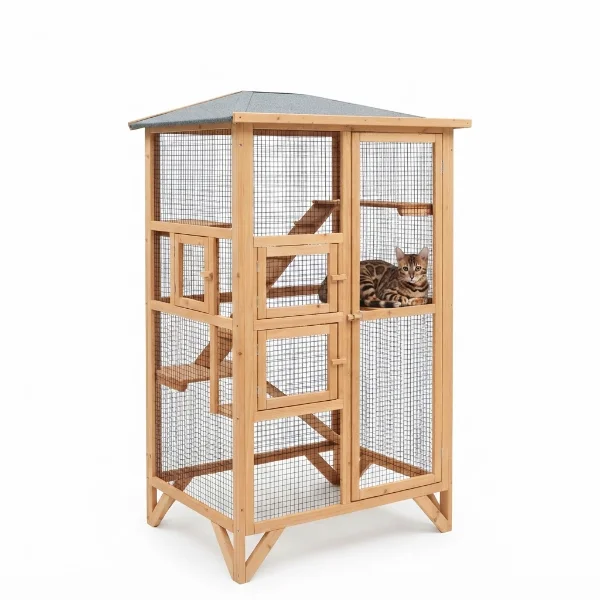
PetsCosset Window Catio (wooden)
Tall unit that stands against the wall and covers a window up to about 147 cm wide; room for 1 to 3 cats per the listing
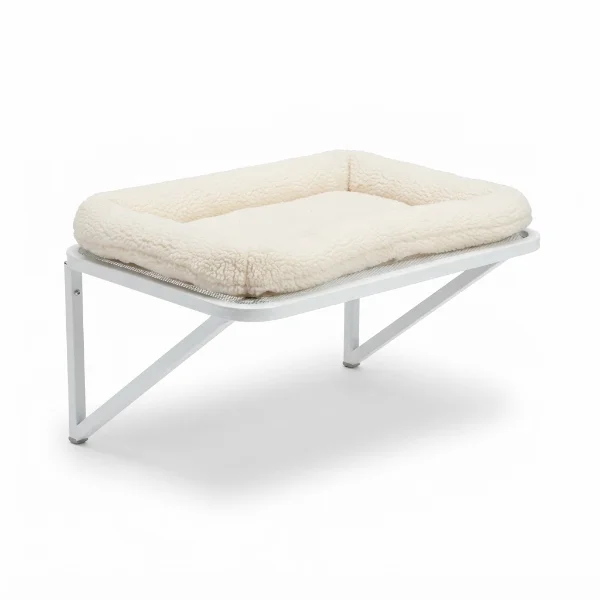
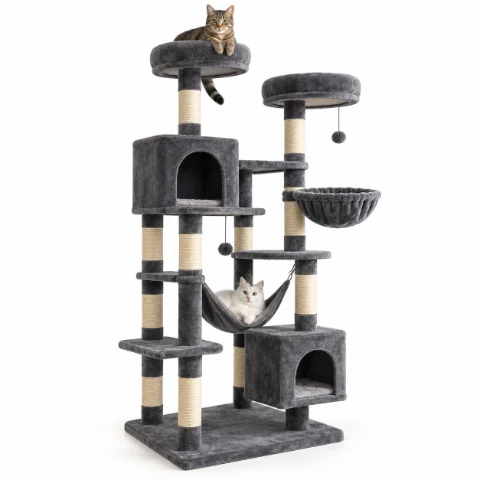
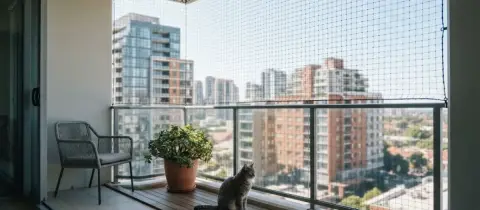
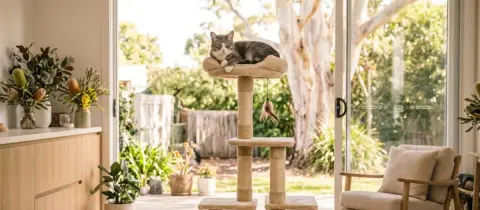
Pictures are illustrations, not the actual products.
Not sure which window you have? Read the next two sections before you buy.
What is a window catio?
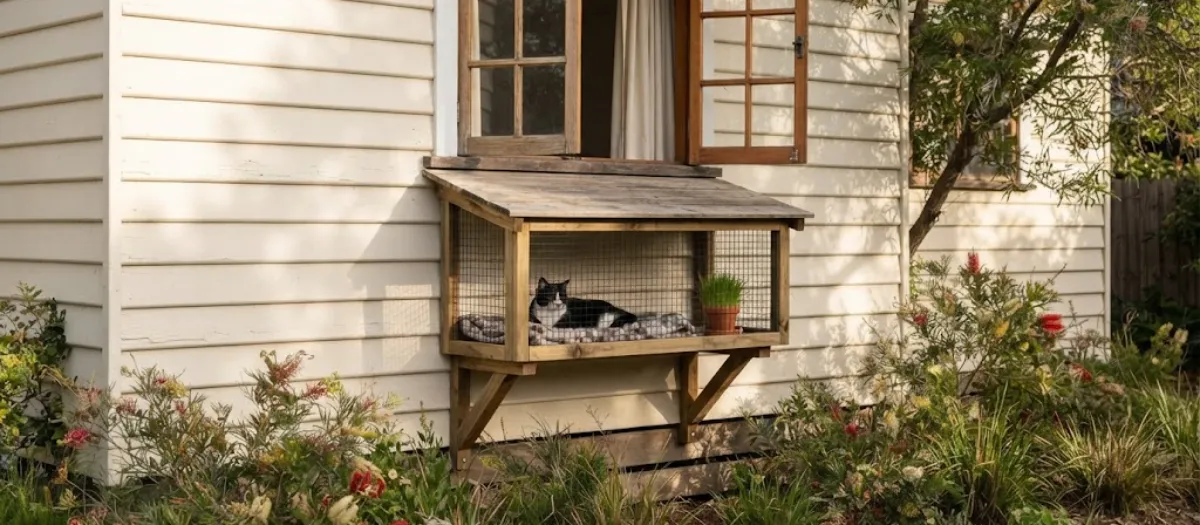
A window catio is a small enclosed space outside a window, with mesh or clear panels on every open side, so an indoor cat can sit in fresh air without getting out. Some clamp to the window frame, and others stand against the wall like a tall cupboard with a door to the window.
They are a small step up from a window perch. A perch sits inside the glass, while a catio puts your cat outside, with smells, sounds and breezes. A window catio is not a garden. It gives a cat a place to sit, climb and watch, and it works best alongside play and a good indoor setup. See our cat enrichment guides and cat trees for ideas.
Will a window catio fit Australian windows?
Often not as sold. Many window boxes are made for up and down sash windows, which are less common here than horizontal sliders, awning, casement or louvre windows. Measure first, check the opening type, and pick a design that matches. Stand-alone catios that sit against the wall suit more window types.
Here is how the common types work:
Up and down sash: the easy case. Box-style catios sit on the sill and the sash closes down onto them.
Horizontal sliding: there is no sill to rest a box on and the glass slides sideways, so a sash-style box won't fit. A stand-alone unit set against the window can work, if the opening lines up with the catio door or tunnel port.
Awning and casement: the sash swings outward, so it may hit the catio. Check the swing space before you buy.
Louvre: the slats make a secure fix hard. Treat these as a poor match.
Measure these before buying:
Opening width and height: the part of the window that actually opens, not the whole frame.
Sill depth and the wall around the window: a box needs a flat sill, and a stand-alone unit needs room to stand beside and below it.
Opening type: sash, slider, awning or casement, and which way it swings.
Height above the ground: at ground level a unit can stand on its legs. Higher up, fixing and weight limits matter much more, as covered below.
Wall material: the PetsCosset Window Catio listing says it mounts to wood or brick walls, so check yours.
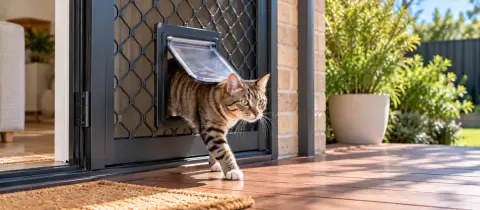
If you want your cat to come and go through a flyscreen rather than a sash, a cat flap in the screen can link a window to a catio or tunnel. See our cat doors for screen doors guide, which also covers keeping your cat in at night.
A tall catio of solid fir with a waterproof roof and high-density mesh. It measures about 172.7 x 59.9 x 205 cm, with about 0.9 m2 of floor space, and stands outside against the wall on four triangular legs. The listing says it covers a window up to about 147 cm wide, mounts to wood or brick walls and holds up to about 40 kg.
It has 3 large doors, 2 removable tunnel ports and 4 jump platforms, and the listing says it suits 1 to 3 cats. Parts are pre-drilled, but a unit this size is a big build, so plan on a long session with two people.
Pros: the most room of the three; suits wide windows and several cats; waterproof roof; pre-drilled parts
Cons: tall and wide, so it needs space outside the window; heavy fixing on the wall; a long assembly job; the roof keeps rain off but isn't shade, so you'll still need to shade it
Best for: homes with a wall and space outside the window, and cats that like to climb
Skip it if: you rent and can't fix to the wall, or your window is wider than the listing allows
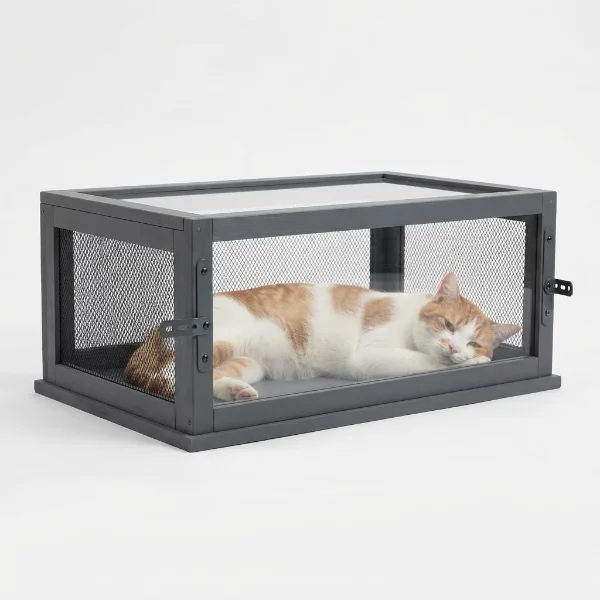
A small box with clear acrylic panels, iron mesh sides, wooden edges and a PVC curtain panel, in grey or walnut. The listing says it fits vertical windows that slide up and down, single or double-hung, 25.4 to 43.3 inches wide (about 65 to 110 cm), using sliding side brackets, and that setup and removal need no tools. It's about 45 cm deep and 44.5 cm high, takes up to about 27 kg and weighs about 8.5 kg.
Many Australian homes have horizontal sliding, awning or casement windows, so check your window type before you order.
Pros: tool-free setup and removal per the listing, which suits renters; clear panels for a good view; light enough to lift in and out
Cons: only fits up and down sash windows; imported, so check the delivery details on Amazon before you order; small, so it suits one cat at a time; no tall platforms
Best for: a renter with a sash window and a single small to medium cat
Skip it if: your window slides sideways, swings out or is outside the 65 to 110 cm range
3. PetsCosset Compact Window Catio on wheels: best movable
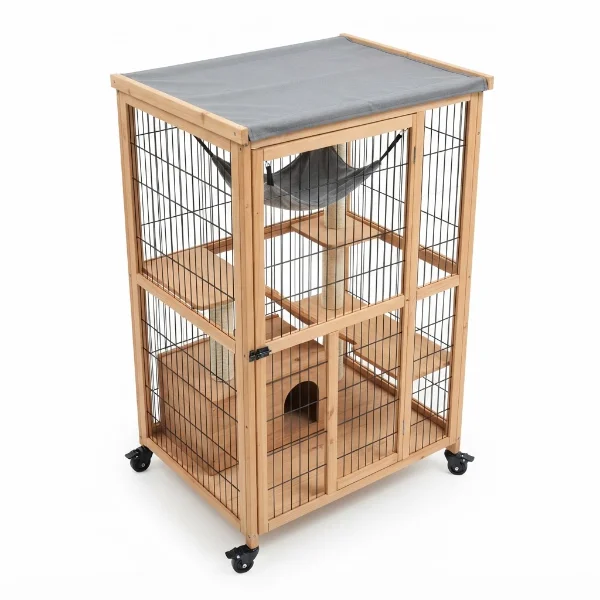
A solid fir catio about 81.8 x 55.1 x 161.3 cm (a longer version exists), with four metal wheels that have brakes. The listing says the back panel is removable so it can sit against a window, and it has 2 small doors for pet doors or tunnels, 3 jump platforms, a resting house, 2 sisal scratching posts, a hammock and a removable roof cover. Two units can be joined by removing a side panel.
Wood doesn't like wet weather, so keep it under an eave or verandah and dry it out after rain. The roof cover isn't a substitute for shade in summer, and the space is small for a large cat.
Pros: wheels with brakes, so you can move it to sun or shade; extras included; two can be joined
Cons: needs shelter in wet weather; small inside for big cats; it only sits against a window, so check the opening lines up with the back panel
Best for: a window that opens onto a patio, verandah or balcony, and homes that want to shift the catio around
Skip it if: you have a large cat or nowhere dry to keep it
How does a window catio connect to the window?
It depends on the design. Box-style catios clamp or slide into the window opening, so your cat steps through the gap. Stand-alone catios stand against the wall and line a door, tunnel port or removable panel up with the window. Either way, the join should leave no gap a cat can squeeze through.
The three picks do it differently, going by their listings:
PetsCosset Window Catio: stands on four triangular legs outside the wall, covers a window up to about 147 cm wide and has 2 removable tunnel ports.
AMZOSS Window Box: slides into a sash window with side brackets, which the listing says needs no tools.
PetsCosset Compact: has a removable back panel that can sit against a window, plus 2 small doors for pet doors or tunnels.
Whatever you buy, close any gap around the join with something your cat can't push through, and check it every time you open the window. Pests and wind get into gaps too.
Window catios compared
Details from each Amazon Australia listing, checked on 30 Oct 2026.
We searched Amazon Australia for window catios and window boxes for cats, then shortlisted ones that met all of these checks:
Well rated: a strong average rating with plenty of buyer reviews.
No red flags: no pattern of poor reviews, safety complaints or listing problems.
Available on Amazon Australia when we checked.
Full dimensions and window fit listed.
Weight limit listed where the listing gives one.
Mesh or panels on all open sides.
Fixing method stated.
These are researched picks, based on specifications rather than use in our own homes. We compared the features shown on each Amazon Australia listing, checked on 30 Oct 2026. We didn't accept payment from any brand, and no brand saw this page before it was published.
Left out this time: new listings with no buyer history, big walk-in units that don't connect to a window (see our catio ideas hub), and suction-cup window perches, which are indoor perches rather than catios.
How do I set up a window catio safely?
Fix it firmly to the wall or frame, check every join for gaps and weak points, and stay with your cat until you're sure the setup is secure. Check the weight limit, the screen, the shade and the water, and make sure your cat has a way back inside at all times.
Work through this checklist:
Fixing and weight: follow the maker's instructions and use fixings that suit your wall. Keep well under the listed load limit, and remember a few cats plus water add weight. If you're unsure, ask a handyman or builder.
Height: above the ground floor, a fall is a real risk. The Cat Protection Society of NSW says falls often cause broken limbs, jaws or pelvic bones, and internal injuries that aren't always obvious straight away (Cat Protection Society of NSW, balcony safety factsheet, page read 30 October 2026). Fix higher units extra securely.
Screens: keep the window screen in place, with a cat flap if you need one, so a cat can't push or tear its way out. If your screen is torn or flimsy, see our pet-proof fly screen guide.
Gaps and weak points: run your hand along every join, hinge and corner. Cats can squeeze through small gaps and push at weak mesh.
Supervise early: stay with your cat for the first few sessions, then check the catio often. Never leave a cat in a catio for long periods, in heat or in storms.
Always a way back inside: the window or flap stays open to the room, with a litter tray indoors.
Water and plants: add fresh water in a heavy bowl. If you add plants, use cat grass or catnip, and check any other plant on a reliable toxic plant list first. Never use lilies.
Neighbours and wildlife: a closed catio also keeps your cat from reaching birds and lizards. See our cat curfew rules guide for the local rules.
If you rent, ask first. In NSW, tenants can make changes if the lease allows it or the landlord agrees in writing, and a landlord can't unreasonably refuse a minor change; strata schemes have extra restrictions (NSW Government, page read 30 October 2026). Other states differ, so check yours. Owners in apartments should ask the body corporate or strata manager, because outside walls are usually common property.
Shade it, give your cat fresh water and an easy way back indoors, and don't leave your cat in it during hot afternoons. North and west-facing windows can get strong afternoon sun in summer. A catio is a mesh box, and it can heat up fast without a cover.
Some practical steps:
Add shade cloth: attach it over the roof and sun side, leaving airflow. A roof cover on its own may not be enough.
Choose the position: wheels on the compact PetsCosset let you move it away from the sun. For fixed units, shade the west and north side first.
Water: have more than one bowl in case one tips over. RSPCA Australia says pets need plenty of fresh water, and shade with airflow for pets outdoors (RSPCA Australia, published 20 January 2021, page read 30 October 2026).
Choose the time: use the catio in the morning and evening, and close it up on very hot days.
Watch for light-coloured cats: the same page says white-haired cats can sunburn, so shade matters most for them.
Heat stress is an emergency. RSPCA Australia lists heavy panting that gets worse, drooling, restlessness, very red or pale gums, breathing distress, vomiting and weakness as signs of heatstroke, and says to get the animal to a vet as soon as possible even if you only suspect it. Move your cat somewhere cool and call your vet on the way.
Call your vet straight away after any fall, even if your cat seems fine, because the Cat Protection Society of NSW says internal injuries aren't always obvious straight away. Also speak with your vet if your cat seems stressed or won't settle after the change.
Frequently asked questions
Do window catios work with sliding windows?
Sash-style window boxes don't, because they need a window that slides up and down. A stand-alone catio set against the window can work with a sliding window, if a door or tunnel port lines up with the opening. Measure the opening and check the swing. See the measuring section above.
Are window boxes safe for cats?
They can be, if the box is fixed firmly, every open side has mesh or panels, and your cat is supervised at first. Check joins for gaps, stay under the weight limit and add shade. Falls from height are the main risk, so extra care is needed above the ground floor.
Can I leave my cat in a window catio?
Not for long periods, and not unsupervised until you've checked for gaps and weak points. Never leave a cat in one in heat or storms. Provide shade, fresh water and an open way back inside at all times. Short sessions while you're home are the safest start.
Is it cheaper to build or buy a catio?
It depends on your skills, tools and window. A purpose-made unit gives you listed dimensions and pre-drilled parts, while a build lets you fit an odd window exactly. Whichever way you go, the safety checks are the same: secure fixing, no gaps and shade. Our catio ideas hub covers other types.
Where can I find window catios in Australia?
Pet shops, hardware stores and specialist catio makers sell them, and Amazon Australia lists the three here. Some listings are imported from overseas, so check the sizes and your window type first. For balconies, see our cat netting guide, and for gardens, our cat proof fence guide.
Product details from each linked Amazon Australia listing, checked on 30 Oct 2026.
This guide provides general information and isn't a substitute for veterinary advice. If you're concerned about your cat's safety or heat stress, speak with your vet.