By Anish PuriUpdated 21 Oct 202612 min readResearched, not tested by us
Research guide. WhiskerFinds may earn a commission from links, at no extra cost to you.
Quick answer: The best dog cone depends on where your dog's wound is. Our pick is the Avont 2-in-1 inflatable cone, which pairs a soft donut with a removable clear shield, so you can start with more protection and step down later. Your vet decides which type is safe for your dog.
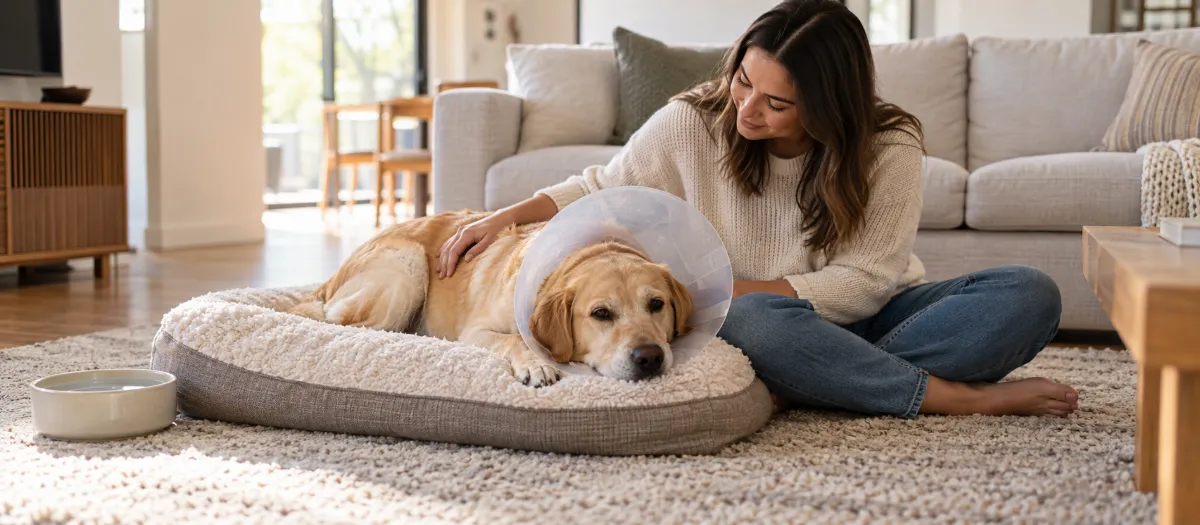
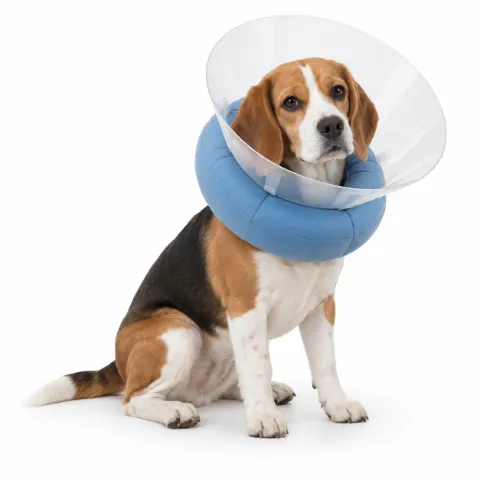
Illustration, not the actual product
Our top pickAvont 2-in-1 Inflatable Cone with Clear Shield
A cone only works if your dog can't reach the sore spot, and it's only bearable if your dog can still eat, drink and move about. This guide compares three dog cones on Amazon Australia, explains which type suits which wound, and covers sizing and daily life. Itchy skin can also lead to a cone, because licking and scratching can turn a small patch into a sore one, so see our dog itchy skin guide for the bigger picture.
Quick picks
Our top pickBest overall
Avont 2-in-1 Inflatable Cone with Clear Shield
Soft donut plus a removable clear shield, so one cone covers early and later recovery
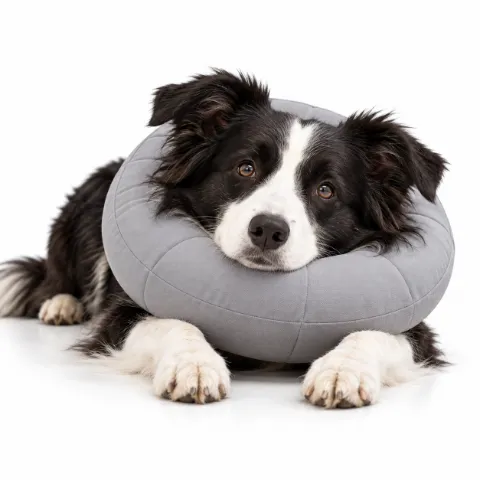
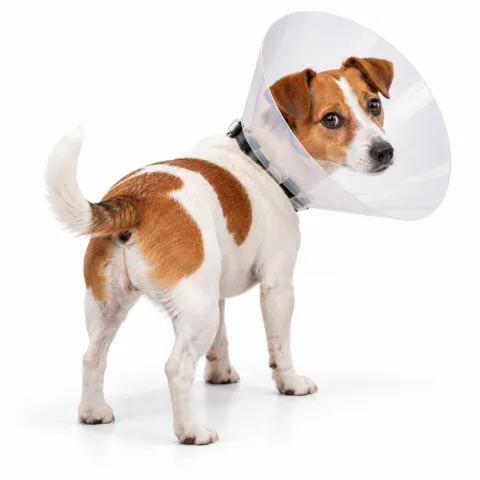
Pictures are illustrations, not the actual products.
Not sure a cone is the right tool? Our best dog recovery suits guide covers the fabric alternative.
When does a dog need a cone?
A dog needs a cone when licking, chewing or scratching could harm something that is healing, such as stitches after surgery, a wound, a dressing, a hot spot or irritated skin. Licking can slow healing and let infection in, so a cone matters most when you can't watch your dog (VCA Animal Hospitals, updated September 2023).
Your vet will usually tell you at the clinic. Itchy skin can also lead to a cone, because constant licking and scratching can turn a small patch into a sore one. A cone only blocks the habit. It doesn't treat what's causing the itch, so a vet visit for a diagnosis still matters. Medicated washes, if your vet suggests one, are covered in our medicated dog shampoo guide. For cats, see our cat cone guide.
Eye problems can lead to a cone too, for example after cherry eye surgery or while a vet treats an irritated eye. See cherry eye in dogs and conjunctivitis in dogs.
Which type of dog cone suits which wound?
The right cone is the one that stops your dog turning to reach the sore spot, as well as being comfortable enough to leave on. Hard plastic cones block the most. Inflatable donuts and soft cones are gentler but may leave some areas reachable, so ask your vet which type suits the wound's position.
Whole Dog Journal makes the same point: the device must stop the dog from reaching the incision, and a dog can't be left unattended after surgery (Whole Dog Journal, updated April 2026). As a general guide:
Whole Dog Journal's advice for any donut is that it has to be the right size to stop the dog reaching round to the sore spot, and VCA's alternatives page lists specially designed bandages for paws and joints (VCA Animal Hospitals).
Face, head and ears: a hard cone usually protects best, because it extends past the nose.
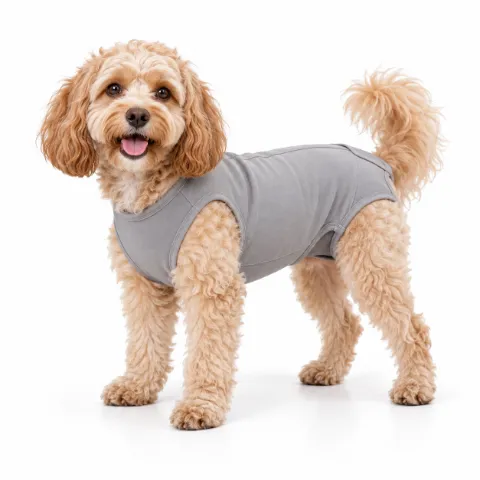
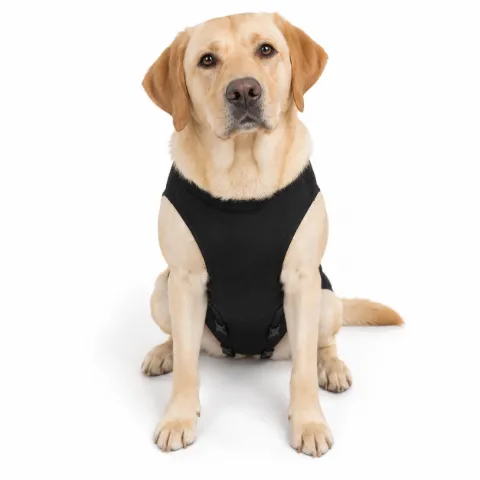
Belly, chest and flanks: a donut or a recovery suit may work if your dog can't bend round to reach.
Back end, tail or back legs: these are the hardest spots for a donut, so ask your vet before relying on one.
Paws and lower legs: a donut can leave these reachable for some dogs, and a hard cone or bandage cover may be needed.
Our picks in detail
1. Avont 2-in-1 Inflatable Cone with Clear Shield: best overall
An inflatable donut collar with a removable clear shield. The listing says the shield gives fuller protection in the early days, and that you can remove it and use the donut alone later in recovery. That makes it the most flexible pick here, though your vet should say when it's safe to step down.
Pros: two cones in one; the clear shield lets your dog see out; soft donut for resting; several sizes
Cons: inflatable parts can lose air or be punctured, so check it holds air when it arrives; more parts to fit and clean
Best for: dogs who need strong protection early, then something gentler
Skip it if: your dog chews inflatables, or your vet wants a hard cone
A simple inflatable donut collar in sizes small to extra large. The listing says it doesn't get in the way of eating and drinking, and that it can double as a neck pillow.
Pros: soft and light; the listing says it allows eating and drinking; wide size range
Cons: a determined chewer can puncture it; a donut may not stop a dog reaching paws, legs or the back end; sizing needs care so it can't be slipped off
Best for: calm dogs with wounds on the body that they can't curl round to reach
Skip it if: the wound is on a paw, leg, tail or rear, or your dog chews soft things
3. WacHomz Adjustable Plastic E-Collar: best classic cone
A translucent plastic Elizabethan collar with an adjustable fit, made for dogs and cats. Follow the listing's size chart closely, and measure your dog's neck and the length to the nose before you order, because plastic cones leave little room for error.
Pros: blocks reaching better than a donut; translucent; adjustable; works for cats too
Cons: fit depends on measuring carefully; can bump furniture and doorways
Best for: wounds near the face, head or back end, and dogs whose vet has asked for a hard cone
Skip it if: your dog won't settle in plastic
Dog cone types compared
The three main cone types trade protection against comfort. Hard cones protect most, donuts and soft cones are easier to live with, and recovery suits cover the body instead of blocking the head.
Swipe sideways to see every column
Type
Best for
Main plus
Main limit
Hard plastic cone
Face, head, ears, back end
Blocks the most
Limits side vision; bumps into things
Inflatable donut
Body wounds a dog can't curl round to reach
Soft, easy to rest on
May not stop reaching paws, legs or rear
Soft fabric cone
Dogs who dislike plastic
Flexible, still blocks reaching
Dog can't see through it
Recovery suit
Belly, chest, back
Covers the wound; washable
Needs correct sizing; toileting care
Whole Dog Journal cites a 2020 University of Sydney study in the journal Animals in which over 77% of participants reported a poorer quality of life for their pet while it wore the Elizabethan collar (Whole Dog Journal). Comfort matters, but it can't come at the cost of protecting the wound.
Dog cones compared
Details from each Amazon Australia listing, checked on 20 Oct 2026.
We searched Amazon Australia for dog cones, then shortlisted ones that met all of these checks:
Well rated: a strong average rating with plenty of buyer reviews.
No red flags: no pattern of poor reviews, safety complaints or listing problems.
Available on Amazon Australia when we checked.
Adjustable fit with clear sizing on the listing.
Lets the dog eat and drink, according to the listing.
These are researched picks, not products we've personally tested. We compared the specifications and features shown on each Amazon Australia listing, checked on 20 Oct 2026. We didn't accept payment from any brand, and no brand saw this page before it was published.
Left out this time: a soft inflatable cone that didn't pass our red flags check.
How do I measure my dog for a cone?
Measure your dog's neck, then check the size chart on the listing. A cone should be snug enough not to slip off but loose enough that you can slide two fingers between the collar and the neck (VCA Animal Hospitals).
Use a soft tape and measure round the neck where the collar will sit, over the fur.
Many hard cone charts also ask for the length from the neck to the nose, since a cone should extend a little past the nose to block licking. Check what the listing asks for.
If you're between sizes, follow the listing's own advice, and when in doubt ask your vet clinic to check the fit.
Once it's on, check the two-finger rule and watch that your dog can still breathe and swallow easily.
If you can't get a proper fit, call your vet rather than loosening it until it slips.
How can I help my dog eat, drink and sleep in a cone?
A correctly fitted cone shouldn't stop normal eating and drinking. If your dog struggles with a deep bowl, try a shallow dish or plate, or raise the food and water slightly (VCA Animal Hospitals). If your dog refuses food, check the fit before blaming the cone.
Some other ideas:
Settling in: VCA says most dogs adjust within a few hours, but should be watched at first, because a paw can get caught in the collar.
Clear the space: move small items off low tables and shelves, and keep your dog in a space without objects they can knock over.
Doorways and stairs: side vision is limited, so guide your dog through tight spaces.
Outside: VCA advises against letting your dog outside in a cone, because it can catch on plants. Ask your vet whether short lead walks are OK.
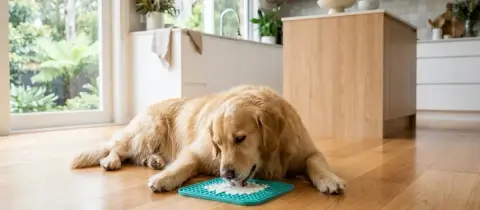
Boredom: a lick mat can give your dog something calm to do while you supervise. See our best lick mats guide.
Bed: put the bed somewhere with room to turn round, so the collar isn't jammed against a wall.
Keep the cone clean on both sides. If cleaning it while worn is hard, take it off briefly under close supervision and wipe it with a damp cloth.
How long does a dog need to wear a cone?
A dog needs to wear a cone until the wound has fully healed, which can be a few days or several weeks depending on the injury. Your vet sets the timeline. Following their instructions keeps it as short as it can safely be (VCA Animal Hospitals).
Taking the cone off early is the common mistake. VCA generally discourages removing it because it can be hard to refit, though your vet may allow short breaks when you can watch closely. Dogs with long-term skin problems may need a cone for longer, so ask your vet about options that suit ongoing use.
Dog cone or recovery suit?
A recovery suit covers a body wound with fabric, so your dog has nothing round their neck. A cone blocks the head instead. VCA lists soft cones, donuts and suits as alternatives, and your vet can say which suits the wound (VCA Animal Hospitals).
Suits tend to suit belly, chest or back wounds, and they can cause problems if they're the wrong size or make toileting messy. A cone is simpler for face, head and ear problems. Some dogs wear both. See our best dog recovery suits for the options.
When to see your vet
Call your vet if the wound looks red, swollen, hot, smelly or is leaking, if stitches have opened, or if your dog seems to be in pain or stops eating.
Also call if the cone is rubbing a sore patch on the neck, if you can't fit it properly, or if your dog is very distressed. Your vet may suggest a different type of cone or other options. For more on VCA's advice, see Elizabethan collars in dogs.
Frequently asked questions
Do dogs sleep with a cone on?
Yes, most dogs can sleep in a cone once they get used to it. VCA says most adjust within a few hours. Give your dog room to turn, a comfortable bed, and check the cone isn't pressing on the neck.
How long does a dog need a cone?
Until your vet says the wound has healed. For a simple desexing incision, Seattle Animal Shelter's instructions, for example, say 7 to 10 days (Seattle Animal Shelter), but injuries and skin problems can take several weeks, and some dogs with ongoing skin disease wear one on and off. Ask at each check-up rather than guessing.
Can I take my dog's cone off at night?
Ask your vet first. Licking when nobody's watching is the main risk, so the cone usually matters most when you're asleep or out. Removal is generally discouraged, and any short break should happen only under close supervision.
Are inflatable cones as good as plastic?
Not for every wound. Inflatable donuts are softer, but they may not stop a dog reaching a paw, leg or back end, and a chewer can puncture one. A hard cone blocks more. Ask your vet which suits the position of the wound.
What can I use instead of a cone?
Your vet may suggest a soft fabric cone, a donut-shaped collar or a recovery suit, depending on the wound (VCA). Avoid homemade fixes unless your vet agrees, since they may not protect the wound.
How do I stop my dog licking without a cone?
Ask your vet first, because licking can slow healing and the right tool depends on the problem. Options include a recovery suit or soft cone. Never put creams, sprays or human medicines on a wound without your vet's advice.
Can a cone make my dog anxious?
It can. Restricted side vision and bumping into things can unsettle some dogs, and in the Sydney study mentioned above, most owners reported a poorer quality of life for their pet in the collar. Tell your vet if your dog is very distressed.
Product details from each linked Amazon Australia listing, checked on 20 Oct 2026.
This guide provides general information and isn't a substitute for veterinary advice. If you're concerned about your dog's wound or recovery, speak with your vet.