By Anish PuriUpdated 21 Oct 202612 min readResearched, not tested by us
Research guide. WhiskerFinds may earn a commission from links, at no extra cost to you.
Quick answer: The best fish oil for dogs is one made for pets, with the EPA and DHA amounts and a weight-based dose clearly on the label. Our pick is Zesty Paws Omega Boost Salmon Oil. Nordic Naturals Omega-3 Pet has the clearest dose. Check with your vet before you start.
Fish oil is one of the most common supplements owners ask about, and it's easy to get wrong. This guide compares three fish oils on Amazon Australia, explains EPA and DHA, and covers dose, side effects and storage. If your dog is itchy, start with our guide to itchy skin in dogs, because a supplement is only one small piece.
Quick picks
Our top pickBest overall
Zesty Paws Omega Boost Salmon Oil
Salmon oil with EPA, DHA and ALA named on the listing
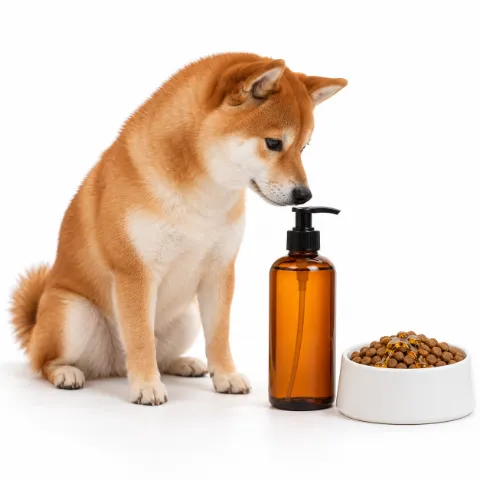
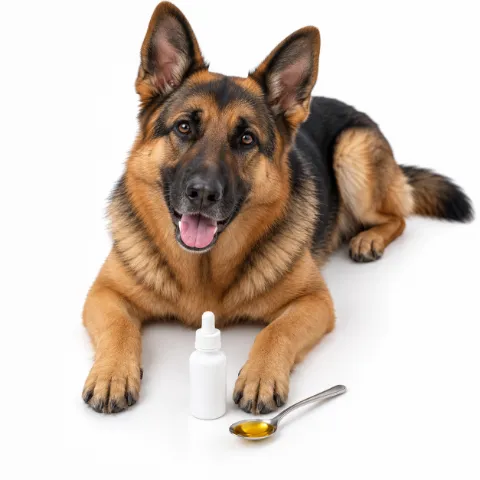
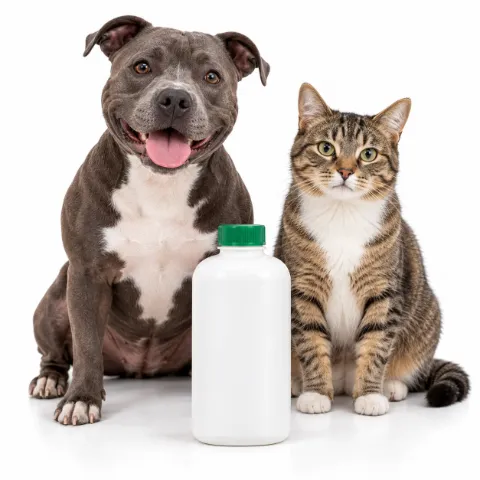
Pictures are illustrations, not the actual products.
Fish oil is a supplement, not a treatment. It doesn't replace a vet diagnosis for itchy skin or sore joints.
Is fish oil for dogs worth giving?
Fish oil may help some dogs, but the evidence is limited, and VCA notes that few supplements have been through rigorous trials. It isn't a cure. The American Kennel Club says fish oil is often recommended for skin and coat and linked to joint comfort, and adds that itching and coat changes can come from parasites, allergies or hormone problems, not just diet (AKC, updated August 2026).
VCA Animal Hospitals lists skin allergies, arthritis, kidney disease and heart disease among the conditions vets use fish oil for. It also notes that supplements like this aren't checked for safety or effectiveness before sale (VCA Animal Hospitals, updated January 2026).
So think of fish oil as one tool inside a plan your vet agrees with. If your dog has a healthy coat and a balanced complete diet, ask your vet whether they need it at all.
What are EPA and DHA in fish oil?
EPA and DHA are the two omega-3 fatty acids found in fish oil, and they're the ones dogs use directly. Plant oils such as linseed supply ALA, which the body must convert slowly. AKC says ALA isn't the best omega-3 source for an older or unwell dog (AKC, updated August 2026).
This matters when you read a label. "Total omega-3" can include ALA, so it may be larger than the EPA plus DHA your dog actually gets. A paper on omega-3 safety in dogs also points out that labels showing only an omega-6 to omega-3 ratio don't tell you the actual amount (dvm360 summary of Lenox and Bauer, 2013). Look for EPA and DHA amounts per serve.
Our picks in detail
1. Zesty Paws Omega Boost Salmon Oil: best overall
A liquid salmon oil for dogs and cats. The listing says it's 91% French salmon oil, with concentrated fish oil and linseed oil added, and names EPA, DHA and ALA. It comes in 250 mL, with a 500 mL size also sold (500 mL here). Because the linseed oil supplies ALA, which dogs convert slowly, look at the EPA and DHA figures on the label rather than the headline oil percentage. The listing makes skin and coat claims, which we haven't verified. For cats, see fish oil for cats, which covers why cats need EPA and DHA from fish rather than plant oils.
Pros: EPA and DHA named; two bottle sizes; dogs and cats on the same label
Cons: the listing doesn't set out the EPA and DHA split on the page, so check the bottle; contains linseed oil, which adds ALA
Best for: most healthy adult dogs, once your vet agrees
Skip it if: your dog is allergic to fish, or you want the omega-3 amount stated per teaspoon (choose Nordic Naturals)
2. Nordic Naturals Omega-3 Pet: best for a clear dose
A liquid made from anchovy and sardine oil, with d-alpha tocopherol (a form of vitamin E) added. The listing states 1518 mg of omega-3 per teaspoon, and says it's for medium to large dogs. The directions say to follow the weight chart and not to exceed it without your vet. That 1518 mg is total omega-3, so check the label for the EPA and DHA split.
An Australian brand's omega 3 6 9 oil in a 500 mL bottle. The listing says it's for dogs, cats and horses. It's the large-bottle option here, which suits multi-pet homes if your vet approves it for each animal.
Pros: Australian brand; large bottle
Cons: the listing doesn't give EPA and DHA amounts, so it's harder to match to a vet's target; the omega 3 6 9 blend is less specific than a fish-only oil
Best for: owners who prefer an Australian brand and will confirm the dose with their vet
Skip it if: you want to work out a dose from stated EPA and DHA amounts
How much fish oil can I give my dog a day?
There's no single agreed amount, because the right dose depends on your dog's weight, age, health and diet. AKC says to ask your vet how much suits your dog rather than relying on package directions alone, and to increase the amount slowly (AKC, updated August 2026). VCA says to follow your vet's instructions and measure liquid doses carefully (VCA, updated January 2026).
Here's a practical way to approach it:
Ask your vet for a target of combined EPA and DHA for your dog, especially if they have a health condition.
Use the product's weight chart as a starting point, and begin with less than the full amount.
Never go above the label without your vet's say-so.
For a sense of the ceiling: the US National Research Council set a safe upper limit of 370 mg of combined EPA and DHA per kg of metabolic body weight (kg to the power of 0.75) per day, which works out to about 2,080 mg for a 10 kg dog (dvm360 summary of Lenox and Bauer, 2013). That's a ceiling, not a target, and it's no reason to aim high. Oil also adds calories, which counts if your dog needs to lose weight.
What are the side effects of fish oil for dogs?
The most common side effects are digestive: diarrhoea, vomiting, gas, and a fishy smell. VCA also lists delayed wound healing, an oily coat, and, more rarely, allergic reactions, abnormal bruising or bleeding, and pancreatitis. VCA says to stop the product and call your vet for the serious ones, such as an allergic reaction, bruising or bleeding, or signs of pancreatitis. For mild tummy upset, ask your vet about lowering the dose (VCA, updated January 2026).
Check with your vet first if your dog:
Has had pancreatitis. VCA advises caution. A 2013 paper found no reports of fish oil causing pancreatitis in dogs, but your vet knows your dog's history (dvm360 summary of Lenox and Bauer, 2013).
Has surgery coming up. Omega-3s could in theory slow wound healing, so vets take care around operations. If your dog is recovering, our guides to the best dog cones and best dog recovery suits cover protecting stitches.
Takes medicines. VCA says to be careful with blood thinners and anti-inflammatory medicines (NSAIDs), and to tell your vet about every supplement.
Has diabetes or a clotting disorder. VCA lists both as reasons for caution.
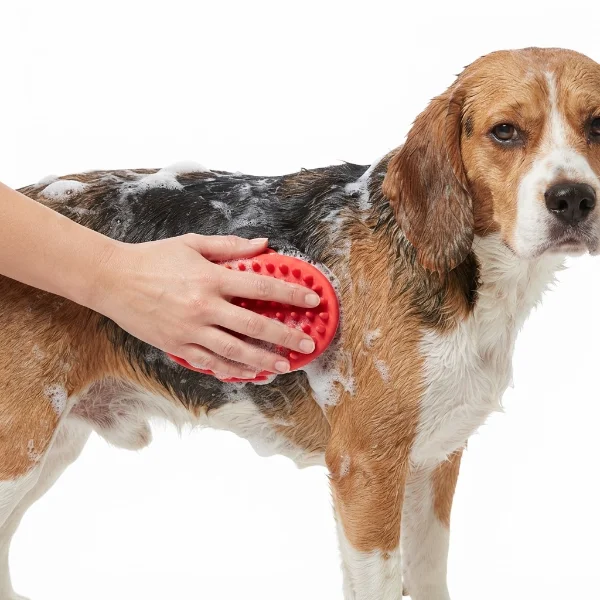
Is itchy and still scratching. A supplement won't fix fleas, infection or allergy. See itchy skin in dogs and, if your vet suggests it, medicated dog shampoo.
Fish oils compared
Details from each Amazon Australia listing, checked on 20 Oct 2026.
We searched Amazon Australia for fish oil for dogs, then shortlisted oils that met all of these checks:
Well rated: a strong average rating with plenty of buyer reviews.
No red flags: no pattern of poor reviews, safety complaints or listing problems.
Available on Amazon Australia when we checked.
Made for pets: not a human fish oil capsule.
Clear about what's inside: oil source named on the listing.
These are researched picks, not products we've personally tested. We compared the specifications and features shown on each Amazon Australia listing, checked on 20 Oct 2026. We didn't accept payment from any brand, and no brand saw this page before it was published.
Left out this time: human fish oil capsules, and products that don't name their oil source.
How should I store fish oil for dogs?
Store fish oil in a cool, dry place away from light, and follow the label, including any advice to refrigerate after opening. AKC adds that oil which smells rancid or is past its date should be thrown out, because oxidised oil can cause vomiting or diarrhoea (AKC, updated August 2026; VCA, updated January 2026).
Keep the lid tight, and don't leave the bottle on a sunny bench or in a hot car. Oxidised EPA and DHA can also use up vitamin E in the body, which is one reason a fresh bottle matters (dvm360 summary of Lenox and Bauer, 2013).
Can I give my dog human fish oil capsules?
It's best not to. AKC says human products are made and dosed for people and may contain ingredients that aren't safe for pets, so choose a product made for dogs (AKC, updated August 2026). PetMD, in a piece reviewed by a vet, names xylitol, which is toxic to dogs, as one ingredient human supplements can contain (PetMD, 25 June 2025). Some human capsules also add vitamins A or D at doses meant for people.
Human capsules also tend to be dosed in a way that's hard to scale down for a small dog. A pet fish oil with a weight chart is simpler and safer. If a capsule is all you have at home, call your vet before giving any.
When to see your vet
Talk to your vet before you start if your dog has had pancreatitis, has surgery coming up, takes regular medicines, or has diabetes or a clotting disorder. Your vet can set a dose that suits your dog.
Stop the oil and call your vet if your dog gets diarrhoea or vomiting, unusual bruising or bleeding, swelling, or a sudden worsening of itching. Book a visit if the itching doesn't improve, because it may need a proper diagnosis. See our itchy skin guide for the common causes, and check for fleas and ticks with our paralysis ticks guide.
Frequently asked questions
Is fish oil actually good for dogs?
It can be useful for some dogs, but the evidence is limited. Vets use it for skin allergies, arthritis and other conditions, alongside other treatment. It isn't a cure, and not every dog needs it. Ask your vet whether it suits your dog before you buy.
How much fish oil can I give my dog a day?
It depends on your dog's weight, age, health and diet, so ask your vet for a target. Start below the label amount, build up slowly, and don't go over the label without your vet. See how much fish oil to give for the steps.
Which fish oil is best for dogs?
The best choice is a product made for dogs, with EPA and DHA amounts and a weight-based dose on the label. Our overall pick is Zesty Paws Omega Boost (check its label for the EPA and DHA detail), and Nordic Naturals Omega-3 Pet has the clearest dose. Your vet can help you match one to your dog.
Can I give my dog human omega fish oil?
It's best to choose a pet product. AKC says human products are made for people and may contain ingredients that aren't safe for pets. If you already have a human capsule, check with your vet before giving any to your dog.
Can fish oil help itchy skin?
It may help some dogs with skin allergies as part of a vet-guided plan, but it won't fix fleas, infection or mites. Itching has many causes, so see your vet for a diagnosis. Our itchy skin guide explains the usual ones.
How long does fish oil take to work?
VCA says full effects may take several weeks, though gradual improvement is usually noticeable. Results vary from dog to dog, and some dogs show no change. Watch how your dog responds, keep notes, and tell your vet if the itching or stiffness doesn't improve.
Can fish oil cause diarrhoea in dogs?
Yes, it can. Diarrhoea is one of the most common side effects, especially if the dose starts too high. Slowly building up the amount may help. If loose stools continue, or your dog vomits or seems unwell, stop the oil and call your vet.
Product details from each linked Amazon Australia listing, checked on 20 Oct 2026.
This guide provides general information and isn't a substitute for veterinary advice. If you're concerned about your dog's diet or skin, speak with your vet.