Dog itch relief sprays: what's in them and when they help
By Anish PuriUpdated 21 Nov 202613 min readResearched, not tested by us
Research guide. WhiskerFinds may earn a commission from links, at no extra cost to you.
Quick answer: A dog itch relief spray can clean and soothe a small, irritated patch or freshen an itchy coat between baths, and for a red, licked spot our top pick is the Vetericyn Plus Hot Spot Spray. A spray doesn't treat the cause of the itch, so a dog that keeps scratching still needs a vet.
Itch is a symptom, not a diagnosis, and sprays only ever help with the surface. This guide compares four sprays on Amazon Australia by what the listing says is in them and where the label says to use them, then sorts out when a spray is reasonable and when it's a vet problem. For causes, start with our itchy skin guide. If the licking is mostly at the feet, our dog licking paws guide covers the patterns.
Three of the four sprays are from one brand, Vetericyn, and all four are imports. Where the sprays overlap, the tables show how they differ.
Quick picks
Our top pickBest overall
Vetericyn Plus Hot Spot Spray, 236 ml
Made for a red, licked patch; no-rinse; hypochlorous acid 0.0035%
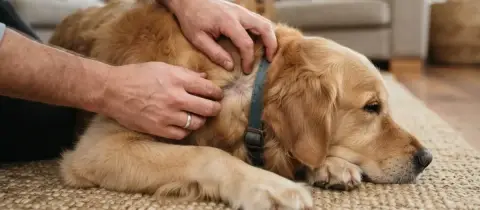
Pictures are illustrations, not the actual products.
What is the best dog itch relief spray?
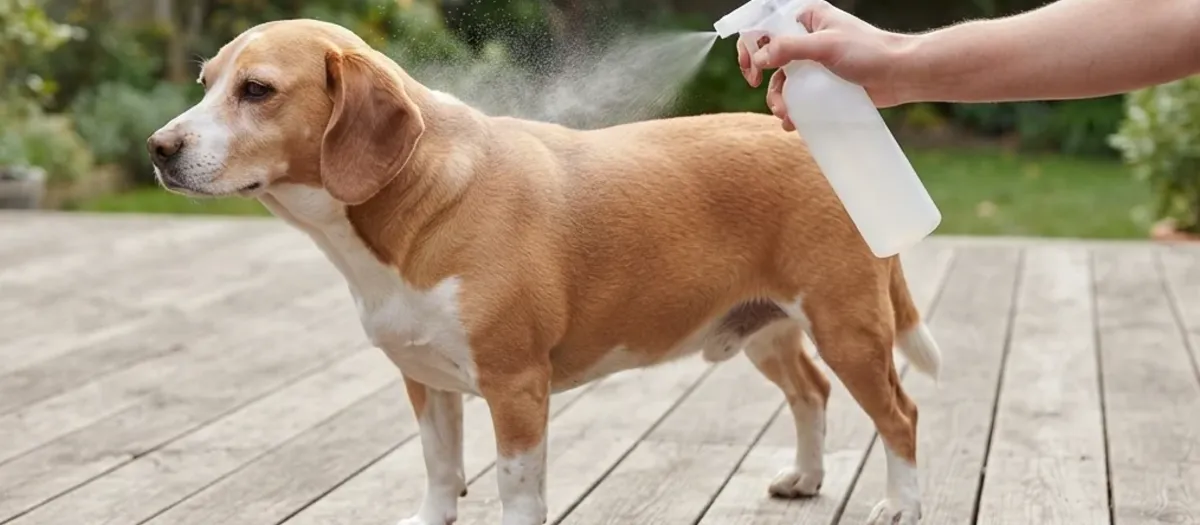
For a small red patch your dog keeps licking, a hypochlorous acid spot spray such as the Vetericyn Hot Spot Spray is the most sensible type to keep at home. For a mildly itchy coat after a swim or walk, a gentle coat spray is the other option. Neither replaces a vet when the skin is broken or the itch keeps coming back.
The four sprays do different jobs, so "best" depends on the patch:
A spot spray (picks 1 and 2) goes on one small area.
A gel spray (pick 3) stays put on a spot instead of running off fur.
A coat spray (pick 4) goes over the whole coat and isn't for sores.
What's in dog itch sprays?
Most sprays here are one of two things: a hypochlorous acid cleanser, or a scented coat freshener with soothing plant extracts. Steroid creams exist too, but they belong with your vet.
Hypochlorous acid is a mild chlorine-based cleanser made from salt water and electricity, listed as a no-rinse product. The Hot Spot and Wound Care listings give 0.0035% and 0.0120%, and the Hydrogel listing gives no figure. It cleans a spot. It isn't a treatment for allergies, infection or hot spots.
Baking soda and plant extracts are what the Arm & Hammer listing names: baking soda, chamomile and peppermint extracts, with a chamomile and peppermint scent. It says it is free of sodium lauryl sulfate and parabens and pH balanced. It's a coat freshener for mild itch, not a wound product.
Steroid and antibiotic products are left to vets. We didn't pick any imported hydrocortisone cream, because those labels say to check with a vet first and not to use them on large areas. Some human medicines, creams and eye drops are dangerous for dogs. Ask your vet before giving anything.
Our picks in detail
1. Vetericyn Plus Hot Spot Spray, 236 ml: best overall
A no-rinse hypochlorous acid spray made for red, irritated, licked patches. The listing gives its ingredients as electrolysed water, sodium chloride, sodium hypochlorite and hypochlorous acid 0.0035%, says it is steroid-free and antibiotic-free, and says to spray a few times a day. The bottle is 5.72 x 5.72 x 16.51 cm and 226 g.
It cleans and soothes the spot. It doesn't replace the clipping, cleaning and medication most hot spots need from a vet. The listing also makes healing and safety claims that we haven't repeated. Treat it as a short-term tool within the plan your vet gives you, and keep the cone on.
Pros: made for hot spots; no-rinse; ingredients listed in full; the larger 236 ml size
Cons: imported, so check the delivery details on Amazon before you order; one of two hypochlorous sprays with overlapping uses
Best for: a small red patch your dog has been licking, while you wait for the vet
Skip it if: the skin is broken, wet or spreading, or you want a coat-wide spray
2. Vetericyn Plus Wound Care Spray, 89 ml: best for cleaning scrapes and licked spots
The stronger hypochlorous acid of the two spot sprays, at 0.0120% per the listing, with the inactive ingredients listed as electrolysed water, sodium chloride, phosphates and sodium hypochlorite. The 89 ml bottle is 5.08 x 5.08 x 12.7 cm and 113 g, and the listing says to spray the area a few times daily. It's labelled for cuts, abrasions, sores and skin irritations. For cuts and grazes rather than itch, see our dog wound spray guide.
The larger 473 ml bottle is 6.99 x 6.99 x 20.96 cm and 522 g. Its label says to move hair away from the area (clipping if necessary), saturate the area to flush debris, repeat three or four times a day and not rinse, and says it is safe around the mouth, nose, ears and eyes. That is the maker's claim, so don't spray it into the eye itself, and an eye that is red, squinting or cloudy needs a vet, not a spray (see our eye drops guide).
Pros: the higher hypochlorous figure; a first-aid flush for small grazes; two sizes
Cons: imported, so check the delivery details on Amazon before you order; two Vetericyn sprays with overlapping uses, so you rarely need both; the listing's description text is for the brand's cat spray, so check the bottle pictured is the dog one
Best for: a graze after a bush walk, or a licked spot you want to rinse clean
Skip it if: the wound is deep, bleeding or gaping (that's a vet visit)
3. Vetericyn Plus Wound Care Hydrogel Spray, 89 ml: best gel that stays on a spot
A spray-on gel in an 89 ml bottle, 12.7 x 5.08 x 5.08 cm and 86 g. The listing says it uses hypochlorous technology, is pH-balanced and suits all life stages, and that it is for cuts, wounds, sores and irritations. The gel clings to a spot instead of running off fur, which helps on a fluffy dog.
The Amazon listing gives no ingredient list or directions, so read the pack label before use. Like the others, it won't treat the cause, and it won't help if your dog licks it off.
Pros: clings to a spot; spray-on, so no tube to squeeze
Cons: the listing has no ingredients or directions; imported, so check the delivery details on Amazon before you order
Best for: a small patch on a long or fluffy coat where a liquid runs off
Skip it if: you want the full ingredient list before you buy
4. Arm & Hammer for Pets Itch Relief Spray, 236 ml: best coat spray between baths
The only coat-wide spray here. The listing's directions are to shake well, spray directly onto the coat, avoid the eyes and ears, and use as needed. The description names baking soda and chamomile and peppermint extracts and says it's free of sodium lauryl sulfate and parabens and pH balanced. The bottle is 6.6 x 4.32 x 19.69 cm and 254 g.
It's scented, and the listing doesn't give a full ingredient list. Dogs that are sensitive to fragrance, or that lick their coat a lot, may be better off without it. It's for mild itch on intact skin, not for sores.
Pros: covers the whole coat; no sodium lauryl sulfate or parabens, per the listing
Cons: scented, with peppermint and chamomile extracts the listing doesn't detail; no full ingredient list on the listing; imported, so check the delivery details on Amazon before you order
Best for: a mildly itchy, doggy coat between baths
Skip it if: your dog has sores or broken skin, you want a fragrance-free spray, or a cat grooms or sleeps with your dog
When does a spray help, and when is it a vet problem?
A spray can help with a small, new, irritated patch on an otherwise well dog, as a short-term step while the cause is sorted out. It's a vet problem when the patch is wet, smelly or growing fast, when the itch is all over or year-round, or when it comes with ear or paw problems.
Because essential oils can poison pets, and "natural" itch sprays often contain them. Tea tree oil is the essential oil most often reported in pet poisonings. It's absorbed through the skin, concentrated oil should never go on pets, and cats are even more sensitive (Merck Veterinary Manual, reviewed March 2025).
Dogs carry sprays on their coat, and a dog who sleeps on the couch with a cat can pass residue along. Merck lists vomiting, drooling, lethargy and wobbliness among the signs. Read the ingredient list, and skip any spray that names tea tree or other essential oils. The two Vetericyn listings that give ingredients name no essential oils, and the Hydrogel listing gives no ingredients at all, so read its pack. Arm & Hammer lists chamomile and peppermint extracts without saying what's in them, so in a home with cats, ask your vet before using a coat spray.
How do you use an itch spray without your dog licking it off?
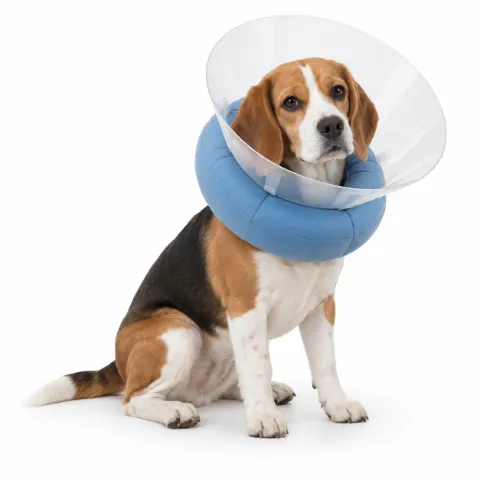
Stop the licking first, then spray. VCA says the first step with a hot spot is to stop the licking and scratching, and a cone is one way to do it. A spray does nothing if your dog licks it straight off. Our dog cone guide and dog recovery suit guide cover the options.
Check the skin. If it's bleeding, oozing or spreading, call your vet instead.
Clip the hair around a spot only if needed. VCA says never to use scissors, as they can cut the skin. A groomer or vet can do it.
Spray as the label says, from the distance it gives, and keep sprays away from the eyes unless the label allows it (for the eye area, see our dog eye wipes guide).
Put the cone or suit on until the spray has dried, and keep it on if your vet says to.
Note the date and size of the patch. If it isn't improving or it spreads, see your vet.
Summer in Australia adds sticky, humid weather and swims that can leave skin damp, which is when many owners reach for a spray. A damp, licked patch is the one to show your vet early.
Itch sprays compared
Details from each Amazon Australia listing, checked on 20 Nov 2026. "Not stated" means the listing doesn't say.
Swipe sideways to see every column
Spray
Type
Size
Active as listed
Where to use (per the listing)
Scent
Hot Spot
Spot spray
236 ml
Hypochlorous acid 0.0035%
Hot spots and irritated skin
Not stated
Wound Care
Spot flush
89 or 473 ml
Hypochlorous acid 0.0120%
Cuts, scrapes and skin irritations
Not stated
Hydrogel
Spray-on gel
89 ml
Not listed
Cuts, sores and irritations
Not stated
Arm & Hammer
Coat spray
236 ml (per the description)
Baking soda plus plant extracts
Coat only, avoid eyes and ears
Chamomile and peppermint
Choose by situation
Swipe sideways to see every column
Your situation
What to look for
Our pick
A red licked patch waiting for the vet appointment
A no-rinse spot spray made for hot spots
Hot Spot (1)
A graze or scratch after a bush walk
A flush for small grazes
Wound Care (2)
A spot on a fluffy dog where liquid runs off
A gel that clings
Hydrogel (3)
A smelly, mildly itchy coat between baths
A coat spray
Arm & Hammer (4)
Broken, bleeding or spreading skin
No home spray
See your vet
How we chose
We searched Amazon Australia for dog itch, hot spot and skin sprays, then shortlisted those that met all of these checks:
Well rated: a strong average rating with plenty of buyer reviews.
No red flags: no pattern of poor reviews, safety complaints or listing problems.
Available on Amazon Australia when we checked.
Dog-safe labelling: made for dogs or animals, with the use named on the listing.
No tea tree oil named on the listing, with plant extracts flagged.
No steroid or antibiotic that needs a vet's say-so.
Ingredients or directions available, with the gaps flagged where they aren't.
Where a listing is imported or missing a detail, we say so in the cons. These are researched picks, not products we've personally tested. We compared the specifications and features on each Amazon Australia listing, checked on 20 Nov 2026, and we didn't accept payment from any brand. Several listings make bigger claims than we repeat here, such as "vet recommended" or healing claims, and we haven't repeated them.
Left out this time: hydrocortisone creams, shampoos, foams, a hemp oil supplement, and a deodorising spray that isn't for itch.
Where else can you buy itch sprays?
Pet shops, vet clinics and some pharmacies sell dog-labelled skin sprays and cleansers, and a vet can recommend one that suits your dog's skin. If your vet prescribes a product, use it as directed.
When to see a vet
Book a vet visit if your dog's itch is daily, all over or comes back; if there's a red, wet, smelly or fast-growing patch; if you see bleeding, pus or an open sore; or if the itch comes with ear shaking, paw licking, hair loss or flea dirt. A vet can work out the cause, and a spray won't. Our hot spots guide and itchy skin guide have more.
Go to a vet or emergency clinic straight away if your dog has licked or been exposed to tea tree or another essential oil and is vomiting, drooling, wobbly or lethargic. The Animal Poisons Helpline is on 1300 869 738, 24 hours a day. Some human medicines, creams and eye drops are dangerous for dogs, so ask your vet before giving anything.
Frequently asked questions
Do anti-itch sprays for dogs actually work?
They can clean and soothe a small patch or freshen a coat, but they don't treat the cause. Common causes include allergies, fleas and skin infections, and MSD describes allergic skin disease as something managed long-term, not cured. Treat a spray as a short-term helper while you find the cause with your vet.
What is hypochlorous acid, and is it safe on dogs?
It's a mild chlorine-based cleanser made from salt water and electricity, listed as a no-rinse product. The three Vetericyn sprays are made for use on animals, but we don't call any spray safe if licked. Follow the label, use a cone and ask your vet if you're unsure.
Can I use human anti-itch spray on my dog?
Don't. Some human medicines, creams and eye drops are dangerous for dogs, and VCA says to consult your vet before using any medicine made for people, as many are toxic to dogs. Dogs also lick sprays off, so ask your vet what suits your dog's skin.
Is apple cider vinegar spray safe for itchy dogs?
We don't recommend it. Home remedies can sting or make broken skin worse, and none of the sources we read supports them. If your dog is itchy enough to want a remedy, a vet visit is the better step, and your vet can suggest what to use.
Can I spray my dog's paws with an itch spray?
Only if the label allows it and the skin isn't broken, and your dog will probably lick it off. Constant paw licking has many causes, so see our dog licking paws guide and your vet before reaching for a spray.
How often can I use an itch spray on my dog?
Follow the label. The listings say a few times a day for the two Vetericyn spot sprays, and "as needed" for the Arm & Hammer coat spray. If the patch isn't improving or it spreads, see your vet rather than spraying more.
Can I use a dog itch spray on my cat?
Don't assume so. These sprays are labelled for dogs or "all animals", but this is a dog guide, and cats are more sensitive to many ingredients. Ask your vet before using any of them on a cat.
Product details from each linked Amazon Australia listing, checked on 20 Nov 2026.
This guide provides general information and isn't a substitute for veterinary advice. If you're concerned about your dog's itchy skin, speak with your vet.