Research guide. WhiskerFinds may earn a commission from links, at no extra cost to you.
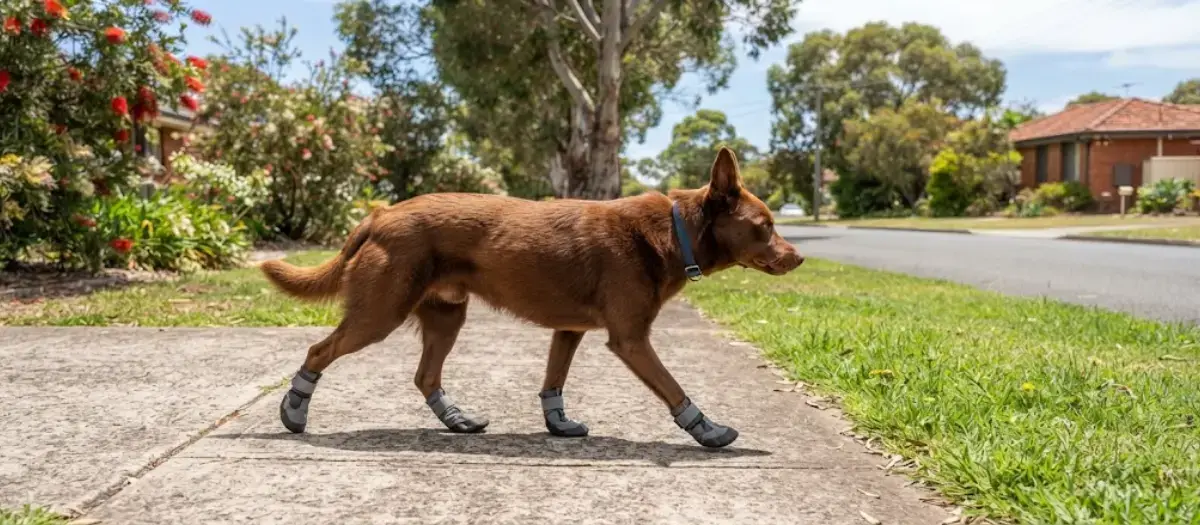
Quick answer: Dog boots (also sold as dog shoes) can shield paws from hot ground, bindis and rough tracks, but walking early and staying on grass or in shade protects paws better on a hot day. If you want boots, our top pick is the XSY&G waterproof dog boots, which have adjustable straps and a size chart for medium and large dogs.
Fit is the hard part of buying boots, so this guide spends as much time on measuring and getting boots to stay on as it does on the four pairs we picked. For the bigger picture on hot footpaths, see our hub on burnt dog paws.
Quick picks
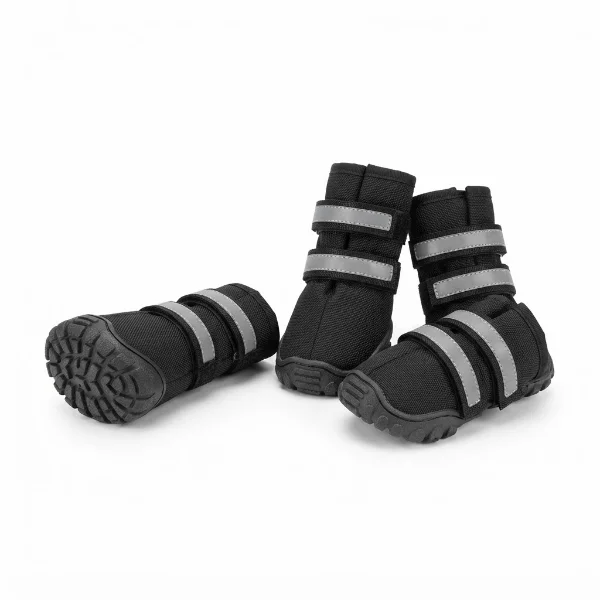
XSY&G waterproof dog boots
Two long adjustable straps, anti-slip sole and a size chart by paw length and width
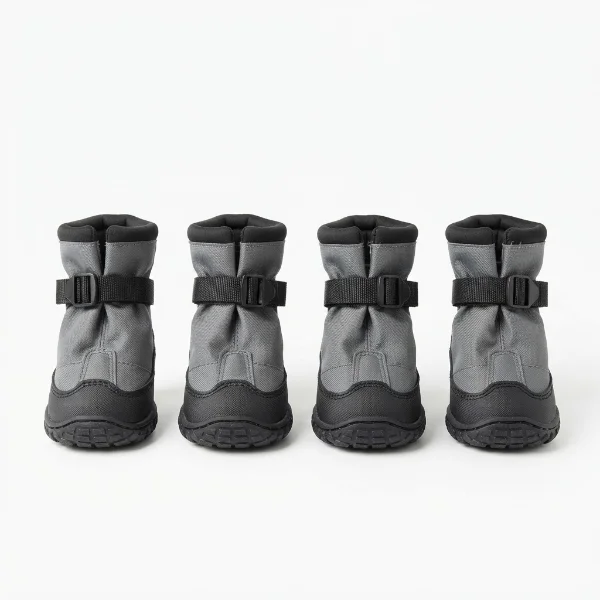
SlowTon waterproof dog boots
Wide slit opening, two nylon straps and 9 sizes based on inner width
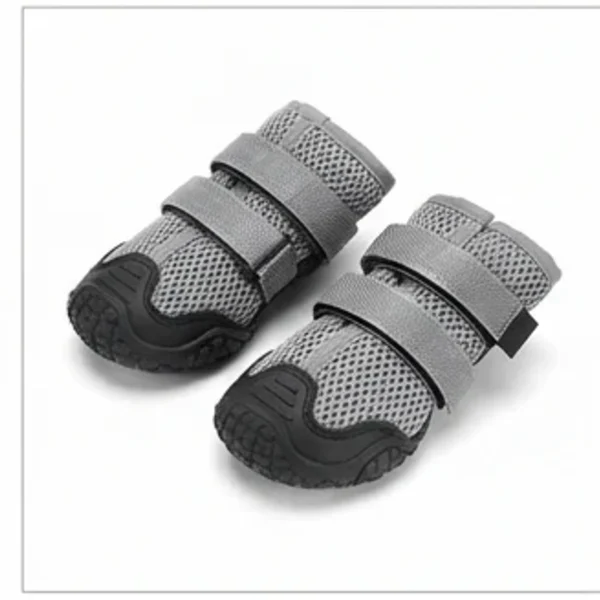
SlowTon mesh dog boots
Three layers of mesh, rubber sole, waterproof toe section and a wide slit opening
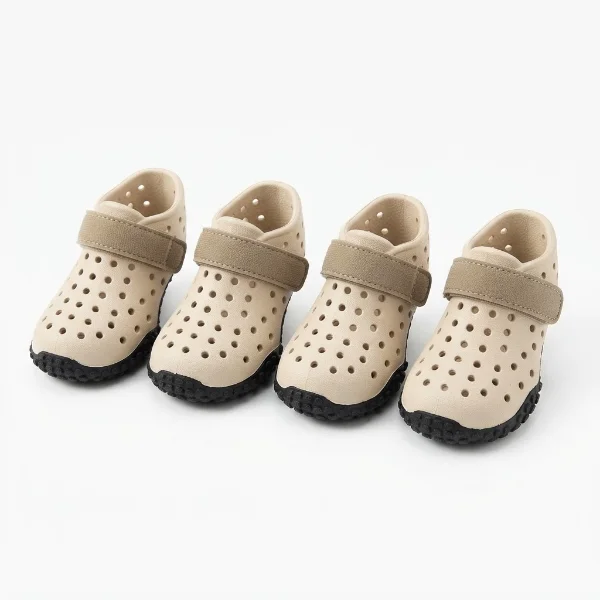
SlowTon summer dog shoes
Lightweight EVA with air holes, non-slip sole and a wide side opening
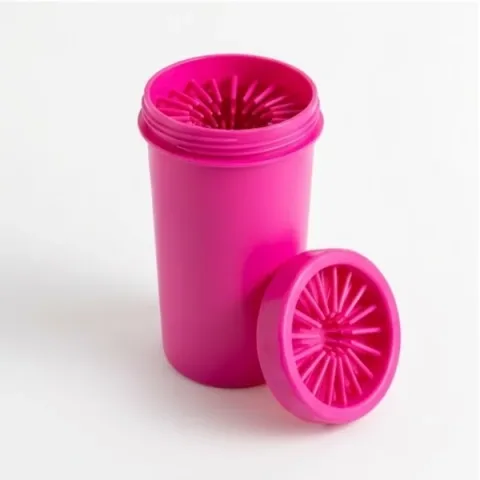
Dexas MudBuster paw washer
A quick rinse-and-wipe for muddy or gritty paws after you take the boots off.
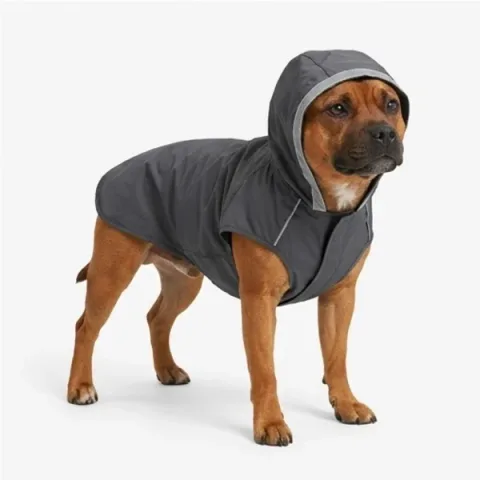
Hooded dog raincoat
Keeps the body dry on wet walks while the boots cover the feet.
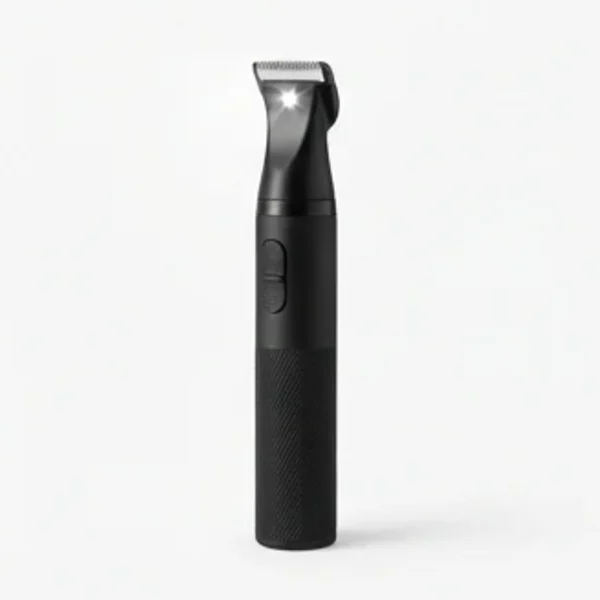
Dog paw trimmer with LED light
Trimming the fur between the pads can help with grit and grass seeds.
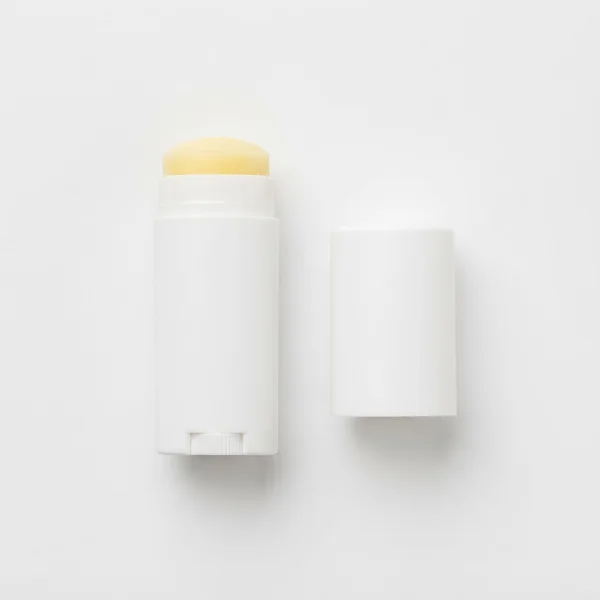
Lick-safe dog paw balm
A balm for dry paw pads on healthy skin, not for burns or open wounds.
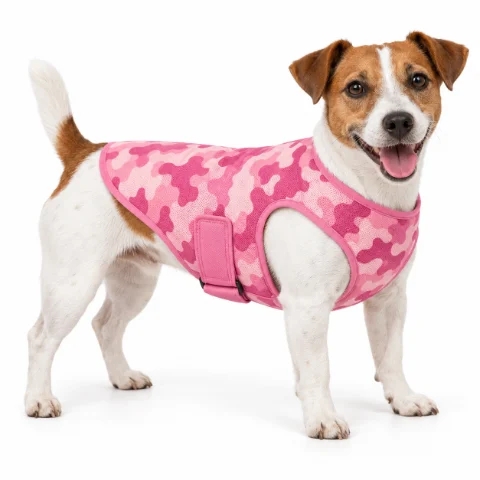
Dog cooling vest
An extra for warm-weather walks alongside boots, though neither replaces shade and water.
Pictures are illustrations, not the actual products.
Boots are a tool, not a cure, and none of these makes a very hot footpath safe to walk on. Read the next sections before you choose a size.
Do dogs need boots in Australia?
Most dogs don't need boots for everyday walks. The simplest protection on a hot day is timing: walk in the early morning or after sunset, and stay on grass and in shade. Boots make sense for specific jobs, such as a rough track, a bindi patch or a short trip across warm ground.
RSPCA Australia suggests putting the back of your hand on the footpath for 5 seconds, and if it's too hot for your hand, it's too hot for your dog's paws (RSPCA Australia, page read 31 October 2026). There's no single safe temperature, because humidity, breed, age, fitness and coat all matter. Hot sand can burn paws too (RSPCA Australia, 13 December 2024), so see our dog beach tips before a summer beach trip. Our summer cooling guide has the full routine, and a dog cooling vest can help with body heat on an early walk, though it does nothing for paws.
Boots help most in these situations:
- Short crossings of hot ground, such as a car park or a few metres of footpath, when you can't avoid it. If the footpath fails the hand test, skip the walk or go on grass.
- Bindi and grass seed season, when you're walking through long, dry grass.
- Rough tracks, stones and glass, where the sole adds a layer between paw and ground. Our hiking with a dog guide covers gear, water and track rules.
You can skip boots if you can walk early, stick to shade and grass, and your dog's paws are healthy. Dogs who need paw care for dry pads should look at our dog paw balm guide instead.
Dog boots or dog shoes: what's the difference?
In practice, none. Listings use boots, shoes, booties and paw protectors for the same product: a covering for each paw with a sole and a strap. What changes the choice is the upper (coated fabric, mesh or perforated EVA), the sole and how it fastens. Grip socks are a different product, made for slippery indoor floors, and our dog socks with grip guide covers them.
Our picks in detail
1. XSY&G waterproof dog boots: best overall for medium and large dogs
A fabric upper with a rugged anti-slip sole and two long adjustable hook-and-loop straps with reflective lines. The listing says they're hand washable, protect from hot pavement, thorns, stones and glass, and suit indoor and outdoor use. It tells you to measure the paw and tighten the straps after putting them on so they don't fall off.
The sizes are listed by length x width with a weight guide (see the size chart above), and the sets are sized mainly for medium to large dogs. A set covers four paws.
- Pros: long adjustable straps; anti-slip sole; reflective lines; size chart by paw length and width; hand washable
- Cons: fit is the hard part, and they can slip off if the size is wrong; sized mainly for medium to large dogs
- Best for: medium and large dogs, and short walks over rough or warm ground
- Skip it if: you have a small dog, or your dog chews boots
2. SlowTon waterproof dog boots: best easy on and off
A waterproof-coated fabric boot with a wide slit opening, which makes it easier to slide onto a wriggly paw. It has two nylon straps with dual adjustable fasteners, a soft rubber non-slip sole and a reflective design. The listing offers 9 sizes based on the shoe's inner width.
The listing says it isn't a rain boot, so don't submerge it. The coating also makes it warmer than an open shoe, so it suits wet or rough ground better than a very hot day.
- Pros: wide opening for easy on and off; two straps with dual fasteners; soft non-slip sole; 9 sizes
- Cons: sizing is by paw width, so measure carefully; dewclaws may need checking; warmer than open shoes; don't submerge
- Best for: dogs who fuss while boots go on, and damp or rough ground
- Skip it if: you mainly want a cooler shoe for warm footpaths
3. SlowTon summer dog shoes: best breathable shoes for hot footpaths
A lightweight EVA shoe with perforated holes for airflow, a non-slip sole, reflective strips and a wide side opening with an adjustable hook-and-loop strap. The listing says it suits hot pavement and offers 8 sizes chosen by paw width.
It comes with four detachable flower charms. Remove them before wearing, because they're small parts. It's a newer listing with less track record than the others, and EVA protects from heat and sharp objects but not from every surface.
- Pros: airflow holes; lightweight; wide side opening; non-slip sole; reflective strips
- Cons: newer listing with less track record; the charms are small parts, so take them off; doesn't protect from every surface
- Best for: short crossings of warm ground when you want something lighter
- Skip it if: your dog chews or swallows small things, or your walk goes over very rough ground
4. SlowTon mesh dog boots: best closed boot for everyday walks
This sits between the coated SlowTon boot (warm) and the open EVA shoe (little cover on rough ground): a closed, breathable boot. The listing says it has three layers of mesh, a rubber sole and a waterproof toe section (it calls the material "space leather"), plus two nylon straps with dual fasteners, a reflective design and a wide slit opening. The listing says it protects from hot pavement and sharp things such as stones and glass, though no boot makes a very hot footpath safe, so do the hand test first. The care field says machine wash.
It uses the same strap and opening design as the SlowTon waterproof boots, but with a mesh upper instead of the coated one, so it should be cooler and is not the pick for wet days. The link is for one size, so choose yours on the listing by paw width.
- Pros: breathable mesh upper; closed boot with a waterproof toe section; wide slit opening; two straps with dual fasteners; reflective design; machine washable per the listing
- Cons: sizing is by width only, so measure carefully; the link is one size, so pick yours on the listing; a newer variant with a smaller track record; mesh can let in fine sand and water
- Best for: daily walks on mixed ground, bindi patches, and dogs who fuss about boots going on
- Skip it if: you want a fully waterproof boot (only the toe is), or your dog has an injured paw. The listing also pitches it for injured paws, but ask your vet first and don't rely on that line.
How to measure your dog for boots
Measure each paw while your dog stands on a sheet of paper, so the paw spreads the way it does when walking. Mark the widest point for width, then measure from the back of the paw to the tip of the longest nail for length. Compare both numbers with the size chart on the listing, never a general guess (a dog boot size guide).
Front and back paws can differ, so measure all four. The four listings size boots differently, which is why you shouldn't carry a size from one pair to another:
- XSY&G: sized by length x width, with a weight guide. The listing's size 7 is about 8.2 x 7.3 cm, for dogs about 34 to 41 kg. It tells you to measure the paw before ordering and to choose the size by width.
- SlowTon waterproof boots: 9 sizes based on the shoe's inner width, so the paw width measurement matters most.
- SlowTon mesh boots: sized by inner width too. The listing shows size 7 as 7 cm wide.
- SlowTon summer shoes: 8 sizes, and the listing says to measure your dog's paw width and choose by the inner diameter on its size chart.
Boots that are too small can squeeze and hurt, and boots that are too big can slip off or make a dog trip (a dog boot size guide). If your dog falls between sizes or the chart is unclear, check the listing for sizing advice before you buy.
Dog boot size chart by paw size (cm)
This is the XSY&G size reference as listed, converted to centimetres and kilograms. Use it as a guide to what the sizes mean, then go by your own dog's measured paw.
XSY&G sizes as listed
| Size | Inside length x width | Listing's dog guide |
|---|---|---|
| 1 | 5.8 x 4.0 cm | about 7 kg |
| 2 | 6.0 x 4.3 cm | about 9 kg |
| 3 | 6.4 x 4.8 cm | over about 10 kg |
| 4 | 6.4 x 5.6 cm | about 15 kg |
| 5 | 6.4 x 6.9 cm | about 20 to 25 kg |
| 6 | 7.0 x 6.6 cm | about 29 to 32 kg |
| 7 | 8.2 x 7.3 cm | about 34 to 41 kg |
| 8 | 8.1 x 7.6 cm | about 36 to 41 kg |
The listing says its sizes are the inside of the shoe, measured by hand, so allow a little size error. The chart is uneven between sizes 5 and 6 (size 5 is wider than size 6), so go by your dog's measured paw width and not by the breed examples. The listing's own measurement bullet gives size 7 slightly differently (about 8.2 x 7.4 cm), which is another reason to treat the numbers as "about".
The three SlowTon pairs are sized by inside width only (see the list in the measuring section above), so don't use this table for them.
Dog boots compared
Details from each Amazon Australia listing, checked on 25 November 2026.
| Boots | Best for | Upper | Sizes | Fastening and sole |
|---|---|---|---|---|
| XSY&G waterproof dog boots | Medium and large dogs | Fabric | 8, by length and width | 2 long hook-and-loop straps, reflective lines, rugged anti-slip sole |
| SlowTon waterproof dog boots | Easy on and off, wet or rough ground | Coated fabric | 9, by inner width | 2 nylon straps, dual fasteners, wide slit, soft rubber non-slip sole |
| SlowTon mesh dog boots | Everyday walks on mixed ground | Three-layer mesh with a waterproof toe section | By inner width | 2 nylon straps, dual fasteners, wide slit, rubber sole |
| SlowTon summer dog shoes | Warm footpaths, breathability | Perforated EVA | 8, by inner width | Wide side opening, adjustable hook-and-loop strap, non-slip sole |
Choose by situation
| Your situation | What to look for | Our pick |
|---|---|---|
| Short crossing of warm ground | Light, airy shoe; still do the 5 second hand test | SlowTon summer shoes |
| Bindis and dry grass | Closed toe, two straps | SlowTon mesh boots or XSY&G |
| Wet grass, rain, rough tracks | Coated upper, rubber sole | SlowTon waterproof boots |
| Medium or large dog, first pair | Size chart with length and width | XSY&G |
| Dog fusses when boots go on | Wide slit opening | SlowTon waterproof or mesh boots |
| Older dog slipping on tiles indoors | Not boots | Dog socks with grip |
| Footpath fails the hand test | No boot fixes this | Walk early or late, on grass |
How we chose
We searched Amazon Australia for dog boots and summer dog shoes, then shortlisted pairs that met all of these checks:
- Well rated: a strong average rating with plenty of buyer reviews.
- No red flags: no pattern of poor reviews, safety complaints or listing problems.
- Available on Amazon Australia when we checked.
- Size chart by paw measurement.
- Adjustable straps.
- Non-slip sole.
These are researched picks, based on specifications rather than use in our own homes. We compared the features shown on each Amazon Australia listing, checked on 25 November 2026. We didn't accept payment from any brand, and no brand saw this page before it was published.
Left out this time: premium-brand boots that were slow to arrive, rubber balloon-style disposable boots, boots with lots of fit and durability complaints, a velvet-lined pair whose listing gave two different size charts, and knit socks pitched for hot pavement, because a knit sock isn't heat protection.
How to get your dog used to boots
Go slowly, with treats, and never force it. Let your dog sniff the boots first and reward calm curiosity. Then try one boot for about 10 seconds, then 30, then a minute, rewarding each time, before adding the other boots (a boot training guide). Keep sessions short and stop while your dog is still relaxed.
A simple plan:
- Indoors on a soft floor. Let your dog take a few steps on carpet while you stay close.
- Short walks in a quiet, familiar spot. Move at your dog's pace, on grass first.
- Build up slowly. Lengthen the walks and try new surfaces over time. Dogs vary, and some take a few sessions while others need a few weeks.
- Stop and go back a step if your dog limps, lifts a paw or chews at the boots.
A trainer can help if your dog resists. Never punish a dog for refusing boots.
After every use, take the boots off and check each paw, between the toes and the dewclaws for rubbing, swelling or redness. Don't leave a dog in boots unsupervised or overnight, and a dog that chews boots shouldn't be left with them.
How to stop dog boots falling off
Most boots fall off because the size is wrong or the straps are loose. Re-measure the paw standing, check it against the listing's size chart, then fasten the straps firmly after the boot is on. The XSY&G listing says to tighten the straps after putting them on so they don't fall off. Boots should fit snugly without being tight, and a boot that slips off or pinches is the wrong size (a dog boot size guide).
Other things to try:
- Trim long nails and paw hair first, using our dog nail clippers guide, how to cut dog nails at home, dog paw trimmers and trimming dog paw fur.
- Boots are for outdoors. If the problem is an older dog slipping on tiles or floorboards at home, dog socks with grip are the better tool.
- Practise at home until your dog walks naturally in them, and go back a step if the walk still looks awkward.
- If a pair still slips after you've checked the size, try a different style, such as the SlowTon waterproof boots or mesh boots with their wide opening and two straps.
- Use a well-fitted no-pull harness so you aren't tugging on a dog who is still learning to walk in boots.
Dog shoes for bindis and grass seeds
Boots can add a barrier between the sole and long, dry grass, and Pet Insurance Australia lists protective booties as one option for high-risk outings. They don't replace checking paws, though, because seeds can also end up in ears, armpits and fur (Pet Insurance Australia).
After walks in long grass, check the paws, ears, armpits, groin and nose. Keep the fur around the toes and legs trimmed, and avoid long, dry grass in summer where you can (Pet Insurance Australia, page read 31 October 2026). Swollen paws, persistent paw licking and unexplained limping can be signs of a grass seed. Pet Insurance Australia says a dog won't sneeze out a lodged seed, so see your vet promptly if you suspect one.
When to get help
Heatstroke is an emergency. Heavy panting, drooling, weakness, vomiting or collapse need action now. Cool first with cool (not ice-cold) tap water over the body, neck, belly and legs, keep air moving, then call your vet and go straight there, even if your dog seems better. Boots don't prevent heatstroke. See our full steps.
Call your vet the same day if your dog is limping, refusing to walk, licking or chewing a paw, or has swelling, redness, blisters or missing skin after being on hot ground. Get off the hot surface, cool the paw with cool (not ice-cold) running water, keep it clean and stop licking, and call your vet the same day. Don't use human creams, butter or ointments, or paw balm on a burn or open wound. More in our burnt paws guide.
See your vet if you suspect a grass seed, or if boots leave rubbing, sores or swelling on the paws.
Frequently asked questions
Do dog boots help with hot pavement?
They can add a layer between the paw and the ground, and the XSY&G, SlowTon mesh and SlowTon summer listings all mention hot pavement. They don't make a very hot footpath safe, so walk early or late, stay on grass and shade, and use the hand test first.
Are dog boots bad for dogs?
Not if they fit and your dog is used to them. Problems come from boots that are too tight or too loose, or from wearing them too long. Introduce them slowly, check the paws for rubbing, swelling or redness afterwards, and take them off after each walk.
What size dog boots do I need?
Measure each paw standing, for width and length, then match both to the listing's size chart. Sizing differs between brands, so a size 7 in one pair isn't the same as in another. Our size chart and measuring section show how, and the SlowTon boots and shoes size by inner width.
How do I know if dog boots fit?
A good fit is snug but not tight. The paw should be narrower than the boot's inside width, the straps should close firmly, and there should be no rubbing at the dewclaw. After a few short sessions your dog should walk normally. If the boot slips off or your dog limps, re-measure and try another size.
Can dogs wear boots all day?
No. Put them on for the walk and take them off afterwards, because boots can rub or squeeze over long periods and you want to see the paws. Don't leave a dog in boots unsupervised or overnight, and check the paws each time they come off.
Why does my dog walk funny in boots?
A high-stepping or awkward walk can happen at first, because boots feel strange. Go back to short indoor sessions with treats. If the walk doesn't settle, or your dog limps or chews at the boots, check the size and fit, and try a different style.
Are there dog boots for small dogs?
Yes, but size is the question. The XSY&G chart starts small: sizes 1 and 2 are listed at 4.0 and 4.3 cm wide, though the set is sold mainly for medium to large dogs. Both SlowTon styles run several sizes by inside width. Measure your dog's paw width standing, then compare it with the listing's chart.
Do dog boots work for bindis?
They can add a barrier between paws and bindis, but seeds can still end up in fur, ears and other spots. Check paws after walks in long grass, and see your vet if you notice swelling, licking or limping. More in the bindi section above.
Related guides
- Best dog hiking backpacks
- Best dog coats and jackets
- Best dog raincoats
- Burnt dog paws: how hot is too hot for pavement
- Best dog paw balm that's lick-safe
- Dog socks with grip for slippery floors
- Best dog cooling vests
- How to keep your dog cool in summer
- Best no-pull dog harness
- Best dog nail clippers
- Hiking with a dog: gear, water and track rules
- Taking your dog to the beach
Sources
- RSPCA Australia: 4 ways to keep your dog cool this summer, page read 31 October 2026
- RSPCA Australia: Five ways to keep your animals safe on hot days, dated 13 December 2024, read 31 October 2026
- Pet Insurance Australia: Grass seed injuries in dogs, read 31 October 2026 (no publication date shown)
- Choosing the right dog boots, size guide, read 31 October 2026 (boot brand, used for measuring and fit only)
- Training guide, get your dog used to boots, read 31 October 2026 (boot brand, used for introduction steps only)
- Product details from each linked Amazon Australia listing, checked on 25 November 2026.
This guide provides general information and isn't a substitute for veterinary advice. If you're concerned about your dog's paws, speak with your vet.