Quick answer: To cut dog nails at home, hold the paw steady and take off 1 to 2 mm at a time, stopping well before the quick, the living core of the nail with blood and nerves. On black nails, take thin slices and stop when a dark dot appears in the centre. Keep styptic powder within reach.
Most owners put nail trims off because they're scared of hurting their dog, and that's fair. This guide covers the handling, the quick, black nails, dewclaws and what to do if a nail bleeds. If you're still choosing tools, our dog nail clipper picks compare them by dog size.
Quick picks
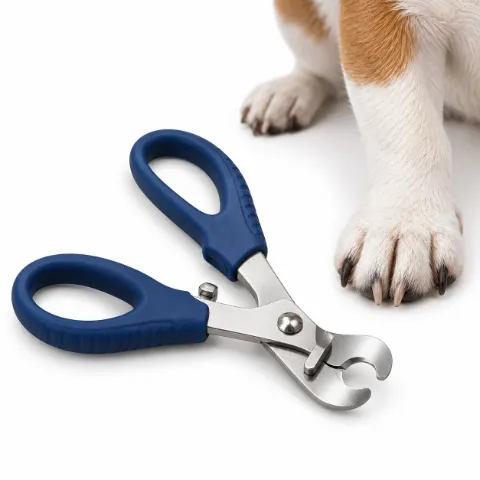
Safari Professional Nail Trimmer
Scissor-style stainless steel blades with a safety stop, which is an aid, not a guarantee.
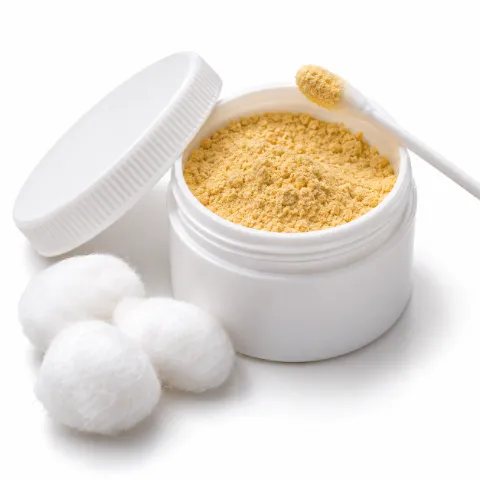
Kwik Stop Styptic Powder, 14 g tub
Styptic powder for nail tips and tiny surface nicks only; follow the label.
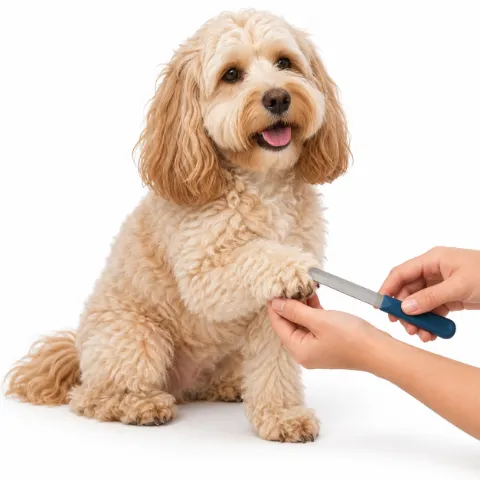
Coastal Safari Diamond Nail File
A fine-grit file for smoothing the sharp edge after clipping.
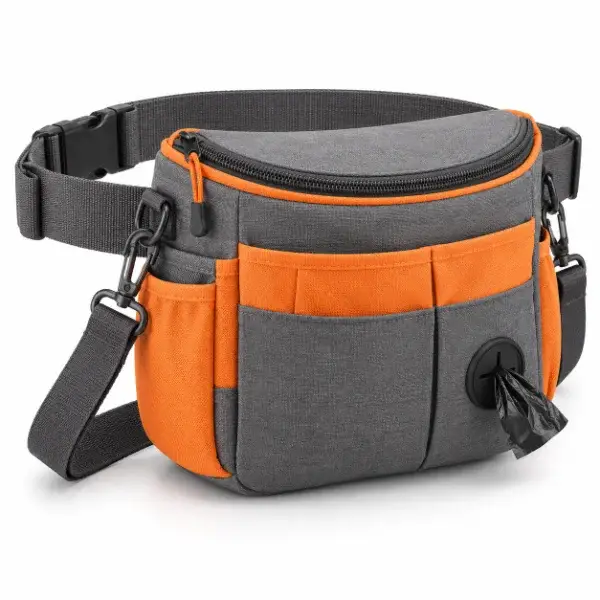
Gobeigo treat pouch
Keeps treats on your hip so you can reward calm the moment it happens.
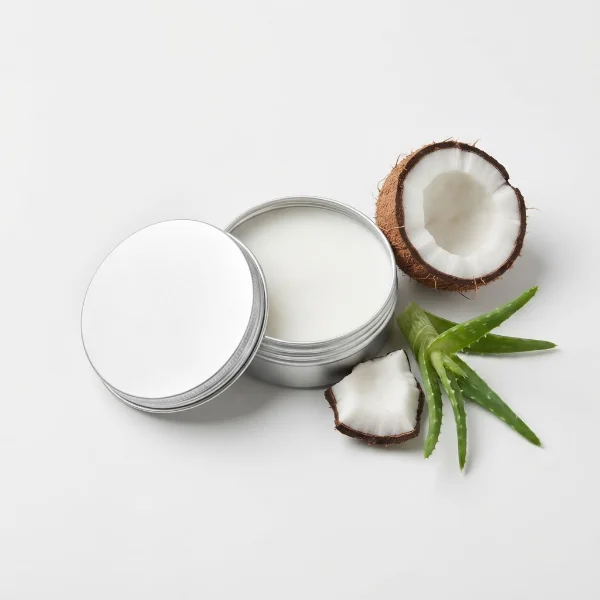
PawSono lick-safe paw and nose balm
A paw balm for dry pads once nails are done and you've checked each foot.
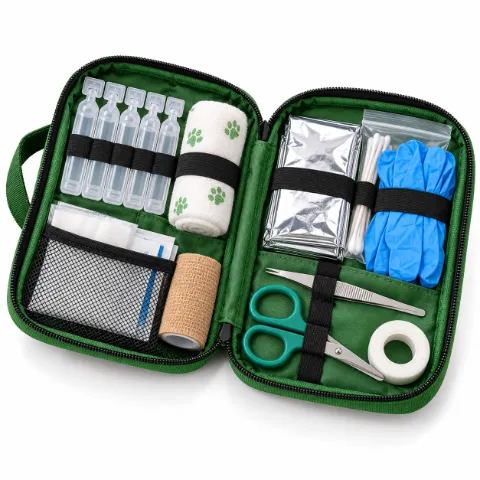
Reliance Medical Pet First Aid Kit
A ready-made kit gives the styptic powder and other basics one tidy home.
A treat pouch for trim sessions
Keeping rewards on your hip means you can hand one over the moment your dog stays calm, which is how the training steps above work best.
PawSono lick-safe paw and nose balm
A paw balm for tending dry pads once nails are done and you've had a good look at each foot.
Reliance Medical Pet First Aid Kit
A ready-made kit gives the styptic powder and other basics one tidy home.
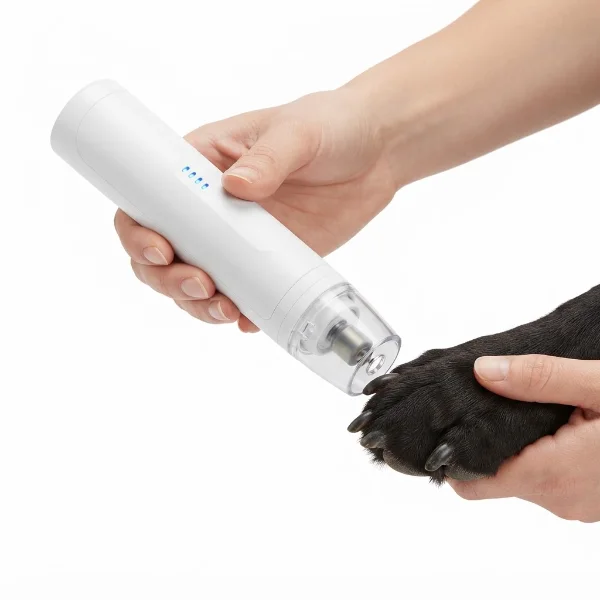
Casfuy 6-speed dog nail grinder
A grinder wears nails down gradually, which some owners prefer to clipping.
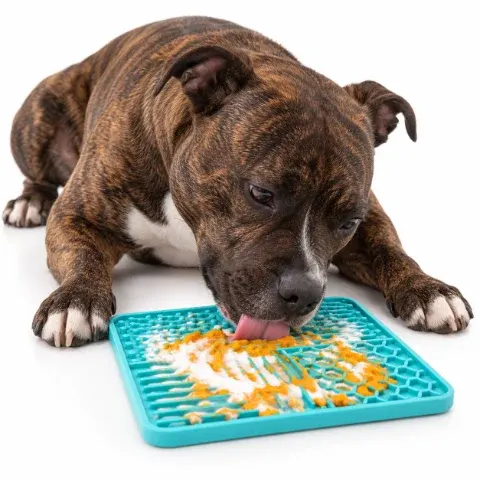
LickiMat Classic Buddy
A spread of something tasty on the mat gives your dog a calm distraction while you work.
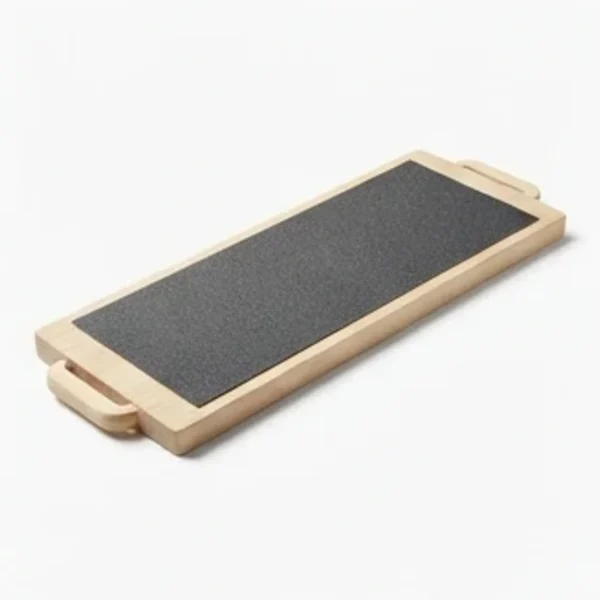
Embosk dog nail scratch board
A scratch board can be taught as a hands-off way to keep nails short between trims.
Pictures are illustrations, not the actual products.
More detail on the clipper, powder and file is in Useful gear for a nail trim below. These help with the routine; if a nail keeps bleeding or looks injured, call your vet.
How do you cut a dog's nails at home, step by step?
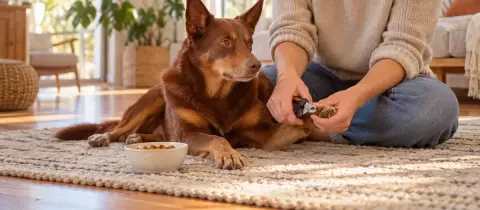
Set up somewhere calm and well lit with your tool, treats and styptic powder within reach. Hold the paw, extend one nail, and remove a tiny piece from the tip. Repeat in small cuts, stopping before the quick. Finish with a treat, then do the next nail or call it a day.
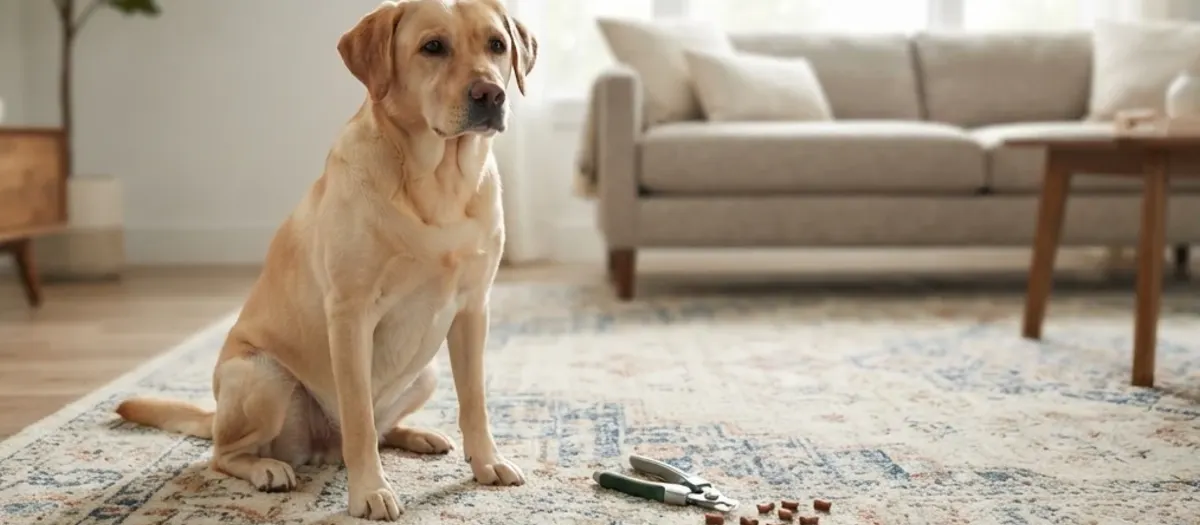
- Get set up. Good light makes the quick easier to see. Have treats ready, and keep a little styptic powder open before the first cut, not after the first accident.
- Hold the paw the way the AKC describes. Thumb on the pad, forefinger on top of the toe above the nail. Press the pad back gently and push the toe forward and the nail extends. Move any long fur out of the way so you can see what you're cutting (American Kennel Club).
- Look at the nail. On a light nail you can see the quick, the pink core. VCA suggests stopping about 2 to 3 mm short of it. On a dark nail you can't see it, so take only the very tip (VCA Animal Hospitals).
- Cut in small slices. VCA suggests taking 1 to 2 mm at a time, with the final cut near where the nail starts to curve, stopping sooner if you reach the quick (VCA).
- Do the dewclaws (see below), then finish with a treat.
A helper can keep the paw steady and hand out small, frequent treats, which VCA suggests. If your dog needs holding down to get it done, stop and read the section on dogs that hate nail trims, because force tends to make the fear worse.
How do you know where the quick is on black nails?
You can't see the quick through a black nail, so you work from what the cut surface shows you. Trim a thin slice, look at the end of the nail, and stop as soon as it changes in the middle. Two sources describe the signs slightly differently, so learn both.
- A dark dot in the centre. PetMD says to trim a little at a time and stop once a black dot shows in the middle of the cut face (PetMD).
- A chalky white ring. The AKC says to watch for this on dark nails and stop when you reach it (American Kennel Club).
- A torch. Dogs Trust says shining a torch through a dark nail can help you see inside, and to ask your vet if you're unsure (Dogs Trust).
- The squeeze test. Dogs Trust also suggests gently squeezing the clippers on the nail before a full clip. If your dog pulls away, looks anxious or yelps, the quick is inside, so move closer to the tip (Dogs Trust).
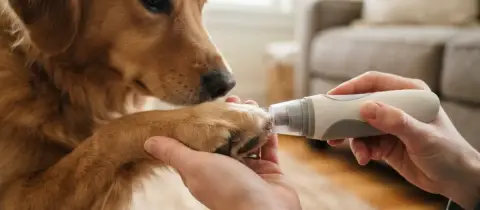
A grinder or file takes off less at a time, which is why many owners prefer one for black nails (more on that below).
How short should a dog's nails be?
A dog's nails should be short enough that they don't touch the ground when your dog stands normally. Look at them from your dog's level. If they touch the floor, or you can hear them clicking on tiles or timber, they're too long (VCA).
PetMD says nails shouldn't extend past the toe pads when your dog is standing (PetMD). Use the table to work out how much to take.
| What you see | How much to take | When to stop |
|---|---|---|
| Light nail, quick visible | Stay about 2 to 3 mm short of the quick (VCA) | Before the pink core |
| Dark nail, regular trims | Very tip only, 1 to 2 mm slices (VCA) | When a dark dot or chalky ring shows on the cut face |
| Nails not trimmed for a long time | A little at a time, because the quick can reach almost to the tip (VCA) | Before the quick; give it about a week to recede between trims (Dogs Trust) |
| Nails touching the floor | Work back towards the toe pad over several sessions | When they clear the ground |
RSPCA Australia puts it the same way: trim nails just before they start to touch the ground when your dog is standing or walking (RSPCA Australia Knowledgebase, "Why and how should I groom my dog?", updated 19 January 2022, page read 25 November 2026).
How often should you cut a dog's nails?
Most dogs need a trim about every three to four weeks. VCA says about once a month for most dogs, and about every three weeks for inactive dogs. Dogs that walk often on pavement or concrete may go longer, because hard ground wears nails down (VCA; PetMD).
Don't go by the calendar alone. Check the nails every couple of weeks, as Dogs Trust suggests, and keep checking as your dog gets older and exercises less, even if they rarely seem to need clipping. If your dog licks or nibbles at a nail, check it straight away (Dogs Trust). Persistent paw licking has plenty of other possible causes too, which we cover in dog licking paws.
What do you do if you cut the quick and the nail bleeds?
Stay calm; it happens to most owners at some point. Press styptic powder onto the nail tip and hold gentle pressure. If you don't have any, PetMD says you can dab the nail on a bar of soap or in a little flour or cornflour. Call your vet if it keeps bleeding for more than several minutes (PetMD).
Once the bleeding slows, look over the toe for other injuries. PetMD also notes that a fractured nail is more serious than a trim nick and usually needs a vet to prevent infection, and suggests talking to your vet before treating any nail injury at home if you can.
Styptic powder is for nail tips and tiny surface nicks only. The Kwik Stop listing says to avoid deep wounds and body cavities, and to follow the label. Our styptic powder guide covers the options and how they differ, and a dog first aid kit is a sensible home for a tub.
How do you cut the nails of a dog that hates it?
Go slowly, keep sessions short and never force it. VCA says dogs with no existing fear may learn within a session or two, while dogs with existing fear may take weeks, months or longer. The aim is a dog who is comfortable with each step before you move on to the next one (VCA).
A sequence that fits what VCA and Dogs Trust describe:
- Touch the shoulder, then work gradually towards the paw, pairing each step with a treat.
- Let your dog sniff the clippers, with treats. Dogs Trust suggests practising the sound by clipping dry pasta.
- Touch a nail with the tool, then trim a tiny sliver from one nail and stop there.
- Add one nail at a time over several sessions. Keep sessions to a minute or two, a few times a week.
- Pause if your dog turns away, leans back or yawns, and don't move on until they relax.
Two cautions from VCA. Don't use food to distract your dog during the trim and then rush it, because that can erode trust. Do use treats to build a good feeling about each handling step. And holding a frightened dog by hand, or in a hammock or sling, can make the fear worse. Extreme fear, such as trembling, drooling, panting, growling or snapping, is a reason to get professional help, and your vet may suggest anti-anxiety medication. Until training is complete, VCA says not to ask anyone, including a groomer or vet, to trim the nails. If they are very long and can't wait, VCA says a vet can trim them under a light sedative.
Do you need to trim dewclaws?
Yes. Dewclaws are the extra nails higher up on the inside of the leg. They don't touch the ground, so they don't wear down and can overgrow and curl into the pad. VCA says to trim the inside dewclaws along with the other nails (VCA).
The AKC and PetMD both list dewclaws as part of a normal trim. Check them every time, and look at all four feet before you decide you're done.
Is it better to clip or grind (file) a dog's nails?
Both work, so use whichever your dog tolerates and you find easier. The AKC says both are safe when used correctly, and that some dogs accept one tool much better than the other. Clippers are quick and quiet. Grinders and files take off less at a time (American Kennel Club).
| Tool | Handy when | Watch for |
|---|---|---|
| Clippers | Your dog is fine with a quick snip and you want it done fast | Cutting too much at once; blunt blades |
| Grinder | Nails are black, or your dog flinches at the clip | Noise and vibration; PetMD says it may not suit jumpy dogs, and the AKC says to keep long hair away from the head |
| Hand file | Smoothing a sharp edge after clipping | Slow for shortening long nails |
Our dog nail grinder guide compares grinders and how to introduce one, and the dog nail file guide covers hand files. A dog scratch board is a training tool some owners use between trims; it mainly reaches the front nails, so it doesn't replace trimming. If you're building a full home kit, see what you need to groom a dog at home, and if the fur between the pads is in the way, our guide to trimming paw fur and paw trimmer picks can help.
Useful gear for a nail trim
You don't need much. These three are worth having before the first cut. Styptic powder and nail tools are also stocked by vet clinics and pet shops, so ask there if you'd rather see them in person.
- Safari Professional Nail Trimmer: our pick in the clipper guide. It's a scissor-style trimmer with stainless steel blades, a tension spring and a safety stop, and the listing gives the size as 12.7 cm long. The maker's directions say to trim the nail tip in a single stroke and stop short of the quick. The stop is an aid, not a guarantee. Imported, so check the delivery details before you order.
- Kwik Stop Styptic Powder, 14 g tub: for nail nicks. The listing says to apply it with a moistened cotton applicator and moderate pressure for 5 to 10 seconds. The listing says it contains benzocaine, but the ingredient field doesn't list it, so check the label. Details and alternatives are in the styptic powder guide.
- Coastal Safari Diamond Nail File: a fine-grit stainless steel file for smoothing the sharp edge after clipping. The listing says to file from the back of the nail to the tip, never the opposite way. It finishes a trim rather than shortening long nails. More in the nail file guide.
If your dog hates the clip, a grinder may suit better. Our nail grinder guide compares them and names its top pick, a Casfuy 6-speed grinder.
When to see a vet
Call your vet if:
- a nail is still bleeding after several minutes of pressure and styptic powder
- a nail is torn, split or broken, or is hanging loose
- a nail or dewclaw has curled into the pad
- there is swelling, pus, heat or a bad smell around a nail
- your dog is limping or keeps licking or nibbling at a toe
- the nails are so overgrown that the quick has grown long. A vet or groomer can bring them back in stages
- your dog snaps, panics or needs holding down. Ask your vet about a calmer plan rather than forcing it
Not sure whether a nail needs attention? Your vet clinic can look at it, and can show you how to trim at home. See also our dog licking paws guide.
Frequently asked questions
What angle should you cut a dog's nails at?
Sources differ. The AKC says to cut straight across and remove only the tip, without cutting past the curve. PetMD describes cutting following the natural curve at roughly 45 degrees. Either way, the safer habit is small slices that stop before the quick.
Why are my dog's nails clicking on the floor?
Clicking or tapping on hard floors is a sign the nails have grown long enough to touch the ground. PetMD says that's the cue for a trim. Check from your dog's level, and trim a little at a time if the nails haven't been done for a while.
When should puppies start having their nails trimmed?
Start handling a puppy's paws early and often so they get comfortable with it, as the AKC suggests. Pair each session with treats. You can begin with gentle paw touching and the very tip of a nail, long before nails need a real trim.
Can overgrown nails hurt my dog?
They can. Dogs Trust says a badly overgrown nail can grow into the pad and cause pain and possible infection, and that long nails can also hide problems such as arthritis. PetMD notes long nails can change how a dog stands. If a nail has curled into the pad, see your vet.
How do I get a long quick to recede?
Trim a little at a time over several weeks. Dogs Trust suggests giving the quick about a week to recede between trims, then keeping nails short with regular trims and exercise on hard ground. VCA notes the quick can reach almost to the tip when nails haven't been trimmed regularly.
Can a groomer or vet trim my dog's nails instead?
Yes, if your dog is relaxed about it, and it's worth asking the clinic to show you how. The exception is a fearful dog in training: VCA says not to have anyone, including a groomer or vet, trim the nails until training is complete. If the nails are very long in the meantime, VCA says a vet can trim them under a light sedative.
Do scratch boards or nail caps replace trimming?
Not on their own. A scratch board works mainly on the front nails and needs training, so it's an extra between trims, not a replacement. We didn't find a vet source on nail caps for dogs, so ask your vet first.
Related guides
- Best dog nail clippers
- Best dog nail grinder
- Dog nail files
- Styptic powder for dogs
- Dog paw trimmers
- Dog grooming kit: what you need at home
- Trimming dog paw fur
- Best dog first aid kits
- Dog licking paws
Sources
- VCA Animal Hospitals: How to trim a dog's nails (page read 25 November 2026)
- VCA Animal Hospitals: Nail trimming for anxious dogs (page read 25 November 2026)
- American Kennel Club: How to trim dog nails (page read 25 November 2026)
- PetMD: How to trim dog nails (page read 25 November 2026)
- PetMD: How to stop a dog's nail bleeding (page read 25 November 2026)
- Dogs Trust: Nails (page read 25 November 2026)
- RSPCA Australia Knowledgebase: Why and how should I groom my dog? (updated 19 January 2022, page read 25 November 2026)
- Product details from the linked Amazon Australia listings, checked on 25 November 2026.
This guide provides general information and isn't a substitute for veterinary advice. If you're concerned about your dog's nails, paws or comfort, speak with your vet.