Quick answer: Camping with a dog is easy once you pick the right site. Dogs are banned from most national parks, but state forests and many private campgrounds welcome them on a lead. Check each site's rules first, pack shade, water and a bed, check for ticks daily, and never leave your dog alone at camp.
Dog-friendly camping mostly comes down to three things: choosing a site that actually allows dogs, keeping your dog safe from heat, ticks and snakes, and giving them a proper spot to sleep. This guide is the starting point for our camping and hiking guides, including hiking with a dog. Leaving your dog at home instead? See dog care while you're on holiday.
Can I take my dog camping in a national park?
In most cases, no. NSW National Parks says dogs and other pets aren't allowed in most national parks and reserves, and Parks Victoria says the same, including beaches that are part of a national park. Rules differ by state and by park, so check the park's own page before you go.
The NSW National Parks pets page says some regional parks allow dogs under effective control, and that dogs are welcome in all NSW State forests (NSW National Parks, page read 2 November 2026). Parks Victoria says dogs must be on a lead in parks that allow them, that you could be fined for an off-lead dog in a dog-friendly park, and that owners can face court action or substantial fines if a dog harms wildlife. Parks Victoria adds that you can drive through a national park with a dog if it stays in the vehicle. Other states have their own rules, so look up the relevant parks agency.
Where can I camp with a dog in Australia?
Look at state forests, some regional parks, council and private caravan parks, and private bush camps that say dogs are welcome. Many allow dogs on a lead, but rules vary from site to site, so confirm before you book. We can't verify individual campgrounds, so we don't list them.
Parks Victoria's dog-friendly page names some parks with dog-friendly camping, such as Cape Conran, Gippsland Lakes Coastal Park and Kurth Kiln Regional Park, and says dogs are generally not permitted to camp in national parks (Parks Victoria, page read 2 November 2026). Treat any list online, including that one, as a place to start and check the current rules.
When you book, ask:
- Are dogs allowed across the whole campsite or just some areas?
- Do they need to be on a lead at all times?
- Is there a limit on the number or size of dogs, or an extra fee?
- Are there baiting programs, livestock or wildlife nearby? Ask about these before bringing your dog.
What should I pack for camping with a dog?
Pack for your dog the way you pack for yourself: somewhere to sleep, water, shade, food, ID and a first-aid plan. The list below links to our guides for the bigger items. It's a checklist, not a shopping list, so buy just what you'll use.
What to pack
- Bed or mat: a camping bed or an outdoor dog bed keeps your dog off cold, damp or rough ground. For cold nights, see dog sleeping bags.
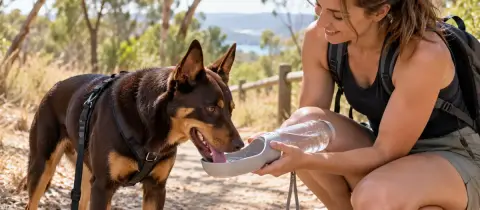
- Water: carry more than you think you need, in a dog water bottle, plus a collapsible bowl.
- Rinse water: a portable dog shower washes sand, salt and mud off before your dog gets in the car or tent.
- Food: their normal food, measured for the trip and kept sealed.
- Lead and harness: a sturdy lead and a well-fitted harness. Pullers may do better in a no-pull harness.
- Tie out: a dog tie out is for supervised, shaded use while you're right there. More on that below.
- ID: a collar with a tag and a microchip with up-to-date details. See our dog collar guide.
- Poo bags: pack plenty of poop bags and a bin bag, so you can carry it out. A walking bag keeps them handy.
- Tick tools and treatment: a tick remover, plus whatever tick preventative your vet recommends.
- Life jacket: if there's water and your dog will be near it. See dog life jackets.
- Towel, torch and first-aid basics: and your vet's number, plus the nearest after-hours vet. Our dog first aid kits guide compares kits and lists what to add.
- Familiar items: a favourite toy or blanket helps them settle in a new place.
Where should my dog sleep when camping?
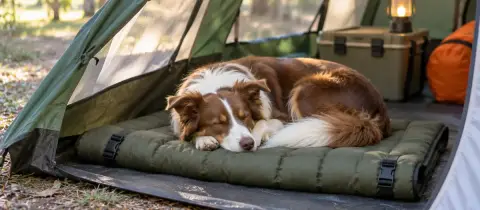
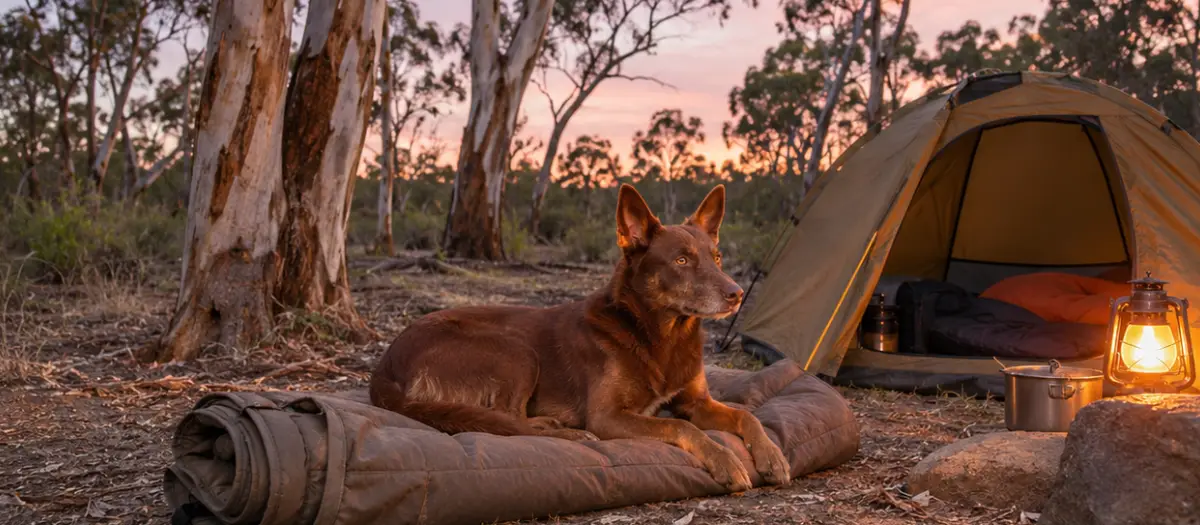
The best spot is next to you, inside the tent or the vestibule, on a bed that keeps them off the ground. A familiar bed helps them settle. Bring a blanket for cool nights and make sure they have shade and air in the daytime.
Some dogs sleep happily in the tent, others pant and fidget when it's stuffy, so watch how yours responds. If you take a camping bed, let your dog try it at home first. A raised bed lets air flow underneath, while a flat mat suits dogs who dislike wobbly surfaces. For a bed that can live outdoors at home too, see our outdoor dog bed guide.
Keep the dog's bed away from the fire, from guy ropes and from the car door. Check the tent zip doesn't trap fur or paws, and never zip a dog into a hot tent. A pop-up pen with stakes gives your dog a spot by the tent while someone's nearby; our portable dog fence guide compares them.
Can I leave my dog at the campsite?
No. Leaving a dog alone at camp is risky: it can get hot, wander, chase wildlife, bark at neighbours, escape or become tangled. Many campgrounds also don't allow it. Take your dog with you, or camp at a site where someone can stay with them.
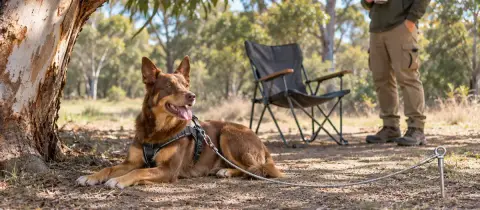
A tie out is not a way to leave a dog alone. Use one just when you're watching, in shade with water within reach. Clip it to a harness, never a collar, and keep it clear of tents, guy ropes, fires, roads and other dogs. Check often for tangles. Our dog tie out guide covers what to look for.
Never leave a dog in a parked car either. Parks Victoria warns that a dog left alone in a vehicle can overheat (Parks Victoria, page read 2 November 2026), and a car can heat up fast even on mild days. See keeping your dog cool in summer.
How do I keep my dog safe from ticks and snakes while camping?
Check your dog for ticks every day, especially the head, neck and ears, and use a vet-recommended tick preventative. Keep your dog on a lead and out of long grass and thick scrub, where snakes may be hiding. A snakebite is an emergency: go to a vet straight away.
Ticks: Paralysis ticks live along the east coast, and bushland campsites are exactly where your dog may pick one up. Our paralysis tick guide covers symptoms, removal and prevention. Ask your vet about a tick preventative before you go, and search your dog every day and after every walk.
Snakes: RSPCA Australia says a pet bitten by a snake needs emergency vet care right away, even if you don't know what kind of snake it was. It advises keeping the pet calm and quiet, phoning the vet ahead, and not trying to catch or kill the snake. It also says not to wash the wound or use a tourniquet (RSPCA Australia Knowledgebase, updated 14 November 2023, page read 2 November 2026). Phone ahead so the clinic can prepare, and know where your nearest emergency vet is before you settle in.
To lower the risk: keep your dog on a lead, don't let them poke into logs, rocks or long grass, and keep food and rubbish packed away so it doesn't attract mice and snakes. Never let a dog off lead near wildlife.
How do I keep my dog cool at camp?
Camp in shade, put water within easy reach and rest your dog through the hottest part of the day. Skip long walks in the heat, and avoid hot sand and bitumen. If your dog pants hard, drools or seems unwell, move them somewhere cool straight away and call a vet.
Tents trap heat, and a dog on a tie out in full sun can overheat quickly. Set up under natural shade or a shade sail, and follow the shade through the day. A pop-up dog tent adds shade at the beach or camp while you're right there. For heat tips, cooling gear and the signs of heatstroke, read our hot weather guide. If you're near water, a life jacket is a good idea for swimming dogs.
First trip checklist
- Check the rules for your campsite: dogs allowed, lead rules, fees.
- Visit your vet about tick prevention, vaccinations and any health concerns, and check your dog's microchip details.
- Try gear at home: let your dog use the bed, harness and tie out before the trip.
- Do a short overnight trip first, close to home and close to a vet.
- Pack water, shade and a bed (see the list above).
- Walk your dog on a lead, pick up after them and bin the poo.
- Check for ticks every day and after every walk.
- Plan your emergency vet: save the nearest after-hours clinic's number.
- Stay with your dog. Don't leave them unattended at camp or in the car.
When to see a vet
Go to a vet straight away if your dog:
- has a tick, or shows a changed bark, gagging, wobbly back legs or laboured breathing (see our paralysis tick guide)
- may have been bitten by a snake: sudden weakness or collapse, shaking, vomiting, dilated pupils or bleeding. Keep them calm and quiet, call ahead and don't try to catch the snake
- shows signs of heatstroke: heavy panting, drooling, vomiting, collapse or very red or pale gums
Heat emergency: move your dog into shade, cool them with cool (not ice-cold) water and go to the vet, even if they seem to recover. See our summer guide.
RSPCA Australia says a pet can collapse and then seem to recover, so don't wait for signs to settle: go straight to the vet (RSPCA Australia).
Frequently asked questions
Can I take my dog camping in Australia?
Yes, at the right sites. Most national parks don't allow dogs, but state forests, some regional parks, many caravan parks and private bush camps do, usually on a lead. Rules differ by state, park and campground, so always check the site's page or phone them before you book.
Can I drive through a national park with my dog in the car?
In Victoria, yes, as long as your dog stays in the vehicle. Parks Victoria says pets can travel through a park this way but can't get out, and it warns that a dog left in a car can overheat even with a window down or in the shade. Other states have their own rules, so check before you drive.
What do I need for camping with a dog?
Bring a bed or mat, plenty of water and a bowl, their food, a lead and harness, ID, poo bags, tick tools and a first-aid plan. Add shade and a tie out for supervised use. Our packing list above links to guides for each item.
Can dogs sleep in the tent?
Many dogs do, and it's often the easiest option because they settle next to you. Put them on a bed so they're off the cold ground, keep the tent ventilated, and keep them away from zips and the entry. If they get hot or restless, give them more space.
How do I stop my dog getting ticks when camping?
Ask your vet about a tick preventative made for dogs before the trip, avoid long grass and dense scrub where you can, and run your hands over your dog daily, starting with the head, neck and ears. Prevention doesn't replace checking. See our paralysis tick guide.
What should I do if my dog is bitten by a snake?
Treat it as an emergency. Keep your dog calm and still, phone the nearest vet to say you're coming, and go straight there, even if your dog seems fine. Don't try to catch the snake, and don't wash the wound or use a tourniquet, per RSPCA Australia. See our snake bite guide for the signs and what vets advise.
Is it safe to leave my dog alone at the campsite?
No. A dog left alone at camp can overheat, wander, get tangled or become distressed, and many campgrounds don't allow it. If you need to leave camp, take your dog with you or have someone stay. Never leave a dog in a parked car.
Related guides
- Dog-friendly camping in NSW
- Dog-friendly beaches in Australia
- Portable dog fences
- Taking your dog to the beach
- Dog sleeping bags
- Best dog hiking backpacks
- Best dog travel bags
- Best dog first aid kits
- Best tick removers
- Hiking with a dog
- Best dog camping beds
- Best dog tie outs
- Best outdoor dog beds
- Best dog water bottles
- Best collapsible dog bowls
- Best dog life jackets
- Paralysis ticks in dogs and cats
- How to keep your dog cool in summer
- All our dog guides
Sources
- NSW National Parks and Wildlife Service, Pets and animals in national parks, page read 2 November 2026 (https://www.nationalparks.nsw.gov.au/conservation-and-heritage/pets-in-national-parks)
- Parks Victoria, Dog friendly parks, page read 2 November 2026 (https://www.parks.vic.gov.au/things-to-do/dog-friendly-parks)
- RSPCA Australia Knowledgebase, My pet has been bitten by a snake, what should I do? updated 14 November 2023 (https://kb.rspca.org.au/knowledge-base/my-pet-has-been-bitten-by-a-snake-what-should-i-do/)
This guide provides general information and isn't a substitute for veterinary advice. If you're concerned about your dog's health on a trip, speak with your vet.