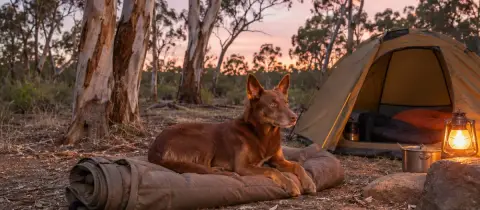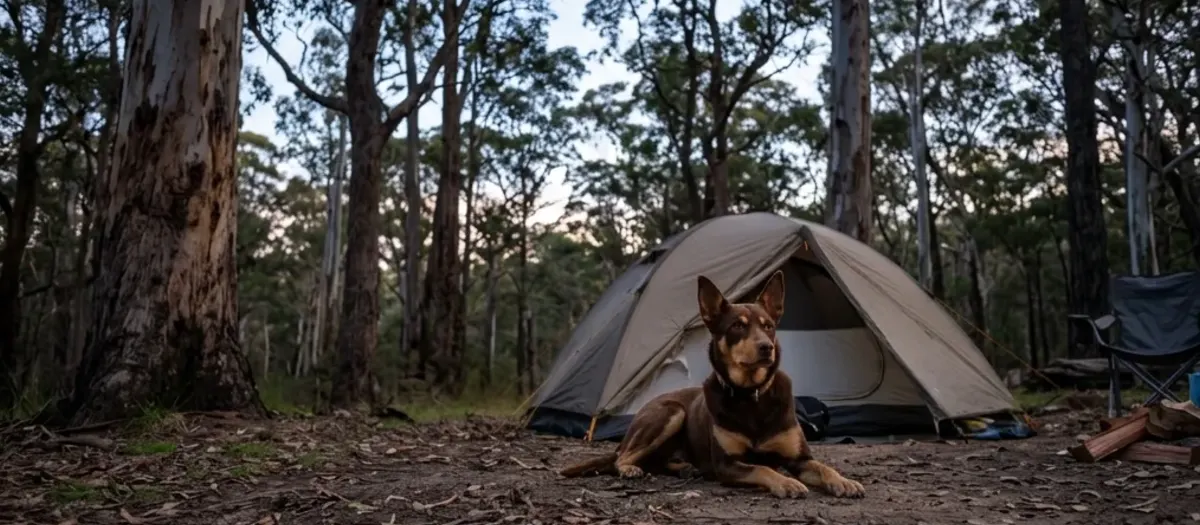
Quick answer: Dog-friendly camping in NSW mostly means state forests and some regional parks, where dogs are welcome under control or on a lead. Most national parks and state conservation areas don't allow pets at all, and that includes their campgrounds. Check the page for your exact campground before you pack the car.
Planning a trip with your dog? Our how-to guide to camping with a dog covers the practical side, and this page covers the NSW rules.
Can you take dogs camping in national parks?
Generally, no. NSW National Parks says dogs and other pets aren't permitted in most NSW national parks and reserves, and gives the reason that the sights, sounds and smells of dogs cause native animals great stress. Its campground booking conditions say pets are not allowed, with the exception of certified assistance animals. A state conservation area page we read (Jilliby) lists pets as prohibited in the same way.
Regional parks are different, and each one has its own rules. Some allow dogs on a lead, and some of their campgrounds do too. The catch is that a regional park often sits right beside a national park, where dogs are still banned, so keep your dog inside the regional park boundary.
Where you can camp with a dog in NSW
You can camp with a dog in NSW state forests, in some regional parks, and in council or private campgrounds that accept pets. Most national parks and state conservation areas are off limits. The table shows what each official source says, and the rule that counts is always the one on the page for your campground.
| Where | What the official source says | Source |
|---|---|---|
| State forests | Dogs are welcome, and the Forestry Corporation says they must be under your control at all times. A lead is the simplest way to do that. Some forests have their own rules, so follow the signs. | Forestry Corporation: dogs in state forests |
| State forest camping | Camping is generally first come, first served, with no online booking. The camping guide says you can bring your dog if it stays under control. | Forestry Corporation: camping in NSW state forests |
| Regional parks | Rules vary park by park. Some welcome dogs on a lead, and dogs must be under effective control. Always read the page for the campground. | NSW National Parks: dogs in parks |
| National parks and state conservation areas | Pets aren't permitted in most national parks and reserves. The campground booking conditions allow only certified assistance animals, and the state conservation area page we read (Jilliby) says the same. Check the page for your park. | NSW National Parks: booking conditions |
| Council campgrounds and private holiday parks | Each council or park sets its own pet rules. We haven't found one official NSW source that covers them, so check the council's page or ask the park directly before you book. | Check with the council or park |
Named campgrounds that list dogs
- Delicate campground (Goolawah Regional Park). The park page says dogs may be brought into the park, including the campground, and must be on a lead in the campground and on walking tracks. Dogs are permitted off lead on Delicate Beach. It asks people not to bring un-desexed female dogs in heat, because they may attract dingoes, and says dogs should be vaccinated and protected against ticks. Dingoes live in the area, so don't leave food out. Dogs aren't permitted in the neighbouring Goolawah National Park or Limeburners Creek National Park.
- Willoughbys Beach campground (Murray Valley Regional Park). The park page says dogs on leads are welcome in the regional park and that dogs aren't allowed in the adjoining national park. It shows campers with dogs on leads at this campground. The page doesn't say whether each of the park's other campgrounds allows dogs, so check each one.
- Yadboro Flat campground (Yadboro State Forest). The Forestry Corporation describes Yadboro Flat as a pet-friendly campground. Its forest page says dogs are allowed at the Yadboro Flat camping area but not in the adjoining national park, so keep your dog in the camping area and check the forest page and signs before you go.
Rules checked on 25 November 2026 against the official pages listed in Sources. Rules, closures and fire bans change, so check the page for your campground and the signs on arrival.
Rules to know
- Lead and control. State forests require dogs to be under your control at all times, and a lead is the simplest way to manage that. Regional parks usually want dogs on a lead and under effective control, and the Delicate campground page requires a lead in the campground.
- Stay in bounds. Many forests and regional parks border national parks. Dogs can't cross into those, even on a lead.
- Pick up after your dog, and carry enough food and water for the whole trip. Don't rely on finding clean water at camp.
- Don't leave your dog alone at camp. Heat, snakes and wandering are all risks, and a barking dog disturbs everyone else.
- Wildlife. Keep your dog away from native animals, and don't let it dig or chase. Park pages note that scents and noise from dogs can upset wildlife.
- 1080 baiting. The Forestry Corporation runs fox and wild dog baiting in some state forests and puts up signs. It says baits can be very harmful to dogs. Watch for signs, stop your dog eating anything it finds on the ground, and call a vet straight away if you think it has eaten bait. National parks pages also warn that fox baits can be fatal to dogs.
Safety
- Ticks. Bushland and forest edges can have paralysis ticks, mostly along the coast and ranges. Check your dog all over every day and read our paralysis tick guide. A tick remover is worth packing.
- Snakes. Keep your dog on a lead on tracks and near logs and long grass. Learn the signs in our snake bite guide.
- Heat. Tents and cars get hot quickly. Provide shade and water, and read how to keep your dog cool in summer.
- Water. Don't let your dog drink from creeks or still water. Offer fresh water instead.
- Fire. Fire bans and closures can change fast in forests, so check them before you set out.
What to pack
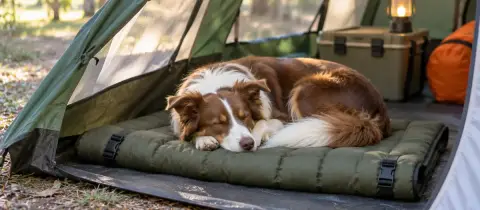
Start with a dog camping bed to keep your dog off cold, damp ground, and a dog sleeping bag or a dog tent if the nights get chilly. Add a tie-out or long lead, a collapsible water bowl, a first aid kit, poop bags and an ID tag with your mobile number.
When to see a vet
Call your vet or the nearest clinic straight away if your dog collapses, is wobbly or has weak back legs, vomits repeatedly, pants heavily and seems distressed, or if you find a tick or think a snake has bitten it. If your dog may have eaten bait, contact a vet at once, and the Animal Poisons Helpline is on 1300 869 738. See our guides to paralysis ticks and snake bites. Find the nearest vet before you leave home, because forest areas can be a long way from help.
Frequently asked questions
Can I take my dog camping in a NSW national park?
No, in almost all cases. NSW National Parks says pets aren't permitted in national parks, with an exception only for certified assistance animals. Regional parks and state forests are where dogs are more likely to be welcome.
Are dogs allowed in NSW state forests?
Yes. The Forestry Corporation says dogs are welcome in state forests, but they must be under your control at all times. A lead is the simplest way to do that around other campers and wildlife. Some forests have stricter rules, so read the signs and the forest page.
Do I need to book a state forest campsite?
The Forestry Corporation's camping guide describes state forest camping as first come, first served, with no online booking. Rules and fees can vary by forest, so check the page for the one you plan to visit.
Can my dog be off lead at a campground?
Usually not. The Delicate campground page requires a lead in the campground and on walking tracks, and allows off-lead only on Delicate Beach. Treat a lead as the default unless an official page says otherwise.
Can I leave my dog in the tent or car while I go for a walk?
It isn't a good idea. Tents and cars heat up fast, and a dog left alone may bark or wander. Plan walks you can take together, or camp with another adult who can stay.
What is 1080 baiting and why does it matter for dogs?
1080 is a poison used in some forests to control foxes and wild dogs. The Forestry Corporation says baits can be very harmful to dogs and signs are put up. Keep your dog close and contact a vet straight away if it may have eaten bait.
Can I bring a dog to a regional park campground?
Sometimes. Some regional parks welcome dogs on a lead, such as Goolawah (at Delicate campground) and Murray Valley, but the rules are park-specific and dogs must stay under effective control. Read the page for the campground and keep your dog out of any neighbouring national park.
Related guides
Sources
- Forestry Corporation of NSW, Dogs in state forests, read through search summaries on 25 November 2026, because the page would not open for us. Check it yourself before you go.
- Forestry Corporation of NSW, Camping in NSW state forests, read through search summaries on 25 November 2026.
- Forestry Corporation of NSW, Minimise the impact of your visit and its fox and wild dog baiting notices, read through search summaries on 25 November 2026.
- NSW National Parks, Pets and animals in national parks and Dog walking in parks, pages read 25 November 2026.
- NSW National Parks, Terms and conditions: accommodation bookings, page read 25 November 2026.
- NSW National Parks, Jilliby State Conservation Area: visitor info, page read 25 November 2026.
- NSW National Parks, Delicate campground, page read 25 November 2026.
- NSW National Parks, Murray Valley Regional Park, page read 25 November 2026.
This guide provides general information and isn't a substitute for veterinary advice. If you're concerned about your dog's health after a camping trip, speak with your vet.