Quick answer: How much exercise a dog needs depends on breed, age, weight and health, but most healthy adults do well on somewhere between about 30 minutes and 2 hours of activity a day, split into walks and play. A steady daily routine beats one big weekend outing, and your vet can clear a new plan.
There's no magic number, and anyone quoting one minute count for every dog is guessing. This guide gives you a sensible starting point, then adjusts it for puppies, seniors, flat-faced dogs and hot Australian days. It also points you to the right gear for each activity, starting with our dog enrichment ideas for the days a long walk isn't possible.
Quick picks
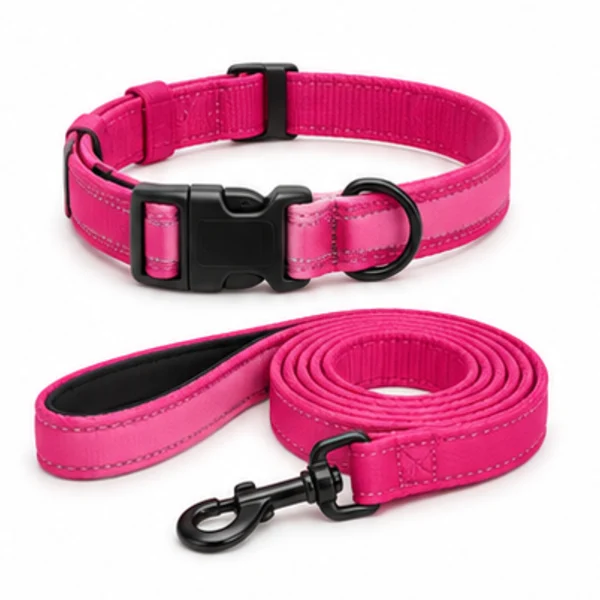
Jumpress padded reflective collar and lead set
A 150 cm lead with a padded handle for everyday walks
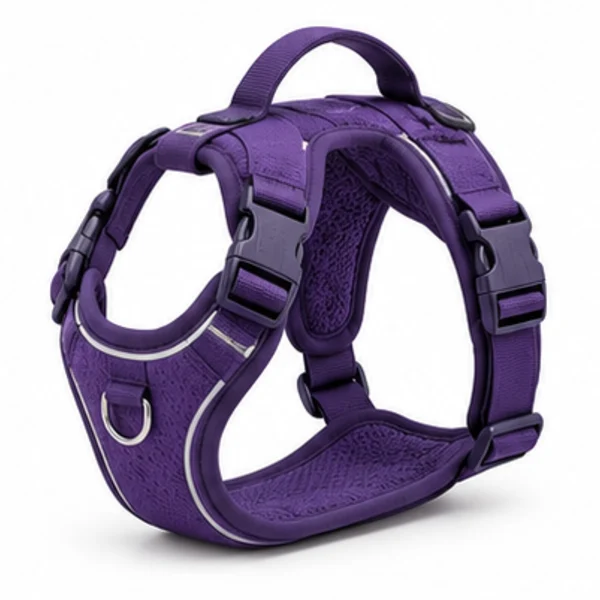
Julius-K9 IDC Powerharness, Size 0
Walking harness with a top handle; it is not a no-pull harness
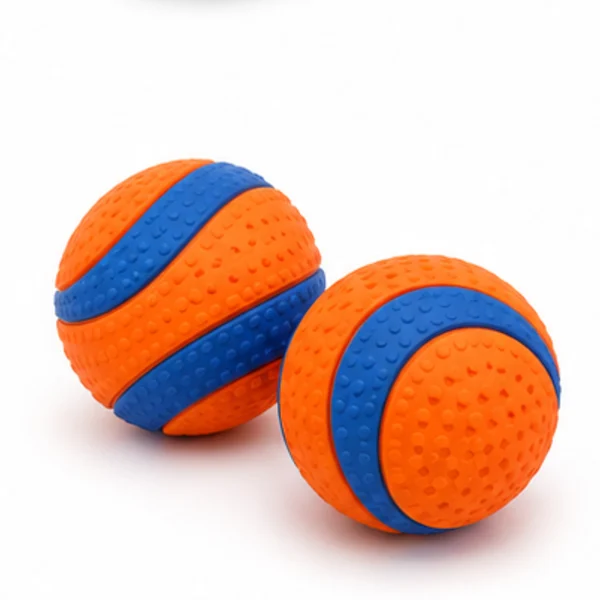
Chuckit Ultra Duo Tug, medium
Two rubber balls on a cord handle for fetch and supervised tug games
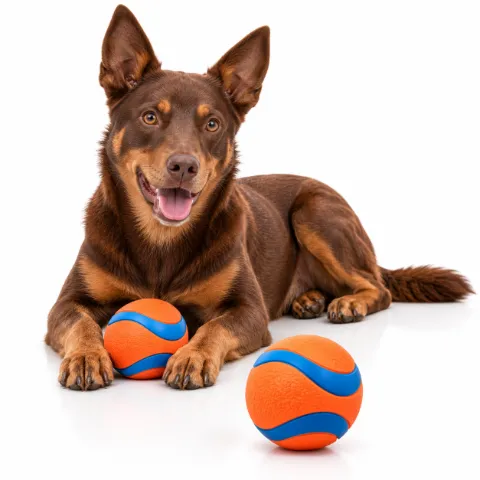
Chuckit Ultra Ball, medium, 2 pack
A fetch toy for roughly 9 to 27 kg dogs, supervised, not a chew
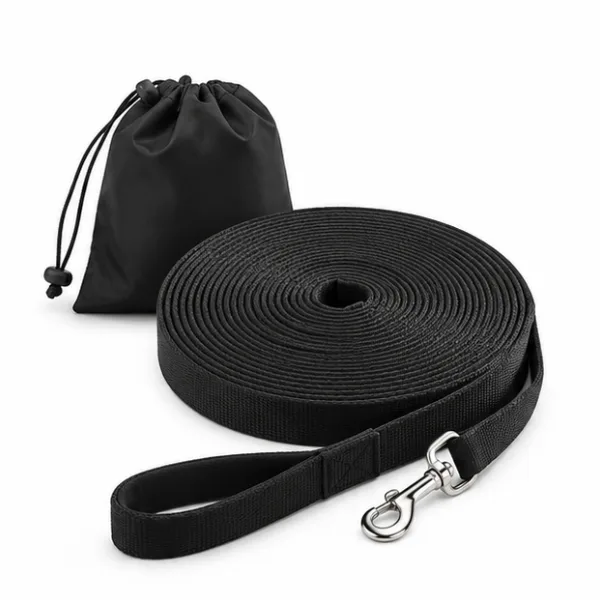
Toozey long line, 5 to 20 m
Nylon line in four lengths with a padded handle, reflective stripes and swivel clip
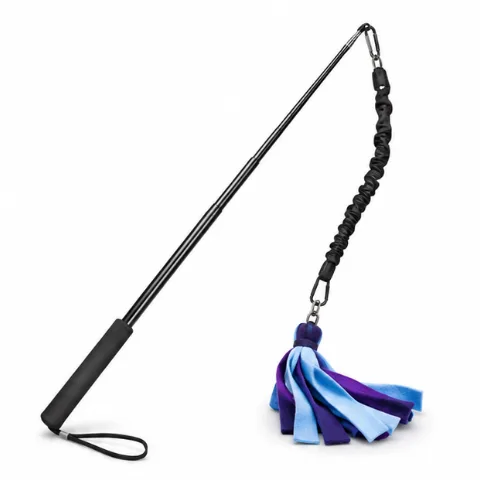
DIBBATU Flirt Pole for Dogs
Two-piece stainless pole with a rubber handle, 97 cm cord and detachable rope lure
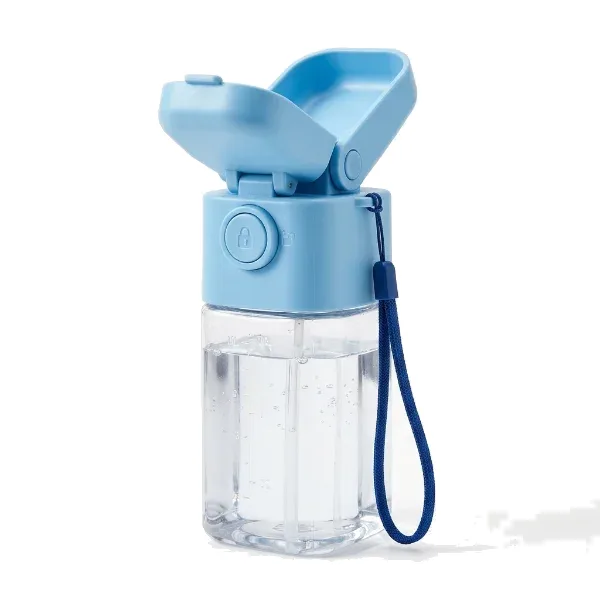
Cibaabo dog water bottle 300 ml
One-hand lock, a built-in bowl and a detachable treat container
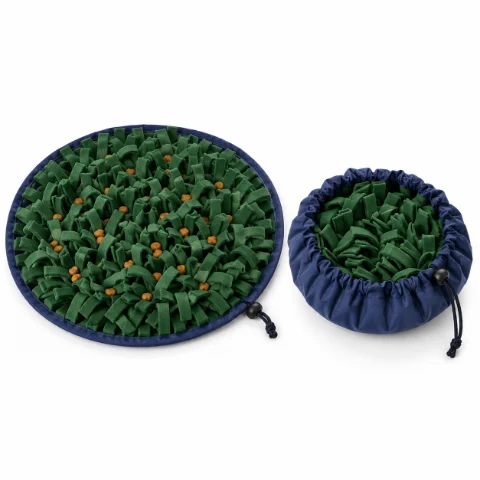
PET ARENA Adjustable Snuffle Mat
Pulls into a bowl for harder searching, a cool swap for a long walk
Toozey long line, 5 to 20 m
A nylon line in four lengths with a padded handle, reflective stripes and a swivel clip, for sniff walks and recall practice.
DIBBATU Flirt Pole for Dogs
A two-piece stainless steel pole with a rubber handle, a 97 cm cord and a detachable rope lure, for active play in a small space.
Cibaabo dog water bottle 300 ml
A one-hand lock and a built-in bowl, so you can carry water on walks.
PET ARENA Adjustable Snuffle Mat
It pulls into a bowl for harder searching, which gives your dog a brain game when it's too hot to walk.
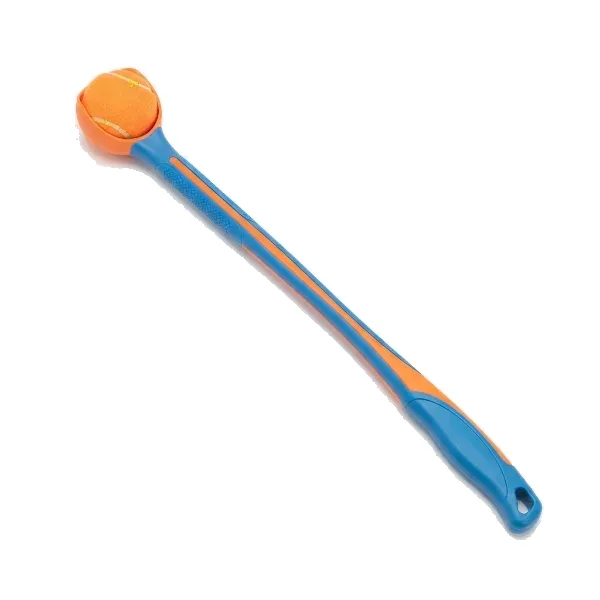
Chuckit! Sport Launcher 25M, 64 cm
A long throwing arm for fetch, so you can give your dog a good run without throwing a ball by hand.
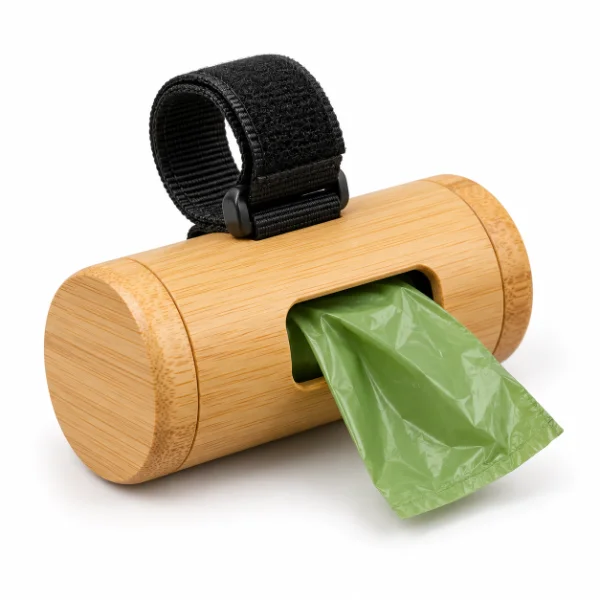
Tuff Pets bamboo poop bag holder
It clips on so you have bags handy on every walk.
Pictures are illustrations, not the actual products.
More detail on the first four is in Useful gear for walks and play below. They suit the routine; your vet can clear any new plan.
How much exercise does a dog need each day?
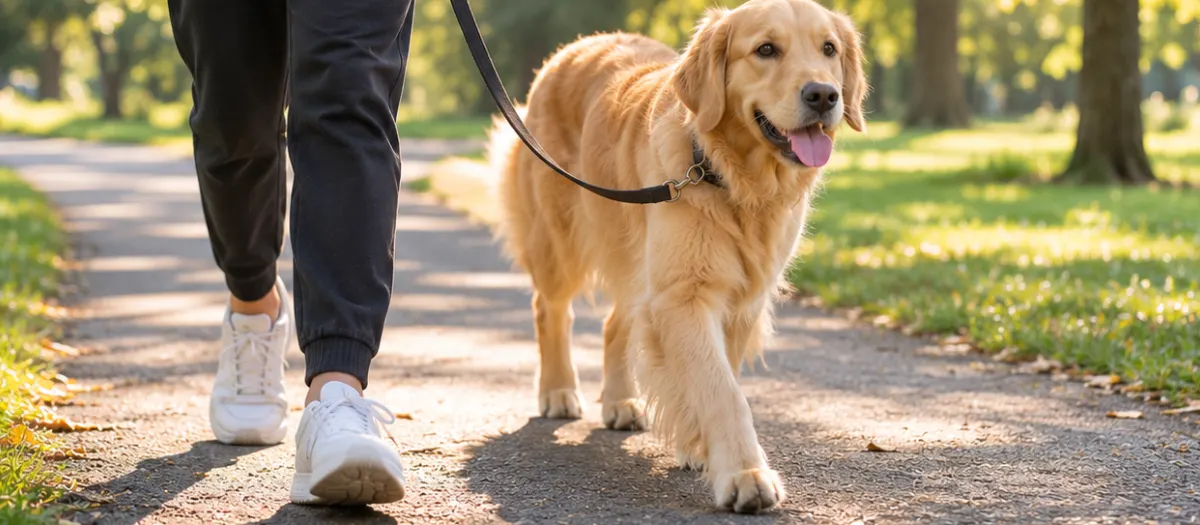
Most sources land between 30 minutes and 2 hours a day for a healthy adult, and the vet hospital advice sits at the low end as a starting aim: about 30 minutes of walking in total, split into outings if that suits your day. Start at around 10 minutes and build up. Your dog's body and breed set the upper limit.
Consistency counts more than size. VCA Animal Hospitals says a 20-minute walk every day is better than a 2-hour walk on Sunday, and that building up gradually helps avoid injury. Check with your vet before starting a new routine, particularly if your dog is overweight, older or has a heart or joint condition (VCA, "Healthy Exercise for Dogs"; VCA, "The Benefits of Walking Your Dog").
Many Aussie dogs get less than they need. University of Sydney researchers wrote in 2018 that it seems about 40 percent of Australian dogs aren't walked enough, and Guide Dogs Australia's Pawgust campaign encouraged two 30-minute walks a day (University of Sydney, page read 19 November 2026).
Exercise by situation
Use this as a starting point and let your dog's energy, breathing and next-day stiffness guide you. Minutes appear only where a vet source gives them.
| Situation | What to aim for | What to avoid | Gear that helps |
|---|---|---|---|
| Puppy under 6 months | Short, slow walks and play where the puppy sets the pace | Long runs, repeated ball throwing, leaping for frisbees | Puppy toys and chews |
| Adolescent, 6 to 18 months | Gradually longer walks, training games, sniffing | Sudden jumps in distance, hard impact while still growing | Long lead for recall practice |
| Adult working or herding breed | Daily walks plus a job: fetch, training, puzzles | Relying on one walk to do everything | Chuckit guide, flirt pole |
| Adult toy breed | Short walks and indoor play, spread through the day | Pulling on a neck collar | Small dog harness |
| Adult flat-faced breed | Very short, slow walks in the cool | Heat, humidity, hard play | Harness picks |
| Senior or arthritic dog | Shorter, more frequent, low-impact outings | Jumping, sudden starts and stops | Beds for older dogs |
| Overweight dog | Vet-cleared walks that build slowly | Chasing a ball with sharp stops, heat | Snuffle mats for food games |
| Any dog on a hot day | Early or late outings, shade, water | Hot pavement, sand and dry grass in sun | Footpath test |
How much exercise does a puppy need?
Puppies need short, slow outings and plenty of rest, not a set number of minutes. RSPCA Australia advises gentle walks where the puppy can stop and sniff, and carrying a tired puppy home. VCA says growing bones can be damaged by long runs, so short bursts of play that the puppy leads suit them better.
You'll hear a "five minutes per month of age" rule. It's a common guideline with no research behind it, so don't plan your walks around it. Watch your puppy instead. If they flop down, lag or look sore afterwards, you've done enough.
RSPCA Australia also warns against excessive ball throwing and leaping for frisbees or high balls, because awkward landings can damage growing limbs and joints. It says vaccinations should be finished before public places like the park, so ask your vet when your puppy is clear (RSPCA Australia, "How to exercise your puppy", 18 October 2022). Our puppy training schedule and new puppy checklist cover what to do before then.
Which breeds need the most exercise?
Breed gives you a clue, not a number. Working and herding dogs, gundogs and many terriers usually want more activity and a mental job. Sighthounds like short sprints then long naps. Toy breeds do well on shorter outings. Giant breeds need care with joints. Flat-faced dogs need the most careful management of all.
No vet source we read gives a minutes figure per breed, so we won't invent one. A Border Collie, a Cavoodle and a Greyhound can all be fit and happy on very different routines. Match the activity to the dog in front of you: how quickly they recover, how they sleep and how they walk the next morning.
Flat-faced breeds need special care. VCA says short-snouted breeds need a different conditioning program from a golden retriever. RSPCA Australia's knowledgebase says a third of the flat-faced dogs in one study couldn't walk for more than 10 minutes on a 19°C summer day. It adds that exercise still matters for weight control but has to be managed so breathing isn't compromised (RSPCA Australia Knowledgebase, brachycephalic dogs, updated 6 November 2025).
How much exercise does a senior dog need?
Senior dogs still need to move every day, but in shorter, more frequent, lower-impact outings. A couple of gentle walks beat one long one. Skip sudden starts and stops, jumping and hard fetch, and get your vet's go-ahead first, especially if your dog has sore joints or a heart condition.
Watch how your dog moves that evening and the next morning. Stiffness that builds, or a dog that hangs back at the gate, is a cue to shorten the walk and talk to your vet. Good support at home helps too: see our guides to beds for older dogs and joint supplements for dogs. Pain relief for a stiff dog is a vet's call, because some human medicines are dangerous for dogs.
What counts as exercise for a dog?
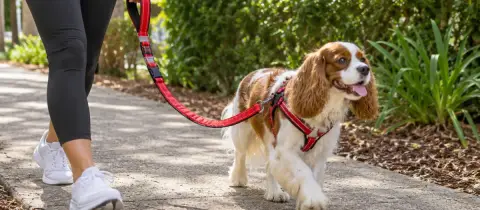
Anything that gets your dog moving or thinking counts: walks, sniffing, fetch, tug, swimming, training and puzzle games. A varied week usually serves a dog better than the same lap every day. A sniff walk on a lead of about 2 metres gives room to explore, and RSPCA Australia says a short lead tends to encourage pulling (RSPCA Australia Knowledgebase, walking equipment, updated 10 January 2023).
What counts, and what it's good for
| Activity | Body | Brain | Watch out for |
|---|---|---|---|
| Street walk | Steady movement, weight control | Some, from new smells and sights | Hot ground, pulling on a collar |
| Sniff walk on a 2 m lead | Gentle movement | A lot: sniffing is hard mental work | Retractable leads aren't recommended |
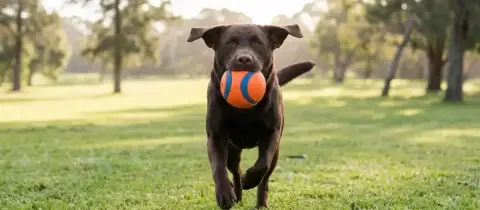
| Fetch | Sprinting, high energy burn | Moderate | Sharp stops for overweight, young or older dogs |
| Tug | Core and legs if feet stay down | Self-control practice | Rope strands, rough jerking, a toy too short for your hands |
| Swimming | Low-impact, easy on joints | Moderate | Don't assume your dog can swim; go in gradually |
| Training | Light | A lot | Short sessions, plenty of rewards |
| Puzzle toys | Little | A lot | Supervise and put them away afterwards |
Gear that suits each kind of exercise
Everyday walks are easier with a comfortable set: our collar and lead set guide compares six by neck size in cm. A sturdy harness with a handle, like the ones in our Julius-K9 harness guide, helps steady a dog at kerbs and car doors, though it's a walking harness and not a no-pull tool. For pullers, see our no pull harness guide.
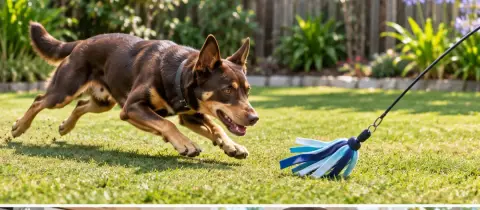
For play, a tug toy works for a rainy day when you're also stuck inside, and the Chuckit guide covers fetch balls and launchers by size. Other options are a flirt pole, water toys, snuffle mats and puzzle toys. More ideas live in our rainy day games, hiking guide and keeping a dog busy at work pages.
How do I exercise my dog safely in the heat?
Exercise at the coolest times of day, keep it gentle, and skip hot ground. RSPCA Australia says dogs can get heatstroke from exercise when they make heat faster than they lose it. Overweight, flat-faced, very young and very old dogs are at higher risk. Carry water and rest in shade.
The RSPCA knowledgebase also warns that sand, concrete, bare dirt and even dry brown grass in the sun can be too hot (RSPCA Australia Knowledgebase, heatstroke, updated 8 May 2023). On a hot day, swap a long walk for sniffing in the shade, a snuffle mat or a training game. Our summer cooling guide has the footpath test and heatstroke signs, and burnt dog paws explains pavement burns. A dog water bottle and a cooling vest are tools for the walk, not reasons to go out in the heat.
How do I know if my dog is getting too much or too little exercise?
Look at the pattern over days, not one sign. A dog that is heavily panting long after stopping, lagging, lying down on walks or stiff the next day may be getting too much. A dog that is restless, gaining weight or chewing and barking may be getting too little.
Too much or too little?
| Sign | More consistent with | What to do |
|---|---|---|
| Heavy panting that won't settle, lagging, lying down mid-walk | Too much, or heat | Stop, cool down, shorten the next outing |
| Limping or stiffness that evening or next day | Too much, or a joint problem | Rest and call your vet if it lasts beyond a day |
| Reluctance to walk | Pain, illness, or a bad experience | Check with your vet |
| Restlessness, pacing, pestering | Too little exercise or too little to do | Add a sniff walk or puzzle; see is my dog bored |
| Weight gain | Too little activity, or too many calories | Ask your vet for a plan |
| Destructive chewing, barking | Boredom, but also stress or other causes | Look at the context; see stop dog chewing |
Exercise helps with weight, joints and mental stimulation, but it doesn't treat separation anxiety. If your dog is distressed when you leave, see our separation anxiety guide.
Useful gear for walks and play
These are the four products this guide points to, each linked to its main buying guide. We compared them from the Amazon Australia listings and haven't used them ourselves.
- Jumpress padded reflective collar and lead set: the listing gives a 150 cm lead with a padded handle for everyday walks. See our collar and lead set guide for sizes.
- Julius-K9 IDC Powerharness, Size 0: a walking harness with a top handle for steadying a dog at kerbs and car doors. It is not a no-pull harness. See our Julius-K9 guide.
- Chuckit Ultra Duo Tug, medium: two rubber balls on a cord handle for fetch and short, supervised tug games. See our tug toy guide and Chuckit guide.
- Chuckit Ultra Ball, medium, 2 pack: our size guidance puts this ball at roughly 9 to 27 kg dogs, supervised, and it is a fetch toy rather than a chew. See our Chuckit guide and balls for dogs.
When to see a vet
Book a vet visit, or go straight to an emergency vet, if your dog:
- shows heatstroke signs after exercise: constant panting, drooling, vomiting, weakness or collapse. Start cooling with cool water on the fur and skin and get to a vet straight away (RSPCA Australia)
- tires suddenly, collapses, coughs after exercise or has pale or blue gums, because exercise intolerance can be a sign of a heart or airway problem
- has a limp or stiffness that lasts beyond a day, or comes with swelling or pain
- is flat-faced and breathes noisily on short walks
- is a puppy that is lame after play
- suddenly becomes unwilling to walk
A vet can also clear your dog for a new routine, especially if they are overweight, older or have a heart or joint condition.
Frequently asked questions
Is one walk a day enough for a dog?
It can be for some calm, older or small dogs, but many dogs do better with two outings. The aim is enough movement, sniffing and attention across the day. If your dog is restless, gaining weight or pestering you in the evening, add a short second walk or a game.
Is a 30 minute walk enough for a dog?
For many healthy adults it's a reasonable base, which is the total VCA suggests aiming for. Active breeds usually want more on top, such as fetch, training or a longer weekend outing. Watch your dog: if they settle well afterwards and aren't stiff the next day, the amount is probably working.
Is a big backyard enough exercise for a dog?
Usually not on its own. University of Sydney researchers say all dogs need some time out of the house and yard every day. Most dogs don't run laps alone, and a walk offers new smells and company. A yard helps for toilet breaks and play, but it works best alongside outings.
Can you over-exercise a puppy?
Yes. RSPCA Australia says over-exercise can affect a puppy's bone and muscle development, and VCA warns that long runs can cause skeletal trauma in growing dogs. Keep outings short and slow, let your puppy rest when they choose, and ask your vet to check your plan.
Do small dogs need less exercise than large dogs?
Not always. Toy breeds often manage with shorter outings, but some small dogs, like terriers, are very active and need a job. Large and giant breeds need care with joints, especially while growing. Size is one clue, and breed, age, weight and health matter just as much.
Is it OK to skip a walk when it's hot?
Yes, skipping the walk on a hot day is safer than going out in the heat. Offer a short toilet break in the cool, then swap the walk for shade-friendly play: a snuffle mat, a training game or a puzzle toy. Flat-faced, overweight, very young and old dogs are at higher risk.
How much exercise does an overweight dog need to lose weight?
Ask your vet first, because overweight dogs are more prone to joint injury and overheat more easily. VCA suggests starting gently and building up gradually, and avoiding sudden stops and starts like chasing a ball. Food matters just as much as exercise, so your vet's weight plan covers both.
Do dogs need rest days from exercise?
No source we read gives a firm rule. VCA stresses consistency and gradual increases. Look at how your dog is the day after a big outing: stiffness, sore feet or reluctance to go are signs to ease off. Many dogs enjoy a lighter day with sniffing, training or a puzzle.
Related guides
- Dog enrichment ideas
- Is my dog bored?
- Indoor games for dogs
- How to keep your dog cool in summer
- Best dog collar and lead sets
- Julius-K9 harness guide
- Best dog tug toys
- Chuckit guide
- Hiking with a dog
Sources
- VCA Animal Hospitals, "Healthy Exercise for Dogs", last updated 19 January 2026, page read 19 November 2026.
- VCA Animal Hospitals, "The Benefits of Walking Your Dog", last updated 3 May 2023, page read 19 November 2026.
- RSPCA Australia, "How to exercise your puppy", 18 October 2022, page read 19 November 2026.
- RSPCA Australia Knowledgebase, "How can I protect my dog from heatstroke?", updated 8 May 2023, page read 19 November 2026.
- RSPCA Australia Knowledgebase, "What do I need to know about brachycephalic dogs?", updated 6 November 2025, page read 19 November 2026.
- RSPCA Australia Knowledgebase, "What equipment should I use when teaching my dog or puppy to walk on a leash?", updated 10 January 2023, page read 19 November 2026.
- University of Sydney, "Are you walking your dog enough?", 30 July 2018, page read 19 November 2026.
This guide provides general information and isn't a substitute for veterinary advice. If you're concerned about your dog's exercise or health, speak with your vet.