Best dog puzzle toys: level 1 to 3 picks for every dog
By Anish PuriUpdated 31 Oct 202612 min readResearched, not tested by us
Research guide. WhiskerFinds may earn a commission from links, at no extra cost to you.
Quick answer: The best dog puzzle toys match your dog's experience. Start a beginner with the level 1 Nina Ottosson Dog Smart, then move up to the level 2 Dog Brick, our top pick overall, and the level 3 Dog Worker once those feel easy. Puzzles are for supervised play, not for leaving with your dog.
Puzzle toys hide treats behind lids, sliders and pieces, so your dog has to think before it eats. This guide compares four puzzles on Amazon Australia by difficulty, shows how to teach one, and covers safety. For the wider picture, see our guide to interactive dog toys.
Quick picks
Our top pickBest overall
Nina Ottosson Dog Brick (level 2)
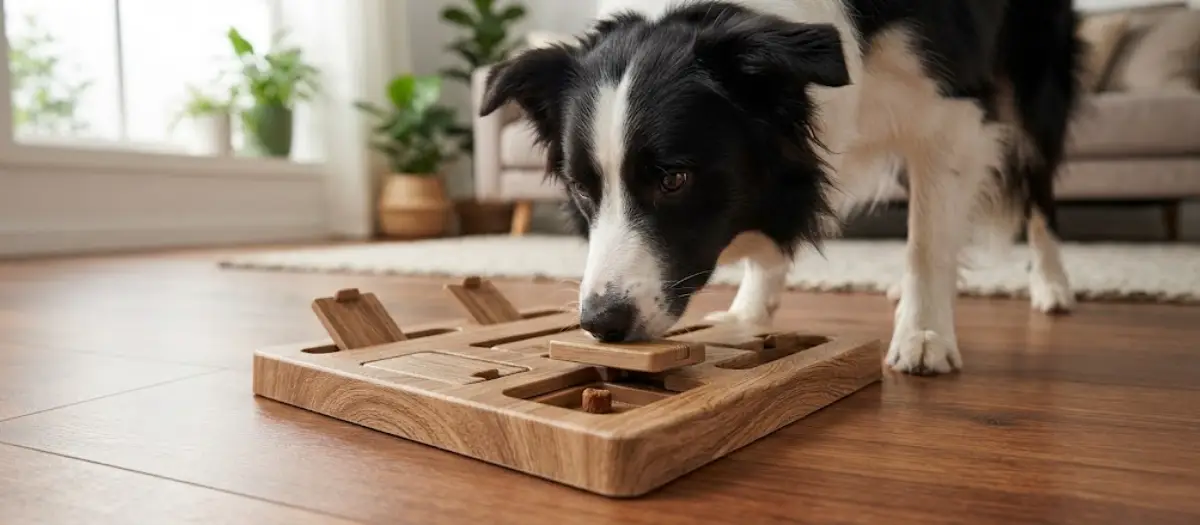
Three kinds of hiding spots: flip lids, sliding compartments and removable bone pieces
Pictures are illustrations, not the actual products.
Not sure where your dog sits? The level guide below explains what each step asks of them.
Are puzzle toys good for dogs?
For most dogs, yes. RSPCA Australia lists interactive and puzzle toys as a way to give a dog's mind a workout and build problem-solving skills. They work best as one part of a routine that also includes walks, play and rest, and they don't treat separation anxiety.
The RSPCA also warns that leaning too hard on food enrichment can lead to overfeeding and obesity, and that toys can be a hazard if a dog swallows them (RSPCA Australia, page read 31 October 2026). So count puzzle treats as part of the day's food, using part of a meal or small treats. Our training treats guide has picks that suit small rewards.
Puzzles help with boredom, not anxiety. If your dog is mainly distressed when you leave, see is my dog bored? for how to tell the two apart.
Dog puzzle levels explained
Puzzle levels rank how many steps a dog has to work out. Level 1 needs one simple action, level 2 mixes several kinds of moves, and level 3 asks for a sequence of steps. Start at level 1 and move up only when your dog solves the current one easily.
Here is what each level asks of your dog, based on the Nina Ottosson puzzles in this guide:
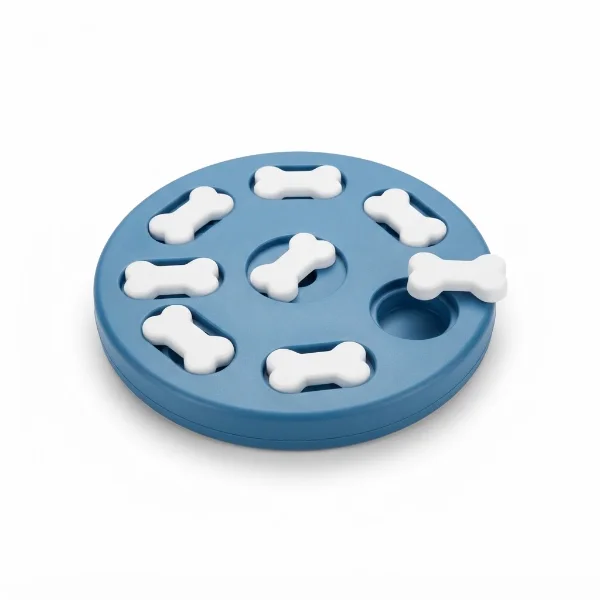
Level 1, the Dog Smart: one-step actions. Your dog lifts a bone-shaped piece to reach a treat. The listing says you can raise the bones for an easier grab or leave them flush for more challenge.
Level 2, the Dog Brick: three kinds of hiding spot, so your dog learns to flip a lid, slide a compartment and lift a bone piece.
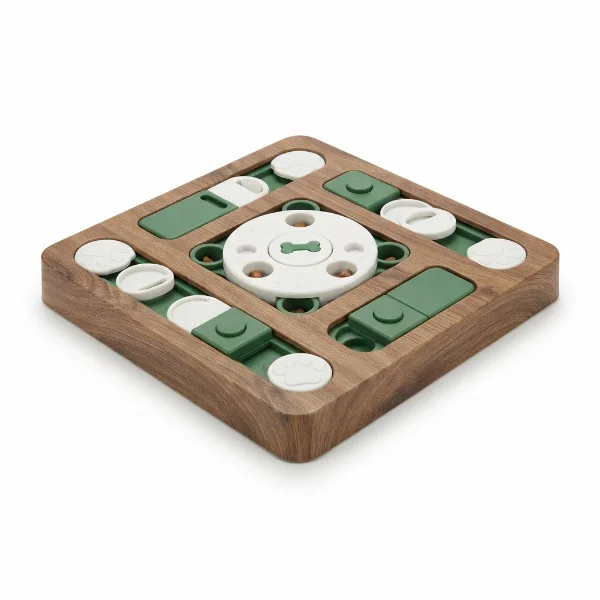
Level 3, the Dog Worker: three steps, swivelling the flippers, sliding the blocks and spinning the centre wheel. The listing says it's for dogs who have mastered levels 1 and 2.
A retailer's guide to the brand's levels gives the same advice: begin with the easiest level and climb step by step (Kiwi Canine, Nina Ottosson difficulty levels). The LUKITO isn't part of that scale. Its listing describes three difficulty designs, so treat it as a beginner to intermediate slider.
Our picks in detail
1. Nina Ottosson Dog Brick (level 2): best overall
An intermediate, level 2 board with three kinds of hiding spot: flip lids, sliding compartments and removable bone pieces. That mix means your dog learns several moves in one toy, which is why it suits a dog who has outgrown a beginner puzzle. It also appears in our treat dispensing toys guide.
Pros: three kinds of hiding spot; a step up from level 1
Cons: the bone pieces lift out, so supervise closely; a strong chewer can damage it
Best for: a dog who has solved a level 1 puzzle and is ready for more
Skip it if: your dog chews toys apart, or you're after a first puzzle for a complete beginner
2. Nina Ottosson Dog Smart (level 1): best for beginners
A level 1 puzzle with simple one-step actions. It has 9 hidden compartments covered by 9 removable bone-shaped pieces. You can raise the bones so they're easy to grab, or leave them flush for more challenge. The listing says it suits any breed and size, and that it's BPA, PVC and phthalate free.
Pros: the easiest way in; adjustable by raising the bones
Cons: the bones lift out, so it isn't for dogs who chew pieces; supervise and pick it up afterwards
Best for: dogs new to puzzles, with you right beside them
Skip it if: your dog picks up and chews loose pieces. For a young puppy, a retailer's guide to these levels suggests games with no loose parts or only large pieces, so the LUKITO slider is the closer fit here, with you right beside them
3. Nina Ottosson Dog Worker (level 3): best for clever dogs
An advanced level 3 puzzle for dogs who have mastered levels 1 and 2. Your dog works through three steps: swivel the flippers, slide the blocks and spin the centre wheel. The pieces are built in, so nothing lifts out. The listing says it's composite plastic and wood, BPA, PVC and phthalate free, and to wash it with warm water and mild soap.
Pros: no removable parts; a real challenge; simple to wash
Cons: can frustrate a beginner; still needs supervision
Best for: clever, food-motivated dogs who finish easier puzzles fast
Skip it if: your dog hasn't done a puzzle before. Start lower and work up
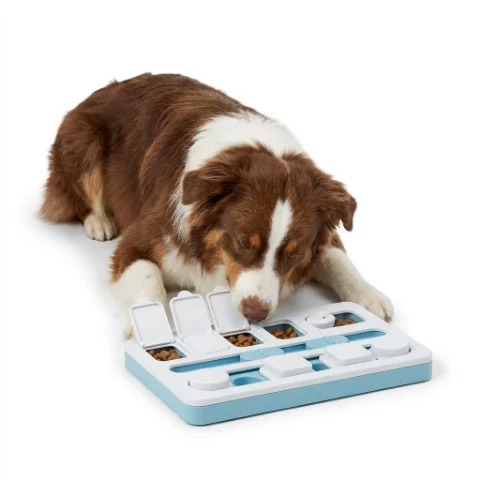
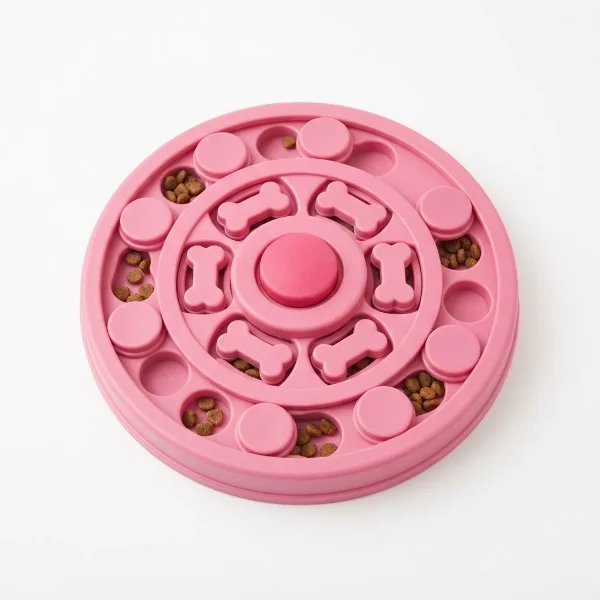
A round slider with circular and straight tracks over 16 treat holes, in three difficulty designs. The listing says there are no removable parts, and it measures about 26 x 3.5 x 26 cm. A squeak button sits in the middle, and the listing recommends it for small breeds and says cats use it too.
Pros: no removable parts per the listing; three difficulty designs; suits small dogs
Cons: the squeaker may over-excite some dogs; best for small to medium dogs
Best for: small dogs and a first slider puzzle
Skip it if: your dog is large, or gets wound up by squeaky toys
Dog puzzle toys compared
Details from each Amazon Australia listing, checked on 31 Oct 2026.
We searched Amazon Australia for dog puzzle toys and treat puzzles, then shortlisted puzzles that met all of these checks:
Well rated: a strong average rating with plenty of buyer reviews.
No red flags: no pattern of poor reviews, safety complaints or listing problems.
Available on Amazon Australia when we checked.
A clear difficulty level on the listing, or a clear description of how hard it is.
Non-removable parts, or large removable pieces.
Easy to clean.
These are researched picks, not products we've personally tested. We compared the specifications and features shown on each Amazon Australia listing, checked on 31 Oct 2026. We didn't accept payment from any brand, and no brand saw this page before it was published.
Left out this time: puzzles with lots of small loose parts, puzzles that didn't pass our red flags check, and very hard level 4 puzzles that suit few homes.
How to teach your dog a puzzle
Start with an easy win. Let your dog see you put a treat in an easy spot, praise when they get it, then close things up a little at a time. Stay nearby, keep sessions short and stop while your dog is still keen.
Pick the easiest setting. On the Dog Smart, raise the bones. Use treats your dog loves, in small pieces.
Show how it works. Lift a piece or slide a block yourself and let your dog eat the treat. Play along with them, as a retailer's guide to the levels suggests (Kiwi Canine).
Make it slightly harder. Cover one or two spots, then more. If your dog starts to give up, go back a step.
End with a win. Finish while there is still a treat they can get.
Put it away. Wash it and store it until the next session. Level up only when your dog solves the current one easily.
If your dog tries to chew the puzzle rather than work it out, stop and pick it up. That may mean it's too hard, or the wrong toy for them.
Keeping puzzle play safe
Puzzle toys are for supervised play. Stay in the room, take the puzzle away once the treats are found and before your dog starts chewing it, and be extra careful with pieces that lift out. Choose a puzzle with no removable parts if your dog is a chewer.
The RSPCA notes that enrichment toys can be a hazard if a dog swallows them, but that those risks are avoidable (RSPCA Knowledgebase, page read 31 October 2026). Some simple habits help:
Check pieces before and after each session, and stop using anything cracked.
Don't leave a puzzle with your dog while you're out.
Pick up the bone pieces when play is over, and store the puzzle out of reach, for example in a dog toy box.
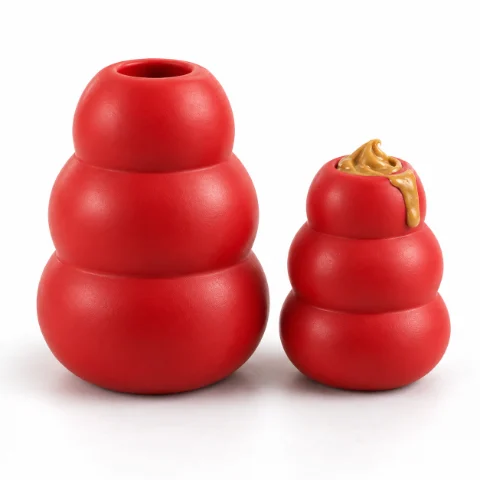
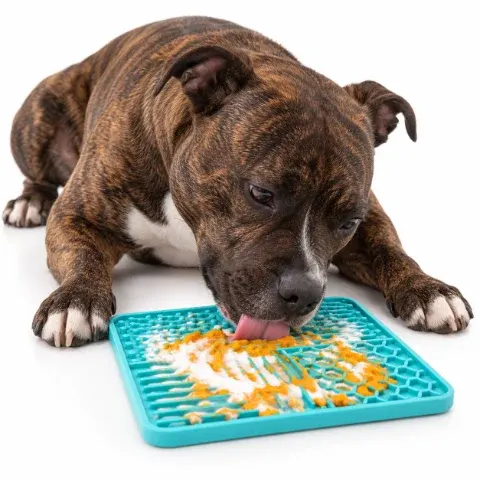
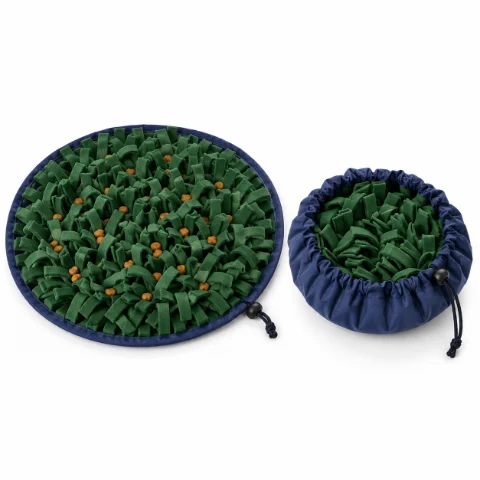
All three give your dog a job, but in different ways. A puzzle asks for problem-solving, a KONG asks for licking and chewing, and a snuffle mat asks for sniffing. Many dogs enjoy a mix, rotated through the week, and each one suits a different moment in the day. Plush hide-and-seek puzzles, such as the Hide A Squirrel, are in our squeaky dog toys guide.
Call your vet straight away if your dog swallows a piece of a puzzle, even if they seem fine. PDSA advises contacting a vet immediately if your dog has eaten something it shouldn't, and never trying to make your dog vomit at home. Signs of a blockage can include vomiting, a painful tummy, low energy or a poor appetite (PDSA, page read 31 October 2026).
See your vet if your dog's play, eating or behaviour changes suddenly. A puzzle toy won't fix distress when you leave. If your dog howls, paces or damages doors when alone, talk to your vet or a qualified, reward-based behaviour professional.
Frequently asked questions
What are the best puzzle toys for dogs?
It depends on your dog's experience. The Nina Ottosson Dog Smart suits beginners, the Dog Brick suits dogs ready for more, and the Dog Worker suits clever dogs who have mastered the first two levels. For a small dog, the LUKITO slider is a good fit. Compare them in the table above.
What is the best puzzle toy for a smart dog?
For a clever dog, the level 3 Nina Ottosson Dog Worker is the hardest pick here. The listing says it's for dogs who have mastered levels 1 and 2, and its three steps need swivelling, sliding and spinning. Move up from easier levels first, or it may frustrate rather than reward.
Are puzzle toys safe to leave with my dog?
No. Puzzle toys are for supervised play. Plastic and wooden pieces can be chewed, and some lift out. Stay with your dog, take the puzzle away once the treats are found, and pick it up afterwards. See keeping puzzle play safe above.
How long should my dog play with a puzzle?
There's no set time. Many dogs finish a puzzle in a few minutes, and short sessions are enough. Stop when the treats are gone or your dog loses interest, and put the puzzle away. If your dog is chewing the toy instead of working it, end the session.
Do puzzle toys tire a dog out?
Often, yes, for a while. Working out a puzzle takes real concentration, and plenty of dogs have a nap afterwards. It is mental exercise, not physical, so your dog still needs walks and play, and results vary from dog to dog. Treat it as one part of the routine.
Can puzzle toys help with separation anxiety?
No. Puzzle toys can help with boredom, but they don't treat separation anxiety. A dog who is distressed when left may ignore treats altogether. If that sounds like your dog, read is my dog bored? and talk to your vet.
Can I use puzzle toys for puppies?
Often, with care. Choose an easy puzzle and stay right beside your puppy. A retailer's guide to the Nina Ottosson levels suggests games with no loose parts, or only large pieces, for puppies. Of our picks, the LUKITO slider is the closest fit, and a level 3 puzzle is too hard for a beginner.
Are puzzle toys better than a KONG?
Neither is better. A puzzle asks your dog to solve a problem, while a KONG is a stuffable rubber toy for licking and chewing, and it can be frozen to last longer. Many dogs enjoy both. See puzzles, KONGs or snuffle mats for how to choose.
Product details from each linked Amazon Australia listing, checked on 31 Oct 2026.
This guide provides general information and isn't a substitute for veterinary advice. If you're concerned about your dog's play or behaviour, speak with your vet.