Best dog whistles: which pitch to buy and how to train whistle recall
By Anish PuriUpdated 11 Nov 202614 min readResearched, not tested by us
Research guide. WhiskerFinds may earn a commission from links, at no extra cost to you.
Quick answer: The best dog whistle for most families is the Coachi Whizzclick, a single-tone whistle and clicker in one with a reflective lanyard. If you want a fixed pitch you can reorder for years, choose an ACME 210.5. A whistle is a recall and cue tool. It won't stop barking.
A whistle gives your dog the same sound every time, whoever blows it and however you're feeling. That's why it works for recall. This guide compares six whistles on Amazon Australia by pitch, size and what's in the box, explains the ACME model numbers, and walks through how to teach recall with rewards. If you're also weighing a clicker, see our dog training clicker guide.
Quick picks
Our top pickBest overall
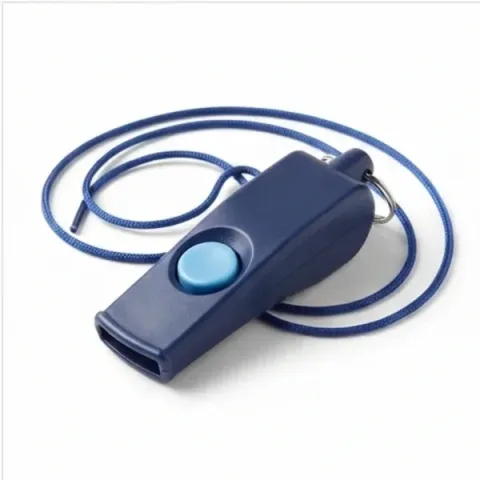
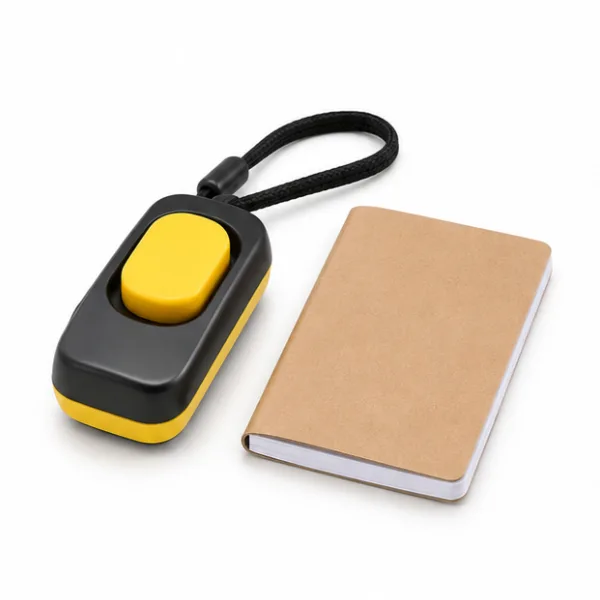
Coachi Whizzclick whistle and clicker
Single-tone whistle and clicker in one tool, reflective lanyard, listing says puppies from 8 weeks
Pictures are illustrations, not the actual products.
How do dog whistles work, and what can dogs hear?
A dog whistle makes a steady, high-pitched sound that carries farther and cuts through noise better than your voice. Dogs hear a wider range than we do, but most training whistles sit well inside human hearing, so you can hear them too.
LSU's veterinary school gives a dog hearing range of about 67 to 45,000 Hz and a human range of about 64 to 23,000 Hz. The limits depend on how loud a tone is. The American Kennel Club (AKC) says adult humans hear up to about 20,000 Hz and that "silent" whistles are really ultrasonic whistles that still make a sound (AKC, updated 28 January 2026, page read 11 November 2026).
Dog whistle models and pitches compared
Details come from each Amazon Australia listing, checked on 11 Nov 2026, and from ACME's own comparison guide where it says so. "Not stated" means the listing doesn't say. Range and loudness figures are the makers' claims.
Swipe sideways to see every column
Whistle
Pitch (source)
Pea or pealess
Weight, size
Lanyard in the box
Local or import
Coachi Whizzclick
Single tone, no Hz stated
Not stated
21 g packaged
Yes, reflective, adjustable
Local
ACME 210.5
About 5,900 Hz (ACME's guide)
Pealess (ACME's guide)
30 g; listing size 2.1 x 7 x 14.3 cm
Yes, a matching band
Import
ACME 211.5
Lower than the 210.5 (ACME's guide); no Hz stated
Without pea (listing)
6 g; 7.8 x 1.3 x 1 cm
Not mentioned
Local
ACME Alpha 210.5
5,700 Hz, 110 dBA (listing)
Pealess (listing)
6 g per the text (the details say 4.54 g); 7.8 x 1.3 x 1.3 cm
Not mentioned
Import
Coachi Two Tone
Two tones, no Hz stated
Not stated
18 g packaged
Yes, reflective, adjustable
Local
ACME 535
Adjustable, 5,400 to 12,800 Hz (listing and ACME's guide)
Not stated
35.8 g; 8.5 x 1 x 1.4 cm
Not mentioned
Import
The table shows two figures for the 210.5 because ACME's guide says about 5,900 Hz for the classic model and the Alpha listing says 5,700 Hz.
Both the 210.5 and the 211.5 are pealess, with no ball inside. ACME says a pealess design keeps the tone steady in wet or cold conditions, which matters at the beach and in the rain. Pick one pitch and keep it for your dog's life, because changing pitch means retraining the cue.
One ACME listing describes the series as 210 (ultra high, with pea), 210.5 (high pitch, without pea), 211.5 (standard pitch, without pea) and 212 (a field trialler's single pitch). The ACME 575 shepherd's whistle is a metal working-dog whistle that needs a learned tongue technique, so we haven't covered it here.
Our picks in detail
1. Coachi Whizzclick whistle and clicker: best overall
A whistle and a clicker in one tool, with a single-tone whistle that the listing says travels well in open spaces, and a reflective, adjustable lanyard for neck or wrist. The listing says it suits puppies and dogs from 8 weeks, and it weighs 21 g packaged. The listing says it's made in China.
A clicker marks the exact moment your dog gets it right, so it suits teaching new behaviours up close; a whistle carries over distance, so it suits recall. Having both in one tool is why it's our top pick for a family starting out. Our clicker guide covers clicker basics.
Pros: whistle and clicker in one; reflective adjustable lanyard; sold locally; fine for puppies per the listing
Cons: no stated frequency, so a replacement may not match exactly; a combined tool means you carry one thing for two jobs
Best for: a family starting recall who already clicker-train, or want to
Skip it if: you want a frequency-standardised whistle you can reorder years later in the same tone (go ACME)
2. ACME 210.5 with whistle band: best fixed-pitch recall whistle
The listing says every ACME whistle is frequency standardised, so a partner, a child or a replacement whistle sounds the same, and you can reorder the same tone after years. A matching band is in the box. ACME's own guide puts the 210.5 at about 5,900 Hz, pealess, for spaniels and close-range work.
Pros: frequency standardised per the listing; pealess per ACME; band included; the same sound whoever blows it
Cons: imported, so check the delivery details on Amazon before you order; no clicker built in
Best for: one dog with several handlers
Skip it if: you'd rather not buy an import, or you need a lower pitch for long distance
3. ACME 211.5, Day Glo orange: best for distance and retrievers
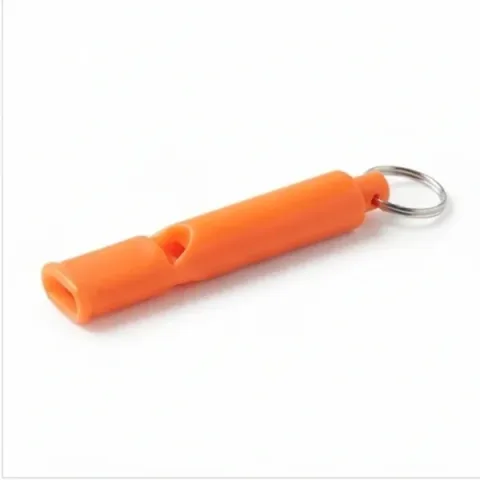
The listing describes it as without pea, solid tone, single frequency, "suggested use with Retriever breeds", weighing 6 g and measuring 7.8 x 1.3 x 1 cm. ACME says the 211.5 has a lower frequency that carries farther and cuts through wind. No source gives a Hz figure for it, so we haven't printed one.
The orange is easy to spot if you drop it in long grass or sand.
Pros: pealess; lower pitch for distance per ACME; light at 6 g; sold locally
Cons: no lanyard mentioned; no stated Hz; a plain whistle with no extras
Best for: recall at range, on the beach or at the oval, and retrievers
Skip it if: you want a lanyard in the box
4. ACME Alpha 210.5: best for small dogs and the newest design
The only listing here that prints its specs: 5,700 Hz, 110 dBA, 6 g and 7.8 x 1.3 x 1.3 cm, BPA-free plastic, pealess, with an all-over grip. The listing names spaniels, cockapoos, dachshunds and smaller breeds, and gives a range of about 90 m (the listing says "approximately 100 yards", the maker's figure). ACME says the Alpha is tuned to the 210.5 or 211.5 frequency and needs little breath.
Pros: the clearest specs on the page; light; grip lines; pealess
Cons: imported, so check the delivery details on Amazon before you order; no lanyard mentioned; the listing's weight differs between the text and the details
Best for: a small dog and close-range recall
Skip it if: you want ACME's classic shape, or a locally sold whistle
5. Coachi Two Tone whistle: best for two dogs or two cues
One whistle with two distinct tones, so you can give each dog its own, or use one tone for recall and another for stop, per the listing. It has a reflective adjustable corded lanyard, weighs 18 g packaged, and is small enough for a pocket or treat bag.
The listing doesn't state either pitch, so train the two tones as separate cues and stay consistent about which is which.
Pros: two tones in one tool; reflective lanyard; sold locally; light
Cons: no stated frequencies; two tones take more practice to keep apart
Best for: a two-dog household, or a dog that knows two whistle cues
Skip it if: you have one dog and want one clean tone (pick 1 or 2)
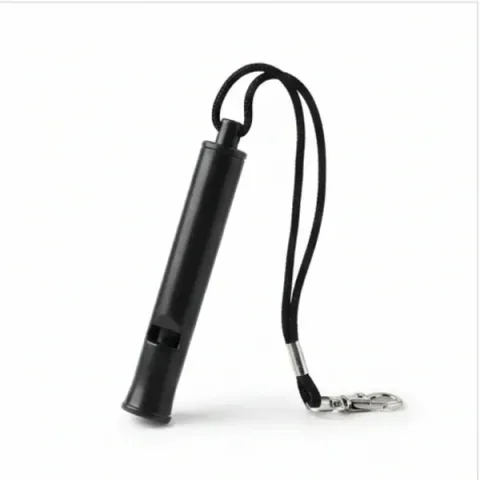
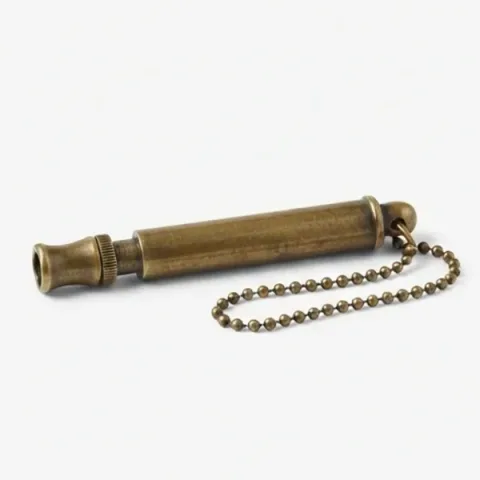
An antique-brass whistle, 35.8 g and 8.5 x 1 x 1.4 cm, that you turn to set the pitch anywhere from 5,400 to 12,800 Hz. The listing says sound travels up to 1.5 km "depending on the weather", which is the maker's figure. ACME's guide says it suits people who value subtlety.
This is the one we'd only suggest with care. The dial can move in a pocket or a bag, which changes the pitch your dog has learned, and because you can barely hear it you may not notice.
Pros: adjustable pitch; quiet to people; fits all breeds per the listing
Cons: imported, so check the delivery details on Amazon before you order; the dial can drift, changing the pitch; still makes sound, and units can vary; no lanyard mentioned
Best for: one handler who wants a quieter whistle and will check the setting
Skip it if: more than one person will use it, or you want to hear your own cue
Add-ons worth a look
These are tools that help you train with a whistle, and each has its own guide.
Training clickers: for teaching new behaviours up close, alongside the whistle.
Training treats: small and soft, so a reward is quick to eat and you can pay often.
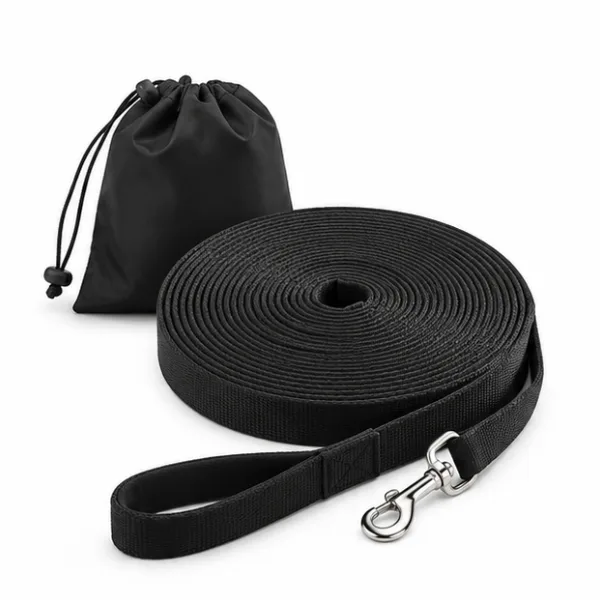
A long dog lead: a long line to practise recall safely before you go off lead.
How do you teach recall with a dog whistle?
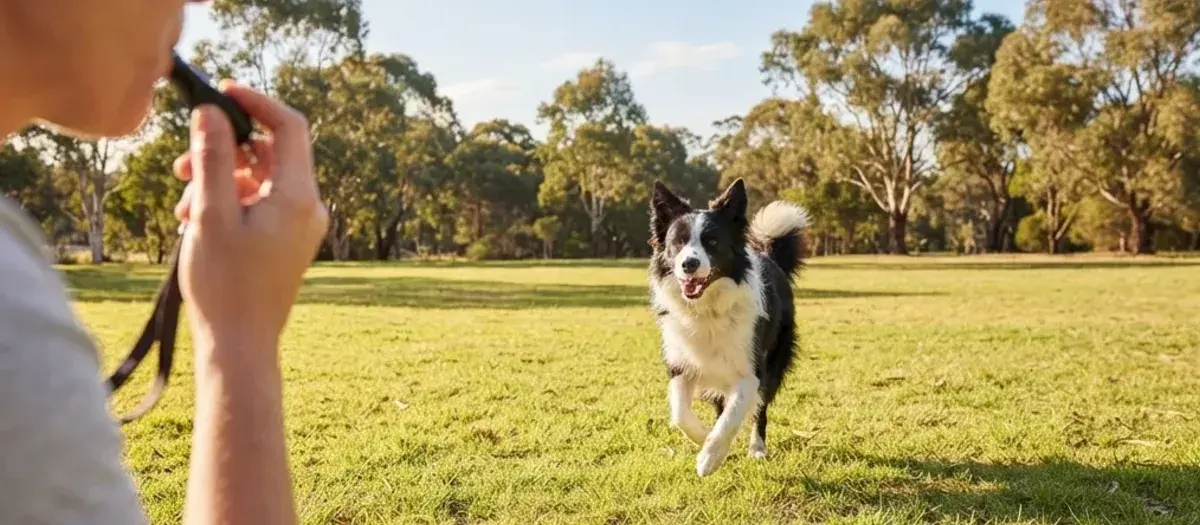
Teach the whistle as a sound that predicts food, start in a quiet room, then add distance and distraction in small steps. The AKC's method: blow once while your dog is looking at you, give several treats, and repeat until the sound means good things.
RSPCA Australia supports reward-based training, which it says is the most humane and effective way of training dogs and involves no aversive techniques or physical punishment (RSPCA Australia, page read 11 November 2026). Here's a sequence built on the AKC method within that approach. Steps 4 to 6 are our own suggestions, and every dog learns at a different pace.
Pair the sound. In a quiet room, blow one soft blast while your dog looks at you, then give several treats straight away. Repeat for a few short sessions. Blow gently. The AKC says you don't need full strength.
Add the cue to a known recall. If your dog already comes to a word, blow the whistle just before the word, then fade the word as the whistle takes over.
Practise at short range. Call from a few steps away indoors, reward on arrival, and keep the reward worth coming for.
Move outside on a long line. Use a long dog lead so your dog can't practise ignoring you. The line is the safety net, not a correction. Don't yank it.
Add distance and distractions gradually. Make one thing harder at a time: more distance, or a busier place, not both.
Keep it rare and rewarded. Use the whistle only for recall, always pay, and never use it to call your dog to something unpleasant such as a bath.
Keep small, soft training treats in a treat pouch so a reward is always within reach. Count them toward the day's food. Keep treats to about 10% of daily calories, as VCA advises and our dog treats guide explains.
Choose by situation
Our suggestions, based on the specs above.
Swipe sideways to see every column
Your situation
What to look for
Our pick
First whistle, you already use a clicker
Whistle and clicker in one, sold locally
Coachi Whizzclick
One dog, several handlers
A standardised pitch you can reorder
ACME 210.5
Retriever at the beach or oval
Pealess, lower pitch for distance
ACME 211.5
Small dog, close range
Higher pitch, clear specs, grip
ACME Alpha 210.5
Two dogs, or one cue for recall and one for stop
Two distinct tones
Coachi Two Tone
Urban park, quiet to people
Adjustable ultrasonic, used by one person only
ACME 535
How we chose
We searched Amazon Australia for dog training whistles, then shortlisted ones that met all of these checks:
Well rated: a strong average rating with plenty of buyer reviews.
No red flags: no pattern of poor reviews, safety complaints or listing problems.
Available on Amazon Australia when we checked.
Pitch or model is clear, from the listing or the maker's own guide.
Weight and size are stated.
Listing matches the product. The listing and the maker's guide agree on whether it has a pea.
Suits training, not anti-bark use.
These are researched picks, not products we've personally tried. We compared the specifications and features on each Amazon Australia listing, checked on 11 Nov 2026. We didn't accept payment from any brand.
Left out this time: one ACME 210.5 listing that says it has a pea, which contradicts ACME's own guide that the 210.5 is pealess, duplicate listings of models already here, generic whistles with no stated frequency, a metal shepherd's whistle that needs a learned technique, and any ultrasonic anti-bark device.
Where else can you buy a dog whistle?
Pet shops and some vet clinics also sell whistles, and you can compare how they feel in the hand before you buy.
When to see a vet
A whistle is a training tool, not a hearing test. If your dog suddenly stops responding to sounds, shakes their head, flinches near an ear, or seems to have lost hearing, a vet can check their ears and hearing before you assume it's stubbornness.
Watch your dog's response. Never blow a whistle directly into your dog's ears, which the AKC says is painful. If your dog seems worried or frightened by the sound, stop and speak with your vet or a qualified, reward-based trainer. Our guide to dogs scared of storms and fireworks covers noise worries.
Barking, aggression or recall that won't improve: a vet can rule out pain or other causes, and a reward-based trainer can help with the rest. For the approach, see RSPCA Australia: reward-based training.
Frequently asked questions
Can a dog whistle stop my dog barking?
No. A whistle marks or cues behaviour you want, and isn't for stopping unwanted behaviour. The AKC calls bark-stopping a myth, saying dogs get used to the sound and keep barking, and RSPCA Australia opposes devices that use ultrasonic or high-pitched sounds to change behaviour. For barking, a vet or a qualified reward-based trainer can help you work out why it's happening.
What is the difference between an ACME 210.5 and a 211.5?
The 210.5 is the higher pitch, about 5,900 Hz per ACME, suited to close range and smaller dogs. The 211.5 is lower, and ACME says it carries farther and cuts through wind, so it suits distance and gundogs. Both are pealess. Pick one and keep it, because switching means retraining.
Can dogs hear a silent dog whistle, and can I?
Dogs can hear it, and you may barely hear it. A silent whistle is ultrasonic, not silent. The AKC says it still makes a sound, and LSU gives dog hearing up to about 45,000 Hz against about 23,000 Hz for people. ACME says units can vary.
What frequency is a dog whistle?
It depends on the model. ACME's guide gives about 5,900 Hz for the 210.5, and the Alpha 210.5 listing says 5,700 Hz. The 211.5 is lower, with no Hz given. The 535 adjusts from 5,400 to 12,800 Hz. The AKC says adults hear up to about 20,000 Hz.
Can I use a phone app instead of a dog whistle?
A phone can play a tone, but we haven't compared apps. A whistle is consistent, hands-free and always on your neck, while a phone needs unlocking and can vary with volume and speaker. For recall, the same sound every time is what counts, and a whistle gives you that.
How do I teach my dog to come to a whistle?
Start in a quiet room. Blow once while your dog looks at you, give several treats, and repeat until the sound predicts food. Then add distance and distractions gradually, using a long line as a safety net. Results vary, so go at your dog's pace and keep it rewarding.
Is a whistle better than a clicker for training?
They do different jobs. A clicker marks the exact moment your dog gets it right, so it suits teaching new behaviours up close. A whistle carries over distance, so it suits recall. Many people use both, and the Coachi Whizzclick combines them. See our clicker guide.
Can a dog whistle hurt my dog's ears?
It can if used badly. The AKC says never to blow a whistle directly into a dog's ears, because it's painful, and that you don't need to blow at full strength. Blow gently from a normal distance, and stop if your dog seems worried or flinches.
Product details from each linked Amazon Australia listing, checked on 11 Nov 2026.
This guide provides general information and isn't a substitute for veterinary advice. If you're concerned about your dog's training or hearing, speak with your vet.