Research guide. WhiskerFinds may earn a commission from links, at no extra cost to you.
Quick answer: The best dog car crate depends on your dog's size and your car. For small dogs, a carrier strapped to the back seat works well, and our pick is the K&H Travel Safety Carrier. Bigger dogs usually need a secured crate in a wagon or SUV boot. None of our picks claims to be crash tested.
A crate keeps your dog in one place while you drive, which is one of the reasons RSPCA Australia gives for restraining dogs in cars: less distraction for the driver, less chance of being thrown forward in a crash or hard braking, and no jumping out of a window. This guide compares five dog travel crates on Amazon Australia, explains how to size and secure one, and is upfront about crash testing. For the full picture on restraints and the rules, start with our dog car restraint guide. Looking for a crate for home instead? See our dog crate guide.
Quick picks
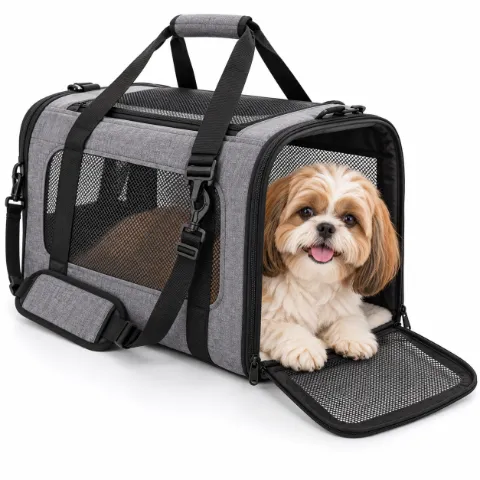
K&H Travel Safety Carrier, Medium
Straps loop around the headrest and take the seat belt; holds dogs up to 9 kg
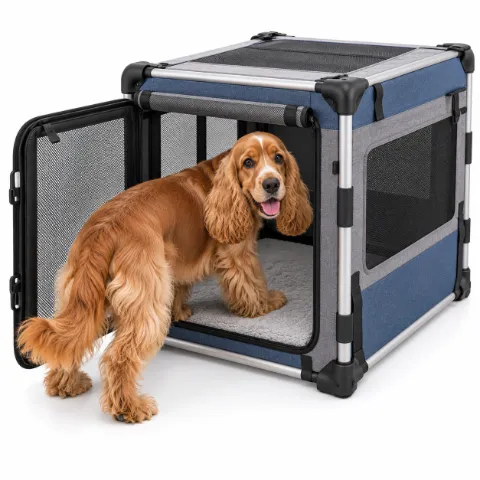
PetSafe Portable Pet Crate for Car
Aluminium frame that fits on one seat and folds down
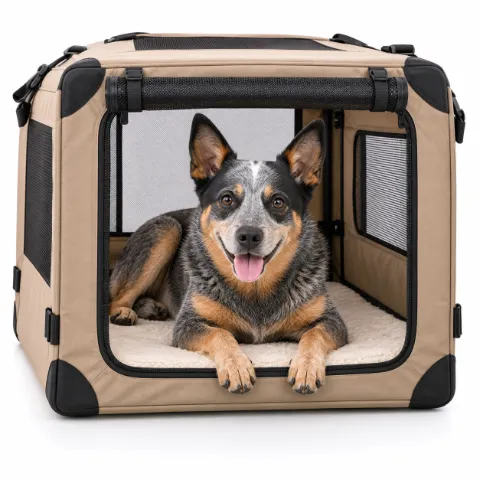
Amazon Basics 2-Door Soft-Sided Travel Crate, Medium
Folds flat, mesh on four sides, listed for about 12 to 34 kg
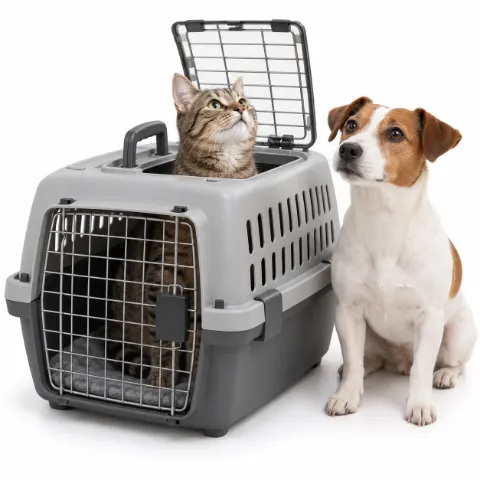
Amazon Basics 2-Door Top Load Hard-Sided Kennel
Rigid plastic with front and top doors, listed for about 5.5 to 9 kg
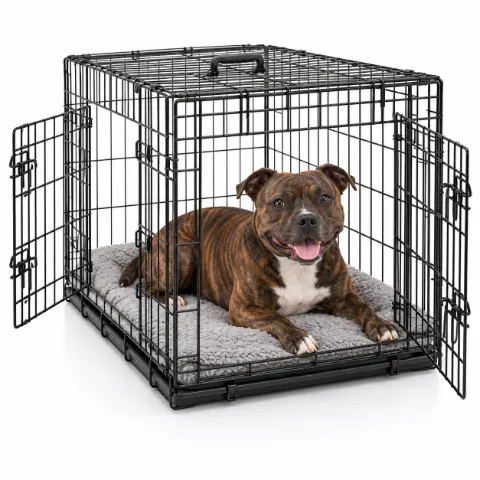
Amazon Basics Foldable Metal Wire Dog Crate, Double Door
Double door, folds flat, removable tray

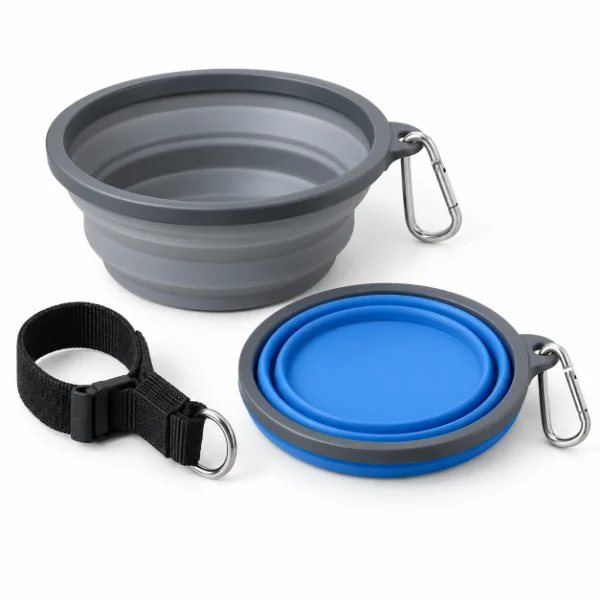
Aonkey collapsible bowls with bottle carrier
Handy for water stops on longer drives.
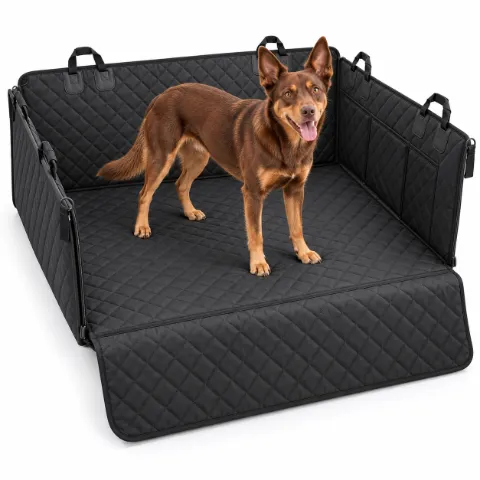
PETICON SUV cargo liner
Protects the boot floor from muddy paws and hair if your crate rides in the back.
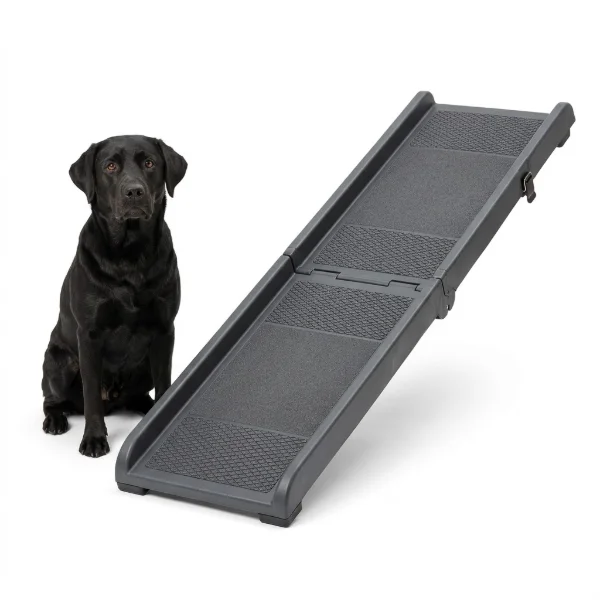
PetSafe Solvit bi-fold car ramp
Lets your dog walk up into the car, which suits dogs who shouldn't jump.
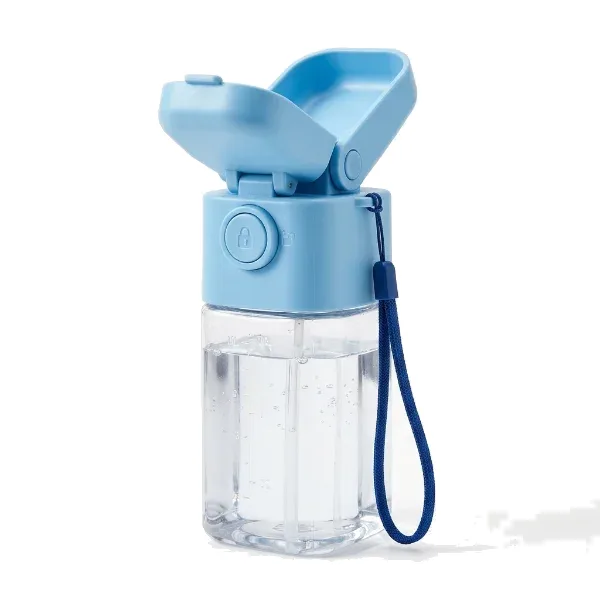
Cibaabo dog water bottle
A bottle for offering water when you stop.

Lucky Paws dog towel
A large towel for drying off a wet or muddy dog before they go into the crate.
Pictures are illustrations, not the actual products.
None of these crates claims to be crash tested, and there is no formally recognised Australian standard for crash testing dog car restraints or carriers. We explain what that means in are any dog car crates crash tested? below. Small dog on the back seat but a crate feels like too much? Our dog car seat guide covers booster seats.
Soft, hard or wire: which dog car crate?
Soft crates are light and fold flat, hard-sided kennels are rigid and easy to wipe clean, and wire crates are open-sided and suit bigger dogs. For the car, pick the type that fits your vehicle and can be strapped down, then match the size to your dog.
| Type | Best for | Watch out for |
|---|---|---|
| Soft-sided | Crate-trained small to large dogs; back seat or boot; storing flat | A lighter frame than a hard or wire crate, and fabric that a dog who chews or scratches may get through |
| Hard-sided | Small dogs; easy to wipe clean | Only small sizes suit a car seat; doesn't fold down, so it takes up space when not in use |
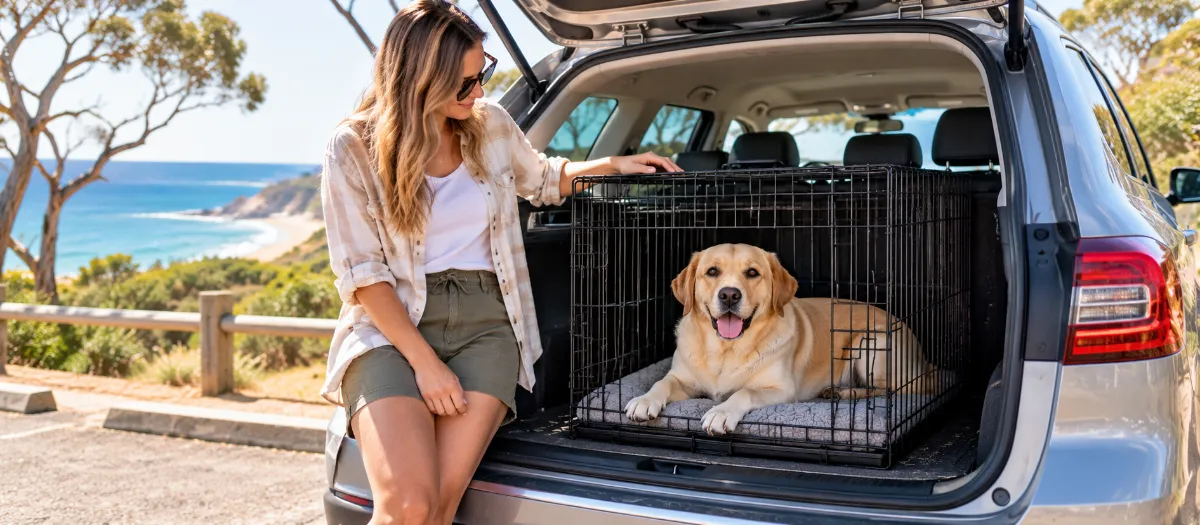
| Wire | Medium to large dogs in a wagon or SUV boot | Most are built for use at home, so secure it so it can't slide, and check it fits through your boot opening |
Back seat or boot?
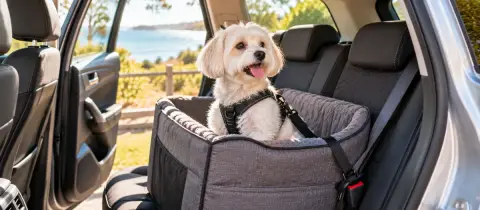
Small dogs can ride in a carrier on the back seat, held in place by the seat belt. Bigger dogs usually travel in the boot of a wagon, hatchback or SUV, in a crate that's secured. RSPCA Australia lists the back seat with a harness, a secured crate, or the cargo area behind a barrier as options (RSPCA Australia).
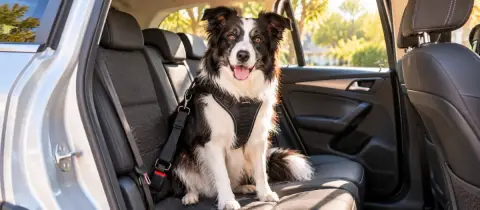
- Small dogs: back seat. A carrier that straps to the seat keeps your dog where you can see them, and on the seat belt rather than loose. The front seat isn't the place for a crate or a dog, and a dog should never ride on your lap.
- Bigger dogs: boot of a wagon, hatchback or SUV. The crate sits flat on the cargo floor, with the dog behind the back seat.
- Sedans: not the closed boot. A sedan's boot is sealed off from the cabin, with no airflow for your dog, so never put a dog in it. In Victoria it's also illegal to put a dog in the boot of a sedan type car under animal welfare law (Agriculture Victoria), and leaving an animal unattended in a car for more than 10 minutes when it is 28 degrees or hotter outside is an offence too. A bigger dog in a sedan is better in a harness on the back seat. See our dog car harness guide.
Whichever you choose, Australian road rules say a driver must not drive with a person or an animal in their lap (rule 297(1A); see, for example, Queensland's road rules). The penalty is a fine and demerit points. Other rules for dogs in vehicles differ between states and territories, so check yours in the dog car restraint guide.
Our picks in detail
1. K&H Travel Safety Carrier, Medium: best for small dogs on the back seat
A soft carrier made for the back seat. The listing says it measures 61 x 48 x 43 cm and holds dogs up to about 9 kg. It has straps that loop around the headrest and straps for the car seat belt to tether the carrier, and doors on both sides and the front. There are mesh windows, a washable pad, and it folds flat.
- Pros: straps for both headrest and seat belt; three doors; mesh windows; washable pad; folds flat
- Cons: holds only about 9 kg, so it suits small dogs only; the listing makes no crash-test claim
- Best for: small dogs travelling on the back seat
- Skip it if: your dog is over about 9 kg, or you want a crate for the boot
2. PetSafe Portable Pet Crate for Car: best one-seat crate
A soft crate with an aluminium frame, listed at 68.6 x 48.3 x 71.1 cm. The listing says it fits on one seat, which leaves room for passengers, and that a headrest strap and the vehicle seat belt hold it in place. It has mesh sides, a fleece pad, a carry handle and doors on each side, and it folds down.
- Pros: takes up one seat; strap and seat belt hold it in place; doors on each side; folds down
- Cons: the listing doesn't give a weight limit, so size it by measuring your dog; no crash-test claim
- Best for: small to medium dogs who need a crate on the back seat without taking over the whole row
- Skip it if: you want a stated weight limit, or you need a boot crate for a big dog
3. Amazon Basics 2-Door Soft-Sided Travel Crate, Medium: best soft crate for the boot
A collapsible soft crate with a PVC frame and mesh on four sides. The medium is listed at 76 x 54 x 54 cm for dogs of about 12 to 34 kg (the listing gives 11.7 to 34.1 kg), and other sizes are available. It has top and front doors and folds flat for storage.
- Pros: wide weight range; two doors; mesh on four sides; folds flat; other sizes available
- Cons: the listing says to use it with crate-trained dogs only; a soft crate isn't a good fit for a dog who chews or scratches; no crash-test claim; the listing doesn't mention car straps or seat belt loops, so you'll need to secure it yourself
- Best for: crate-trained medium to large dogs in a wagon or SUV boot
- Skip it if: your dog isn't used to a crate, or chews their way out of soft ones
4. Amazon Basics 2-Door Top Load Hard-Sided Kennel, 58 cm: best hard-sided for small dogs
A rigid plastic kennel with steel wire doors, held together with screws at the top and bottom. The listing describes front and top doors, spring latches and ventilation. It measures 58 x 38 x 33 cm and is listed for dogs of about 5.5 to 9 kg. A plastic car crate isn't automatically a hold crate; see our airline approved pet carriers guide.
- Pros: rigid sides; two doors; spring latches; easy to wipe clean
- Cons: only suits small dogs; doesn't fold flat; no straps on the listing for the car, so you'd need to secure it yourself; no crash-test claim
- Best for: small dogs, and owners who want a hard shell
- Skip it if: your dog is over about 9 kg, or you want a crate that folds away
5. Amazon Basics Foldable Metal Wire Dog Crate, Double Door, 76 cm: best wire crate for wagon and SUV boots
A folding metal wire crate with two doors, a removable tray and manual locks. The listing says it folds flat and gives a sizing method: measure your dog from nose to tail and from head to floor, then add 10 cm.
- Pros: double door; folds flat; removable tray; wide range of sizes
- Cons: it's built for use at home, not the car, so you need to secure it so it can't slide; check it fits through your boot opening; no crash-test claim
- Best for: medium to large dogs in the boot of a wagon or SUV
- Skip it if: you drive a sedan, or your boot opening is narrow
What size dog crate do I need for the car?
Your dog should be able to stand with their head in a normal upright position, turn around and lie down comfortably, and the crate should be ventilated and secured in the car (RSPCA Australia). Too big isn't ideal in a car either, as the crate has to fit the space and be fastened down.
A few practical tips:
- Measure your dog standing, from nose to tail base and from the floor to the top of the head, then compare with the inside size on the listing. Check whether the listing gives inside or outside measurements.
- The Amazon Basics wire crate listing suggests measuring from nose to tail and from head to floor, then adding 10 cm.
- Weight ranges on listings are a starting point only. A long-legged dog and a stocky dog of the same weight need different crates.
- Measure your car as well: the boot opening, the cargo floor and the height under the parcel shelf.
How do I secure a dog crate in the car?
Use the straps and loops the crate comes with, and follow the maker's instructions. RSPCA Australia says a crate should be fixed securely and well ventilated (RSPCA Australia). A crate that slides, tips or bounces around is a risk to your dog and your passengers. Fasten it so it can't move in hard braking, and keep it away from loose luggage.
- Back-seat carriers: the K&H listing describes straps that loop around the headrest, plus straps for the car seat belt to tether the carrier. The PetSafe listing describes a headrest strap and the vehicle seat belt keeping the crate in place.
- Boot crates: place the crate flat against the back of the rear seats. Many wagons and SUVs have tie-down points in the cargo area, so check your car's manual for where they are and use straps made for the job.
- Check it moves as little as possible after fastening, with the dog's weight in mind rather than an empty crate.
- Never leave the door unlatched, and use the latches on the crate every time.
If the crate has no way to strap down, it's better suited to home use than the car.
Are any dog car crates crash tested?
Not among our picks, and we didn't find any on Amazon Australia. RSPCA Australia says there is no formally recognised Australian standard for crash testing dog car restraints or carriers. Some brands have products tested by groups such as the Center for Pet Safety, while others say they ran their own tests, so check the claim (RSPCA Australia, updated 30 September 2025).
RSPCA Australia advises using crates that have passed safety or crash tests and are securely fastened. Some specialist brands, such as 4pets and Variocage, say their crates are crash tested, but we didn't find them on Amazon Australia when we checked on 22 Oct 2026. If crash testing matters to you, look at the maker's own site and ask what was tested and how.
The five crates in this guide don't make that claim. A crate that's strapped down still contains your dog and keeps them away from the driver, which are reasons RSPCA gives for restraining dogs, but we can't tell you how any of them would hold up in a crash.
Dog car crates compared
Details from each Amazon Australia listing, checked on 22 Oct 2026.
| Crate | Type | Size (cm) | Dog weight |
|---|---|---|---|
| K&H Travel Safety Carrier, Medium | Soft carrier | 61 x 48 x 43 | Up to 9 kg |
| PetSafe Portable Pet Crate for Car | Soft, aluminium frame | 68.6 x 48.3 x 71.1 | Not stated on listing |
| Amazon Basics Soft-Sided Travel Crate, Medium | Soft, PVC frame | 76 x 54 x 54 | About 12 to 34 kg |
| Amazon Basics Hard-Sided Kennel, 58 cm | Hard plastic | 58 x 38 x 33 | About 5.5 to 9 kg |
| Amazon Basics Metal Wire Crate, 76 cm | Wire | Measure your dog (see listing) | Not stated, size by measuring |
How we chose
We searched Amazon Australia for dog car crates and travel crates, then shortlisted crates that met all of these checks:
- Well rated: a strong average rating with plenty of buyer reviews.
- No red flags: no pattern of poor reviews, safety complaints or listing problems.
- Available on Amazon Australia when we checked.
- Measurements on the listing: inside or outside sizes we could compare.
- A way to secure it: straps, seat belt loops, or a shape that sits flat in a boot.
- Ventilation: mesh or openings on more than one side.
These are researched picks, not products we've personally tested. We compared the specifications and features shown on each Amazon Australia listing, checked on 22 Oct 2026. We didn't accept payment from any brand, and no brand saw this page before it was published.
Left out this time: home-only crates too tall for most boots, and car barriers that didn't pass our red flags check. One crate covers what most readers need.
Getting your dog used to a car crate
A crate works best when your dog already sees it as a comfortable spot. Go at your dog's pace and use treats and praise, never force or punishment.
- Set the crate up at home with the door open, with a blanket and a few treats inside.
- Let your dog wander in and out on their own, and reward them for going in.
- Close the door for a few seconds, then open it before your dog gets worried. Slowly build up the time.
- Move the crate to the car and repeat while parked, then try a short drive that ends somewhere fun.
If your dog gets sick in the car, our dog car sickness guide explains what helps. Heading away for a few days? See going on holiday with your dog. Whichever way your dog travels, never leave them alone in a parked car. RSPCA Australia says dogs can suffer fatal heat stress very quickly, even in mild weather (RSPCA Australia). See keeping your dog cool in summer.
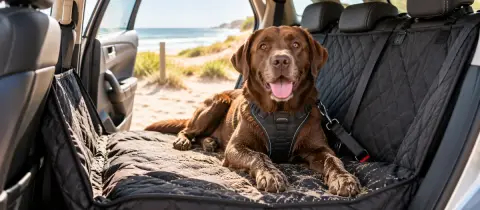
If you'd rather add a protective layer under the crate, our dog car seat covers guide has options for the seat and boot.
When to see a vet
Get urgent vet help if your dog shows signs of heat stress after a car trip: heavy panting, drooling, weakness or collapse. Move them somewhere cool and call your vet on the way. See our guide to keeping your dog cool.
Book a check if your dog seems sore, limps or yelps after a sudden stop or knock in the car, even if they seem fine afterwards. Dogs often hide pain.
Talk to your vet or a qualified dog behaviour professional if your dog panics, scratches at the crate, or injures themselves trying to get out. A crate shouldn't be a place of fear. If your dog drools, vomits or seems unwell on the road, read our dog car sickness guide and ask your vet.
Frequently asked questions
What is the safest dog crate for a car?
RSPCA Australia advises crates that have passed safety or crash tests and are securely fastened in the car. There is no formally recognised Australian standard for crash testing, so check any claim a brand makes. None of the crates in this guide claims crash testing, so what matters is size, ventilation and how well you secure it.
Can I put a dog crate in the boot?
Yes, in a wagon, hatchback or SUV where the boot is open to the cabin. Fasten the crate so it can't slide. Don't put a dog in the closed boot of a sedan, as there is no airflow for them. For more on the rules, see our dog car restraint guide.
Should a dog crate be in the back seat or boot?
It depends on your dog and car. Small dogs fit a carrier on the back seat, strapped to the seat belt. Bigger dogs usually travel in the boot of a wagon or SUV. Both are fine when the crate is the right size and can't move. The front seat is not.
Are soft crates safe in the car?
A soft crate keeps a calm, crate-trained dog contained when it's strapped down, but the frame is lighter than a hard or wire crate. It isn't suited to dogs who chew or scratch. The Amazon Basics soft crate listing says it's for crate-trained dogs only. None of the soft crates in this guide claims crash testing.
How big should a travel crate be?
Big enough for your dog to stand with their head in a normal upright position, turn around and lie down comfortably, with ventilation (RSPCA Australia). Measure your dog and compare with the inside size on the listing. A much bigger crate isn't better in a car, as it needs to fit and be secured.
Are crash-tested dog crates available in Australia?
Some specialist brands, such as 4pets and Variocage, say their crates are crash tested, but we didn't find them on Amazon Australia when we checked on 22 Oct 2026. Because there's no formally recognised Australian standard, ask the brand what was tested and how before you buy.
Related guides
- Best dog car beds
- Airline approved pet carriers: cabin bags and hold crates
- Dog car restraints: the rules and your options
- Best dog car harnesses
- Best dog car seat covers
- Best dog car seats and boosters
- Dog car sickness: signs, tips and what helps
- How to keep your dog cool in summer
Sources
- RSPCA Australia Knowledgebase: Do I need to restrain my dog when travelling in my car? (updated 30 September 2025)
- Agriculture Victoria: Travelling with dogs
- RSPCA Australia Knowledgebase: Is it legal to have unrestrained dogs on ute trays or other open vehicles? (updated 29 October 2025)
- Queensland legislation: Transport Operations (Road Use Management, Road Rules) Regulation 2009, rule 297
- Product details from each linked Amazon Australia listing, checked on 22 Oct 2026.
This guide provides general information and isn't a substitute for veterinary advice. If you're concerned about your dog's safety in the car, speak with your vet.