By Anish PuriUpdated 22 Oct 202612 min readResearched, not tested by us
Research guide. WhiskerFinds may earn a commission from links, at no extra cost to you.
Quick answer: A dog car seat is a small raised bed that holds a little dog in place and lets them see out. Our pick is the Amazon Basics Pet Car Booster Bucket Seat, for dogs up to 15 kg. Always use it in the back seat, with its short lead clipped to a harness.
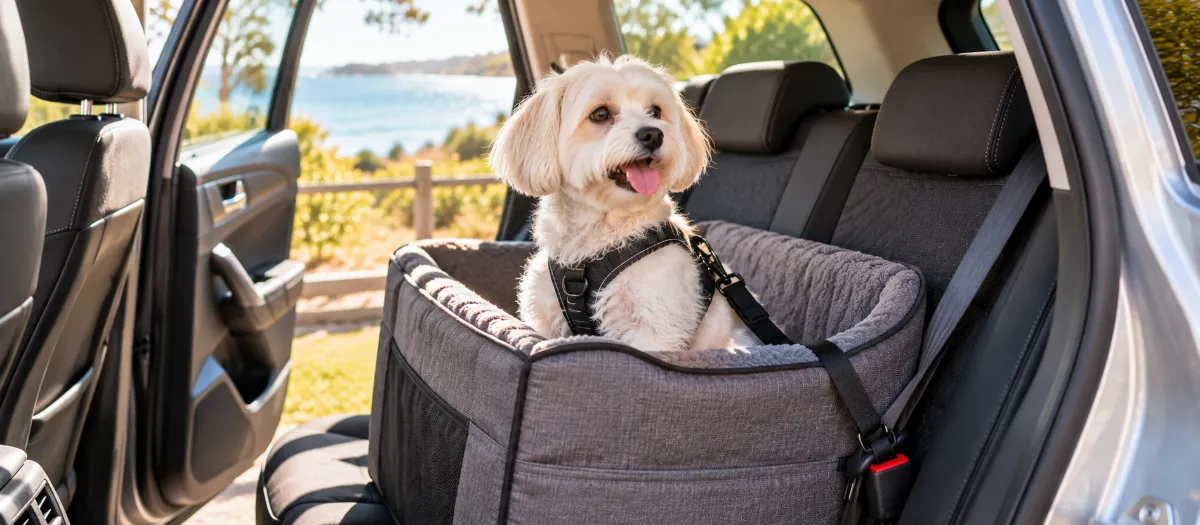
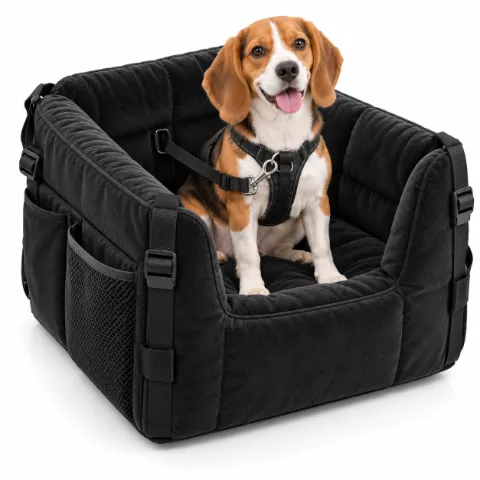
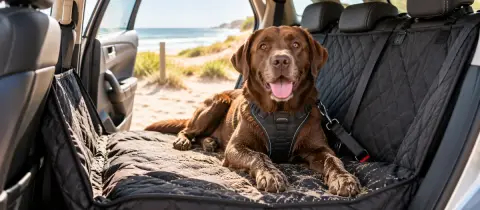
Illustration, not the actual product
Our top pickAmazon Basics Pet Car Booster Bucket Seat
A booster seat is mostly about comfort, a view and keeping a small dog settled. This guide compares four dog car seats on Amazon Australia by weight limit and size, explains how to set one up safely, and points to better options for bigger dogs. For the full picture on restraining dogs in cars, start with our dog car restraint guide. Cat owner? See our cat car seat guide, which covers cat-labelled seats and why a belted carrier comes first.
Quick picks
Our top pickBest overall
Amazon Basics Pet Car Booster Bucket Seat
Raised bucket shape for dogs up to 15 kg, with a lead clip for a harness
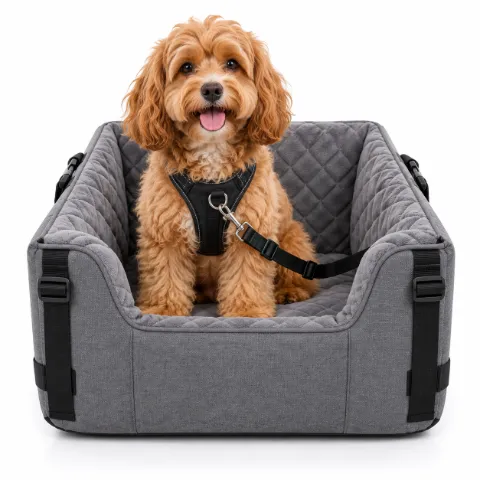
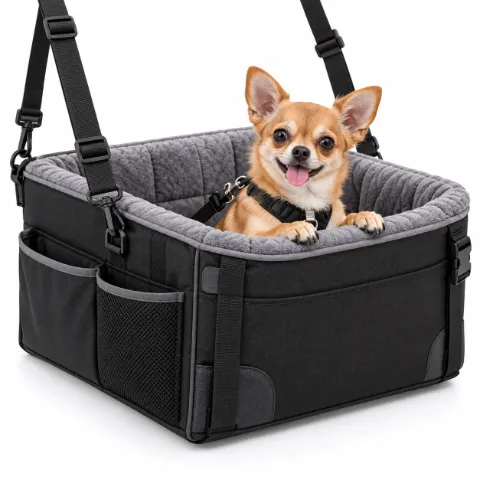
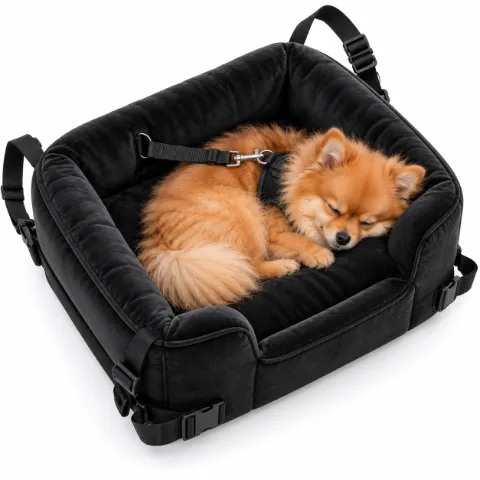
Pictures are illustrations, not the actual products.
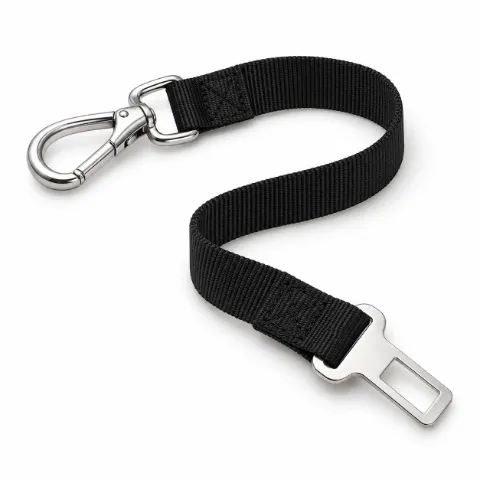
A booster seat holds a small dog in place, but it isn't a substitute for a harness. Every seat here has a short lead. Clip it to the back of your dog's harness, never their collar.
Do dogs need a car seat?
Most dogs don't need a car seat, but all dogs need some kind of restraint. RSPCA Australia says a restrained dog is less likely to distract the driver or be thrown forward in a crash or hard braking, and can't jump out of a window (RSPCA Australia Knowledgebase, updated 30 September 2025).
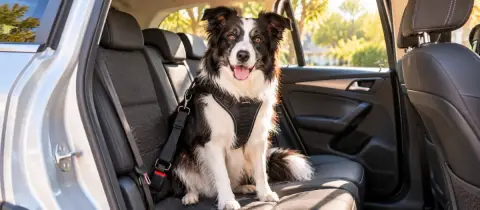
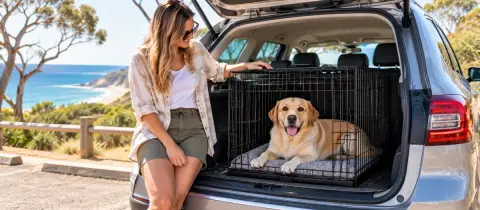
For a small dog, a booster seat is one way to do that. It raises them so they can see out, gives them a defined spot to settle, and keeps them off the floor and out of your lap. RSPCA Australia lists three places for a dog to travel: the back seat with a car harness, a secured crate or carrier, or the cargo area behind a barrier. A booster seat on the back seat, tethered to a harness, is a version of the first.
Australian road rules say a driver must not drive with a person or an animal in their lap (rule 297(1A); see, for example, Queensland's road rules). The penalty is a fine and demerit points. Other rules for dogs in vehicles vary between states and territories, and our dog car restraint guide explains where to check.
Are dog booster seats safe?
A tethered booster seat keeps a small dog in one place, which is the point of restraint, but none of the four listings here claims crash protection. RSPCA Australia says there is no formally recognised Australian standard for crash testing dog car restraints or carriers; some brands have products tested by groups such as the Center for Pet Safety, others say they ran their own tests, so check the claim (RSPCA Australia Knowledgebase).
So treat a booster seat as a comfort and containment product. Three habits make it work better:
Back seat only. RACV says it's unsafe for a dog to sit in the front passenger seat because a deploying airbag could seriously injure them, and recommends a restraint in the back seat (RACV, September 2026).
Clip to a harness, never a collar. RSPCA Australia says a collar may tighten on the neck and choke or injure a dog in an accident, so use a properly fitted harness (RSPCA Australia Knowledgebase on dogs in open vehicles). Clip to the back of the harness, and keep the lead short enough that your dog can't climb out or reach the front seats.
Fix the seat itself. A seat that slides about on the cushion isn't doing its job. Thread the car's seat belt through, and use the headrest strap where the seat has one.
If you want something built for impacts, look at a car harness or a car crate, and check what testing the brand says it did.
Our picks in detail
1. Amazon Basics Pet Car Booster Bucket Seat: best overall
A bucket-style booster for dogs up to 15 kg. The listing describes a foam-cushioned seat with a grey Oxford outer and a quilted inside, raised so your dog can see out. It holds an adjustable lead that clips to a harness, and it is held in place by the car's seat belt. The inside measures 34 x 34 x 27 cm.
The listing says it does not attach to a headrest, so it relies on the seat belt alone to stay put.
Pros: raised bucket shape; lead clips for a harness; roomier than the very small seats
Cons: no headrest strap, so the seat belt does all the securing; at 46 x 46 cm outside it takes up much of a back seat
Best for: small dogs up to 15 kg who like to look out of the window
Skip it if: your dog is over 15 kg, or you want a seat with headrest straps
2. JOEJOY Deluxe Dog Booster Seat: best for very small dogs
A compact booster for dogs up to 9 kg. It has a collapsible internal metal frame, two adjustable straps that go around the headrest and buckle, a clip-on safety leash, a water-resistant Oxford outer, mesh sides and storage pockets. It measures 41 x 33 x 23 cm.
Use it in the back seat only, with the headrest straps fastened, for the airbag reason on this page.
Pros: headrest straps hold it in place; folds down when not in use; pockets for treats and a lead
Cons: the 9 kg limit rules out many small breeds; only 23 cm tall, so it raises a dog less than a bucket seat
Best for: toy and very small dogs, such as a Chihuahua or Maltese
Skip it if: your dog is over 9 kg or very leggy
3. AlfaTok Memory Foam Booster Dog Car Seat: best cushioned
A booster for dogs up to 11 kg. The listing describes egg-crate foam, a firm foam bolster around the edge, an anti-slip base and a velvet cover you can machine wash. The seat belt threads through two holes, and there's also a headrest strap. An adjustable leash with a snap hook clips to a harness, and there are storage pockets. It measures 50 x 45 x 30 cm.
At 30 cm tall, it sits lower than the bucket-style seats, which means less of a view for a tiny dog.
Pros: thick foam; washable cover; seat belt and headrest strap; anti-slip base
Cons: lower than bucket-style seats, so less of a view for a tiny dog; 11 kg limit
Best for: small dogs who like a soft, cushioned spot
Skip it if: you want your dog raised high enough to see out easily
4. GL GLENSLAVE Dog Car Seat: best for medium dogs up to 16 kg
A deeper seat for small to medium dogs up to 16 kg. It's imported. The listing describes adjustable safety leashes, a shoulder strap, harness access at the bottom, a 15 cm foam base and a fully removable washable cover. It measures 45 x 45 x 48 cm.
The seat arrives vacuum-packed, and the listing says it needs 24 to 48 hours to expand, so unpack it before the day you need it.
Pros: the highest weight limit of the four; tall sides; thick foam base; removable washable cover
Cons: Imported, so check the delivery details on Amazon before you order; needs time to expand; takes up a lot of back seat
Best for: dogs up to 16 kg, such as a Cavalier King Charles Spaniel or a small Cocker
Skip it if: your dog is over 16 kg
What size dog car seat do I need?
Weigh your dog first, then measure them lying curled up, because most dogs rest in a curl rather than stretched out. Pick a seat whose weight limit is comfortably above their weight and whose inside space is bigger than their curled-up size. Dogs near the limit are better in the next size up.
The weight limits in our picks are 9 kg, 11 kg, 15 kg and 16 kg. The listings give these inside and outside sizes:
Amazon Basics: inside 34 x 34 x 27 cm, outside 46 x 46 x 41 cm.
JOEJOY: 41 x 33 x 23 cm.
AlfaTok: 50 x 45 x 30 cm.
GLENSLAVE: 45 x 45 x 48 cm.
Only the Amazon Basics listing gives an inside measurement. For the others, the listed size is the outside size, so allow for the walls and cushioning.
A dog that can lie down and stand without touching the sides is comfortable. A dog squashed in a seat that is too small won't settle. A dog in a seat that is too big can slide about on corners.
What about medium and large dogs?
Booster seats top out at about 15 to 16 kg in our picks, so they suit small dogs and some small-to-medium breeds. Bigger dogs are better served by a car harness clipped to the seat belt or a secured crate; a hard-bottom seat cover can add a flat platform under the harness. Some large-dog "car seats" are really bolstered beds, so check what the listing says the seat does. For dogs over about 16 kg, see dog car beds: bed-style seats up to 26 kg and flat mats for the boot.
Here is where to go next:
Best dog car harness: a harness that clips into the seat belt, for dogs of most sizes.
Best dog car crate: a secured crate in the back seat or boot, which RSPCA Australia says should be ventilated and big enough for the dog to stand, turn around and lie down comfortably.
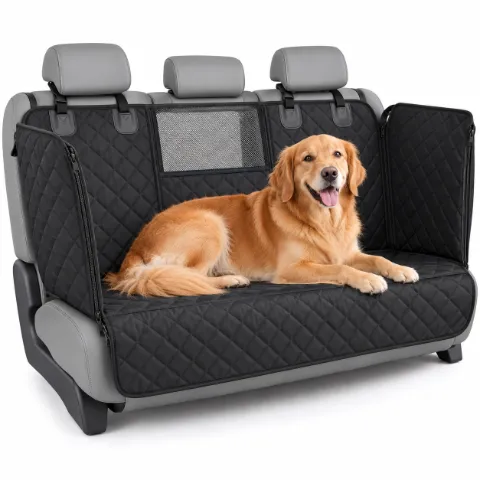
Best dog car seat covers: hammock and hard-bottom covers that protect the car and give a larger dog a flat surface.
Dog car seats compared
Details from each Amazon Australia listing, checked on 22 Oct 2026.
Weight limits are the listings' own figures, converted from pounds where the listing uses pounds.
How we chose
We searched Amazon Australia for dog car seats and booster seats, then shortlisted seats that met all of these checks:
Well rated: a strong average rating with plenty of buyer reviews.
No red flags: no pattern of poor reviews, safety complaints or listing problems.
Available on Amazon Australia when we checked.
Weight limit and size stated on the listing.
A built-in tether that clips to a harness.
Secures with the car's seat belt, and a headrest strap where the listing mentions one.
These are researched picks, not products we've personally tested. We compared the specifications and features on each Amazon Australia listing, checked on 22 Oct 2026. We didn't accept payment from any brand, and no brand saw this page before it was published.
Left out this time: large-dog "car seats" that are really bolstered beds and didn't pass our red flags check, and near-identical imported seats.
How do I set up a booster seat in the car?
Set the seat on the back seat, thread the seat belt through, tighten it, and clip the short lead to your dog's harness. The seat should not shift when you push it. Keep the lead short enough that your dog can sit and lie down but can't climb out or reach the front.
Put the seat on a back seat position and thread the car's seat belt through the loops or slots. Pull it tight and click it in.
If the seat has a headrest strap, fasten it as well.
Put a well-fitted car harness on your dog, then clip the seat's lead to the back of the harness. Never clip it to a collar.
Check that your dog can sit up and lie down, but can't reach the edge.
Practise first. Let your dog explore the seat at home with treats, then try a short drive to somewhere nice.
Go step by step and keep trips short at first. If your dog drools, vomits or seems distressed, see our dog car sickness guide, and don't push through.
See your vet if your dog's car sickness persists, or if they drool heavily, vomit, shake or panic every time they travel. A seat won't fix this. Our dog car sickness guide explains what may help.
Never leave your dog in a parked car. Heat stress can become serious quickly, even on a mild day. If your dog is panting heavily, wobbly or collapsed, get them to a cool place and call your vet straight away.
Get your dog checked after any crash or hard stop, even if they seem fine. Injuries are not always obvious.
Frequently asked questions
Are dog car seats safe?
A tethered booster seat keeps a small dog in one place, which is the point of restraint, but none of the four listings here claims crash protection. RSPCA Australia says there is no formally recognised Australian standard for crash testing dog car restraints or carriers. Use the seat in the back, tether it to a harness, and see are dog booster seats safe.
Can a dog car seat go in the front seat?
We say no. RACV says it's unsafe for a dog to sit in the front passenger seat because a deploying airbag could seriously injure them, and a driver must not drive with an animal in their lap. Use the back seat, with the seat belt through the booster and a tether to a harness.
What weight is a dog booster seat for?
The four seats here suit dogs up to 9 kg, 11 kg, 15 kg and 16 kg, from the listings. Weigh your dog and choose a seat comfortably above that weight. Dogs over about 16 kg do better in a car harness or a crate, with a hard-bottom cover underneath if they like a flat surface.
Do dog car seats help with car sickness?
We can't promise that. Car sickness can have several causes, and a seat won't treat it. Some dogs settle better when they can see out, but that varies from dog to dog. If your dog drools or vomits in the car, read our dog car sickness guide and talk to your vet.
What is the best car seat for a small dog?
For most small dogs up to 15 kg, our pick is the Amazon Basics bucket seat, which is held by the seat belt and has a lead clip for a harness. For very small dogs up to 9 kg, the JOEJOY has headrest straps and folds down. Always use either in the back seat.
Do I still need a harness with a booster seat?
Yes. The booster seat's lead needs something to clip to, and it should be the back of a harness, not a collar. A car harness also gives you a restraint that can clip to the seat belt if you take the booster out. See our best dog car harness guide.
Product details from each linked Amazon Australia listing, checked on 22 Oct 2026.
This guide provides general information and isn't a substitute for veterinary advice. If you're concerned about your dog's safety in the car, speak with your vet.