Cat car seats and boosters: do they work, and which to buy
By Anish PuriUpdated 23 Nov 202611 min readResearched, not tested by us
Research guide. WhiskerFinds may earn a commission from links, at no extra cost to you.
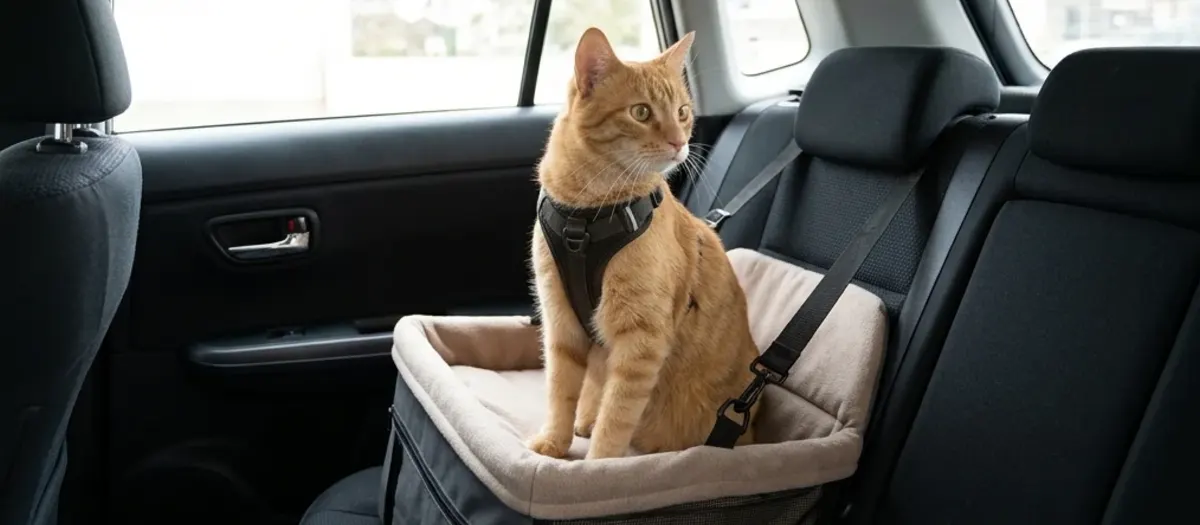
Quick answer: A cat car seat is a booster that raises your cat and holds them in one spot, and for a calm, harnessed cat the K&H Bucket Booster is our top pick. It helps with distraction, not crashes: the one crash study we found says pet seats likely don't protect in a collision. For most cats, a belted carrier comes first.
Plenty of cats hate being shut in a carrier, and a booster seat with a view looks like the kind answer. This guide compares five seats on Amazon Australia by size in centimetres, weight limit in kilograms and how they tether, and is upfront about what a seat can and can't do. If your cat will ride in a carrier, see our cat carrier guide first.
Most listings here are written for dogs and mention cats as a second use. That's why we only picked seats whose listing names cats, and why every limit below is the maker's, not ours.
Quick picks
Our top pickBest overall
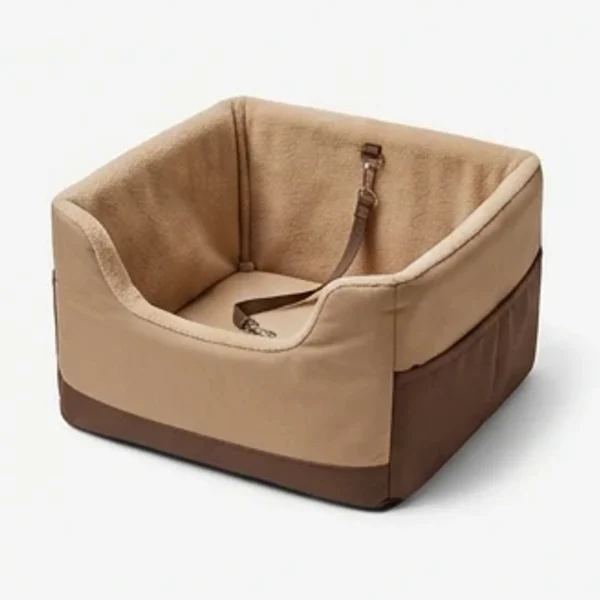
K&H Bucket Booster Pet Seat, small
Two tethers, a belt route under the cushion and a collapsible frame
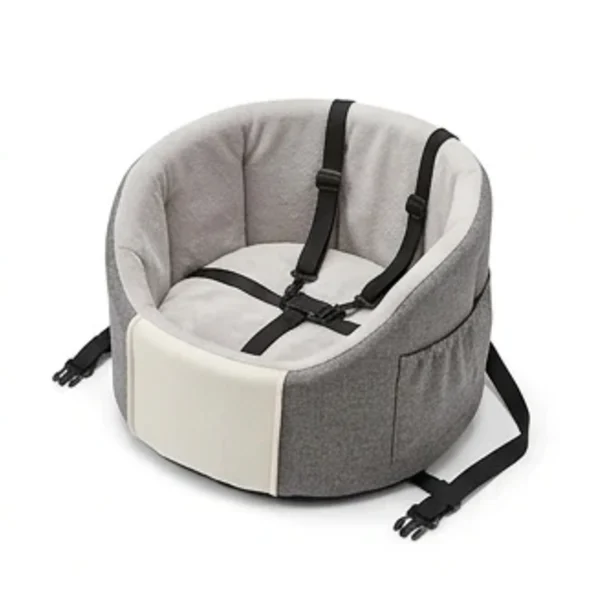
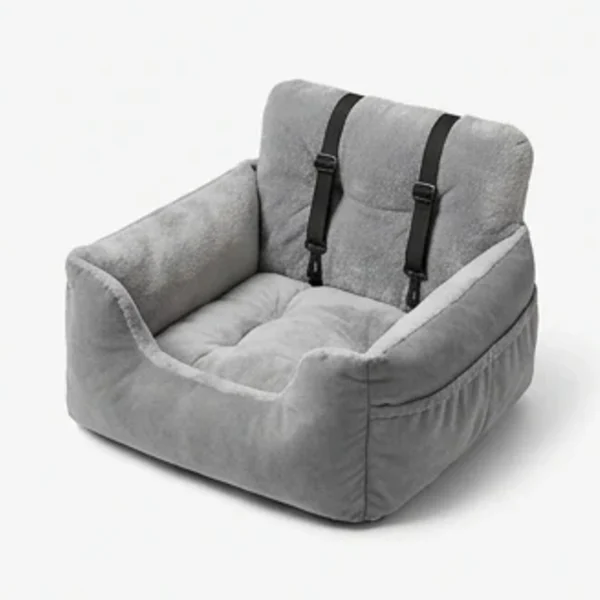
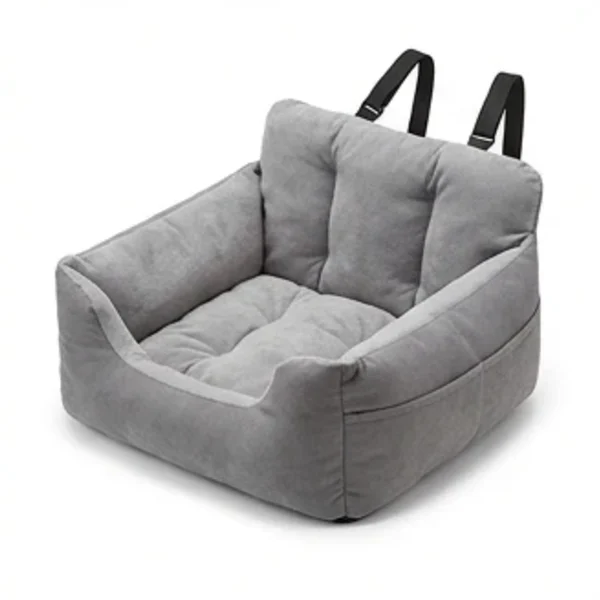
Pictures are illustrations, not the actual products.
Cat car seats compared
Details from each Amazon Australia listing, checked on 23 Nov 2026. Sizes are the listing's outer size unless noted. Tether counts are what the listing describes.
Swipe sideways to see every column
Seat
Outer size (cm)
Weight limit
Tether and belt
Collapsible
Washable
K&H
48.9 x 38.7 x 40.6
9.1 kg
2 tethers; belt under the cushion
Yes
Cover machine washable
Best Pet Supplies
About 51 x 53 x 36, or 20.3 x 38.1 x 17.8 (the listing gives both)
9.1 kg
Seat straps plus a harness strap
Not stated
Slipcover washable; waterproof liner
Akinerri
38 x 41 x 36; folds to 44 x 39 x 15
Not stated for cats (see pick 3)
Inner leash, 2 belt loops, surround belt
Yes, with carry bag
Hand wash or dry clean only
Petbobi
40 x 34 x 24.9
6.8 kg
2 belts, back strap, clip-on leash
Foldable
Detachable board; wipe-clean material
PetSafe Solvit
41 x 33 x 21
8.2 kg (the listing also gives 11.3 kg)
Internal leash, belt loops, headrest straps
Not stated
Liner removable; hand wash only
Do cat car seats work?
They work for one job: keeping a cat in a set spot, off the driver's lap and the pedals. They don't turn a seat into a crash restraint. The K&H listing says it plainly: it "is not a crash safety device" but gives "distraction free driving", and none of the other listings claims crash protection.
The outside evidence points the same way. A 2015 pilot study by the Center for Pet Safety, sponsored by Subaru of America, found commonly sold pet travel seats may prevent distraction but will likely not protect in a crash, and advised a crate, carrier or harness over a seat (Subaru of America media release on the Center for Pet Safety study, 6 October 2015, page read 24 November 2026). It's an old, maker-sponsored pilot, and it used crash-test dogs, not cats. We found no cat-specific seat study.
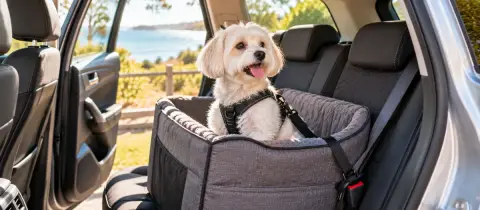
The only pick that names cats and dogs, collapses for storage, and has two tethers plus a belt route hidden under the cushion. The listing says 48.9 x 38.7 x 40.6 cm, 1.25 kg, up to 9.1 kg, a firm foam bolster around the edge, a front that dips for easy entry, a removable washable fleece cover and a one-year limited warranty. It collapses flat to store.
The listing's Directions say to install it in the front or rear seat and that it isn't a crash safety device. We suggest the back seat, for the reasons on this page, and a harness on the cat, never a collar. The listing's item type and target species fields say "dog", with cats in the title and pet type, so it's a dog seat that suits a small cat.
Pros: two tethers; belt route under the cushion; collapsible; washable cover; one-year warranty
Cons: the maker says it isn't a crash safety device; the listing allows front-seat use, which we don't suggest; the interior is sized for small pets
Best for: a calm, harnessed small cat who likes to see out
Skip it if: your cat wriggles or panics, or weighs more than 9.1 kg
2. Best Pet Supplies Dog and Cat Booster Seat, grey: best for a cat who likes high walls
A plush seat with tall pillow walls, for a cat who likes to curl up with their sides covered. The listing calls it a "dog car seat or cat car seat", up to 9.1 kg, with multiple adjustable straps to the car seat, a harness strap, a slip-resistant base and a waterproof TPU liner under a washable slipcover.
The sizes conflict. The size field says 20 x 21 x 14 in (about 51 x 53 x 36 cm), while the item dimensions say 20.3 x 38.1 x 17.8 cm. Those can't both be right, so check the size chart on the listing against the space in your back seat before you order.
A foldable seat that doubles as a bed. The medium is listed at 15 x 16 x 14 in (about 38 x 41 x 36 cm) and folds to 17.3 x 15.5 x 5.9 in (44 x 39 x 15 cm), with a carry bag. The listing says it lifts the pet 18 cm (7 in) above the car seat, and has a safety inner leash, two seat belt loops, a surround belt, a base storage compartment and two outer pockets. Its own safety info says a pet shouldn't be left unattended on the seat and that it should be secured by the belt only.
The listing's weight field says 45 lb, which doesn't suit a cat-sized seat, so we don't print it as a limit. The listing describes it as suitable for small dogs and medium cats. It's the Akinerri brand, but a different product from the carrier on our airline pet carrier page.
Pros: folds flat with a carry bag; doubles as a home bed; inner leash and two belt loops
Cons: hand wash or dry clean only; no usable weight limit for cats on the listing
Best for: a cat who also naps on it at home
Skip it if: you want a machine-washable cover, or a stated weight limit
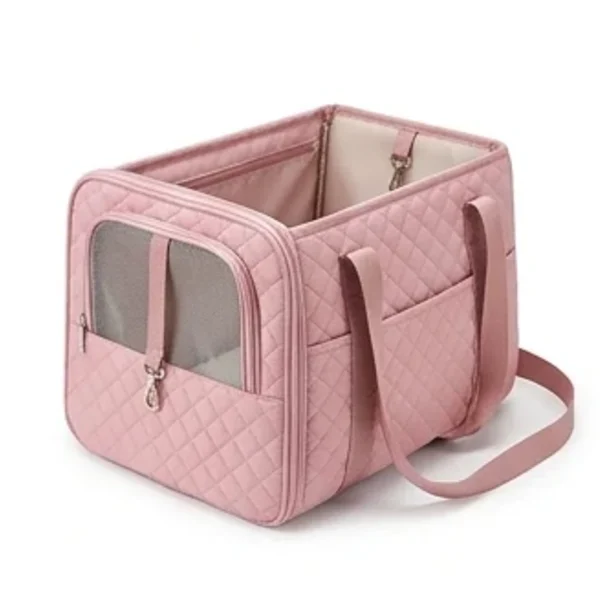
4. Petbobi Reinforced Pet Booster Car Seat, pink: best for a small cat
The lightest and smallest seat here. The listing says 40 x 34 x 24.9 cm, 0.9 kg and up to 6.8 kg, with a PE board, PVC tube supports and a foam edge. Two belts fix the seat, a back strap stops it moving and a clip-on leash attaches the pet. The listing says it's foldable and the board detaches for cleaning, and its care field says to use a harness, not a collar.
It has the lowest weight limit of the seats here and the smallest interior, so a larger cat won't fit. The listing describes it for small pets such as Yorkies and Chihuahuas.
Pros: light; foldable; belts and a back strap; says harness, not collar
Cons: lowest weight limit and smallest interior here; dog-sized breed examples on the listing
Best for: a small, harness-trained cat on a short, calm drive
Skip it if: your cat is more than about 6.8 kg or likes to stretch out
5. PetSafe Solvit Tagalong Deluxe Booster, large: best framed seat
A frame-supported seat with an internal harness attachment, an internal leash and "safety loops" for the seat belt. The listing says 41 x 33 x 21 cm, 1.4 kg, a removable liner, hand wash only, a three-year warranty, and an Australian customer care team on weekdays. Adjustable headrest straps set the height.
The listing gives two weight limits: 25 lb (11.3 kg) in the product fields, but 18 lb (8.2 kg) for the Large in the maker's size table, where 25 lb belongs to the XL. We use the lower figure. The listing's species field says dog, with "Dogs/Cats" in the title.
Pros: internal harness attachment; frame supports the seat; three-year warranty; Australian care team per the listing
Cons: needs a headrest to fit; hand wash only; two weight limits on the listing
Best for: a medium-sized cat in a car with headrests
Skip it if: your car has no headrests, or your cat is over about 8 kg
What the sources say, and what they don't
Swipe sideways to see every column
Source
What it says
What it doesn't cover
Center for Pet Safety pilot (2015, via Subaru)
Seats likely give distraction prevention, not crash protection
Cats; current seat models; Australian cars
RSPCA Australia (dog page, 2025)
Restraints should be crash-tested; no Australian standard
Cats; boosters specifically
International Cat Care (2025)
Carrier belted on the back seat or in the footwell behind a front seat; never the boot
Booster seats
Preventive Vet (2026)
Keep the cat in a carrier while the car moves; no harness is escape-proof
Booster seats
RSPCA NSW (2015)
Cats travel in a secured carrier; never leave a pet in a parked car
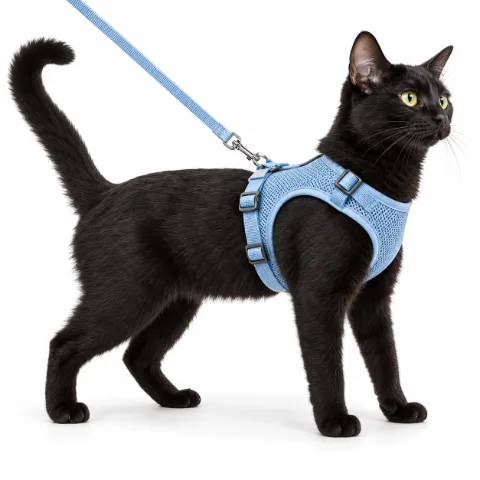
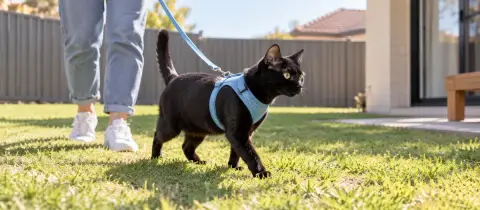
Use a harness, never a collar. Every seat here has a tether or leash that clips to a harness, and the Petbobi listing's care field says "Use a harness, not collar". A collar can tighten on a cat's neck if they jump or the car stops suddenly. Fit the harness at home first, using our cat harness guide.
Preventive Vet is blunt that no harness is 100% escape-proof, so check the fit every trip and keep windows and doors shut while your cat is out of the carrier. Clip the tether short, so your cat can sit, stand and turn but can't reach the floor or the driver.
If the tether is the only thing holding your cat in, that's a sign the seat is the wrong tool for that cat.
Where should the seat go?
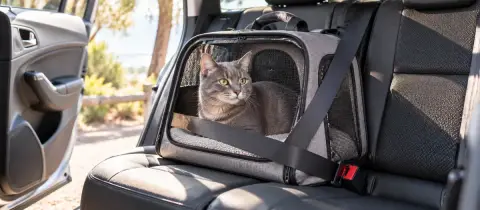
On the back seat, secured with the seatbelt as the maker says. Preventive Vet says the back seat avoids driver distraction and airbag injury, which is why we don't suggest the front passenger seat for a cat, even though the K&H listing says either seat can take it. The Akinerri listing adds that you should secure its seat by the belt only, and shouldn't leave your cat unattended on it.
Never leave your cat in a parked car. RSPCA NSW says heat can cause severe stress or death in just six minutes, even in shade or with windows slightly open. Our guide on leaving a pet in a hot car has the Australian detail.
Where else can you buy a cat car seat?
Pet shops and vet clinics sell carriers and some car seats, and a vet or vet nurse can tell you whether a carrier or a harness suits your cat. Whatever you buy, check the listed size and weight against your cat, and confirm the seat is set up for a harness.
Choose by situation
Swipe sideways to see every column
Your situation
What to look for
Our pick
Small, calm cat who likes a view
A seat with a bolster and two tethers
K&H (1)
Cat who likes high walls and a cushion
Tall walls and a harness strap
Best Pet Supplies (2), once you've checked the size
Cat who naps on it at home
A foldable seat that doubles as a bed
Akinerri (3)
Small adult cat under 6.8 kg
A light seat with a low weight limit
Petbobi (4)
Bigger cat, up to 9.1 kg
The highest stated limit and two tethers
K&H (1), or PetSafe Solvit (5) up to 8.2 kg if you want a framed seat
Cat over 9 kg
A belted carrier
None of these seats lists a limit above 9.1 kg for cats
We searched Amazon Australia for cat car seats and boosters, then shortlisted those that met all of these checks:
Well rated: a strong average rating with plenty of buyer reviews.
No red flags: no pattern of poor reviews, safety complaints or listing problems.
Available on Amazon Australia when we checked.
Cats named on the listing, not only dogs.
Size and weight limit given on the listing, with a way to tether to a harness.
No collar attachment: a seat that clips to a collar was ruled out.
Where a listing contradicts itself, we say so in the cons. These are researched picks, not products we've personally tested. We compared the specifications and features on each Amazon Australia listing, checked on 23 Nov 2026, and we didn't accept payment from any brand.
Left out this time: a seat belt tether that hooks to the cat's collar, a dog-only booster that suggests the front seat, a carrier-and-litter-box set (see our travel litter box guide), centre console seats, which sit beside the driver rather than on the back seat, and the booster that tops our dog car seat guide.
How do you get a cat used to a car seat?
Go slowly, with the car parked first. Preventive Vet suggests short, calm sessions at your cat's pace: start in the parked car, then with the engine running, then a short drive, with treats and praise throughout. It says never push a cat past their comfort zone, and that timing varies, from a few sessions to several months. Our guide to getting a cat into a carrier uses the same steps.
When to see a vet
Book a vet visit if your cat is very distressed in the car, drools heavily, vomits on most trips or hides for a long time afterwards. A vet can work out whether travel stress, motion sickness or another problem is behind it and talk through options for the trip. A seat doesn't treat any of these.
Go to a vet or emergency clinic straight away if your cat has been in a crash, even if they seem fine, or if they pant with an open mouth, collapse or seem unwell in a hot car. Heat can be fatal, as RSPCA NSW and International Cat Care both stress. See our hot car guide and carrier guide.
Frequently asked questions
Do cats need a car seat?
No. A belted carrier is the usual first choice, and the cat charities and vets we read prefer it. A seat suits only a calm cat who is comfortable in a harness. Our cat carrier guide has the options.
Are cat car seats crash tested?
We found no cat-specific crash study. The 2015 Center for Pet Safety pilot used crash-test dogs and found pet seats likely don't protect in a crash, and RSPCA Australia says there's no Australian standard for dog restraints. Any claim on a listing is the maker's.
Where should a cat sit in the car?
In a carrier belted on the back seat, or in the footwell behind a front seat, as International Cat Care says. Never in the boot, and not on the front passenger seat because of the airbag, as Preventive Vet says. Never loose in the car.
Can a cat wear a harness in the car?
Yes, with a harness rather than a collar, and ideally with the cat in a carrier while the car is moving. Preventive Vet says no harness is 100% escape-proof. Fit it at home first; our cat harness guide shows how.
Can I use a dog car seat for a cat?
Only if the listing names cats, and the size and weight limit suit your cat. Most dog seats are too big or have wide-open sides. Our dog car seat guide and dog seat belt guide cover the dog versions.
Can a cat sit on my lap or loose while I drive?
No. RSPCA NSW says cats travel in a secured carrier, and a loose cat can distract the driver or get under the pedals. Road rules about animals and driver control vary by state, and our dog car restraint guide covers the legal side.
How do I get a cat used to a car seat?
Start with the seat at home, then the parked car, then short drives, with treats and praise, at your cat's pace. Preventive Vet says it can take a few sessions to several months. Our carrier guide has the same steps.
Is a centre console cat seat a good idea?
We don't suggest one. A console seat sits between the front seats, right beside the driver, and Preventive Vet says the back seat is best because it cuts driver distraction and keeps a cat away from the passenger airbag. A belted carrier on the back seat is the safer default, and a booster belongs there too.
Product details from each linked Amazon Australia listing, checked on 23 Nov 2026.
This guide provides general information and isn't a substitute for veterinary advice. If you're concerned about your cat's travel stress or health, speak with your vet.