Best dog seat belts: car tethers that clip to a harness
By Anish PuriUpdated 2 Nov 202614 min readResearched, not tested by us
Research guide. WhiskerFinds may earn a commission from links, at no extra cost to you.
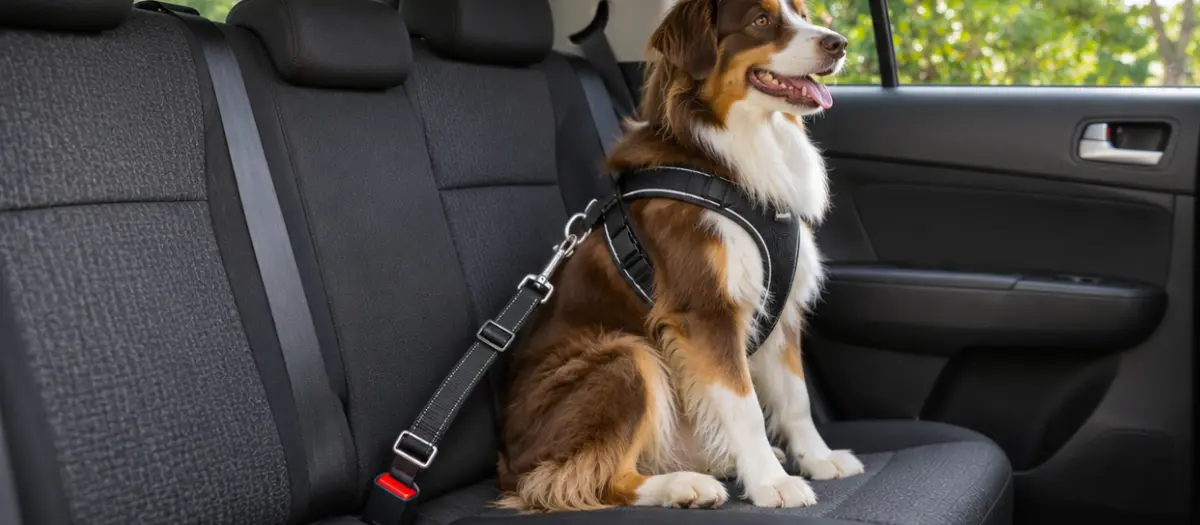
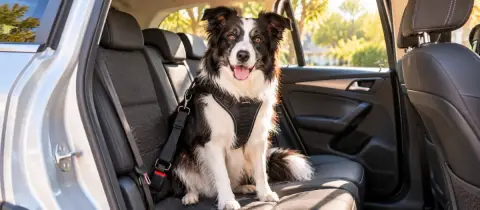
Quick answer: A dog seat belt is a short tether that plugs into your car's seat belt buckle and clips to the back of your dog's harness, never a collar. Our top pick is the Rudelkönig adjustable belt, which adjusts from 60 to 80 cm. Fit it so your dog can sit and lie down but can't reach the front seat.
A dog seat belt is only half of a car restraint. The other half is a harness made for car travel, which you can compare in our car harness guide. This page compares five tethers on Amazon Australia, and for the rules on dogs in cars, see our dog car restraint guide.
Quick picks
Our top pickBest overall
Rudelkönig adjustable dog seat belt
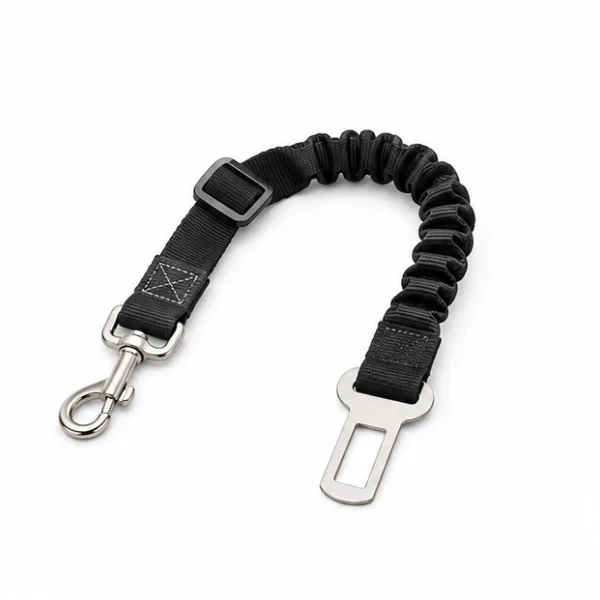
Nylon belt that adjusts from 60 to 80 cm, with elastic cushioning in the back and a lobster clasp
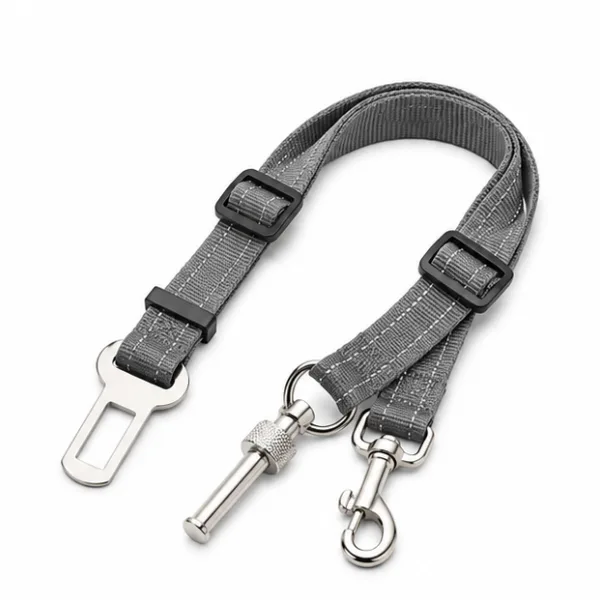
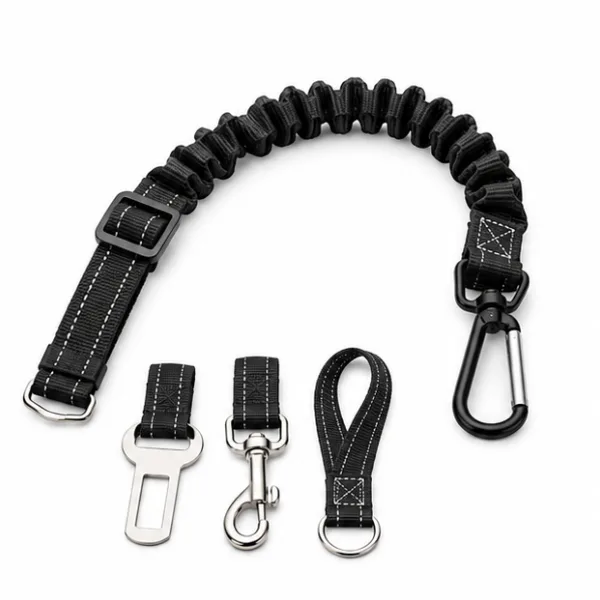
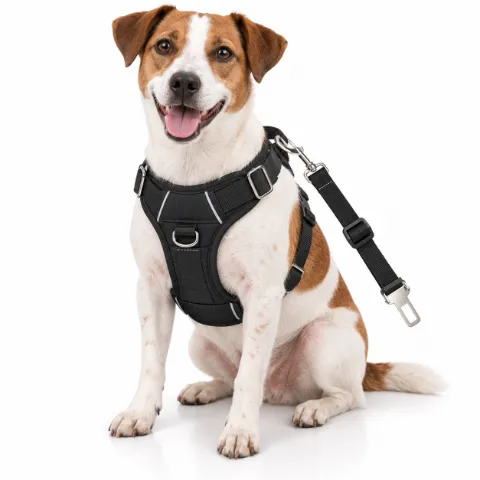
Pictures are illustrations, not the actual products.
Every pick here is a tether, not a harness. Pair it with a car harness that fits your dog.
Are dog seat belts safe?
A dog seat belt is safer than a loose dog, but it isn't a guarantee. RSPCA Australia says restraint reduces distraction and the chance of a dog becoming a projectile in a crash or hard stop, and that many restraint products haven't had crash tests (RSPCA Australia, page read 2 November 2026).
That is why we describe these tethers by their features and not as proven protection. The fit matters as much as the product: a short tether on the back seat, clipped to a well-fitted car harness. A tether on its own, or clipped to a collar, is the wrong set-up.
Should a dog seat belt clip to a collar or a harness?
Clip it to a harness. A seat belt tether pulls hard in a sudden stop, and a collar puts that force on the neck. The AUBELL, IOKHEIRA and steel cable listings all say to use a harness and not a collar. The SlowTon listing allows either, so choose harnesses.
A walking harness isn't automatically a car harness. RSPCA Australia says a harness made for car travel may be different from the one you use for walks (RSPCA Australia, page read 2 November 2026). Check that your harness suits the car and clip the tether to the ring on the back. Our car harness guide covers fit, and a harness for walks is in our no-pull harness guide.
Our picks in detail
1. Rudelkönig adjustable dog seat belt: best overall
A plain, no-fuss nylon belt. The listing says the length adjusts from 60 to 80 cm and that it has an elastic cushion in the back to soften a sudden jerk. It plugs into a standard seat belt buckle, and a lobster clasp goes on the harness. It weighs about 100 g and is hand wash only.
It is our top pick because it does the main job simply, with a sensible length range and nothing extra to fiddle with. It's also a good match for most dogs, and the listing says it suits all breeds.
Pros: length range that suits many back seats; elastic cushion per the listing; light and simple
Cons: no other fixing options, so it uses the seat belt buckle alone; the listing gives the dog size as medium and also says all breeds, so check the length against your dog
Best for: most owners with a dog in a car harness on the back seat
Skip it if: you want to fix to Isofix points or the boot, or your dog chews straps
A nylon belt that adjusts from 50 to 80 cm. The listing says the strap is 25 mm wide, the carabiner has a mechanical lock so it can't open by accident, and there is an energy absorbing section. It can attach to the buckle in the front or rear seats, and the listing says it connects to child seat (Isofix) points and the boot anchor (LATCH) too.
That range of fixing points makes it flexible if your car's buckle isn't convenient. The listing also advises using it with a harness, because a collar may injure a dog in a crash.
Pros: shortest setting of 50 cm; locking carabiner; several fixing points per the listing
Cons: the listing is aimed at large dogs; sizing details are thin, so check the length yourself
Best for: owners who want an adjustable tether with extra fixing options
Skip it if: your car has no Isofix or boot anchors you can reach, or you want a bungee
3. AUBELL 3-in-1 bungee dog car tether: best bungee
A bungee tether that the listing says adjusts from 19 to 33 inches. It comes with two ways to fix: the standard seat belt plug and a hook latch for a child seat anchor or the boot. The listing also says you can join two belts into one. A 360 degree swivel carabiner keeps the dog's end from tangling, and the weight range is given as 25 to 90 lbs (about 11 to 41 kg).
The bungee gives a softer pull than fixed webbing, which suits dogs who shift about. Because it stretches, set it short so your dog can't reach the front seat.
Pros: three fixing options per the listing; swivel carabiner; bungee give
Cons: the listing says the buckle tab is 0.83 inch wide, so check it fits your car; materials are listed inconsistently (the details say aluminium, the bullets describe bungee), so we can't be sure what it is made from
Best for: dogs who wriggle, and cars where you want to fix to a child seat anchor
Skip it if: your dog chews bungee, or your car's buckle is an unusual shape
4. Chew-resistant steel cable dog seat belt: best for chewers
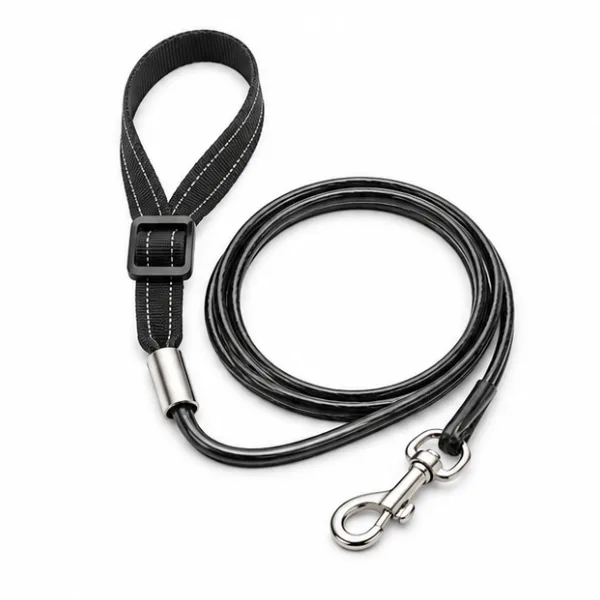
A steel cable tether with a headrest loop at one end and a seat belt clip. The listing says it is chew proof, with elastic bungees inside for shock absorption and two 360 degree swivel buckles. The headrest loop is nylon with a reflective strap and adjusts to fit around a headrest. The tether is 70 cm long, and the listing says that is short enough that a dog can't fall onto the floor. It comes as a pack of two.
It is the pick for dogs who chew nylon, though that claim is the brand's. The listing recommends it for medium to extra large breeds and says to connect it to a harness, not a collar.
Pros: steel cable instead of fabric; headrest loop; two in the pack
Cons: the 70 cm length is fixed; it needs a headrest to loop around; the listing's material field says nylon while the text describes steel
Best for: dogs that chew straps, or a two dog car where you need two tethers
Skip it if: your car has no suitable headrests, or you have a small dog
5. SlowTon double dog seat belt: best for two dogs
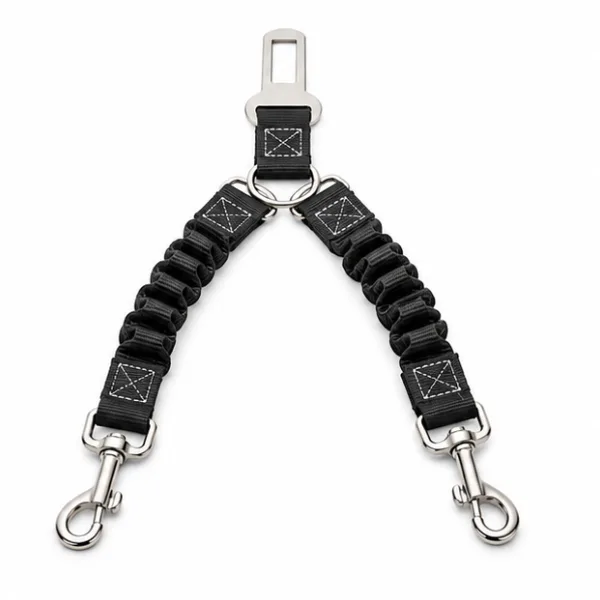
A Y-shaped coupler. One seat belt clip leads to two elastic nylon bungee straps, and the listing says the design keeps the two dogs apart and stops the straps twisting together. It adjusts from 20 to 28 inches and stretches to 32 inches. The listing adds reflective stitching and alloy swivel snaps for each dog, and says the clip is 0.82 inch wide.
It saves buying two tethers and keeps the back seat tidy. The listing says the snaps can connect to a harness or a collar, but we'd use harnesses only.
Pros: two dogs on one tether; reflective stitching per the listing; no-tangle design
Cons: both dogs share one seat belt point, so a big or boisterous dog can pull the other; the listing gives the size as medium, so it suits mid-sized dogs best
Best for: two calm medium dogs, each in their own harness
Skip it if: you have large dogs, or the two dogs don't get along
Are dog seat belts crash tested?
Rarely, and none of the five listings here describes a crash test or names a test standard. RSPCA Australia says there's no Australian crash test standard for dog restraints, though some brands use independent groups such as the Center for Pet Safety (RSPCA Australia, page read 2 November 2026).
Some listings mention strength figures or shock absorbing designs. Treat those as the brand's own claims. We repeat them as "the listing says", and we don't claim crash test results for any pick.
How long should a dog seat belt be?
Long enough for your dog to sit and lie down, short enough that they can't reach the front seat or tip off the seat. In practice that is often somewhere between 50 and 80 cm, but it depends on your car and your dog, so measure with your dog sitting in the back.
The listings in this guide range from 50 cm at the shortest setting to about 84 cm at the longest. Adjustable and bungee tethers let you fine tune it. With a bungee, remember that stretch adds length in a sudden stop, so start on the shorter side.
Is it the law to restrain a dog in a car in Australia?
Rules vary by state and territory. You can't drive with a dog on your lap, and dogs on utes and trailers must be secured. Beyond that, whether a dog must be restrained inside the car depends on where you live. The rules are set out state by state in our dog car restraint guide.
RSPCA Australia advises checking both road rules and animal welfare laws for your state or territory (RSPCA Australia, page read 2 November 2026). Even where no rule asks for a restraint, a lap or a front seat is a poor place for a dog.
Can a dog chew through a seat belt?
Yes, a determined chewer can damage nylon webbing or a bungee cord. If your dog chews straps, a steel cable tether is one option. The listing for our steel cable pick says the cable is chew proof, but that is the brand's claim, so check it often for wear.
A tether is also a poor place to practise a chewing habit. Give a bored dog something else to do on the drive, and stop to rest on long trips. Our toys for heavy chewers guide has options for home. If your dog chews the belt, stop and check it before you drive again.
Dog seat belts compared
Details from each Amazon Australia listing, checked on 2 Nov 2026.
We searched Amazon Australia for dog seat belts and car tethers, then shortlisted the ones that met all of these checks:
Well rated: a strong average rating with plenty of buyer reviews.
No red flags: no pattern of poor reviews, safety complaints or listing problems.
Available on Amazon Australia when we checked.
A clear fixing method: a seat belt buckle, headrest or Isofix, as the listing describes it.
A stated length range short enough to keep a dog on the back seat.
Bungee or cushioning, so a sudden stop isn't a hard jerk, per the listing.
A clip that fits a harness, such as a carabiner or swivel clasp.
These are researched picks, not products we've personally tested. We compared the specifications and features shown on each Amazon Australia listing, checked on 2 Nov 2026. We didn't accept payment from any brand, and no brand saw this page before it was published.
Left out this time: tethers that suit a collar, and long tethers that let a dog reach the front seat.
How to fit a dog seat belt
Put the harness on first, then clip the tether to the ring on your dog's back. Sit your dog in the back, plug the tether into the buckle, and adjust the length until they can sit, stand and lie down but can't reach the front seat.
Check the harness. It should be snug and made for car use. Our car harness guide has picks.
Check the buckle. Push the plug in until it clicks and give it a tug. Some cars have a buckle that a universal plug won't fit.
Set the length. Your dog should be able to lie down and turn, with no slack for jumping to the front seat or off the seat.
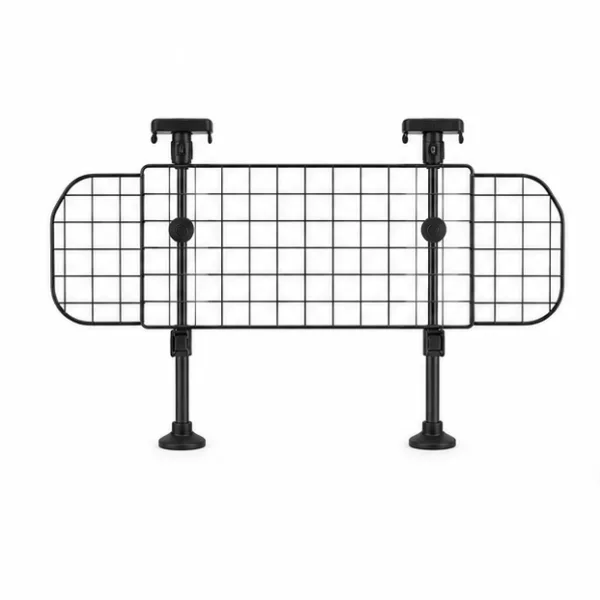
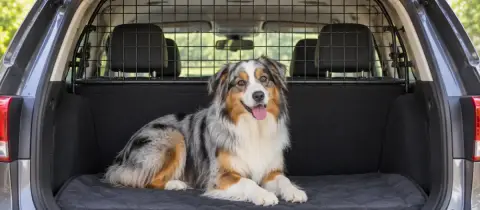
Add a barrier if you need one. A car barrier can help in a wagon or SUV.
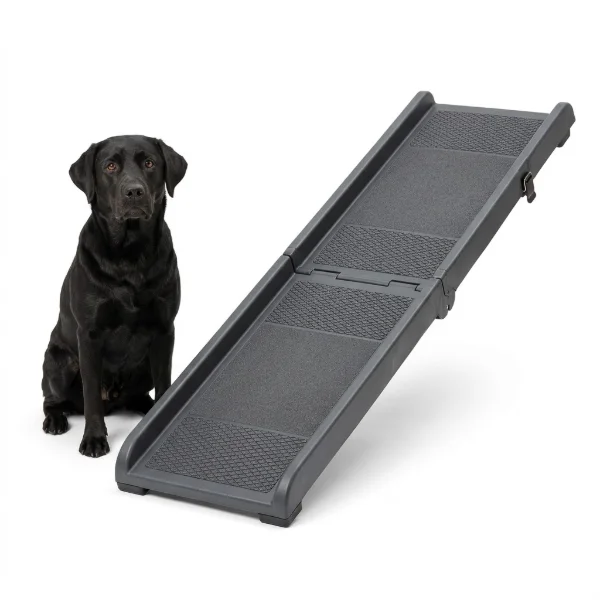
Help your dog in and out. A car ramp helps older or smaller dogs.
Take it slowly. Let your dog get used to the harness at home, then to the tether in a parked car with treats, then to a short drive. If your dog gets queasy, our car sickness guide can help.
Put your dog on the back seat and not on a lap, and keep the tether short. Stop for water and a break on long trips. Wash the tether by hand as the listings direct, and check for fraying, cracks, a loose clip or a stiff carabiner before each trip.
If a belt has been in a crash or a hard stop, it's worth replacing, because hidden damage is hard to spot. This is our own caution, not a maker's instruction.
When to get help
Call a vet straight away after any crash or hard braking if your dog is quiet, limping, breathing fast or sore to touch, and book a check even if they seem fine. Injuries from a sudden stop don't always show straight away.
Stop and cool your dog if they pant heavily, drool, wobble or collapse in a warm car. Those can be signs of heat stress, which RSPCA Australia says can be fatal even in mild weather. Call a vet on the way, and see our guide to keeping your dog cool.
If your dog shakes, whines or is sick on every trip, a tether won't fix that. Talk to your vet, and read our car sickness guide.
Frequently asked questions
Do dog seat belts work?
A dog seat belt keeps a dog in place on the back seat, so they can't jump around or climb to the front. It isn't proven crash protection, because most make no crash test claim. Use it with a car harness that fits, and keep the tether short.
Can a dog seat belt attach to the headrest?
Yes, some do. The steel cable pick has a nylon loop that adjusts around the headrest, with the tether clipping to the harness, per its listing. A headrest tether leaves the seat belt buckle free for a passenger. Check that your headrest is firmly fitted, keep the tether short, and still clip to a harness, never a collar.
Where should my dog sit with a seat belt?
On the back seat, not the front and never on a lap. The tether should let your dog sit and lie down but not reach the front seats or fall off the seat. Our dog car restraint guide explains why the front seat isn't advised.
Do dog seat belts fit every car?
Not always. Most plug into a standard seat belt buckle, but the two listings that give a plug width say about 0.82 to 0.83 inch, and some cars have unusual buckles. Push it in until it clicks, give it a tug, and check before a trip.
What is the best dog seat belt for a big dog?
Choose a tether with a strong clip and a length that stops the dog reaching the front. The IOKHEIRA listing is aimed at large dogs, and the steel cable listing says medium to extra large. Pair either with a car harness sized for your dog.
Can two dogs share one seat belt?
They can with a coupler such as the SlowTon, which splits one clip into two straps. It suits two calm, medium dogs. For large or lively dogs, give each their own tether and harness, and add a car barrier between them and the front seats if they still push forward.
Is a bungee dog seat belt better than a fixed one?
Neither is better for every dog. A bungee gives more stretch, which can feel gentler in a sudden stop, but it adds length, so set it short. A fixed belt keeps your dog closer. Choose the one that keeps your dog off the front seat.
Product details from each linked Amazon Australia listing, checked on 2 Nov 2026.
This guide provides general information and isn't a substitute for veterinary advice. If you're concerned about your dog's safety in the car, speak with your vet.