By Anish PuriUpdated 2 Nov 202614 min readResearched, not tested by us
Research guide. WhiskerFinds may earn a commission from links, at no extra cost to you.
Quick answer: The best dog car barrier for most cars is the HAITRAL adjustable wire barrier, our top pick. A barrier stops your dog climbing into the front seat, but it isn't a crash restraint. RSPCA Australia says a dog guard may not protect the dog from serious injury, so pair it with a harness.
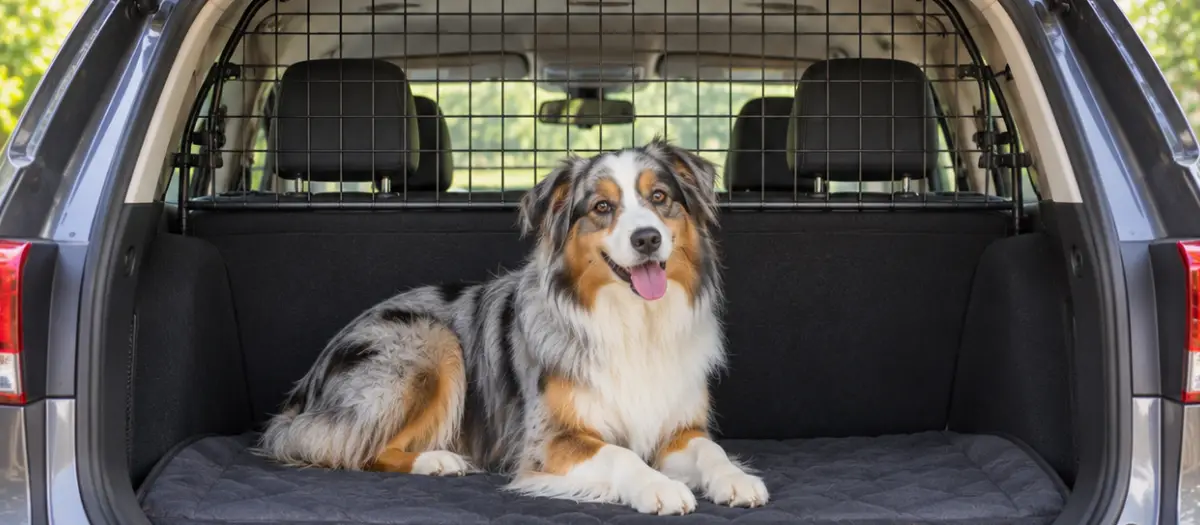
For doorways and stairs at home, see our dog gate guide. A dog car barrier keeps a dog out of the driver's space, which cuts down on paws, drool and sudden jumps while you drive. This guide compares four barriers on Amazon Australia, explains how to pick between back seat and boot styles, and covers fit and safety. For the law and the wider picture, start with our dog car restraint guide.
Quick picks
Our top pickBest overall
HAITRAL adjustable dog car barrier
Folding three-panel steel wire barrier that extends and mounts to the headrests with buckle straps, no tools
Pictures are illustrations, not the actual products.
A barrier is one part of a safe car routine, not the whole of it. The sections below explain what it does and doesn't do.
Are dog car barriers safe?
They're safe to use when you pick the right style, fit it firmly and treat it as a partition, not a seat belt. A barrier keeps your dog out of the front. It doesn't hold your dog in place in a crash, and a loose dog in the back can still be thrown around.
RSPCA Australia says cargo barriers (dog guards) can be used in wagons and hatchbacks where the dog has room, and can protect people from a loose dog. It adds that they may not protect the dog from serious injury, so a harness may still be advisable (RSPCA Australia, page read 2 November 2026).
Is a car barrier enough to restrain my dog?
No. A barrier separates spaces, while a restraint holds the dog. RSPCA Australia describes a restrained dog as less likely to distract the driver, less likely to become a projectile in a crash or hard stop, and unable to jump out of a window. A barrier mainly covers the first, and may shield people from the dog, not the dog itself.
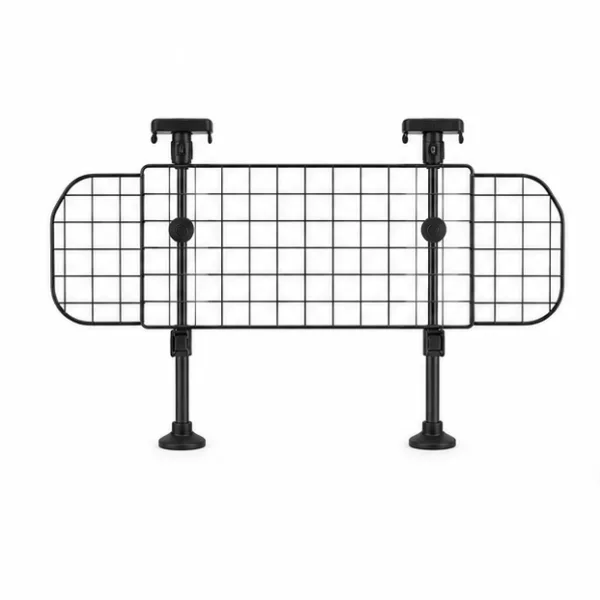
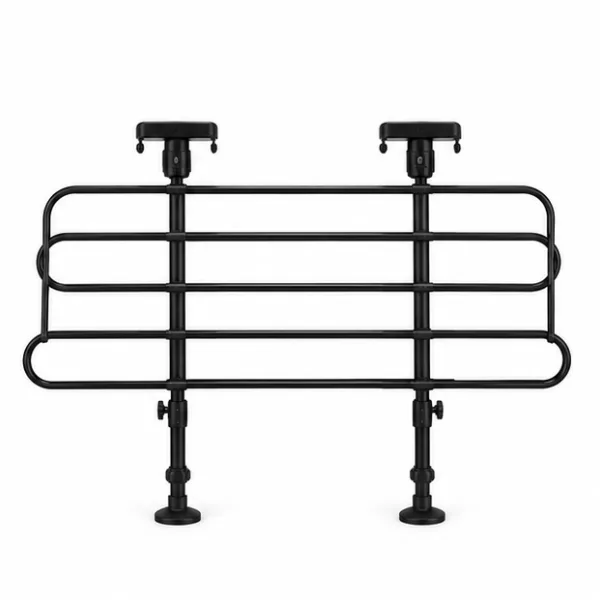
A foldable three-panel barrier made of steel wire. The listing gives the main panel as 36.6 inches long and 16.5 inches high (about 93 by 42 cm), with two side panels that extend the barrier to 52.7 inches (about 134 cm). It mounts to the headrests with buckle nylon straps and the listing says no tools are needed. The listing also says the black finish is smooth and won't scratch the car or your dog.
The wire grid lets you see your dog in the mirror, and the three panels fold for storage. It weighs 2.91 kg.
Pros: adjustable length; headrest straps and no tools per the listing; folds for storage; see-through wire
Cons: the main panel is about 42 cm high, so it's a gate across the seats, not a floor-to-ceiling wall; the strap mount needs removable headrests; steel is heavier than a net
Best for: a dog riding on the back seat of a car or SUV that needs to be kept out of the front
Skip it if: your dog is a determined jumper who may clear a low panel, or your headrests are fixed
2. Back seat and boot dog guard with wide cover: best back seat and boot
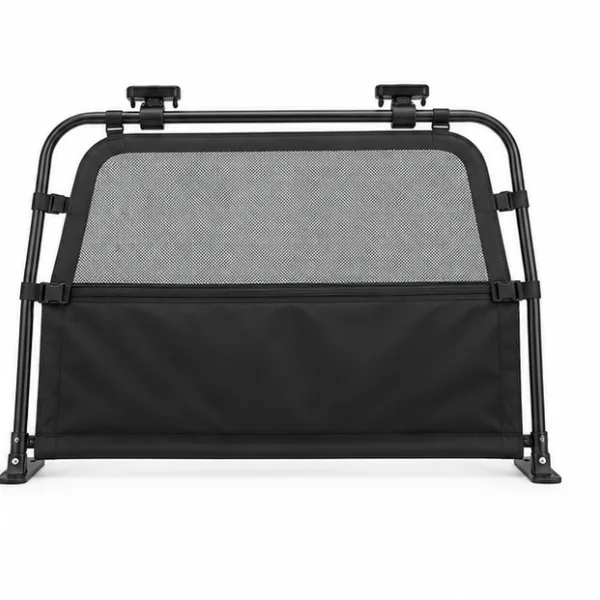
A metal frame with transparent mesh that the listing says works in two places: on the back seat to block the front, or in the boot to make a safe zone. It attaches with buckle straps to headrests or seat frames, and the listing says set-up takes about three minutes without tools. The listing also claims the mesh is 30 percent wider than a conventional net, 90 percent transparent and chew-proof, and mentions floor-to-ceiling coverage and console locks. Those are the brand's claims, not ours.
Pros: one barrier for the back seat or the boot; no tools per the listing; the listing says it lets air from rear vents through
Cons: the listing gives no dimensions, so measure your car carefully and check the listing again before you order; the listing's instructions may be hard to follow; the strength claims are the brand's own
Best for: SUV or wagon owners who want one barrier for both seating and cargo
Skip it if: you need exact dimensions up front, or your car has no headrest or seat frame to strap to
3. Padded nylon net back seat barrier: best net barrier
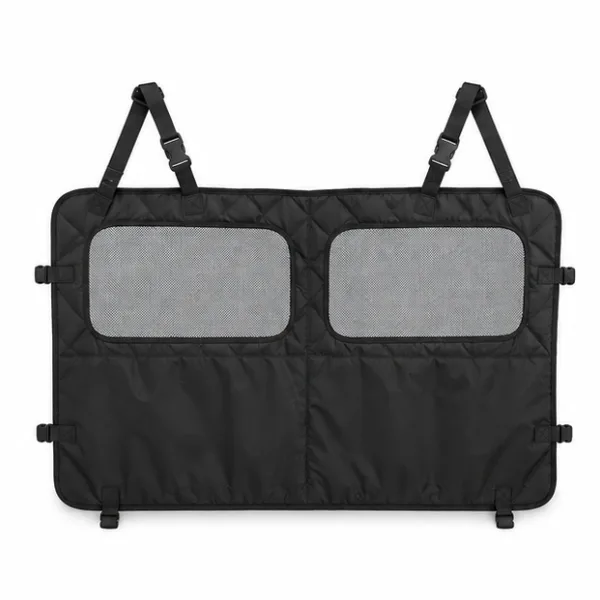
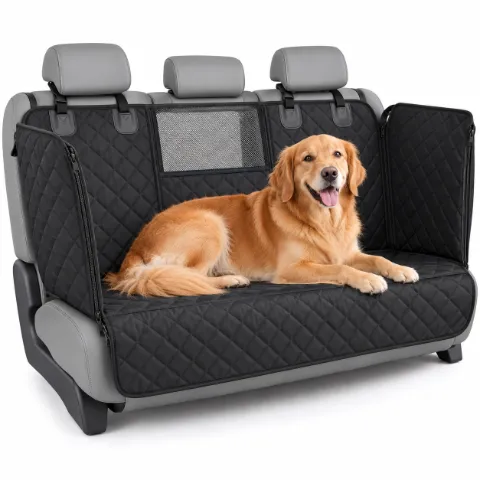
A soft barrier that hooks onto the back of both front seats. The listing describes padded nylon with an EVA layer and a waterproof lining, two mesh windows (one for sight, one for airflow), and a size of 23.6 by 22.4 inches (about 60 by 57 cm). It weighs 422 g, folds flat and the listing says it's machine washable. It comes with four mounting hooks and adjustable straps, and the listing mentions a 180-day manufacturer warranty.
The recurring limitation is fit. The listing says both front seats need a headrest post and a seat base hook point, and to measure the gap between your front seats first. If your seats lack those fixings, it won't attach.
Pros: light, washable and folds flat; mesh windows for sight and airflow; easy to store
Cons: fit depends on headrest posts and seat base hook points; it's fabric, so it can be pushed or chewed; it sits behind the front seats only
Best for: a small to medium calm dog on the back seat
Skip it if: your dog jumps or chews, or your front seats lack a headrest post or seat base hook point
A tubular barrier with three tubes that adjust to the height and width of the car interior. It has rubberised top and bottom caps that hold it in place by pressure, and quick-connect clamps so you can take the tubes apart to reach the pet area. The listing gives its size as 124.5 cm wide and 83.8 cm high, lists it as suited to all breed sizes, and mentions a three-year manufacturer warranty.
The limitation is fit. The listing doesn't say which vehicles it suits, and a pressure mount relies on your cabin shape, so measure the width and height where it will sit.
Pros: rigid metal tubes; adjustable height and width; comes apart for access
Cons: no vehicle fit list or text description; pressure-held, so it needs matching cabin space; heavy at 4.1 kg
Best for: a bigger dog and a car or SUV with interior space that matches the listed 124.5 by 83.8 cm
Skip it if: the space where it will sit doesn't match the listed size, or your cargo area has a sloping roof or cover
Back seat or boot barrier?
Choose by where your dog rides. A back seat barrier blocks the gap between the front seats and the back, so a dog on the rear seat can't climb forward. A boot barrier sits behind the rear seats in an SUV or wagon and keeps the dog in the cargo area, away from the cabin.
RACV says dogs can travel in the cargo area of an SUV or station wagon, but not in the boot of a sedan, and suggests a grille between the cargo area and back seat to stop a dog moving into the cabin (RACV, page read 2 November 2026). So in a sedan, your dog rides on the back seat. In an SUV or wagon, you have both options.
Back seat dogs: fabric nets and headrest-mounted barriers suit small to medium dogs who mainly want to peer between the seats.
Boot dogs in SUVs and wagons: a rigid frame or wire barrier that reaches the roof suits bigger dogs.
Cargo dogs: a barrier doesn't stop them sliding around, so a crate in the boot can add real protection.
Big dogs who always ride in the boot: a vehicle-specific cargo barrier, fitted by an auto accessories shop, reaches the roof and bolts to the car. Those aren't universal-fit products, so they're outside this guide, but they're worth pricing if your dog lives in the cargo area.
Will a barrier fit my car?
Measure before you buy. Barriers fit by headrest posts, seat hooks or pressure against the car's interior, and the wrong match leaves gaps or won't attach at all. Measure the gap between your front seats, or the width and height of your cargo area, and compare it with the listing.
Three things to check on your own car:
Headrests: do the posts lift out and slide through straps? Fixed or integrated headrests can be a problem for strap-mounted barriers.
Seat base hook points: the net barrier below needs one at the base of each front seat, per its listing.
Height and width where the tubes will sit: the PetSafe tubes press against the car's interior, and the listing gives 124.5 cm wide by 83.8 cm high, so measure that space and allow for a sloping roof or cargo cover.
"Universal fit" is the listing's wording, so treat it as a starting point and measure.
Mesh or metal barrier?
Mesh and nets are lighter, fold flat and are easier to remove. Metal frames and steel wire are stiffer and suit bigger dogs. Neither is a crash barrier, but rigid wire is harder for a dog to push through, so choose by your dog's size and whether they test limits.
A fabric net can be pushed, jumped or chewed through by a determined dog. A rigid barrier also rattles more and takes up more room when stored. If your dog is small and calm, a net is simple. If your dog is big or keen to get forward, a wire or tube barrier is the closer fit.
Dog car barriers compared
Details from each Amazon Australia listing, checked on 2 Nov 2026.
We searched Amazon Australia for dog car barriers and shortlisted ones that met all of these checks:
Well rated: a strong average rating with plenty of buyer reviews.
No red flags: no pattern of poor reviews, safety complaints or listing problems.
Available on Amazon Australia when we checked.
Fit: a clear mounting method on the listing (headrest, seat hooks or pressure), and a note on which cars it suits.
Material: steel wire, metal frame or padded fabric, described plainly.
Size range: dimensions or an adjustment range we could report.
Tools needed: no tools, or a simple set-up.
These are researched picks, not products we've personally tested. We compared the specifications and features shown on each Amazon Australia listing, checked on 2 Nov 2026. We didn't accept payment from any brand, and no brand saw this page before it was published.
Left out this time: barriers that clip only to seat fabric.
How to measure and set up a barrier
Take three measurements before ordering: the width between the car's side pillars (or the gap between front seats), the height from floor to roof or headrest, and how far you need to extend. Then compare them with the listing.
Fit it with the seats where they'll be. Move seats and headrests to their usual place first.
Pull straps firmly. A barrier that swings or sags leaves gaps.
Check for gaps. Look at the sides, floor and console. Dogs go through gaps smaller than you'd think.
Train gently. Let your dog sniff it and have a treat nearby before the first drive. No force or punishment.
Try a short drive with someone watching your dog, then adjust.
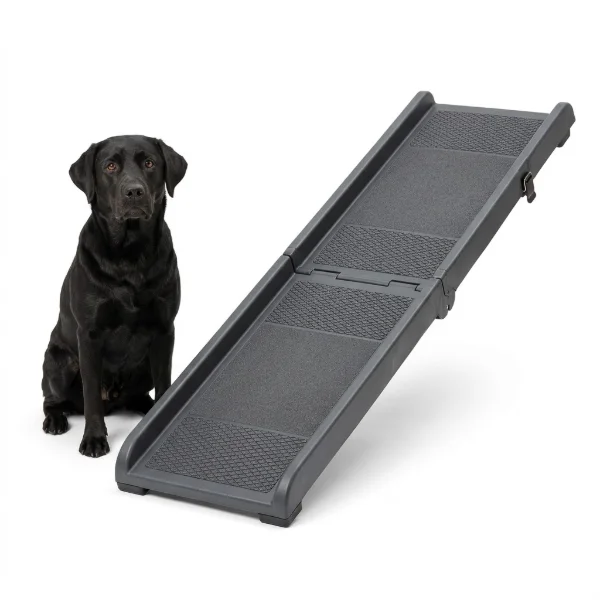
If your dog gets queasy in the car, see our dog car sickness guide. A ramp can help older or small dogs get into an SUV, and our dog car ramp guide compares them.
Keeping a dog safe in the car
A barrier is one layer of several. Add a harness or secured crate, keep the car cool, and never leave your dog alone in a parked car.
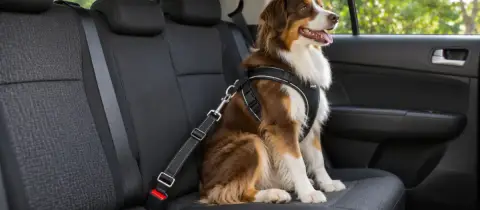
Restrain, don't just divide. Use a car harness on a short tether clipped to the back of the harness, never a collar.
Keep heads inside. RACV reports that Animal Welfare Victoria advises against letting a dog hang its head out of the window, because dirt and debris can hurt their eyes, ears and nose.
Restraint still matters. RACV notes that an unsecured pet can become a projectile in a collision, which is why the barrier pairs with a harness or crate.
Not for a sedan boot. RACV says dogs shouldn't ride in a sedan's boot.
Care: wipe wire and tubes, wash fabric nets as the listing directs, and check straps and clamps for wear before each trip.
When to get help
Call your vet straight away if your dog is hurt in a crash or hard stop, even if they seem fine afterwards. Injuries aren't always obvious straight away. Call a vet or emergency clinic if your dog is panting heavily, drooling, weak or collapses in a warm car (RSPCA Australia, page read 2 November 2026 notes heat stress can be fatal, even in mild weather).
A barrier doesn't treat travel stress. If your dog howls, pants or vomits on trips, talk to your vet or a qualified, reward-based behaviour professional.
Frequently asked questions
What is the best dog car barrier?
Our top pick is the HAITRAL adjustable wire barrier, which extends to about 134 cm and straps to the headrests. For SUVs and boots, the back seat and boot guard is the closer fit. A net suits small calm dogs, and the PetSafe tubes suit bigger dogs. Measure your car first.
Do I need a dog barrier if my dog wears a car harness?
Not always. A harness on a short tether already keeps most dogs on the back seat. A barrier adds a second layer for dogs that lunge at the gap between the seats, or for a dog riding in an SUV cargo area. If you can have only one, choose the harness, because it restrains the dog and the barrier doesn't.
Where do I put a dog barrier in an SUV?
Either behind the rear seats to keep your dog in the cargo area, or across the back seat to block the front, depending on the barrier. RACV suggests a grille between the cargo area and back seat in an SUV or wagon, and says dogs shouldn't ride in a sedan's boot.
Does a dog car barrier damage the car?
Usually not when it's fitted as the listing directs. Strap-mounted barriers hang from the headrest posts, and the HAITRAL listing says its smooth black finish won't scratch the interior, which is the brand's claim. The PetSafe tubes have rubberised top and bottom caps, per its listing. Check the seat backs and roof lining for rubbing after the first few trips.
Do dog car barriers block the rear view mirror?
They can, depending on the style. Wire and clear mesh designs are made to be seen through. The HAITRAL listing describes a grid you can watch your dog through in the rear-vision mirror, and the back seat and boot guard listing claims 90 percent transparent mesh, the brand's figure. A padded fabric net blocks more, though ours has a mesh window.
How do I get my dog used to a car barrier?
Let your dog see and sniff the barrier with the car parked, then feed a few treats on the back seat behind it. Take a short drive somewhere good, then build up. Never push a dog through or punish them for pawing at it. If your dog panics behind a barrier, go back a step and ask a reward-based trainer.
Can I put a dog barrier in a sedan?
Yes, on the back seat. A net or headrest barrier can stop a dog climbing into the front. RACV says dogs shouldn't ride in the boot of a sedan, so a boot barrier is for SUVs and wagons only. Measure the gap between the front seats first.
Product details from each linked Amazon Australia listing, checked on 2 Nov 2026.
This guide provides general information and isn't a substitute for veterinary advice. If you're concerned about your dog's safety in the car, speak with your vet.