Best large dog crate in Australia (2026): heavy duty and XL
By Anish PuriUpdated 13 Nov 202615 min readResearched, not tested by us
Research guide. WhiskerFinds may earn a commission from links, at no extra cost to you.
Quick answer: A large dog crate should be sized to your dog's measurements. One crate maker's chart puts Labradors in a 42 inch (107 cm) crate, German Shepherds in a 48 inch (122 cm) and Great Danes in a 54 inch (137 cm). Our top pick is the Feandrea heavy-duty crate. Heavy duty suits strong dogs, but no crate fixes a dog who panics when shut in.
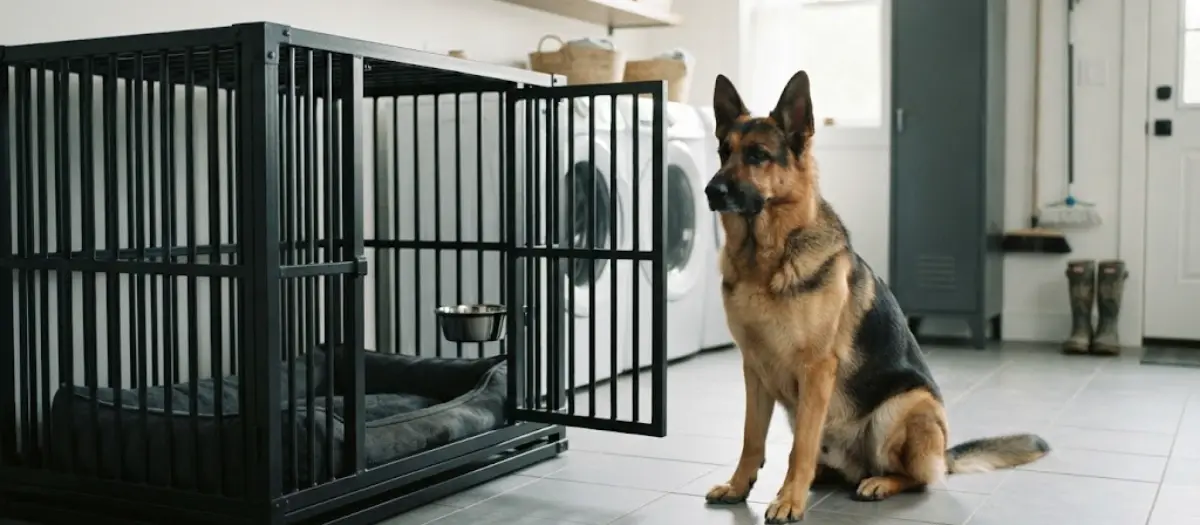
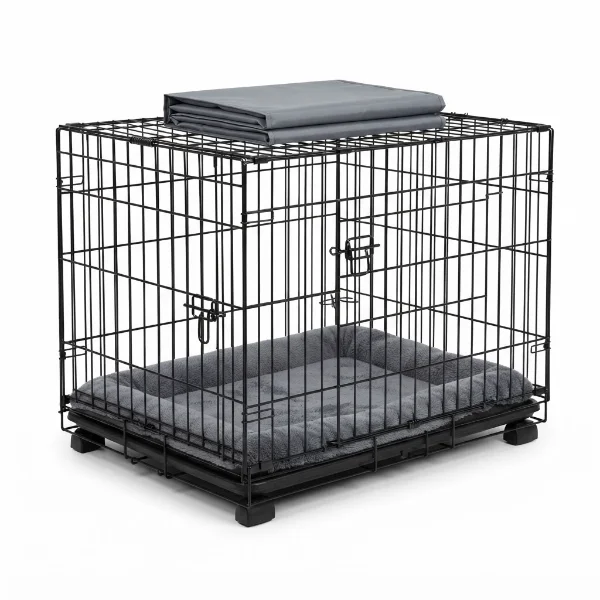
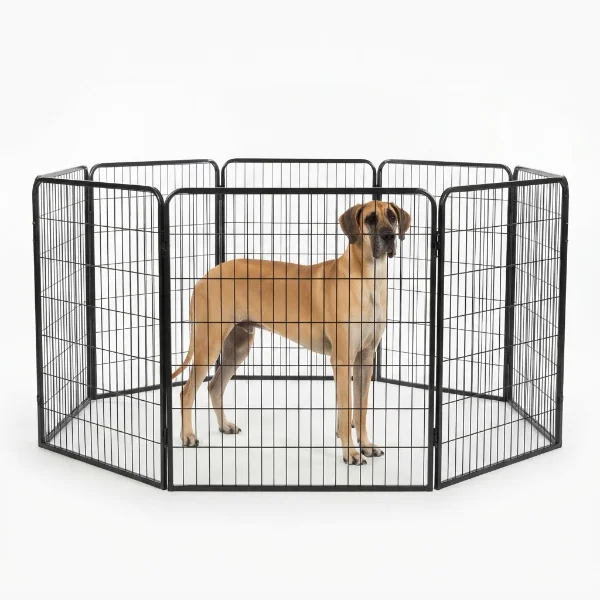
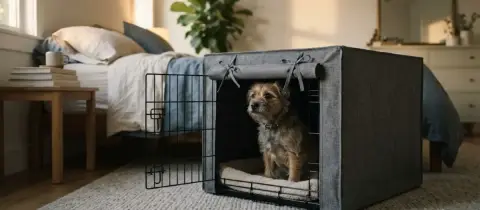
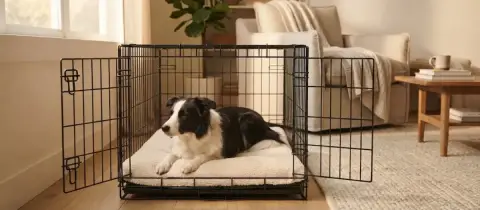
Illustration, not the actual product
Our top pickFeandrea heavy-duty dog crate, 122 x 74.5 x 80.5 cm
Big dogs need more than a bigger box: they need room to stand, turn and stretch, a floor that copes with the weight, and a crate you can actually move. This guide compares five large crates on Amazon Australia, shows how to measure your dog, and is honest about what a stronger cage can and can't do. For the basics across all sizes, see our best dog crate guide. At the other end, our small dog crate guide covers toy and small breeds. Between the two, our medium dog crate guide compares 30 and 36 inch crates in cm. If you're starting from scratch, crate training a puppy comes first.
Quick picks
Our top pickBest overall heavy duty
Feandrea heavy-duty dog crate, 122 x 74.5 x 80.5 cm
Steel frame with 5 L-shaped locks, listed for dogs 42 to 50 kg
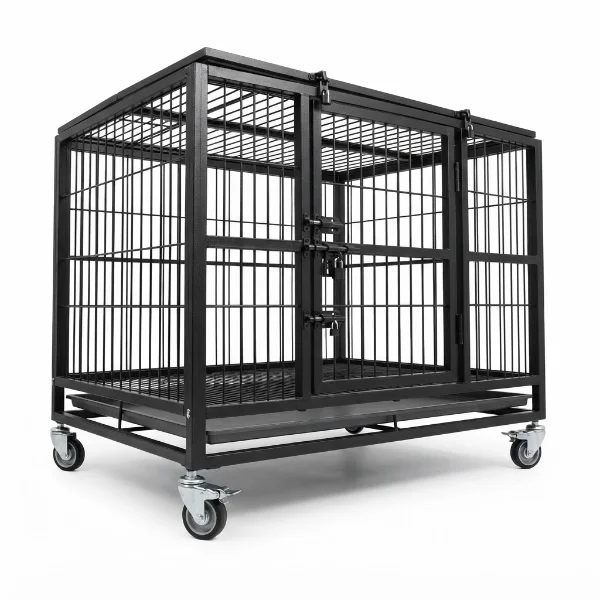
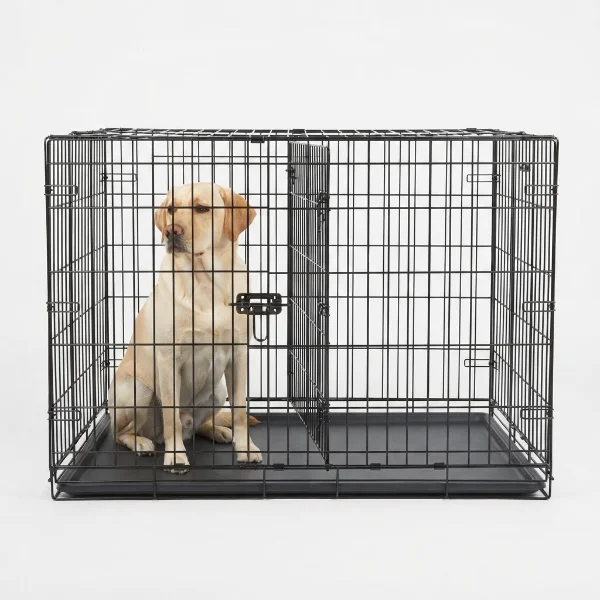
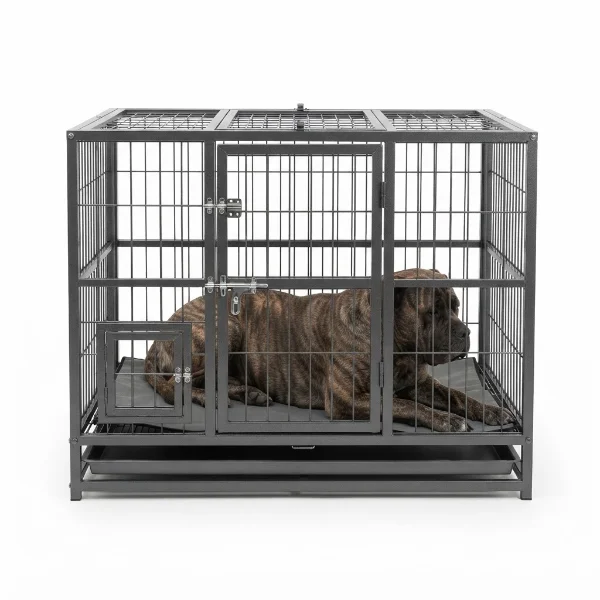
Pictures are illustrations, not the actual products.
Sizes on listings can be outside or inside measurements, so check the table below before you buy.
What size crate does a large dog need?
Measure your dog, then add a little. Measure nose to the base of the tail for length, and floor to the top of the head or ears (whichever is taller) for height, with your dog standing. MidWest, which makes the iCrate below, says to add a few inches to each (MidWest crate sizing, page read 13 November 2026), and the Amazon Basics listing on our dog crate guide suggests about 10 cm. If your dog falls between two sizes, the bigger crate is usually the safer choice. Whichever maker's method you follow, use it for both length and height.
Weight alone is a poor guide, because a lean tall dog and a stocky one can weigh the same and need different crates. The goal, per PDSA, is a crate tall enough to stand and sit without touching the top, and long enough to turn around, lie down and stretch out (PDSA, page read 31 October 2026).
MidWest's breed chart is a useful starting point. It's a crate maker's guide, and it notes that sex and mixed ancestry can mean a bigger or smaller crate, so treat it as a guide, not a rule (MidWest size and breed chart, read 13 November 2026):
Swipe sideways to see every column
Example breed
Typical crate length
Check
Labrador Retriever
42 inches (107 cm)
Measure: a small, lean Lab may need less
German Shepherd
48 inches (122 cm)
Measure head height as well as length
Great Dane
54 inches (137 cm)
Too big for most crates, so look for a giant-breed size
Inch sizes are crate length. A "42 inch" crate is about 107 cm long, and a "48 inch" about 122 cm. Always check the listing's own measurements against your dog's, because brands round differently.
What size crate for a Labrador or a German Shepherd?
MidWest's chart puts Labradors in its 42 inch (107 cm) size and German Shepherds in its 48 inch (122 cm) size. Your dog's own measurements decide. If your dog is between sizes, go up, then use a divider to make a puppy's space smaller.
A growing pup needs the crate for the adult size, with a divider panel to shrink it for now. The MidWest iCrate in this guide comes with one. For crates without a divider, you can buy panels separately or use a smaller crate first. See crate training a puppy for how to set up a space that isn't too big while toilet training.
Our picks in detail
1. Feandrea heavy-duty dog crate: best overall heavy duty
A steel crate listed at 122 x 74.5 x 80.5 cm (the listing also gives 48 x 29.3 x 32.6 inches), for dogs between 42 and 50 kg. The listing names German Shepherds, Alaskan Malamutes and Golden Retrievers as suited breeds. It has 5 L-shaped locks, a large door plus a small feeding door, a removable tray, and doors that can be taken off.
Pros: strong build with 5 locks; weight range stated; removable tray; double door
Cons: the listing says one door in its details but describes two in the text; it doesn't say if the size is inside or outside; heavy to move
Best for: a strong, big dog in the 42 to 50 kg range
Skip it if: your dog is well under the listed 42 to 50 kg range, or you need to move the crate between rooms often
2. MidWest iCrate double door, 42 inch: best wire crate for big dogs
A folding wire crate at 42 x 28 x 31 inches (about 107 x 71 x 76 cm), listed for pets 71 to 90 pounds. It has two doors, a divider panel, a leak-proof plastic pan, floor-protecting feet and a slide-bolt latch. It folds to carry. The listing says a breed-by-breed size list is in a PDF. The title says 30 inches high and the bullet says 31, so allow a little.
Pros: divider for growing pups; folds flat; floor-protecting feet
Cons: wire can bend under a very strong dog; one latch type, so not for escape artists
Best for: a calm to medium-energy Labrador or similar that needs a roomy, standard crate
Skip it if: your dog bends bars or pushes doors open
3. BingoPaw heavy duty dog crate, 42 inch: best square-tube crate
A square-tube metal crate (the listing says iron) with three doors (front, top and a small food door) and double safety locks. The listing describes its square tube as thickened, and its claims of strength are the brand's own, so we don't repeat them. The 42 inch size is listed around 107 x 77.5 x 88.5 cm, with a tray, and the listing quotes a weight capacity of 100 kg. The listing gives the weight as 30 kg in one place and 24 kg for the 42 inch size in another, so expect a heavy box either way, and it takes assembly (the listing says about 30 minutes).
Pros: square tube and double locks; three doors; tray included
Cons: heavy; sizes and dimensions vary across the listing; the listing's wording about "fierce" dogs and "correction" is not advice we share
Best for: a strong dog who leans on or pushes doors, with an owner who has a fixed spot for it
Skip it if: you need to move the crate often, or you're hoping it will settle a dog who panics
4. New World double door crate kit, extra large: best crate kit
A 48 inch, two-door wire crate kit that measures 48 x 30 x 33 inches (about 122 x 76 x 84 cm) once built. In the box: the crate, a grey fleece bed and a grey polyester cover. The crate has four roller feet, a carrying handle and a leak-proof tray. The listing calls the dog size both "Large" and "X Large", so check against your dog's measurements.
Pros: bed and cover included; roller feet; a good size for tall dogs
Cons: the listing is unclear on size class; the cover can trap heat if left over the whole crate
Best for: an owner of an extra-large breed who wants everything in one box
Skip it if: you don't want a cover, or your dog chews fabric beds
5. Feandrea collapsible soft crate, 102 cm: best soft crate for calm big dogs
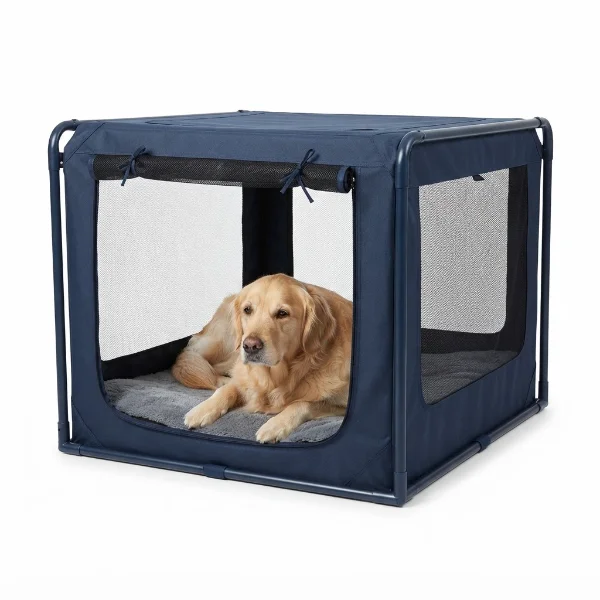
A fabric crate with a metal frame, 600D Oxford fabric, mesh windows and a fleece mat, at 102 x 69 x 69 cm. It weighs 5.1 kg and folds flat. The listing gives a maximum weight of 42 kg and lists transport, accommodation and a safe space as uses.
Pros: very light; folds flat; good for car trips and calm dogs
Cons: fabric can be chewed or clawed; 69 cm tall may be tight for tall dogs, so measure; not for escape artists
Best for: a calm, crate-trained dog who needs a light crate for a short stay or travel
Skip it if: your dog chews, scratches at doors or has tried to escape a crate
Heavy duty, wire or soft?
Heavy-duty steel suits strong, big dogs, wire suits most calm adult dogs, and soft crates suit calm dogs for short stays and travel. Each has a trade-off between strength, weight and ease of moving. Pick for your dog's habits first, then your space.
Heavy duty metal (Feandrea, BingoPaw): thicker bars or square tube, extra locks, and a much heavier crate. Feandrea lists alloy steel, BingoPaw lists iron tube. Good for strong dogs who lean on doors. Not a fix for distress (see the escape section).
Wire (MidWest, New World): the usual choice. Folds flat, good airflow, and a divider on some models. The wire is lighter, so a determined dog may bend it.
Soft (Feandrea collapsible): light and quiet, but fabric can be chewed or clawed through, and zips are the weak point. Best for calm dogs and car trips, not for a dog who chews.
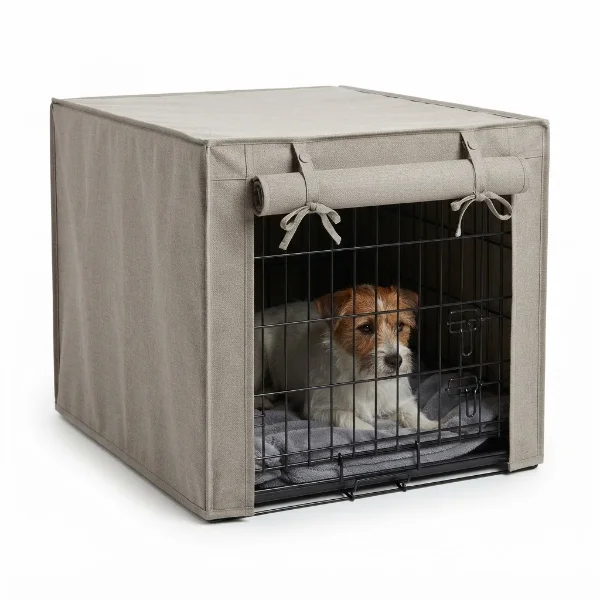
If you need a soft cover for a wire or steel crate, see our dog crate cover guide. A cover must not block airflow on warm days.
Large dog crates compared
Details from each Amazon Australia listing, checked on 31 Oct 2026. Listings don't always say whether a size is inside or outside, so allow a few centimetres either way.
We searched Amazon Australia for large, XL and heavy-duty dog crates, then shortlisted crates that met all of these checks:
Well rated: a strong average rating with plenty of buyer reviews.
No red flags: no pattern of poor reviews, safety complaints or listing problems.
Available on Amazon Australia when we checked.
Inside measurements and a weight or breed guide on the listing.
Locks or latches described.
A tray or floor, and wheels or carry handles where relevant.
These are researched picks, not products we've personally tested. We compared the specifications and features shown on each Amazon Australia listing, checked on 31 Oct 2026. We didn't accept payment from any brand, and no brand saw this page before it was published.
Left out this time: giant outdoor kennels (a different job), crates with a pattern of welds breaking or doors bending in buyer feedback, and listings that sell a heavy-duty crate as a fix for a dog that panics when confined.
Is a heavy-duty crate escape proof?
No crate is escape proof, and a stronger crate isn't the answer to a dog that is trying hard to get out. Dogs who panic when confined can hurt themselves, and a tougher cage can make that worse. A dog that bends bars or breaks out needs help with the cause, not a stronger box.
A vet behaviourist quoted by Today's Veterinary Practice says dogs who panic when confined often break out of crates and injure themselves (broken teeth, torn claws, sore muzzles), and that for these dogs the simple answer is to let them out of the crate (Today's Veterinary Practice, page read 31 October 2026). VCA Hospitals say that where destructive behaviour comes from separation anxiety, the crate is not the best solution, and that pets may harm themselves trying to escape (VCA, page read 31 October 2026).
So a heavy-duty crate is for a strong dog who is calm, not a dog in distress. Signs your dog is not coping can include frantic scratching or biting at the bars, drooling, soaked bedding, injured paws or mouth, or damage to the crate. Stop using the crate for alone time, and talk to your vet. Our guide to whether your dog is bored explains how to tell boredom from distress. A pen or a dog-proofed room (see our dog playpen guide) can suit some dogs better.
How long can a large dog stay in a crate?
There's no single number of hours that suits every dog. Puppies, older dogs and anxious dogs cope with much less, and crates are for short, positive stays, never punishment. PDSA gives three hours at a time as a ceiling, and less if a dog isn't used to it.
Twelve hours is far beyond that. VCA says crating overnight is generally fine, but warns against too much daytime confinement (VCA). RSPCA Australia's housing policy also says companion animals shouldn't be kept in a space that greatly limits movement and company for long periods (RSPCA Australia policy A8, page read 31 October 2026). A whole workday in a crate isn't the same as a night's sleep. See keeping a dog busy while you're at work for other options.
Setting up a big crate
Put the crate somewhere shaded, draught-free and away from direct sun, with a floor that can take the weight. A big dog's crate is heavy, can scratch timber or tiles, and can be hard to move once it's full. Plan the spot before you assemble.
Floor: use a rubber mat or rug under the feet. The MidWest and New World crates come with floor-protecting or roller feet; steel crates may not.
Moving it: the BingoPaw is listed at 24 to 30 kg depending on which part of the listing you read, so build it where it will stay. Folding wire crates move more easily.
Airflow and covers: never cover a crate on hot days in a way that blocks airflow. See the crate cover guide.
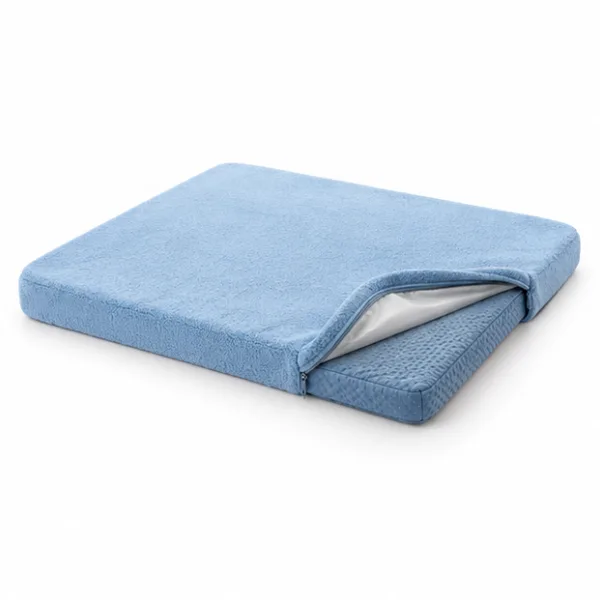
Bed: a firm, washable bed is fine for most dogs. Remove it if your dog chews it.
Heat: RSPCA Australia says dogs need a cool, shaded area with good airflow at all times, and lists hot sand, concrete and cars as dangers (RSPCA Australia knowledgebase, page read 31 October 2026). A big dog with a thick coat in a closed room in summer can overheat quickly. Never leave a dog in a crate in the sun or a hot room, or in a parked car. A cooling mat can help in a shaded, ventilated spot, but it doesn't make a hot room safe.
Heatstroke: if your dog is panting hard, drooling, wobbly or collapses, cool them with cool (not ice-cold) tap water and go to the vet, even if they seem better. See our summer cooling guide.
For a puppy, a smaller playpen and short sessions often work better than a large crate. Our puppy crate training guide covers it step by step.
When to get help
See your vet if your dog scratches or bites at the crate, injures their paws or mouth, drools, pants or panics when shut in. A crate doesn't treat separation anxiety, and confining a dog with separation anxiety can make distress worse. Talk to your vet first, then a qualified, reward-based behaviour professional.
Heatstroke is an emergency. RSPCA Australia lists constant panting, rapid breathing, pale or red gums, drooling, vomiting, muscle tremors, seizures and collapse among the signs, and says to seek a vet immediately (RSPCA Australia, page read 31 October 2026).
Frequently asked questions
How do I measure a big dog for a crate?
Measure your dog nose to tail base, and floor to the top of the head, then add a few inches to each, as crate maker MidWest suggests. If your dog falls between two sizes, go up a size. MidWest's chart puts many large breeds, such as Labradors and Golden Retrievers, in a 42 inch (107 cm) crate and bigger breeds, such as German Shepherds and Rottweilers, in a 48 inch (122 cm).
What size crate for a Labrador?
MidWest's breed chart lists the Labrador Retriever in its 42 inch (107 cm) size. Check your own dog's length and height first, and use a divider while a puppy is growing.
What size crate for a German Shepherd?
MidWest's breed chart lists the German Shepherd in its 48 inch (122 cm) size. Measure nose to tail base and floor to the top of the head or ears, add a few inches, and if your dog sits between sizes choose the larger crate. The Feandrea heavy-duty crate in this guide names German Shepherds on its listing.
Are heavy duty dog crates escape proof?
No. A strong crate may resist bending, but a panicking dog can still injure their teeth, claws or mouth. Vets point to distress as the cause, not a weak cage. If your dog breaks out or bends bars, speak to your vet before trying a stronger crate.
Can I leave my dog in a crate for 12 hours?
There's no single number of hours that suits every dog, and puppies, older dogs and anxious dogs cope with much less. PDSA gives three hours at a time as a ceiling. Twelve hours in a crate through a day isn't something vets recommend.
Is a 42 or 48 inch crate better?
It depends on your dog. MidWest's chart lists Labradors at 42 inches (107 cm) and German Shepherds at 48 inches (122 cm), so a 48 inch suits taller or longer dogs. A crate that's too big can be harder to toilet train a puppy in, so use a divider for puppies.
Can a large dog use a soft crate?
Yes, if your dog is calm, crate-trained and under the listed weight. A soft crate isn't for chewers, diggers or escape artists, since fabric and zips can be damaged. It suits car trips and short stays rather than an anxious or strong dog.
Product details from each linked Amazon Australia listing, checked on 31 Oct 2026.
This guide provides general information and isn't a substitute for veterinary advice. If you're concerned about your dog's behaviour or comfort in a crate, speak with your vet.