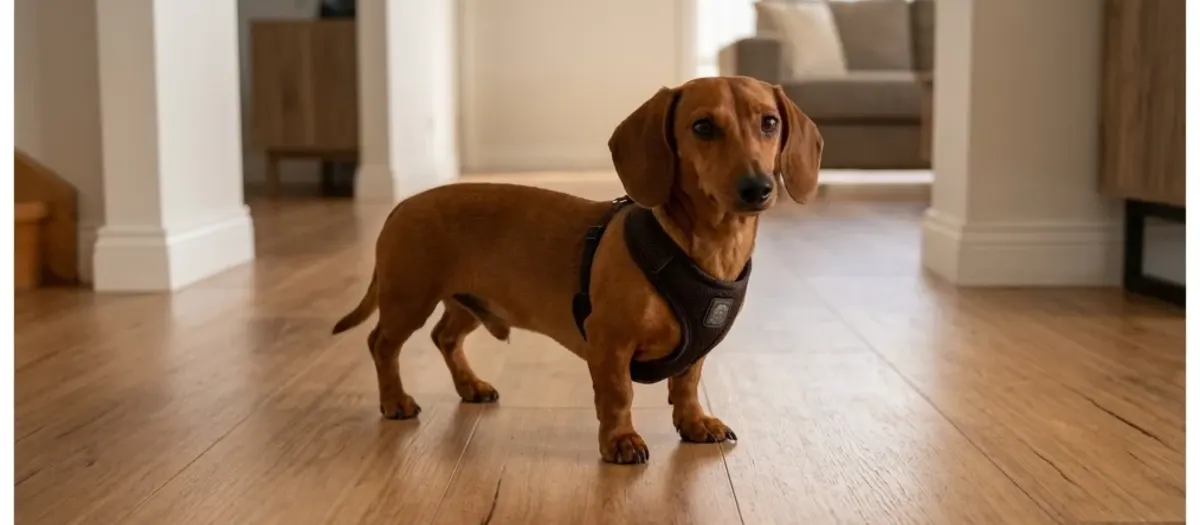
Quick answer: A dachshund is a long-bodied, short-legged hound that comes in two sizes, miniature (up to about 5 kg) and standard (roughly 9 to 12 kg), and in smooth, long-haired and wire-haired coats. They are bold, loyal and often vocal, and suit owners who will protect their backs.
Dachshunds were bred to follow badgers underground, which explains the big personality in a small frame. Here is what to expect from each size and coat, how to look after that long spine, and the gear that fits.
Dachshund at a glance
Weights below are from the Dogs Australia breed standard (miniature ideal 4.5 kg with a desired maximum of 5 kg, standard 9 to 12 kg). The standard gives no height in centimetres, so treat the heights as rough guides. Individual dogs vary.
| Miniature | Standard | |
|---|---|---|
| Size category | Small | Small to medium |
| Height at shoulder | Roughly 13 to 15 cm | Roughly 20 to 23 cm |
| Weight | Up to about 5 kg | About 9 to 12 kg |
| Lifespan | Over 12 years (Royal Kennel Club) | Over 12 years (Royal Kennel Club) |
| Coat types | Smooth, long-haired, wire-haired | Smooth, long-haired, wire-haired |
| Shedding | All three coats shed. Long and wire coats need more brushing | Same |
| Energy | Moderate, with short bursts of play | Moderate |
| Kids and other pets | Usually good with respectful, gentle children. Can chase small animals | Same |
| Grooming | Smooth: weekly rub. Long-haired: brush several times a week. Wire-haired: brushing plus occasional hand-stripping | Same |
How big do miniature and standard dachshunds get?
A miniature dachshund is usually up to about 5 kg and stands roughly 13 to 15 cm at the shoulder. A standard dachshund is typically 9 to 12 kg. Dogs between those weights are common, and a healthy waistline matters more than a number on the scales.
Some Australian listings and owners say "mini" for any small dachshund. If you are choosing a harness or coat, use your own dog's measurements, not the label. Our guide to measuring a dog for clothes shows how.
What is a miniature dachshund like to live with?
A miniature dachshund is the same breed in a smaller package: confident, curious and attached to its people. The bigger concern is not size but spine care. Miniatures are light enough to be carried everywhere, which is lovely, but stairs, couch jumping and rough play still matter.
Many miniatures are also barkers, as they were bred to signal their position underground. Early training helps, and our guide to stopping barking covers the basics.
Are long-haired dachshunds different?
A long-haired dachshund has the same body and health profile as a smooth one, with a soft, silky coat and feathering on the ears, chest, belly, legs and tail. Many people describe them as slightly calmer in manner, but the sources point to coat as the difference, not a separate temperament, so treat that as a tendency at most.
A miniature long-haired dachshund is simply the small size with the long coat, so everything in this guide applies. The coat needs more care than a smooth coat. Tangles form behind the ears, under the elbows and around the "trousers", and mud and grass seed catch in the feathering.
How do you groom a dachshund?
Smooth coats need a quick weekly brush or rubdown with a soft brush or grooming glove. Long-haired coats need brushing a few times a week, working gently through the feathering with a slicker brush and then a comb, and trimming the hair between the toes. Wire-haired coats need regular brushing and occasional hand-stripping.
Bathe only when needed. Over-washing can dry the skin. Check our guides to a dog brush for the right coat, a slicker brush and how often to wash a dog.
What is a dachshund's temperament like?
Dachshunds are often described as clever, brave, stubborn and loyal. Many are devoted to one or two people, can be wary of strangers and love to dig and sniff. They can be a handful in training because they think for themselves, so short, rewarding sessions work best.
Individual dogs vary a lot. Good socialisation as a puppy helps, and gentle handling matters, because they are small and easily hurt by rough play. If digging becomes a project in your garden, see our guide to stopping digging.
How much exercise does a dachshund need?
Most adult dachshunds do well on about 30 to 60 minutes of walking a day, split into two outings, plus play and sniffing games. They have more stamina than their legs suggest, and regular exercise matters: in a UK survey, dachshunds exercised for over an hour a day were less likely to have had disc disease, though the study could not prove cause. Many vets still advise limiting repeated jumping.
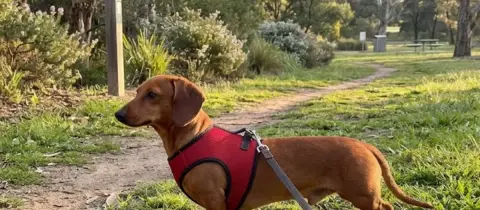
Keep them lean, use a harness, not a collar, for walks, and avoid ball games that involve twisting leaps. For general guidance, see how much exercise a dog needs.
How long do dachshunds live?
Dachshunds often live well into their teens. The Royal Kennel Club lists the breed at over 12 years. A lean body weight, regular dental care and spine-friendly habits all help. Miniatures and standards have a similar range in the breed sources.
Lifespan is an average, not a promise. Because older dachshunds may develop stiffness, read our guide to arthritis in dogs if your senior seems sore.
Common dachshund health problems
The best known condition is intervertebral disc disease, or IVDD. Their long spine and short legs mean the discs between the vertebrae can bulge or rupture, pressing on the spinal cord. Earlier estimates suggest about 19 to 24% of dachshunds show signs of IVDD in their lifetime, and a UK survey of about 2,000 dachshunds run with the Royal Veterinary College found 15.7% had been affected.
Other issues the sources link to the breed or to small dogs include:
- Obesity, which adds strain to the spine and joints.
- Dental disease, which is common in small breeds. See how to clean a dog's teeth.
- Eye conditions, including progressive retinal atrophy in some lines.
- Ear infections, especially in long-eared dogs.
- Back and hip pain that may show up as reluctance to jump or climb.
Ask any breeder about health testing of the parents and talk to your vet about a weight and spine-care plan. This is general information, and only a vet can say what is going on with an individual dog.
How do you protect a dachshund's back?
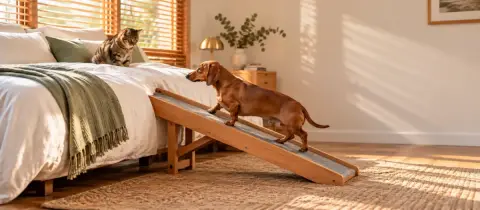
Keep your dachshund at a healthy weight, discourage jumping on and off furniture, and support the chest and hindquarters when you lift them. Many vets also suggest ramps or steps for the couch and bed, and a harness instead of a neck collar. Research has not yet proved which habits prevent disc disease, so ask your vet what suits your dog.
Practical habits worth building from puppyhood:
- Lift with one hand under the chest and the other supporting the back legs, keeping the spine level.
- Block steep stairs with a gate, or teach a calm, steady way up.
- Use a ramp for the car instead of letting them leap out.
- Choose a firm, supportive bed they can step into.
Is a dachshund right for you?
A dachshund suits people who like a characterful, loyal dog and will accept the back care, the barking and some stubbornness. It is probably a poor match if you live somewhere with many steep stairs and cannot adapt, want a dog that never barks, or expect an athletic jogging partner.
They can suit apartments and homes with older children who handle them gently. Dachshunds can be left for short periods, but many dislike long hours alone, so see our separation anxiety guide. With the breed's hunting past, they may chase cats and wildlife, so a secure yard matters.
Caring for a dachshund in Australian weather
Heat is the main summer risk. Dachshunds are not flat-faced, but they overheat in hot, humid weather like any dog, and their low bodies sit close to hot pavement and sand. Walk early or late, carry water and read our guide to keeping a dog cool.
Ticks and snakes matter because dachshunds sniff and burrow through undergrowth. In tick areas, talk to your vet about prevention and read about paralysis ticks and what to do after a snake bite.
Smooth-coated dachshunds feel the cold, so a snug coat helps on frosty mornings. Our guide to dog coats and small dog clothes can help you choose a fit that does not drag on their long bodies.
Gear that fits a dachshund
- Harness: a chest-supporting harness is the safest choice for the spine. See our dachshund harness guide. Measure around the widest part of the chest, just behind the front legs. The breed standard gives no chest measurement, so go by your own dog's numbers and each maker's size chart, not by "miniature" or "standard".
- Small dog harnesses: for a lightweight miniature, our small dog harness guide has other options.
- Ramps and steps: a dog car ramp and stairs for the bed cut down on jumping. Pick a gentle slope and a height that matches your dog's leg length.
- Bed: an orthopaedic dog bed gives a firm, supportive surface. A low-sided bed in a small size suits a miniature, and a medium size suits a standard.
- Brushes: a slicker brush for long-haired coats and a soft dog brush for smooth coats.
- Coat: a dog coat for winter. Measure from the base of the neck to the base of the tail, because dachshunds are long.
- Crate: a small dog crate sized to stand, turn and lie flat, which suits a miniature. A standard may need the next size up.
When to see a vet
Book a vet urgently if your dachshund:
- yelps in pain, cries when picked up or will not move
- hunches, holds their head low or shivers with a tense or tucked belly
- drags a back leg, wobbles, knuckles over or loses control of the back legs
- cannot urinate or passes urine without realising
These signs can point to a spinal problem. Treat loss of use of the back legs or loss of bladder control as an emergency, because the MSD Veterinary Manual says prompt treatment gives the best chance of recovery. Other reasons to call your vet include limping that does not settle (see our limping guide), a swollen, painful belly, and any suspected tick or snake bite. Do not wait to see if it passes.
Frequently asked questions
Are dachshunds good family dogs?
Many are, with respectful children who handle them gently. Dachshunds are loyal and playful but small and easy to injure, so teach kids to support the body when holding and never to carry them on their backs. Supervise young children, and expect a dog with opinions.
Do dachshunds bark a lot?
Many do, since they were bred to alert hunters from underground. Barking tendencies vary by dog, but dachshunds are often described as vocal. Early training, plenty of exercise and not leaving them bored help, though you may never get a completely quiet dachshund.
Can dachshunds go up and down stairs?
A few steps are usually fine for a healthy adult, but repeated stairs and jumping are a worry for the spine. Many owners use gates and ramps. If your dog already has back trouble, ask your vet what is safe.
Do dachshunds shed?
Yes. The Royal Kennel Club lists the smooth dachshund as a breed that sheds, and long-haired dogs also drop hair, with the feathering collecting on furniture. Wire coats are harsher and need brushing and occasional hand-stripping. Regular brushing keeps loose hair down, and none of the coats is truly non-shedding.
Are dachshunds easy to train?
They are clever but independent. Short sessions with food rewards work better than repetition and pressure. House training can take patience in small breeds, so see our toilet training guide and stay consistent.
What is the difference between a miniature and a standard dachshund?
Mostly size and weight. A miniature is up to about 5 kg and a standard is around 9 to 12 kg. The breed standards describe the same build and nature, though some owners find standards a little sturdier.
Is a harness better than a collar for a dachshund?
Usually yes. A harness spreads pressure across the chest and avoids pulling on the neck and spine. Choose one that does not press on the back and fits snugly behind the front legs. See our dachshund harness guide.
Related guides
- Dachshund dog food
- Dachshund jumper
- Dachshund coat
- Dachshund ramp
- Dachshund bed
- Dachshund life jacket
- Dachshund harness guide
- Small dog harnesses
- How to put on a dog harness
- Dog car ramps
- Orthopaedic dog beds
- Cavoodle guide
- Kelpie guide
- French bulldog guide
Sources
- Dachshund breed standard, Dogs Australia (ANKC standard, last updated 2021): https://dogsaustralia.org.au/members/breeds/breed-standards/Dachshund---Standard-Long,-Standard-Smooth,-Standard-Wire,-Miniature-Long,-Miniature-Smooth,-Miniature-Wire (page read 25 November 2026)
- Dachshund (Miniature Smooth Haired), Royal Kennel Club (UK): https://www.royalkennelclub.com/search/breeds-a-to-z/breeds/hound/dachshund-miniature-smooth-haired/ (page read 25 November 2026)
- Packer RMA and others (2016), DachsLife 2015: lifestyle associations with the risk of intervertebral disc disease in Dachshunds, Canine Genetics and Epidemiology: https://pmc.ncbi.nlm.nih.gov/articles/PMC5097381/ (page read 25 November 2026)
- Disorders of the spinal column and cord in dogs, MSD Veterinary Manual: https://www.merckvetmanual.com/dog-owners/brain-spinal-cord-and-nerve-disorders-of-dogs/disorders-of-the-spinal-column-and-cord-in-dogs (page read 25 November 2026)
This guide provides general information and isn't a substitute for veterinary advice. If you're concerned about your dog's health, speak with your vet.