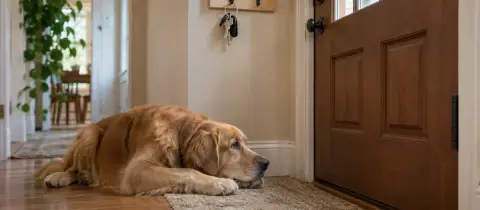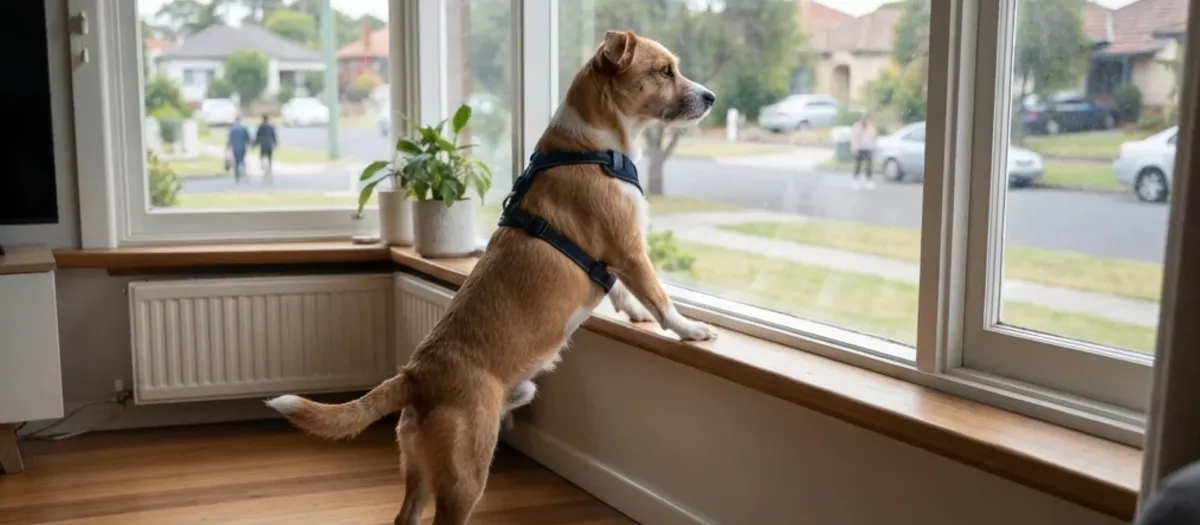
Quick answer: To stop a dog barking, first work out why it barks, because barking is normal communication. Note where and when it happens, block or reduce the trigger, give your dog more exercise and brain work, and reward quiet. Punishment tends to make barking worse, and barking that is new or persistent is worth a vet visit.
A barking dog wears on you, your family and sometimes the neighbours. This guide splits the advice by where the barking happens: the front window, the fence, when you're out and at night. For ideas to fill your dog's day, see our dog enrichment guide.
Quick picks

rabbitgoo frosted window film, white, 44.5 x 200 cm
Frosts the lower glass so passers-by become blurs.

Sunnyglade privacy screen, about 1.83 x 15.2 m
Blocks the view through a see-through fence, but not sound or smell.
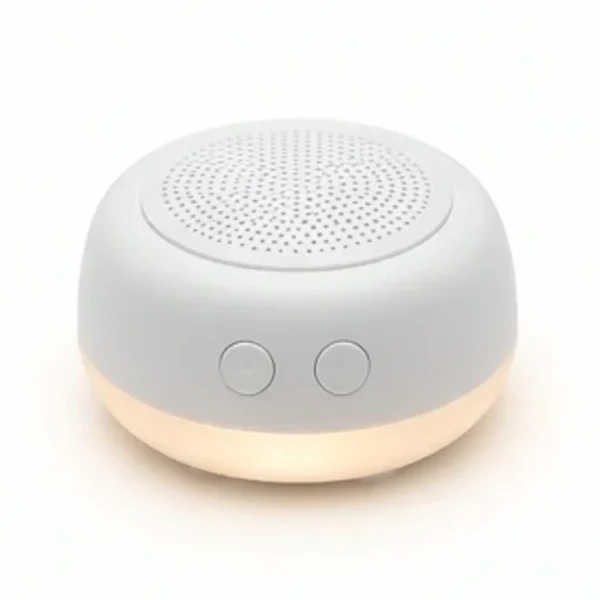
Easysleep white noise machine
Can play continuously at low volume to soften street noise.
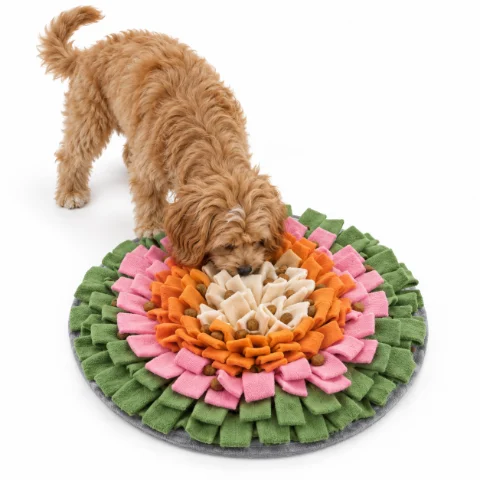
SCHITEC Snuffle Mat
A sniffing job before you leave, for small and medium dogs; supervise.

KONG Classic (pick the size for your dog)
A stuffable rubber toy for brain work; KONG advises supervision.
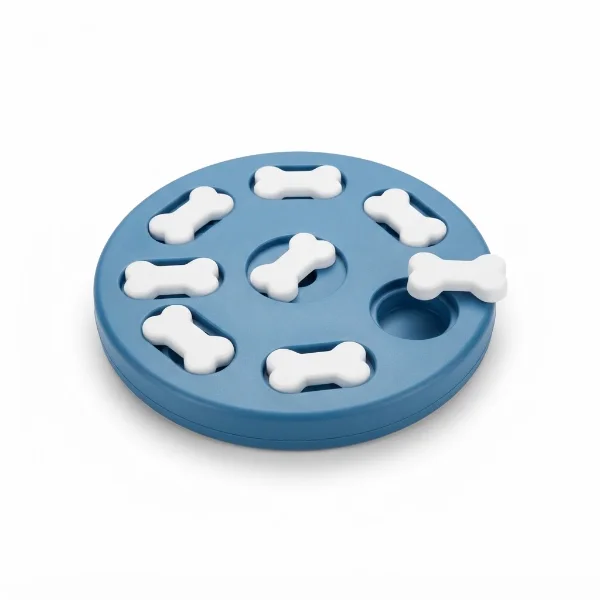
Nina Ottosson Dog Smart (level 1)
A puzzle toy that gives your dog something to figure out; supervise.
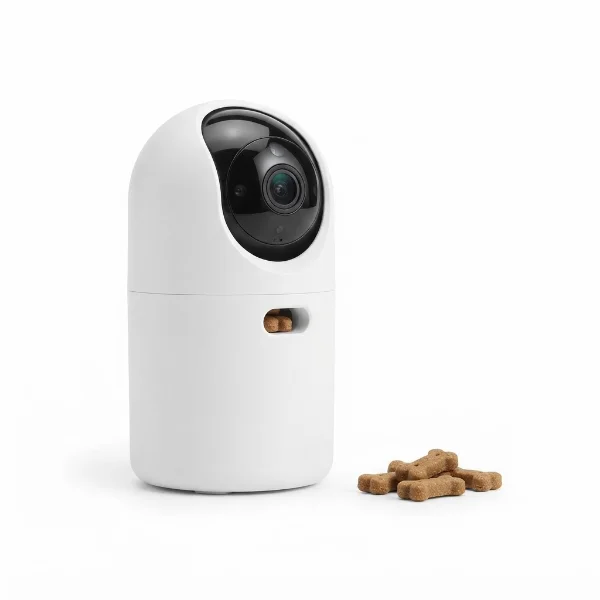
Furbo 360 dog camera
A pet camera shows how your dog behaves while you're out.
KONG Classic (pick the size for your dog)
A stuffable rubber toy for a calm job before you leave.
Nina Ottosson Dog Smart (level 1)
A puzzle toy that gives your dog something to figure out.
Furbo 360 dog camera
A camera shows how your dog behaves while you're out.
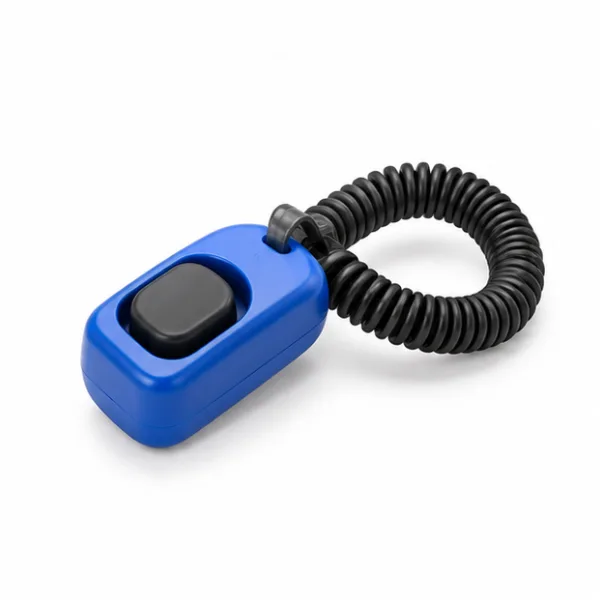
PetSafe Clik-R Training Clicker
A clicker marks the quiet moment so you can reward it.

SavourLife Dog Training Treats, Australian Kangaroo, 165 g
Small treats suit rewarding quiet behaviour in short sessions.
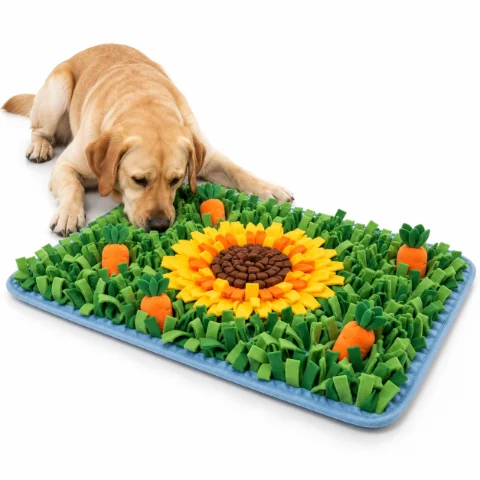
ZMUBB Large Snuffle Mat
A sniffing game uses up energy and gives a bored dog a calm job.
Pictures are illustrations, not the actual products.
More detail on the screen, film, white noise and mat is in Useful gear below. These are management tools; none trains your dog or cures barking.
Why does my dog bark so much?
Dogs bark to communicate, and the reason matters more than the noise. The common causes are alerting or guarding territory, boredom, fear, frustration, attention-seeking and loneliness or separation. RSPCA Australia says some barking is normal, and that excessive barking can come from boredom, excitement, distress, territorial defence, fear and anxiety.
Cornell's vets describe the same patterns and suggest noting when and where your dog barks, because the pattern points to the cause (RSPCA Australia Knowledgebase, updated 3 March 2023, page read 21 November 2026; Cornell University College of Veterinary Medicine, page read 21 November 2026).
Health can play a part too. RSPCA South Australia says pain or illness can cause barking, and the City of Boroondara lists fleas, worms, skin allergies and injuries. A vet can check for an underlying cause, especially if the barking is new (RSPCA South Australia, 10 September 2020, page read 21 November 2026).
Where does the barking happen, and what should I try first?
Match the barking to the place and time. The table pairs each situation with what it may be more consistent with and a sensible first step. It isn't a diagnosis, and one pattern doesn't prove a cause, so look at the whole context.
| Where and when | May be more consistent with | First things to try | Our guide |
|---|---|---|---|
| Front window, at passers-by | Alert or territorial barking | Block the lower view, move the couch away from the glass | Window privacy film |
| Fence, at a neighbour's dog | Territorial barking, frustration, excitement | Limit unsupervised yard time, block the view | Fence privacy screens |
| Fence, at people on the footpath | Territorial or alert barking | Block the view, reward quiet, teach a bell cue to come inside | Fence privacy screens |
| Doorbell or visitors | Alert, excitement | Teach a go-to-bed cue, reward calm | Puzzle toys |
| When left alone | Boredom, loneliness, possibly separation-related | Exercise first, a sniffing job, build up absences slowly | Separation anxiety |
| At night | Alert barking at sounds, discomfort, loneliness, health | Check comfort and bedtime routine, rule out health | White noise machines |
| At you, for food or a game | Attention or demand | Reward quiet, don't give in mid-bark | Is my dog bored? |
| Storms or fireworks | Fear | Safe space, plan ahead, talk to your vet | Storms and fireworks |
| Backyard, at visiting cats | Alert or territorial barking, excitement | Bring your dog in when cats are about, and keep cats out of the yard humanely | Cat repellents |
How do I stop a dog barking at the window?
Take away the view, then reward calm. A dog that watches the street all day gets many chances to bark at something walking past, and each time the person leaves, it can look like barking worked. Cornell suggests translucent window clings or blocking your dog's access to the window.
Cover the glass from the sill to about 15 to 20 cm above your dog's eye height where it watches: standing, on the couch or with its paws on the sill. That height is our suggestion, so measure for your own dog. You can test it first by taping paper over the lower pane. Our window privacy film guide compares frosted and patterned films and explains why one-way film doesn't suit this job.
Moving the couch or a favourite perch away from the window works too, and costs nothing. Then reward your dog for quiet in the room, not for barking, so it learns that calm is what pays.
How do I stop a dog barking at the fence?
Limit the chances to rehearse it, and block the view where you can. Cornell suggests blocking your dog's view of passers-by, letting the dog out only when the area is usually quiet, and rotating dogs outside if they egg each other on. Fence-running and barking tend to feed each other.
A privacy screen blocks sight only. Your dog can still hear and smell the neighbour's dog, so it helps most with barking at movement. Our fence privacy screen guide matches screen heights to fences from 0.9 m to 1.8 m and covers fixing one safely. Check council and strata rules before covering a boundary fence, and talk to the neighbour first if it's shared.
A screen doesn't make a fence taller or stronger. If your dog escapes, see our portable dog fences guide. Diggers and barkers often share a cause, so our guide to stopping a dog digging may help too. If your dog barks and lunges at other dogs on walks, our reactive dog training guide explains distance, triggers and a calm plan.
How do I stop a dog barking when I'm out?
Meet your dog's needs before you leave, then build up time alone gradually. RSPCA South Australia suggests mental exercise as well as physical, such as hidden treats, a food puzzle or short training, and a dog walker or dog minder for long days. Boroondara suggests about two walks a day and puzzle toys.
Keep leaving and arriving calm and low-key, because excitement can add to barking. Give your dog a safe retreat, and start with short absences, building up slowly. Our guide to keeping a dog busy at work has day plans, and our exercise guide covers how much suits different ages and breeds.
Barking that continues all day may be separation-related, especially alongside pacing, drooling, destruction or escape attempts. Products don't treat separation anxiety. Our separation anxiety guide explains the signs, and a vet or veterinary behaviourist can help with a plan.
Management or training: which does what?
Management removes the trigger so your dog stops rehearsing the barking. Training teaches your dog what to do instead. You usually need both, and management makes training easier because your dog isn't being set off every few minutes. Neither is a quick fix, and results vary from dog to dog.
| Management | Training | |
|---|---|---|
| What it does | Removes or softens the trigger | Teaches a new habit |
| Examples | Window film, a fence screen, white noise, moving the dog's bed | Rewarding quiet, a bell cue to come inside, a "quiet" cue, building up time alone |
| Works when | The tool is in place | Your dog has practised it, with rewards |
| Limit | Doesn't teach anything by itself | Needs steady practice and a calm setting |
Cornell suggests music or the TV to cover outdoor sounds. If you try white noise, keep it at a low volume you could talk over, place it away from your dog so your dog can move away from the speaker, and never use it to drown out a distressed dog or as punishment. Never put it inside a crate.
How do I find out what sets my dog off?
Keep a short barking diary for a week or two. Write down the time, place, trigger, how long the barking lasted and what your dog did next. Patterns often show up quickly: the postie at the same time each day, or the neighbour's dog first thing in the morning.
Here is a simple layout:
| Time | Where | What happened just before | How long | What I did |
|---|---|---|---|---|
| 8.15am | Front window | Walker with a dog passed | 2 minutes | Called dog to its mat, treat |
| 1.40pm | Back fence | Not sure (heard a gate) | 10 minutes | Brought dog inside |
What shouldn't I do?
Don't punish, and don't yell. RSPCA South Australia says punishment can confuse a dog and doesn't teach an alternative, and that yelling often escalates the problem. RSPCA Australia agrees that punishment tends to make barking worse. RSPCA South Australia adds that a dog who thinks the neighbour is also barking may ramp it up in response.
Don't skip the cause either. Cornell says to identify why your dog barks before responding.
RSPCA South Australia says it strongly opposes devices that deliver electric shocks, because they inflict pain and involve punishment. It also opposes collars that deliver other aversive stimuli, such as citronella or high-pitched sound. Cornell quotes Dr Katherine Houpt, who calls shock nasty, says ultrasound only works a few times and says citronella is still punishment. Cornell adds that these devices don't deal with the cause. They're not part of any plan here.
How do council barking complaints work?
Councils handle barking complaints in Australia, and rules and processes vary by state and council. One NSW council, Hornsby Shire, describes the path as talking to the owner first, then mediation, then a council complaint with a barking diary kept for at least 14 days, then the local court if the council can't act.
Hornsby says its council can issue a nuisance order when barking is persistent, regular and affects several people. It treats barking as normal dog behaviour and doesn't act on one-off barking such as sirens, mail delivery, fireworks, planes or visitors. It also can't remove a dog from its home. Check your own council's page for how it works (Hornsby Shire Council, page read 21 November 2026). Brisbane City Council says owners are responsible for keeping barking from disturbing neighbours, and that regular training can help (Brisbane City Council, page read 21 November 2026).
Useful gear
These are management tools within your routine. None of them trains your dog or cures barking.
- Sunnyglade privacy screen, about 1.83 x 15.2 m: blocks the view through a see-through fence. See our fence privacy screen guide.
- rabbitgoo frosted window film, white, 44.5 x 200 cm: frosts the lower glass so passers-by become blurs. See our window privacy film guide.
- Easysleep white noise machine: the listing says it can play continuously, so it can run at low volume to soften street noise. See our white noise machine guide.
- SCHITEC Snuffle Mat: a sniffing job before you leave. The listing gives the size as about 45 cm across and says it's made for small and medium dogs. Supervise your dog with it, and put it away afterwards. See our snuffle mat guide, and our treat dispensing toys guide for other options.
When to see a vet
Book a vet visit if your dog's barking comes with any of these:
- barking that is new or sudden
- other changes, such as scratching, licking, limping, being off food or seeming in pain
- barking when alone along with destruction, drooling, pacing or escape attempts (see our separation anxiety guide)
- fear barking that is getting worse
- an older dog barking at night and seeming confused
A vet can check for an underlying cause and refer you to a veterinary behaviourist if needed. Cornell recommends working with one when barking is driven by fear or aggression.
Frequently asked questions
Is it normal for dogs to bark?
Yes. Barking is a normal way for dogs to communicate, and RSPCA Australia says some barking is part of normal behaviour. The aim isn't a silent dog. It's reducing barking that is excessive, distressing for your dog or disturbing the neighbours, by finding the cause and addressing it.
Why does my dog bark at nothing?
Your dog may be hearing, smelling or seeing something you can't, such as a distant sound or a possum. Boredom and attention-seeking can also be behind it. Note the time and place in a diary, and see your vet if it's sudden or comes with other changes.
Why does my dog bark at night?
Common reasons include alert barking at sounds outside, discomfort, loneliness or fear. Check that your dog is comfortable and has had enough exercise. Barking at night in an older dog, especially with confusion, is worth a vet check. White noise may help mask sudden sounds for some dogs.
How long does it take to stop a dog barking?
There's no set timeline, and results vary with the cause, your dog and how consistently you practise. Removing the trigger can help quickly in some cases, while habits built over months take longer to change. Watch how your dog responds, and ask a vet or behaviourist for help if it isn't improving.
Should I ignore my dog when it barks?
Ignore barking for attention, and reward the moment your dog stops. RSPCA South Australia says not to reward barking with attention. But don't ignore barking that may signal fear, pain or distress. If you're unsure why your dog is barking, find the cause first.
How can I tell if my dog barks while I'm out?
Ask a neighbour, or use a pet camera or a phone left recording to see what happens. Watch for when the barking starts and whether your dog also paces, pants or destroys things, which can point to stress. Our pet camera guide compares options.
What should I do if a neighbour complains about my dog barking?
Listen, ask when it happens, and keep your own barking diary to find the trigger. Then try the management steps above, and let your neighbour know what you're doing. If a council letter arrives, check your council's page for its process, because it varies by state and council.
Do puppies grow out of barking?
Not reliably. Puppies learn what works, so a habit that's rewarded can continue as they grow. Start early with exercise, enrichment and rewarding quiet, and build time alone slowly. See our puppy training schedule for what to teach and when.
Related guides
- Reactive dog training: a calm plan for lunging and barking
- Dog separation anxiety: signs and what helps
- How to keep a dog entertained while you're at work
- Is my dog bored?
- Dog enrichment ideas
- Best dog puzzle toys
- Dog scared of fireworks or thunder?
- How much exercise does a dog need?
- How to stop a dog digging
- Fence privacy screens for dogs
- Window privacy film for dogs
- White noise machines for dogs
- Humane cat repellents
Sources
- RSPCA Australia Knowledgebase: My dog is barking excessively, what should I do?, updated 3 March 2023, page read 21 November 2026
- RSPCA South Australia: Excessive barking, 10 September 2020, page read 21 November 2026
- Cornell University College of Veterinary Medicine: Excessive barking, page read 21 November 2026
- City of Boroondara: Tips to stop your dog barking, page read 21 November 2026
- Hornsby Shire Council: Barking dogs, page read 21 November 2026
- Brisbane City Council: My dog is barking, what should I do?, page read 21 November 2026
This guide provides general information and isn't a substitute for veterinary advice. If you're concerned about your dog's barking, speak with your vet.