Quick answer: Arthritis in dogs is long-term joint pain that often shows up as stiffness after rest, slower walks and hesitating at stairs or jumps. It can't be cured, but a vet can manage it with pain relief, weight control, gentle exercise and home changes. See your vet early, because untreated pain gets worse.
Arthritis tends to creep in. A dog who was a bit slow to get up last month may be skipping the couch this month. This guide covers the early signs, how vets diagnose and treat it, and the home changes that make daily life easier. If your dog's limp came on suddenly, start with our dog limping guide instead.
What is arthritis in dogs?
Arthritis in dogs is osteoarthritis, a long-term condition where a joint becomes sore and stiff. There is usually no single cause. Body shape, extra weight, joint development problems, past injury or surgery and diet can all play a part. Ageing alone isn't considered a cause.
VCA Animal Hospitals lists body build, excess weight, hip or elbow dysplasia, a luxating patella, injury, surgery and nutrition as contributors (VCA Animal Hospitals). That matters, because putting stiffness down to "just getting old" can mean a sore dog misses out on treatment. It also means some of the risk is in our hands, especially body weight.
What are the early signs of arthritis in dogs?
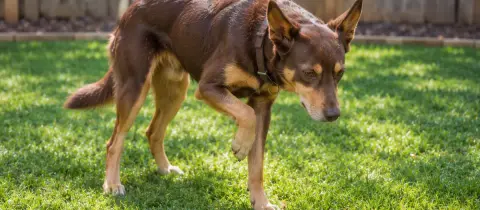
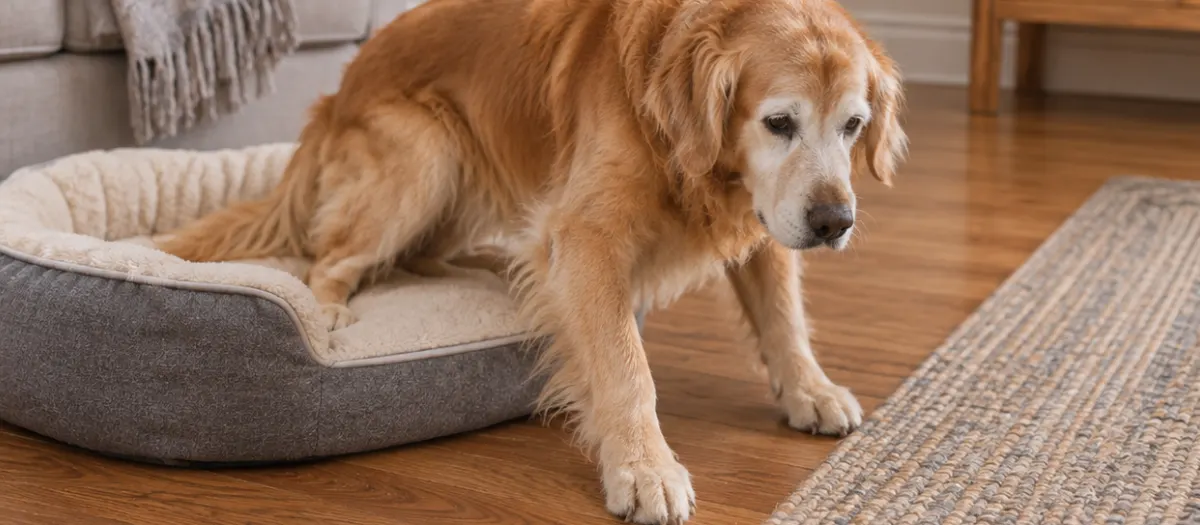
Early signs are small changes that build over days and weeks: slow to get up, shorter walks, hesitating at stairs, jumps or the car, and licking at a joint. Stiffness often eases once your dog warms up, which can make it easy to miss. Look at the pattern, not one bad morning.
RSPCA Australia and VCA both list these signs. Together they give you a checklist to compare against your own dog.
| What you might notice | Where it shows up | Source |
|---|---|---|
| Slow to get up after a nap or lying down | Mornings, after rest | RSPCA Australia, VCA |
| Hesitates at stairs, the car or the couch | Jumps and steps | RSPCA Australia, VCA |
| Shorter walks, or lagging behind | On the lead | VCA |
| Licking or chewing at one joint | At rest | RSPCA Australia |
| Snapping or yelping when touched, or unexpected grumpiness | Handling, patting | RSPCA Australia, VCA |
| Shifting weight off a sore leg, a slight hunch, swollen joints | Standing | VCA |
| Coat lying differently than it used to, with hairs lifting or sitting flat | Fur and skin | VCA |
Other conditions can look just like arthritis, so none of these signs proves it. A vet can work out what is going on. If you spot a few of them together, book a check rather than waiting for it to get worse.
How do vets diagnose and treat arthritis in dogs?
Your vet will examine your dog first, because other conditions can look similar. Arthritis can't be cured, so treatment aims to manage pain and keep your dog moving, usually with several approaches together. Plans are chosen for each dog, and they get adjusted over time.
RSPCA Australia says vets may use anti-inflammatory medicines, medicines for long-term pain, agents that slow cartilage breakdown, and stem cell therapy, chosen to suit each dog (RSPCA Australia, page read 23 November 2026). VCA adds a monthly injection some vets use, a vet-prescribed diet, rehabilitation and physical therapy, and surgery in severe cases. It also says never to give your dog your own medicines.
Here's how the work usually splits between the vet and you.
| Part of the plan | Who leads it | Examples |
|---|---|---|
| Diagnosis and pain relief | Your vet | Exam, tests, prescribed medicines |
| Weight | Your vet's diet plan, then you at home | Measured meals, fewer extras |
| Exercise | Your vet, then you | Walk length and surface, indoor games |
| Physio and hydrotherapy | Qualified practitioners | Supervised sessions |
| Comfort gear | You at home | Bedding, rugs, ramps, a lift harness |
RSPCA Australia says hydrotherapy and physiotherapy may help, but only when done by someone expert, because poorly done sessions can cause harm. On supplements, we match our joint guide: RSPCA Australia says many supplements lack robust evidence and shouldn't replace conventional treatment. Our joint supplements guide and 4CYTE guide explain what's in them, and your vet can say whether one is worth adding.
What home changes help a dog with arthritis?
Make the floor grippy, the bed thick and supportive, and everything your dog needs reachable without steps. Small changes in each room add up, and they work alongside your vet's plan rather than replacing it. Many Australian homes have tiles or floorboards, which are slippery for sore legs.
| Room or spot | Change | Why it helps | Our guide |
|---|---|---|---|
| Hard floors | Runners or rugs on the paths your dog uses | Gives paws something to grip (RSPCA Australia, VCA, PetMD) | Dog socks with grip |
| Bed | Thick, supportive foam | Soft, padded bedding is VCA's advice | Orthopaedic dog beds |
| Couch or your bed | Steps or a ramp | Saves the jump (VCA, PetMD) | Dog stairs or ramp for bed |
| Car | A ramp | RSPCA Australia suggests one | Dog car ramps |
| Food and water | Bowls at elbow height (VCA), kept where your dog doesn't need stairs to reach them (PetMD) | Less bending and climbing. For a large or deep-chested dog, ask your vet first because of the bloat question | Elevated dog bowls |
| Stairs and steps | Gate them off, or steady your dog with a lift harness your vet agrees with | RSPCA Australia says avoid stairs where possible | Dog gates, lift harnesses |
PetMD's vet-written guide suggests a bed on each level of the house so your dog never has to climb to rest (PetMD, updated 29 October 2026). Our older dog bed guide compares beds made for stiff dogs.
What exercise is best for a dog with arthritis?
Gentle, regular and low-impact is the usual idea. RSPCA Australia suggests shorter walks on even ground, and PetMD says walks can continue if your dog is comfortable. Avoid sudden sprints and big jumps, and plan how much with your vet (see the walking question below).
On bad-weather days, PetMD suggests low-impact indoor play such as hide-and-seek, puzzle toys, treat hunts with low-calorie treats, and gentle fetch down a hallway with good traction. Our rainy day games for dogs has more ideas, and how much exercise a dog needs covers the general picture before you adjust for sore joints.
Why does weight matter so much for sore joints?
Extra weight puts more load on every joint and is linked to arthritis getting worse. VCA calls getting body condition back to normal critical, and RSPCA Australia lists weight management as an important part of managing arthritis. A lean dog usually moves more comfortably, so this is one of the most useful things you can do.
Ask your vet to check your dog's body condition and suggest a feeding plan. VCA says a vet may prescribe a specific diet to bring your dog's weight back to normal. Treats count, so use the 10% treat rule from our dog treats guide, and swap extras for low-calorie bits or a little of your dog's own meal. PetMD notes that less activity and extra holiday treats may lead to weight gain, which is worth remembering over Christmas and through winter.
Is it arthritis or something else?
Either is possible, and only a vet can tell. Arthritis usually builds slowly. A limp that comes on suddenly, a dog who won't put weight on a leg, or a hot, swollen limb is more consistent with an injury or another problem that needs prompt attention.
Our dog limping guide has a triage table for these signs. Never give your dog human pain medicine such as paracetamol, ibuprofen or aspirin to "help". Some are dangerous for dogs, so ask your vet first.
Useful guides
Gear supports what your vet advises. None of it treats arthritis.
- Dog lift harnesses: rear slings and full-body harnesses to help you steady your dog on steps or into the car. A lift harness helps you support your dog while your vet's plan does the treating. Never lift by the legs.
- Orthopaedic dog beds and beds for older dogs: supportive foam for resting.
- Dog stairs or ramp for bed and dog car ramps: fewer jumps up and down.
- Elevated dog bowls: eating and drinking without bending.
- Dog socks with grip: help on slippery floors.
- Joint supplements for dogs: what the evidence says, to talk through with your vet.
- Pet heat pads: warmth only as the label says and with a cover, and ask your vet first.
Vet clinics and physio or rehab clinics can often advise on supports and fit them, and pet shops stock many of the basics.
When to see a vet
Book a check if you notice stiffness, slowing down or any of the signs above. RSPCA Australia says arthritis pain should be treated promptly, because it gets worse if it's left. If it's after hours and your dog is in severe pain, call your nearest 24-hour emergency vet.
- A limp that lasts more than a day or two, or pain that is severe, sudden or getting worse (Cornell University College of Veterinary Medicine says don't wait)
- A dog who can't or won't put a leg down, or has a serious wound (see your vet immediately, per PDSA)
- A swollen, hot or misshapen leg, or crying out when touched
- Weak or wobbly back legs, or a dog who can't stand: call a vet now
- Snapping, yelping or sudden grumpiness when touched
- Pain relief that doesn't seem to be working, or any new vomiting, tummy upset or loss of appetite on medicine
Never give your dog human pain medicine. If your dog has swallowed any, call your vet or the Animal Poisons Helpline (1300 869 738, 24/7) straight away. For sudden limps, see our dog limping guide.
Frequently asked questions
Can arthritis in dogs be cured?
No. VCA says arthritis can't be cured, but it can be managed with several approaches working together, such as pain relief, weight control, diet, rehabilitation and home changes. Many dogs stay comfortable and active with a good plan, though results vary. Your vet will adjust the plan as your dog's needs change.
Is arthritis worse for dogs in cold weather?
It may be. PetMD says cold weather may make some arthritic dogs stiffer, although the link isn't fully understood. Keep walks going if your dog is comfortable, use shorter walks or indoor play on bad days, and put rugs on hard floors. If winter seems harder, tell your vet.
How far should I walk a dog with arthritis?
Ask your vet, because there's no single distance or time that suits every dog. RSPCA Australia suggests shorter walks on even ground. Aim for gentle and regular rather than rare and long, and watch your dog afterwards. If your dog is stiffer or sorer the next day, the walk was probably too much, so tell your vet.
Does hydrotherapy help dogs with arthritis?
It may help as part of a wider plan. RSPCA Australia says hydrotherapy and physiotherapy can help when expertly delivered, but poorly done sessions can cause harm. Ask your vet for a referral to a qualified practitioner, and don't start any water-based exercise on your own with a sore dog.
Do joint supplements help dogs with arthritis?
The evidence is thin and uneven. RSPCA Australia says many supplements lack robust evidence and shouldn't replace conventional treatment. Some may suit some dogs, so ask your vet which, if any, is worth adding. Our joint supplements guide lays out the ingredients.
Should a dog with arthritis use stairs?
Avoid them where you can. RSPCA Australia suggests avoiding stairs, and PetMD suggests keeping food, water and a bed on each level so your dog doesn't need to climb. A gate helps, and if you must help your dog up or down, a lift harness your vet agrees with can steady them.
Why is my older dog grumpy when I touch their back or hips?
Pain is one possible reason. VCA lists unexpected aggression towards people or other dogs among the signs of arthritis, and RSPCA Australia lists snapping or yelping when touched. Other problems can cause the same reaction, so don't punish it. Book a vet check and handle your dog gently until then.
Can young dogs get arthritis?
Yes, it can happen. VCA says ageing alone isn't considered a cause, and lists joint development problems such as hip or elbow dysplasia, injury, surgery and excess weight as contributors. A young dog who is stiff, limps or avoids jumping needs a vet check, not a wait-and-see approach.
Related guides
- Why is my dog limping?
- Dog lift harnesses
- Best joint supplements for dogs
- 4CYTE for dogs
- Best orthopaedic dog beds
- Best dog beds for older dogs
- Dog stairs or ramp for bed
- Dog car ramps
- Elevated dog bowls
- Dog socks with grip
Sources
- RSPCA Australia Knowledgebase, "I think my dog has arthritis, what can I do?", updated 17 June 2024, page read 23 November 2026: https://kb.rspca.org.au/knowledge-base/i-think-my-dog-has-arthritis-what-can-i-do
- VCA Animal Hospitals, "Arthritis in Dogs", page read 23 November 2026: https://vcahospitals.com/know-your-pet/arthritis-in-dogs
- PetMD, "Dog Arthritis and Cold Weather", updated 29 October 2026, page read 23 November 2026: https://www.petmd.com/dog/general-health/helping-dog-arthritis-in-cold-weather
- Cornell University College of Veterinary Medicine, "What to expect when taking your limping dog to the veterinarian", updated 5 January 2026, page read 23 November 2026: https://www.vet.cornell.edu/departments-centers-and-institutes/riney-canine-health-center/canine-health-information/what-to-expect-when-taking-your-limping-dog-to-the-veterinarian
- PDSA, "Limping and stiffness in dogs", published July 2019, page read 23 November 2026: https://www.pdsa.org.uk/pet-help-and-advice/pet-health-hub/symptoms/limping-and-stiffness-in-dogs
This guide provides general information and isn't a substitute for veterinary advice. If you're concerned about your dog's joints or mobility, speak with your vet.