Elevated dog bowls: best picks and the bloat question
By Anish PuriUpdated 6 Nov 202610 min readResearched, not tested by us
Research guide. WhiskerFinds may earn a commission from links, at no extra cost to you.
Quick answer: Elevated dog bowls can help some dogs, such as older dogs with stiff necks or backs, but they aren't right for every dog. Research has linked raised bowls with higher bloat risk in large and giant breeds, so ask your vet first. Our top pick is the adjustable Niubya stand.
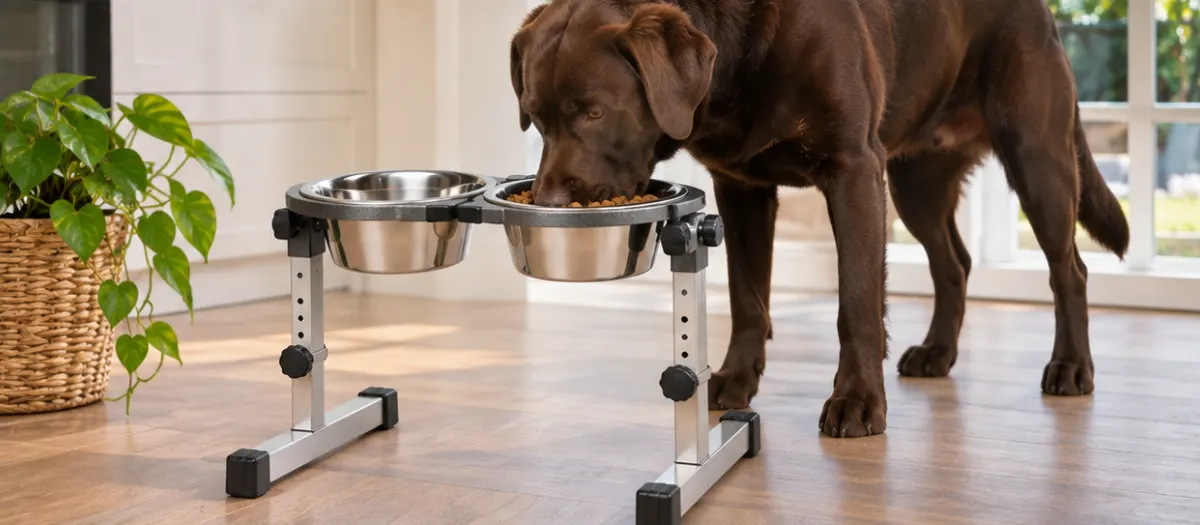
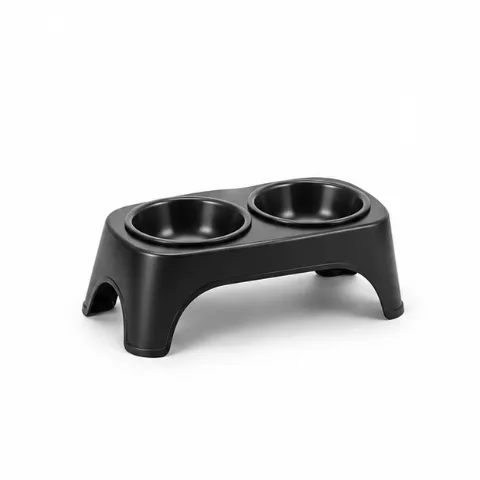
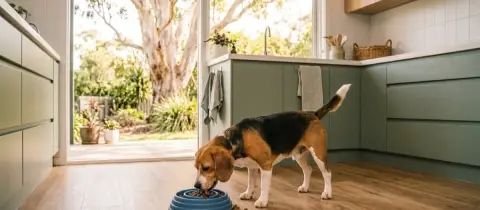
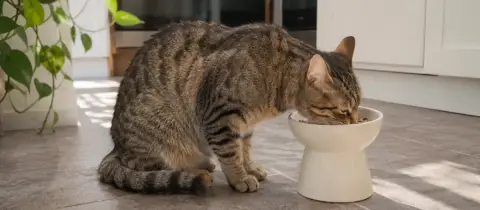
Illustration, not the actual product
Our top pickNiubya Elevated Stainless Steel Dog Bowls, 5 heights
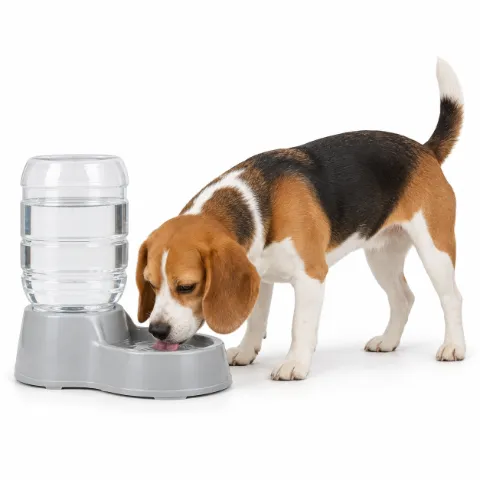
Raised bowls look like an easy upgrade, but the bloat question means it pays to read before you buy. This guide covers who might benefit, how to choose a height, and five stands compared on their listing specs. If your dog gulps food, our slow feeder bowl guide is the place to start, and our dog water bowl guide covers the other half of the feeding station.
Quick picks
Our top pickBest overall adjustable stand
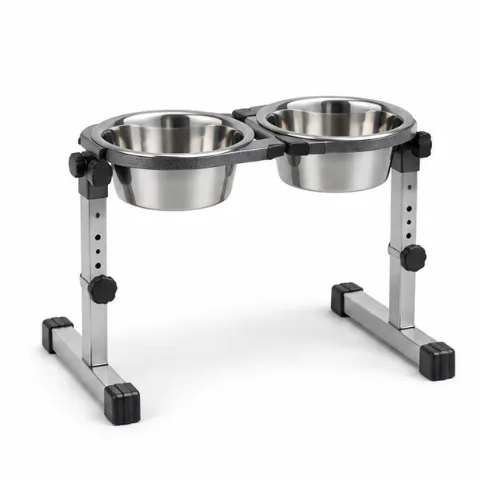
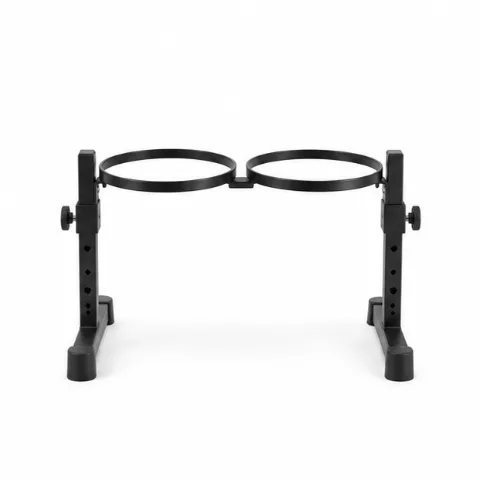
Niubya Elevated Stainless Steel Dog Bowls, 5 heights
Two stainless steel bowls, five listed heights from 8 to 31 cm, non-slip feet, folds flat
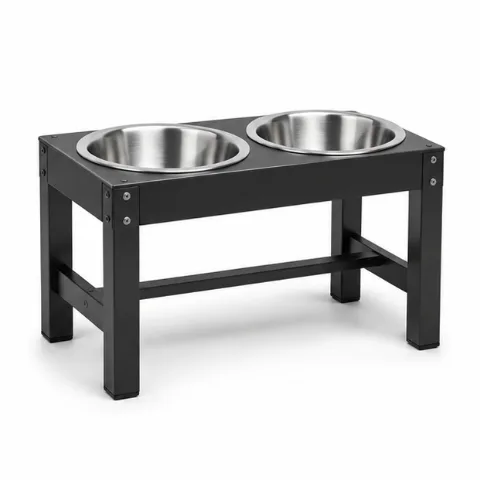
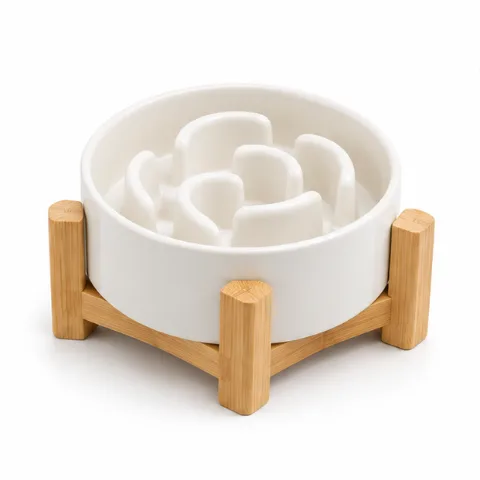
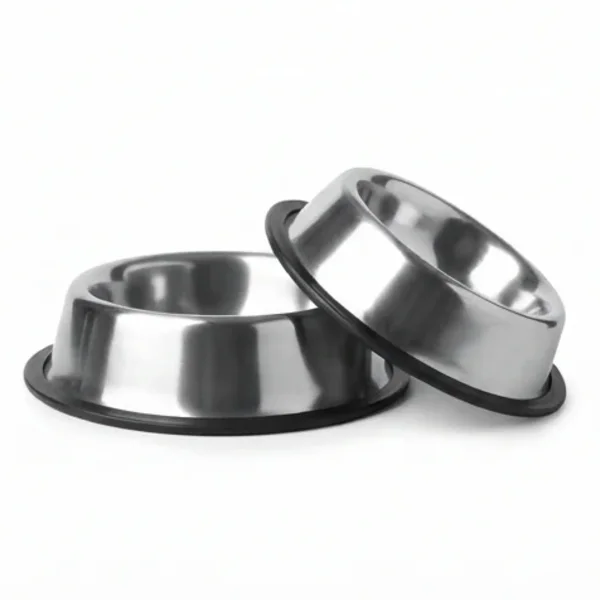
Pictures are illustrations, not the actual products.
Do elevated dog bowls cause bloat?
A 2000 study of large and giant breed dogs found that having a raised feeding bowl was associated with a higher risk of bloat (Glickman et al., JAVMA, 2000, abstract read 6 November 2026), and the American Kennel Club says the research conflicts, so a solid recommendation can't be made. If your dog is a large or deep-chested breed, ask your vet before raising the bowl.
Bloat (gastric dilatation and volvulus, or GDV) is when the stomach swells with gas and can twist. VCA Animal Hospitals (page read 6 November 2026) calls it one of the most serious non-traumatic conditions seen in dogs. Its feeding-related risk factors are eating one big meal a day, eating quickly, and exercising right after eating or after drinking a lot of water. That VCA page doesn't mention raised bowls either way. The AKC page says earlier research that blamed floor-level bowls was later contradicted, and that raised bowls are now thought to carry at least as much risk.
The AKC (page read 6 November 2026) also lists body shape, with deep, narrow chests at higher risk, large and giant breeds, and family history. The practical takeaway is that bowl height is only one small piece, and the habits around it matter too. Some product listings, including the XIAZ one, claim a raised stand reduces bloating. We haven't found a source that supports that, so we don't repeat it as fact.
Who might benefit from a raised bowl?
A raised bowl may suit dogs who find bending down uncomfortable, such as some older dogs or dogs with arthritis, neck or back problems, but only on your vet's advice. For a healthy young dog there is usually no need. Ask your vet whether it suits your dog and which height to try.
Several listings pitch their stands at senior dogs. The XIAZ listing says its stand is for dogs with limited mobility or arthritis, which is the brand's claim, not a veterinary finding. If stiffness is what's bothering your dog, rest and bedding matter too, so see our bed guide for older dogs. A raised bowl is a tool within a routine, not a treatment for joint pain.
Our picks in detail
1. Niubya Elevated Stainless Steel Dog Bowls, 5 heights: best overall adjustable stand
A stand with two stainless steel bowls, each listed at about 6 x 23 cm (2.4 x 9 in). The description gives five heights of 8, 22, 25, 28 and 31 cm. The listing says the legs fold away at the touch of a button, the feet are non-slip with a silent rubber edge, and the bowls can go in the dishwasher. The listed footprint is 40 x 22 x 8 cm and the listing gives the weight as about 1.25 kg (2.76 lb).
Pros: two bowls, so one can hold water; five height settings; stainless steel bowls; folds flat to store
Cons: the listing is inconsistent: the title gives the lowest height as 3.15 in and a bullet says 3.5 in, and it calls the stand suited to medium breeds while the title says small to large dogs; the stand is plastic and rubber, so check it feels steady with your dog
Best for: most dogs, and owners who want to try different heights
Skip it if: your vet has advised against a raised bowl, or you need a taller setting than 31 cm
2. XIAZ Elevated Dog Bowls for Large Breeds: best for large dogs
A stand designed for medium and large dogs, with the highest setting of about 35 cm (13.78 in). The listed settings are 8, 23, 27, 31 and 35 cm, though the listing says four heights. Capacity is 4 cups, the unit is ABS plastic and collapsible, and the listing mentions non-slip pads and a silent strip. Its footprint is about 51 x 25 x 23 cm (20 x 10 x 9 in) and it is styled as a slow feeder.
Pros: tallest setting of our five; large capacity; slow-feeder style; collapsible
Cons: hand wash only per the listing; the heights are described inconsistently; it makes bloat-reducing claims we can't support; a puppy under about 38 cm (15 in) body height won't suit it per the listing
Best for: large dogs whose vet has okayed a raised bowl
Skip it if: your dog is a large or deep-chested breed and your vet hasn't discussed bloat with you, or your dog is a small breed or young puppy
3. Elevated Slow Feeder Dog Bowl, ceramic on bamboo stand: best raised slow feeder
A maze-style ceramic bowl on a bamboo stand, 22.4 cm square and 22.4 cm high (about 8.8 in), holding 2.5 cups. The listing says the bowl is food grade, lead-free and cadmium-free, and is dishwasher and microwave safe, and that the stand just needs wiping with a dry cloth. It says the bowl can extend mealtime up to five times, which is the brand's claim. It suits medium to large dogs per the listing and the whole unit weighs about 1.87 kg.
Pros: heavy and steady; ceramic bowl is dishwasher safe; maze slows eating per the listing; looks neat
Cons: one fixed height, so you can't adjust; only 2.5 cups, so large meals may not fit; ceramic can chip or break if dropped; the listing's claims about bloating are unsupported
Best for: a medium or large dog who bolts food and suits a bowl at about 22 cm
Skip it if: you want adjustable heights, your dog is a big eater or you need a lighter, unbreakable bowl
4. Dogit 2 in 1 Elevated Dog Dish: best for small dogs
A compact raised dish with a removable stainless steel insert that holds 300 ml (10.1 fl oz, or 1 1/4 cups). The listing gives the size as 12.4 x 12.4 x 15.2 cm (4.9 x 4.9 x 6 in) and the weight as about 0.31 kg (0.68 lb). It says the feet are anti-skid and the insert is dishwasher safe, and it is listed for small breeds. The description says it can serve as a food or water dish, and the maker suggests it for small, older or joint-sore dogs, which is the brand's claim.
Pros: low and compact; stainless steel insert lifts out for washing; anti-skid feet; one dish that suits a small dog's reach
Cons: one fixed height and one small dish, so it can't be adjusted and isn't built for big meals; the listing says it improves digestion in fast eaters, which we can't support; the listing calls it for small breeds in some places and up to medium breeds in the description
Best for: a small dog whose vet has okayed a raised dish, such as a dachshund
Skip it if: your dog is a large or deep-chested breed, you want a height you can change, or you need a bowl that holds a big meal
5. Adjustable Dog Bowl Stand, natural bamboo: best adjustable stand for your own bowls
A bamboo stand with no bowls included, so it holds the dishes you already own. The listing says the width extends from about 20 to 25 cm (8 to 10 in; the title says 7 to 10 in), the stand is 30.5 cm (12 in) tall with the rubber foot pads, and the spot where the bowl sits is about 20.3 cm (8 in) high. The feet are angled outwards to help stop it tipping, and the listing says the rubber pads protect floors and stop sliding. It is listed as hand wash only, with bamboo that may need re-coating.
Pros: fits the bowls you already have; the width adjusts for different bowl sizes; angled feet and rubber pads; collapsible per the listing
Cons: only the width adjusts, so the height is fixed; the listing says small to medium dogs in one place and medium and large breeds in another; the "capacity" of 3.63 kg is unexplained; bamboo is hand wash only and no bowls come with it
Best for: owners who want to raise bowls they already like, for a small or medium dog whose vet has agreed
Skip it if: you want a height you can change, your dog is a large or deep-chested breed and your vet hasn't discussed bloat, or you'd rather have bowls included
What height should a dog bowl be?
There is no single right height, and we haven't found a vet source that gives a formula, so ask your vet. As a starting point, the XIAZ listing suggests measuring your dog from the foot to the middle line of the body and matching that to a stand setting. Choose a stand with several heights so you can adjust.
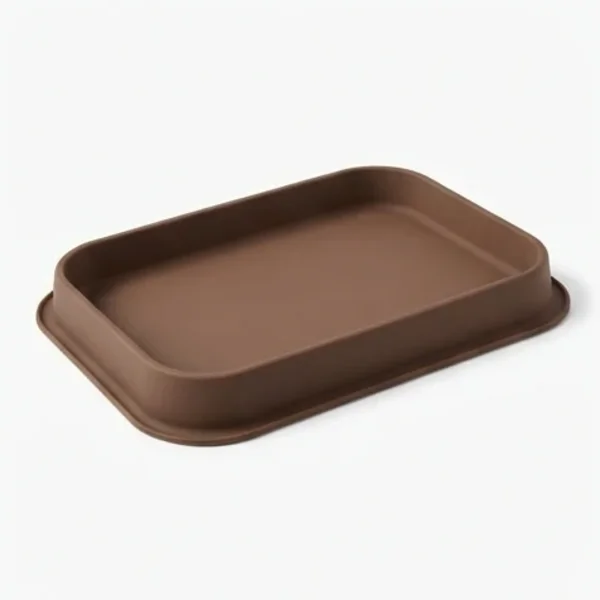
Watch how your dog eats at each setting. They should be able to reach the bowl without stretching up or crouching down, and the bowl shouldn't tip or slide. A raised-edge mat under the stand catches drips from a tall drinker (dog food mat guide). Here are the heights listed for our picks, with inches converted at 2.54 cm each.
Stand
Listed heights
Niubya
8, 22, 25, 28 and 31 cm (3.15 to 12.2 in)
XIAZ
8, 23, 27, 31 and 35 cm (3.15 to 13.78 in)
Ceramic and bamboo
One fixed height, 22.4 cm (about 8.8 in)
Dogit
One fixed height, 15.2 cm (6 in) including the dish
Adjustable bamboo stand
One fixed height, 30.5 cm (12 in) with feet, bowl sits at about 20.3 cm (8 in)
The XIAZ listing says a puppy whose whole body height is under about 38 cm (15 in) won't suit the stand once it's set up. Small dogs and puppies may do better with a low bowl, so check the lowest setting.
Choose by situation
Every dog is different, and for several of these situations your vet should have the final say on whether to raise the bowl at all. Use this table to see what to look for and which pick or guide fits, based on the listing figures above, then check the height with your dog.
Swipe sideways to see every column
Your situation
What to look for
Our pick or guide
Large or giant breed
Talk to your vet first, because research links raised bowls with bloat risk in these dogs
If your vet agrees, XIAZ (highest setting 35 cm)
Older dog with stiff joints
A height they can reach without stretching or crouching, set on your vet's advice
Want a fixed-height pair rather than an adjustable stand? Our double dog bowl sets compares six food-and-water pairs by bowl size.
Can I use a slow feeder with a raised stand?
Yes. The XIAZ is styled as a slow feeder, and the ceramic bowl has a maze design on a bamboo stand. A slow feeder may help a gulper eat more steadily, and eating quickly is one of the bloat risk factors VCA lists. Slowing the meal and raising the bowl are separate decisions, so weigh each on its own.
Keep in mind that slower eating won't prevent bloat on its own. For more designs, including floor-level ones, see our slow feeder bowl guide. If your dog drinks from the same stand, our dog water bowl guide has more options.
How we chose
We searched Amazon Australia for elevated dog bowls and raised dog feeders, then shortlisted ones that met all of these checks:
Well rated: a strong average rating with plenty of buyer reviews.
No red flags: no pattern of poor reviews, safety complaints or listing problems.
Available on Amazon Australia when we checked.
Height or adjustable heights stated in the listing, so you can judge fit.
Bowl capacity stated.
Non-slip feet or a stable base per the listing.
These are researched picks, not products we've personally tried. We compared the specifications and features shown on each Amazon Australia listing, checked on 5 Nov 2026. We didn't accept payment from any brand, and no brand saw this page before it was published.
Left out this time: fixed-height stands without measurements.
Where else can you buy raised dog bowls?
Pet shops, vets and hardware stores also stock raised feeders, and you can see how steady a stand is and check its heights in person. Whatever you choose, compare the height settings with your dog's size using the figures above.
When to see a vet
Bloat is an emergency. Signs can include a swollen belly, retching without bringing anything up, restlessness, heavy drooling, laboured breathing or collapse. If you notice any of these, call your vet or an emergency clinic straight away. See VCA Animal Hospitals: gastric dilatation and volvulus.
Ask your vet before raising your dog's bowl, especially for a large, giant or deep-chested breed, and if your dog seems stiff, vomits after meals or struggles to eat.
Frequently asked questions
Are elevated dog bowls good or bad?
It depends on the dog. They may help some older or stiff dogs eat more comfortably, but research has linked raised bowls with higher bloat risk in large and giant breeds. There is no one answer for every dog, so ask your vet before switching.
Do raised bowls cause bloat?
We can't say they do or don't. A 2000 JAVMA study by Glickman and colleagues found raised feeding bowls were associated with higher risk in large and giant breeds, while the AKC says the research conflicts and a solid recommendation can't be made. Fast eating, one big meal a day and exercise after eating are other risk factors, so ask your vet.
Are raised bowls good for older dogs or arthritis?
They may make eating more comfortable for some dogs who struggle to bend, but this should be your vet's call. Brands claim benefits for arthritis and neck strain, which isn't the same as veterinary evidence. A comfortable bed for older dogs matters too.
Are elevated bowls good for large dogs or greyhounds?
Large and deep-chested breeds are the group where bloat risk is highest, per the AKC, so talk to your vet before raising the bowl. If your vet agrees, choose a stand with several heights, such as the XIAZ, and watch how your dog eats.
Are elevated bowls good for small dogs or dachshunds?
Only if your vet agrees, and then at a low setting. Both adjustable stands here start at about 8 cm, which suits a small dog better than their taller settings, and the XIAZ listing says a puppy under about 38 cm tall won't fit once it's set up. Watch that your dog isn't stretching up to reach the bowl.
Do vets recommend raised bowls?
Not as a blanket habit. We haven't found a vet body that recommends raised bowls for all dogs, and the VCA bloat page doesn't mention them either way. A vet may suggest one for a dog with neck, back or mobility problems, and may advise against one for a large or deep-chested breed, so make the decision with your vet looking at your dog.
Do raised bowls help with slow eating?
Not on their own. Height doesn't slow a gulper, but a maze or ridged bowl can, and the XIAZ and the ceramic and bamboo pick are both styled that way per their listings. VCA lists fast eating as a bloat risk factor, so a slow feeder may help. Raising the bowl is a separate decision.
What material is best for dog bowls?
We haven't found a vet source that names one best material, so choose for easy cleaning and stability. The listings describe stainless steel bowls as dishwasher safe, a ceramic bowl as dishwasher safe but breakable, and an ABS plastic stand and bamboo stand as hand wash. Pick what you will wash often and your dog can't tip.
Glickman LT, Glickman NW, Schellenberg DB, Raghavan M, Lee T. Non-dietary risk factors for gastric dilatation-volvulus in large and giant breed dogs. Journal of the American Veterinary Medical Association, 2000;217(10):1492 to 1499, abstract read 6 November 2026 (https://pubmed.ncbi.nlm.nih.gov/11128539/)
Product details from each linked Amazon Australia listing, checked on 5 Nov 2026.
This guide provides general information and isn't a substitute for veterinary advice. If you're concerned about your dog's eating or digestion, speak with your vet.