Slicker brushes for dogs: which coats need one, and soft or firm pins
By Anish PuriUpdated 21 Nov 202616 min readResearched, not tested by us
Research guide. WhiskerFinds may earn a commission from links, at no extra cost to you.
Quick answer: A slicker brush for dogs is a flat head of fine bent pins that loosens tangles and lifts dead hair, and for most coats the Hertzko self-cleaning slicker is our top pick. Slickers suit curly, double and long coats, and short smooth ones rarely need one. Use light strokes, and leave tight mats to a groomer.
Purdue's canine welfare team calls the slicker the most commonly used dog brush, and the range on Amazon Australia is wide: bare wire, rounded tips, soft plastic bristles, long pins for fluffy coats and buttons that wipe the hair off for you. This guide compares six, explains which coats need one and how to avoid brush burn. For every brush type side by side, see our best dog brushes guide; this page is the slicker deep dive. Brushing the paw fur up with a slicker is also the first step in our guide to trimming your dog's paw fur.
Quick picks
Our top pickBest overall
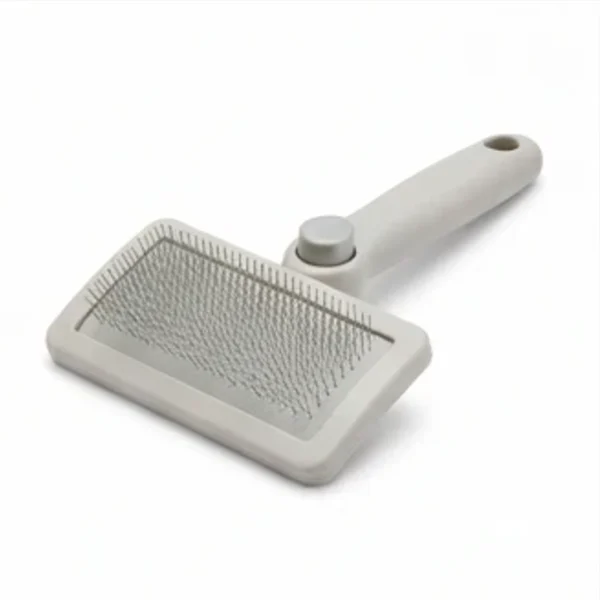
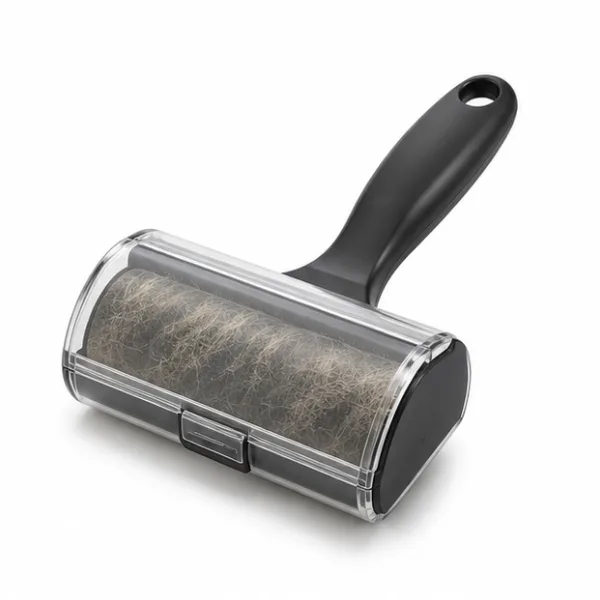
Hertzko self-cleaning slicker brush
Fine bent wire pins, retracting button and a grip handle; for all coat types per the maker
Long and short; not extra-long, tangle-prone or curly
What is a slicker brush for?
A slicker brush removes loose and dead hair and works small tangles apart before they become mats. It isn't a deshedding tool for a whole undercoat or a dematting tool for tight knots, though it's the usual first step before both.
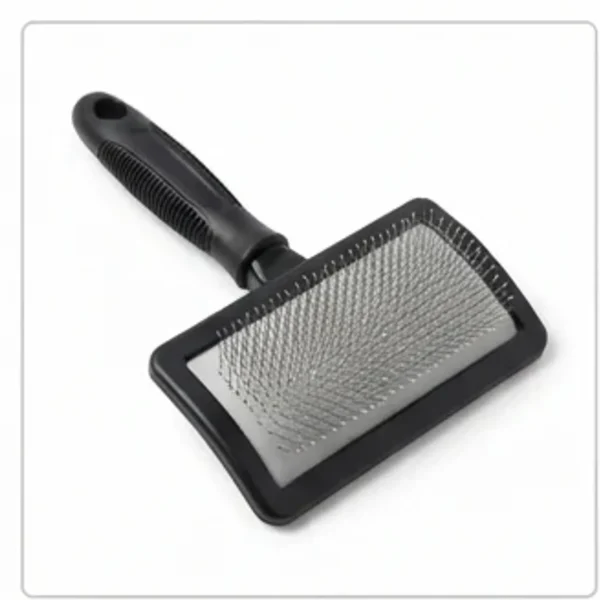
The classic retracting slicker, and the broadest fit for most coats. The listing says fine bent wire bristles, a button that retracts them so the hair wipes off, and a comfort-grip anti-slip handle, and says it suits dogs and cats of all sizes and coat types. Listed size is 14.7 x 7.6 x 25.4 cm and 90.6 g.
The listing doesn't mention coated or rounded tips, so this is a firmer brush. Use light pressure and short strokes. The listing's lines about removing mats and massaging are the maker's claims; for tight mats, see the dematting guide on this page.
Pros: one-button clean; light; grip handle; suits most coats per the maker
Cons: tips aren't described as coated or rounded; no head size separate from the handle in the listed dimensions
Best for: a first slicker for a long, wavy or double coat
Skip it if: your dog has thin or sensitive skin (pick 3) or a very dense curly coat (pick 2)
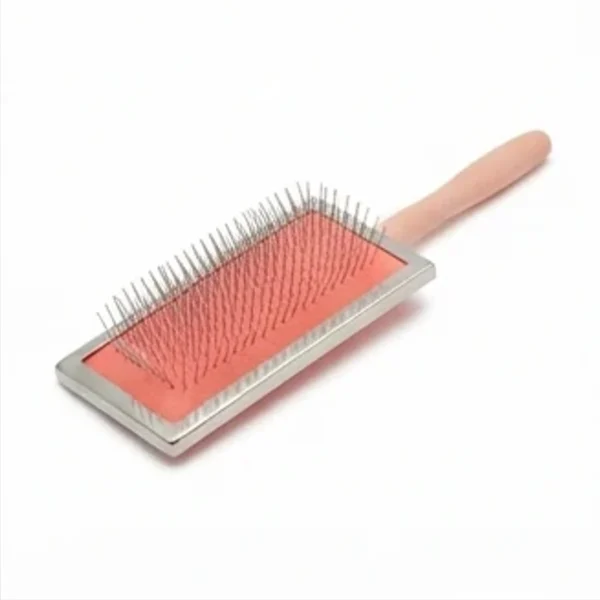
2. Chris Christensen Long Pin Slicker Brush, large: best for curly and doodle coats
Made for coats that need lift as well as untangling. The listing says long pins to fluff curly, cottony coats, to work through dense coats to the root and to shape heads, toplines and legs. The maker says it has 40 percent more pins than its Big K slicker and suggests the large on the body and the medium on legs. Listed size is 20.3 x 10.2 x 6.4 cm. The listing's weight is clearly an error, so we haven't used it.
It has no self-clean button, and the long pins need a light hand on thin or short coats.
Pros: long pins reach a dense curly coat; large head covers the body; maker names a medium for the legs
Cons: no self-clean button; premium; long pins need care on thin coats
Best for: doodles, cavoodles and other curly or cottony coats
Skip it if: your dog has a short or fine coat
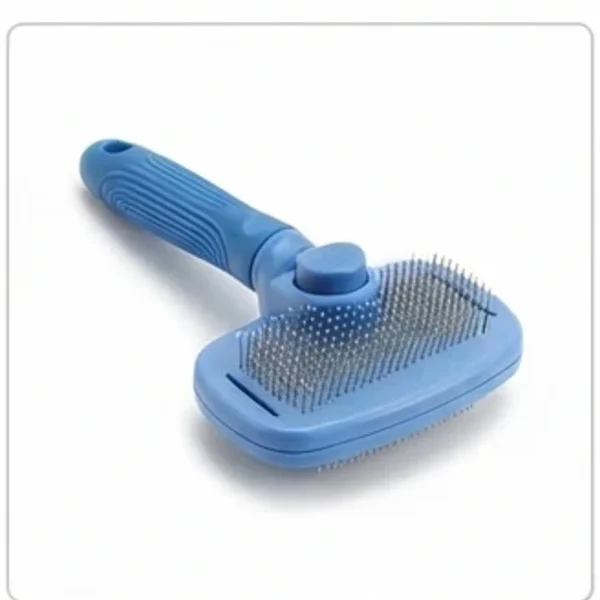
3. Swihauk self-cleaning slicker brush: best for sensitive skin and puppies
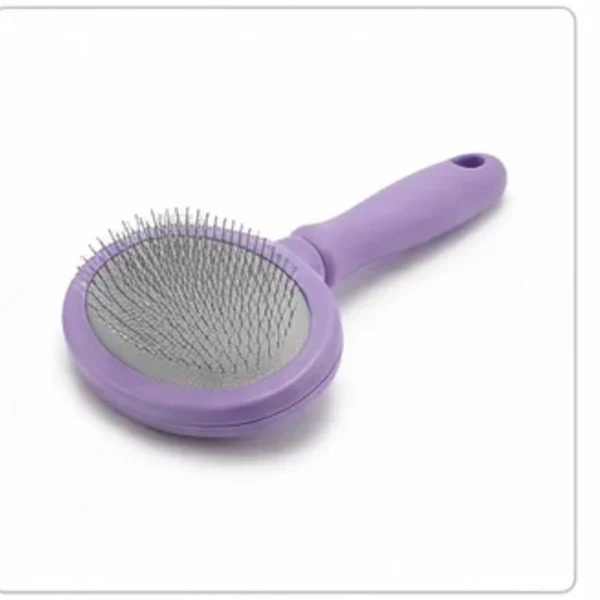
The softest pin feel here. The listing says protective round-head plastic bristles, a release button to clean, and a lightweight TPR handle, and says it suits long and short coats. The materials list mentions stainless steel, but the bristles are described as plastic.
Soft tips may not reach a dense undercoat as well as bare wire, and the listing gives no head size. The listed 41 x 24 x 2 cm and 250 g look too big for the brush alone, so we haven't used them.
Pros: round-head bristles; release button; light handle; a good first brush for a puppy
Cons: soft tips may not reach a dense undercoat; no head size on the listing
Best for: puppies, small dogs and dogs with sensitive skin
Skip it if: your dog has a thick double coat that needs reaching
4. Poodle Pet slicker brush (model 463): best for small to medium dogs and loose tangles
A compact wire slicker with rounded tips. The listing says fine stainless steel wire pins, each with a coated rounded tip and angled to avoid scratching, plus a rotating feature to work a tangle from different directions. Its directions say to brush from the surface out and not to scrape the skin. Listed size is 17.8 x 7.6 x 2.5 cm and 91 g.
It isn't self-cleaning. We've gone by its listed size and pin design only, not the marketing claims on the listing.
Pros: coated rounded tips; compact; works loose tangles from different directions
Cons: not self-cleaning; modest head for a big dog
Best for: small to medium dogs and loose tangles
Skip it if: you have a large dog, or you want a button to clean the pins
5. Miracle Care Slicker Dog Brush, large: best for large dogs
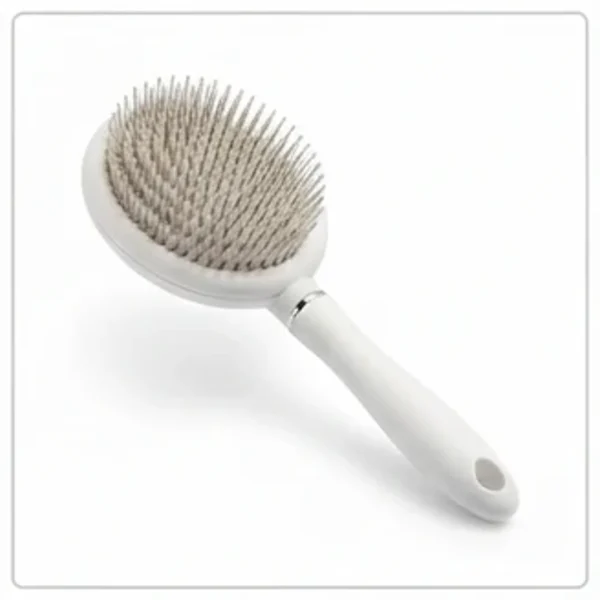
A bigger head for bigger dogs. The listing says a soft pad with angled flexible pins, a larger head for large dogs, a cushioned grip and reach into the undercoat on double-coated breeds. The maker says to use it to finish the coat. Listed materials are plastic and Sanoprene.
It's not self-cleaning and the listing gives no head size. The small size is on our dog brush guide.
Pros: larger head; flexible pins on a soft pad; cushioned grip
Cons: not self-cleaning; no head size on the listing
Best for: large dogs and double coats
Skip it if: your dog is small, or you want a button
6. ACE2ACE self-cleaning cat and dog brush: best budget
The simplest self-cleaning option, with a limit the maker states itself. The listing says 140 degree curved stainless steel needles with rounded rubber tips and a one-button clean. The package is 20.2 x 8 x 6.1 cm and 130 g.
The listing also says extra-long hair, hair that tangles easily and curly coats are not so suitable, because the teeth may bend after a few uses. The listing's "reduces shedding by up to 95 percent" is a brand claim and we haven't used it.
Cons: the maker says the teeth may bend on extra-long, tangle-prone or curly coats
Best for: short to medium coats and a first brush
Skip it if: your dog is a doodle, poodle or has a long coat
Which dogs need a slicker brush, and which don't?
Dogs with curly, wavy, long, wire or double coats get the most from a slicker. A short, smooth coat usually doesn't need one, and a stiff bristle or rubber brush suits it better. How often to brush depends on the coat, and the frequencies below come from Purdue.
Swipe sideways to see every column
Coat
Slicker?
Purdue's brushing frequency
Notes
Curly or doodle
Yes, a long-pin one suits cottony coats (pick 2)
Two to three times a week for curly coats; daily for wavy coats such as Poodles and their crosses
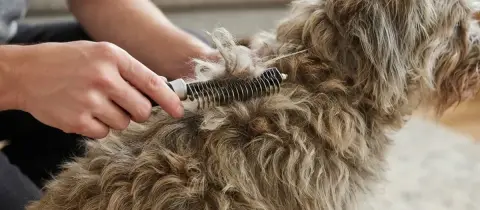
Work to the skin in sections; combs work best as a finishing step, Purdue says
Long, silky or wavy
Yes
Daily
Check ears, armpits and the backs of the legs
Double coat (Labrador, Husky types)
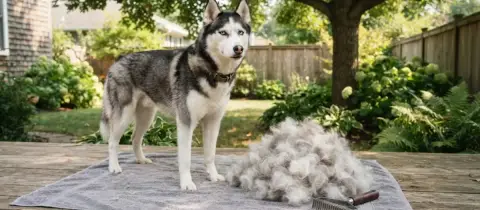
Yes, then a rake or deshedding tool
Once or twice a week, more if needed
RSPCA Australia suggests starting a short double coat (Labrador, Corgi types) with a slicker, and a long double coat with a rake
Brushing is not shaving. Don't shave a double-coated dog unless a vet or groomer advises it; our dog clippers guide explains why. VCA Animal Hospitals says long-haired dogs clipped for summer should keep at least 2.5 cm (1 inch) of coat to protect the skin from sunburn, and that, as a rare complication, a clipped coat can be slow to grow back (post-clipping alopecia), for up to two years, especially in plush-coated breeds.
Soft or firm pins, coated tips and head size
Bare wire pins reach deeper into a thick coat but are firmer on the skin. Coated or rounded tips and soft bristles are kinder on thin skin but may not reach as far. Pick by your dog's coat depth and how sensitive their skin seems, not by which sounds gentlest.
Bare wire (Hertzko): the listing says fine bent wires made to reach deep into the coat, and doesn't mention coated tips. Treat it as the firmer end of the range.
Coated or rounded tips (Poodle Pet, ACE2ACE): Poodle Pet's listing says each stainless pin has a rounded tip and is angled to avoid scratching, and ACE2ACE's says each needle has a rounded rubber tip. They are kinder on thin skin, but still need a light hand.
Soft plastic bristles (Swihauk): round-head bristles that the listing calls protective. They are the gentlest option here, and may not shift a dense undercoat as well as bare wire.
Long pins (Chris Christensen): made for cottony curls and dense coats. The pins are long, so on a thin coat they can reach skin sooner than you expect.
Head size: the listing for the large Miracle Care says a larger head for large dogs. For small dogs and faces, a small head is easier to control. Where a listing gives no head size, check the listing's size chart or photos before you order.
Self-cleaning button: a push button retracts the pins so the hair slides off in one piece. It saves picking hair out of the pins. It doesn't change how the brush feels on the dog, so choose pins first and button second. Brushes without one can be cleaned with your fingers or a comb, as the FAQ explains.
How to use a slicker brush for dogs without brush burn
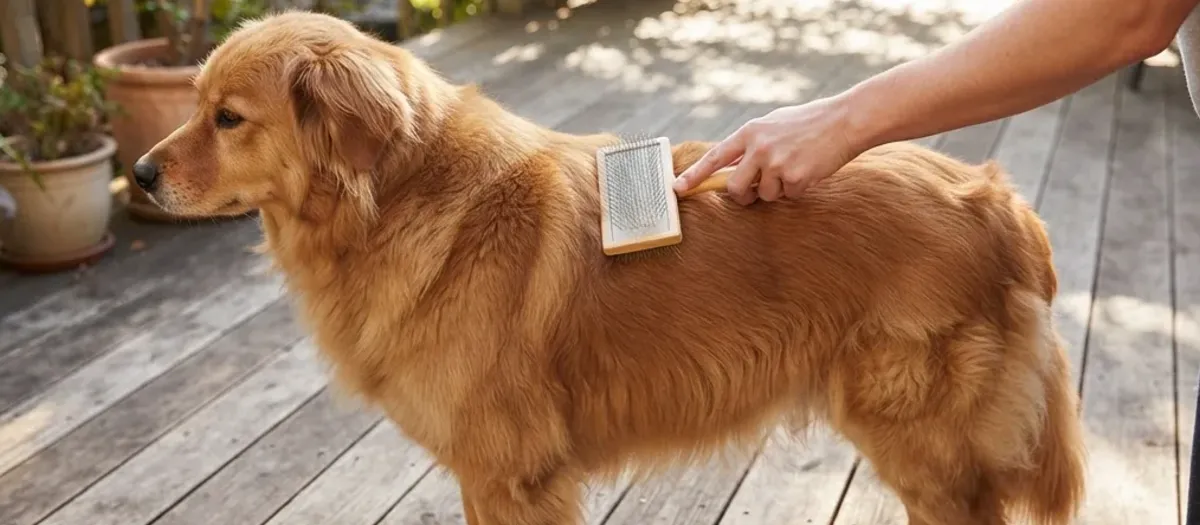
Use light, short strokes in the direction the hair grows, brush the whole body rather than one spot, and stop if the skin goes pink. "Brush burn" is a plain-English term for skin irritation from pressing too hard or going over the same patch, and we found no vet source that uses the term.
The steps below come from Purdue and RSPCA Australia, plus common sense.
Pick a calm moment. Purdue suggests brushing when your dog is relaxed or tired, such as after exercise, starting slowly and pairing it with high-value treats.
Brush before a bath, not after. VCA says tangles can become impossible to remove once the coat is wet. Our how often to wash a dog guide covers the washing side, and our dog hair dryer guide covers drying a thick coat afterwards.
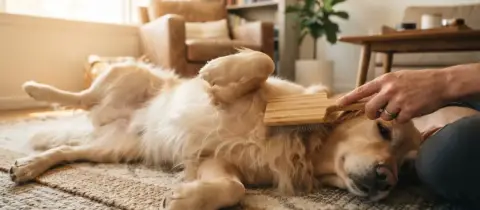
Work in lines, in sections. Lift a layer of hair with your free hand and brush the layer beneath from the skin outwards, then let the top layer down. Dense coats need this; a quick pass over the top only smooths the surface.
Keep the head flat and the pressure light. Let the pins glide. If the brush is catching, hold the hair at the base with your other hand so the pull doesn't reach the skin.
Go gently over joints and thin skin. RSPCA Australia suggests reducing downward pressure over joints and other sensitive areas.
Don't dwell. Purdue says to brush the whole body rather than focusing on one area. A tangle that won't shift after a few gentle strokes needs a different tool, not more force.
Stop if your dog is stressed. Purdue says that if your dog freezes, tries to escape or bites, stop and ask your vet for help.
If you find a tight mat close to the skin, don't push on with the slicker. Never cut a mat out with scissors, because a sudden move can cut the skin. A groomer or vet can clip it safely; our dematting comb guide covers when to comb and when to clip.
Basic slickers are sold in pet shops and by some vet clinics, and grooming salons often stock the professional long-pin types. Whichever you buy, check the pin tips and the size, and hold it first if you can, since the pin feel matters more than the colour.
How we chose
We searched Amazon Australia for slicker brushes for dogs, then shortlisted those that met all of these checks:
Well rated: a strong average rating with plenty of buyer reviews.
No red flags: no pattern of poor reviews, safety complaints or listing problems.
Available on Amazon Australia when we checked.
Pin type and tips described on the listing.
Self-cleaning mechanism described, where there is one.
The maker's own coat limits printed where a listing gives them (pick 6).
Size variants named where a brush comes in more than one.
These are researched picks, not products we've personally tested. We compared the specifications and features on each Amazon Australia listing, checked on 20 Nov 2026, and we didn't accept payment from any brand.
Left out this time: the aumuca and Miracle Care small slickers, which are already on our dog brush guide; colour variants of the Swihauk; a listing written for cats; and a lookalike copy of the Hertzko with thinner detail.
When to see a vet
Book a vet visit if skin looks red, raw or broken after brushing, your dog flinches when you touch one spot, or you find a tight mat, scabs, a lump or a smelly patch under the coat. These can have many causes, and a vet can work out which. Don't cut a mat out yourself. Our dematting guide covers when to clip instead.
Ask your vet for help if your dog freezes, tries to escape or bites when you brush, as Purdue advises. For itchy skin, see our dog itchy skin guide.
Frequently asked questions
Slicker brush or pin brush: what's the difference?
A slicker has fine bent wire pins packed tightly on a flat head, so it lifts dead hair and loosens tangles. A pin brush has wider-spaced pins, like a human hairbrush. Purdue lists pin brushes for medium to long, fine coats, but says they may tug and pull, so they aren't a first choice for most dogs.
Can a slicker brush hurt my dog?
It can if you press hard, brush one spot repeatedly or drag it through a tangle. Purdue says to use slickers gently so you don't hurt your dog. Use short, light strokes, hold the hair at the base and stop if the skin looks pink. Coated or rounded tips are kinder.
How often should I use a slicker brush?
It depends on the coat. The table above gives Purdue's frequencies, from daily for long and silky coats to about weekly for short ones. Check the coat daily and brush more in the spring and autumn sheds. Fewer, gentler sessions beat long ones, and if your dog tires, stop and come back later.
Is a slicker brush good for doodles and cavoodles?
Yes, usually, because curly coats mat easily, and a slicker lets you work through the coat in sections down to the skin. A long-pin slicker suits dense, cottony coats. Purdue suggests two to three times a week for curly coats and daily for wavy ones such as Poodles and their crosses. Follow with a comb to check you've reached the skin.
Does a slicker brush remove undercoat?
Partly. It lifts loose hair from the outer and upper undercoat, and RSPCA Australia says to start a short double coat with a slicker. A thick, shedding undercoat usually needs a rake or deshedding tool afterwards, used with care. Don't overwork one area, since the skin underneath is easily irritated.
Can I use a slicker brush on a short-haired dog?
You can, but you might not need to. Purdue says stiff bristle and rubber brushes suit most smooth, short coats, and slickers are good for most coat types if used gently. If you try one, pick soft or rounded tips, use very light strokes and watch for red skin.
Should I brush my dog wet or dry?
Dry, before a bath. VCA says tangles can become impossible to remove once the coat is wet. Brush out burrs and tangles first, then wash. Some coats are brushed damp with a detangler spray, so if you use one, follow our detangler spray guide and the label.
How do I clean a slicker brush that has no button?
Pull the loose hair off with your fingers or the tines of a comb, working from the base of the pins outwards. Do it after every session so hair doesn't pack in. Rinse a stubborn brush in warm water with a little mild soap, then dry it fully before the next use.
Product details from each linked Amazon Australia listing, checked on 20 Nov 2026.
This guide provides general information and isn't a substitute for veterinary advice. If you're concerned about your dog's coat or skin, speak with your vet.